

Reviewed · MARDI HIMAL TREKS
4 Days Mardi Himal Base Camp Trek from Pokhara
Mardi Himal gives you a big Himalayan payoff in just four days. From Pokhara, the route climbs through forest, village country, and high alpine ground to a 4,500-meter viewpoint facing Machapuchare and the Annapurna range. I like the changing scenery and the chance to meet Gurung and Magar communities without committing to a much longer trek.
I also like the private format and practical inclusions: hotel pickup, permits, guesthouse lodging, an English-speaking guide, and jeep transfers. Guides named in recent trips include Bikram, Biru, Krishna, Prakash, and Surya. The main caution is altitude. Reaching 4,000 meters at High Camp and 4,500 meters at the viewpoint in a short schedule demands moderate fitness and a sensible pace.
Key points to know before you book
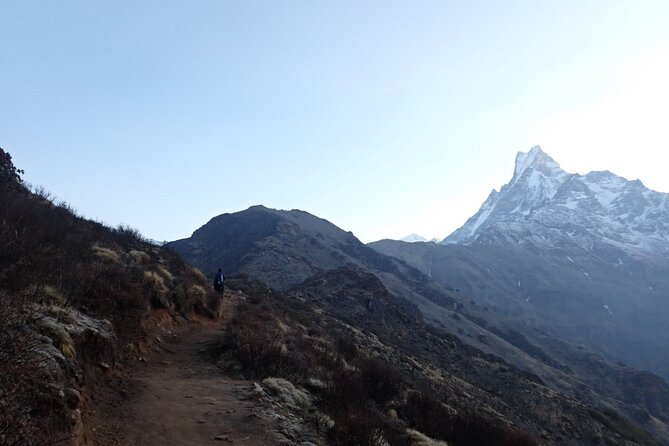
- 4,500-meter viewpoint: The early hike from High Camp brings you to the trip’s highest stated point, with views toward Machapuchare and the Annapurna range.
- Four days from Pokhara: You get a compact mountain route with pickup, transport, lodging, permits, and a guide arranged.
- Forest to alpine terrain: The trail changes from subtropical woodland to meadows and rough high-country ground.
- Private trekking party: Only your own group participates, even though the road transfers use a sharing jeep.
- Cultural contact: Gurung and Magar villages add a human side to the mountain scenery.
- Moderate fitness required: The uphill walking and altitude are the real test, especially on days two and three.
Why Mardi Himal works as a short trek from Pokhara
Mardi Himal is a good choice if you want serious mountain scenery without spending a week or more on the trail. The route begins near Pokhara, but the change is quick. Fields and forest replace city traffic, and the mountains become the focus of the journey.
The appeal is the variety. You are not simply walking uphill through one type of scenery. The route passes through forest, open meadows, rough ridges, and high ground near the base camp area. Depending on the season, you might also find rhododendron flowers along the way, a detail that has made the route especially memorable for some families.
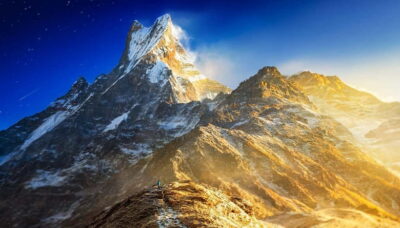
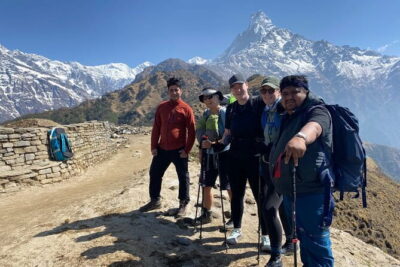
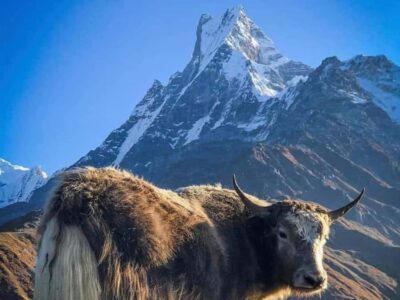
The mountain views are the main reward. Machapuchare, also called Fishtail Mountain, is a constant reference point, while the Annapurna range fills the wider horizon. The view from the high viewpoint is the clearest reason to accept the early start and the steep climb.
This is also a cultural trip, not just a mountain walk. You pass through communities connected with Gurung and Magar traditions, where the pace of life is tied closely to the hills. The experience is more personal than a simple drive to a lookout because you reach these places on foot and stay in local guesthouses.
More ridge treks from Pokhara:
- Pokhara: 4-Day Mardi Himal Trek
★ 4.9 · 59 reviews - Private Mardi Himal Trek
★ 5.0 · 42 reviews - From Pokhara: 4-Day Mardi Himal Base Camp Trek
★ 4.9 · 31 reviews
Day one: Pokhara to Forest Camp at 2,500 meters
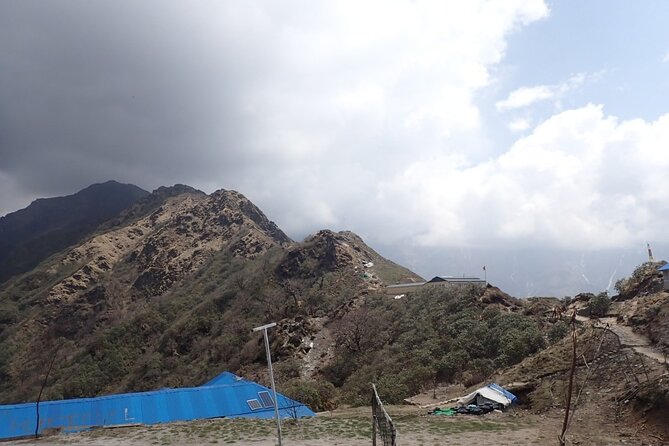
The first day begins around 8:00 in the morning with a drive from Pokhara to Kande. The journey takes about an hour and a half, passing fields and wooded hills before you start walking.
From Kande, the trail leads toward Forest Camp at about 2,500 meters. You should expect roughly seven hours for the full day, including the road transfer and walking. This is a useful opening day because it gives your legs time to adjust before the highest sections arrive.
The forest is the star here. Instead of exposed mountain slopes, you walk through dense woodland with the possibility of seeing local plant life and wildlife. The shade can make the climbing more comfortable, but a long forest day still requires steady effort.
Forest Camp is also where the route begins to feel properly remote. You leave behind the easy access of Pokhara and settle into guesthouse accommodation. The stay is simple rather than luxurious, but that is part of the point. You are sleeping along a working mountain route, not at a resort.
The first day is not difficult only because of altitude. It is long, and the combination of driving and walking can catch you off guard. Keep your daypack light, carry water, and avoid treating the morning drive as if it were the beginning of a relaxed sightseeing day.
Day two: Forest Camp to High Camp at 4,000 meters
Day two takes you from Forest Camp to Mardi Himal High Camp, at about 4,000 meters. The walking time is listed at roughly five hours, with around six hours allowed for the full stop.
This is the day when the scenery opens up. The dense jungle gives way to higher ground, meadows, and more exposed mountain country. You begin to understand the route’s appeal because the views become broader as the trees thin out.
The change in altitude matters more than the distance. Moving from 2,500 meters to 4,000 meters in a single day is a serious gain. You may feel the air getting thinner even if the trail does not seem impossibly long. Walk slowly, tell your guide if you feel unwell, and resist the urge to race ahead simply because you can still see the lodge.
High Camp is the staging point for the next morning’s viewpoint walk. Its position is the practical advantage of this itinerary. By sleeping high, you can reach the viewpoint at sunrise without starting from a lower village and adding several hours to an already demanding day.
The tradeoff is comfort. Guesthouse accommodation at this height is basic, and the cold or thin air may make the night less restful. The included lodging saves you from arranging a separate booking, but it does not turn a high mountain lodge into a hotel.
Day three: The 4:00 a.m. climb toward Mardi Himal Base Camp
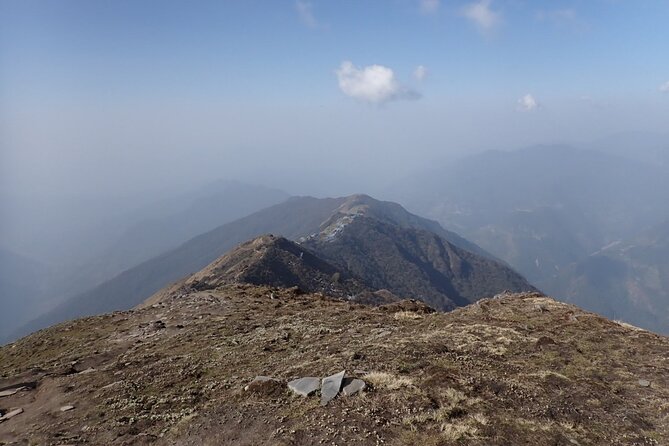
The third day starts at about 4:00 a.m. You walk for roughly two hours toward a viewpoint at 4,500 meters, described as the Mardi Himal Base Camp section of the trip.
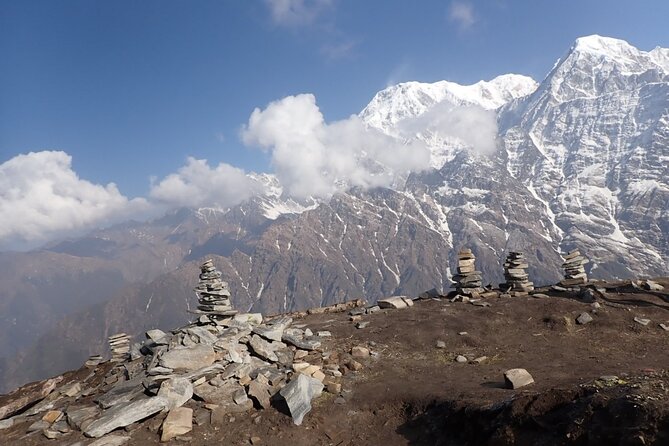
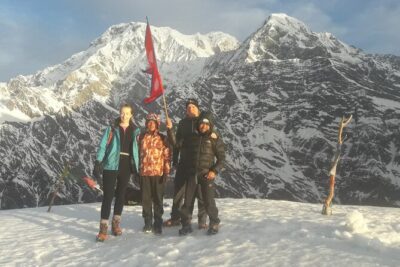
This is the emotional high point of the trek. The early darkness gives way to views of Machapuchare and the full Annapurna range as the light improves. The exposed route and high elevation make the mountain scenery feel much more immediate than it did from the forest below.
The stated schedule gives about three hours for the viewpoint portion, followed by a descent. That is enough time to pause, take photographs, and appreciate the setting, but not an invitation to linger indefinitely. At 4,500 meters, staying warm and moving carefully matter more than squeezing every possible photograph from the morning.
It is worth noting the wording of the route carefully. The itinerary calls this Mardi Himal Base Camp, but the specific high point listed is a viewpoint at 4,500 meters. If you want a precise explanation of the final destination, ask the operator how the guide defines Base Camp on your departure date.
After the viewpoint, you return to High Camp, collect your belongings, and continue down to Low Camp at about 3,000 meters. The whole day is listed at around six hours for the descent section, in addition to the early viewpoint walk. This makes day three a long one, even though you are walking downhill for much of it.
The drop to Low Camp is welcome after the high point. Lower altitude usually feels easier, and the route gives you another change in scenery as alpine ground gives way to more vegetation. Still, downhill walking can be hard on knees, particularly after the early start.
A few more things to do in Pokhara worth a look
- Poon hill Trek 3 days
★ 5.0 · 176 reviews - Trekking in Annapurna/Langtang/Everest/Upper Mustang regions
★ 5.0 · 161 reviews - Pokhara: 4-Day Ghorepani, Poonhill & Ghandruk Mountain Trek
★ 5.0 · 132 reviews - Ghorepani – Poon Hill Trek 3N-4D
★ 5.0 · 125 reviews
Day four: Low Camp, Siding Village, and back to Pokhara
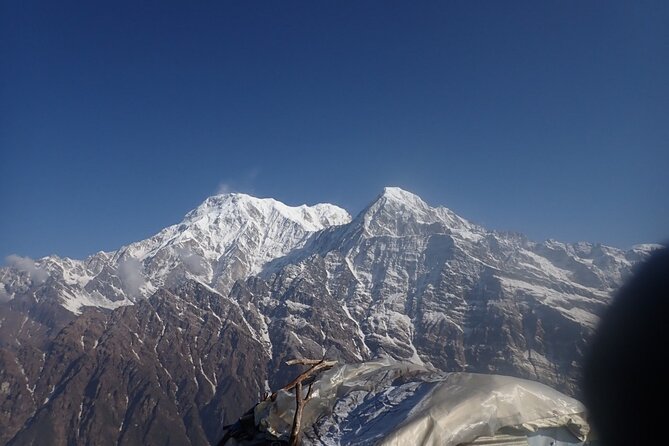
The final walking day starts at Low Camp and descends for about four hours to Siding Village, at roughly 1,800 meters. This is a quieter finish than the high viewpoint, but it gives you time to notice the villages, fields, and mountain countryside at close range.
Siding is where the walking ends. A jeep then takes you back to Pokhara, with the transfer listed at about two hours. The road ride is part of the adventure, not a polished coach journey, and conditions can affect how comfortable or quick it feels.
The tour finishes in Pokhara Lakeside. That makes the trip easy to fit into a wider Nepal visit. You can begin and end in the same base, without arranging a separate return from a distant trailhead.
Day four is shorter on foot than the middle days, but do not treat it as effortless. Four hours of descent after several days of walking can still leave you tired. The reward is a relatively early return to Pokhara and a clean finish rather than another night on the trail.
What the $290 price covers
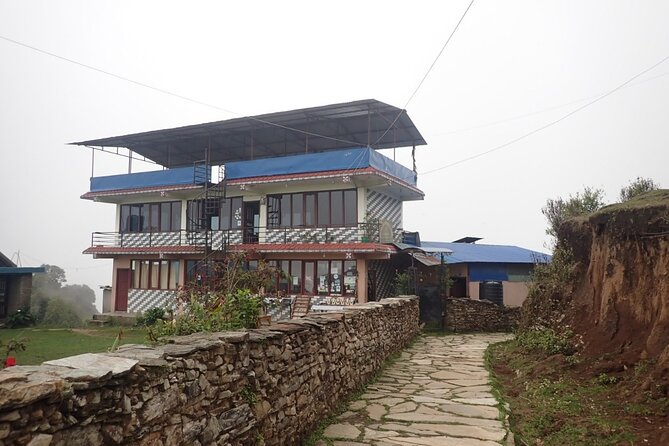
At $290 per person, the value depends on how much planning you would otherwise do yourself. The package includes hotel pickup and drop-off, trekking permits and TIMS, an experienced English-speaking guide, guesthouse accommodation, and round-trip transfer by sharing jeep.
Those inclusions cover the items that can quietly add cost to a short trek. Permits need arranging, transport between Pokhara and the trail matters, and guesthouse reservations are more convenient when handled as part of one plan. You also get a guide who can manage the route and help with the day-to-day rhythm of the trek.
The tour is described as private, so only your group participates. That gives you more room to set a comfortable walking pace than a large fixed group might allow. But the transport is by sharing jeep, so private trekking does not mean every vehicle is private.
Personal expenses are not included. You should also allow for any optional gratuity. The exact price does not include every possible out-of-pocket cost, so take enough money for personal needs during the four days.
For a private four-day package with permits, lodging, guide service, and transport included, the price looks reasonable. Its value is strongest if you want the route arranged for you. Independent trekkers who already know the area and can organize permits, lodging, and transport may prefer to build the trip separately.
Guides, family groups, and the level of service
The guide can make a major difference on a short, high-altitude trek. Recent trips have been led by Prakash, Surya, Bikram, Biru, and Krishna. The strongest praise centers on friendly help, patience, route knowledge, and keeping different members of a group together.
That matters especially for families. One account describes a trip with young children, with the guide paying attention to each family member and keeping the group coordinated. You should still judge the route against your children’s fitness and experience, because the itinerary reaches 4,000 meters and includes a 4:00 a.m. start.
Bikram is singled out for making family trips memorable, while Biru is praised for patience and care. Prakash is described as friendly and helpful. These details suggest a service style that focuses on personal support, but guide assignments can change, so you should confirm who will lead your group.
The operator is My Dream Adventure, often shortened to MDA. The package is presented as a private activity, which is useful if you want the guide’s attention focused on your own group rather than on a large mixed party.
The main drawbacks to consider
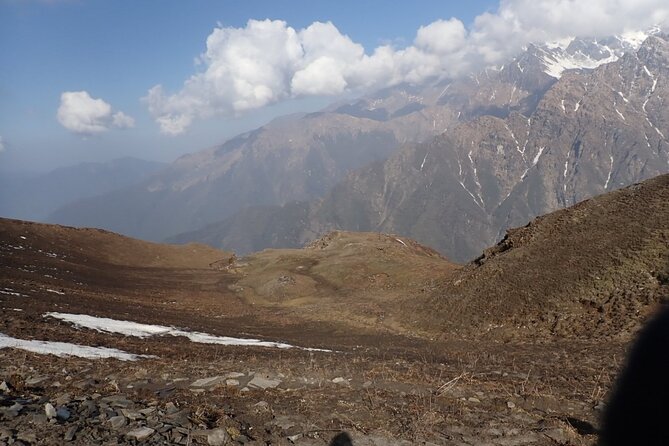
The short schedule is both the attraction and the weakness. You reach high altitude quickly, with little spare time if you need to slow down. Someone who is not used to long walking days should not book this simply because it lasts only four days.
The 4:00 a.m. start on day three will not suit everyone. It is necessary for the high viewpoint experience, but you may get limited sleep after the long climb to High Camp. Cold conditions and basic guesthouse accommodation add to the challenge.
The route description also uses several names for the high point, including High Camp, Base Camp, and a 4,500-meter viewpoint. That may reflect local route wording, but you should ask for clarity if reaching a specific named camp is important to you.
Finally, the return road from Siding is by jeep. The two-hour estimate is useful for planning, but mountain roads can be tiring and less predictable than city transfers. Think of the jeep ride as a practical link back to Pokhara, not a comfortable sightseeing segment.
What to pack and how to prepare
The supplied details call for moderate physical fitness, and that is the right standard to use. Prepare for several hours of walking on days one, two, and three, plus the early high-altitude climb.
Useful choices include:
- Warm layers for High Camp and the pre-dawn viewpoint walk
- Comfortable walking shoes with dependable grip
- A small daypack for water, clothing, and personal items
- Sun protection for exposed high ground
- Any personal medication and basic toiletries
You should keep your pace even rather than fast. The guide is there to help manage the route, so speak up early if altitude, cold, or fatigue becomes a problem. The itinerary provides no extra acclimatization day, which makes honest communication especially important.
Should you book the Mardi Himal trek?
Book this trek if you want strong mountain views in a compact four-day plan, prefer having permits and transport arranged, and can handle long walking days with a rapid climb to 4,000 meters. It suits couples, families with fit older children, and private groups that value a guide’s attention.
Think twice if you need a slow acclimatization schedule, dislike basic guesthouses, or want a relaxed holiday with no pre-dawn start. The route is short on the calendar but demanding on the trail.
For the $290 price, the package offers a practical balance of scenery, cultural contact, guide support, lodging, and transport. I would choose it for a focused first Himalayan trek from Pokhara, provided I was comfortable with the altitude and confirmed the exact Base Camp viewpoint and guide assignment before booking.
You can cancel for a full refund if you do so at least three full days before the local start time. Cancellations or changes made inside that window are not refunded or accepted.
FAQ
How long is the Mardi Himal Base Camp trek?
The experience lasts approximately four days, including transport from Pokhara and the return jeep ride from Siding Village.
Where does the trek begin?
The tour includes pickup in Pokhara, followed by a drive of about one and a half hours to Kande, where the walking section begins.
How high does the trek go?
The route reaches Mardi Himal High Camp at about 4,000 meters and a viewpoint at approximately 4,500 meters.
Is the trek private?
Yes. Only your own group participates in the trekking activity. The package also includes round-trip transfer by sharing jeep.
What accommodation is included?
Guesthouse accommodation is included during the trek.
Are permits and a guide included?
Yes. The package includes trekking permits and TIMS, along with an English-speaking trekking guide.
Is a certain fitness level required?
Yes. You should have a moderate level of physical fitness because the itinerary includes several hours of walking, substantial altitude gain, and a 4:00 a.m. hike to the high viewpoint.
Just added in Pokhara
- Pokhara: Pokhara Highlights Tour by Bus★ 3.6 · 10 reviews
- Discover Pokhara in Style: Private Vehicle Service with Driver★ 5.0 · 5 reviews
- 4 Day Mardi Himal Base Camp Trek from Pokhara★ 5.0 · 18 reviews
- Private 4 Day Poon Hill Trek from Pokhara★ 5.0 · 16 reviews
- Pokhara in 5 Hours: Lake, Museum, Cave, Falls & Pagoda Hill★ 4.5 · 16 reviews
- Annapurna Base Camp Trek from Pokhara and Kathmandu★ 5.0 · 7 reviews
- 7-Day Trek to Annapurna Base Camp from Pokhara★ 5.0 · 12 reviews
- Beautiful Sarankot Sunrise with Full Day Sightseeing in Pokhara★ 4.5 · 3 reviews
Mardi Himal Treks, compared.

Browse the lists this tour appears in