
Reviewed · CHITWAN JUNGLE SAFARIS
From Kathmandu/Pokhara: 3-Day Chitwan National Park Tour
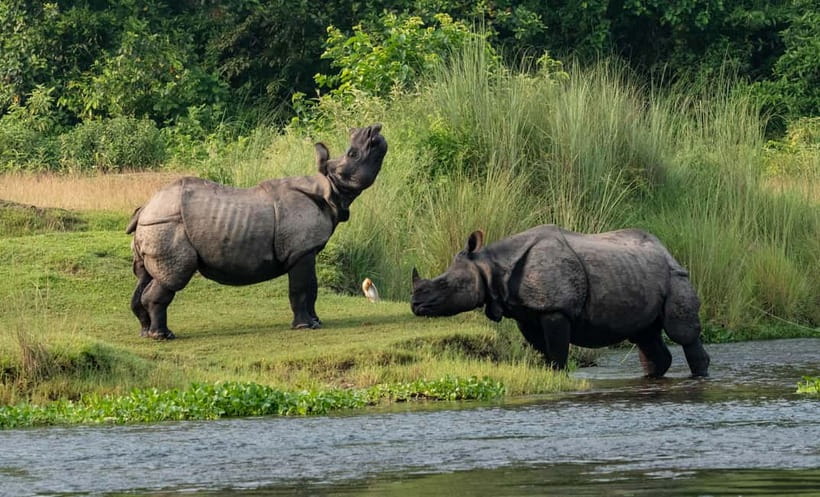
Chitwan is one of Nepal’s best breaks from temples and mountain roads. In three days, you move from a quiet canoe ride past crocodiles and water birds to a jungle walk and a jeep safari through one of the country’s best-known wildlife areas. Rhinos are a real possibility, while tigers and sloth bears require luck and patience.
I like the practical mix of activities, especially the canoe trip followed by a jeep safari. I also like that the $136 price covers two nights, park entry, meals at the Chitwan hotel, and major activities. The main drawback is the long bus ride, which takes about five to six hours each way, and wildlife sightings can never be promised.
Key points at a glance
- Three ways to explore the park: You experience Chitwan by canoe, on foot, and by jeep rather than from a vehicle alone.
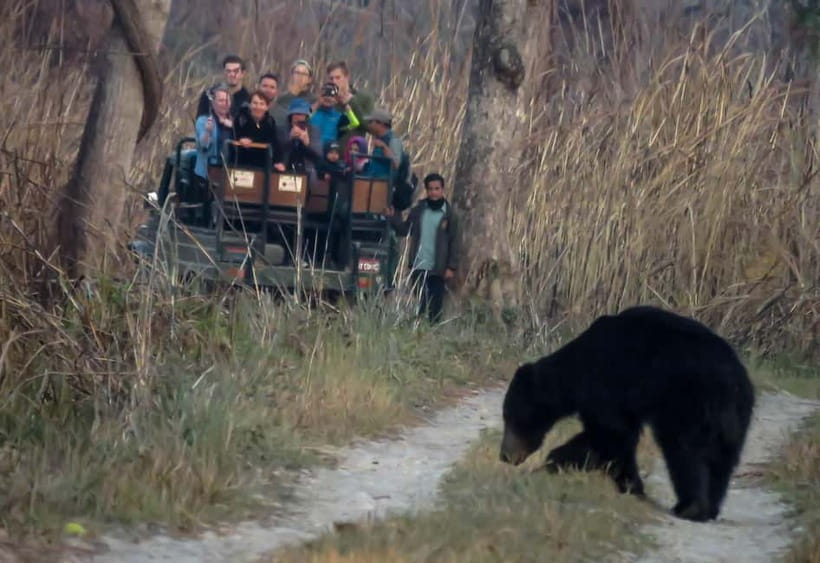
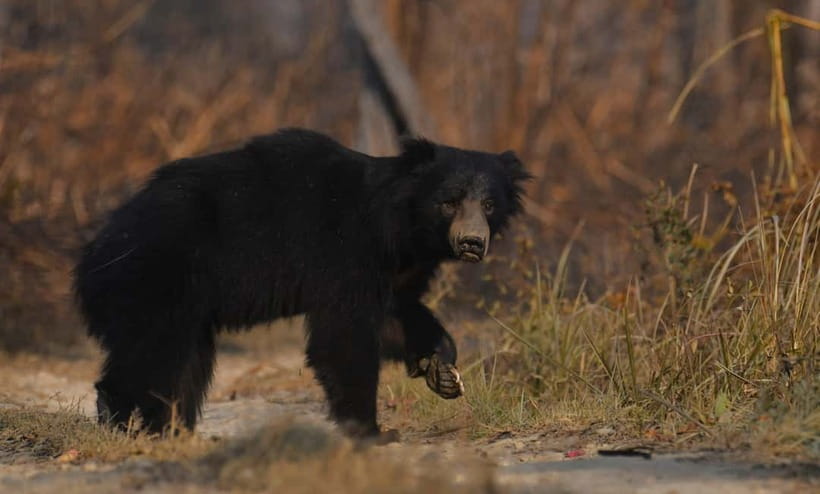
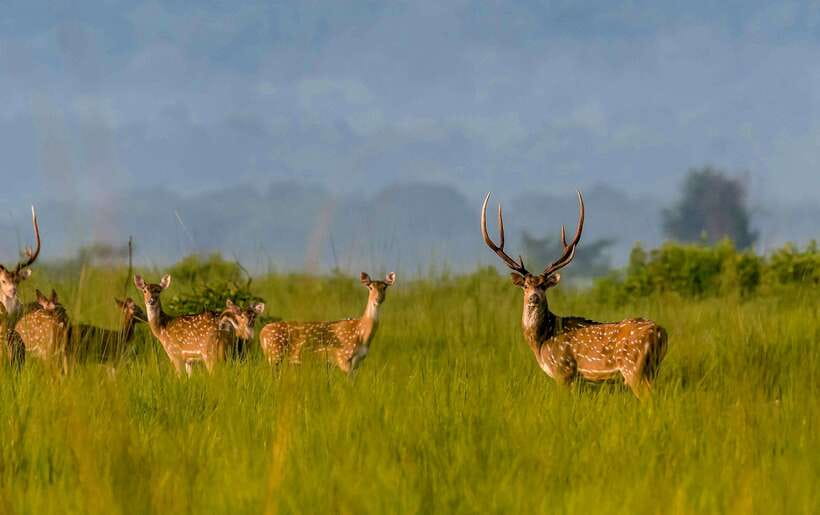
- Good chance of varied wildlife: Rhinos, crocodiles, deer, birds, and smaller creatures may appear, while tigers, leopards, and sloth bears are less certain.
- Two nights in Sauraha: The schedule gives you a full activity day instead of trying to rush through the park in one afternoon.
- Tharu culture included: An evening local culture show adds a human side to the wildlife program.
- Bus travel is part of the value: Transport from Kathmandu or Pokhara is arranged, but meals during the bus journey are not included.
- Simple, active touring: Comfortable shoes, sunscreen, insect repellent, water, and a camera will make the days easier.
Why Chitwan works as a short Nepal safari
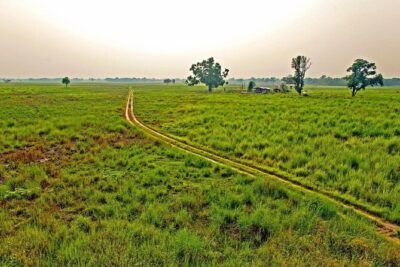
Chitwan National Park gives you a very different Nepal from the high Himalayas. Here, the focus is lowland forest, rivers, grassland, reptiles, birds, and large mammals. You are not climbing toward a viewpoint. You are moving slowly and quietly, watching for signs of life.
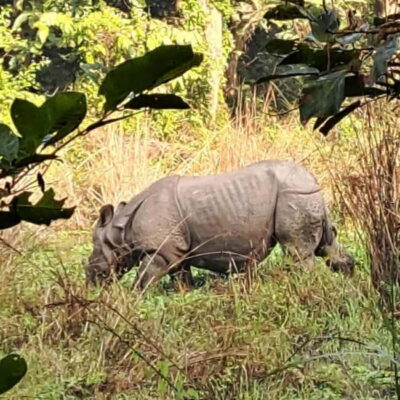
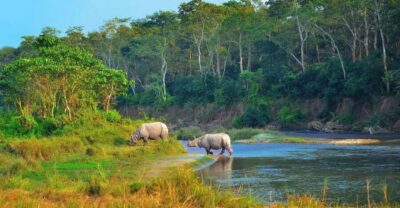
The park is known for the one-horned rhinoceros and Royal Bengal tiger. You may also see sloth bears, deer, leopards, crocodiles, water birds, large lizards, and many smaller animals. That list matters because the safari is not only about checking off a tiger. A good outing can still be memorable when the biggest sighting is a rhino standing near the trees or a crocodile lying beside the river.
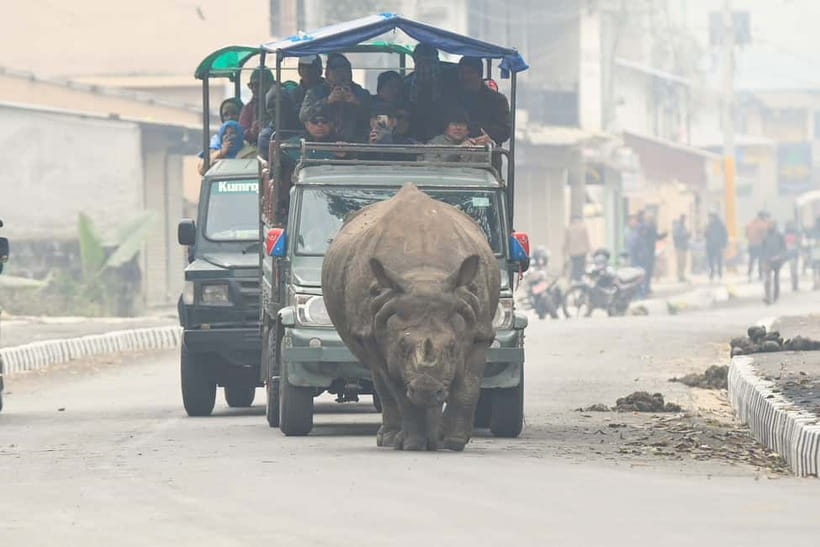
I like the three-part approach here. A canoe lets you scan the riverbank without engine noise. A jungle walk brings you close to tracks, plants, and bird calls. The jeep covers more ground and gives you the safest, fastest way in this package to search for animals across the park.
You should keep your expectations realistic. No responsible wildlife tour can guarantee a tiger. The supplied experience describes tiger sightings as possible, not certain. If you want a strong chance of seeing some wildlife, Chitwan makes sense. If your only goal is a tiger photograph, three days may leave you disappointed.
More lowland and wildlife trips from Pokhara:
- From Kathmandu/Pokhara: Private 3-Day Chitwan Safari Tour
★ 4.7 · 34 reviews - Luxury Chitwan Jungle Safari Package (2Nights/3Days) Resort
★ 4.3 · 16 reviews - 3-Day Chitwan Jungle Safari Adventure From Kathmandu/Pokhara
★ 5.0 · 6 reviews
The five-to-six-hour journey from Kathmandu or Pokhara
The tour begins with a tourist bus from Kathmandu or Pokhara. The ride to Chitwan takes about five to six hours. Private car and flight options are also listed, but the bus is the standard choice described in the program.
This transfer is useful because it removes one major planning task. You do not need to arrange a separate ride to Sauraha, find the hotel, and then book each safari activity on your own. At the same time, a five-hour road journey is a real part of the tour, not a minor footnote.
Bring water and a little food for the ride. Meals during the bus journey to Chitwan and back are not included. A refillable bottle is particularly sensible, since the trip information asks you to reduce waste and avoid littering.
After arrival, you check into the hotel, freshen up, and receive lunch. The team then briefs you about the activities. That briefing is useful because the next two days combine several kinds of outings, and you will want to know what to wear and carry for each one.
Day one: settling into Sauraha and watching the sunset
The first day is deliberately light after the road journey. After lunch and the activity briefing, you visit a sunset point and spend some time seeing the area around Sauraha.
I like this opening because it gives you a gentle start. You are not asked to jump off the bus and immediately take a long walk through the forest. The sunset visit also helps you get your bearings before the more active second day.
The evening includes dinner and a local culture show connected with the Tharu community. This is more than a filler performance. Chitwan is not only a national park. People live around it, and the Tharu community is an important part of the region’s identity.
The show offers a short introduction to local culture without taking another full day from the safari. Keep your expectations at the right scale. The program gives no detailed information about the performance, so you should treat it as a cultural addition rather than a full historical presentation.
Your first night is at the Chitwan hotel. Two nights of accommodation are included, along with food at the hotel. Bar drinks, bottled water, cold drinks, and alcohol cost extra.
Day two: canoe, jungle walk, and the elephant center
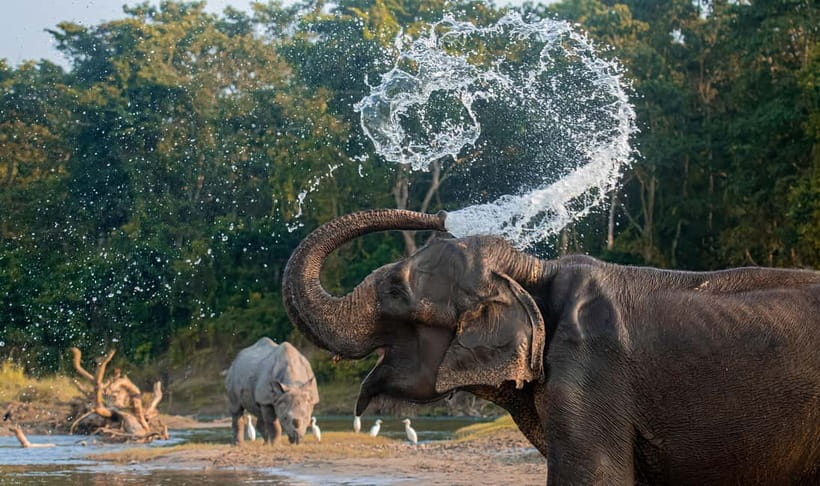
Day two is the main wildlife day. You begin with a canoe trip on the river, looking for crocodiles and water birds. Other animals may appear along the banks, though sightings depend on conditions and luck.
The canoe is one of the best parts of the schedule because it changes the pace. You are not rushing from one sighting to the next. You are watching the river edge, scanning branches and sandbanks, and listening for movement. Crocodiles and birds are the stated targets, but the appeal is the quiet search.
After the canoe outing, you take a jungle walk. The goal is to look for rhinos, deer, and other animals. Walking puts you closer to the forest than a jeep does, but it also demands more attention. You need comfortable shoes, water, a hat, sunscreen, and insect repellent.
The instructions are clear about wildlife manners. Keep a safe distance, do not feed animals, do not touch plants, and do not litter. Smoking, alcohol, and drugs are not allowed during the activity. These are not fussy rules. They protect both you and the animals.
The program also includes a visit to an elephant breeding center, where you can see baby elephants. This stop will appeal to many families and animal lovers. Still, you may want to consider how you feel about captive-animal facilities before booking. The supplied information does not provide details about the center’s practices, so the visit is best approached as an observation stop, not as a full conservation lesson.
Lunch follows the morning activities. Then comes the jeep safari, usually the largest wildlife-searching section of the tour.
A few more things to do in Pokhara worth a look
- Jungle Towernight Stay In Chitwan National Park ,nepal-2 Nights 3 Days Package
★ 5.0 · 186 reviews - 3-Day Chitwan National Park Jungle Safari Tour Package with Pick Up
★ 5.0 · 184 reviews - 3 Nights 4 Days Chitwan National Park with Tower Night Stay
★ 5.0 · 41 reviews - Kathmandu Shivapuri National Park and Nagarkot Hiking – 3 Days
★ 5.0 · 21 reviews
The jeep safari and your best chance to cover ground
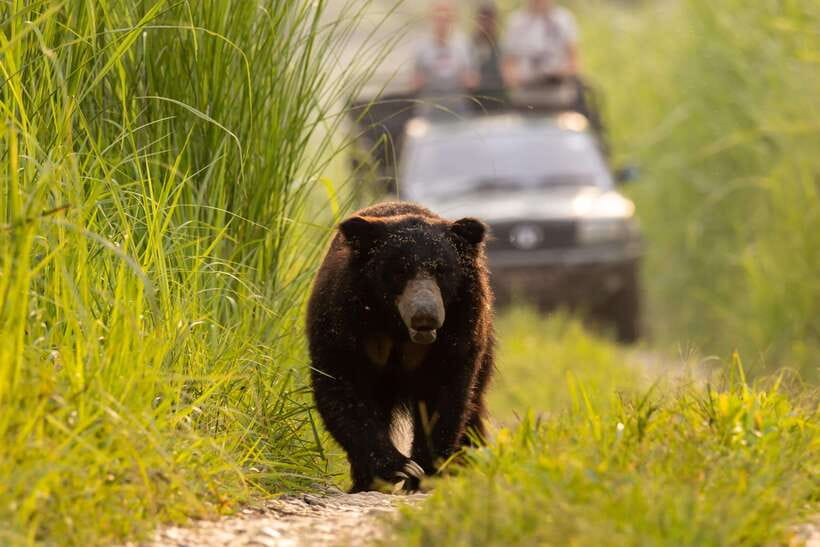
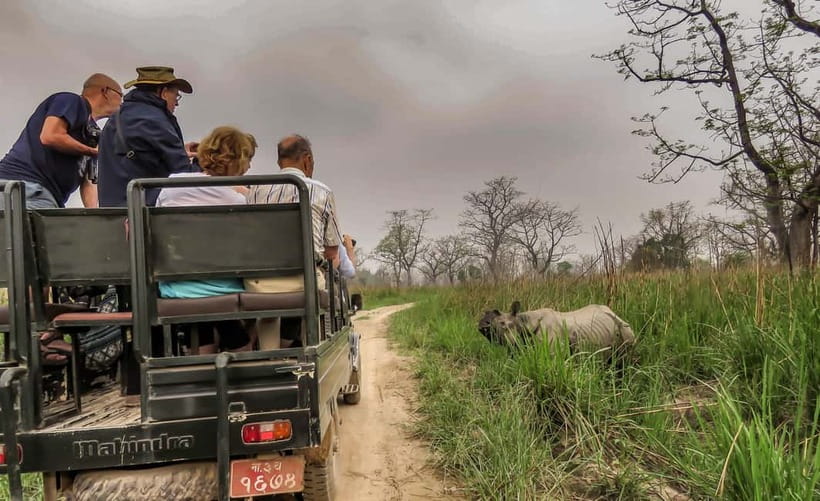
The jeep safari is described as the fastest and safest way to explore Chitwan National Park. That makes sense after the canoe and walking sections. A jeep allows you to cover more distance and reach areas that would take much longer on foot.
During the drive, you may search for rhinos, tigers, sloth bears, leopards, and deer. You might also see birds, crocodiles, lizards, or other smaller animals. The safari is about habitat as much as sightings. You are looking at the places where animals feed, rest, and move through the forest.
The strongest wildlife possibilities appear to be rhinos, crocodiles, deer, and birds. A previous three-day outing produced all of those, along with smaller creatures and large lizards. That is a useful picture of what a successful visit can look like. You may see a broad mix of animals even if the most elusive predators stay hidden.
The jeep is practical, but it does not guarantee a better view of every animal. You are still sharing the forest with creatures that do not follow a schedule. A tiger may remain out of sight, and a rhino may appear only briefly. The guide’s job is to read the area and make the most of the time available, not to produce a fixed show.
After the safari, you return for dinner and rest. It is a full day, so do not plan a busy evening afterward. The combination of canoeing, walking, and a jeep ride gives you variety, but it also makes day two the most tiring part of the tour.
What the $136 price really covers
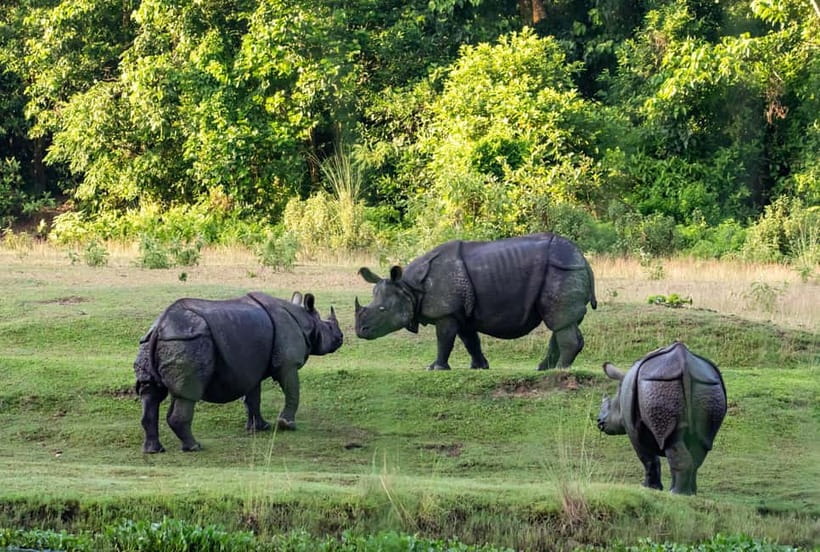
At $136 per person, the package offers reasonable value if you want transport and activities arranged together. The price includes two nights of accommodation, food at the Chitwan hotel, national park entry fees, the sunset visit, canoe trip, jungle walk, jeep safari, elephant breeding center visit, and local culture show.
Bus transport from Kathmandu or Pokhara is also part of the package. This matters because separate transfers and park fees can make an independently arranged safari harder to compare. Here, the main pieces are grouped into one booking.
The price does not cover medical expenses, personal spending, bar bills, cold drinks, water, alcohol, or food during the bus journeys. You should budget for those items. The package is not completely all-inclusive, but its main cost is easy to understand.
Accommodation details are limited. You know that two nights at a Chitwan hotel are included, but the room standard, exact hotel name, and group size are not specified. If those details matter to you, ask before paying.
The tour has a five-star rating from three submitted ratings, with praise for the bus, hotel, and local guide. One especially strong account described rhinos, crocodiles, birds, deer, large lizards, and other small animals across the three days. That matches the tour’s main strength: it gives you a full range of activities and a good chance to see varied wildlife, rather than promising one dramatic encounter.
Who will enjoy this tour most
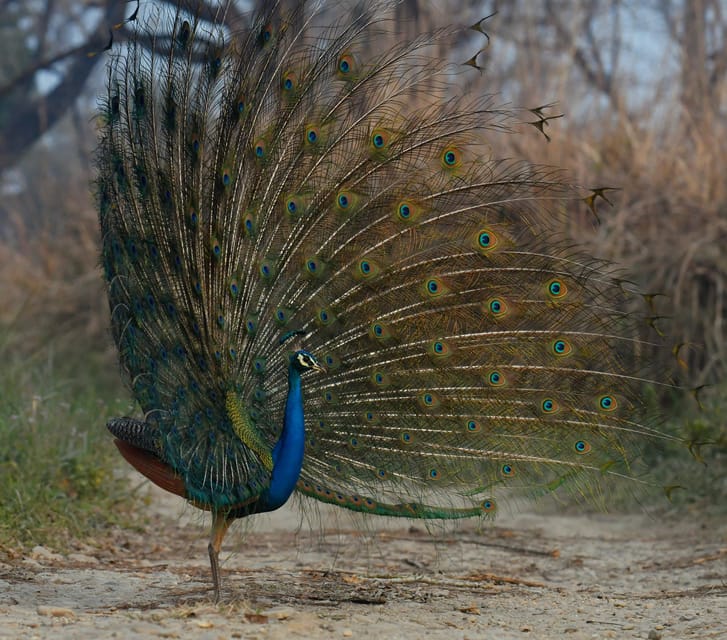
I would choose this trip if you want a short safari with the main logistics handled for you. It suits first-time visitors to Chitwan, people combining Kathmandu or Pokhara with a wildlife break, and anyone who prefers a planned mix of canoeing, walking, driving, and local culture.
It also suits you if you are happy to appreciate many kinds of wildlife. Rhinos and crocodiles may be more realistic goals than tigers. The more flexible your expectations, the more rewarding the trip is likely to feel.
Families may like the range of activities and the chance to see baby elephants, but the jungle walk and long bus ride could be tiring for young children. The tour is not suitable for pregnant women, people with back or heart problems, or wheelchair users.
It is less suitable if you want luxury accommodation, a slow private safari, or complete control over your schedule. The available information does not give a group size, and the bus transfer adds fixed travel time. You are buying convenience and variety, not a tailor-made wildlife expedition.
What to pack and how to behave in the park
Wear comfortable walking shoes. You will need them for the jungle walk, and sandals are not the best choice for an active day.
Bring a hat, camera, sunscreen, water, and insect repellent. A refillable water bottle is recommended. Biodegradable sunscreen is a considerate choice for a protected natural area.
Keep your camera ready, but do not let it distract you from safety. Maintain a safe distance from animals, never feed them, and do not touch plants. Smoking, alcohol, drugs, and littering are prohibited.
The simple rule is to act like a quiet guest in the forest. Let the guide manage the distance and direction of the wildlife encounters. You will get more from the outing by watching patiently than by trying to force a photograph.
Final call: should you book it?
Book this three-day Chitwan tour if you want a solid introduction to Nepal’s lowland wildlife at a clear price. The canoe, jungle walk, and jeep safari give you three distinct ways to explore, while the two-night stay prevents the visit from becoming a rushed day trip.
I would book it with two conditions in mind. First, accept the five-to-six-hour bus ride and bring your own food for the journey. Second, treat tigers and leopards as lucky possibilities, not promises. If rhinos, crocodiles, birds, deer, and a range of smaller animals sound worthwhile, this is a practical and well-rounded choice.
Cancellation is available up to 24 hours before the tour for a full refund, and you can reserve now and pay later. That helps if your Nepal schedule is still shifting.
FAQ
How long does the tour last?
The tour lasts three days and includes two nights of accommodation in Chitwan.
Where does the tour start?
You can start from Kathmandu or Pokhara. Tourist bus transport to Chitwan is provided, and private car or flight options are also listed.
How long is the bus journey to Chitwan?
The bus journey takes about five to six hours.
What animals might I see?
You might see one-horned rhinos, Royal Bengal tigers, sloth bears, deer, crocodiles, leopards, birds, large lizards, and other smaller animals. Sightings are not guaranteed.
What activities are included?
The package includes a canoe trip, jungle walk, jeep safari, sunset point visit, elephant breeding center visit, local culture show, and national park entry fees.
Are meals included?
Food at the Chitwan hotel is included. Meals during the bus journeys to Chitwan and back are not included. Cold drinks, water, alcohol, and bar bills also cost extra.
What should I bring?
Bring comfortable shoes, a hat, camera, sunscreen, water, and insect repellent. A refillable water bottle is recommended.
Is the tour suitable for everyone?
The tour is not suitable for pregnant women, people with back or heart problems, or wheelchair users. You should also be comfortable with walking and a long bus journey.
Just added in Pokhara
- Tandem Paragliding in Pokhara★ 4.8 · 8 reviews
- Seti George and Thrilling Suspension Bridge Tour at Pokhara★ 4.5 · 3 reviews
- Pokhara: Suspension Bridge Private Tour- 30 Min Village Walk★ 4.8 · 9 reviews
- Pokhara: Visit Best Seven Tourist Destination by Sharing Bus★ 3.4 · 10 reviews
- Pokhara: Sunrise Tour to Sarangkot★ 5.0 · 3 reviews
- Pokhara Sightseeing By Bus – Day Trip★ 3.2 · 8 reviews
- Pokhara Sightseeing By Bus: Day Trip★ 4.6 · 7 reviews
- Pokhara Sarangkot : Cable Car (Himalayas) Sunrise Tour★ 5.0 · 6 reviews
Chitwan Jungle Safaris, compared.
Jungle Towernight Stay In Chitwan National Park ,nepal-2 Nights 3 Days Package
Read our review →
3-Day Chitwan National Park Jungle Safari Tour Package with Pick Up
Read our review →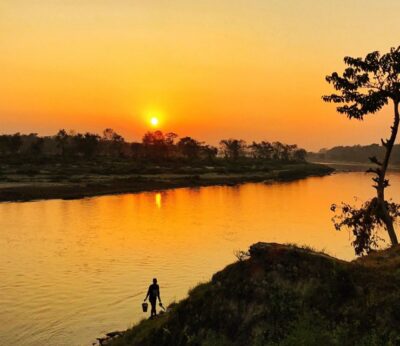
3-Day Chitwan Safari Tour with Hotel Transfers
Read our review →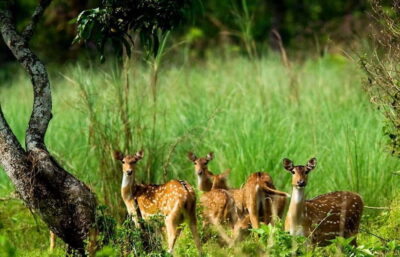
3 Nights 4 Days Chitwan National Park with Tower Night Stay
Read our review →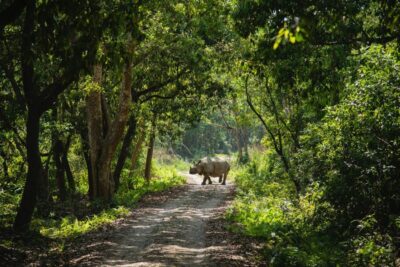
2 Days Chitwan Jungle Safari Tour from Pokhara/Kathmandu
Read our review →Browse the lists this tour appears in