
Reviewed · GHOREPANI & POON HILL TREKS
Pokhara: 4-Day Ghorepani, Poonhill & Ghandruk Village Trek
Poonhill earns its reputation at sunrise, when Annapurna and Dhaulagiri catch the first gold of the day. This four-day route gives you that famous mountain view, but it also delivers quieter rewards: terraced hillsides, rhododendron forest, waterfalls, and time in the Gurung village of Ghandruk. I especially like the round-trip design and the way the trek mixes hard climbs with easier walking.
I also like the personal guiding. Bidur receives repeated praise for patience, cultural insight, and adjusting the pace, while Krishna and Paras are also named as excellent guides. The main thing to consider is the physical effort: Ulleri and the early climb to Poonhill are not casual strolls, and the standard option does not include meals or a porter.
Key points at a glance
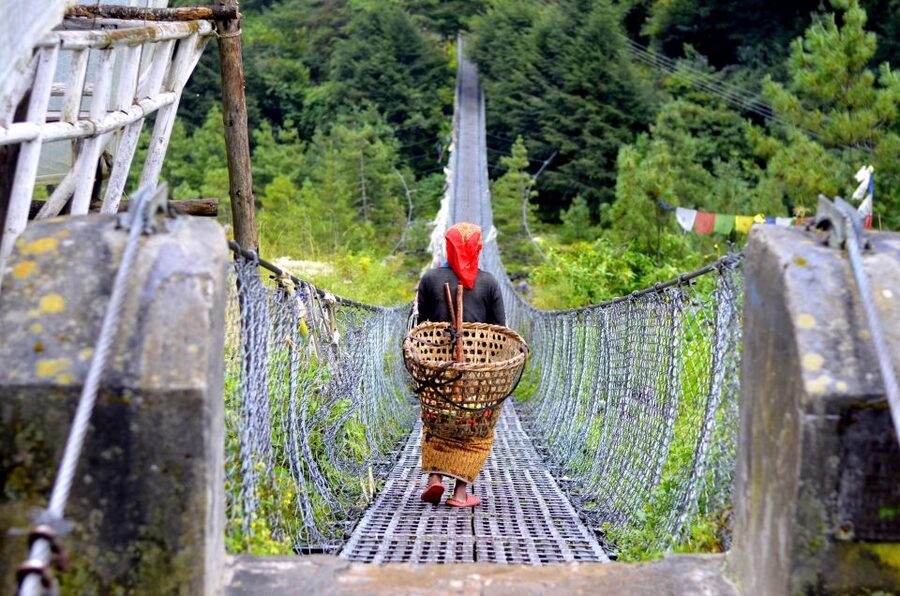
- Sunrise at 3,210 meters: Reach Poonhill early for views toward the Annapurna and Dhaulagiri ranges.
- A proper four-day circuit: Start and finish with road transport from Pokhara, rather than retracing the entire route on foot.
- Ghandruk adds cultural depth: Spend time in a traditional Gurung village with mountain views and local encounters.
- Guides make a difference: Bidur, Krishna, and Paras are specifically praised for care, information, and attention to pace.
- Choose your package carefully: Premium includes meals and a porter, while the standard option charges for meals and makes a porter optional.
- Private-group format: Pickup is available from any Lakeside Pokhara hotel or Pokhara Airport.
Why this short trek works so well
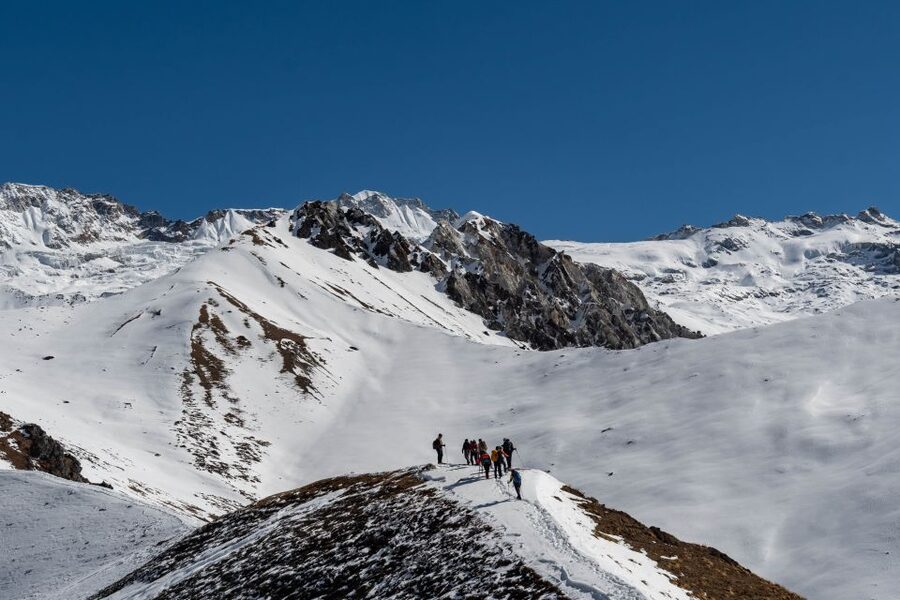
The Ghorepani, Poonhill, and Ghandruk route is one of Nepal’s best short introductions to mountain trekking. You do not need to commit to a long Himalayan expedition, yet you still get forest paths, stone stairways, village lodges, high viewpoints, and serious mountain scenery.
I like the balance. Day one and day two build your legs gradually, day three gives you the big sunrise reward, and day four brings you back to Pokhara. You get enough variety to avoid the feeling of simply walking up and down the same trail.
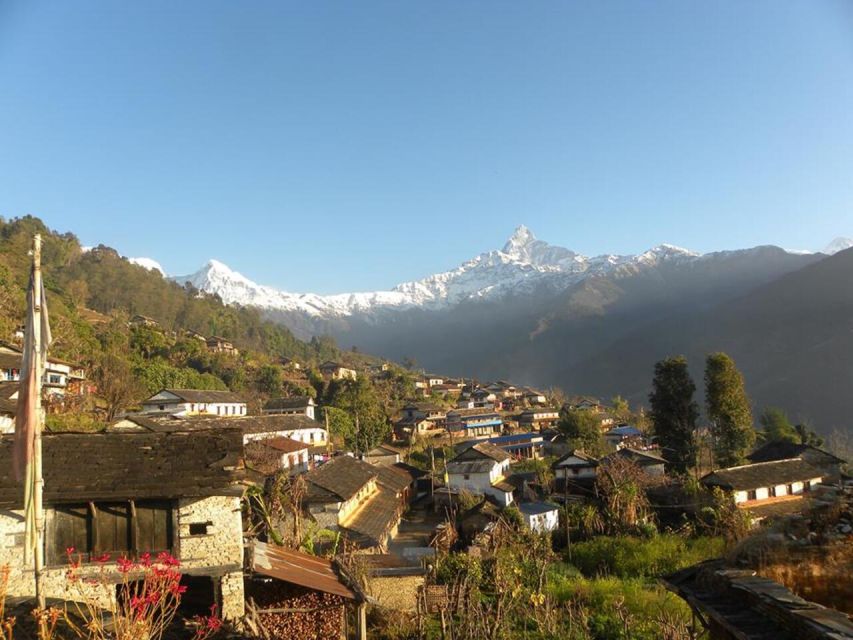
The route also gives you more than mountain scenery. Ulleri shows you life among terraced fields. Ghorepani is a high stopping point shaped by trekking traffic. Ghandruk offers a stronger sense of village life and Gurung culture. The result feels more rounded than a quick drive to a viewpoint.
Still, four days means a fairly brisk schedule. You will spend several hours walking on some days, and the route includes steep climbs and descents. If you want long afternoons to sit in each village, this itinerary may feel hurried. If you want a compact trip with strong scenery, it makes good use of your time.
Other short treks out of Pokhara:
- Poon hill Trek 3 days
★ 5.0 · 176 reviews - Pokhara: 4-Day Ghorepani, Poonhill & Ghandruk Mountain Trek
★ 5.0 · 132 reviews - Ghorepani – Poon Hill Trek 3N-4D
★ 5.0 · 125 reviews
Day one: Pokhara to Nayapool, then the climb to Ulleri
The trip begins with a drive from Pokhara to Nayapool, taking about an hour and a half. Pickup is offered from any hotel in Lakeside Pokhara or from Pokhara Airport, which keeps the morning simple if you are arriving by air.
From Nayapool, you start walking toward Ulleri at about 1,960 meters. The route rises through terraced fields and rhododendron forest, with the scenery changing as you gain height. The terraces give you a close look at how communities use the steep hillsides, while the forest provides shade and a quieter setting.
Ulleri is a good first-night stop because it gives the trek a clear sense of progress. You leave the road behind and settle into a mountain village rather than rushing straight toward the highest viewpoint.
The climb is the main issue on this day. The ascent can feel demanding, especially if you have just arrived in Nepal or have not been walking regularly. A guide who adjusts the pace is useful here. Bidur is praised for doing exactly that, and for choosing sensible places to rest.
Your accommodation is in a tourist-standard lodge. That means you should expect practical mountain lodging rather than hotel comfort. The value comes from location and convenience: you sleep along the route, avoid returning to Pokhara each evening, and wake ready to continue.
Day two: Forest paths and waterfalls on the way to Ghorepani
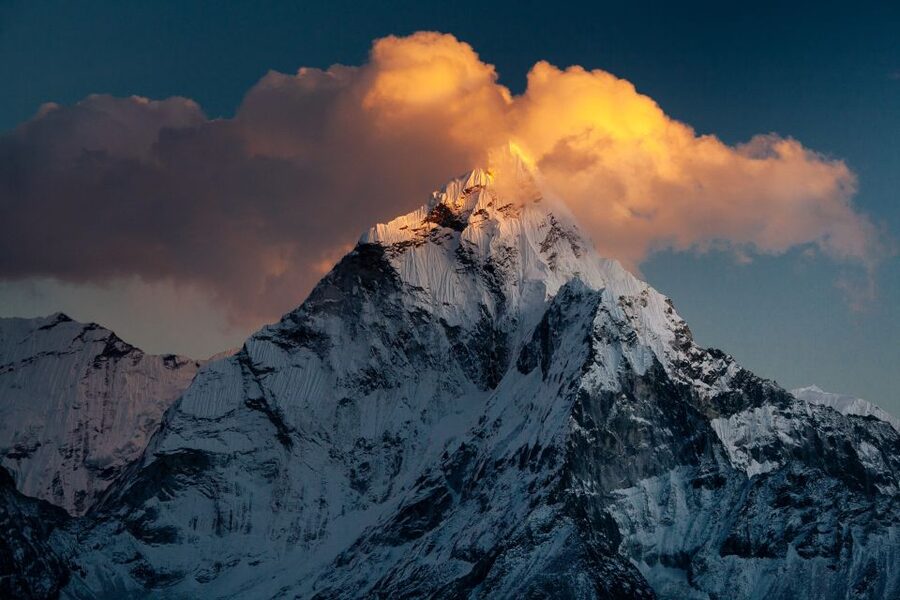
Day two takes you from Ulleri to Ghorepani at about 2,850 meters. The route continues through forest, with rhododendrons, waterfalls, and changing mountain views adding interest to the climb.
This is one of the most scenic sections because the trail is not all about open mountain panoramas. Forest walking gives the journey texture. You may spend one stretch under trees, then come upon a waterfall or a more open view toward the surrounding hills.
Ghorepani is a lively trekking village and an important staging point for Poonhill. Its altitude is high enough that the air and effort become more noticeable, but it is not the final summit of the trip. The purpose of the night here is practical: you get close to the viewpoint so that the sunrise walk is manageable.
This day can feel like the hardest continuous walking of the trip for some people. The route climbs, and altitude adds another factor. You should not judge the day only by distance. Steep steps and repeated uphill sections can tire you more than a longer but flatter walk.
A good guide helps with pacing, breaks, and local information. The strongest praise for Bidur focuses on his attention to individual needs, while Krishna is noted for explaining the peaks and helping at stopping points. You can ask when booking if one of these guides is available, but guide requests cannot be assumed unless confirmed.
Day three: Poonhill sunrise, then down to Ghandruk
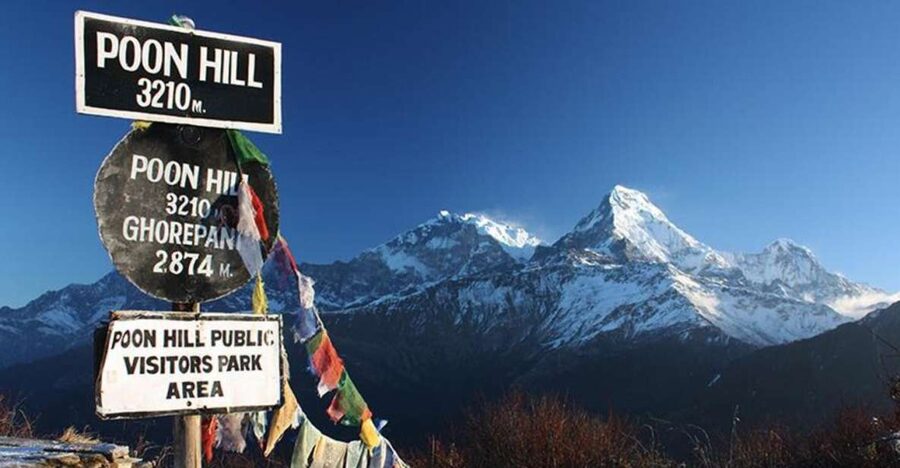
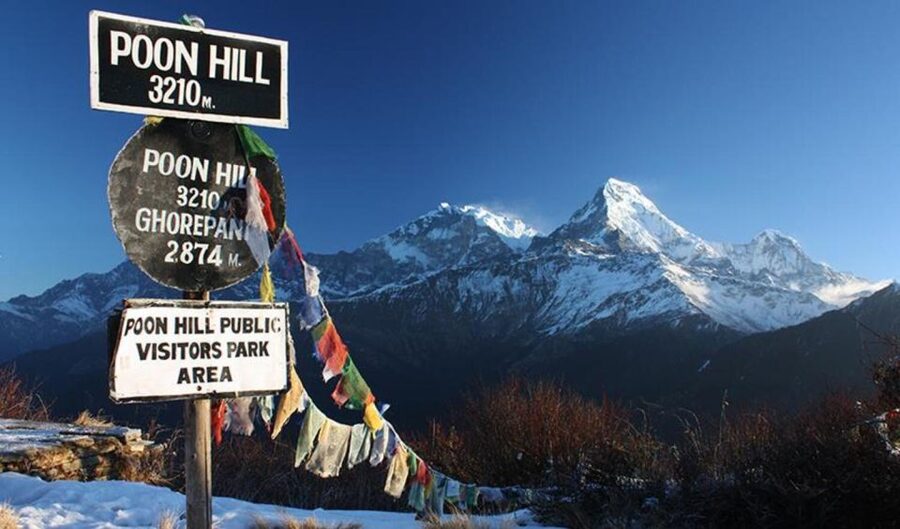
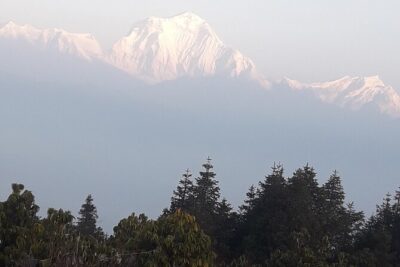
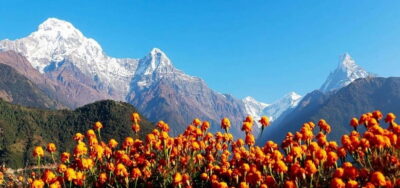
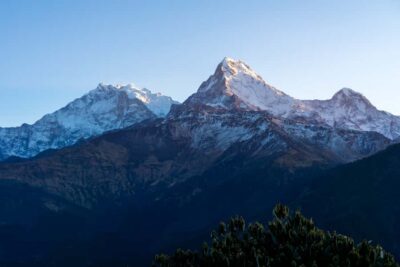
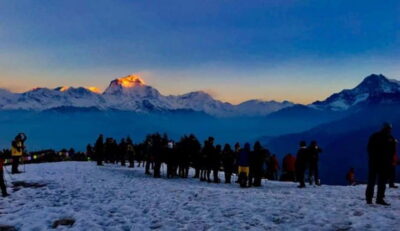
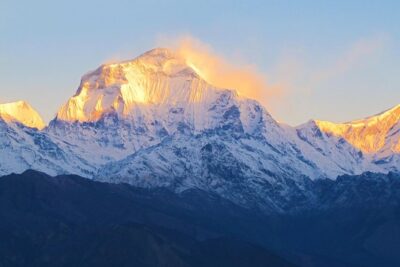
The early morning hike from Ghorepani to Poonhill is the signature part of the trek. At 3,210 meters, the viewpoint looks across the Annapurna and Dhaulagiri ranges. Arriving before sunrise lets you watch the mountains shift from dark outlines to a golden morning display.
This is the moment that makes the early alarm worthwhile. The view is not only about seeing snow-covered peaks. It is about watching the light change across a huge sweep of mountains while you stand above the surrounding hills.
You should bring warm layers for this part. The information provided does not specify equipment rental or temperatures, so you need to prepare for a cold early start yourself. The tour can provide a trekking pole or trekking bag if required, but you should confirm what is available before departure.
After Poonhill, you descend toward Ghandruk, which sits at about 1,940 meters. The change in altitude is welcome, and the walk shifts from a pre-dawn viewpoint effort to a longer descent through mountain scenery.
Ghandruk is a traditional Gurung village with cultural importance and broad mountain views. This is where the trip gains a more human focus. You can spend time seeing the village setting, meeting local people, and learning about culture, religion, and language through your guide.
The descent is not automatically easy. Downhill walking can be tough on knees, especially after the early climb. Take your time and use a trekking pole if one is supplied. The day combines the highest point of the trip with a substantial drop, so it is a full day rather than a quick sightseeing stop.
A few more things to do in Pokhara worth a look
- Trekking in Annapurna/Langtang/Everest/Upper Mustang regions
★ 5.0 · 161 reviews - Pokhara: Annapurna Foothills Day Hike with Transfers
★ 5.0 · 100 reviews - Kathmandu/Pokhara: 5-Day Annapurna Base Camp (ABC) Trek
★ 4.9 · 72 reviews - From Pokhara: 3-Day Ghorepani Poon Hill Trek with Guide
★ 4.9 · 68 reviews
Day four: Ghandruk to Nayapool and back to Pokhara
The final day takes you from Ghandruk to Nayapool, followed by a drive back to Pokhara. It is a satisfying finish because you return by a different pattern of travel instead of reversing every step from the previous days.
The descent gives you one last look at the hills, villages, and paths that shaped the trek. It also lets you ease out of mountain walking before returning to the city. The drive back to Pokhara closes the circuit and makes the four-day schedule practical.
By this point, you will probably feel both tired and pleased with the route. You have had the major viewpoint, a high village stay, a cultural stop, and several types of scenery without needing a long expedition.
The return arrangement includes round-trip transportation and hotel drop-off. That matters after a day on your feet. You do not need to arrange a separate vehicle back to Pokhara, and you can be taken to your hotel or the airport according to the pickup arrangement.
What the $172 price really covers
At $172 per person, the trek offers useful inclusions, but you need to pay attention to the package choice. Both options include private tourist-standard lodge accommodation, transport, government permits, TIMS, taxes, a registered trekking guide, first-aid supplies, and luggage storage in Pokhara during the trek.
The trip also provides guide-related costs such as food, accommodation, insurance, salary, transport, and equipment. A duffel bag, trekking pole, or trekking bag may be available if required. Those practical details reduce the amount of gear and paperwork you need to arrange yourself.
The important difference is food and porter service. On the premium, full-board option, breakfast, lunch, dinner, and a porter are included. On the standard option, meals are available for purchase and a porter costs an additional $15 per day.
That can change the real cost. If you want a porter and do not want to buy every meal separately, compare the premium total with the standard price before booking. The cheaper headline price may not be the cheaper final price for your style of trekking.
For a private four-day trip with transport, permits, a guide, accommodation, and the possibility of porter support, the price looks strong. It is especially useful if you value having arrangements handled in advance. It is less appealing if you prefer carrying your own bag, buying food as you go, and arranging transport independently.
The guide can shape the whole experience
The route is beautiful on its own, but the guide affects how much you understand and how comfortable you feel. Bidur receives the strongest praise in the supplied feedback. He is described as courteous, attentive, helpful with pacing, and able to explain mountains as well as Nepalese culture, religion, and language.
That combination matters. A guide who only leads the way can get you from Ulleri to Ghorepani. A guide who explains the places around you helps turn the walk into a more meaningful trip.
Krishna is also singled out for information about the peaks and for careful attention during stops. Paras is praised for being friendly and ready to help. You can request a preferred guide, but ask the operator to confirm availability rather than assuming a particular person will lead your group.
The private-group format is another advantage. You are not tied to the pace of a large mixed group, and the guide can respond to your needs more easily. One person described the guide and porter becoming trekking friends, which says something about the personal nature of a small private trip.
Who should book this trek
I would recommend this route to you if you want a first Himalayan trek with a clear finish line and a strong mix of nature and culture. It suits people who want mountain views but do not have time for a much longer route.
It is also a good match if you prefer a private group and want help with permits, transport, lodge arrangements, and luggage storage. The English-speaking guide gives you a practical link to the places you pass through.
You should be comfortable with sustained uphill and downhill walking. The trek is not described as technically difficult, but that does not mean it is effortless. Ulleri, Ghorepani, and the early Poonhill climb require stamina.
The route may not suit you if you want a relaxed schedule with short walking days, private hotel rooms, or city-level comforts. Tourist-standard lodges are included, but this remains a mountain trek. You should also decide in advance if you want the premium food and porter package.
Booking details worth checking before you go
The activity offers free cancellation up to 24 hours in advance for a full refund, and you can reserve now and pay later. Starting times depend on availability, so confirm the departure details before making other plans.
Pickup is available at any hotel in Lakeside Pokhara or at Pokhara Airport. The provider says a representative will meet you in the hotel lobby or airport, which is helpful if you do not know the area well.
English is the listed guide language, and the group is private. Government permits, TIMS, and taxes are covered, so you should not need to handle those arrangements separately.
Ask three simple questions before you finalize the booking:
- Is the premium or standard option being booked?
- Are meals and porter service included in the price you see?
- Is your preferred guide, such as Bidur, Krishna, or Paras, available?
Those answers will tell you more about the actual value than the base price alone.
Should you book the Ghorepani, Poonhill, and Ghandruk trek?
Book it if you want a compact Nepal trek with a famous sunrise, varied scenery, village life, and a private guide. The four-day plan is efficient, the route forms a satisfying circuit, and the combination of Poonhill and Ghandruk gives you both mountain drama and cultural interest.
I would give extra weight to the guide choice. Bidur is the clearest recommendation if he is available, while Krishna and Paras also have strong praise for care and helpfulness. Confirm that request early.
Skip it if you dislike early starts, steep walking, basic lodge accommodation, or extra costs for meals and a porter on the standard plan. For everyone else, this is a well-balanced introduction to the Annapurna region at a sensible price, provided you choose the package that matches your needs.
FAQ
How long is the Ghorepani, Poonhill, and Ghandruk trek?
The trek lasts four days, including transport from Pokhara to Nayapool at the start and the return drive to Pokhara at the end.
Where does the trek start?
The trip begins with a drive from Pokhara to Nayapool, which takes about one and a half hours. From Nayapool, you trek to Ulleri.
What is the highest point on the route?
Poonhill is the highest listed point, at 3,210 meters.
Is the Poonhill sunrise included?
Yes. The itinerary includes an early morning hike to Poonhill for sunrise views of the Annapurna and Dhaulagiri mountain ranges.
Where do you stay during the trek?
Accommodation is provided in tourist-standard lodges in the mountain villages along the route.
Are meals included?
Meals are included on the premium full-board option. On the standard option, meals are available to purchase separately.
Is a porter included?
A porter is included on the premium full-board option. On the standard option, porter service is optional and costs $15 per day.
Is transportation included?
Yes. Round-trip transportation is included, along with pickup and drop-off from any hotel in Lakeside Pokhara or Pokhara Airport.
Can you cancel the booking?
You can cancel up to 24 hours in advance for a full refund. The activity also allows you to reserve now and pay later.
Just added in Pokhara
- Tandem Paragliding in Pokhara★ 4.8 · 8 reviews
- Seti George and Thrilling Suspension Bridge Tour at Pokhara★ 4.5 · 3 reviews
- Pokhara: Suspension Bridge Private Tour- 30 Min Village Walk★ 4.8 · 9 reviews
- Pokhara: Visit Best Seven Tourist Destination by Sharing Bus★ 3.4 · 10 reviews
- Pokhara: Sunrise Tour to Sarangkot★ 5.0 · 3 reviews
- Pokhara Sightseeing By Bus: Day Trip★ 4.6 · 7 reviews
- Pokhara Sightseeing By Bus – Day Trip★ 3.2 · 8 reviews
- Pokhara Sarangkot : Cable Car (Himalayas) Sunrise Tour★ 5.0 · 6 reviews
Ghorepani & Poon Hill Treks, compared.
4-Day Ghorepani, Poonhill & Ghandruk Mountain Trek
Read our review →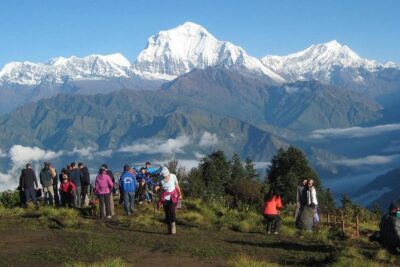
Browse the lists this tour appears in