
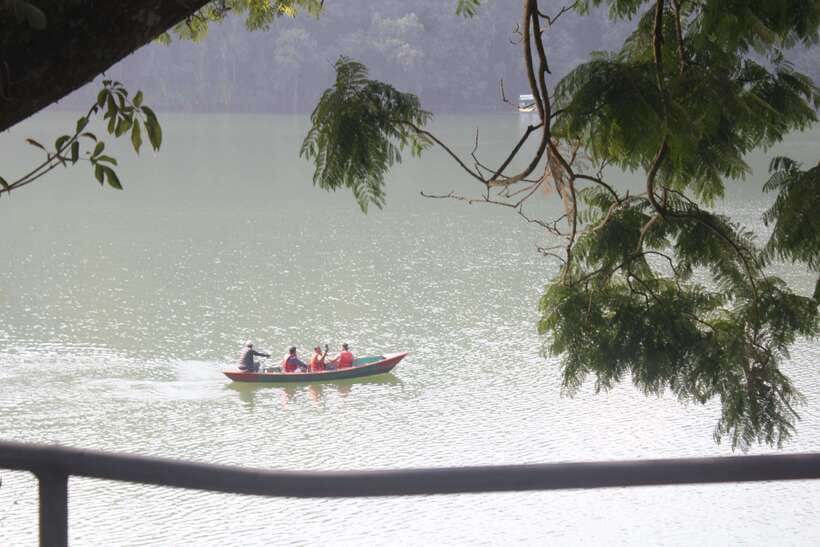
Reviewed · TOURS IN POKHARA
Pokhara: Full-Day Sharing Bus Tour on 7 Iconic Destination
Pokhara’s best sightseeing is scattered across the valley, and this $12 shared bus tour gathers the main sights into one busy day. You’ll see a giant Shiva statue, a hilltop peace stupa, waterfalls, caves, temples, and the Seti River without hiring a taxi for every stop.
I like the low price and the chance to meet a mix of Nepali, Indian, and international visitors. I also like the practical route: it reaches places that are awkward to connect by bicycle or on foot. The catch is that this is mostly transport with timed stops, not a traditional guided tour. You may need to read up before you go.
The advertised duration is six hours, but allow closer to eight if the day runs long. Pickup is offered from hotels in Pokhara’s Lakeside area, and the bus returns to the Fewa Lake area. The trip is not suited to wheelchair users, people with back problems, or anyone uncomfortable in tight cave passages.
Key points at a glance
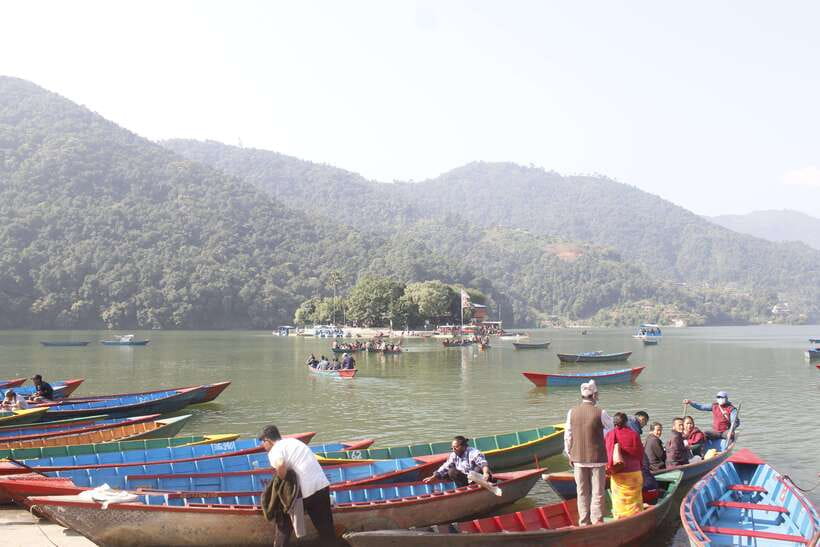
- Pumdikot Shiva Idol: Begin above Pokhara with a large Shiva statue and broad Annapurna views when the weather is clear.
- World Peace Stupa: Reach the hilltop Buddhist monument before returning toward the city and valley sights.
- Three cave experiences: Gupteswor Cave, Mahendra Cave, and Bat Cave each offer a different underground visit.
- Seti River in the city: See the river squeeze through a narrow gorge and cut through Pokhara below street level.
- Self-guided sightseeing: The driver and coordinator handle the route, while you explore each stop on your own timetable.
- Strong value at $12: Hotel pickup, shared transport, and a full circuit cost far less than arranging separate rides.
Pokhara is easy to enjoy beside Fewa Lake, but its famous sights sit well beyond the lakeside cafés. The Shiva statue at Pumdikot is on one side of town, the caves are north of the center, and Bindabasini Temple sits in another direction. This bus tour solves the transport puzzle in one sweep.
The title promises seven iconic destinations, while the route and descriptions cover more than seven named stops. In practice, you should think of it as a broad Pokhara sightseeing circuit rather than a tightly counted list. The exact order can vary, and some days run longer than the stated six hours.
What the $12 price really buys you
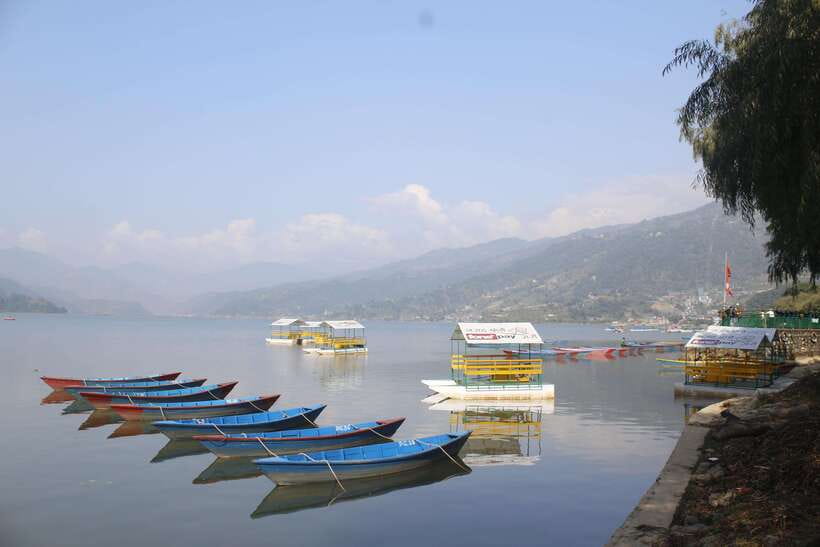
At $12 per person, this is one of the cheapest ways to see Pokhara’s major sights in a single day. The fee covers pickup and drop-off within the Lakeside area and shared sightseeing by bus. It does not cover monument entry, food, or drinks.
The listed entry cost is about $4, though you should carry small cash because several stops may charge separately or be included in that rough total. Add lunch, water, and any drinks to your budget. Even after those extras, the day remains good value if you do not have your own motorbike or want to negotiate several taxi rides.
The saving comes with a simple bus and a fixed schedule. Air conditioning is not guaranteed. On hot days, the vehicle has sometimes been upgraded to an air-conditioned bus, but you should not book on the assumption that it will happen. Carry water, sunscreen, and a light layer for changing conditions.
A few more things to do in Pokhara worth a look
- Full-Day Tibetan Cultural Tour to Tibetan Settlements Pokhara
★ 5.0 · 184 reviews - Pokhara: Full-Day Private Tour on 7 Iconic Destination
★ 4.8 · 108 reviews - Pokhara: Sarangkot Sunrise with Half or Full-Day City Tour
★ 4.8 · 100 reviews
Pickup from Lakeside and the shared-bus rhythm
Pickup is available from hotels within Pokhara’s Lakeside area, using your name on a card. You should confirm the meeting time in advance, ideally through the contact number or WhatsApp details provided after booking. One pickup did not arrive at the expected time, and the passenger had to call the company, so a little follow-up is sensible.
Once aboard, expect a local-style group outing rather than a private excursion. The mix can include Nepali visitors, people from India, and international visitors. That gives the day a more local feel and can be a pleasant way to meet people, especially if you are traveling alone.
The bus waits while you visit each site, then moves on. You need to watch the agreed return time. This works well if you like structure and prefer to explore independently, but it is less suitable if you want to linger for photographs or receive a full explanation at every monument.
Pumdikot Shiva Idol and the first mountain views
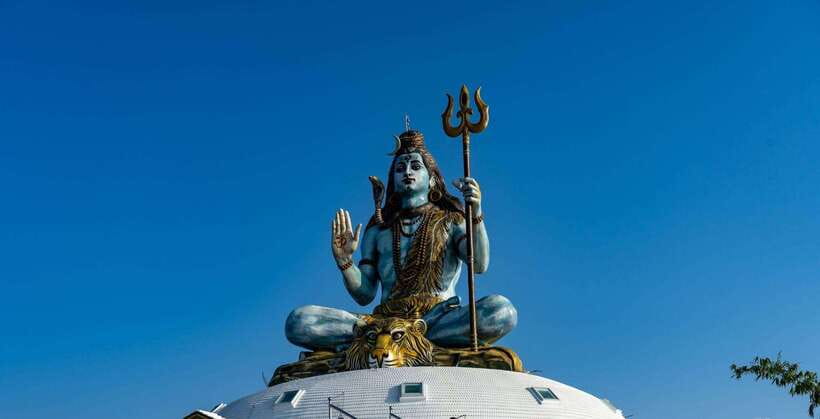
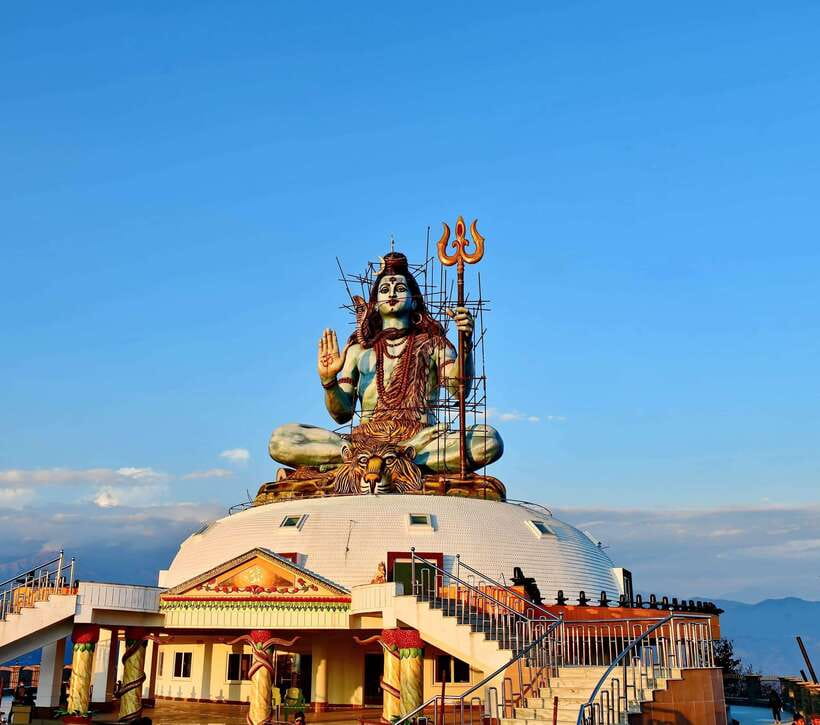
The first major stop is the Shiva Idol at Pumdikot, a large religious statue on a hill above Pokhara. The approach gives you a sense of how spread out the city is, and the higher position can offer excellent views toward the Annapurna range.
This is one of the strongest photo stops on the route. Clear mornings give you the best chance of seeing the mountains, while cloud and rain can hide them. The shrine also adds a religious dimension that you would miss if you only stayed around Fewa Lake.
Allow time for steps, open viewpoints, and the temple area. The stop may feel more like a scenic religious site than a museum visit, so read the information beforehand if you want more context. The attraction is the combination of the enormous statue, the hilltop setting, and the mountain view.
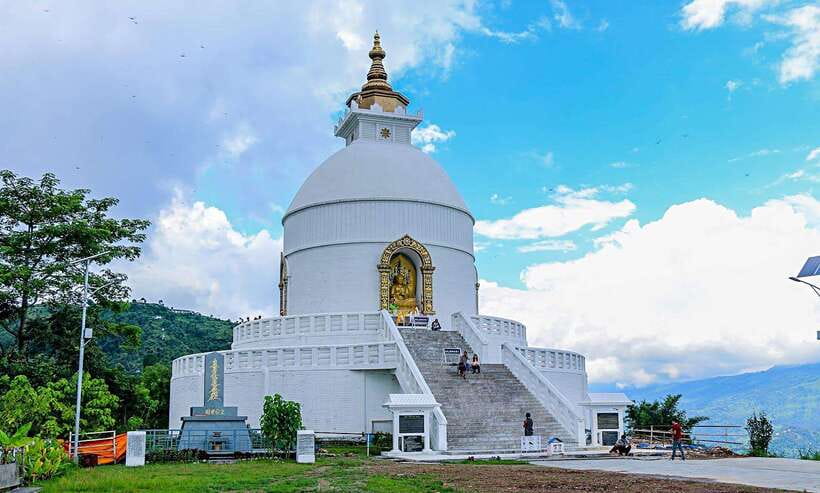
World Peace Stupa above Pokhara
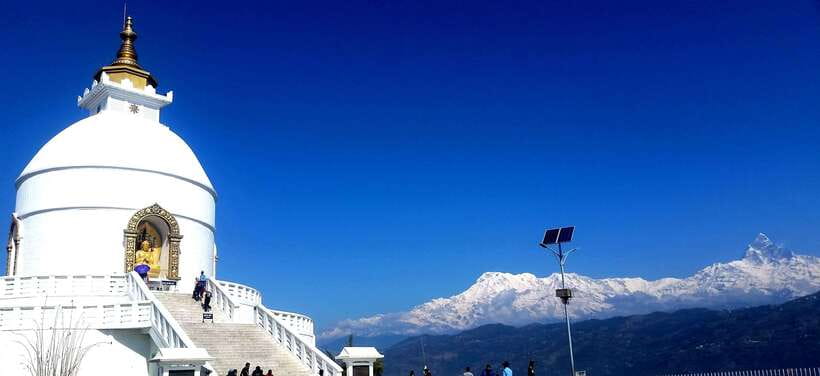
The World Peace Stupa is another hilltop stop, with a calmer feel and wide views over the lake and valley. Its white Buddhist monument is designed for quiet reflection, but the setting is also one of Pokhara’s most useful viewpoints.
You will have time to walk around, take photographs, and look down toward Fewa Lake. The stupa is more rewarding when the air is clear. On a cloudy day, the visit still has atmosphere, but the long views may be limited.
Because this is a shared circuit, you will not normally have a private guide explaining Buddhist symbols or the monument’s background. I suggest reading a short introduction before leaving your hotel. That small bit of preparation makes the stop more meaningful and helps you notice details beyond the view.
Same base, a different kind of day:
- ZipFlyer Nepal – The World’s Steepest Zip-line
★ 5.0 · 608 reviews - Bungee Pokhara by HighGround Adventures
★ 5.0 · 366 reviews - From Pokhara: Sarangkot Sunrise Himalayas Tour
★ 4.7 · 218 reviews - ATV Adventure Tour in Pokhara, Nepal
★ 5.0 · 194 reviews
Devi’s Fall and the changing flow of water
Devi’s Fall, also called David Falls in some descriptions, is one of Pokhara’s best-known water sights. Water drops through a rocky channel before disappearing underground, creating a compact but forceful display.
The experience changes with weather and season. Heavy rain can make the falls louder and more dramatic, while drier conditions may produce a smaller flow. One stop was closed during a previous outing, so it is wise to treat the exact viewing conditions as changeable rather than guaranteed.
This is usually a short visit, with time to see the water and take photographs before returning to the bus. Stay behind barriers and use care on wet surfaces. The route packs in many sights, so you will not have a long nature walk here.
Gupteswor Cave and its sacred underground setting
Across from Devi’s Fall is Gupteswor Cave, an underground shrine with a strong connection to Hindu worship. The cave is darker, tighter, and more devotional than a typical tourist attraction. You may see religious images and a passage leading toward the area beneath the falls.
This stop is useful because it connects the water above ground with the limestone passages below. The cave is not ideal for anyone with claustrophobia, and uneven surfaces may be difficult if you have back or mobility problems. Wear shoes with a firm grip.
The tour description sometimes calls this Mahadev Cave, while other parts refer to Gupteswor Cave. Expect the sacred cave near Devi’s Fall, and check the day’s instructions if the naming causes confusion. Entry is not included in the tour price.
Mahendra Cave and Bat Cave
Mahendra Cave is the most classic cave visit on the circuit. Inside, you can see stalactites and stalagmites, with a cool, dim atmosphere that offers relief from a hot Pokhara day. The passage gives you a direct look at the region’s limestone formations rather than another viewpoint or temple.
Next comes Bat Cave, also called Chamere Cave. Its appeal is the chance to see where bats live and to learn about these small cave creatures. Sightings are not assured. On one outing, there were no bats visible, so you should treat the cave as an underground walk rather than promise yourself a wildlife encounter.
These visits are among the most distinctive parts of the day, but they also require the most care. The ground can be uneven, the passages can feel tight, and lighting may be limited. Comfortable shoes are essential. If enclosed spaces make you uneasy, the caves may be the reason to choose a different Pokhara outing.
The Seti River through Pokhara
The Seti River gives the bus circuit a useful change of pace. Instead of another formal monument, you stop near the river and see how its pale water cuts through the city in a narrow channel.
The river’s force is easy to underestimate from the streets. In places, it runs through a deep gorge, and the water appears far below the surrounding buildings. The stop helps explain Pokhara’s geography and shows you a part of daily city life that is easy to miss when your day is limited to temples and viewpoints.
This is not a long riverside hike. You will have a set amount of time to look, photograph, and return to the bus. Keep an eye on the group because the schedule depends on everyone being ready to move on.
Bindabasini Temple and a quieter final visit
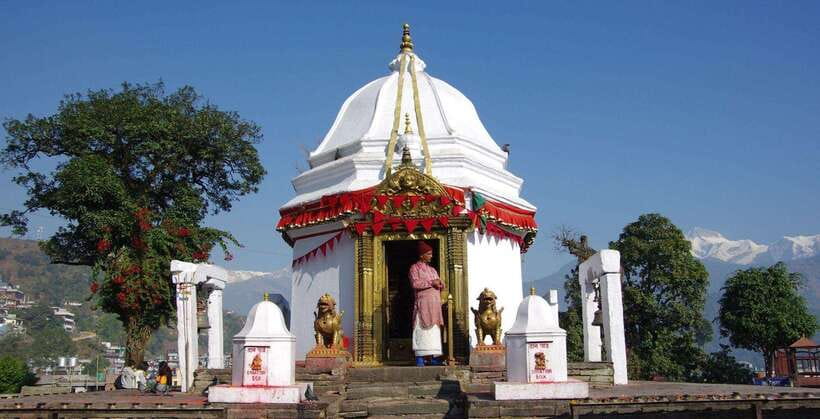
Bindabasini Temple is one of Pokhara’s important Hindu temples and a good late-day stop. Its white structures and carefully maintained grounds create a more peaceful mood after the caves, viewpoints, and road travel.
You can walk around the temple area, observe worshippers, and take in the design. Dress respectfully and follow any signs about where visitors may enter. As with the other religious sites, a little advance reading helps you understand what you are seeing without relying on a guide at the site.
The temple is also a reminder that this tour is not only a checklist of attractions. Pokhara’s identity comes from the meeting of mountain scenery, Hindu and Buddhist devotion, rivers, and ordinary city life. Bindabasini brings that cultural side into the route.
Returning to Fewa Lake
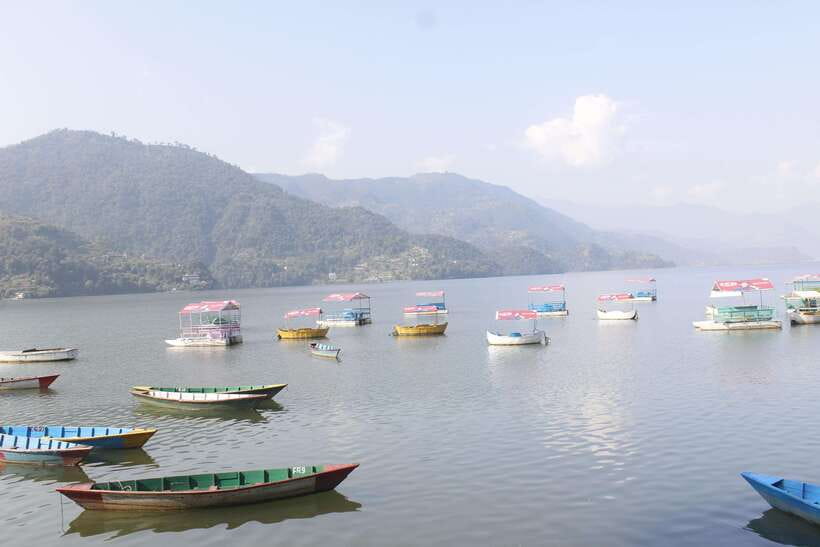
At the end of the circuit, the bus returns toward Fewa Lake. You can get off near the lakeside area and continue exploring on your own, or return to your hotel on the same bus at the scheduled time.
This final arrangement is useful if you want dinner, a lakeside walk, or an evening boat ride. It also means the tour does not force you to ride back to your hotel if you would rather stay in the center. Confirm the final drop-off plan with the coordinator so you know where the bus will stop.
Is it really a guided tour?
This is the most important point to understand before booking. The experience is described as being with a guide, but the practical setup is mainly a shared bus with a coordinator, driver, and fixed stop times. At the attractions, you generally explore independently and return to the bus when instructed.
That is not a flaw if you want affordable transport and freedom at each site. In fact, several visitors preferred the clear schedule and self-guided format. It becomes a drawback if you expect detailed commentary, historical explanations, or someone walking with you through each cave and temple.
You can make the day work better by saving short notes about Pumdikot, the World Peace Stupa, Devi’s Fall, and the caves before departure. That gives you the background while keeping the low-cost format.
Timing, comfort, and who should book
The official duration is six hours, but some outings take about eight hours. Traffic, rain, group size, and time at each stop can all affect the finish. Do not schedule a flight, long-distance bus, or fixed appointment immediately afterward.
The bus may be basic and may not have air conditioning. The experience has still worked well in hot weather when an air-conditioned vehicle was arranged, but conditions are not fixed. Pack water, sunscreen, comfortable shoes, and a camera.
I would choose this trip if you are short on time, watching your budget, traveling without your own transport, or happy to meet people and explore on your own. Families have completed it with young children, though the caves and long day may tire them. I would choose a private car and guide instead if you need flexible timing, detailed interpretation, or easier access.
Cancellation and practical limits
You can cancel up to 24 hours before departure for a full refund, and the reservation can be held with payment later. Pickup is limited to hotels in the Lakeside area.
Smoking, alcohol, and drugs are not allowed. People with back problems, claustrophobia, or wheelchair users should avoid this outing because of the road travel, uneven cave access, and enclosed passages.
Should you book the Pokhara bus tour?
Book it if your goal is to cover a lot of Pokhara for very little money. The route reaches the Shiva Idol, World Peace Stupa, waterfalls, caves, Seti River, and Bindabasini Temple in one organized day. The friendly shared setting is a real bonus for solo visitors.
Do not book it expecting a private guide or slow sightseeing. You will have fixed time at each place, entry fees and meals cost extra, and the day may last longer than six hours. For an independent-minded visitor who values access over luxury, this is a smart budget choice. For detailed cultural explanation or comfort, spend more on a private tour.
FAQ
How much does the Pokhara shared bus tour cost?
The tour costs $12 per person. Monument entry fees are not included and are listed at approximately $4, while food and drinks are also extra.
How long does the tour last?
The stated duration is six hours. Some outings have taken closer to eight hours, so allow extra time when planning the rest of your day.
Where does hotel pickup take place?
Pickup is available from hotels within Pokhara’s Lakeside area. The pickup uses your name on a card.
Is the tour fully guided?
No. The bus has a driver and tour coordination, but you generally explore each attraction independently and return at the assigned time. It is best treated as a self-guided sightseeing circuit.
Which attractions are included?
The route includes the Pumdikot Shiva Idol, World Peace Stupa, Devi’s Fall, Gupteswor or Mahadev Cave, Mahendra Cave, Bat Cave, the Seti River, and Bindabasini Temple. The exact order may vary.
Are entry fees included?
No. Entry fees are separate, with the total listed at approximately $4.
What should I bring?
Bring comfortable shoes, a camera, sunscreen, and water. Firm footwear is especially useful for the caves.
Who should avoid this activity?
The tour is not suitable for people with back problems, claustrophobia, or wheelchair users. Smoking, alcohol, and drugs are not allowed.
Just added in Pokhara
- Tandem Paragliding in Pokhara★ 4.8 · 8 reviews
- Seti George and Thrilling Suspension Bridge Tour at Pokhara★ 4.5 · 3 reviews
- Pokhara: Suspension Bridge Private Tour- 30 Min Village Walk★ 4.8 · 9 reviews
- Pokhara: Visit Best Seven Tourist Destination by Sharing Bus★ 3.4 · 10 reviews
- Pokhara: Sunrise Tour to Sarangkot★ 5.0 · 3 reviews
- Pokhara Sightseeing By Bus: Day Trip★ 4.6 · 7 reviews
- Pokhara Sightseeing By Bus – Day Trip★ 3.2 · 8 reviews
- Pokhara Sarangkot : Cable Car (Himalayas) Sunrise Tour★ 5.0 · 6 reviews
Tours in Pokhara, compared.
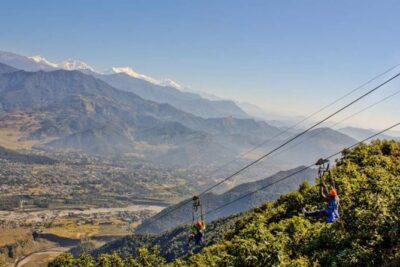
ZipFlyer Nepal – The World’s Steepest Zip-line
Read our review →
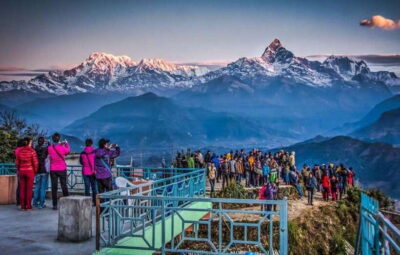

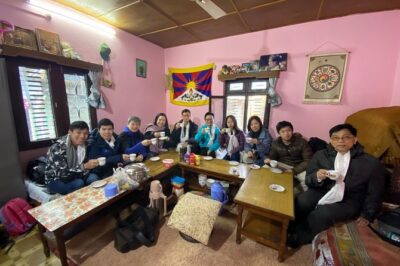
Full-Day Tibetan Cultural Tour to Tibetan Settlements Pokhara
Read our review →
Trekking in Annapurna/Langtang/Everest/Upper Mustang regions
Read our review →
4-Day Ghorepani, Poonhill & Ghandruk Mountain Trek
Read our review →Browse the lists this tour appears in