
Reviewed · NAGARKOT SUNRISE TOURS
Essence of Nepal: 4-Day Tour Kathmandu, Nagarkot & Pokhara
Kathmandu’s ancient temples, Nagarkot’s mountain sunsets, and Pokhara’s lakeside views make this a smart first taste of Nepal. You move quickly, but the route gives you a good mix of culture and scenery without demanding long hikes.
I like the scenic flight to Pokhara, which saves road time and adds a memorable mountain view. I also like the practical design: one night each in Kathmandu, Nagarkot, and Pokhara, with a guide, driver, breakfast, and transport handled. The drawback is the pace. Four days means early starts, several major sights each day, and a long bus ride back to Kathmandu.
Key points to know before booking
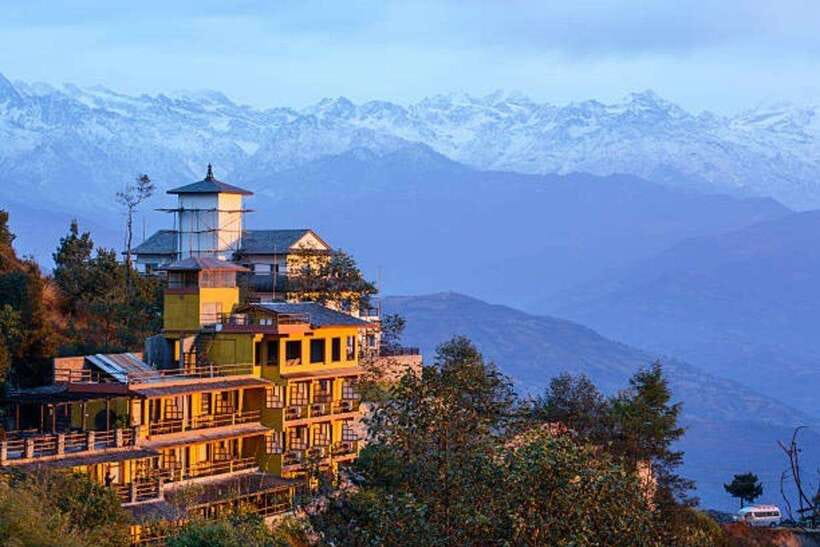
- Nagarkot and Sarangkot provide two different mountain-view moments: sunset from Nagarkot, then sunrise over Annapurna and Machhapuchhre from Sarangkot.
- The route covers seven major cultural and natural stops: Kathmandu, Patan, Pashupatinath, Boudhanath, Bhaktapur, Pokhara, and the surrounding viewpoints.
- The Kathmandu to Pokhara flight is included: your return is by tourist bus, unless you arrange the optional flight.
- Sobit is the named guide: he leads in English, with an English audio guide also included.
- The $416 price includes the main structure of the trip: three hotel nights, breakfast, guide, driver, fuel, tolls, parking, and the flight to Pokhara.
- Entry fees, meals, and drinks are extra: carry Nepali rupees for tickets and small purchases.
Why this four-day Nepal route works
Nepal can take time to understand. Kathmandu Valley alone has several major religious sites and old royal cities, while Pokhara feels like a different country, with its lake, caves, waterfalls, and mountain views. This trip links both areas with Nagarkot in the middle, so you get a useful overview without arranging every transfer yourself.
The route is aimed at first-time visitors, families, couples, seniors, solo visitors, and small groups. That promise is mostly realistic. You will walk around temple courtyards and heritage squares, but the plan does not rely on strenuous trekking. The cable car at Chandragiri Hills and the vehicle transfers also help keep the physical effort moderate.
Still, do not mistake easy for slow. Day one packs in a long list of sights. Day two includes both Kathmandu and Bhaktapur before the drive to Nagarkot. Day three begins with a flight and then several Pokhara stops. Day four starts before sunrise and ends with a return to Kathmandu by bus. You should be comfortable with early mornings and a full schedule.
At $416 per person, the value depends on how much of the included service you would otherwise arrange yourself. The price covers three nights in 3-star hotels on a twin-sharing basis, breakfast, a professional guide, a driver, local transport, fuel, tolls, parking, and the Kathmandu to Pokhara flight. You still pay for entry tickets, lunch, dinner, drinks, and possibly the optional flight from Pokhara back to Kathmandu.
For a short Nepal visit, that is a sensible bundle. You are paying for coordination as much as sightseeing. The main limitation is that there is little free time until the afternoon of the final day.
More sunrise viewpoints within reach of Kathmandu:
- Nagarkot Sunrise View and Day Hiking from Kathmandu
★ 5.0 · 471 reviews - Private Bhaktapur and Nagarkot Day Tour From Kathmandu
★ 5.0 · 305 reviews - Kathmandu: Nagarkot Sunrise View & Morning Hike with Lunch
★ 4.9 · 188 reviews
Day one: Chandragiri Hills and Kathmandu’s sacred landmarks
The first day begins with pickup from your Kathmandu hotel or from the airport if you arrive on a morning flight. The operator allows the sightseeing schedule to begin before or after hotel check-in, depending on how rested you are. That flexibility matters, since flights into Kathmandu do not always fit neatly with hotel hours or a fixed tour departure.
Chandragiri Hills is an unusual opening stop. Instead of beginning in the dense center of Kathmandu, you rise by cable car for broad views over the valley and, when conditions cooperate, the Himalayas. It gives you a quick sense of Nepal’s setting before you spend the rest of the day among temples and old city streets.
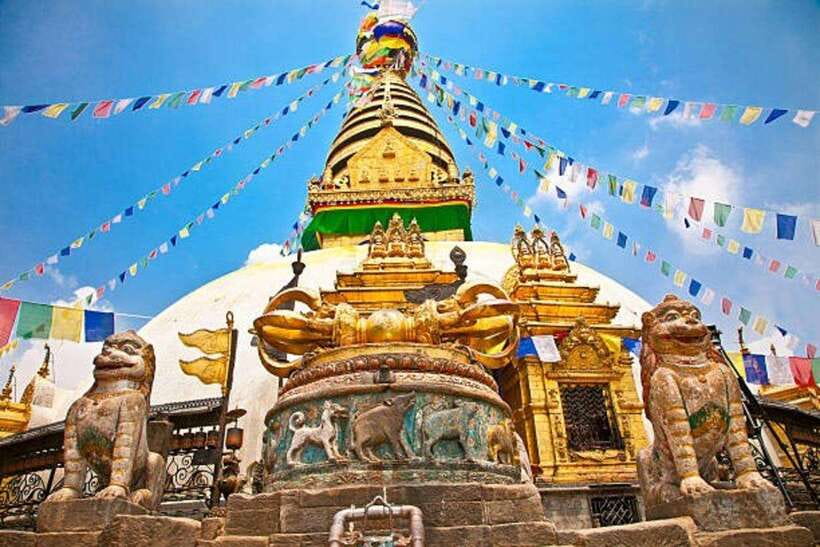
Next comes Swayambhunath, often called the Monkey Temple. The site is a major Buddhist stupa and one of Kathmandu’s best-known spiritual landmarks. Expect religious activity, prayer flags, and a hilltop setting. Photography can be restricted in some areas, so follow posted instructions and ask before taking pictures of people or ceremonies.
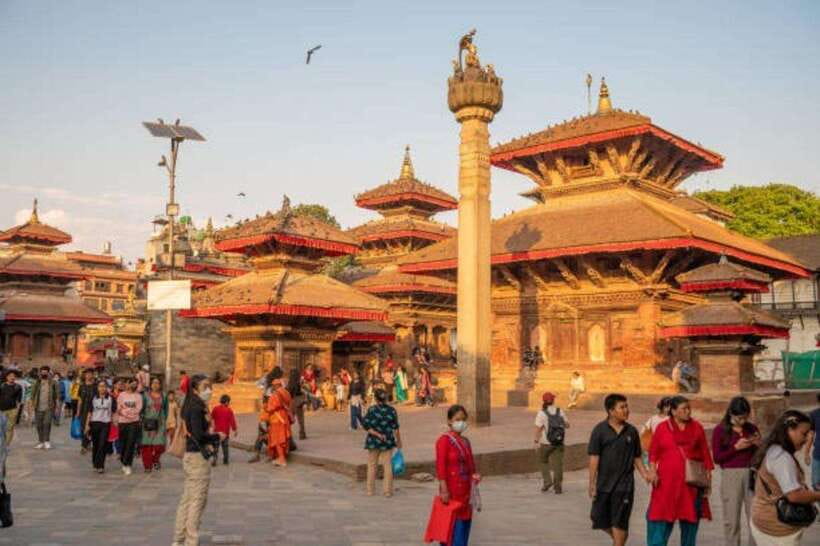
Patan Durbar Square brings you into the old Newari architectural world. Its palace courtyards and carved details show the artistic strength of the Kathmandu Valley. You are not simply checking off another square here. The value is in seeing how royal buildings, temples, and urban life were arranged in a compact historic center.
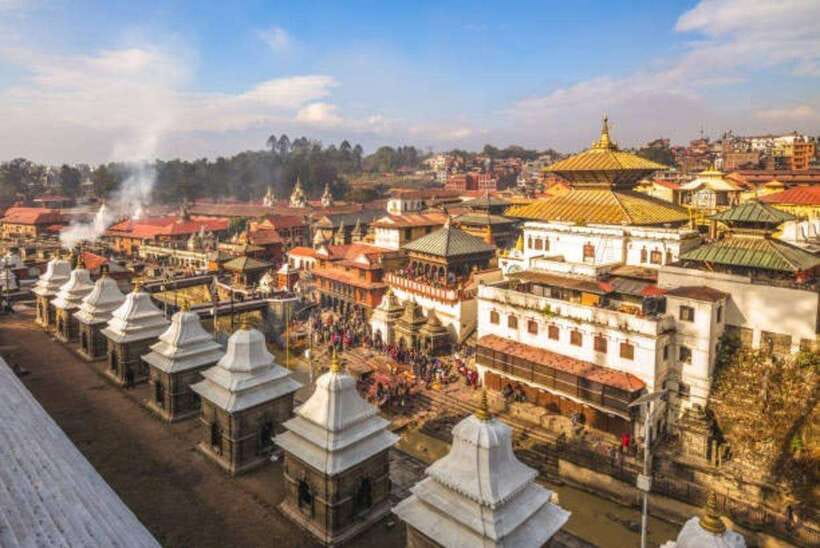
The itinerary then moves to Pashupatinath Temple, one of Nepal’s most important Hindu religious sites. Religious access and photography rules can vary, so treat it as a living place of worship rather than a museum. A respectful pace and modest clothing will serve you well.
Boudhanath Stupa rounds out the day with a very different atmosphere. This large Buddhist landmark is a place for walking, prayer, and observation. The contrast between Pashupatinath and Boudhanath is one of day one’s strengths: you see two major religious traditions in active use, not just old buildings behind ropes.
The weakness is simple: this is a lot for one day. Chandragiri, Swayambhunath, Patan, Pashupatinath, and Boudhanath each deserve time. If you like lingering over architecture or taking long photo breaks, you may feel hurried. If you want a strong first orientation to Kathmandu, the packed schedule works well.
Day two: Kathmandu and Bhaktapur before Nagarkot
Day two begins with Kathmandu Durbar Square, including the royal courtyard and the Living Goddess. This is another place where the setting matters as much as the individual monuments. The square helps explain Kathmandu’s former royal center, while the surrounding lanes show how closely historic religious and civic life remain tied together.
Bhaktapur receives more detailed attention later in the day. Its Durbar Square includes the 55-Window Palace, Golden Gate, Nyatapola Temple, and Dattatreya Square. These are not minor stops squeezed into a roadside visit. Bhaktapur is one of the clearest places on this route to see Newari design, brickwork, carved timber, palace courtyards, and temple forms.
The afternoon drive to Nagarkot changes the mood. Kathmandu Valley’s historic centers are busy with detail and people. Nagarkot is about open views and cooler air. Your 3-star hotel night is included, with breakfast, but hotel standards can vary, so it is wise to think of this as a practical mountain stop rather than a luxury retreat.
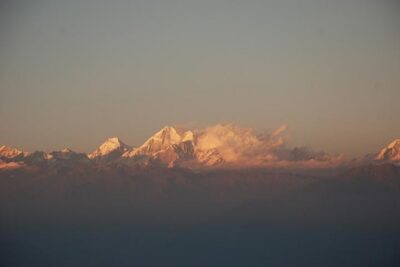
The main event is the evening view. The program highlights a Himalayan sunset stretching from Langtang toward Everest. Mountain visibility depends heavily on weather, season, and haze. The view is not guaranteed, but the timing gives you a good chance to enjoy the hills and peaks as the light changes.
November through February usually brings sunny days but cold mornings and evenings. Nagarkot is higher and cooler than Kathmandu, so pack a warm jacket even if the capital feels mild. During the June to August monsoon period, rain can block mountain views. Bring a raincoat or umbrella if you visit then.
Day three: a short flight into Pokhara
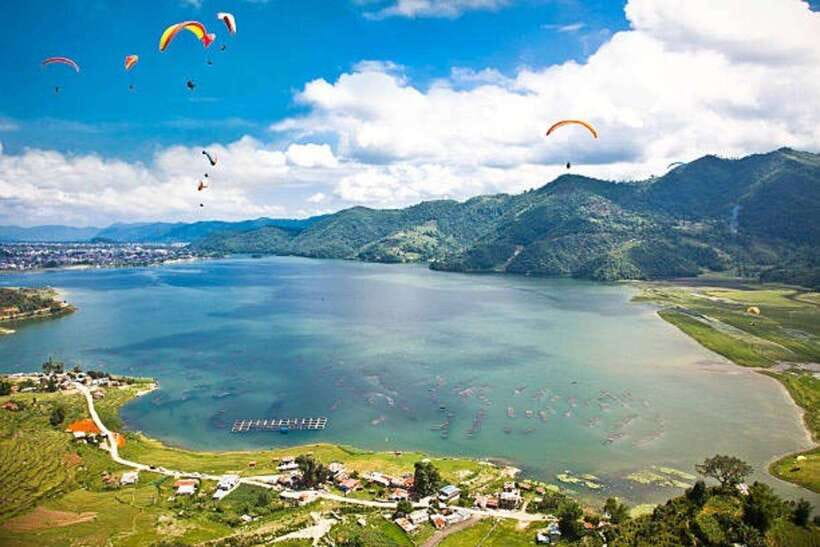
Day three begins early with Himalayan views from Nagarkot, then you take the included flight to Pokhara. This is one of the smartest choices in the plan. A scenic domestic flight cuts out a long overland transfer and turns the move between regions into part of the experience.
The flight is short, but the mountain views depend on weather and window position. Keep your camera ready, but do not treat the flight as a guaranteed full panorama. Cloud, haze, and operational changes can affect what you see.
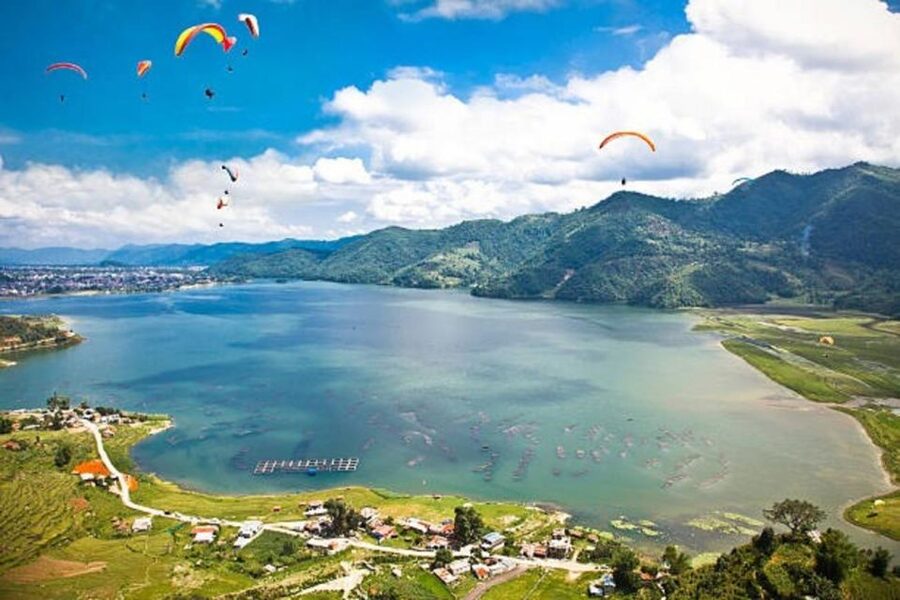
In Pokhara, Phewa Lake provides a gentler change of pace. You can choose an optional boat ride, then spend time near the lakeside. The lake is one of the city’s defining places, and its reflections can be especially attractive around sunset. The optional wording matters: the boat ride is not included in the stated price.
The International Mountain Museum gives useful context to the region’s famous peaks and climbing culture. It is a good counterweight to the viewpoints because it adds explanation rather than another photo stop. You get a closer look at Himalayan mountains, expeditions, and local cultures connected with the range.
Davis Falls and Gupteshwor Cave form a natural pair. Water drops through the falls while the cave adds a darker, more enclosed setting with sacred associations. Wear comfortable shoes and pay attention to footing. The itinerary is not a trek, but these stops are still better enjoyed when you are prepared for ordinary sightseeing surfaces rather than polished floors.
Pumdikot Shiva Statue is the day’s broadest viewpoint. From here, the program highlights views toward the Annapurna, Dhaulagiri, and Manaslu ranges. It is a strong final stop because it gathers the region’s mountain appeal into one wide view. Again, weather controls the result.
The evening is free for the lakeside area and sunset reflections. This is one of the few chances to slow down. I would use it for a meal, a quiet walk, or an early night, since day four begins before dawn.
The supplied information names Sobit of Bold Himalaya as a guide associated with the experience. One useful practical point is that guide quality in Pokhara can depend on the local handoff. If your Kathmandu guide is not accompanying you throughout, make your expectations clear early. A concern about the Pokhara guiding was handled politely when raised, so speaking up is better than letting a small problem spoil the day.
A few more things to do in Kathmandu worth a look
- 4 Days Poon Hill Trek
★ 5.0 · 94 reviews - 4-day Poon Hill Trek
★ 5.0 · 74 reviews - 3 Nights 4 Days Chitwan National Park with Tower Night Stay
★ 5.0 · 41 reviews - 3 night 4 Day Yoga & Ayurveda Retreat to Detox the Body & Mind, Nepal
★ 5.0 · 37 reviews
Day four: Sarangkot sunrise and the ride back
The final day starts with an early drive to Sarangkot. This is the best sunrise opportunity in the program, with views toward Annapurna and Machhapuchhre, also known as Fishtail. The cold is sharper before sunrise, especially from November through February, so keep warm layers beside your bed rather than buried in your luggage.
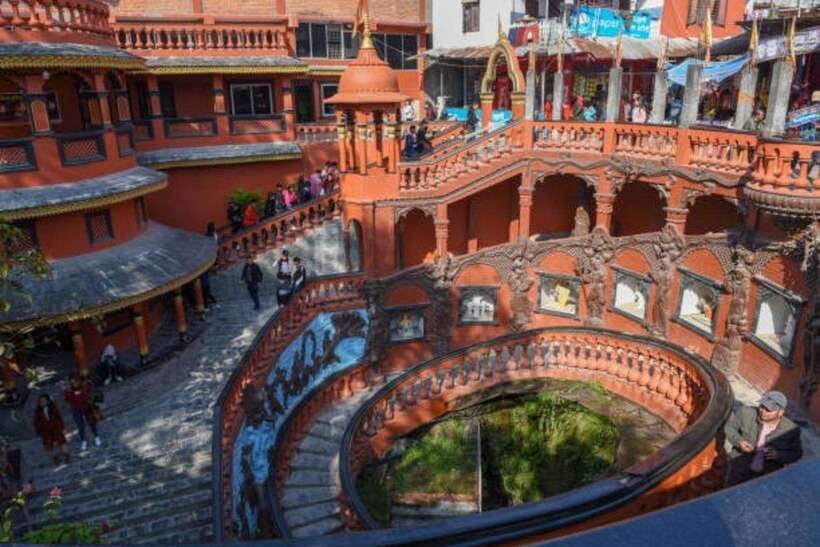
After the viewpoint, you visit Bindabasini Temple. It is a fitting final cultural stop after several days of Buddhist and Hindu landmarks. The order also makes sense: mountain views first, temple visit second, then breakfast and the journey back.
The included return is by tourist bus from Pokhara to Kathmandu. This is the trip’s biggest comfort compromise. The flight to Pokhara saves time and adds scenery, but the bus return is longer and less predictable than flying. An optional return flight is available, but it is not included in the stated package price.
You arrive in Kathmandu with the afternoon free for shopping in Thamel, resting, or continuing your trip. That makes the final day more useful than a simple transfer. If you have an evening flight, check the timing carefully before adding extra plans.
Hotels, meals, and what you pay separately
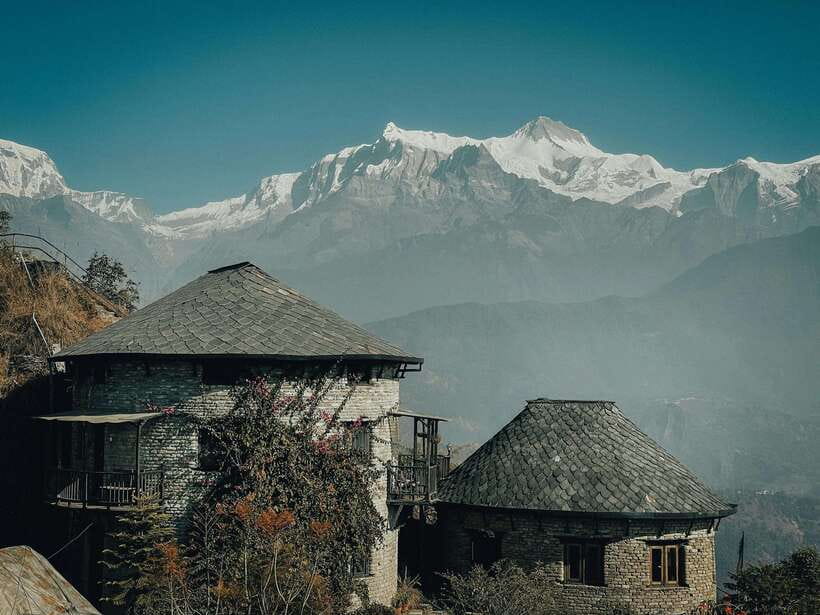
Accommodation includes one night each in Kathmandu, Nagarkot, and Pokhara at 3-star hotels, based on twin sharing. Breakfast is included at the Nagarkot and Pokhara hotels, and the itinerary also states breakfast on the final morning. A solo visitor should confirm any single-room supplement before booking.
Lunch, dinner, drinks, and entry fees are not included. Entry tickets are paid in Nepali rupees, so carry cash even though ATMs are available in Kathmandu and Pokhara. Smaller towns and local markets may not offer the same convenience.
Wi-Fi is available in most hotels and restaurants, and mobile networks work across most of the route. Bring a reusable water bottle and use filtered water. Sunglasses, sunscreen, travel documents, comfortable walking shoes, and clothing suited to changing temperatures belong in your day bag.
The booking terms are flexible: you can cancel up to 24 hours in advance for a full refund, and reserve now while paying later. Those details are useful if your Nepal plans are still shifting.
Who should book this Nepal tour?
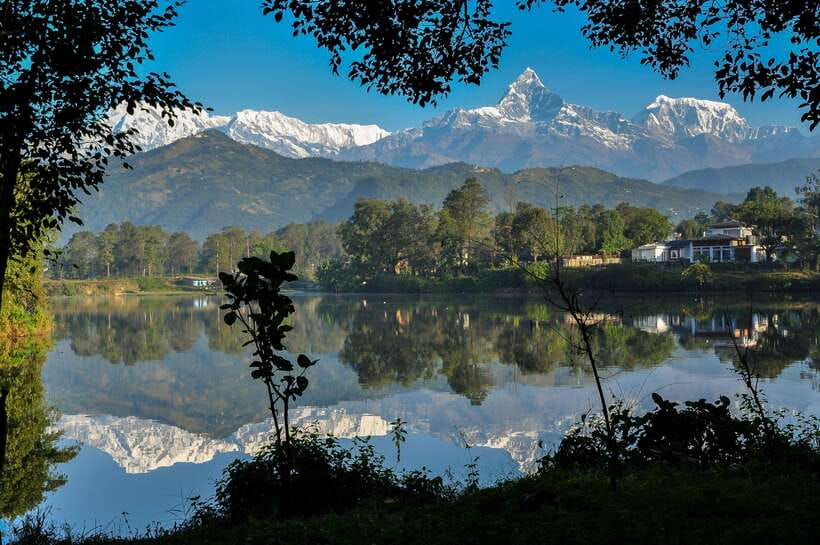
Book it if you want a broad first look at Nepal and do not want to manage domestic flights, drivers, hotels, and sightseeing on your own. It suits you especially well if you value cultural sites, mountain viewpoints, and straightforward transport more than long stays in any one city.
Families and older visitors may appreciate the moderate physical demands, though the early starts and full first day still require stamina. Couples and small groups get a useful blend of temples, scenery, and free time without committing to a trekking holiday.
You should think twice if you want a slow cultural trip, several nights in Pokhara, or a guaranteed Himalayan view. You should also consider paying for the return flight if a long bus journey will wear you down.
For $416, this is a strong four-day introduction when you count the included flight, three hotel nights, guide, driver, and transport costs. Book it for range and convenience. Skip it only if you would rather see fewer places at a slower pace.
FAQ
How long is the tour?
The experience lasts four days and covers Kathmandu, Nagarkot, Pokhara, and the return to Kathmandu.
What places are visited in Kathmandu?
The route includes Chandragiri Hills, Swayambhunath, Patan Durbar Square, Pashupatinath Temple, Boudhanath Stupa, and Kathmandu Durbar Square.
Is Bhaktapur included?
Yes. The tour visits Bhaktapur Durbar Square, including the 55-Window Palace, Golden Gate, Nyatapola Temple, and Dattatreya Square.
Is the flight to Pokhara included?
Yes. A flight from Kathmandu to Pokhara is included, with mountain views when weather allows.
How do I return from Pokhara to Kathmandu?
The included return is by tourist bus. An optional return flight is available at an additional cost.
Are hotels included?
Yes. The package includes one night each in Kathmandu, Nagarkot, and Pokhara in 3-star hotels on a twin-sharing basis.
Are meals included?
Breakfast is included as stated in the program. Lunch, dinner, and drinks are not included.
Are entry fees included?
No. Entry fees are separate and are paid in Nepali rupees.
Who guides the tour?
The tour includes a live English-speaking guide and an English audio guide. Sobit of Bold Himalaya is the named guide connected with the experience.
Just added in Kathmandu
- Kathmandu to Chitwan Tour by Tourist Bus – A Convenient and Affordable Way★ 4.0 · 4 reviews
- Changunarayan Hill to Telkot Hike Near Kathmandu Day Tour★ 5.0 · 6 reviews
- Mt Everest Base CampTrek | Budget Package★ 5.0 · 4 reviews
- Chitwan Jungle Safari 3-Day Tour★ 5.0 · 9 reviews
- Chandragiri Hill Station Tour by Cable Car★ 5.0 · 4 reviews
- Chandragiri Hills cable car day trip, private car with driver from Kathmandu★ 5.0 · 8 reviews
- Chandragiri to Taudaha Nature Day Hiking from Kathmandu★ 5.0 · 13 reviews
- Chandragiri Cable Car & Monkey Temple Private Guided Day Tour★ 5.0 · 5 reviews
Nagarkot Sunrise Tours, compared.
Nagarkot Sunrise View and Day Hiking from Kathmandu
Read our review →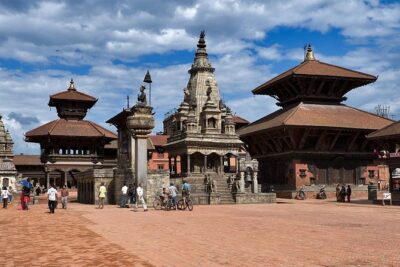
Private Bhaktapur and Nagarkot Day Tour From Kathmandu
Read our review →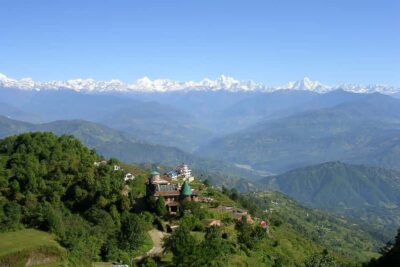
Nagarkot Sunrise and Hike Tour to Changu Narayan
Read our review →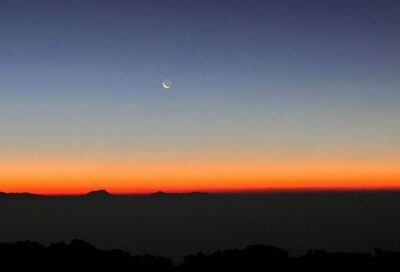
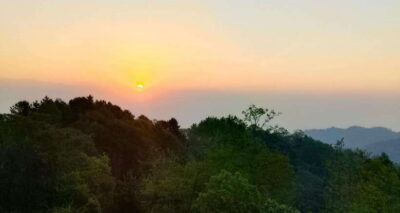
Nagarkot Sunrise & Hike with Lunch -Private/Group
Read our review →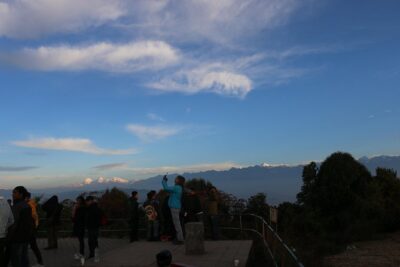
Nagarkot Sunrise Trip & Day Hike with Lunch from Kathmandu
Read our review →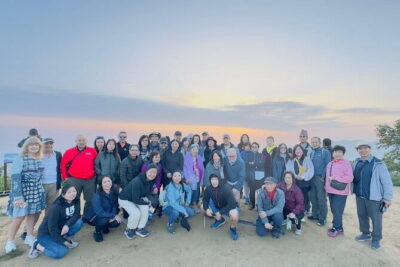
Nagarkot Sunrise View & Day Hiking with Lunch – Private/Group
Read our review →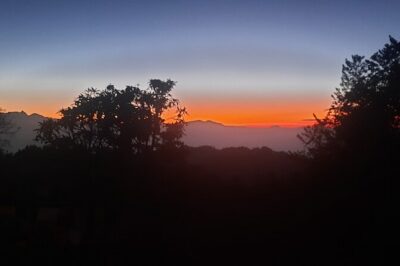
Nagarkot Sunrise & Bhaktapur UNESCO Heritage Private Tour
Read our review →Browse the lists this tour appears in