
Reviewed · ANNAPURNA CIRCUIT TREKS
Kathmandu: 9-Day Annapurna Circuit Trek via Thorong La Pass
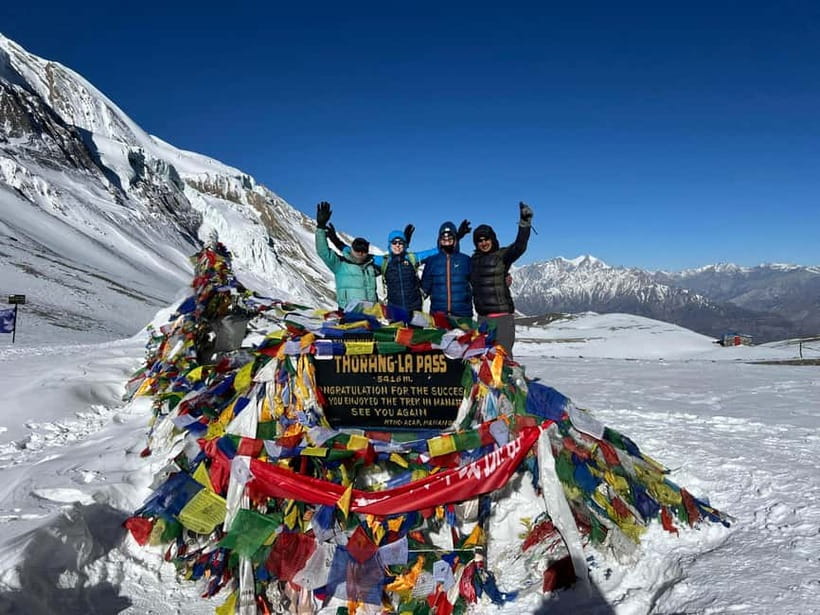
The heart of this trek is Thorong La Pass at 5,416 meters, a high, stark crossing that tests your legs, lungs, and patience before rewarding you with huge views and a real sense of achievement. In nine days, you move from green valleys and terraced fields to dry high mountain country and the sacred site of Muktinath.
I like the sensible acclimatization stop in Manang, and I like the human scale of the trip: local buses, shared jeeps, teahouses, village meals, and guides who stay close to their groups. Parkash, Sishir, and Ghanashyam are among the guides named by past customers, with Sishir especially noted for careful pacing, hydration reminders, and a good sense of humor.
The trade-off is clear: this is a fast version of the Annapurna Circuit. The pass day is hard, the accommodation is basic, and cold nights require a proper sleeping bag. You should also confirm the exact transport plan for the final return, since the schedule describes both Muktinath to Pokhara and Jomsom to Pokhara.
Key points at a glance
- Thorong La is the main event: You climb to 5,416 meters and cross before the wind usually becomes stronger.
- The route changes quickly: Expect rice-growing valleys, pine and oak forest, Tibetan-style villages, dry alpine country, and broad Himalayan views.
- Manang gives your body a chance to adjust: The itinerary includes an acclimatization day with an optional hike to Gangapurna Glacier Lake or nearby icefalls.
- Upper Pisang is a scenic stop: Its mountain views and local village setting make it more than just a place to sleep.
- Expect simple trekking conditions: Teahouse rooms, similar meals, cold nights, and extra charges for showers, charging, water, and personal services.
- Guiding is a strong part of the package: Private groups receive an English or Hindi-speaking guide, with guide insurance and staff costs included.
This is a compact Annapurna Circuit trek for people who want the classic high-pass crossing without spending two or three weeks on the route. You travel from Kathmandu or Pokhara toward Dharapani, walk through Manang, cross Thorong La, and finish at Muktinath before returning by road to Pokhara.
The trip combines three very different experiences. You get a major mountain challenge, contact with Himalayan villages, and a fair amount of road travel. That last point matters. This is not a quiet trail-only route, since buses and jeeps handle the opening and closing sections.
The package is built around a private group, not a large shared tour. Hotel pickup, permits, TIMS fees, government taxes, teahouse lodging, trek staff costs, and scheduled transport are included. Full Package bookings also include breakfast, lunch, and dinner during the trek. A night at Hotel Orchid in Pokhara and a traditional Nepali farewell dinner are included as well.
Day 1: A long road to Dharapani
The first day is mostly transport. You leave early, take a public bus to Besisahar, and then continue by local jeep to Dharapani. The full journey is described as seven to eight hours over roughly 175 kilometers.
The road gives you a quick introduction to rural Nepal: rolling valleys, terraced fields, scattered villages, and distant Himalayan peaks. It is scenic, but it can also be tiring. A public bus and shared jeep are practical choices, not luxury transport, so keep your expectations realistic.
You sleep in a teahouse at Dharapani. This first night is useful because it puts you close to the walking route without using an expensive private vehicle for the entire approach.
Other long routes from Pokhara:
- Kathmandu: 10-Day Annapurna Circuit Trek via Thorong La Pass
★ 5.0 · 10 reviews - Annapurna Circuit Trek with Tilicho Lake
★ 5.0 · 368 reviews - Annapurna Circuit Trek
★ 5.0 · 94 reviews
Day 2: Forests, Bhote villages, and Chame
The walk from Dharapani to Chame takes about six hours and covers roughly 13 kilometers, ending at 2,670 meters. The route passes through Bhote villages, pine and oak forest, streams, and open fields.
This is a good first walking day because the surroundings change without demanding the extreme altitude you face later. You can settle into the pace, test your boots, and learn how your guide manages breaks and water stops.
Chame has a stronger alpine feel than Dharapani. Your teahouse is basic, but the setting begins to feel properly Himalayan. Use the evening to organize your daypack, check your layers, and avoid treating the early days as a race.
Day 3: Bhratang Valley and Upper Pisang
From Chame, you walk about 15 kilometers to Upper Pisang in five to six hours. The trail climbs through the Bhratang Valley toward 3,200 meters, with views of Lamjung Himal and surrounding peaks.
Upper Pisang is one of the more memorable overnight stops. The village has a distinctive high mountain setting, and the surrounding peaks are close enough to dominate the view. You also have a chance to meet local residents and see how the route’s village life changes as you climb.
The route is becoming more demanding, but the walk remains manageable for someone with good fitness. Your main task is to keep a steady pace. At altitude, rushing early in the day is a poor bargain.
Day 4: Upper Pisang to Manang
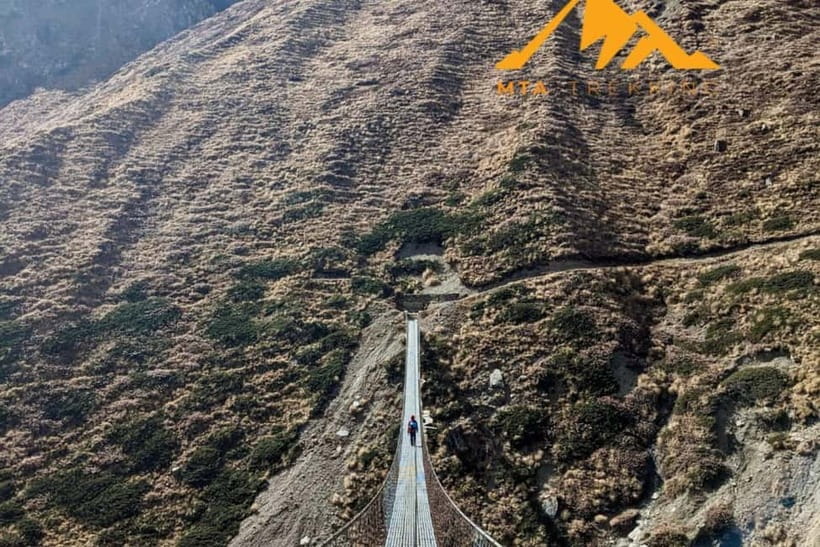
The walk to Manang covers about 16 kilometers and takes five to six hours. Forests and valleys give way to more open high country, with views toward Tilicho Peak, Annapurna III, and Annapurna IV.
Manang is an important stop because it gives you time to adjust before the trail rises much higher. The scheduled overnight is at around 3,540 meters, although the activity description also lists 4,050 meters for the acclimatization day. Treat the elevation as approximate and follow your guide’s plan rather than focusing too closely on one printed number.
This is also a good place to notice the route’s cultural change. The villages and buildings feel increasingly Tibetan in character, and the mountain environment is drier and more exposed than the lower valleys.
A few more things to do in Pokhara worth a look
- Poon hill Trek 3 days
★ 5.0 · 176 reviews - Trekking in Annapurna/Langtang/Everest/Upper Mustang regions
★ 5.0 · 161 reviews - Pokhara: 4-Day Ghorepani, Poonhill & Ghandruk Mountain Trek
★ 5.0 · 132 reviews - Ghorepani – Poon Hill Trek 3N-4D
★ 5.0 · 125 reviews
Day 5: Acclimatization around Manang
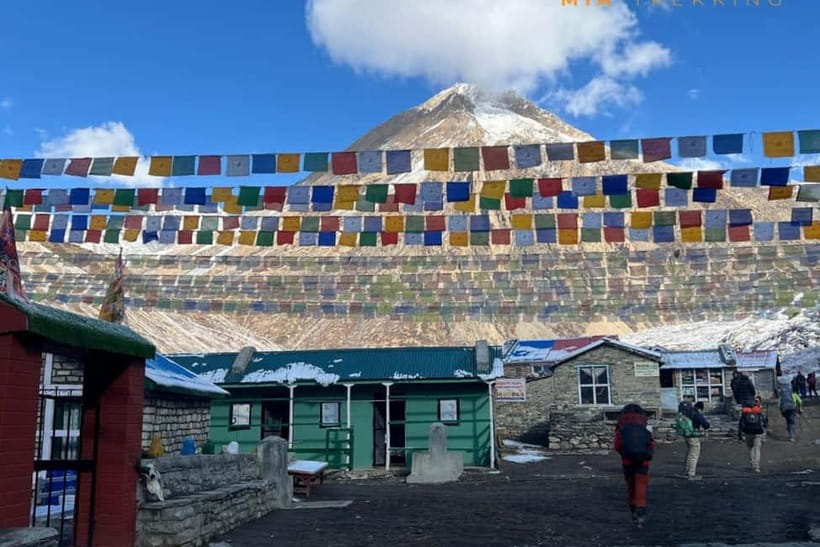
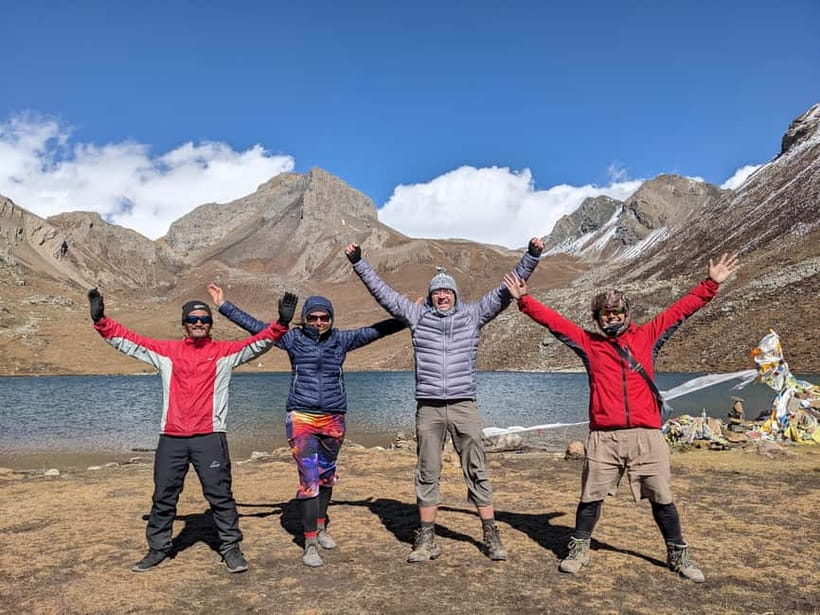
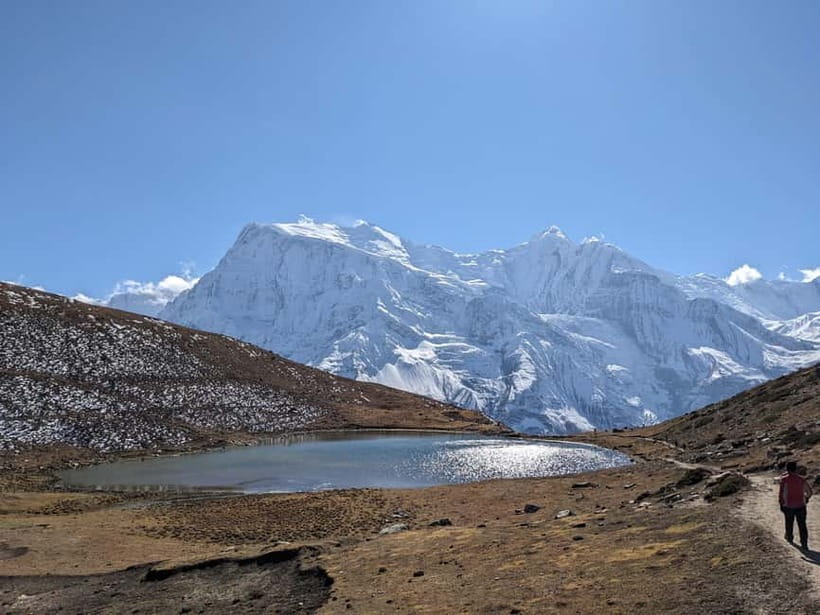
The fifth day is not a free pass to do nothing, but it is designed to help your body adjust. An optional hike leads toward Gangapurna Glacier Lake or nearby icefalls, offering mountain views without moving your overnight location higher.
I consider this day one of the most important parts of the schedule. Some people try to shorten the route by skipping acclimatization, but the pass comes soon after, and altitude sickness can ruin the entire trek. A slower day in Manang is a practical investment.
Use the time to eat, drink, rest, and ask your guide about symptoms. Headache, nausea, unusual tiredness, and poor coordination should not be brushed aside. The itinerary is not suitable for people with altitude sickness or high blood pressure, and you need insurance that covers high-altitude trekking and rescue.
Day 6: The high pastures near Yak Kharka
The walk from Manang to Yak Kharka takes about four hours and covers roughly seven kilometers, finishing at around 4,050 meters. Alpine pastures replace the forests, and the air feels noticeably colder and thinner.
This short day is helpful. You gain altitude without spending six or seven hours on the trail, and you have time to settle in before Thorong Phedi. The scenery is wide and open, but the short distance can be misleading. At this height, even a modest climb may feel serious.
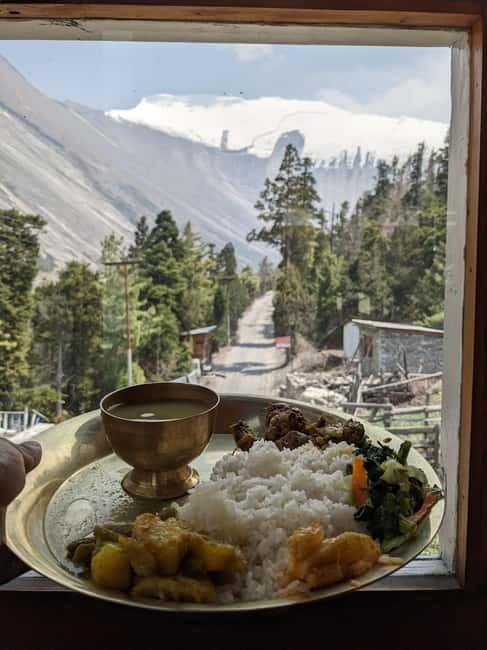
Stay warm at the teahouse and keep your evening quiet. Food is included with Full Package bookings, but meals are simple and can become repetitive. One past customer found the food tasty but similar from day to day, which is a fair expectation for a high mountain route.
Day 7: Thorong Phedi, the pass base
The route from Yak Kharka to Thorong Phedi takes four to five hours over roughly six kilometers. You cross rocky ground and suspension bridges while climbing to around 4,450 meters.
Thorong Phedi is the last staging point before the pass. It is not a place to seek comfort or entertainment. You arrive, eat, prepare your clothes and daypack, and try to sleep before the early start.
This is where the basic nature of the trip is most obvious. Teahouse lodging is part of the experience, but rooms can be cold, and facilities are limited. Bring a proper sleeping bag, not just a light travel liner. A headlamp, warm layers, gloves, and dry socks are also sensible choices.
Day 8: Thorong La and the descent to Muktinath
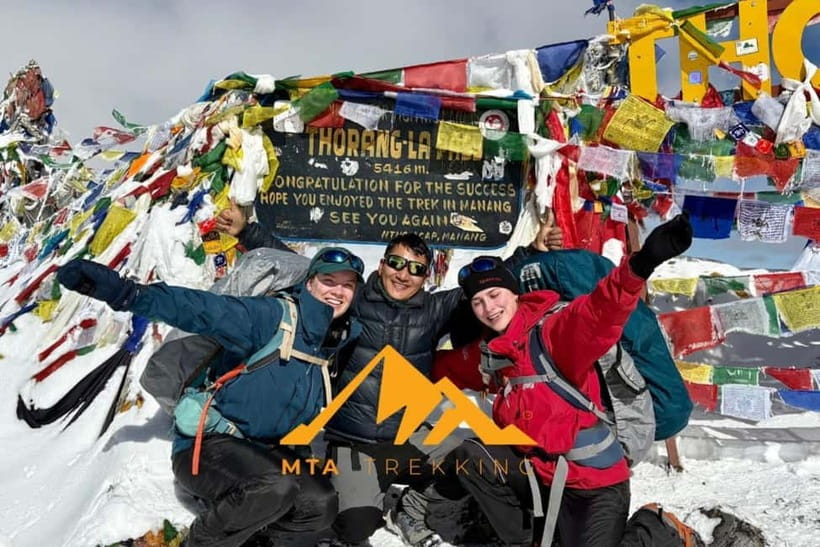
The biggest day starts around 4:00 AM. You climb from Thorong Phedi to Thorong La, reaching 5,416 meters before descending to Muktinath. The full day takes about seven to eight hours.
The early start is not a gimmick. It gives you a better chance of crossing before stronger winds arrive. The climb is slow and demanding, and you should expect the ascent to feel exhausting. The descent may seem easier at first, but tired knees and loose ground can make it feel just as long.
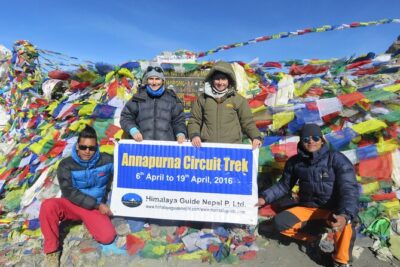
At the pass, prayer flags and huge Himalayan views mark the high point of the trek. Reaching Thorong La is the kind of achievement that stays with you, but do not pretend the crossing is easy. One customer described considering a helicopter during the hardest moments. That is a useful reminder to respect the altitude and the schedule.
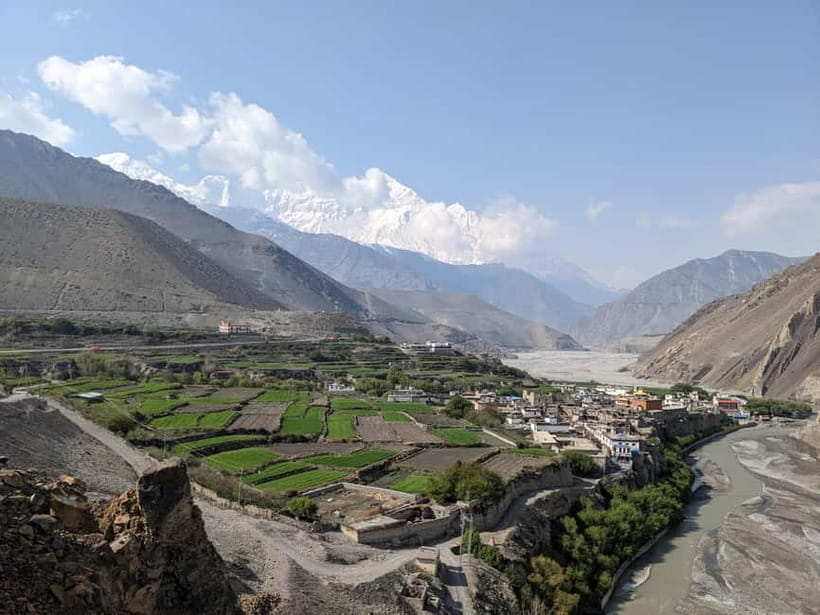
After the pass, you descend to Muktinath, usually arriving around midday or early afternoon. Muktinath is sacred to both Hindus and Buddhists, and the site gives the trek a cultural finish rather than ending only with a physical challenge.
An optional trip to Tatopani hot springs is available after the pass, but taxi costs of about USD 50 are not included. If you choose it, budget for that extra expense.
Day 9: Returning to Pokhara by road
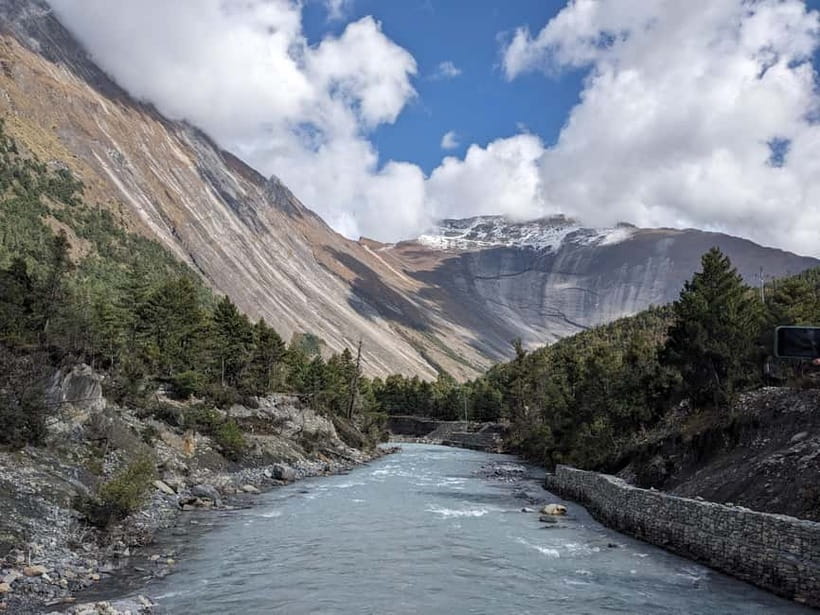
The final day uses a bus from Muktinath toward Pokhara and is listed as five to six hours over about 110 kilometers. The package information also refers to Jomsom to Pokhara by bus, so confirm the exact pickup point and road plan before departure.
This is an important practical detail because mountain road times can be affected by conditions, and the return is not a quiet final walk. The reward is a night at Hotel Orchid in Pokhara and a farewell dinner with traditional Nepali food in Lakeside.
The package also includes a luxury tourist air-conditioned sofa-seater bus from Pokhara to Kathmandu. That transfer is useful if Kathmandu is your next stop, but confirm whether it applies to your exact booking and return arrangement.
What the guiding adds
A good guide matters most on the acclimatization day and the pass crossing. Sishir is described as careful about rest, hydration, and altitude adjustment, while Parkash is noted for checking in often and offering help with a heavy bag. Ghanashyam and Chakra are also named as guides who helped make the route feel safe and organized.
You should still carry your own essential gear and remain responsible for your health. A guide can set a sensible pace and recognize trouble, but no guide can remove the physical demands of 5,416 meters.
English and Hindi guiding is available. The private-group setup gives you more room to discuss pace and rest than a large fixed group would, though the actual walking schedule remains demanding.
What is included, and where costs appear
The value here comes from having the complicated pieces arranged together. Permits, TIMS fees, government taxes, guide services, staff insurance, teahouse lodging, scheduled transport, and luggage storage are included. Full Package bookings add all three daily meals during the trek.
You still need money for drinks, bottled or boiled water, showers, battery charging, phone calls, laundry, bar bills, extra porters, and personal purchases. Travel and rescue insurance are not included, and neither are international flights or the Nepalese visa fee.
The cost is easier to justify if you value a guide, private-group organization, and help with permits and transport. It is less attractive if you want a fully independent trek or expect hotel comfort in the mountains.
Who should book this trek?
You should consider it if you have good fitness, can handle six to eight hours of walking, and want a direct route to one of Nepal’s famous high passes. Previous trekking experience is useful, though the guide and acclimatization plan provide support.
This is not a relaxed sightseeing trip. It is unsuitable for children under seven, pregnant women, people with altitude sickness, and people with high blood pressure. You also need suitable boots, quick-dry clothing, sunglasses, a sun hat, sunscreen, warm layers, and a sleeping bag.
Spring, from March through May, offers warmer conditions and blooming flowers. Autumn, from September through November, usually provides the clearest views and mild temperatures. Winter can bring cold, snow, and trail closures. The June through August monsoon period brings heavy rain and slippery trails, so it is best avoided.
Should you book it?
Book this trek if crossing Thorong La is your main goal and you accept basic lodging, long days, cold conditions, and road transport at both ends. The careful stop in Manang, private guiding, and included permits make the nine-day schedule practical for a fit hiker who wants a tightly planned route.
Think twice if you want leisurely walking, polished hotels throughout, or a great deal of flexibility. The pass day is genuinely hard, and the schedule leaves little spare time if weather, health, or road conditions cause delays. For the right person, though, this is a powerful mountain journey with a clear reward at 5,416 meters.
FAQ
How high is Thorong La Pass?
Thorong La Pass is 5,416 meters above sea level.
How long is the trek?
The experience lasts nine days, including transport from the Kathmandu or Pokhara area, the trek, and the return to Pokhara.
Is an acclimatization day included?
Yes. Day 5 is set aside for acclimatization around Manang, with an optional hike to Gangapurna Glacier Lake or nearby icefalls.
What time does the pass crossing begin?
The walk from Thorong Phedi to Muktinath begins very early, around 4:00 AM, to reach the pass before stronger winds develop.
Where do I sleep during the trek?
You stay in teahouses or lodges during the mountain portion of the trip. Eight nights of teahouse accommodation are included.
Are meals included?
Breakfast, lunch, and dinner during the trek are included for Full Package bookings. Drinks, bottled or boiled water, and personal snacks are not included.
Is a porter included?
A porter is available for an additional cost. The guide is included, but porter service is not part of the standard package.
What transport is included?
The schedule includes a bus from Kathmandu to Besisahar, a shared jeep from Besisahar to Dharapani, and a bus from the Muktinath or Jomsom area to Pokhara. A tourist air-conditioned sofa-seater bus from Pokhara to Kathmandu is also listed.
Is travel insurance included?
No. You need to arrange your own travel and rescue insurance, and it should cover high-altitude trekking.
Which languages do the guides speak?
Guiding is available in English and Hindi.
Just added in Pokhara
- Tandem Paragliding in Pokhara★ 4.8 · 8 reviews
- Seti George and Thrilling Suspension Bridge Tour at Pokhara★ 4.5 · 3 reviews
- Pokhara: Suspension Bridge Private Tour- 30 Min Village Walk★ 4.8 · 9 reviews
- Pokhara: Visit Best Seven Tourist Destination by Sharing Bus★ 3.4 · 10 reviews
- Pokhara: Sunrise Tour to Sarangkot★ 5.0 · 3 reviews
- Pokhara Sightseeing By Bus: Day Trip★ 4.6 · 7 reviews
- Pokhara Sightseeing By Bus – Day Trip★ 3.2 · 8 reviews
- Pokhara Sarangkot : Cable Car (Himalayas) Sunrise Tour★ 5.0 · 6 reviews
Annapurna Circuit Treks, compared.
15-Day Private Annapurna Circuit Trek from Kathmandu
Read our review →
8 Days Private Guided Trekking in Annapurna Circuit with Pickup
Read our review →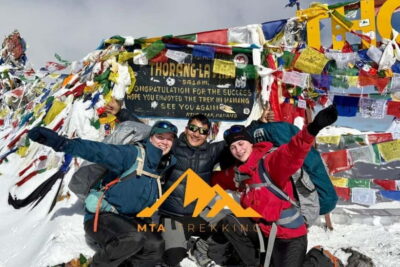
10-Day Annapurna Circuit Trek via Thorong La Pass
Read our review →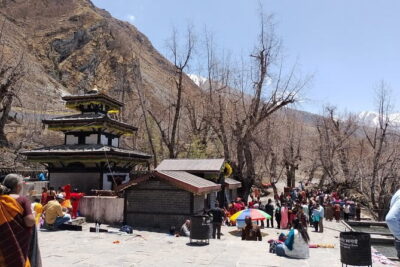
Browse the lists this tour appears in