
Reviewed · ANNAPURNA CIRCUIT TREKS
8 Days Private Guided Trekking in Annapurna Circuit with Pickup
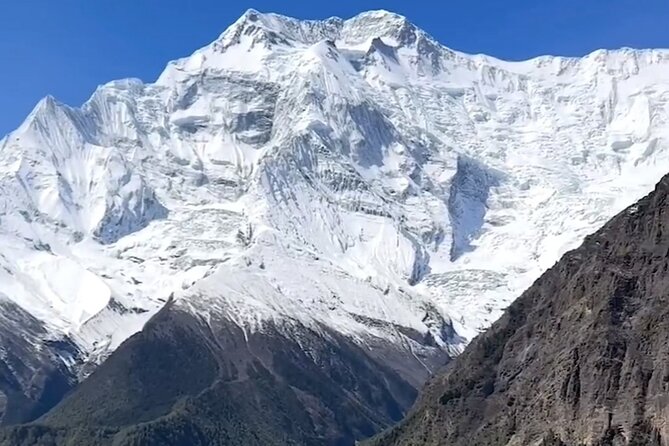
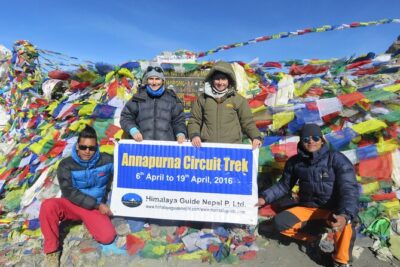
The big prize here is Thorong La Pass at 5,416 meters, reached after a steady climb through the high country and followed by a descent to sacred Muktinath. In eight days, you also pass through pine forests, mountain villages, alpine terrain, and the broad Annapurna range.
I like the practical setup: permits, meals, guide costs, and much of the transport are included, so you can focus on walking. I also like the planned rest day in Manang, plus the option to hike to Gangapurna Lake or higher ground for better acclimatization.
The main caution is the pace. This is a short version of the Annapurna Circuit, with long drives at both ends and a demanding high-pass day. Shared transport is included, and the $260 price is attractive, but you should confirm the exact vehicle plan and guide assignment before departure.
Key points before you book
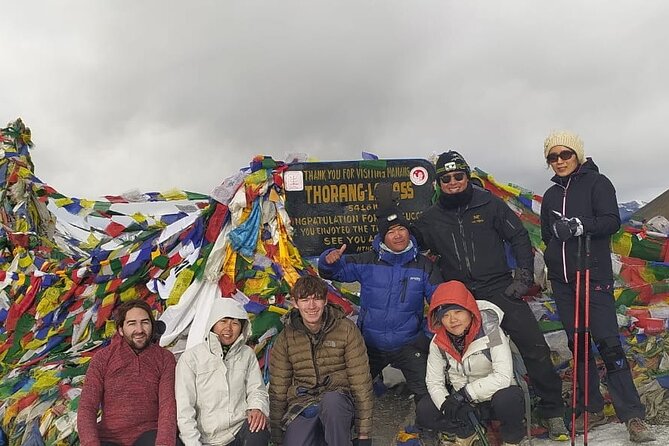
- Thorong La Pass is the physical high point: You reach 5,416 meters on Day 7, so altitude is the serious issue, not just fitness.
- Manang provides a useful rest day: You can use it to recover, hike to Gangapurna Lake, and adjust to the thinner air.
- The route mixes trekking and driving: You ride from Kathmandu, Pokhara, or Chitwan to Besisahar and Chame, then later drive from Jomsom to Pokhara.
- The price covers important basics: Guide services, permits, meals, first aid medicine, and listed shared transport are included.
- Guide support is a major part of the experience: Sobit, Sirjan, Garap, Bijay, and Ramesh are among the named guides associated with these trips.
- This suits a private party, not a solitary trek: Only your group participates in the trekking activity, though some transport is shared.
What the $260 Annapurna trek really gives you
At $260 per person, this is priced as a practical, tightly arranged mountain trip rather than a luxury trek. The fee includes an Annapurna Conservation Area permit and TIMS card, a guide with salary, food, accommodation, insurance, first aid medicine, and government charges.
You also receive seven breakfasts, seven lunches, and seven dinners. Seasonal fruit, a trip certificate, and service charges are included. If needed, sleeping bags and trekking poles are available, which can save you the trouble of arranging extra equipment in Kathmandu.
The price does not cover travel insurance, tips for your guide, bar bills, or extra meals. That last point needs a little clarification, since the main breakfast, lunch, and dinner package is covered, but anything outside those listed meals is your responsibility.
I see good value here if you want the key logistics handled without paying for a high-end trekking operation. The tradeoff is that this is a budget-conscious plan. Transport is described as shared, even though the trekking activity itself is private, so ask how many people will be in each vehicle and where pickup will occur.
Other long routes from Kathmandu:
- Annapurna Circuit Trek with Tilicho Lake
★ 5.0 · 368 reviews - Annapurna Circuit Trek
★ 5.0 · 94 reviews - Annapurna Circuit Trek
★ 5.0 · 35 reviews
Day 1: Kathmandu to Besisahar and Chame
The first day is mostly a transport day. Pickup is offered from Kathmandu, Pokhara, or Chitwan, followed by a drive to Besisahar. From there, you continue by jeep to Chame.
The listed travel time is about six hours, though mountain road conditions can affect any Nepal itinerary. You are not paying for a gentle first day with a short walk. Instead, you are moving quickly toward the trail and saving precious time for the high section of the route.
Chame is an important starting point for the walking portion. After the drive, you should expect a basic mountain-town arrival rather than a sightseeing program. Keep water, snacks, medicine, and a warm layer accessible during the ride instead of burying them in your main bag.
This is also where the short eight-day format becomes clear. A longer Annapurna schedule would give you more time on foot at lower elevations. Here, the driving helps fit the pass crossing into just over a week, but it leaves less room for delays.
Day 2: Forest paths, Dhikur Pokhari, and Upper Pisang
The trek begins through dense forest, with views toward Annapurna II. You pass Dhikur Pokhari village and continue toward Lower Pisang before climbing to Upper Pisang for the night.
The walking time is about five hours. That is a sensible first trekking day after the long drive, although the ascent to Upper Pisang adds work. The change from forest to high mountain scenery gives you a strong first taste of the route’s variety.
Upper Pisang is more than a place to sleep. The village setting gives you a chance to see local life before the route becomes more exposed and demanding. Your guide can help with pacing and the practical rhythm of walking, eating, and resting.
If you are new to altitude, do not treat this as an ordinary hike. Walk slowly from the start. The goal is not to prove how fast you can go on Day 2. It is to arrive in Manang with enough energy for the pass later in the week.
Day 3: Ngawal and the approach to Manang
Day 3 takes you toward Ngawal and then onward to Manang, with about six hours of trekking. The route offers broad views of the Annapurna range and more open mountain scenery as you gain height.
Ngawal is a useful stop because the route begins to feel distinctly high-altitude here. The climb is not only about distance. You are also asking your body to work with thinner air, and the guide’s judgment on speed becomes important.
Manang is one of the key places on the whole trip. You spend the night there and then have a planned rest day, which gives this itinerary a sensible break before the higher stages. Use the evening to eat, drink water, and sleep rather than trying to squeeze in too much activity.
Several named guides, including Garap, Sirjan, Sobit, Bijay, and Ramesh, have been associated with this experience. The strongest reports about the guiding focus on sensible pacing, help with equipment, support during altitude trouble, and local cultural explanations. Those are exactly the qualities you want here.
A few more things to do in Kathmandu worth a look
- Everest Base Camp Trek – 14 Days
★ 5.0 · 1,499 reviews - Everest Base Camp Trekking
★ 5.0 · 485 reviews - Nagarkot Sunrise View and Day Hiking from Kathmandu
★ 5.0 · 471 reviews - Everest Base Camp Trekking – 13 Day
★ 5.0 · 365 reviews
Day 4: Acclimatization around Manang and Gangapurna Lake
Day 4 is a rest day in Manang, but rest does not have to mean staying indoors. The plan allows an optional hike to Gangapurna Lake, with the possibility of going higher for a stronger acclimatization outing.
The listed activity time is about five hours, depending on what you choose. That flexibility matters. You can make the day gentle if you feel tired, or use it to gain some height and return to Manang to sleep lower.
Gangapurna Lake adds a worthwhile visual reward without changing the main route. You get a closer look at the glacial mountain setting and a break from the steady forward march of the trek.
Pay attention to how you feel. Headache, nausea, unusual fatigue, or other health concerns should not be brushed aside. The tour advises consulting a doctor about health issues, and your guide can help you respond to problems, but you should carry suitable travel insurance and make your own safety decisions.
Day 5: Yak Kharka through Letdar
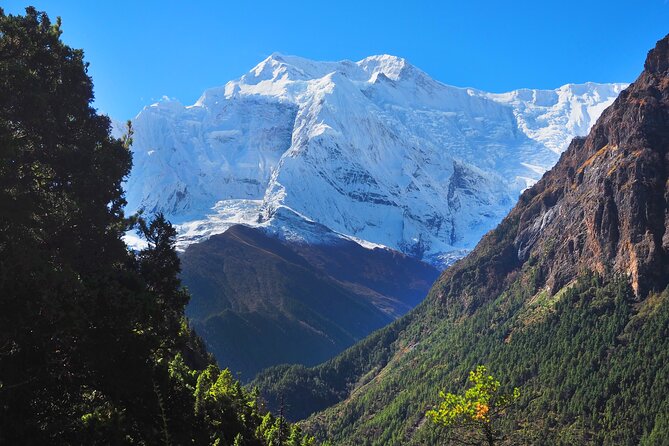
From Manang, the route climbs through alpine country toward Yak Kharka, passing Letdar along the way. Walking time is about five hours.
This section is less about villages and more about open, high terrain. The setting becomes spare and exposed, and the cold can feel sharper. The short distance may look easy on paper, but altitude makes every uphill section more tiring.
Yak Kharka is a staging point for the pass crossing. You spend the night there, settle in early, and prepare for the next day’s climb to Thorong High Camp.
This is where a moderate fitness level becomes more than a box to tick. You need to manage consecutive days of walking, sleep in basic mountain accommodation, and keep moving when the air is thin. You do not need to be an elite athlete, but you should be comfortable with sustained uphill walking.
Day 6: Yak Kharka to Thorong High Camp
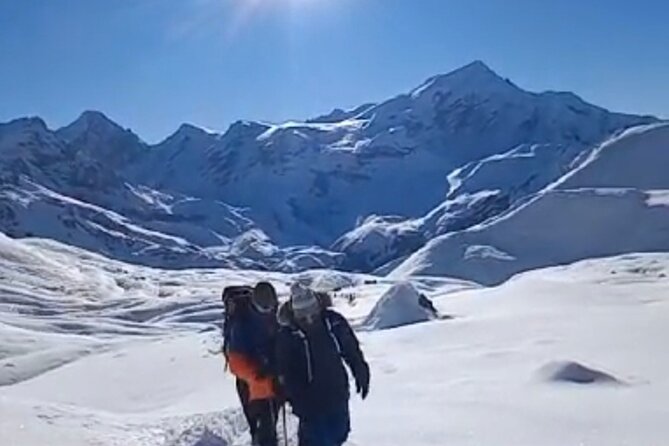
The sixth day is listed as a roughly four-hour trek from Yak Kharka to Thorong High Camp at about 4,450 meters. The purpose is simple: reach the high camp and put yourself in position for an early crossing of Thorong La Pass.
This is a short day by distance, but it is not an easy one. High Camp is already far above sea level, and the reduced oxygen can make a modest climb feel slow. Take the guide’s pace seriously and conserve energy for the next morning.
The itinerary lists an admission ticket for this day, unlike most of the other stops. The main value is not a sightseeing ticket but access to the crucial overnight point before the pass.
You should prepare your clothing, headlamp, water, and small essentials before sleeping. Keep your main equipment organized so the early start is not chaotic. Sleeping bags and trekking poles are available if needed, but confirm in advance that the gear will be ready for you.
Day 7: Thorong La Pass, Muktinath, and Jomsom
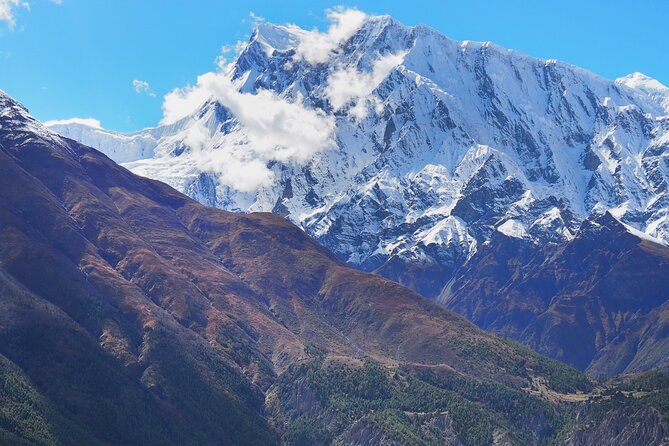
This is the defining day. You begin early, climb from the Thorong area to the 5,416-meter pass, descend to Muktinath at about 3,800 meters, and then continue by vehicle to Jomsom.
The walking time is listed at about six hours, but the day also includes the drive to Jomsom. The pass crossing is demanding because you gain significant height before descending, and the early start is intended to make the crossing more manageable.
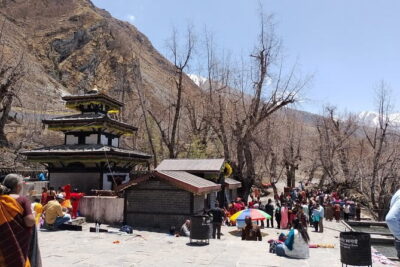
Muktinath is a sacred site associated with Lord Vishnu. Reaching it after the pass gives the day a cultural meaning beyond the physical achievement. The change from high pass to religious destination also shows why the Annapurna route is so compelling: the mountains and local traditions are part of the same journey.
This is the day when altitude sickness can become serious. One guide, Sirgan, is specifically praised for helping when a participant became ill at altitude. That does not make the route risk-free, but it underlines why a private guide is useful. Your guide can watch your pace, help adjust equipment, and advise when you need to stop or descend.
Day 8: Jomsom to Pokhara by jeep
The final day is a roughly six-hour jeep ride from Jomsom to Pokhara. You pass through changing scenery and arrive in the lakeside city rather than returning to Kathmandu.
This is a scenic finish, but it is still a road day. After the effort of Thorong La, you may appreciate sitting back, though a long mountain drive can be tiring. The included Jomsom to Pokhara sharing transport keeps the price down, but do not expect the privacy of a dedicated car unless you arrange and pay for it separately.
Ending in Pokhara is useful if you plan to continue there. If your onward plans are in Kathmandu, you will need to organize the next part of your journey yourself, since the stated route finishes in Pokhara.
Guides, support, and the private format
The private setup means only your group takes part in the trekking activity. That is valuable if you want your walking speed and breaks adjusted around your group rather than a large party.
Guide support includes salary, food, accommodation, and insurance for the guide. The named guides connected with these treks include Sobit, Sirjan, Garap, Bijay, and Ramesh. Accounts of the service place particular emphasis on humor, cultural explanations, equipment adjustments, logistics, and help during altitude trouble.
I would still ask for the assigned guide’s name before leaving. The individual guide matters greatly on a high-altitude trek, and the supplied information refers to several different guides rather than one fixed person.
Porter arrangements are not clearly detailed in the information provided. Do not assume a porter is included. Ask what luggage you carry, what the guide carries, and what baggage limit applies.
Who should choose this trek
I would recommend this trip to you if you have a moderate fitness base, want the Annapurna Circuit’s best-known high point, and prefer having a guide manage permits, meals, and transport.
It is also a good fit if you have limited time in Nepal. The eight-day plan moves quickly and uses vehicles to connect the lower and upper sections. That efficiency is useful, but it reduces the slow, village-by-village feel of a longer trek.
You should think twice if you want a relaxed schedule, have no experience with sustained uphill walking, or are uncomfortable with basic mountain conditions. The tour requires good physical fitness at a moderate level, and the 5,416-meter crossing is not a casual walk.
Practical value, timing, and cancellation
The average booking lead time is about 38 days, so planning ahead is sensible, especially if you need equipment, insurance, or medical advice. Confirmation is provided at booking, and pickup is offered from Kathmandu, Pokhara, or Chitwan.
Free cancellation is available up to 24 hours before the start time for a full refund. Cancellations and changes inside that 24-hour window are not refunded or accepted. If poor weather forces a cancellation, you are offered another date or a full refund.
Should you book the Annapurna Circuit in eight days?
Book it if you want a budget-friendly, guided pass crossing with the key permits, meals, and transport arranged. The rest day in Manang is a strong feature, and the private trekking format gives your group more control than a large fixed party.
Before paying, confirm three things: your guide’s name, the exact shared transport arrangements, and what equipment or baggage support is included. If those details suit you and you are ready for a fast schedule, this is a practical way to reach Thorong La and Muktinath without organizing every piece yourself.
FAQ
How long does the Annapurna Circuit experience last?
The experience lasts approximately eight days, including trekking and vehicle transfers.
What is the price per person?
The listed price is $260 per person.
Is pickup available?
Yes. Shared transportation is offered from your location in Kathmandu, Pokhara, or Chitwan to Besisahar and onward to Chame by jeep.
Is this a private tour?
Yes. Only your group participates in the private trekking activity. Some transportation is shared.
Is a guide included?
Yes. The guide’s salary, food, accommodation, and insurance are included.
Are permits included?
Yes. The Annapurna Conservation Area permit and TIMS card are included.
Are meals included?
Seven breakfasts, seven lunches, and seven dinners are included. Extra meals, bar bills, and other food outside the listed package are not included.
What fitness level is required?
A moderate physical fitness level is required. You should also consult a doctor about any health-related concerns before the trek.
What happens if bad weather cancels the trek?
You will be offered a different date or a full refund if the experience is canceled because of poor weather.
Just added in Kathmandu
- Kathmandu to Chitwan Tour by Tourist Bus – A Convenient and Affordable Way★ 4.0 · 4 reviews
- Changunarayan Hill to Telkot Hike Near Kathmandu Day Tour★ 5.0 · 6 reviews
- Mt Everest Base CampTrek | Budget Package★ 5.0 · 4 reviews
- Chitwan Jungle Safari 3-Day Tour★ 5.0 · 9 reviews
- Chandragiri Hill Station Tour by Cable Car★ 5.0 · 4 reviews
- Chandragiri Hills cable car day trip, private car with driver from Kathmandu★ 5.0 · 8 reviews
- Chandragiri to Taudaha Nature Day Hiking from Kathmandu★ 5.0 · 13 reviews
- Chandragiri Cable Car & Monkey Temple Private Guided Day Tour★ 5.0 · 5 reviews
Annapurna Circuit Treks, compared.
15-Day Private Annapurna Circuit Trek from Kathmandu
Read our review →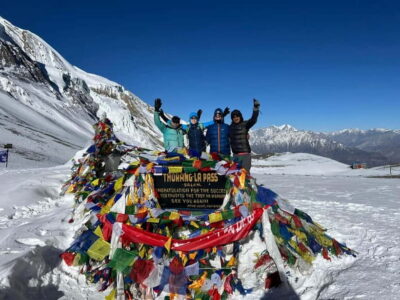
Browse the lists this tour appears in