
Reviewed · ANNAPURNA BASE CAMP TREKS
Private 7 – Day Annapurna Base Camp Trekking
Annapurna Base Camp is the prize here: a high mountain bowl ringed by snow-covered peaks, reached on foot through villages, forests, stone stairs, and tea houses. I like that this is a private trek, so your guide can adjust the pace, and I like that permits, meals, lodging, porters, and transport are bundled into one price. The main caution is the physical effort. Six-hour walking days, an eight-hour return day, steep stairs, and high altitude demand steady fitness.
The $625 price is strong value for a seven-day private trip, especially with guide and porter costs included. Guides named on previous trips include Sanjay, Amar, Laxman, Andrea, and Ram, and the company has shown a willingness to adjust plans. Still, confirm the exact daily schedule before departure, since the stated route includes several demanding transfers and some itinerary details are brief.
Key points to know before you book
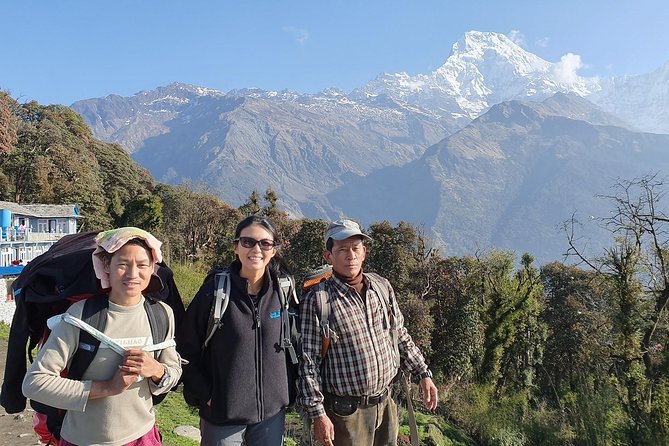
- A private route for your group: You trek with your own party rather than joining a large public group, giving you more say over walking speed and daily needs.
- The mountain approach changes quickly: The trail moves from Chhomrong’s village setting through bamboo forest, alpine forest, rocky river valleys, and the high basin at Annapurna Base Camp.
- A porter is included: Porter and guide expenses are covered, which is useful on a route with long stair sections and repeated climbs.
- The return includes Jhinu Danda hot spring: This gives the journey a welcome change of pace after reaching base camp.
- The hardest day may be the return: The schedule lists eight hours on Day 5, so you should not assume the descent will be easy.
- Tea house travel, not a luxury lodge holiday: Accommodation and meals are provided, but you should expect basic mountain lodging and a simple trekking rhythm.
Why this seven-day Annapurna trek works well
This route gives you a compact taste of the Annapurna region without asking you to organize every moving part yourself. From Pokhara, the company handles the overland transport, necessary permits, tea house lodging, meals, guide, porter, map, water purification, and basic safety support.
That matters in Nepal. A trek is not only about walking from one village to the next. You also need to know where you will sleep, where meals are available, how your bags are handled, and what happens if weather or health changes the plan. Having one local team manage those pieces can take a lot of pressure off you.
I especially like the private format for couples, friends, or families with similar fitness levels. You are not locked to the pace of strangers, and previous arrangements have included changes to the plan when needed. The company has also provided guides and porters with names such as Sanjay, Amar, Laxman, Andrea, Ram, Kumar, and Ramesh. Ask for the name and role of your assigned guide before you leave Pokhara.
The seven-day schedule is brisk. It is not a slow village holiday with long afternoons every day. You will spend much of the week walking uphill or downhill, and the route uses many stone steps. The shorter timetable makes the trip appealing if you have limited time, but it leaves less room for delays or a slow pace.
Other Annapurna routes from Pokhara:
- Kathmandu/Pokhara: 5-Day Annapurna Base Camp (ABC) Trek
★ 4.9 · 72 reviews - Annapurna Base Camp Trek (8 days)
★ 5.0 · 45 reviews - Pokhara: 7 Day Annapurna Base Camp Trek
★ 4.9 · 38 reviews
Day 1: Chhomrong and the first mountain views
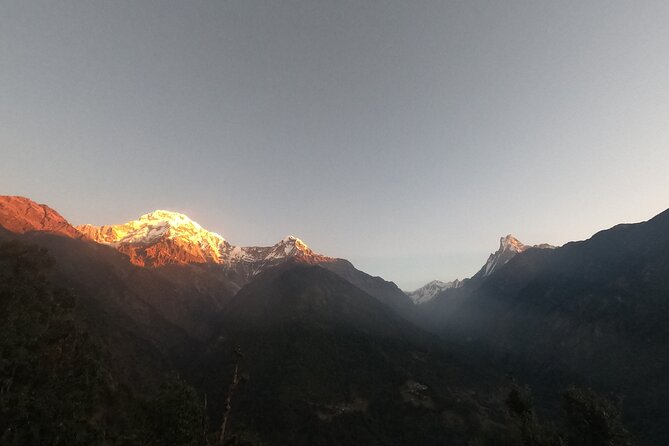
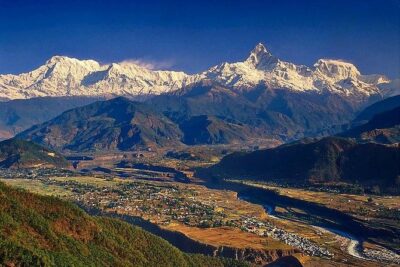
The journey begins from a meeting point on Pokhara Lakeside at 8:15 am. The schedule describes a private jeep ride of about two and a half hours, followed by time around Chhomrong and breakfast with views toward Annapurna I, at 8,091 meters, and Machhapuchhre, at 6,997 meters.
Chhomrong is an important starting point because it gives you an immediate sense of the villages that support the trek. The views from a terrace are a fine introduction, but do not mistake this first day for a gentle sightseeing outing. You are preparing bags, changing from road travel to walking, and getting used to the route.
The transport is a useful inclusion. Roads in this part of Nepal can save you several hours of walking, though a jeep ride on mountain roads is part of the adventure. The schedule gives only about three hours for the day, so this is likely your easiest walking day.
Use it well. Check your boots, water, layers, and day bag. If you have questions about the pace or the next morning’s departure, ask your guide early. A private guide is most useful when you communicate clearly.
Day 2: Stone stairs, Sinuwa, and Bamboo
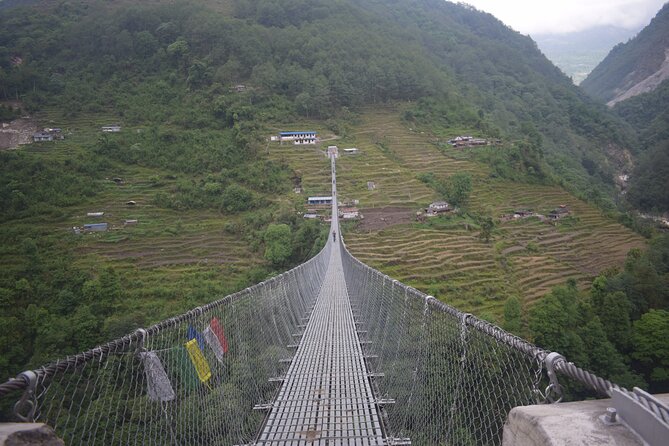
Day 2 brings the first serious test. You descend around 2,500 stone steps from Chhomrong, cross a bridge over the Chhomrong Khola, and then climb toward Sinuwa. After lunch at Sinuwa, you continue to Bamboo for the night.
This is a classic Himalayan trail day: down first, then up. That pattern can surprise you. A descent may feel easy at the start, but thousands of steps can work hard on your knees and thighs. The later climb to Sinuwa and Bamboo then asks for more effort when your legs are already tired.
The six-hour estimate is reasonable as a planning guide, but your actual time depends on the group’s pace, breaks, and trail conditions. I would not rush the first descent. Use trekking poles if you have them, keep your steps short, and let your guide know if your knees begin to hurt.
Bamboo marks a shift in the feel of the route. You are spending the night in a forest setting, with the trail now following the upper reaches of the Modi River route. Tea house accommodation keeps the evening simple: eat, dry what you can, prepare your bag, and rest.
Day 3: Bamboo, Dovan, and the Weeping Wall
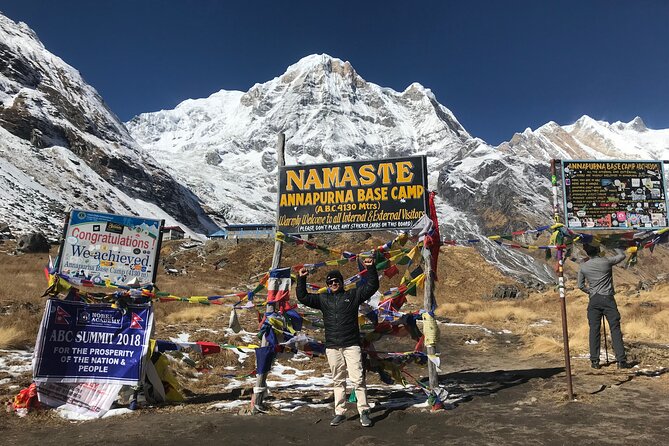
From Bamboo, the trail climbs toward the Himalaya Hotel, passing Dovan and the section known as the Weeping Wall. The day also includes a local shrine and more forest walking before reaching Deurali.
The five-hour estimate makes this shorter than Day 2, but it is still an uphill day. The name Weeping Wall refers to water running down the rock face, and the route’s character becomes more enclosed and rugged as you move higher. You should expect a slower pace than on a flat road or village path.
This is where a good guide earns their fee. The included guide is not simply someone who points out the direction. Your guide watches the pace, helps organize tea house stops, and can respond if the weather or your energy changes. Previous trips have used guides including Amar, Laxman, Sanjay, and Andrea, but your assigned guide may be different.
Deurali is a sensible overnight stop before the final push to base camp. You will want an early night. Keep your water purification supplies close, since the package includes purification equipment and the route requires regular drinking.
A few more things to do in Pokhara worth a look
- Poon hill Trek 3 days
★ 5.0 · 176 reviews - Trekking in Annapurna/Langtang/Everest/Upper Mustang regions
★ 5.0 · 161 reviews - Pokhara: 4-Day Ghorepani, Poonhill & Ghandruk Mountain Trek
★ 5.0 · 132 reviews - Ghorepani – Poon Hill Trek 3N-4D
★ 5.0 · 125 reviews
Day 4: Along the Modi River to Annapurna Base Camp
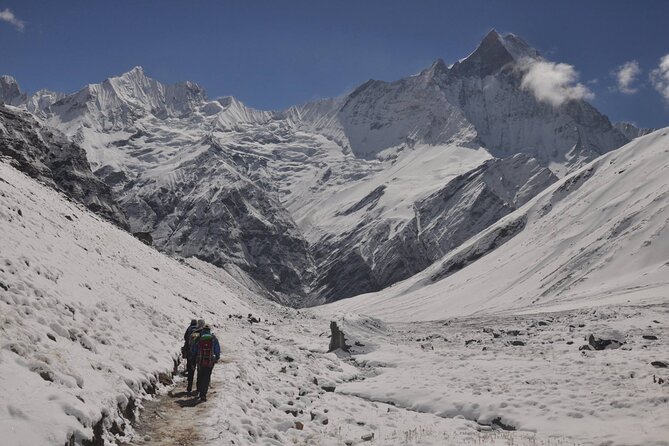
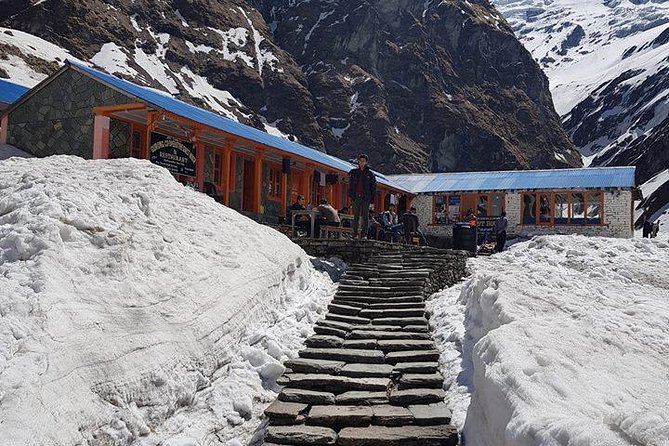
Day 4 is the emotional high point of the trek. Leaving Deurali, you climb beside the Modi River and move beyond the forest toward the higher mountain zone. The trail passes carefully stacked rocks, an icy cave, and then continues toward Machhapuchhre Base Camp before reaching Annapurna Base Camp.
The route is listed at about five hours, but the effort can feel greater than the number suggests. You are climbing, the surroundings are more exposed, and the trail may be rougher. The final approach gives you the sense of entering a huge natural amphitheater, with mountains rising around the basin.
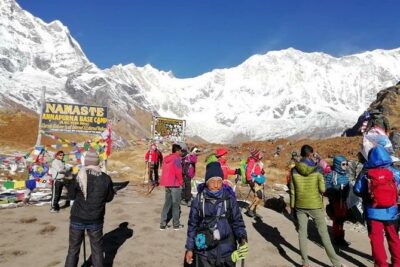
At base camp, the reward is not a single viewpoint. It is the full mountain setting: Annapurna I, Machhapuchhre, and the surrounding peaks filling your view. The next morning is set aside for further exploration, so you do not need to treat your arrival as the only chance to look around.
This is also the point where you need to listen to your body. The tour requires moderate physical fitness, but the high-altitude setting adds another concern. If you feel unwell, tell your guide immediately. The package includes oxygen saturation checks and assistance with emergency rescue evacuation, but those services are safeguards, not a substitute for travel insurance.
Day 5: A long base camp morning and the return
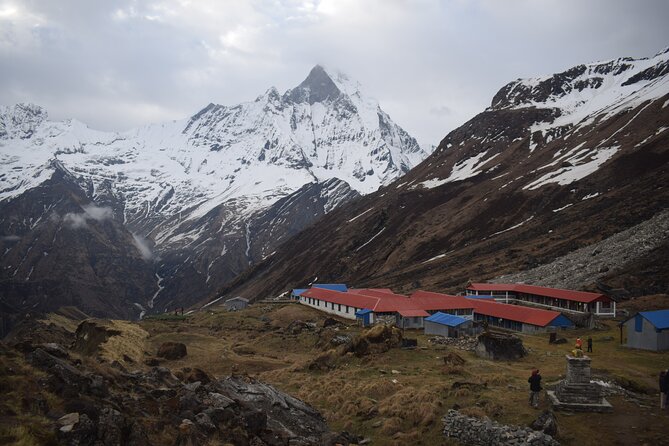
The schedule gives Day 5 about eight hours and begins with time to explore Annapurna Base Camp. This is the day to take in the 360-degree mountain views, photograph the rock formations, and appreciate how far you have walked from the road.
I like the decision to allow a base camp exploration period rather than treating the arrival as a quick photo stop. Morning light can make the mountains feel especially dramatic, though clear conditions are never guaranteed. Weather is a central part of any Himalayan plan, and the company reserves the right to change the date or provide a full refund if poor weather cancels the experience.
The second half of this day is the major return section. The schedule connects the route back toward Bamboo, with the total walking time listed at eight hours. That is a demanding day, even though much of it is downhill. You should keep your day bag light, protect your knees, and avoid spending all your energy at base camp before the return begins.
The itinerary’s wording around the exact overnight stop is brief, so confirm it with the operator before departure. This is one of the few practical points I would clarify in advance.
Day 6: Bamboo forest and Jhinu Danda hot spring
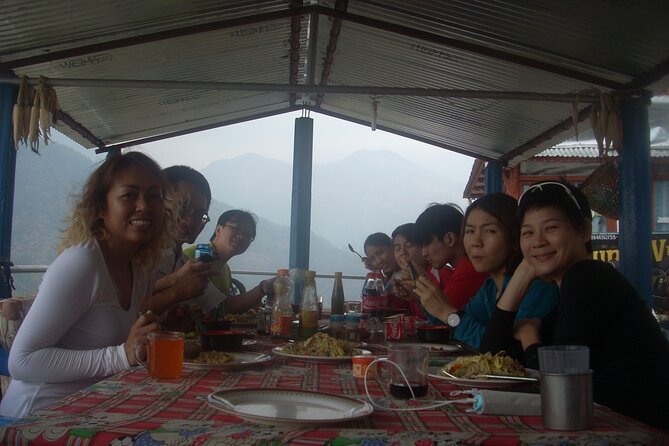
Day 6 continues through bamboo forest, along a narrow ridge toward Sinuwa, and downhill toward the Chhomrong River. The destination is Jhinu Danda, known for its hot spring.
After several days of stairs and mountain walking, the hot spring is a welcome change. It gives you a chance to relax your legs and enjoy a different side of the Annapurna region. The route is still listed at six hours, so do not picture this as a rest day from start to finish.
The mix of uphill and downhill walking is typical here. You may feel that the return should be easy because you are descending toward lower ground, but the repeated steps can be tiring. A private guide can help you choose a sensible pace and make sure nobody in the group gets left behind.
This day also brings you back toward the village world that marked the start of the trek. The contrast is part of the appeal: forest, river, ridge, tea houses, and a hot spring all appear within the same short trip.
Day 7: Returning to Pokhara by jeep
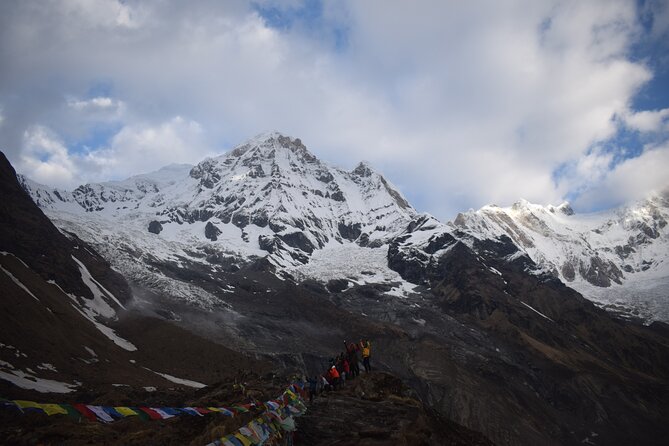
The final morning begins with breakfast and another chance to look toward Annapurna I and Machhapuchhre. You then walk a short distance to Samrung and take a private jeep back toward Pokhara along the Baglung route.
The listed duration is about three hours, so the final day is much lighter than the base camp return. Ending back at the original meeting point in Pokhara makes onward planning easier. You can arrange a hotel there separately, but accommodation in Pokhara is not included in the $625 price.
The road journey is also a reminder of how much ground this trek covers. You begin with a road transfer, spend the middle days on foot, and return by vehicle after reaching a remote mountain destination. That combination makes the seven-day plan possible.
What the $625 price includes
At $625 per person, the package offers solid value for a private trek. The price includes a government-registered guide, porters, their expenses, tea house accommodation, meals, permits, and the listed overland transport.
You also receive a trekking map, oxygen saturation checks, water purification supplies, a duffle bag, emergency rescue assistance, government tax, service charges, and public liability insurance. Seven breakfasts, six lunches, and six dinners are included, which matches a trek that begins and ends with transport around the walking days.
You still need to budget for hotel rooms in Pokhara and Kathmandu, travel insurance, and tips for your guide and porter. Travel insurance is especially important here. Emergency assistance is listed, but insurance gives you financial protection if you need treatment, evacuation, or trip changes.
The price is strongest if you value convenience and private support. If you prefer to arrange every tea house, permit, and vehicle yourself, you might find a cheaper basic trek. You would also take on more responsibility. For many people, that trade is not worth it on a seven-day mountain route.
Who should book this trek
I would choose this trek if you want Annapurna Base Camp in a short, organized format and prefer a private guide to a large group. It suits people who enjoy village routes, basic tea house lodging, mountain scenery, and a clear physical challenge.
You should have moderate fitness and be comfortable walking for up to eight hours. The 2,500 stone-step descent on Day 2 is the detail I would take most seriously. If stairs, steep climbs, or long downhill sections are difficult for you, ask about a slower or longer version before booking.
The trip also works well for people who want flexibility. Previous arrangements have included custom six-day and seven-day plans, and the company has adjusted schedules for personal needs. Do not assume every change is possible, but ask early rather than waiting until you are on the trail.
The private setup is useful for couples and small groups with shared goals. It is less suitable if you want a quiet luxury holiday, a fully independent trek, or a trip with no fixed physical demands.
Practical details to settle before departure
You meet in Pokhara Lakeside at 8:15 am, and the activity ends at the same meeting point. Pickup is offered, and confirmation is provided at booking. The tour is near public transportation, but your own hotel in Pokhara is not part of the package.
Ask the operator to confirm the assigned guide, porter arrangement, exact overnight stops, and the road transfer details. Also ask how your group’s bags will be divided between the porter and your day pack. You want easy access to water, warm layers, personal medication, and rain protection while walking.
Free cancellation is available up to 24 hours before the start time for a full refund. Changes made inside that 24-hour window are not accepted, and poor weather may lead to a different date or a full refund.
Should you book it?
Book this trek if you want a well-supported private route to Annapurna Base Camp and you are ready for long stair sections, basic lodging, and a demanding return day. The guide, porter, meals, permits, transport, and safety support give the $625 price real value.
I would pause before booking only if you need a slow itinerary, dislike tea house accommodation, or have doubts about handling six to eight hours of mountain walking. Ask for a precise day-by-day plan and your guide’s name first. For a fit group with limited time in Nepal, this is a practical way to reach one of the Himalayas’ great mountain viewpoints.
FAQ
Where does the Annapurna Base Camp trek start?
The trek starts at a meeting point on Lakeside Road in Pokhara, Nepal. The stated start time is 8:15 am.
How long does the trek last?
The experience lasts approximately seven days and ends back at the meeting point in Pokhara.
Is this a private trek?
Yes. Only your group participates, with a guide and porter arranged for your party.
Are a guide and porter included?
Yes. The package includes one government-registered trekking guide, porters, and their expenses.
Are meals included?
Yes. The package includes seven breakfasts, six lunches, and six dinners during the trek.
Is tea house accommodation included?
Yes. Lodge accommodation along the trekking route is included. Hotel accommodation in Pokhara and Kathmandu is not included.
Do I need travel insurance?
Yes. Travel insurance is not included, and you are advised to arrange it before the trek.
What happens if bad weather cancels the experience?
If poor weather causes cancellation, you are offered a different date or a full refund. For a full refund under the standard cancellation policy, you must cancel at least 24 hours before the start time.
Just added in Pokhara
- Tandem Paragliding in Pokhara★ 4.8 · 8 reviews
- Seti George and Thrilling Suspension Bridge Tour at Pokhara★ 4.5 · 3 reviews
- Pokhara: Suspension Bridge Private Tour- 30 Min Village Walk★ 4.8 · 9 reviews
- Pokhara: Visit Best Seven Tourist Destination by Sharing Bus★ 3.4 · 10 reviews
- Pokhara: Sunrise Tour to Sarangkot★ 5.0 · 3 reviews
- Pokhara Sightseeing By Bus: Day Trip★ 4.6 · 7 reviews
- Pokhara Sightseeing By Bus – Day Trip★ 3.2 · 8 reviews
- Pokhara Sarangkot : Cable Car (Himalayas) Sunrise Tour★ 5.0 · 6 reviews
Annapurna Base Camp Treks, compared.
Kathmandu to Annapurna Base Camp (ABC) 5-Day Trek
Read our review →
11-Day Hike Tour to Annapurna Base Camp Bliss in Kathmandu
Read our review →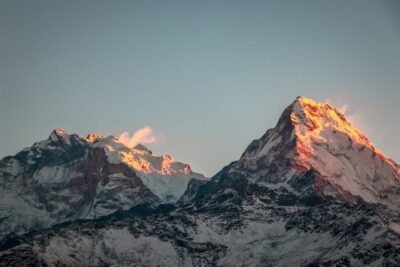
Browse the lists this tour appears in