
Reviewed · ANNAPURNA BASE CAMP TREKS
Annapurna Base Camp, Nepal 10 days
Annapurna Base Camp is a classic Himalayan walk, but this 10-day version keeps the plan practical: you ride from Kathmandu to Pokhara, walk through Gurung villages and rhododendron forest, then reach the high mountain bowl below Annapurna. The route gives you big mountain scenery without a rushed schedule, though several days still demand six to eight hours on foot.
I like the private format, since your guide can adjust the pace and explain the spiritual and environmental importance of the Annapurna Sanctuary. I also like the mix of village life, teahouse nights, suspension bridges, and high-altitude views rather than a trek made only of destination photos.
The main caution is altitude and effort. You climb and descend thousands of stone steps, walk up to about 4,130 meters, and spend nights with hot water, Wi-Fi, and battery charging either unavailable or sold separately. You should arrive in good walking shape.
Key points before you book
- Kathmandu to Pokhara takes about seven hours by tourist bus, so your first day is largely a transport day.
- The route reaches Annapurna Base Camp after passing Machhapuchhre Base Camp, with the hardest walking concentrated in the higher sections.
- Private guiding lets you walk at your own pace, a useful advantage on steep steps and long days.
- Accommodation combines hotels and teahouses, giving you comfort in the cities and simple mountain lodging on the trail.
- Most meals are included, with 10 breakfasts, 8 lunches, and 7 dinners listed in the package.
- The trek suits fit hikers, not anyone looking for a gentle sightseeing holiday.
Why this Annapurna trek works in 10 days
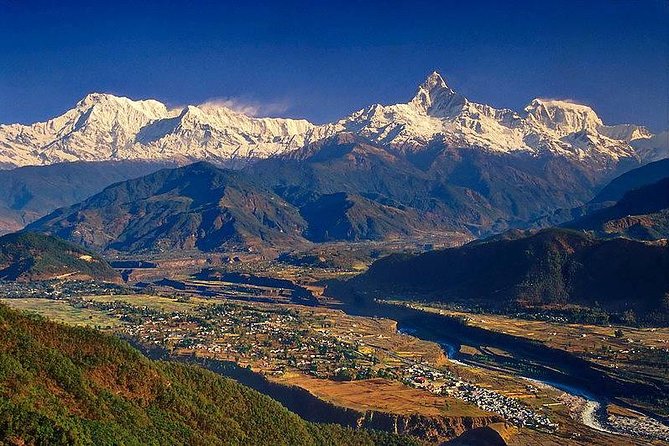
The Annapurna Base Camp route takes you from the warm foothills near Pokhara into a high natural amphitheater surrounded by Himalayan peaks. You begin among villages and cultivated hillsides, then move through forest, river valleys, and increasingly open mountain country.
The route is not just a march to a viewpoint. Ghandruk brings Gurung culture and village architecture. Chhomrong introduces the serious stair work. Bamboo and Deurali bring damp forest and cooler air. The final approach opens toward Machhapuchhre, Annapurna South, Hiunchuli, and the sanctuary itself.
At $848 per person, the price is attractive for a private 10-day trek that includes accommodation, transportation, most meals, and guiding. The value depends on what you expect. This is not an all-inclusive mountain holiday: hot water, hot showers, Wi-Fi, and battery charging are extra, and crew tips are not included.
Still, the package covers the costly framework of the trip. You are not arranging each hotel, transfer, meal, and mountain night separately. The private setup also matters if you prefer not to match your pace to a large group.
Other Annapurna routes from Kathmandu:
- Annapurna base camp trek 5 Days
★ 5.0 · 252 reviews - Annapurna Base Camp Trek
★ 5.0 · 111 reviews - Kathmandu to Annapurna Base Camp (ABC) 5-Day Trek
★ 5.0 · 102 reviews
Day 1: Seven hours from Kathmandu to Pokhara
The trip starts early, with a listed meeting time of 6:15 a.m. The drive from Kathmandu to Pokhara takes about seven hours by tourist bus and covers roughly 200 kilometers.
That sounds short on paper, but Nepal’s road journeys can take most of a day. Treat this as a scenic transfer rather than wasted time. You get your first broad look at rural Nepal before reaching Pokhara at about 820 meters.
Pokhara is the practical gateway for the trek. It is much lower than the mountains ahead, so you spend the night at a sensible elevation before walking higher. The air-conditioned vehicle is a welcome feature on the road portion.
The drawback is simple: after an early start and a long ride, you do not get a walking day here. If you want extra time in Pokhara, ask before booking, since this schedule moves quickly into the mountains.
Day 2: Ghandruk and the first mountain village
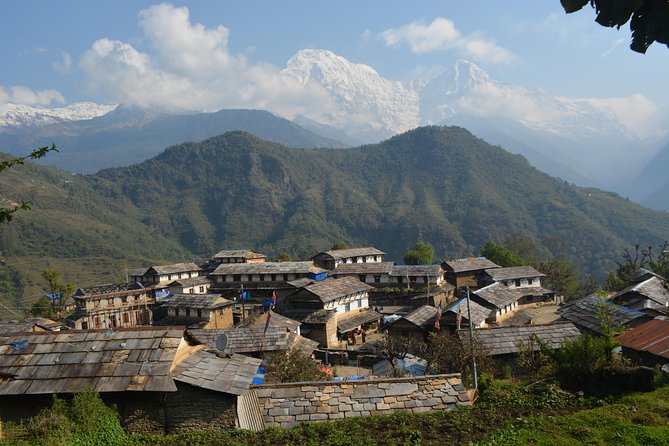
After breakfast, you drive about two and a half hours to Siwai. From there, the walking begins, with roughly four hours on the trail to Ghandruk.
Ghandruk is one of the most rewarding early stops because it is a beautiful village closely associated with the Gurung community. The cultural setting gives the trek a human scale. You are not simply walking from one altitude marker to another. You are passing through a lived-in mountain community.
If time allows, there may be a chance to visit the Gurung Museum. The schedule does not promise this as a fixed stop, so treat it as a possible extra rather than the main reason to book the day.
The first hiking day is moderate by the standards ahead, but the transfer and trail together make it a full day. Good shoes matter from the start. The route begins to show you what this trek is really about: uneven paths, village steps, changing elevations, and views that reward steady walking.
Day 3: From Ghandruk toward Chhomrong
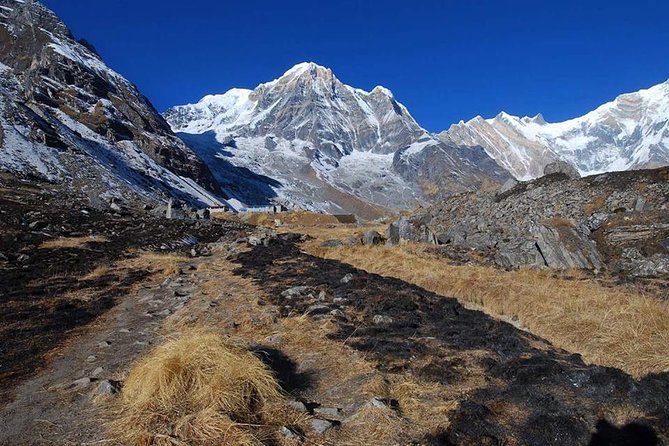
This day includes about six hours of walking and brings some of the first strong views of Annapurna South, Hiunchuli, Machhapuchhre, and Gangapurna.
You climb for about an hour to Kimrungdanda, where the mountain views begin to open. This section gives you a useful sense of the route’s rhythm. There are climbs, descents, forested stretches, and sudden views across the hills.
Chhomrong is one of the key settlements on the Annapurna Base Camp route. It is also where the stairs become more serious. The schedule labels this stop as Chhomrong, and the following day also begins there, so your exact overnight arrangement should be confirmed with Third Eye Adventure before departure.
This is a good day to settle into your walking pace. Do not race the early climb. Your guide can help you keep a steady rhythm, which matters more than speed once the route gets higher.
Same base, a different kind of day:
- Everest Base Camp Trek – 14 Days
★ 5.0 · 1,499 reviews - Private Kathmandu Sightseeing Tour | UNESCO World Heritage sites
★ 5.0 · 756 reviews - Everest Base Camp Helicopter Tour landing at Everest View Hotel
★ 5.0 · 668 reviews - Half day cooking class in Thamel kathmandu
★ 5.0 · 607 reviews
Day 4: Chhomrong’s 2,500 steps and the forest trail
The trail out of Chhomrong drops via about 2,500 stone steps before crossing the Chhomrong Khola on a swaying suspension bridge. Then comes an uphill climb to Sinuwa and a forest walk toward Kuldighar and Bamboo.
The day takes about five hours, but the number of steps makes it feel more demanding than the clock suggests. The unusual part is the repeated loss and regaining of elevation. In the Himalayas, a downhill section is not always an easy section, because every descent may be followed by another climb.
The forest offers shade and a cooler setting. It also changes the mood of the trek. You move away from open village views and into a more enclosed trail corridor, with the river and vegetation close by.
A private guide is particularly useful here. The pace should leave enough energy for the climb after the bridge. If your knees dislike long descents, trekking poles would be sensible, though they are not listed as part of the package.
Day 5: Bamboo to Deurali at 3,230 meters
From Bamboo, you walk for four to five hours toward Deurali, which sits at about 3,230 meters, or 10,595 feet.
The trail passes through bamboo forest described as damp and cold. It then climbs steadily, with fewer sharply steep sections. After Himalaya Hotel, the surroundings begin to feel more exposed and more distinctly high mountain.
This is an important transition day. You are not yet at base camp, but altitude starts to affect how the walk feels. A distance that looked easy at home can take longer when you are climbing higher and breathing colder air.
The accommodation is in a teahouse, so expectations should be modest. Teahouses provide the practical basics of a mountain route, but hot water, hot showers, Wi-Fi, and charging are not included in the trip price. Bring a power bank and warm layers rather than counting on the lodge to provide every comfort.
Day 6: Machhapuchhre Base Camp to Annapurna Base Camp
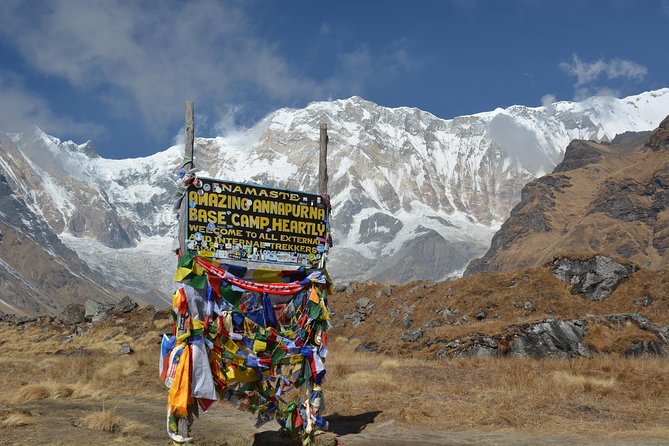
This is the central day of the trek. The route climbs through a river bed and then follows a steep trail along the mountainside. The section from Bagar to Machhapuchhre Base Camp is described as strenuous.
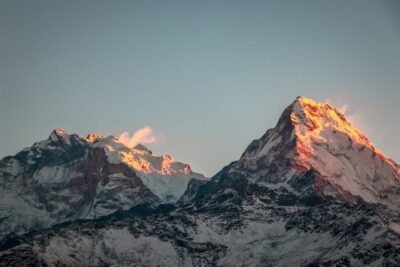
From Machhapuchhre Base Camp, the route continues toward Annapurna Base Camp. The mountain setting becomes the main event, with the trail reaching the foot of some of Nepal’s most famous peaks. Annapurna South, Hiunchuli, and Machhapuchhre are among the major names connected with the route.
The exact walking time is about six hours, though altitude can make this day feel longer. The goal is not to hurry. Your guide can set a measured pace and watch how you are handling the climb.
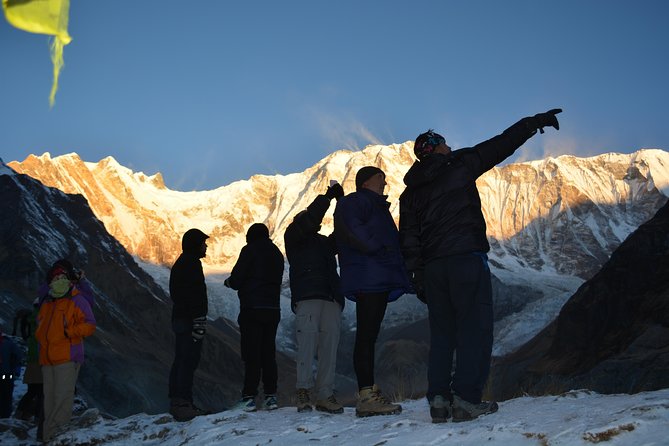
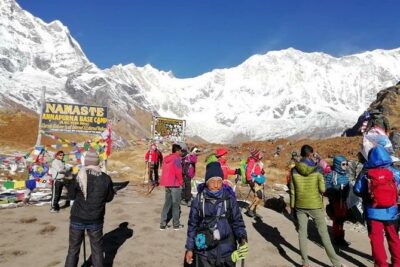
At Annapurna Base Camp, you are inside the Annapurna Sanctuary, a high mountain bowl surrounded by peaks. This is where the spiritual and environmental side of the trek becomes more than a talking point. The setting feels enclosed by mountains, and the change from village paths to high alpine terrain is striking.
You should be ready for simple accommodation and basic facilities at this altitude. The reward is not comfort. It is the chance to wake or spend time in a place that feels physically remote and visually immense.
Day 7: Eight hours downhill to Bamboo
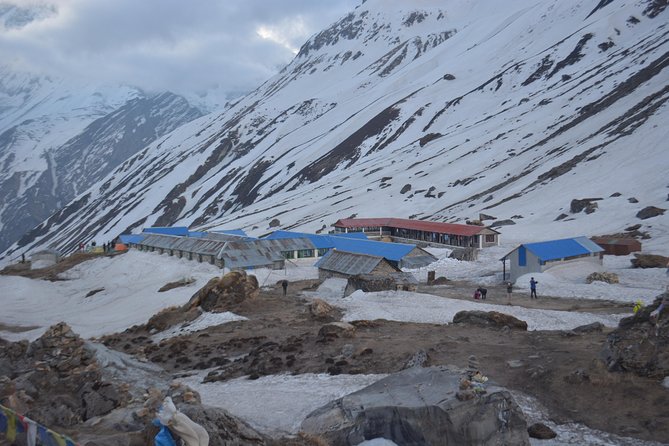
After reaching base camp, you retrace the route to Bamboo. The listed walking time is about eight hours, making this one of the longest days of the trip.
The direction is mostly downhill, but downhill does not mean effortless. Long descents can be hard on knees and feet, especially after the high point of the trek. The surrounding mountain views help, but you still need to manage your energy carefully.
This is where a private itinerary offers a practical benefit. You are not required to keep up with a large group or wait for one. You can discuss breaks with your guide and keep the day moving at a pace that fits your condition.
Pack snacks within easy reach, keep drinking water regularly, and use the rest stops well. Meals are included according to the package, but extra snacks and drinks are not specifically listed, so budget separately for those small purchases.
Day 8: Bamboo to Jhinu Danda
From Bamboo, the trail climbs to Kuldighar, descends to Chhomrong Khola, and then climbs the stone steps to Chhomrong. After that, you descend again to Jhinu Danda.
The day takes about six hours and is a good example of Annapurna’s constant up-and-down walking. You may gain and lose elevation several times before reaching your bed for the night.
Jhinu Danda is a pleasant final mountain stop because it places you closer to the lower hills again. The route description does not promise a particular attraction or activity there, so you should think of it mainly as a resting point after the day’s stairs.
The repeated steps are the key challenge. If you are fit and used to long walks, the day should be manageable. If your training has been mostly flat walking, the stairs will be the part that tests you.
Day 9: Jhinu Danda to Siwai, then Pokhara
You walk from Jhinu Danda to Siwai in about six hours. Along the way, the route offers western Nepal hill scenery and a view of a wild bee hive under a cliff. Lunch is taken on the way.
That bee hive is the sort of small detail that helps break up a long trek. The route is no longer about reaching a higher point. It is about noticing the countryside as you return toward the road.
At Siwai, the walking ends and you board a vehicle to Pokhara. This arrangement gives you a clear finish to the trek, but it also makes the day longer than the hiking time alone suggests.
Once in Pokhara, you return to a hotel rather than a teahouse. That change should feel welcome after the mountain nights. You may also have time to rest, depending on the transport schedule.
Day 10: Returning to Kathmandu
After breakfast, you drive back to Kathmandu, again taking about seven hours. A flight is available for an additional $100, according to the trip details.
The bus keeps the base price lower, but it consumes most of the day. The flight is worth considering if you have an onward connection or simply want to avoid another long road journey. Confirm the current price and availability before relying on it.
The schedule allows time to look around Kathmandu shops, buy souvenirs, and rest. Since the return is long, do not book an important international departure too tightly against the planned arrival.
Guides, private pacing, and support
The company is Third Eye Adventure P. Ltd. Named guides connected with Annapurna and related Nepal treks include Sandip, Resham GC, Nitesh, and Raju. You should confirm your assigned guide before departure, since a specific name is not guaranteed by the trip description.
The strongest pattern in the guide feedback is personal care. Sandip is described as cheerful and helpful, while Resham GC is praised for welcoming and attentive support. Nitesh and the porters are also described as helpful during the route.
That matters on a high-altitude trek. A guide is not just there to point out the path. You need someone who can help with timing, explain the route, and notice when you are struggling. The private format gives you more room to communicate honestly about pace and comfort.
The group is limited to your own party, which is useful for couples, friends, families with fit older children, or solo hikers who want organized support without joining a fixed group.
What the $848 price really covers
The listed price is $848 per person. It includes hotels and teahouses, an air-conditioned vehicle, and most meals:
- 10 breakfasts
- 8 lunches
- 7 dinners
The price does not include hot water, hot showers, Wi-Fi, battery charging, or tips for the crew. Those exclusions are normal concerns on a teahouse trek, but they can affect your daily spending.
The package offers good value if you want a private trek with transport and meals arranged. It is less attractive if you expect hotel-style facilities every night or a completely cash-free trip.
Free cancellation is available up to 24 hours before the experience begins. Poor weather or failure to reach the minimum number of participants can lead to a different date, another experience, or a full refund.
Who should book this trek
You should consider this trek if you want:
- A private route with flexible pacing
- A serious but relatively short Himalayan trek
- A mix of cultural villages, forest paths, and high mountain scenery
- Teahouse accommodation instead of camping
- Most meals and transport handled in advance
- A guide who can explain the Annapurna Sanctuary
You should think twice if you dislike steep stairs, long walking days, basic lodging, or extra charges for hot water and charging. The trip requires a moderate level of fitness, and the day to Annapurna Base Camp is not a casual walk.
Final call: a strong value for fit hikers
I would book this Annapurna Base Camp trek if I wanted a private, organized route and was comfortable with simple mountain lodging. The $848 price covers the main structure of the trip, while the 10-day plan gives you time to reach base camp without turning every day into a race.
The best reasons to choose it are the private pace, the guide support, and the changing scenery from Ghandruk to the Annapurna Sanctuary. The main reasons to hesitate are the long bus rides, repeated stone steps, high altitude, and extra costs for basic teahouse comforts.
Before paying, confirm the exact hotel and teahouse standards, the name of your guide, the current transport plan, and what permits or other fees are included. If those details suit you and you are ready to walk six to eight hours on several days, this is a practical way to reach Annapurna Base Camp with strong support and a manageable schedule.
FAQ
How long is the Annapurna Base Camp trek?
The experience lasts approximately 10 days, beginning in Kathmandu and ending in Kathmandu.
What time does the trek start?
The listed start time is 6:15 a.m.
Is transportation included?
Yes. The package includes an air-conditioned vehicle. The Kathmandu to Pokhara and Pokhara to Kathmandu journeys take about seven hours by tourist bus. A flight back to Kathmandu can be arranged for an additional $100.
What meals are included?
The package lists 10 breakfasts, 8 lunches, and 7 dinners.
Are hot showers, Wi-Fi, and battery charging included?
No. Hot water, hot showers, Wi-Fi, and battery charging during the trek are specifically excluded.
Is this a private tour?
Yes. Only your own group participates, and the itinerary can be customized.
Just added in Kathmandu
- Kathmandu to Chitwan Tour by Tourist Bus – A Convenient and Affordable Way★ 4.0 · 4 reviews
- Changunarayan Hill to Telkot Hike Near Kathmandu Day Tour★ 5.0 · 6 reviews
- Mt Everest Base CampTrek | Budget Package★ 5.0 · 4 reviews
- Chitwan Jungle Safari 3-Day Tour★ 5.0 · 9 reviews
- Chandragiri Hill Station Tour by Cable Car★ 5.0 · 4 reviews
- Chandragiri Hills cable car day trip, private car with driver from Kathmandu★ 5.0 · 8 reviews
- Chandragiri to Taudaha Nature Day Hiking from Kathmandu★ 5.0 · 13 reviews
- Chandragiri Cable Car & Monkey Temple Private Guided Day Tour★ 5.0 · 5 reviews
Annapurna Base Camp Treks, compared.
Kathmandu to Annapurna Base Camp (ABC) 5-Day Trek
Read our review →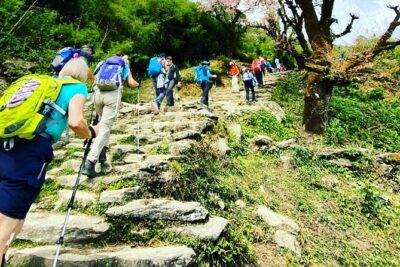
11-Day Hike Tour to Annapurna Base Camp Bliss in Kathmandu
Read our review →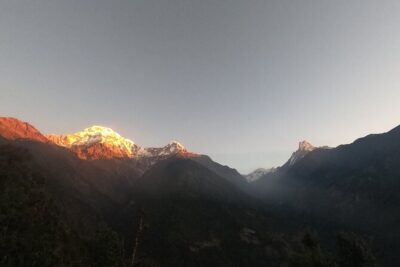
Browse the lists this tour appears in