
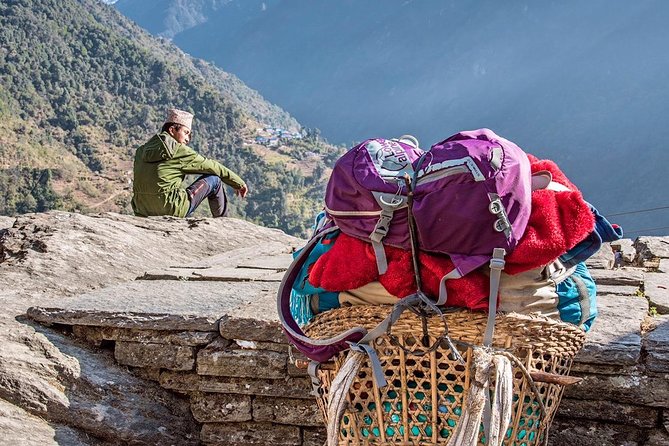
Reviewed · ANNAPURNA BASE CAMP TREKS
Annapurna base camp trek 5 Days
The best part of this six-day Annapurna Base Camp journey is the changing scenery: a long ride from Kathmandu, easygoing Pokhara, village trails, forest shade, and finally a high mountain bowl beneath Annapurna and Fish Tail. It gives you a classic Himalayan trek without asking you to organize every lodge, meal, permit, and transfer yourself.
I like the small group limit of 12, which should make the walking pace and lodge arrangements easier to manage. I also like the practical inclusions: a local English-speaking guide, trekking permits, five breakfasts, five lunches, five dinners, sleeping bags, down jackets, and ground transport. The main caution is organization. Two poor experiences point to forgotten water-purification tablets and a guide who did not seem fully familiar with the plan, so confirm those details before setting out.
Key points to know before booking
- Six calendar days, with five days of included trek meals: The first day is the bus from Kathmandu to Pokhara, while the walking route begins on Day 2.
- A classic forest-to-mountain route: Expect rhododendron, bamboo, and oak woods before the high views around Annapurna Base Camp.
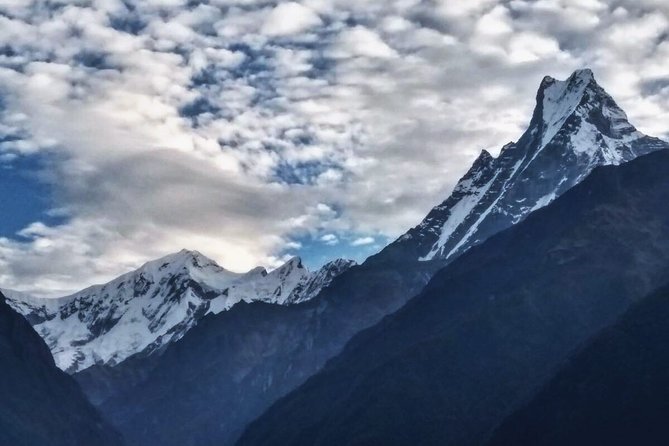
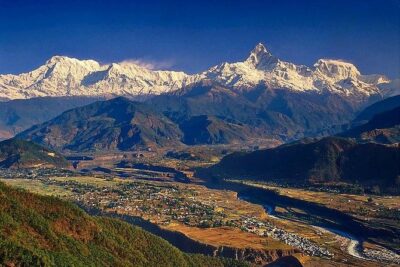
- Fish Tail is a major visual reward: Machhapuchare appears above the trail and is one of the trip’s signature sights.
- Transport is mostly arranged for you: Airport transfers, a tourist bus to Pokhara, and local jeep connections are included.
- The package costs $699 per person: That is useful value if you need gear, permits, meals, lodging, and a guide bundled together.
- Moderate fitness is required: You should be ready for several hours of walking on mountain trails, plus steep descents.
What the $699 price really covers
At $699 per person, this is not simply a guided walk. The price combines airport pickup and drop-off, the tourist bus from Kathmandu to Pokhara, local ground transport, tea house lodging, meals during the trek, permits, a guide, a down jacket, sleeping bags, and several extras.
That bundle matters in Nepal. A self-arranged trek can look cheaper at first, but the separate costs add up quickly once you include permits, transport, lodge rooms, food, and cold-weather equipment. Here, you do not need to pack a sleeping bag or down jacket, which is useful if this is your only Himalayan trip.
The package also includes an ART hiking T-shirt, a certificate of achievement, and a farewell dinner. Those are pleasant extras, but I would judge the trip mainly by the core services: the guide, transport, food, permits, and lodge arrangements.
You still need to budget for food in Kathmandu and Pokhara, your arrival visa, tips for the guide and staff, and travel insurance. The included information refers to insurance among the trek package items, but travel insurance is also specifically excluded, so you should ask the operator exactly what the included insurance covers. Do not assume it replaces your own policy.
Other Annapurna routes from Kathmandu:
- Annapurna Base Camp Trek
★ 5.0 · 111 reviews - Kathmandu to Annapurna Base Camp (ABC) 5-Day Trek
★ 5.0 · 102 reviews - Annapurna Base Camp Trek 12 Days
★ 5.0 · 85 reviews
Day 1: Seven hours from Kathmandu to Pokhara
The trip begins early, at about 6:45 in the morning, with a tourist bus along the Prithvi Highway. The drive takes roughly seven hours. This is a full transport day, not a mountain-walking day, so you should keep your expectations realistic.
The road trip gives you a useful transition from Kathmandu to Pokhara. Once you arrive, the plan includes time around Pokhara Lakeside, the city’s popular waterfront area. It is a gentler start than rushing straight into the hills, and it gives you a chance to see one of Nepal’s main tourist towns before the walking begins.
The main drawback is the road time. Seven hours on a bus can feel long, especially after an early pickup. Keep water and a few snacks close, and place anything you need during the ride in a small day bag rather than buried in your main luggage.
Your overnight stay is in Pokhara, with food there not included in the package. That makes this a good place to plan your first independent meal and check that your trekking clothes, medication, and personal supplies are ready.
Day 2: Jeep travel and the first trail near Chhomrong
After breakfast at your Pokhara hotel, you take a local jeep toward Siwai. The drive takes about two hours, with a stop at Birethati, described as an entry point to the route. From there, the trail leads toward the Chhomrong area and the Chhomrong Cottage.
This day introduces the character of the trek. You move away from city roads and into mountain villages, with the guide handling the route and lodge arrangements. The walking time is listed at about five hours, so you should expect a proper trekking day rather than a short stroll.
Chhomrong is an important overnight point because it places you inside the Annapurna trail system. The appeal here is not one single attraction. It is the shift from road travel to foot travel, with village paths and mountain scenery beginning to dominate your day.
The practical issue is that the transport and walking are closely linked. A delayed jeep could affect the start of the hike, so keep your morning flexible. You also need to be comfortable with local road travel, since the included vehicle is a local jeep rather than a private luxury transfer.
Day 3: Upper Sinuwa and the first serious mountain rhythm
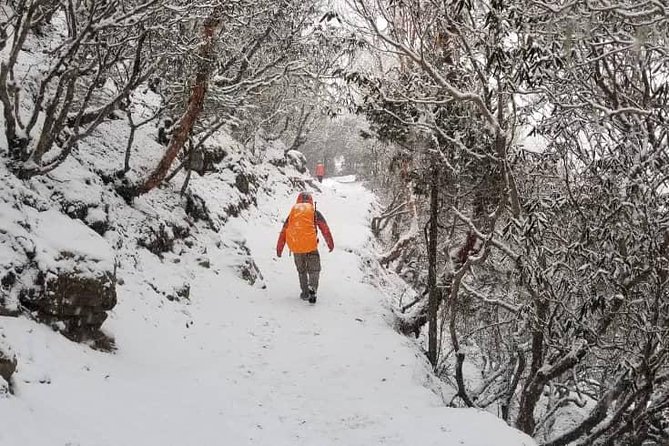
Day 3 begins with tea and, weather permitting, sunrise views over the white mountains from the lodge. Breakfast follows before the trail continues toward Upper Sinuwa, where the Sinuwa Hilltop Lodge and Restaurant is listed as the stop.
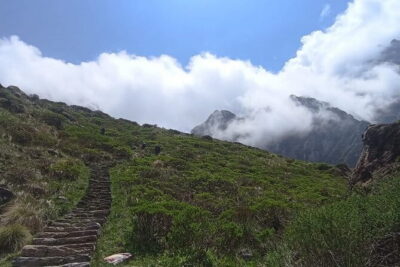
The route passes through the forest belt that gives this trek much of its character. Rhododendron, bamboo, and oak create a softer setting than the bare high mountains, and the trees provide welcome shade. The walk is listed at about six hours, which makes this one of the days when a steady pace matters more than speed.
Upper Sinuwa gives you a useful taste of tea house trekking. Accommodation is functional rather than polished, and the point is to have a bed, food, and a warm place to rest before the next section. Your guide should be managing the lodge arrangements, but it is still wise to keep your sleeping bag and warm layers easy to reach.
One odd detail deserves attention before you book. The schedule lists Day 3 as six minutes, while the description clearly presents it as a full trekking day with breakfast, forest walking, and an overnight stay. Treat the six-minute figure as a likely data error and ask Alpine Ramble Treks to confirm the actual walking time.
A few more things to do in Kathmandu worth a look
- Everest Base Camp Trek – 14 Days
★ 5.0 · 1,499 reviews - Everest Base Camp Trekking
★ 5.0 · 485 reviews - Nagarkot Sunrise View and Day Hiking from Kathmandu
★ 5.0 · 471 reviews - Annapurna Circuit Trek with Tilicho Lake
★ 5.0 · 368 reviews
Day 4: Reaching Annapurna Base Camp
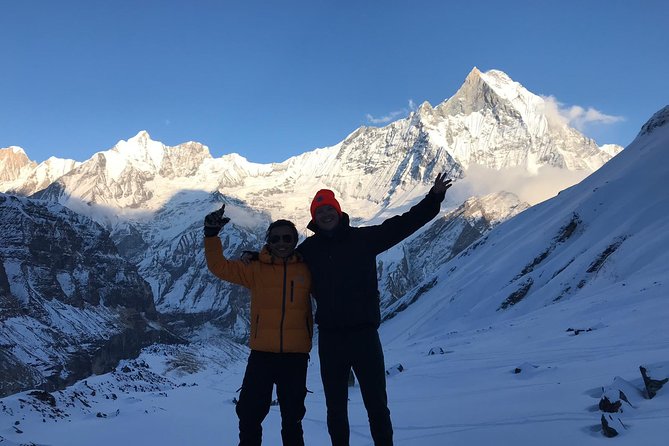
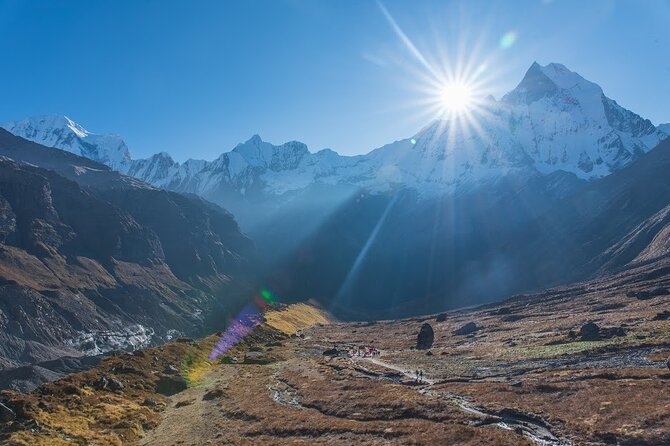
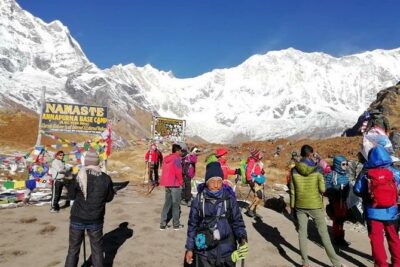
Day 4 is the main prize. After breakfast, you walk toward Annapurna Base Camp, described as the base camp of the world’s 10th-tallest mountain. This is the day when the route’s earlier forests give way to a much more exposed mountain setting.
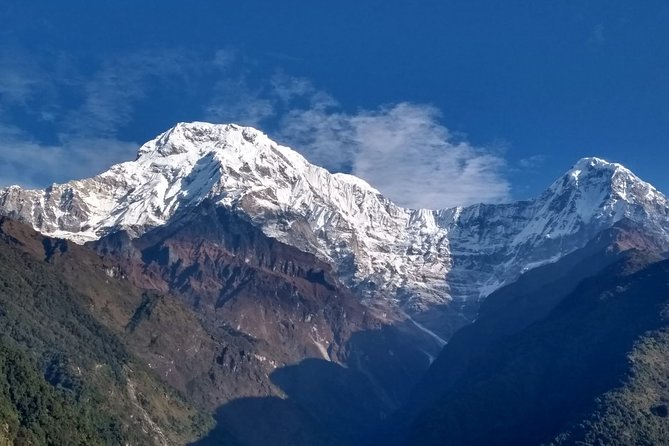
The views are the reason to accept the physical work. Annapurna and Machhapuchare, also called Fish Tail, are the major names to watch for. Fish Tail is especially memorable because of its distinctive shape and its strong presence above the route.
The schedule calls this an exciting day, and that is fair, but you should not mistake excitement for ease. The walking hours are not clearly stated for this day, and the route is at high altitude. Even without a published elevation figure in the tour details, you should expect the air and effort to feel different from the lower trail sections.
A good guide is particularly important here. Your guide should set a sensible pace, explain the day’s plan, and make sure you understand where you are sleeping and when you will eat. The package promises an English-speaking local guide, but because one poor account described a guide who was unfamiliar with the plan, I would confirm the guide’s name and the daily schedule in advance.
Day 5: Sunrise, mountain views, and the return to Upper Sinuwa
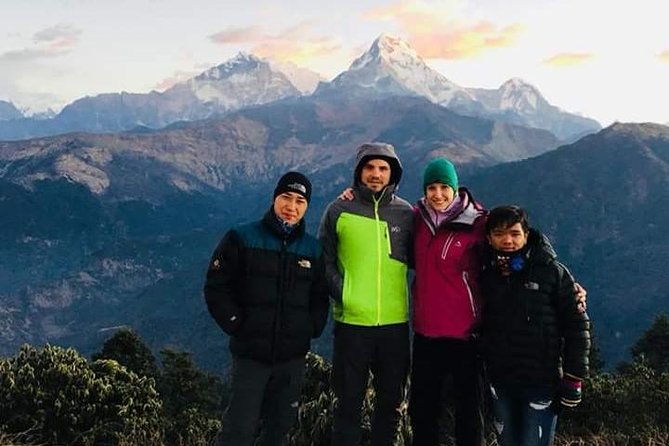
The next morning begins with a short walk upward to watch sunrise over Machhapuchare and Annapurna. This is one of the smartest features of the schedule. Mountain views often change quickly with weather, and an early start gives you a better chance of seeing the peaks before clouds build.
After breakfast, you return toward Upper Sinuwa and the same hilltop lodge area. The day is listed at about six hours, so it is still a substantial walk. The return route lets you see familiar sections from a different angle, while the change in light can make the villages and peaks feel quite different from the outward journey.
The repeated lodging area is practical, not glamorous. You are trading variety for a manageable route and simpler logistics. If you prefer a trip with a new village every night, this may feel repetitive. If you prefer a guide-led route with fewer accommodation changes, it is a sensible arrangement.
Pack patience for the early morning. Sunrise depends on weather, and no guide can guarantee a clear view. The experience is still worthwhile as a mountain walk, but you should not judge the whole trip by one morning’s cloud cover.
Day 6: Chhomrong, Jhinu, and the ride to Pokhara
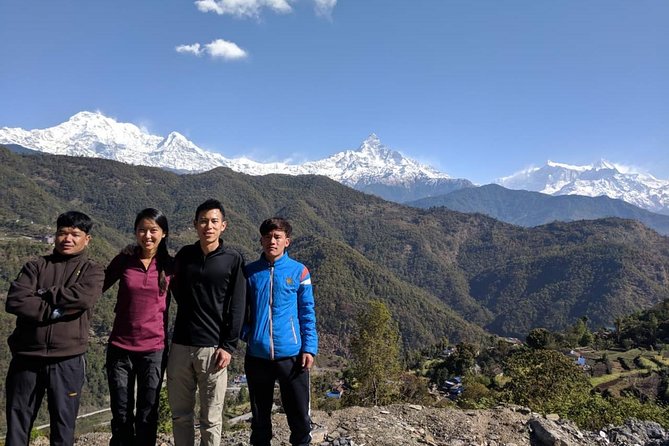
After breakfast, you follow the trail back toward Chhomrong. From there, the route descends steeply to the Jhinu hot spring, then continues down to Siwai for about two hours before you take a local jeep back toward Pokhara.
The steep descent is the day’s main physical challenge. Downhill walking can be harder on your knees than climbing, so trekking poles may be useful, though they are not listed among the included equipment. Take your time and use the guide’s pace rather than trying to hurry toward the vehicle.
Jhinu is an appealing stop because the hot spring breaks up the descent and gives the final walking day a clear point of interest. The schedule does not promise a specific length of time there, so do not assume you will have a long bathing session. Ask the guide about the timing if this is important to you.
The final jeep ride marks the end of the mountain portion. The schedule also lists Pokhara Museum as the stop, though the description focuses on the return from Siwai to Pokhara. Confirm whether the museum visit is included or simply used as a meeting or endpoint reference.
Tea houses, meals, and supplied equipment
Tea house lodging is one of the best ways to experience a Nepal trek without carrying a tent. You sleep in simple mountain accommodation and eat meals along the route, while the guide handles the main arrangements.
The package includes five breakfasts, five lunches, and five dinners. That covers the trekking portion, but not meals in Kathmandu or Pokhara. You should also clarify which meals are provided on the first and final travel days, since the stated meal count does not necessarily cover every meal from airport arrival through departure.
A down jacket and sleeping bag are supplied. That reduces the amount of bulky gear you need to bring, but you still need personal clothing, sturdy walking shoes, toiletries, and any medication. The supplied equipment should be checked before leaving Pokhara.
Water deserves special attention. Two poor experiences specifically describe the guide forgetting the promised tablets for purifying tap water and initially expecting the hikers to pay for bottled water. I would ask before departure how water is handled, confirm that purification tablets are packed, and carry a backup method if possible. This is a small item with a big effect on comfort and cost.
Group size, guide support, and the real trade-off
The maximum group size is 12. That is small enough to keep the group more manageable than a large coach-style trek, while still allowing the operator to spread guide and transport costs across several people.
Your English-speaking local guide is meant to take care of permits, lodging, meals, and the route. That lets you pay attention to the forests and mountains instead of negotiating every practical detail. The value of the package depends heavily on how well that guide communicates.
Before booking, ask for the guide’s name, the daily walking times, the water plan, and the exact lodging points. The supplied details do not provide an individual guide’s name, so do not expect a named guide unless the operator confirms one directly.
This is not a private custom trek. You should expect a shared schedule and a set route. That suits you if you want structure and company. It is less suitable if you want to change the pace, add rest days, or choose your own accommodation.
Who should book this Annapurna trek?
I would recommend this trip to someone who wants a classic Nepal trek but does not want to arrange permits, buses, jeeps, tea houses, meals, and cold-weather gear alone. It is also a good fit if you have a moderate fitness level and can handle several hours of walking on uneven mountain trails.
The route suits hikers who value scenery over luxury. You get forests, village paths, sunrise views, Fish Tail, and Annapurna Base Camp, but the tea houses and local transport are practical rather than plush.
I would be more cautious if you have limited mobility, dislike steep descents, or need a tightly controlled schedule. The experience requires good physical fitness, and the six-minute Day 3 duration shown in the schedule needs clarification. Bad weather can also affect the trip. If the operator cancels for weather, you are offered a different date or a full refund.
Free cancellation is available up to 24 hours before the start time. Inside that window, changes and refunds are not accepted, so keep your plans firm once the final day approaches.
Should you book it?
Book this Annapurna Base Camp trek if you want strong mountain scenery and a practical all-in-one package at $699. The included transport, permits, guide, tea houses, meals, sleeping bags, and down jacket make the price reasonable for a six-day, small-group trip.
Before paying, get written confirmation of four things: the actual Day 3 walking time, the guide’s name, the water-purification plan, and what the included insurance covers. If those answers are clear, this is a sensible short Himalayan trek for a fit hiker who wants help with the details but still wants a real mountain route.
FAQ
How long is the Annapurna Base Camp trek?
The experience lasts approximately six calendar days. Day 1 is mainly the journey from Kathmandu to Pokhara, followed by trekking days and the return to Pokhara on Day 6.
What is included in the $699 price?
The price includes private transportation, airport transfers, the tourist bus to Pokhara, trekking permits, a local English-speaking guide, tea house lodging, meals during the trek, a down jacket, sleeping bags, taxes, and ground transportation.
Are meals included in Kathmandu and Pokhara?
No. Food in Kathmandu and Pokhara is not included. The package includes five breakfasts, five lunches, and five dinners for the trekking portion.
How large is the group?
The maximum group size is 12 people.
What level of fitness do I need?
The activity requires a moderate level of physical fitness. You should be ready for several-hour walking days, forest trails, and the steep descent toward Jhinu and Siwai.
What happens if bad weather cancels the trek?
The experience requires good weather. If it is canceled because of poor weather, you are offered a different date or a full refund. You can also cancel for a full refund up to 24 hours before the start time.
Just added in Kathmandu
- Kathmandu to Chitwan Tour by Tourist Bus – A Convenient and Affordable Way★ 4.0 · 4 reviews
- Changunarayan Hill to Telkot Hike Near Kathmandu Day Tour★ 5.0 · 6 reviews
- Mt Everest Base CampTrek | Budget Package★ 5.0 · 4 reviews
- Chitwan Jungle Safari 3-Day Tour★ 5.0 · 9 reviews
- Chandragiri to Taudaha Nature Day Hiking from Kathmandu★ 5.0 · 13 reviews
- Chandragiri Hill Station Tour by Cable Car★ 5.0 · 4 reviews
- Chandragiri Hills cable car day trip, private car with driver from Kathmandu★ 5.0 · 8 reviews
- Chandragiri Cable Car & Monkey Temple Private Guided Day Tour★ 5.0 · 5 reviews
Annapurna Base Camp Treks, compared.
Kathmandu to Annapurna Base Camp (ABC) 5-Day Trek
Read our review →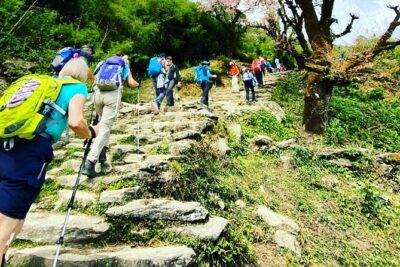
11-Day Hike Tour to Annapurna Base Camp Bliss in Kathmandu
Read our review →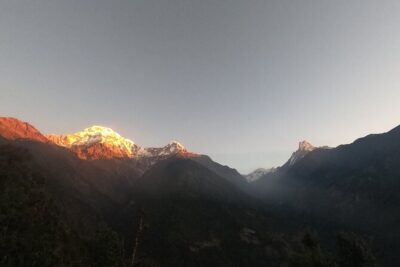
Browse the lists this tour appears in