
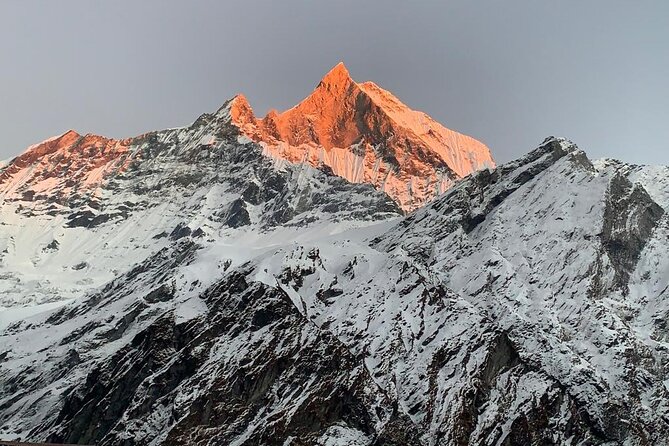
Reviewed · ANNAPURNA BASE CAMP TREKS
Annapurna Base Camp Trek 12 Days
The big draw here is the way one trek combines Poon Hill sunrise with Annapurna Base Camp. You get a famous lower-altitude viewpoint, then continue into the high mountain basin below Annapurna and Machhapuchhre. I like the sensible support package: permits, meals, teahouse lodging, Kathmandu and Pokhara transport, and airport transfers are included.
I also like the personal guide service. Guides named in guest feedback include Prajil, Bhairas Tamang, Somnath Tripathi, Deepak, Uttar, and Buddha, with special praise for careful pacing and helping tired walkers. The main catch is that this is still a serious mountain trek, and the $800 price does not include insurance, emergency evacuation, a porter, drinks, or personal expenses.
Key things to know before booking
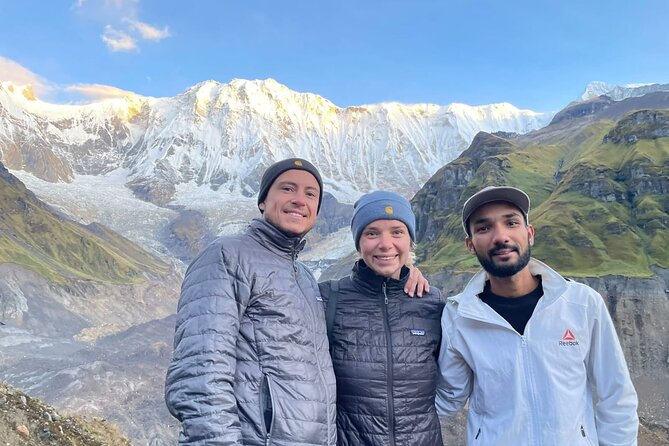
- Poon Hill and Annapurna Base Camp in one trip: You get a sunrise viewpoint and a high mountain destination rather than choosing between them.
- A private group experience: Only your own party participates, with an experienced guide arranged by Nepal Nirvana Trails.
- Long ground transfers: Kathmandu to Pokhara and back are by tourist bus, while the short journeys to and from the trail use private transport.
- Teahouse meals and lodging included: Eleven nights of accommodation, trekking meals, tea, coffee, permits, and local fees are covered.
- Guide support is a major strength: Bhairas Tamang and Prajil are among the guides praised for patience, humor, good pacing, and care.
- You need proper insurance: Emergency rescue and evacuation insurance are not included, but they are essential for a Himalayan trek.
What the $800 Annapurna package really covers
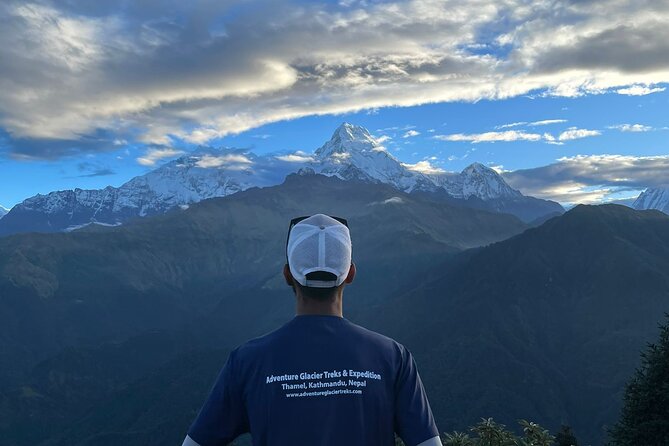
At $800 per person, this trip offers good value if you want a guided trek with much of the basic cost handled in advance. The package includes 11 nights of accommodation, an experienced guide, breakfast, lunch, and dinner during the trekking section, tea and coffee, permits, a trekking map, water purification tablets or drops, ground transport between Kathmandu and Pokhara, and airport transfers.
That saves you from arranging several practical pieces yourself. You will not need to negotiate separately for ACAP, TIMS, and local permits, and the company handles the road connection between the cities. The Pokhara to trailhead and trail-end to Pokhara rides are also covered by private vehicle.
Still, do not read $800 as an all-in price. International flights, the Nepal entry visa, insurance, porter service, drinks, snacks, Wi-Fi, bottled water, beer, juice, and meals in Kathmandu and Pokhara are extra. Tips for the guide are expected, too.
The package lists eight breakfasts, eight lunches, and eight dinners as part of the trekking meals, while accommodation is listed for 11 nights. Because the itinerary includes city nights and road travel, I would ask the company to confirm exactly which meals and hotels are included before paying.
Other Annapurna routes from Kathmandu:
- Annapurna base camp trek 5 Days
★ 5.0 · 252 reviews - Annapurna Base Camp Trek
★ 5.0 · 111 reviews - Kathmandu to Annapurna Base Camp (ABC) 5-Day Trek
★ 5.0 · 102 reviews
Day 1: Kathmandu arrival and a useful rest day
Your guide team meets you at Tribhuvan International Airport and takes you to your hotel. Airport pickup is a small but welcome service after an international flight, especially if Kathmandu is your first stop in Nepal.
The plan suggests using part of the day to rest and prepare. That is good advice. You may need to organize your walking clothes, check your pack, buy anything missing, and recover from travel before the early start on Day 2.
Do not expect a full sightseeing day here. The value of this first day is practical: airport support, hotel arrival, and time to get ready.
Day 2: Kathmandu to Pokhara by tourist bus
Your guide meets you around 6:30 in the morning, and you walk to Sorakhutte tourist bus station for a 7:00 departure. The route passes through Malekhu before continuing toward Pokhara.
This is a long overland connection, not a scenic luxury transfer. A tourist bus is generally more organized than finding your own local transport, but you should still expect a full travel day and road delays are possible. Pack water, snacks, and anything you need close at hand, since your main trekking bag may not be easy to reach.
The upside is that the route lets you travel overland and keeps the package price down. The downside is time. If you strongly dislike long bus rides, ask whether a flight or a different transport arrangement is available, though the listed package specifically includes the tourist bus.
Day 3: Pokhara to Nayapul and the walking trail
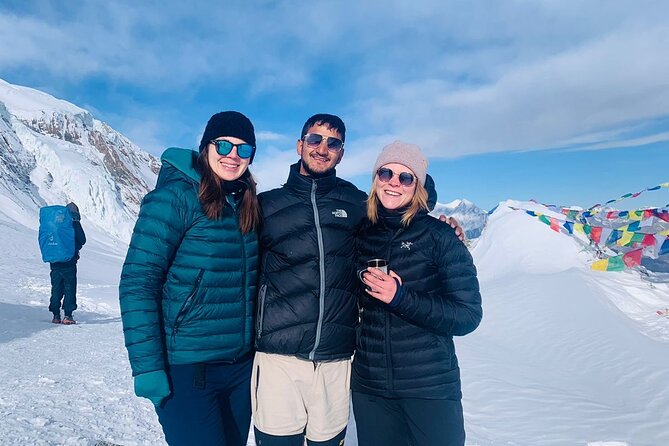
After breakfast in Pokhara, your guide arranges a car or taxi to the bus park. From there, you take a shared local bus or jeep for about an hour and a half to Nayapul, the trail starting point.
This is where the trip changes from transport to trekking. The combination of private and shared road transport is practical, but not especially polished. You are paying for a working route into the mountains, not a private vehicle from your hotel door to every village.
Nayapul marks the start of the walking section. Keep your first day manageable. Your body is still adjusting to the change from city travel to mountain paths, and the value of a guide becomes clear here. A good guide sets a pace that protects your energy for the higher days ahead.
A few more things to do in Kathmandu worth a look
- Everest Base Camp Trek – 14 Days
★ 5.0 · 1,499 reviews - Everest Base Camp Trekking
★ 5.0 · 485 reviews - Nagarkot Sunrise View and Day Hiking from Kathmandu
★ 5.0 · 471 reviews - Annapurna Circuit Trek with Tilicho Lake
★ 5.0 · 368 reviews
Day 4: Mountain morning and the route toward Tadapani
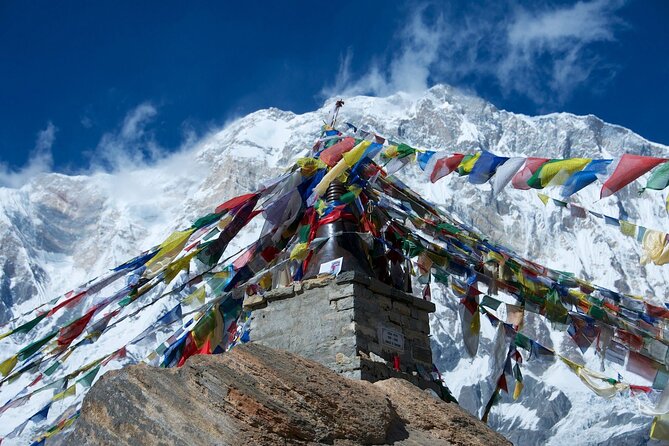
The first mountain morning brings local sounds, including donkeys, goats, hens, and dogs. That detail tells you something about the style of this trek: these are lived-in mountain villages, not a sealed-off resort route.
Breakfast comes with views of the Annapurna range. The itinerary places you in the Tadapani section of the walk, where the mountain scenery begins to feel like the main event rather than a distant backdrop.
The day is also your first real test of the trail. Expect walking conditions to vary, with village paths and mountain routes rather than a smooth road. Take the guide’s pace seriously. The strongest feedback about the guide team centers on stopping when someone is tired and making sure everyone is all right.
Day 5: Early Poon Hill sunrise
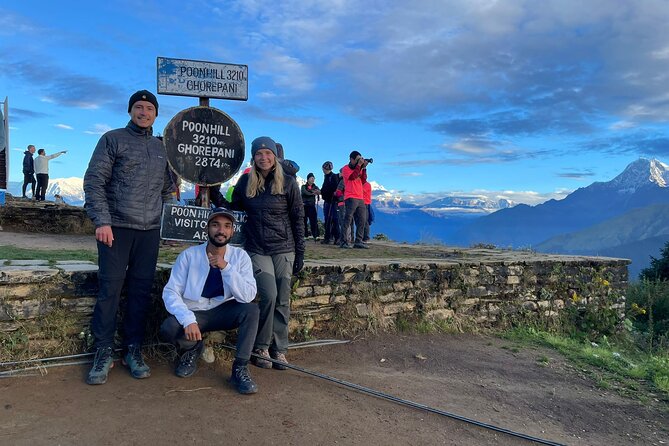
You wake before dawn for a 45-minute to one-hour climb to Poon Hill Viewpoint. This early start is worth understanding before you book: the famous view requires a cold, dark uphill walk before breakfast.
From Poon Hill, the route offers broad views of the Himalayan peaks, with the itinerary describing as many as 18 countable summits on a clear morning. Conditions matter. Clouds, wind, or poor visibility can reduce the view, so treat the sunrise as a strong possibility rather than a guarantee.
Poon Hill gives this trek extra value. Many Annapurna routes offer mountain villages and high passes, but this itinerary adds a well-known sunrise viewpoint before continuing to Base Camp. Afterward, you continue through the route toward Tadapani and the villages beyond.
Bring a headlamp, warm layers, and gloves for this morning. These items are not listed as inclusions, but they make the early walk far more comfortable.
Day 6: Tadapani to Sinuwa through Chhomrong
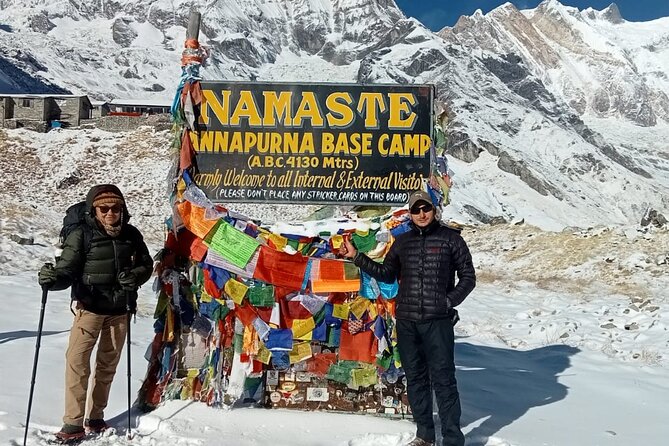
The route from Tadapani to Sinuwa is described as mainly downhill, with views toward Modi and Chhomrong Khola. You pass through Chhomrong, a mountain village with views of the river valleys, waterfalls, farmland, and surrounding peaks.
Downhill sounds easy, but long descents can be hard on knees and ankles. Trekking poles would be useful, though the package does not say they are supplied. Take short steps and avoid racing the guide or the rest of the group.
Chhomrong is an important point on the approach to Annapurna Base Camp. It feels like a proper mountain settlement rather than just a place to stop for tea. The combination of farmland, paths, and mountain views gives you a better sense of how people live along the route.
You end the day at Sinuwa. This is a useful overnight position before the route turns higher toward Bamboo and Deurali.
Day 7: Sinuwa to Deurali through Bamboo
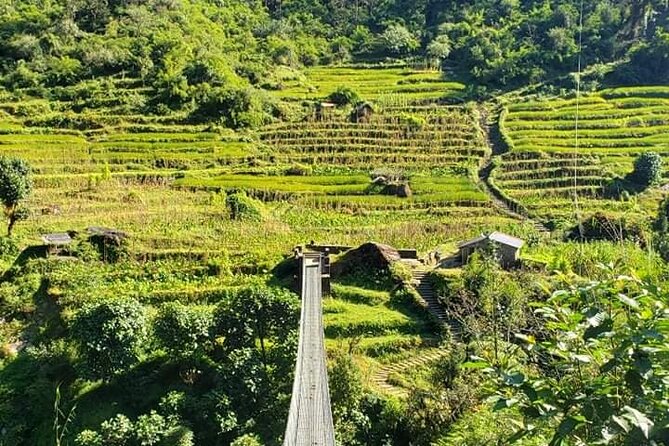
Sinuwa offers a sunrise view over the Himalayas before you begin climbing toward Deurali. The route takes about an hour and a half to reach Bamboo, then continues through increasingly higher mountain terrain.
This is one of the days when pacing matters most. The walk is an ascent, and the route becomes more demanding as you move toward Deurali. Your guide’s job is not simply to lead from the front. It is to watch how the group is coping, keep rest stops sensible, and respond if anyone develops altitude symptoms.
The supplied feedback repeatedly gives credit to guides for this kind of care. Bhairas Tamang is praised for a steady pace and for stopping when someone was tired. Prajil is described as helpful, good company, and attentive to practical needs such as snacks and tea stops.
You should not treat friendly service as a substitute for mountain judgment. Carry water, follow your guide’s advice, and tell the guide early if you feel unwell.
Day 8: Machhapuchhre Base Camp to Annapurna Base Camp
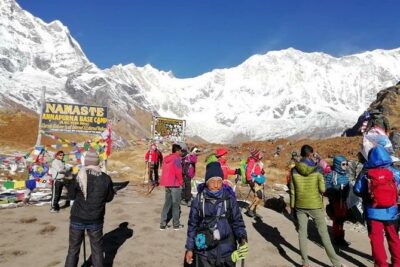
This is the central day of the trip. You continue past Machhapuchhre Base Camp toward Annapurna Base Camp, surrounded by some of the region’s most dramatic peaks.
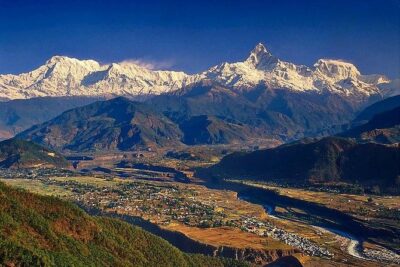
The approach matters as much as the destination. The trail leads into a high mountain basin, and the scenery changes from village farmland to open, stark mountain country. Machhapuchhre, also called Fishtail, is a major landmark along the way.
At Annapurna Base Camp, you reach the point that gives the trek its name. The setting is enclosed by high peaks, making the destination feel very different from a viewpoint such as Poon Hill. Poon Hill gives you a wide distant panorama; Base Camp places you inside the mountain setting.
The itinerary does not provide an exact walking time for this day, so do not judge the trek only by the 12-day title. Weather, trail conditions, and group pace can affect the schedule. You should be comfortable with sustained uphill walking and a night in basic mountain accommodation.
Day 9: Sunrise at Base Camp and the return to Sinuwa
If the weather is clear, you watch sunrise from Annapurna Base Camp. This is one of the best reasons to sleep there rather than visit only during the day. Morning light can change the appearance of the surrounding peaks, and you avoid rushing away before seeing the destination at its quietest.
After breakfast, you retrace the route toward Sinuwa. The return includes rugged trails and sparsely forested areas, with high hills and changing views along the way.
Do not underestimate the return day. Going downhill may feel easier on your breathing, but it can be tiring after the summit destination and an early sunrise. Keep food and water accessible, and use the guide’s pace rather than trying to finish quickly.
The night at Sinuwa gives you a more comfortable position before the final trail section and road transfer.
Day 10: Sinuwa to Siwai and back to Pokhara
The final walking section takes about two hours to reach Siwai from Sinuwa. The route rises to Chhomrong and passes views of mountains, waterfalls, and farmland before continuing toward the road connection.
This is a satisfying close to the trail because it returns you from the high route to inhabited valleys and transport links. The walk is shorter than the main mountain days, but you still need to allow time for the road trip to Pokhara.
A private vehicle from the trail ending point to Pokhara is included. That matters after several days on foot. You can reach the city without arranging a last-minute ride or negotiating with drivers at the trailhead.
Pokhara is listed as the city of lakes and provides a clear change of pace from teahouses and mountain paths. Lunch and dinner there are not included, so budget for those separately.
Day 11: Pokhara to Kathmandu and a final evening
After breakfast, you return to Kathmandu by tourist bus. Like the outbound journey, this can be a long day on the road, but the transport is arranged as part of the package.
The rest of the day is free for rest or shopping. That free time is useful after the trek, especially if you want to buy local goods, sort your luggage, or simply have a quiet evening.
A farewell dinner is planned in Kathmandu. Since meals in Kathmandu are excluded from the package, check whether this dinner is covered or paid separately. That small point is worth confirming before departure.
Day 12: Airport transfer and departure
The company takes you to the airport for your onward flight. This is a simple final service, but it removes one last practical worry after a demanding trip.
The published meeting information gives the starting point as Tribhuvan International Airport and lists a 6:15 a.m. start time. Since Day 1 includes airport arrival and Day 12 includes departure, give the company your flight details clearly and confirm pickup timing before the trip.
Guides, group style, and personal support
This is a private activity, so only your own group participates. That is a major advantage if you want the walking pace, rest stops, and daily rhythm to fit your party rather than a large mixed group.
The guide team is the strongest human element of the experience. Bhairas Tamang is praised for humor, patience, and a good pace. Prajil is described as helpful and attentive, with a habit of making sure people have what they need. Somnath Tripathi is credited with handling problems and organizing the daily plan.
Other names connected with positive feedback include Deepak, Uttar, and Buddha. Your assigned guide may be different, so treat these names as examples of the wider team rather than a promise that one particular person will lead your trek.
The best sign is the repeated focus on safety, company, and care when someone gets tired. That is exactly what you want on a mountain route.
Who should book this trek
I would recommend this trip to anyone who wants a guided Annapurna route with both Poon Hill and Base Camp, and who prefers having permits, meals, transport, and accommodation arranged in one package.
It suits people with moderate physical fitness who are ready for several days of uphill and downhill walking. You should also be comfortable with early mornings, basic mountain accommodation, shared road transport, and changing weather.
This is less suitable if you want a luxury lodge trip, private vehicle service for every road section, or a short scenic walk. It is also not a good choice if you are unwilling to buy rescue insurance or if you expect the $800 price to cover every expense.
Free cancellation is available when you cancel at least 24 hours before the experience start time. After that cutoff, refunds are not provided, and late changes are not accepted.
Should you book the Annapurna Base Camp trek?
Book it if you want a well-supported 12-day route that links Poon Hill sunrise with Annapurna Base Camp, and you value a private group with a guide who watches the group’s pace.
The price is fair for the inclusions, especially the permits, meals, lodging, airport transfers, city transport, and private rides at the trail ends. Before booking, confirm the exact hotels, which meals are included in Kathmandu and Pokhara, the porter cost, and the name of your guide.
My final advice is simple: buy proper rescue and evacuation insurance, bring warm clothing and good footwear, and judge the trip by the mountain walking rather than the low headline price. If you are ready for that, Nepal Nirvana Trails offers a practical way to reach one of the Himalayas’ most rewarding base camps.
FAQ
How long is the Annapurna Base Camp trek?
The experience lasts approximately 12 days, including arrival and departure in Kathmandu, transport between Kathmandu and Pokhara, the trek, and the return journey.
What is included in the $800 price?
The price includes airport transfers, tourist bus transport between Kathmandu and Pokhara, 11 nights of accommodation, an experienced guide, trekking meals, tea and coffee, a trekking map, water purification tablets or drops, permits, local fees, government taxes, and private transport between Pokhara and the trail.
Is a porter included?
No. Porter service is not included, but you can arrange one if needed at an additional cost.
Do I need travel insurance?
Yes. Travel and health insurance covering emergency rescue and evacuation are not included in the tour price.
What fitness level is required?
The activity requires a moderate level of physical fitness. You should be ready for repeated uphill and downhill walking on mountain trails, early starts, and rugged sections.
Is this a private tour?
Yes. Only your own group participates in the activity, with an experienced guide arranged by Nepal Nirvana Trails.
Just added in Kathmandu
- Kathmandu to Chitwan Tour by Tourist Bus – A Convenient and Affordable Way★ 4.0 · 4 reviews
- Changunarayan Hill to Telkot Hike Near Kathmandu Day Tour★ 5.0 · 6 reviews
- Mt Everest Base CampTrek | Budget Package★ 5.0 · 4 reviews
- Chitwan Jungle Safari 3-Day Tour★ 5.0 · 9 reviews
- Chandragiri Hill Station Tour by Cable Car★ 5.0 · 4 reviews
- Chandragiri Hills cable car day trip, private car with driver from Kathmandu★ 5.0 · 8 reviews
- Chandragiri to Taudaha Nature Day Hiking from Kathmandu★ 5.0 · 13 reviews
- Chandragiri Cable Car & Monkey Temple Private Guided Day Tour★ 5.0 · 5 reviews
Annapurna Base Camp Treks, compared.
Kathmandu to Annapurna Base Camp (ABC) 5-Day Trek
Read our review →
11-Day Hike Tour to Annapurna Base Camp Bliss in Kathmandu
Read our review →

Browse the lists this tour appears in