
Reviewed · TOURS IN POKHARA
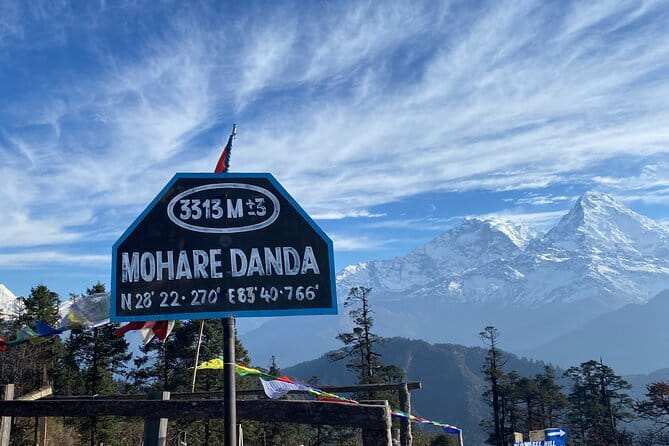
Private Tour Local Culture and The View of Mohare Danda
The best reason to choose this five-day trek is its community-run route through villages rarely reached by the standard Annapurna circuits. You walk past farms, rhododendron groves, mountain viewpoints, and the sacred Kali Gandaki River while local lodges and porters earn directly from your visit. I especially like the wide sunrise views of Dhaulagiri, Annapurna, and Manaslu, and the personal care offered by guides Chitra and Lukesh.
The main drawback is the physical demand. Daily walks run roughly five to seven hours, and the route includes steep mountain trails, so this is not a gentle sightseeing trip. Weather can also change plans, and the descent from Mohare Danda may be tough enough that your guide could arrange a vehicle if needed.
Key points to know before booking
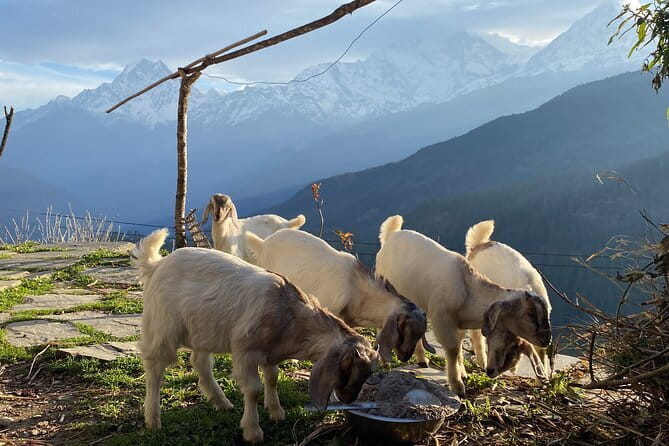
- Five days from Pokhara through village country: The route includes Beni, Banskharka, Mohare Danda, Kali Daha Lake, and the Kali Gandaki corridor.
- Three major Himalayan ranges in view: On a clear morning, you can see Dhaulagiri, Annapurna, and Manaslu, including 8,163-metre Manaslu.
- Money stays closer to the villages: Local people run the lodges, carry luggage, and provide services tied to community development.
- A private trip with named guides: Chitra and Lukesh are known for their care, local connections, and ability to sort out problems on the trail.
- Meals and basic comforts included: The price covers four breakfasts, five lunches, four dinners, tea or coffee, and hot showers.
- Moderate fitness is required: Plan for long walking days, mountain weather, uneven ground, and possible changes to the route.
Why this route feels different from a standard Nepal trek
Many Himalayan trips focus on getting from one famous mountain stop to another. This one puts village life at the center. You pass Brahman settlements, farming land, traditional homes, forest trails, and community lodges rather than spending the whole trip in larger trekking hubs.
That matters for two reasons. First, you get a closer look at daily life in the Annapurna region. Second, the money paid for lodging, porters, guiding, and meals supports local employment and community work in education, health, and infrastructure.
The route is also quieter than Nepal’s best-known trekking corridors. You should not expect a polished resort circuit or a parade of large groups. You should expect simple mountain accommodation, changing weather, long walking days, and views that depend heavily on clear skies.
The private format helps. Only your group takes part, so you can discuss your pace and ask for help when the trail gets hard. The guides’ local connections are useful here. Chitra and Lukesh have helped groups handle heavy rain, hail, and difficult descents, including arranging cars down the mountain when continuing on foot was likely to cause unnecessary strain.
A few more things to do in Pokhara worth a look
- Pokhara: Full-Day Private Tour on 7 Iconic Destination
★ 4.8 · 108 reviews - The Best of Pokhara: Full-Day Private Tour with Sarangkot Sunrise
★ 5.0 · 66 reviews - 4-Day Private Poon Hill Trekking Tour
★ 5.0 · 58 reviews
Day 1: From the Kali Gandaki River to Banskharka
Your first day combines road travel and walking. Private transportation takes you from Pokhara toward Beni beside the Kali Gandaki River. The river is more than a scenic backdrop: it is sacred in both Hindu and Buddhist traditions, and its banks are used for religious ceremonies and purification rituals.
After lunch in Beni, you begin the hike toward Banskharka village. The route passes through Mallaj, where you can see Brahman settlements and cultivated farmland. This is a useful opening day because it introduces the relationship between the villages and the land before the trail climbs farther into the hills.
The walking time is listed at about five hours. That may sound manageable, but the actual feel depends on the trail and weather. Your luggage is carried between destinations by local porters, which lets you walk with a lighter day pack. Even so, you need sturdy footwear and enough fitness for uneven uphill and downhill sections.
Banskharka is part of the appeal. You are not simply checking into a large commercial hotel at the end of the day. The accommodation is tied to the local community, and the setting gives you a better chance to see how mountain villages function.
Day 2: Dhaulagiri views and local handicrafts
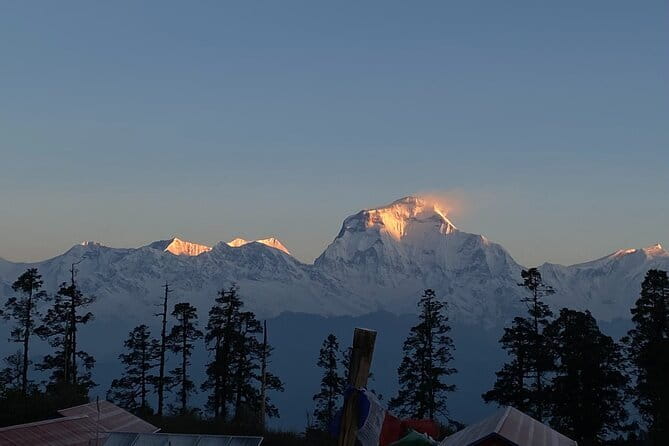
The second day brings the big mountain scenery. You get an outdoor lunch with views toward Dhaulagiri, the world’s seventh-highest mountain. The combination of food, open air, traditional houses, and farmland is more memorable than a quick viewpoint stop because the scenery is tied to the place where people live and work.
You may also have the chance to buy handmade Lokta paper and related handicrafts. Lokta paper is a traditional Nepali product made from the bark of the lokta shrub. Buying directly from local makers can be a practical souvenir choice, especially if you prefer something light and connected to the region rather than a generic trekking memento.
The day is listed at about five hours of walking. Keep some flexibility in your expectations. Mountain trails do not always fit neatly into a schedule, and weather can affect visibility, meal timing, and the pace of the group.
This is also a good day to ask Chitra or Lukesh about village life, farming, and the history of the route. The strongest part of this experience is not only the view. It is the chance to understand what it takes to live in these hills, where food, transport, education, and health services all depend on difficult terrain.
Day 3: Sunrise over Annapurna, Dhaulagiri, and Manaslu
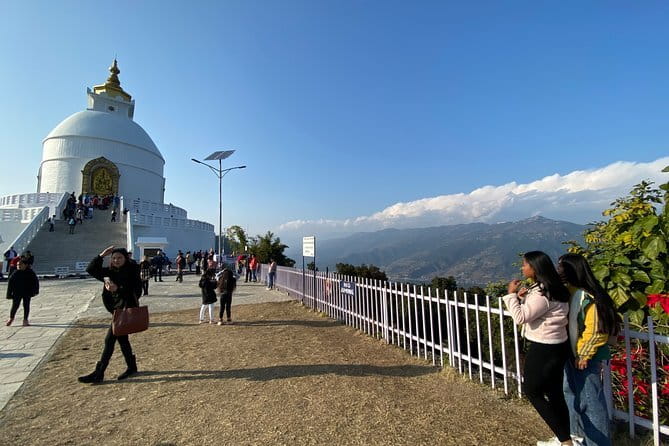
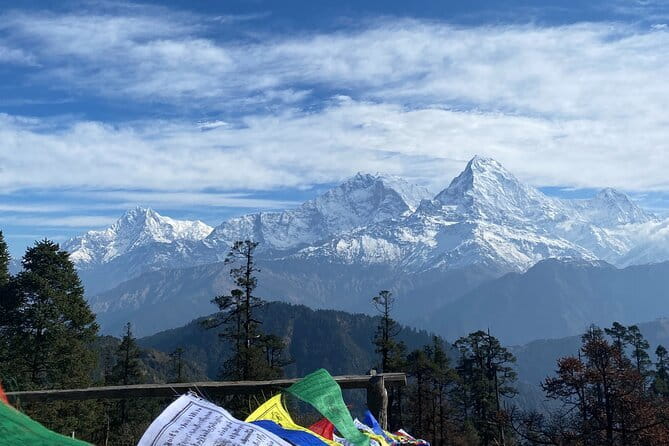
The third day is the visual high point. You rise for sunrise over the Annapurna, Dhaulagiri, and Manaslu ranges. Clear conditions can reveal a remarkable sweep of Himalayan peaks, including Manaslu at 8,163 metres, the eighth-highest mountain in the world.
Sunrise is worth the early start. The mountains can look muted in the dark, then gradually pick up color as the sun reaches the summits. You should bring warm layers, since early-morning mountain viewpoints can feel cold even when the afternoon is pleasant.
The accommodation includes a dining area with a firewood chimney, which gives you a warm place to eat and recover. Free internet is available, though you should treat it as a convenience rather than the main reason to choose the trek. Connectivity in mountain areas can vary.
The day is listed at about seven hours and includes several mountain-view stops. That makes it one of the more demanding sections. If you are new to trekking, do not judge the trip only by the number of hours. Elevation, slopes, weather, and the condition of the trail all affect how tiring a day feels.
The guides are especially important here. Chitra and Lukesh have been praised for making first-time trekkers feel safe and for handling unexpected problems calmly. That does not remove the physical challenge, but it can make the difference between feeling overwhelmed and feeling well supported.
Same base, a different kind of day:
- ZipFlyer Nepal – The World’s Steepest Zip-line
★ 5.0 · 608 reviews - Bungee Pokhara by HighGround Adventures
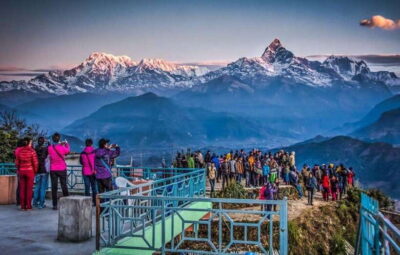
★ 5.0 · 366 reviews - From Pokhara: Sarangkot Sunrise Himalayas Tour
★ 4.7 · 218 reviews - ATV Adventure Tour in Pokhara, Nepal
★ 5.0 · 194 reviews
Day 4: Kali Daha Lake and the rhododendron trail
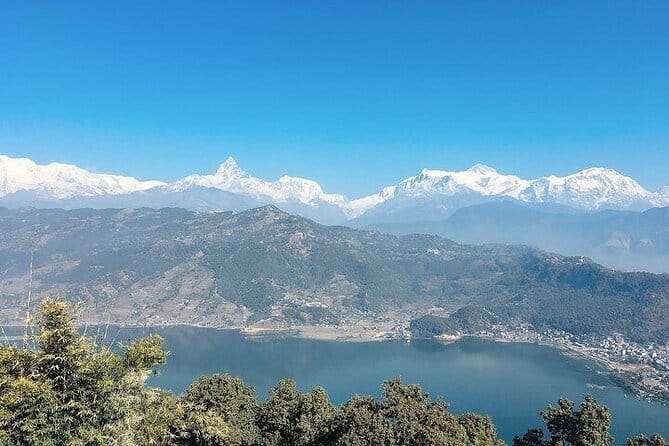
Day four brings a different kind of scenery at Kali Daha Lake. The lake reflects the Annapurna peaks when conditions are calm, and sunrise can turn the surface into a natural mirror. It is a quieter stop than a famous base camp or crowded viewpoint, and its appeal depends on still water and clear skies.
The trail then passes through rhododendron bushes. Rhododendrons are important in Nepali culture, and their flowers are associated with beauty and national identity. Depending on the season, the trail may show more or less color, so do not book this trip expecting full bloom at every visit.
This section also connects the mountain scenery to the Kali Gandaki gorge. The river separates Dhaulagiri and Annapurna, two of the world’s highest mountains. Measured from the summit of Dhaulagiri down to the riverbed, the vertical difference is about 5.5 kilometres, making the gorge one of the deepest on Earth.
The route is listed at about seven hours again. That is a serious walking day, especially after several days on the trail. The practical advantage of a private tour is that your guide can pay attention to your condition and discuss options if weather or fatigue becomes a problem.
Day 5: Sacred river country and the return journey
The final day returns to the Kali Gandaki River. You have already seen it as a dramatic natural feature, but by this point you can also read it as a cultural one. Hindu and Buddhist communities regard the river as sacred, and people use its banks for rituals and cleansing.
This final stretch helps the trip feel like a complete circuit of mountain nature and village culture. You begin with the river, climb through settlements and farmland, reach high viewpoints, then return to the river corridor with a better sense of how the region fits together.
The day is listed at about seven hours. It may be the point when tired legs become the main issue, so make use of the porters and keep your walking load small. The included meals also help: four breakfasts, five lunches, and four dinners are covered, along with tea and coffee.
What the $315 price really covers
At $315, the trip is not just a guided walk with a mountain viewpoint. The price includes private transportation, an air-conditioned vehicle, a licensed or certified in-person guide, local porters for your luggage, meals, tea or coffee, and hot showers.
That is strong value if you want a private five-day package rather than arranging every part separately. Food and transport costs can add up quickly in Nepal, and having porters move your luggage is especially useful on a route with five to seven-hour walking days.
The value also includes the way the money is spent. Local lodges and workers receive direct economic benefit, and the stated purpose is to support education, health, infrastructure, and jobs in the trekking villages. That does not mean every cost is included. Alcohol, soft drinks, and the optional Pun Magar Traditional Cultural Program cost extra, with that program listed at $48 in total if requested.
Group discounts may make the price more attractive for friends or family traveling together. Since this is a private activity, you are paying for control and personal attention as well as the route itself.
Food, showers, vehicles, and the practical comforts
You receive breakfast, lunch, and dinner on the scheduled days, along with tea and coffee. Dietary needs can be indicated when booking, which is important on a five-day trek where food choices may be more limited than in Pokhara.
Hot showers are included, a welcome feature after long trail days. You should still think of the accommodation as mountain lodging rather than a full-service hotel. The information provided does not promise luxury rooms, private bathrooms, or constant internet access.
Pickup is offered, and the trip uses private transportation with air conditioning. Mobile tickets are available, and group discounts may apply. The experience is available daily during the stated operating period, from April 8, 2024, through November 26, 2026, with listed hours from 8:00 a.m. to 11:30 p.m.
The tour requires moderate physical fitness. That phrase deserves attention. You should be ready for repeated long walking days, slopes, weather changes, and the possibility that a descent will feel harder than expected. The fact that a vehicle was arranged for one group descending Mohare Danda is useful practical information, not a guarantee that the same solution will always be available.
The guides and the private-tour advantage
Chitra and Lukesh are central to the experience. Their role goes beyond leading the trail. They help connect you with local people, explain the communities you pass through, and deal with practical problems when weather or fatigue changes the plan.
Their personal connection to people along the route can make village stops feel more natural. You are not simply passing through with a guide pointing at buildings. You have a better chance to hear stories, understand local customs, and see how the trek supports the people who live there.
The private setup also gives you room to ask questions and adjust the pace. It is a good fit if you are new to trekking, concerned about safety, or traveling with friends who have different levels of experience.
Still, private does not mean effortless. You remain responsible for showing up with suitable clothing, footwear, and a realistic view of the walking involved. A guide can manage the route, but you still need to handle the hills.
Who should book this five-day trek
I would choose this trip if you want Nepal to feel personal and local rather than highly commercial. It suits you if mountain views matter, but you also want time with village communities, local food, traditional homes, handicrafts, and guides who know the region well.
It is also a strong choice for first-time trekkers who want support. Chitra and Lukesh have experience helping people through heavy rain, hail, difficult trails, and unexpected changes. That kind of calm assistance is worth paying for when you are far from Pokhara.
You may want to reconsider if you want a relaxed holiday with short walks, guaranteed clear views, or hotel-style comfort. The route is weather dependent, and the main attraction is the walking itself. Poor conditions can lead to a different date or a full refund, but no operator can guarantee mountain views.
You can cancel at least 24 hours before the start time for a full refund. Cancellations or changes made later are not accepted for a refund, and the experience may be rescheduled or refunded if bad weather or insufficient bookings force a cancellation.
Should you book the Mohare Danda route?
Book it if you want a private Himalayan trek with a clear local benefit, not simply a fast trip to a famous viewpoint. The strongest reasons are the community-run lodges, support from local porters, the chance to see three major mountain ranges, and the attentive work of Chitra and Lukesh.
Before paying, be honest about your fitness and your appetite for basic mountain conditions. If five to seven hours of walking on several consecutive days sounds manageable, this offers a thoughtful mix of scenery, culture, and practical support. If you mainly want easy sightseeing from a vehicle, choose a shorter Pokhara excursion instead.
FAQ
How long does the Mohare Danda tour last?
The experience lasts approximately five days and includes several walking days of about five to seven hours.
What mountain ranges can I see?
On clear days, the route offers views of the Dhaulagiri, Annapurna, and Manaslu ranges. Manaslu is listed at 8,163 metres above sea level.
Are meals included?
Yes. The package includes four breakfasts, five lunches, and four dinners, along with tea and coffee.
Is transportation included?
Yes. Private transportation and an air-conditioned vehicle are included, and pickup is offered.
Do porters carry luggage?
Yes. Local professional porters transport your luggage between destinations.
What happens if the weather is poor?
The experience requires good weather. If poor conditions cause cancellation, you will be offered another date or a full refund.
Just added in Pokhara
- Pokhara: Pokhara Highlights Tour by Bus★ 3.6 · 10 reviews
- Discover Pokhara in Style: Private Vehicle Service with Driver★ 5.0 · 5 reviews
- 4 Day Mardi Himal Base Camp Trek from Pokhara★ 5.0 · 18 reviews
- Private 4 Day Poon Hill Trek from Pokhara★ 5.0 · 16 reviews
- Pokhara in 5 Hours: Lake, Museum, Cave, Falls & Pagoda Hill★ 4.5 · 16 reviews
- Beautiful Sarankot Sunrise with Full Day Sightseeing in Pokhara★ 4.5 · 3 reviews
- Annapurna Base Camp Trek from Pokhara and Kathmandu★ 5.0 · 7 reviews
- 7-Day Trek to Annapurna Base Camp from Pokhara★ 5.0 · 12 reviews
Tours in Pokhara, compared.
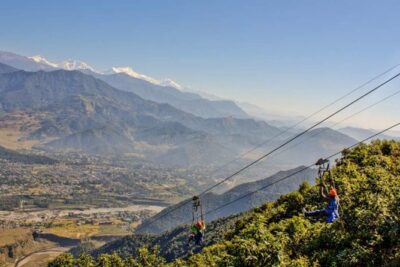
ZipFlyer Nepal – The World’s Steepest Zip-line
Read our review →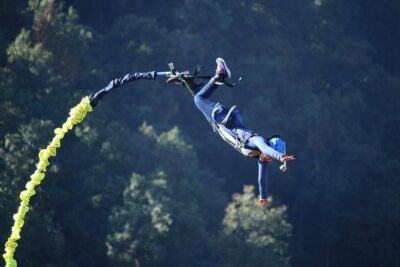

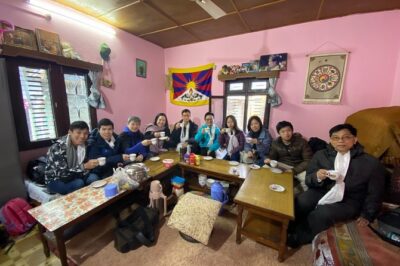
Full-Day Tibetan Cultural Tour to Tibetan Settlements Pokhara
Read our review →
Full-Day Sharing Bus Tour on 7 Iconic Destination
Read our review →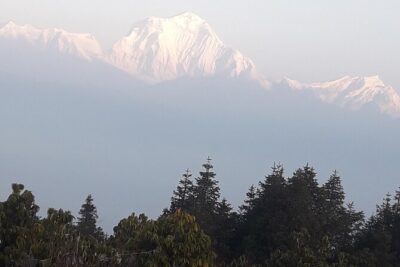
Trekking in Annapurna/Langtang/Everest/Upper Mustang regions
Read our review →Browse the lists this tour appears in