
Reviewed · KATHMANDU UNESCO HERITAGE TOURS
Kathmandu Heritage Tour – Private Full-Day UNESCO Sites & Temples
Kathmandu’s most powerful sights are packed into one demanding day: a hilltop Buddhist shrine, royal courtyards, a living goddess, Hindu cremation ghats, and the huge prayer wheels of Boudhanath. The private format lets you ask questions, slow down for photographs, or cut a stop short when the traffic and heat begin to take their toll.
I like the hotel pickup and private car, which save you from sorting out Kathmandu’s traffic on your first day. I also like the guides named in past bookings, including Krishna, Jamuna, Janina, and SuJan, who are praised for patience, clear explanations, and adapting the pace. The main drawback is cost planning: entrance fees are not included, and they can add a noticeable amount to the $60 tour price.
Key points to know before booking
- See several major sites in one day: Swayambhunath, Kathmandu Durbar Square, Pashupatinath, Boudhanath, and related courtyards are covered in a packed route.
- Meet Nepal’s living goddess tradition: Kumari Chowk offers a chance, though not a guarantee, to glimpse the Kumari at a window.
- Expect extra admission costs: Entrance fees are paid separately at several major sites.
- Use the guide for context: The strongest part of the tour is the explanation of Hindu and Buddhist customs, royal history, and earthquake damage.
- Plan for city traffic: The private vehicle is useful, but five to eight hours can feel longer when roads are slow.
- Best for a first day: You get a fast introduction to Kathmandu before deciding where you want to return at a slower pace.
Why this one-day route works for first-time visitors
Kathmandu can feel confusing at first. Sacred courtyards sit beside shops, shrines appear in ordinary streets, and a short distance on the map can take a long time by car. This tour gives you a guide, a vehicle, and a clear route through the valley’s best-known religious and royal sites.
The day runs about five to eight hours, depending on traffic, how long you linger, and whether you visit every scheduled stop. That range matters. You can see a great deal, but you should not expect a quiet, leisurely visit to every temple.
I would use this as an orientation day. Your guide can explain what you are seeing, point out earthquake damage from 2015, and help you understand the difference between Buddhist and Hindu worship. Afterward, you will have a better sense of which places deserve another visit on foot.
The private setup is especially useful if you are jet-lagged, traveling with family, or have only one day in Kathmandu. The maximum booking size is 10 people, but only your own group participates. A private guide can also adjust the pace, although the number of planned stops means the schedule remains full.
More temple and square walks around Kathmandu:
- Private Kathmandu Sightseeing Tour | UNESCO World Heritage sites
★ 5.0 · 756 reviews - Kathmandu: Full Day 7 UNESCO Tour with Lunch – Private/Group
★ 5.0 · 415 reviews - Private Bhaktapur and Nagarkot Day Tour From Kathmandu
★ 5.0 · 305 reviews
Swayambhunath, the hilltop view and living shrine
The first stop is Swayambhunath, commonly called the Monkey Temple. It sits on a hill above Kathmandu and gives you a broad view across the city. The complex is one of Nepal’s main Buddhist sites and is described as having more than 3,000 years of history.
Allow about an hour here. You will see the stupa, Buddhist features, and the monkeys that give the site its popular name. The hilltop setting makes this a strong opening stop because you can look across Kathmandu before spending the rest of the day among courtyards and temple walls.
The view is a highlight, but this is not simply a lookout. Your guide can explain the symbols around the stupa and how the site fits into Nepal’s Buddhist tradition. Ask questions here, since the route later shifts toward Hindu temples and royal buildings.
Admission is not included. Wear shoes suitable for uneven surfaces and take your time on the approach. The tour information does not specify the exact number of steps or the route used, so ask your guide about the easiest way through if mobility is a concern.
Kathmandu Durbar Square and the Kumari Chowk
Kathmandu Durbar Square gives you the royal center of the city, with ornate buildings and temples around the old palace area. The visit is scheduled for about an hour, though several nearby points are listed separately, including Basantpur Dabali, Taleju Bhawani Temple, Kumari Chowk, and Hanuman Dhoka.
Basantpur Dabali is described as an old tourist center with a Hindu temple. Taleju Bhawani is associated with the Malla kings and is regarded as a powerful goddess and clan deity. These short stops help fill in the political and religious meaning of the square, even if they pass quickly.
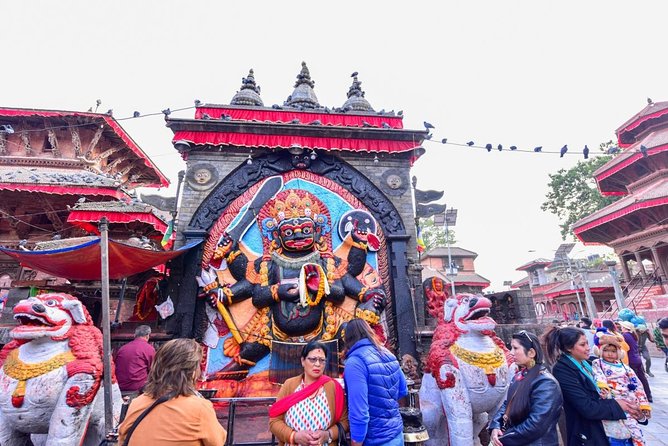
Kumari Chowk is one of the most unusual places on the route. It is the courtyard and palace connected with the Kumari, a young girl worshipped as the living form of the goddess Durga. You might see her briefly at a window, but you should not count on an appearance or expect a long encounter.
One past visit included a brief glimpse of the Kumari, which made the moment memorable but also strange for someone unfamiliar with the tradition. Your guide should help explain the custom with respect rather than treating it as a simple photo opportunity.
Hanuman Dhoka is linked with Hanuman, the monkey god known for courage and mischief. Real monkeys may be present around the square, adding a lively touch to an already crowded group of shrines and buildings.
This area also shows the effect of the 2015 earthquakes. Some buildings suffered major damage, and restoration work or missing sections may change what you see. That damage is not a flaw in the tour, but it does affect expectations. You are seeing a historic center that has been hurt and repaired, not a perfectly preserved open-air museum.
Entrance fees for Kathmandu Durbar Square are extra. Confirm the current amount before setting out, since the total cost of the day depends partly on which sites require payment.
Pashupatinath, sacred riverbanks and the cremation ghats
Pashupatinath is one of the most important Hindu shrines in Nepal. It lies about five kilometers east of central Kathmandu and is known for its ornate pagoda architecture and sacred linga connected with Lord Shiva.
The visit is listed in two parts, each around an hour, followed by about 30 minutes at the cremation area. In practice, the exact rhythm may depend on traffic, crowds, ceremonies, and the time available. The site is religious first, tourist attraction second, so your guide’s advice about where to stand and how to behave matters.
The cremation ghats can be emotionally intense. Fires and funeral rites take place here, and families gather to care for their dead. The setting may remind you of parts of India, but the atmosphere is described as more restrained and reverent. I would approach this part quietly, avoid treating the ceremonies as a spectacle, and follow your guide’s instructions about photographs.
Pashupatinath is often the place that gives the day its strongest human meaning. You are not just looking at carvings and old buildings. You are seeing a sacred practice that remains part of daily life.
Admission is not included for the main temple area. The cremation section is listed as free, but you still need to budget for the broader Pashupatinath entry cost. Non-Hindu access inside some temple areas may be restricted, so ask your guide what you can enter and what you should view from outside.
A few more things to do in Kathmandu worth a look
- UNESCO Seven World Heritage Tour in Kathmandu
★ 5.0 · 253 reviews - Kathmandu Private Sightseeing Tour | UNESCO World Heritage Sites
★ 5.0 · 109 reviews - Kathmandu: Full Day Private Top 4 UNESCO Heritage Tour W/Lunch.
★ 5.0 · 86 reviews - Kathmandu World Heritage Tour
★ 5.0 · 74 reviews
Boudhanath Stupa and the Buddhist close to the day
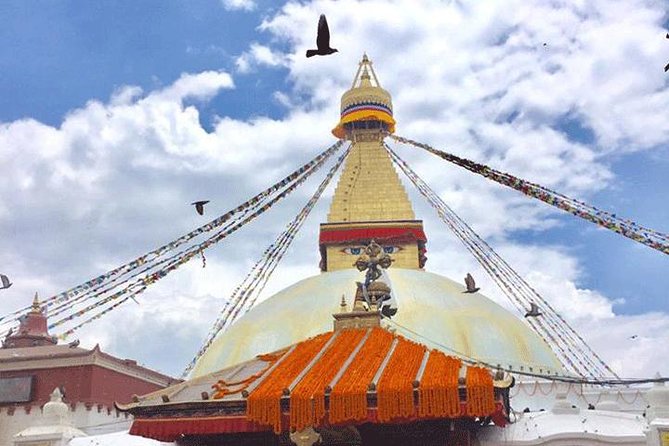
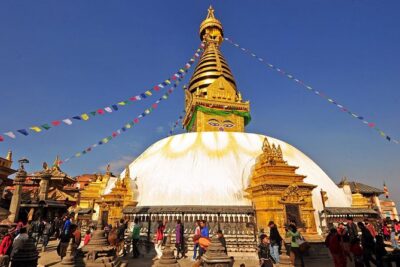
Boudhanath is scheduled for about an hour and provides a different mood after Pashupatinath. The large Buddhist stupa is described as roughly 2,500 years old and was built in the fifth century. Four pairs of Buddha’s eyes face the cardinal directions, giving the stupa its familiar watchful appearance.
This is a good place to slow your pace. You can walk around the stupa, observe Buddhist devotional activity, and take in the scale of the central structure. The circular route and repeated religious details make it easier to focus than the dense royal squares.
Boudhanath also helps you compare the two major religious traditions featured during the day. Swayambhunath and Boudhanath are Buddhist sites, while Pashupatinath is a major Hindu center. A good guide will explain the differences without turning the visit into a classroom lecture.
Admission is extra here as well. Since Boudhanath is one of the main stops, include it in your entrance-fee budget rather than treating the $60 tour cost as the final price.
The optional-feeling stops and city add-ons
The route also lists the main tourist area and the Garden of Dreams. The Garden of Dreams is a neoclassical garden in central Kathmandu, with paved paths and a formal European design. It can provide a quieter contrast to the temples and traffic.
The supplied schedule does not give a visit length for these final city stops. Treat them as possible additions rather than the central reason to book the tour. If the day is running late, ask whether you would rather spend more time at Boudhanath, Kathmandu Durbar Square, or the Garden of Dreams.
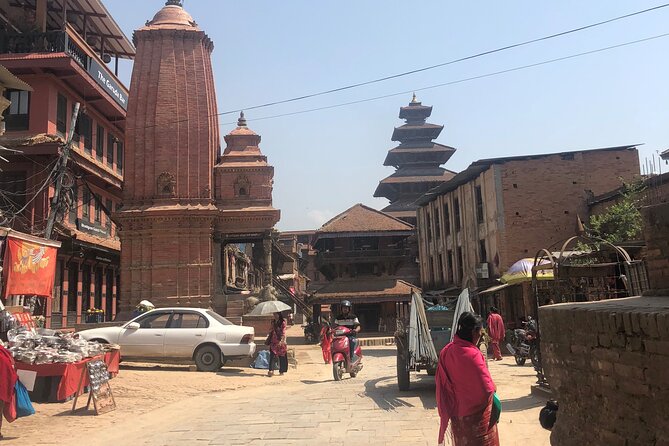
The itinerary also refers to Bhaktapur and Taleju Bhawani Temple Bhaktapur, while the main stop list focuses on Kathmandu’s central sites, Swayambhunath, Pashupatinath, and Boudhanath. Confirm the exact route before booking if Bhaktapur is essential to you. A full visit to another major city square can change the driving time and reduce time at other stops.
What the guide and vehicle add
The guide is the heart of this experience. Several named guides receive strong praise for being patient, flexible, polite, and able to explain both the monuments and ordinary life in Nepal. Krishna is described as fluent in English and well informed, though one person wished he would speak a little more slowly. Jamuna is praised for shaping the day around personal interests and remaining helpful during the wider Nepal trip.
Janina is noted for patience with photography, while SuJan is described as accommodating and well prepared. These details matter because this is not a tour where you simply follow a flag from one monument to the next. The quality of the day depends on whether your guide explains why a place matters.
The private car is another practical advantage. Kathmandu traffic can be difficult, and a driver who knows the route saves time and effort. Still, private transport cannot remove congestion. One booking encountered a vehicle problem and required a walk of about one kilometer to a site, so do not assume every transfer will be perfectly smooth.
Bottled water, hotel pickup, and hotel drop-off are included. Food and drinks are not. Plan around $10 for lunch purchased locally, and remember that some people also choose to tip the guide and driver.
Is $60 good value?
At $60 per person, the tour can be a good deal if you want transport, a private guide, and a full day of major sites without arranging each ride yourself. You are paying for convenience and explanation, not just entry to the monuments.
The important catch is the admission fees. Several main stops charge separately, including Swayambhunath, Kathmandu Durbar Square, Pashupatinath, and Boudhanath. One booking reported spending about $60 per person on entrance fees, while another noted additional costs of roughly $10 to $15 at several sites. Prices can change, so ask for a current estimate before you go.
There is also a wide difference between the advertised $60 rate and one past booking that paid $110 per person. That may reflect booking date, party size, or a different price at the time. Check the total shown at booking rather than relying on an old quoted amount.
For one person, the price buys a private experience but may feel high once admissions and lunch are added. For two or more people sharing a private vehicle and guide, the value becomes stronger. Group discounts are offered, and the booking limit is 10 people.
How to make the day better
Start with realistic expectations. Five to eight hours is enough to see the headline sights, not enough to study every carving or museum. Tell your guide early if you care most about architecture, religious practice, photography, earthquake recovery, or local life.
Keep some flexibility. The schedule includes several short 10-minute stops, and traffic may force changes. If you are tired, ask to skip a minor stop rather than rushing through the sites that matter most to you.
Budget for admissions before you arrive. This is the clearest way to avoid an unpleasant surprise. Also carry water, dress respectfully for temples, and be ready for an emotional visit at the cremation ghats.
The tour has no stated age limit, allows service animals, and most people can participate. Since some sites involve hilltop access, uneven ground, and extended walking, ask the operator about your specific needs before booking.
Who should book this Kathmandu tour?
I would recommend it to a first-time visitor with one full day, especially if you want a guide to explain the religious customs and royal buildings. It also suits anyone who prefers a private car to arranging taxis in Kathmandu’s traffic.
It is less suited to a slow museum-style day. The route is packed, the entrance fees add up, and the most important sites may deserve more time than the schedule allows. Independent visitors who enjoy reading ahead and hiring a driver through a hotel may find a simpler arrangement works better.
Book it if you value context, convenience, and coverage. Skip it if you already know the sites you want to see and would rather spend an entire morning at one square or temple.
Free cancellation is available up to 24 hours before the start time, but changes or cancellations inside that window are not refunded. That gives you some flexibility while finalizing your Kathmandu plans.
FAQ
How long does the Kathmandu Heritage Tour last?
The tour lasts approximately five to eight hours. The final length depends on traffic, the time spent at each site, and whether all listed stops are visited.
What sites are included?
The main route includes Swayambhunath, Kathmandu Durbar Square, Pashupatinath Temple, the cremation area, and Boudhanath Stupa. It also lists Basantpur Dabali, Taleju Bhawani Temple, Kumari Chowk, Hanuman Dhoka, the main tourist area, and the Garden of Dreams.
Is hotel pickup included?
Yes. Hotel pickup and drop-off in Kathmandu are included.
Is this a private tour?
Yes. Only your group participates, with a maximum of 10 people per booking.
Are entrance fees included?
No. Entrance fees are paid separately. Several major sites on the route require admission payments.
Is lunch included?
No. Food and drinks are not included. The tour information suggests allowing about $10 for lunch purchased locally.
Is a guide included?
Yes. A private tour guide is included, along with transport by private vehicle and bottled water.
Can I choose the date and time?
The tour allows you to change the date and time, provided the change is not made less than 24 hours before the experience begins.
Is there an age limit?
No age limit is stated. Most people can participate, and service animals are allowed.
What is the cancellation policy?
You can cancel at least 24 hours before the start time for a full refund. Cancellations or changes made less than 24 hours before the start time are not refunded.
Just added in Kathmandu
- Kathmandu to Chitwan Tour by Tourist Bus – A Convenient and Affordable Way★ 4.0 · 4 reviews
- Changunarayan Hill to Telkot Hike Near Kathmandu Day Tour★ 5.0 · 6 reviews
- Mt Everest Base CampTrek | Budget Package★ 5.0 · 4 reviews
- Chitwan Jungle Safari 3-Day Tour★ 5.0 · 9 reviews
- Chandragiri Hill Station Tour by Cable Car★ 5.0 · 4 reviews
- Chandragiri Hills cable car day trip, private car with driver from Kathmandu★ 5.0 · 8 reviews
- Chandragiri to Taudaha Nature Day Hiking from Kathmandu★ 5.0 · 13 reviews
- Chandragiri Cable Car & Monkey Temple Private Guided Day Tour★ 5.0 · 5 reviews
Kathmandu UNESCO Heritage Tours, compared.
Private Kathmandu Sightseeing Tour | UNESCO World Heritage sites
Read our review →
Full Day 7 UNESCO Tour with Lunch – Private/Group
Read our review →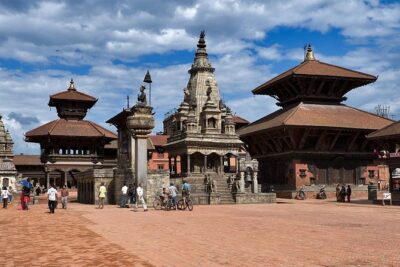
Private Bhaktapur and Nagarkot Day Tour From Kathmandu
Read our review →
Kathmandu Spiritual Sites: Bodhnath & Pashupatinath Tour
Read our review →
Day Trip to Bhaktapur and Panauti from Kathmandu
Read our review →
Browse the lists this tour appears in