
Reviewed · KATHMANDU UNESCO HERITAGE TOURS
Kathmandu: Full Day 7 UNESCO Tour with Lunch – Private/Group
Kathmandu’s seven UNESCO sites are spread across the valley, and seeing them all in a day takes some serious planning. This tour handles the driving, parking, site order, and basic sightseeing, giving you a fast cultural sweep from the hilltop Monkey Temple to the great Buddhist dome at Boudhanath.
I like the hotel pickup and private vehicle, especially in Kathmandu’s famously chaotic traffic. I also like the guides’ practical storytelling. Sumit is often praised for clear explanations, while Anon, Sajina, Suresh, and Asmita have also led the route. The catch is simple: this is a long, tightly packed day, and several sites deserve more time than the schedule allows.
Key points at a glance
- Seven UNESCO sites in one day: Swayambhunath, Kathmandu Durbar Square, Patan, Bhaktapur, Changu Narayan, Pashupatinath, and Boudhanath.
- Hotel-to-hotel service: Pickup and drop-off are provided in an air-conditioned private vehicle.
- A useful cultural primer: Guides explain Nepal’s religion, customs, architecture, and royal history as you move between sites.
- Basic food is included: Expect bottled water, juice, fruit, a banana, muffin, donut, and similar snack items.
- Budget price, extra admission: The advertised price is $10 per person, but standard bookings do not include monument entry fees.
- Bring cash and walking shoes: Entry fees can total about 6,000 Nepalese rupees, and the day includes plenty of walking.
What this one-day Kathmandu route really delivers
This is not a slow temple tour. It is a well-organized introduction to Kathmandu Valley, designed for people with limited time who want to see the major sights in one sweep.
You will move between Hindu temples, Buddhist stupas, former royal squares, and old Newari cities. That variety is the tour’s great strength. One hour you may be studying palace courtyards in Kathmandu, and later you may be watching pilgrims circle Boudhanath’s white dome.
The route usually takes eight to nine hours, though some days can stretch to ten or eleven hours depending on traffic and how long transfers take. An early start is a smart idea. One private group began at 7 a.m. to beat some of the traffic, while another ran from 8:30 a.m. to around 5:30 p.m.
The $10 starting price looks remarkably low for hotel transport, a guide, and lunch. It is important to read that price correctly, though. Standard private and group options do not include entrance fees. The total admission cost has been reported at about 6,000 Nepalese rupees, or roughly $44, so the day is inexpensive only after you add the entry charge to your budget.
An all-inclusive option is available. It includes food, soft drinks, entrance fees, and a khana set or choice of dishes. Check the exact price and inclusions when booking, since this may be easier than carrying cash to each monument.
More temple and square walks around Kathmandu:
- Private Kathmandu Sightseeing Tour | UNESCO World Heritage sites
★ 5.0 · 756 reviews - Private Bhaktapur and Nagarkot Day Tour From Kathmandu
★ 5.0 · 305 reviews - Kathmandu: Full Day Top 4 UNESCO Tour with Lunch – Private/Group
★ 5.0 · 269 reviews
Swayambhunath, the hilltop opening view
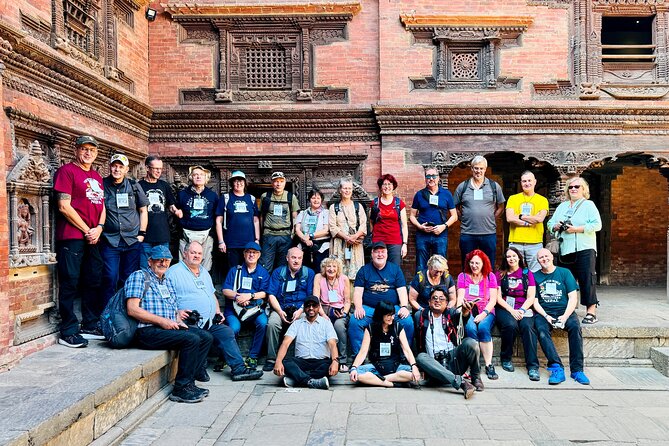
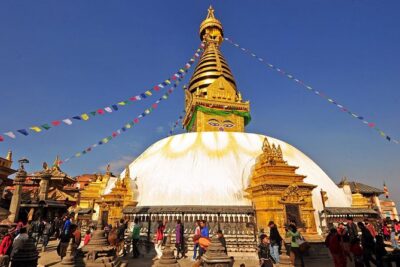
The day begins at Swayambhunath, the hilltop stupa commonly called the Monkey Temple. The site is one of Kathmandu’s best introductions to the valley because it combines a major Buddhist shrine, Hindu elements, prayer activity, and a broad view over the city.
You should expect steps and some walking here. The listed visit lasts about 40 minutes, which is enough to see the main shrine area and hear the basic story from your guide, but not enough for a lingering visit.
The short stop works well as an opening scene. You get an immediate sense that religion in Nepal is not kept behind museum glass. It is part of daily life, with worshippers, symbols, shrines, and ritual activity sharing the same space.
The admission fee is not included in the standard option. Keep Nepalese rupees ready rather than assuming a card will work.
Kathmandu Durbar Square and the old royal center
Kathmandu Durbar Square takes about an hour. This was the royal center of the Malla and Shah kings, and its courtyards and palace buildings offer a useful introduction to Nepal’s political and artistic past.
Your guide matters here. Without context, the square can look like a crowded collection of temples and carved windows. With a good explanation, you begin to see how the buildings connect to royal ceremonies, Hindu worship, Newari craftsmanship, and the old city around them.
The main limitation is time. An hour gives you a strong first look, but you may want to return later if you care about wood carving, palace rooms, or architectural details. This is one of several stops where the tour gives you enough information to decide what deserves a second visit.
Patan Durbar Square, where detail rewards patience
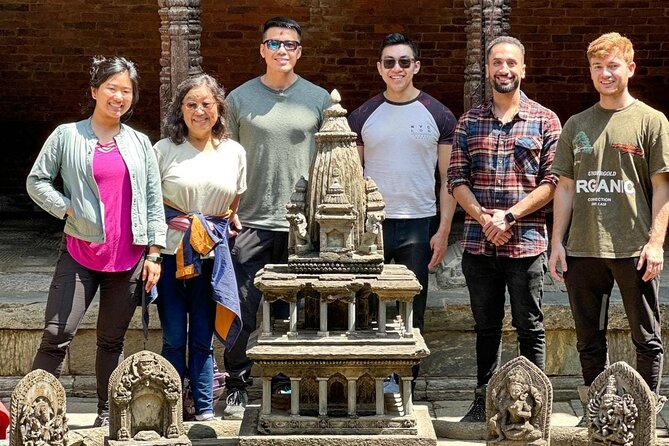
Patan Durbar Square sits in Lalitpur, the old city known for Newari art and architecture. The former royal complex has an especially strong visual appeal, with temple platforms, courtyards, carved façades, and religious buildings packed into a relatively compact area.
The planned stop is about one hour. That is enough to follow the guide through the central square and understand why Patan is so important, but the clock may keep you from examining every carving or museum display.
I like Patan’s place in the schedule because it shows a different character from Kathmandu Durbar Square. The two royal centers share a broad cultural background, yet each has its own arrangement and feel. Pay attention to the craftsmanship. Your guide can point out details that are easy to miss when you are simply moving from one shrine to the next.
Again, admission is extra unless you choose the all-inclusive package.
A few more things to do in Kathmandu worth a look
- Kathmandu: Full-Day 7 UNESCO Tour with Lunch – Private/Group
★ 4.9 · 247 reviews - Kathmandu: Nagarkot Sunrise View & Morning Hike with Lunch
★ 4.9 · 188 reviews - Kathmandu: Top 4 UNESCO Tour with Lunch – Private/Group
★ 4.9 · 181 reviews - Kathmandu: Nagarkot Sunrise & Hike with Lunch -Private/Group
★ 4.9 · 122 reviews
Bhaktapur Durbar Square, the medieval highlight
Bhaktapur is often the most rewarding stop for visitors who enjoy old streets and traditional architecture. The former Malla royal complex sits in a medieval city where brick lanes, palace courtyards, temples, and carved buildings form a much larger historic setting.
The itinerary allows about an hour. That is a respectable amount of time, but Bhaktapur can easily absorb half a day on its own. You may find yourself wishing for more time to slow down, look inside museums, or wander beyond the central monuments.
This is also where the day’s pace becomes more noticeable. You have already visited several major sites, and there are still two important stops ahead. Keep your expectations realistic: you are getting an overview, not an exhaustive visit.
For many people, the value is seeing Bhaktapur at all. Reaching it independently while also fitting in six other UNESCO sites would be difficult in one day, particularly with Kathmandu Valley traffic.
Changu Narayan, a quieter hilltop temple
Changu Narayan receives the shortest scheduled visit, about 30 minutes. The temple is dedicated to Lord Vishnu and is regarded as Nepal’s oldest Hindu temple, with origins dating to the fourth century.
Its position northeast of Bhaktapur gives the day a change of pace. Instead of another major royal square, you visit a hilltop religious site with an older, quieter setting.
Thirty minutes is enough for a guide-led explanation and a look around, but it is not much time for lingering. If you are especially interested in temple sculpture or early Nepalese religious history, this stop may feel brief.
Still, the contrast is valuable. The tour is not simply repeating the same kind of palace square seven times. Changu Narayan adds a temple setting and helps show how varied the valley’s sacred sites can be.
Pashupatinath and the Bagmati River
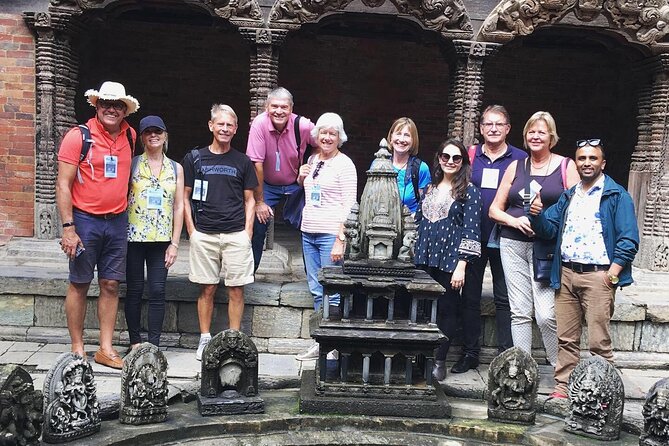
Pashupatinath gets about an hour and is one of the day’s most important religious stops. This is Nepal’s major Hindu temple complex, dedicated to Lord Shiva and located beside the sacred Bagmati River.
The site can feel more emotionally powerful than the polished monuments earlier in the day. Religious practice, riverside rituals, shrines, and everyday movement all come together here. Your guide can explain the role of the temple and the customs connected with it, which is especially useful if you are unfamiliar with Hindu traditions.
Respectful behavior matters. Follow your guide’s instructions about where you may go and what you may photograph. The complex is a living place of worship, not simply a historic attraction.
The one-hour stop offers a useful first visit, but Pashupatinath is broad and layered. You may leave with a better understanding of Nepal’s spiritual life while still feeling that there is much more to see.
Boudhanath, the final great circle
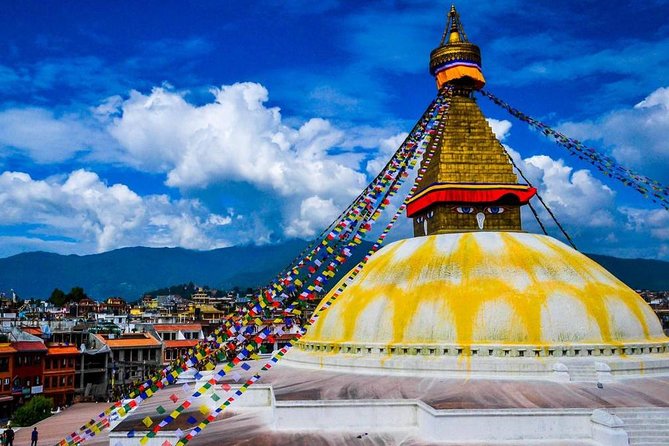
The day ends at Boudhanath, one of the world’s largest spherical stupas and the spiritual center of Kathmandu’s Tibetan Buddhist community. Its huge white dome and painted eyes make it one of the valley’s most recognizable sights.
The planned visit is about 30 minutes. That is enough to walk around the stupa, watch the steady religious activity, and receive an explanation of its meaning. It is not enough to sit for long or explore the surrounding area at a relaxed pace.
Ending here makes sense. After a day of royal squares and Hindu temples, Boudhanath gives you a strong Buddhist finish. The circular path around the dome also offers a simple way to take in the site even when time is short.
If you have another day in Kathmandu, return to Boudhanath independently and spend more time in the surrounding neighborhood. On this tour, treat the stop as a memorable introduction rather than a complete visit.
Guides, drivers, and the value of a private vehicle
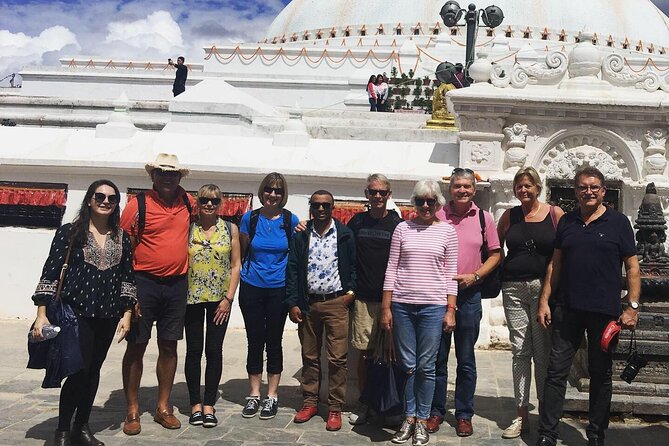
The guide is a major part of this experience. Sumit is repeatedly singled out for calm, clear explanations of Nepal’s history, religion, and culture. Anon has been praised for keeping the commentary focused and allowing enough time at each site. Sajina, Suresh, and Asmita have also led the route.
You cannot assume one specific guide will be assigned unless the company confirms it. Still, the names give you a sense of the guiding team and the style to expect: practical explanations, cultural background, and help moving through a busy day.
The driver is just as important. Kathmandu traffic can turn short distances into slow journeys, so a careful driver makes a real difference. The service includes an air-conditioned private vehicle, even when you select a group arrangement according to the option you book.
Hotel pickup and drop-off remove a great deal of friction. You do not need to work out meeting points across town or negotiate several taxi rides. That convenience is a big part of the tour’s value.
Lunch, cash, and what to carry
The included lunch box is functional rather than fancy. It includes 500 milliliters of bottled water, juice, a muffin, donut, banana, and seasonal fruit. Some descriptions also refer to a simple bread-based meal.
Think of it as fuel for a busy sightseeing day, not a long restaurant lunch. The advantage is speed. You can keep moving instead of spending an hour finding and waiting for a meal. If you need more food, bring extra snacks. The day is long, and several stops involve walking.
Carry Nepalese rupees for admission fees. The total has been cited at around 6,000 rupees, and one payment may be needed at each site. Add a little extra for personal expenses and tips.
Wear comfortable walking shoes. The tour includes temple grounds, old paved areas, steps, and extended periods on your feet. A small day bag, water, sun protection, and a light rain layer are sensible additions, especially since one group completed the route in wet weather.
Who should book this fast-paced cultural day
I would choose this tour if you have only one or two days in Kathmandu and want to cover the major UNESCO sites without arranging every transfer yourself. It is also a good fit if you are traveling alone, since the guide gives structure and local context throughout the day.
It works well for people who prefer an overview before deciding which places deserve a second visit. You will leave with a useful mental map of the valley and a clearer idea of how Hindu, Buddhist, royal, and Newari traditions connect.
I would not choose it if you want slow photography, long museum visits, quiet meals, or time to sit at each temple. One person found the full schedule exhausting, and that is a fair warning. Even the positive accounts describe a long day, with some lasting 10 or 11 hours door to door.
If your schedule allows, split the seven sites across two days. You will see more and feel less pressed. The one-day option is best understood as a cultural sampler with excellent coverage, not a leisurely temple walk.
Should you book the Kathmandu UNESCO day tour?
Book it if coverage, convenience, and price matter more to you than a relaxed pace. Seeing all seven UNESCO sites in one day is difficult to arrange on your own, and the guide, driver, hotel service, and lunch remove much of the day’s practical work.
Before paying, compare the standard and all-inclusive options carefully. The $10 base price does not cover the roughly $44 in monument fees, and you should have about 6,000 Nepalese rupees available if you choose the standard arrangement.
For a short stay, this is a strong way to get oriented. For a longer stay, take the two-day approach if possible. Either way, start early, carry snacks and cash, and expect a full day of temples, palaces, stupas, traffic, and plenty of walking.
FAQ
How long does the Kathmandu UNESCO tour take?
The tour lasts approximately 8 to 9 hours. Depending on traffic and the pace of the day, it can run closer to 10 or 11 hours.
Are entrance fees included?
Entrance fees are not included with the standard group and private tour options. The total is about 6,000 Nepalese rupees, or approximately $44 per person. An all-inclusive option includes entrance fees.
What food is provided?
The lunch box includes bottled water, muffin, donut, banana, seasonal fruit, and juice. The meal is simple and designed to keep the day moving.
Does the tour include hotel pickup?
Yes. Hotel pickup and drop-off are included, along with air-conditioned private transportation.
Which UNESCO sites are visited?
The route includes Swayambhunath, Kathmandu Durbar Square, Patan Durbar Square, Bhaktapur Durbar Square, Changu Narayan Temple, Pashupatinath Temple, and Boudhanath Stupa.
Can I cancel for a full refund?
You can cancel at least 24 hours before the experience begins for a full refund. Changes or cancellations made less than 24 hours before the start time are not accepted for a refund.
Just added in Kathmandu
- Kathmandu to Chitwan Tour by Tourist Bus – A Convenient and Affordable Way★ 4.0 · 4 reviews
- Changunarayan Hill to Telkot Hike Near Kathmandu Day Tour★ 5.0 · 6 reviews
- Mt Everest Base CampTrek | Budget Package★ 5.0 · 4 reviews
- Chitwan Jungle Safari 3-Day Tour★ 5.0 · 9 reviews
- Chandragiri Hills cable car day trip, private car with driver from Kathmandu★ 5.0 · 8 reviews
- Chandragiri to Taudaha Nature Day Hiking from Kathmandu★ 5.0 · 13 reviews
- Chandragiri Hill Station Tour by Cable Car★ 5.0 · 4 reviews
- Chandragiri Cable Car & Monkey Temple Private Guided Day Tour★ 5.0 · 5 reviews
Kathmandu UNESCO Heritage Tours, compared.
Private Kathmandu Sightseeing Tour | UNESCO World Heritage sites
Read our review →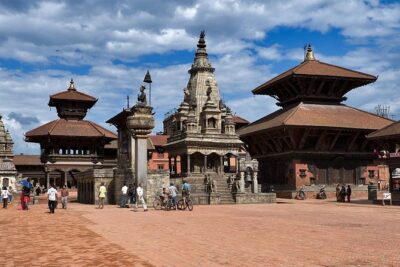
Private Bhaktapur and Nagarkot Day Tour From Kathmandu
Read our review →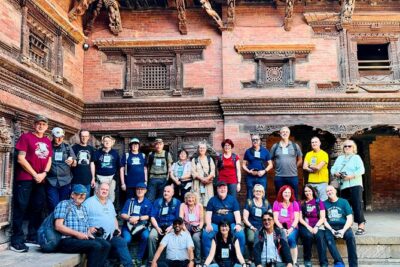
Full Day Top 4 UNESCO Tour with Lunch – Private/Group
Read our review →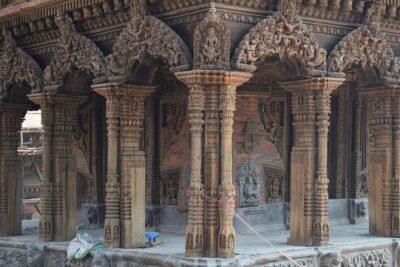
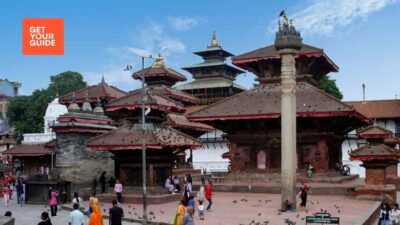
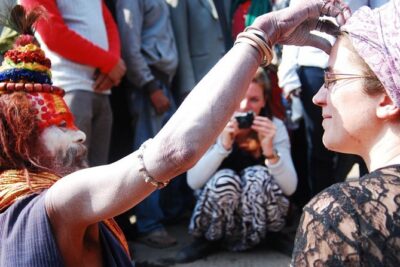
Kathmandu Spiritual Sites: Bodhnath & Pashupatinath Tour
Read our review →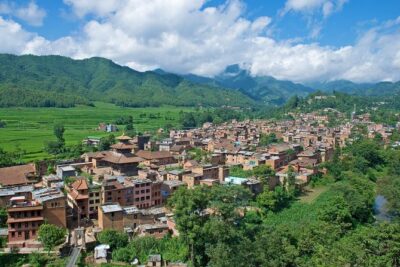
Day Trip to Bhaktapur and Panauti from Kathmandu
Read our review →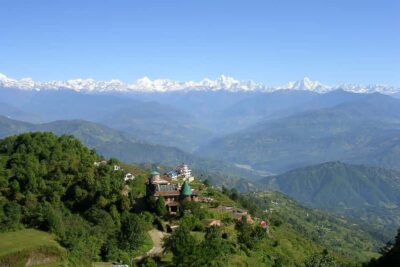
Nagarkot Sunrise and Hike Tour to Changu Narayan
Read our review →Browse the lists this tour appears in