
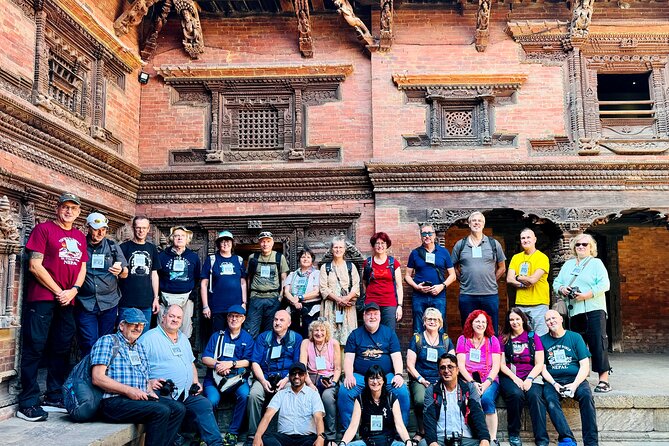
Reviewed · KATHMANDU UNESCO HERITAGE TOURS
Kathmandu: Full Day Top 4 UNESCO Tour with Lunch – Private/Group
Kathmandu’s four major UNESCO sites tell very different stories, from the hilltop prayer flags of Swayambhunath to the solemn cremation ghats at Pashupatinath. This tour gives you a fast, useful introduction to the city in one outing, with hotel pickup, a private vehicle, an English-speaking guide, and lunch included.
I like the variety of sites and the chance to choose between group, private, and ticket-inclusive formats. I also like the guide-led approach. Guides such as Sumit, Sajina, Ram, and Anon are noted for clear English, good historical context, patience, and a willingness to answer questions.
The tradeoff is time. Five to six hours is enough to see all four places, but it can feel like a fast track, especially at Patan and Pashupatinath. If you prefer long pauses, quiet wandering, and close attention to details, two sites in a day may suit you better.
Four things to know before booking
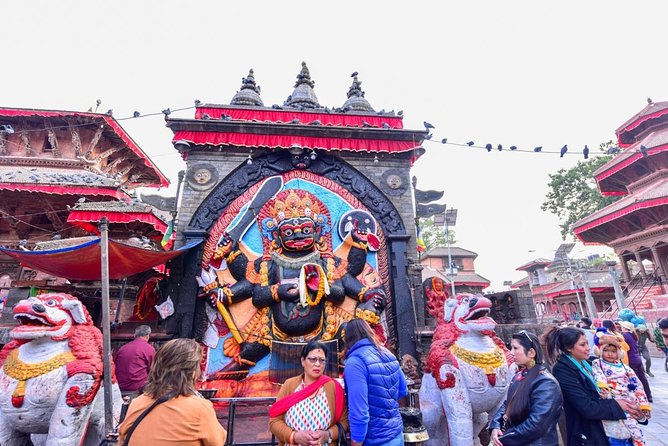
- Four UNESCO sites in one outing: Swayambhunath, Patan Durbar Square, Pashupatinath, and Boudhanath cover Buddhist, Hindu, royal, and artistic traditions.
- Private transport is included: Hotel pickup and drop-off are provided in an air-conditioned vehicle, saving you from dealing with Kathmandu traffic and directions.
- The private option offers flexibility: Past guides such as Ram have accommodated small requests, including a supermarket stop, when time allowed.
- Pashupatinath can be emotionally intense: Cremation ceremonies may be visible from the river area, but you are not required to watch.
- Check the fare option carefully: The basic price is listed at $10 per person, while monument entry fees of $20 per person are extra unless you select the all-inclusive option.
- Lunch is practical rather than elaborate: The standard box includes water, a muffin, donut, banana, seasonal fruit, and juice. The all-inclusive option includes food, soft drinks, and a khana set or choice of dishes.
Why this tour works for a short Kathmandu stay
Kathmandu is not a city where four major sights fit neatly into four easy stops. Traffic can be slow, streets can be crowded, and each monument needs context. This tour solves the basic problem well: you are collected at your hotel, driven between the sites, and accompanied by a guide who explains what you are seeing.
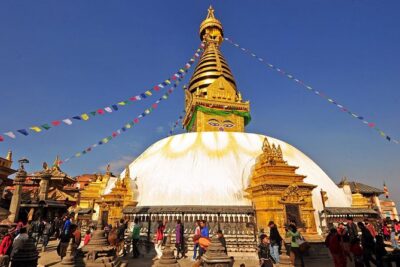
The route also gives you a useful first look at the Kathmandu Valley’s different traditions. Swayambhunath is a hilltop Buddhist site with sweeping city views. Patan focuses on Newar craftsmanship and royal architecture. Pashupatinath brings you into one of Hinduism’s most important temple areas. Boudhanath offers a calmer Buddhist setting centered on a huge white stupa.
The experience is listed as lasting about five to six hours. That makes it closer to a busy half-day than a leisurely full day, despite the tour name. You will spend part of that time in the vehicle, but the transport matters in Kathmandu, where moving across town can take longer than the map suggests.
I would choose this outing if you have limited time, have just arrived in Nepal, or want a broad cultural orientation before exploring more slowly on your own. I would not choose it as your only sightseeing plan if your main goal is photography, detailed architecture study, or extended time at each monument.
More temple and square walks around Kathmandu:
- Private Kathmandu Sightseeing Tour | UNESCO World Heritage sites
★ 5.0 · 756 reviews - Kathmandu: Full Day 7 UNESCO Tour with Lunch – Private/Group
★ 5.0 · 415 reviews - Private Bhaktapur and Nagarkot Day Tour From Kathmandu
★ 5.0 · 305 reviews
Swayambhunath, the hilltop Monkey Temple
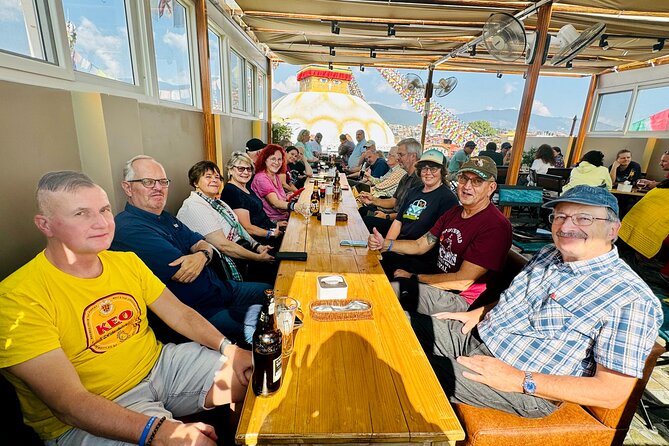
The first stop is Swayambhunath, often called the Monkey Temple. It sits on a hill west of Kathmandu and is described as more than 2,500 years old, making it one of Nepal’s oldest and most sacred places.
You have about 40 minutes here. That is enough to take in the stupa, observe the religious activity, and look across Kathmandu from the hilltop. The site’s name comes from the monkeys that live around the complex, so keep your belongings close and do not treat them as tame pets.
The hilltop setting gives Swayambhunath a strong opening impact. Prayer flags, religious images, and the city below make it immediately different from the streets around your hotel. Your guide can help explain the relationship between the stupa, Buddhist practice, and the wider valley.
The short visit has a clear limit. Forty minutes does not leave much room for lingering, photography, and a full circuit of every corner. If stairs or uneven ground are difficult for you, ask about the walking involved before booking. The tour information says most people can participate, but it does not promise a step-free route.
Patan Durbar Square and Newar craftsmanship
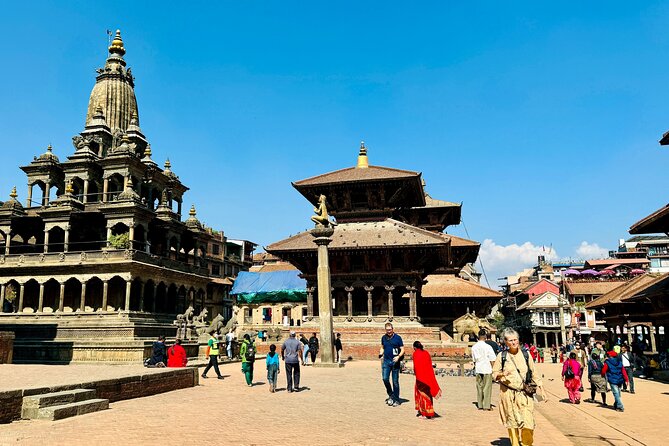
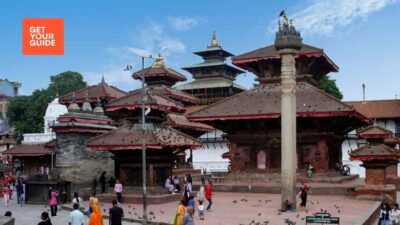
Patan Durbar Square is in Lalitpur, just south of Kathmandu. It was once the royal palace area of the Malla kings of Patan and is now one of the best places on this route to see Newar architecture and decorative arts.
You have about an hour here, the longest scheduled stop. That extra time makes sense. The square is not just one building. It is a collection of palace courtyards, temples, carved details, and open spaces that reward a slower look.
This is where a strong guide makes a real difference. The buildings can appear crowded together at first, especially when you are trying to understand which structure served which purpose. Guides including Sumit, Shanti, Sajina, and Ram have been praised for explaining history and culture in clear English, helping visitors notice more than the obvious temple roofs.
Patan is also the stop most likely to leave you wishing for more time. One hour lets you get a solid introduction, but it does not turn the visit into a detailed architectural study. If you are especially interested in woodcarving, metalwork, or palace design, you may want to return independently after the tour.
The included vehicle is useful here because it lets you move on without arranging another taxi. On the private option, you can ask questions at your own pace, and the guide may be able to adjust small details if the schedule permits. Do not count on major changes, though. The route is built around four sites in one day.
Pashupatinath and the Bagmati River
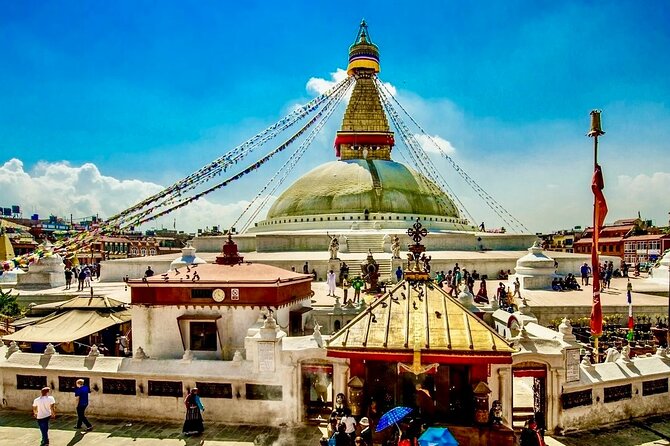
Pashupatinath Temple is dedicated to Lord Shiva and is one of the holiest Hindu shrines in the world. It is also a UNESCO site, positioned along the Bagmati River in Kathmandu.
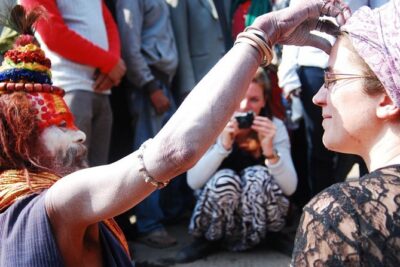
The scheduled visit lasts about an hour. This is likely to be the most powerful and sensitive part of the outing. The temple area is a place of active worship, not simply an old monument. Depending on what is taking place during your visit, you may see religious ceremonies along the river, including cremations.
You do not need to watch a cremation ceremony. Some people choose to observe from a respectful distance, while others step away. The tour does not pressure you either way. I recommend following your guide’s instructions, keeping your voice low, and remembering that this is a family’s religious farewell, not a performance for visitors.
The main temple itself is a Hindu place of worship, and access may be restricted according to religious rules. Your guide can still explain the site, its role, and what you can see from the surrounding areas. This is one reason the guide matters more here than at a simple viewpoint.
Pashupatinath can also feel rushed. An hour includes walking, orientation, and time near the river, so it may not be enough if you want to process everything quietly. Still, it gives you a direct look at an important part of Nepali religious life that you would miss by visiting only palaces and stupas.
A few more things to do in Kathmandu worth a look
- Kathmandu: Full-Day 7 UNESCO Tour with Lunch – Private/Group
★ 4.9 · 247 reviews - Kathmandu: Nagarkot Sunrise View & Morning Hike with Lunch
★ 4.9 · 188 reviews - Kathmandu: Top 4 UNESCO Tour with Lunch – Private/Group
★ 4.9 · 181 reviews - Kathmandu: Nagarkot Sunrise & Hike with Lunch -Private/Group
★ 4.9 · 122 reviews
Boudhanath, the great Buddhist stupa
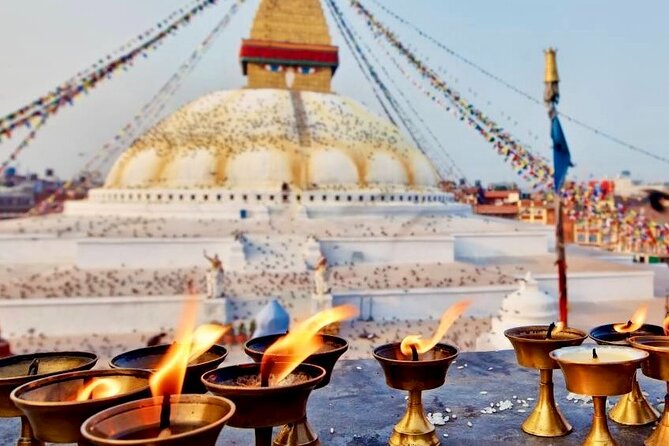
Boudhanath is one of the world’s largest and most important Buddhist stupas. Its huge white dome and watchful eyes create a very different mood from Pashupatinath.
The scheduled time is about 40 minutes. You can walk around the stupa, watch the flow of religious activity, and take in the surrounding buildings. The circular layout makes the purpose of the visit easy to understand: this is a place to move around the stupa in a respectful, steady way while observing Buddhist practice.
Boudhanath is a good final stop because it gives the day a quieter close. After the solemn atmosphere of Pashupatinath and the ornate architecture of Patan, the broad stupa provides a simple visual focus.
Again, 40 minutes is an introduction, not a full visit. If you want time to sit, take photographs, visit nearby shops, or watch the area at a slower pace, you will want to return later. The tour gives you the essential setting and meaning, then moves on.
Guides make the difference
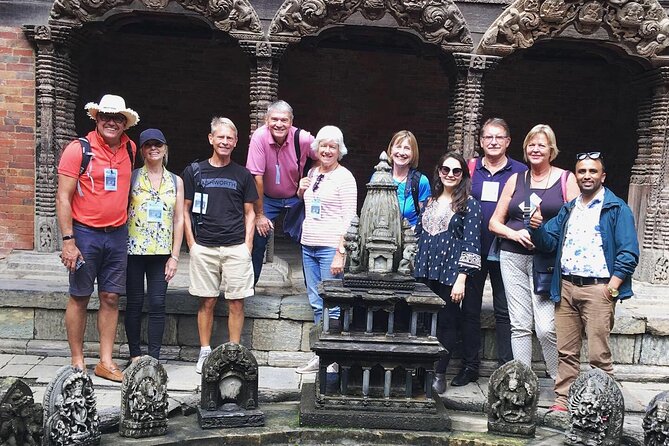
The strongest feature of this experience is the guide-led interpretation. The sites are impressive on their own, but a guide helps you understand why four places that look so different all belong to the same valley.
Sumit is praised for combining clear explanations with humor. Sajina is described as engaging and well informed. Ram is noted for being helpful and flexible, while Anon is praised for making sure people stayed comfortable and understood what they were seeing. Other named guides include Shanti, Asmita, Punam, Rajan, and Suresh.
The exact guide assigned to you may vary, so do not book solely around one name. The useful point is that the operator has several guides who have received strong comments for English, cultural explanation, patience, and organization.
There is one important caution. One past experience involved a guide who rushed the group, gave condescending answers, and did not respect personal space. That appears to be an exception among the supplied feedback, but it is still worth knowing. If a guide’s manner makes you uncomfortable, speak with the operator rather than silently accepting it.
The private option should be your first choice if you want to ask many questions or adjust the pace. The group option may cost less or suit solo visitors who like company, but moving four sites on a shared schedule leaves less room for personal choices.
Lunch, vehicle, and the practical value
Hotel pickup and drop-off are included, along with an air-conditioned private vehicle. In Kathmandu, that is more than a minor convenience. You avoid arranging several rides, finding parking, and explaining four destinations to different drivers.
The standard lunch box includes 500 milliliters of bottled water, a muffin, donut, banana, seasonal fruit, and juice. It is a simple package, best viewed as fuel between sights rather than a major food experience.
The all-inclusive option changes the meal arrangement. It includes food, soft drinks, entrance fees, and a khana set or choice of dishes. If you want a more substantial local meal and fewer payments during the day, this may be the better choice.
The price needs careful reading. The advertised starting figure is $10 per person, but entrance fees are listed separately at $20 per person. Personal expenses and tips are also excluded. Select the ticket-inclusive option if you prefer the cost to be clearer from the start, and confirm exactly what your chosen package covers before paying.
At this price, the tour offers strong value for a short introduction, especially because transport and a guide are included. The value is less obvious if you already know the sites and want to spend most of the day at only one or two of them.
Who should book this Kathmandu tour?
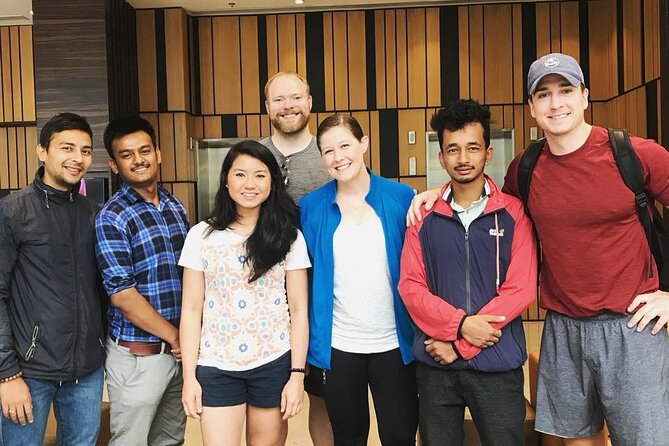
I would recommend it to first-time visitors with limited time, people arriving for a short stay, and anyone who wants the main cultural landmarks explained rather than simply photographed. It also suits solo visitors who prefer a planned route and families or small groups who want hotel transport handled.
The private option is especially useful for couples, families, and anyone who wants to ask questions about religion, architecture, or daily life in Nepal. It may also work well if you need a small adjustment, since past guides have accommodated simple requests when possible.
I would be more cautious if you dislike fixed schedules, have mobility concerns, or want long, quiet visits. The itinerary is full. Several people have found it well paced, while others have felt rushed and wanted to return alone. Both reactions make sense because the tour is trying to cover four major sites in a limited time.
Wear practical shoes and dress respectfully at religious sites. The supplied information does not specify a dress code, but modest clothing is a sensible choice for temple areas. Keep an open mind at Pashupatinath, where the experience may be moving or uncomfortable.
Should you book it?
Book this tour if you want maximum cultural coverage in five to six hours and value a guide who can connect the sites to Nepal’s religious and royal traditions. The transport, hotel pickup, lunch, and choice of private or group format make it easy to fit into a short Kathmandu schedule.
Skip it, or choose a smaller private outing, if your priority is lingering at Patan, spending quiet time at Boudhanath, or exploring one site in detail. For most first-time visitors, though, this is a practical way to get your bearings and see the valley’s major highlights without wasting half the day on transport.
Free cancellation is available up to 24 hours before the start time. Within 24 hours, changes and refunds are not accepted. The tour requires good weather, and a weather cancellation should result in another date or a full refund.
FAQ
How long does the Kathmandu UNESCO tour last?
The tour lasts approximately five to six hours.
Which sites are included?
The route includes Swayambhunath, Patan Durbar Square, Pashupatinath Temple, and Boudhanath Stupa.
Is hotel pickup and drop-off included?
Yes. Pickup and drop-off at your hotel are provided by private vehicle.
Is lunch included?
Yes. The standard lunch box includes bottled water, a muffin, donut, banana, seasonal fruit, and juice. The all-inclusive option includes food, soft drinks, entrance fees, and a khana set or choice of dishes.
Are entrance fees included in the basic price?
No. Monument entrance fees are listed as $20 per person and are paid directly by you unless you select the all-inclusive option.
Can I choose a private tour?
Yes. The experience offers group, private, and ticket-inclusive options. The private activity is limited to your own group.
What is the cancellation policy?
You can cancel at least 24 hours before the start time for a full refund. Cancellations or changes made within 24 hours are not refunded or accepted. If poor weather causes cancellation, you will be offered another date or a full refund.
Just added in Kathmandu
- Kathmandu to Chitwan Tour by Tourist Bus – A Convenient and Affordable Way★ 4.0 · 4 reviews
- Changunarayan Hill to Telkot Hike Near Kathmandu Day Tour★ 5.0 · 6 reviews
- Mt Everest Base CampTrek | Budget Package★ 5.0 · 4 reviews
- Chitwan Jungle Safari 3-Day Tour★ 5.0 · 9 reviews
- Chandragiri Hill Station Tour by Cable Car★ 5.0 · 4 reviews
- Chandragiri Hills cable car day trip, private car with driver from Kathmandu★ 5.0 · 8 reviews
- Chandragiri to Taudaha Nature Day Hiking from Kathmandu★ 5.0 · 13 reviews
- Chandragiri Cable Car & Monkey Temple Private Guided Day Tour★ 5.0 · 5 reviews
Kathmandu UNESCO Heritage Tours, compared.
Private Kathmandu Sightseeing Tour | UNESCO World Heritage sites
Read our review →
Full Day 7 UNESCO Tour with Lunch – Private/Group
Read our review →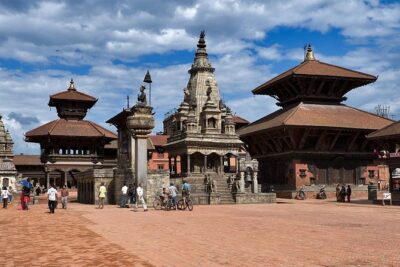
Private Bhaktapur and Nagarkot Day Tour From Kathmandu
Read our review →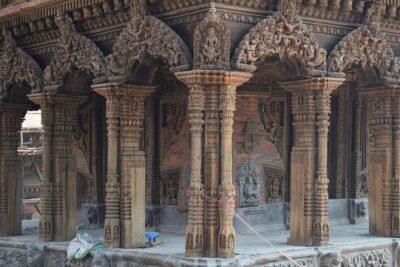
Kathmandu Spiritual Sites: Bodhnath & Pashupatinath Tour
Read our review →
Day Trip to Bhaktapur and Panauti from Kathmandu
Read our review →
Browse the lists this tour appears in