
Reviewed · KATHMANDU UNESCO HERITAGE TOURS
Private Half-Day Tour of Kathmandu Durbar Square and Swayambhunath Temple
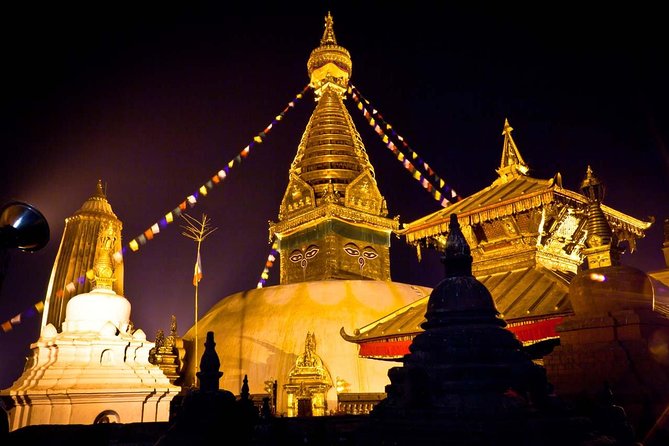
Kathmandu reveals its character quickly on this tour: royal courtyards, carved wooden windows, prayer wheels, monkeys, and a hilltop stupa all fit into one compact morning or afternoon. The pairing of Durbar Square and Swayambhunath gives you both the city’s royal past and its living religious traditions.
I like the private vehicle and guide, especially if you have only a day or two in Kathmandu. I also like the flexible pace, with time to ask about architecture, Hindu and Buddhist customs, or the earthquake damage and rebuilding that still shape the city.
The main trade-off is simple: four hours is enough for an introduction, not a full study of either site. Swayambhunath also involves a hilltop visit, and Kathmandu traffic can make the schedule feel tight.
Key points at a glance
- Two UNESCO-listed Kathmandu highlights: See Hanuman Dhoka Durbar Square and the hilltop Swayambhunath complex in one outing.
- A genuinely private format: Only your group takes part, so you can ask questions and request a small change in emphasis.
- Hotel or airport pickup: Private transport is included, useful in a city where traffic and unfamiliar streets can slow you down.
- A guide-led introduction to Newar art: Look for carved windows, palace courtyards, temples, and the building traditions of Kathmandu Valley.
- A hilltop view with a religious setting: Swayambhunath combines a famous stupa, Buddhist paintings, prayer wheels, monasteries, and Hindu and Buddhist worship.
- Good value for a short stay: At $47 per person, the tour is most attractive when shared by a small group or used to get your bearings quickly.
Why these two Kathmandu sights work well together
This tour makes sense because the two stops show different sides of Kathmandu. Durbar Square places you among the former royal buildings and temples of the old Kathmandu Kingdom. Swayambhunath takes you up a hill into a sacred complex where Buddhist and Hindu traditions meet.
You get architecture, religion, history, local stories, and a city view without spending a full day in a vehicle. For a first visit, that balance is useful. You can see the main sights, ask a local guide how the city fits together, and still have time afterward for another museum, neighborhood, or meal.
The private setup matters more here than it would on a simple sightseeing bus. Kathmandu’s monuments are close together but not always easy to read at first glance. A guide can point out a small shrine, a carved figure, or a courtyard that you might otherwise pass without understanding.
More temple and square walks around Kathmandu:
- Private Kathmandu Sightseeing Tour | UNESCO World Heritage sites
★ 5.0 · 756 reviews - Kathmandu: Full Day 7 UNESCO Tour with Lunch – Private/Group
★ 5.0 · 415 reviews - Private Bhaktapur and Nagarkot Day Tour From Kathmandu
★ 5.0 · 305 reviews
Starting at Kathmandu Durbar Square
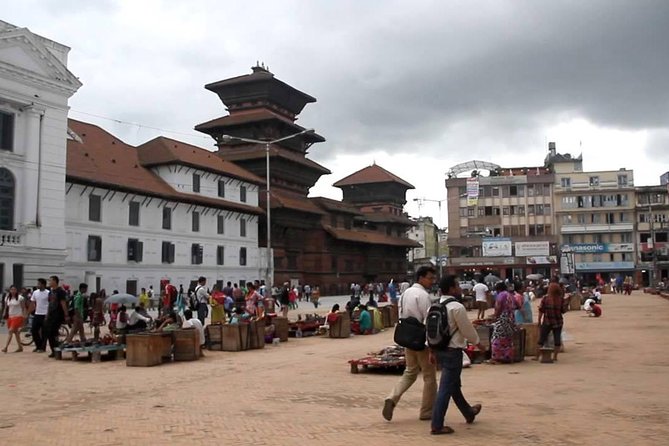
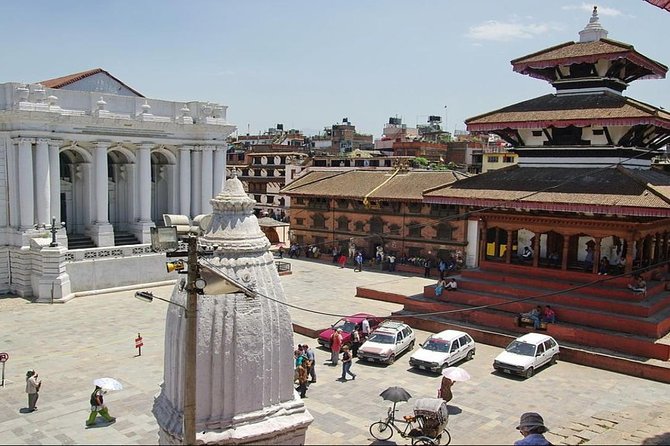
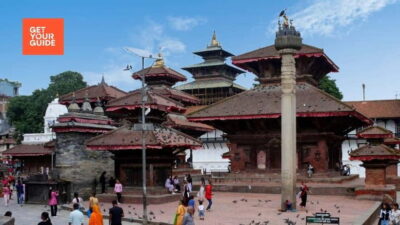
The first stop usually receives about two hours, which is a sensible amount of time for a first look. Kathmandu Durbar Square, also called Hanuman Dhoka Durbar Square, was the royal center of the former Kathmandu Kingdom.
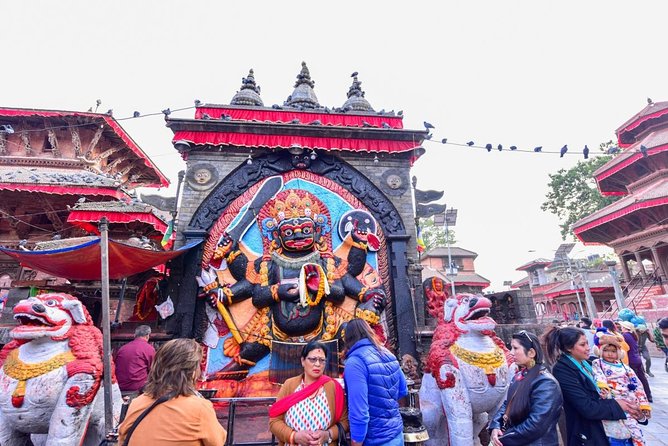
The name comes from a statue of Hanuman, the monkey devotee of Lord Ram, near the palace entrance. From there, the square opens into a collection of palaces, temples, courtyards, and smaller architectural details. The space is not one single building or monument. It is a cluster of connected areas that reward a slow walk.
I would pay close attention to the woodwork. The Newar artists of the Kathmandu Valley are known for finely carved windows, doors, struts, and temple details. These pieces can look decorative at first, but they also carry religious images and local design traditions.
The old royal palace complex contains buildings associated with both the Malla and Shah kings. Your guide can help separate the royal functions from the religious ones, which is useful because palace courtyards and temples sit close together.
Two hours will not let you inspect every corner in detail, but it should give you time to understand the plan of the square and focus on the main features. The guide’s commentary is especially valuable here. Without context, the many shrines and carved facades can blur together.
Kathmandu Durbar Square also carries visible reminders of the 2015 earthquake and later restoration work. The supplied information does not promise a detailed reconstruction tour, so ask your guide about the condition and repair of particular buildings if that interests you.
What to look for in the palace courtyards
The courtyards are among the most rewarding parts of the first stop. They show how royal life, religious practice, and daily movement once overlapped in the old city.
Rather than rushing from one famous facade to the next, I would ask your guide to explain:
- Which buildings belonged to the royal palace
- How Malla and Shah rule shaped the square
- What the carved figures on the temples represent
- Which courtyards are used for religious ceremonies
- How Newar building techniques appear in the wood and brickwork
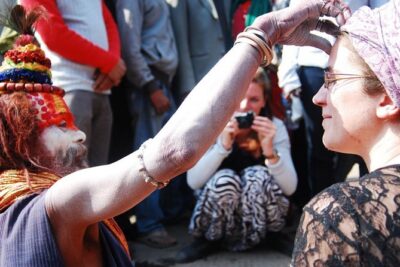
One especially memorable possibility is seeing the Kumari, the living goddess of Kathmandu, if circumstances allow. One booking described a fleeting blessing from the Kumari as the highlight of the day, but this is not something the tour can guarantee. Treat it as a possible moment, not a promised feature.
The square can also be busy and visually crowded. That is part of its character, but it can make quiet observation difficult. A private guide gives you a better chance to pause, ask questions, and choose what matters most to you.
Climbing to Swayambhunath, the Monkey Temple
The second two-hour stop is Swayambhunath, commonly called the Monkey Temple because monkeys roam around the hilltop complex. It is one of Kathmandu’s best-known religious sites and offers broad views across the Kathmandu Valley.
The complex is reached on a hill, so this stop is more physical than the square. The provided details do not specify the number of steps or the exact route, but you should expect an uphill visit rather than a flat museum walk.
At the top, the stupa provides the visual focus. Prayer wheels, Buddhist paintings, monasteries, shrines, and a large Buddha statue add layers around it. The site attracts worshipers from different religious backgrounds, which gives it a wider meaning than a simple photo stop.
I like this part of the tour because the view and the religious setting work together. You are not only looking over Kathmandu. You are seeing the valley from a place that has been treated as sacred for centuries.
The story of Swayambhunath says that the site arose spontaneously when the Kathmandu Valley was still a primordial lake, more than 2,000 years ago. Your guide can explain how this legend connects the stupa to the spiritual identity of the valley.
Give yourself time to notice how people use the space. Watch the prayer wheels, look at the painted Buddhist details, and allow room for worshipers. This is an active religious site, not just a monument made for sightseeing.
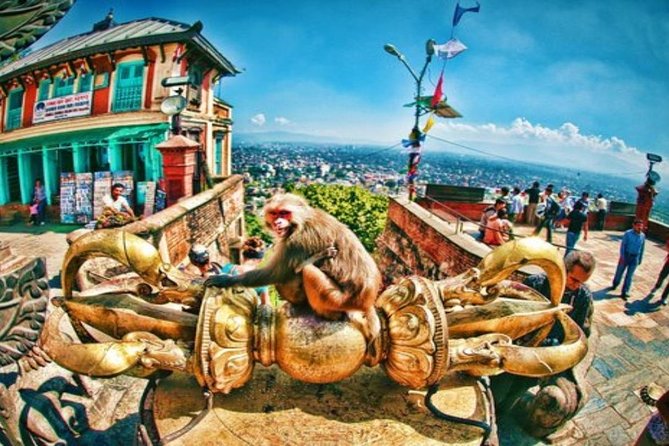
The monkeys are entertaining, but keep your belongings secure and avoid feeding them. The tour information describes them as part of the site, not as a managed attraction, so use ordinary caution around animals.
A few more things to do in Kathmandu worth a look
- Private Half-Day Chandragiri Cable Car Tour in Kathmandu
★ 5.0 · 155 reviews - Namo Buddha and Thrangu Tashi Yangtse Monastery Half-Day Tour
★ 5.0 · 24 reviews - Bhaktapur Old City and Durbar Square Half-Day Tour
★ 5.0 · 15 reviews - From Kathmandu: Half-Day Guided Tour of Bhaktapur
★ 3.8 · 13 reviews
The view over Kathmandu Valley
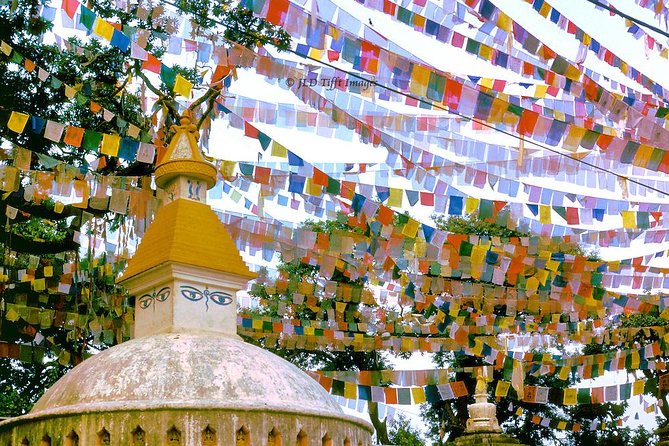
Swayambhunath’s hilltop position is one of the strongest reasons to include it in a short city tour. On a clear day, you can look across the Kathmandu Valley and see how densely the capital spreads around its historic core.
Weather and air quality will affect the view. The tour promises the hilltop setting, not perfect visibility, so keep expectations sensible. Even when the distant view is hazy, the stupa, monasteries, prayer wheels, and painted details still make the stop worthwhile.
This is also a good place to ask your guide to orient you. A local guide who grew up in Kathmandu can explain how the old center relates to the wider city. One named guide associated with this experience is Bishnu, described as having grown up in Kathmandu. Guide assignments can vary, but that local background is the kind of perspective that adds value to a short tour.
Why a private vehicle helps in Kathmandu
Hotel pickup and drop-off are included, with transport in a private vehicle. The tour can also pick you up at the airport and return you there or to your Kathmandu hotel after Swayambhunath.
That arrangement is helpful if you have luggage, have just arrived, or do not want to work out local transport before learning the city. It also removes the need to find the entrances to two major sites on your own.
Traffic remains the unknown. The tour lasts about four hours, but road conditions can affect the exact rhythm of the day. The listed start time is 10:00 a.m., and that timing gives you a straightforward late-morning departure. If your schedule is tight, tell the operator in advance that you need to finish at the airport or return to a hotel by a particular time.
The vehicle is not the main attraction, but it turns a short sightseeing plan into a practical one. You spend your energy looking at Kathmandu rather than arranging each transfer.
Guide quality and the value of flexibility
The guide is the heart of this experience. Commentary covers architecture, culture, religion, and history, but the private format lets you steer the conversation.
If you care about buildings, ask for more Newar architectural detail. If religion interests you, ask how Hindu and Buddhist practices overlap at Swayambhunath. If you are visiting after arriving in Nepal, request practical advice about navigating Kathmandu, neighborhoods, and other sights.
The experience has earned a 4.7 rating from 11 published ratings, with 100 percent recommending it. The strongest praise centers on clear explanations, kind service, and the ability to see a lot in limited time. One solo visitor used the tour during a two-day stay, while another group of 13 appreciated seeing Kathmandu from a local point of view.
That range is important. A private tour can work for one person, a couple, or a larger group, but the experience will feel different depending on group size. With 13 people, privacy means your own party rather than a mixed public group, not necessarily a quiet, one-on-one outing.
A French-speaking guide was also arranged for one booking, although the standard inclusion specifies an English-speaking local guide. If language matters, confirm what can be provided before booking.
Is $47 a fair price?
At $47 per person, this tour offers good value if you want transport, a guide, and admission to both attractions bundled into a half-day plan. The value improves for a larger private group because the vehicle and guide serve everyone together.
You are paying for convenience and interpretation, not just entry tickets. A self-guided visit might cost less, but you would need to arrange transport, find both sites, and make sense of the palace complex and religious symbols on your own.
The price is less compelling if you already have private transport and strong knowledge of Kathmandu’s architecture. In that case, the main benefit is the guide’s local explanation and the chance to tailor the pace.
Two mineral water bottles per person are included. Food and other drinks are not, so eat before departure or plan your own refreshment outside the tour.
Who should book this half-day tour?
I would consider it a strong fit for:
- First-time visitors with only one or two days in Kathmandu
- Solo visitors who want efficient transport and local context
- Couples who prefer a private pace
- Families or groups who want to stay together
- People arriving at the airport who want to use the tour as an introduction to the city
- Visitors interested in Newar art, Buddhist sites, Hindu traditions, and royal architecture
It is less suited to anyone wanting a slow, highly specialized study of Kathmandu Durbar Square or a full day of temple visits. Four hours gives you a useful first chapter, not the whole book.
The hilltop setting at Swayambhunath also deserves attention. Most travelers can participate according to the supplied information, but the route is not entirely flat. If stairs or uphill walking are a concern, ask the operator about the access route before confirming.
Timing, cancellation, and practical notes
The scheduled start is 10:00 a.m. Pickup and drop-off are offered from your hotel or the airport, and the final drop-off can be at the airport or back at your Kathmandu hotel.
Confirmation is provided when you book. The tour is commonly booked well ahead, with an average booking time of 39 days in advance, so early planning may help during busy travel periods.
You can cancel for a full refund up to 24 hours before the local start time. Changes or cancellations made inside that 24-hour window are not accepted or refunded.
Should you book it?
Book this tour if you want a well-organized first look at Kathmandu without giving up the freedom of a private guide. The combination is smart: Durbar Square explains the city’s royal and artistic traditions, while Swayambhunath adds a sacred hilltop setting and a wide valley view.
I would be especially inclined to book it for a short stay, an airport arrival, or a first morning in the city. Go in knowing that traffic can compress the schedule and that four hours will not cover every monument in detail.
For most first-time visitors, $47 is a reasonable price for the vehicle, guide, admissions, water, and time saved. If you want a focused introduction rather than an exhaustive archaeological tour, this is a practical choice.
FAQ
How long does the tour last?
The tour lasts approximately four hours, with about two hours at Kathmandu Durbar Square and two hours at Swayambhunath.
What time does the tour start?
The listed start time is 10:00 a.m.
Is this a private tour?
Yes. Only your group participates in the activity.
Is hotel pickup included?
Yes. Pickup and drop-off from your hotel or the airport are included.
Can I be dropped off at the airport?
Yes. After visiting Swayambhunath, you can be dropped at the airport or returned to your Kathmandu hotel.
Is transportation included?
Yes. Transport is provided in a private vehicle.
Is a guide included?
Yes. An English-speaking local guide is included. A French-speaking guide was provided for one booking, but you should confirm language availability before booking.
Are admission tickets included?
Yes. Admission tickets for Kathmandu Durbar Square and Swayambhunath are included.
Are food and drinks included?
Food and drinks are not included. Two bottles of mineral water per person are provided.
Can I cancel for a full refund?
Yes. You can cancel at least 24 hours before the local start time for a full refund. Changes or cancellations made less than 24 hours before the start are not accepted or refunded.
Just added in Kathmandu
- Traditional Momo Making Class★ 5.0 · 10 reviews
- Women Empowerment Project(Nepali cooking class & jewelry workshop★ 5.0 · 15 reviews
- Kathmandu 2 Nights 3 Days Chitwan Jungle Safari Tour★ 5.0 · 9 reviews
- Walking tour of Kathmandu with awesome local guides★ 5.0 · 4 reviews
- Wildlife Adventure in Chitwan Nepal★ 4.0 · 4 reviews
- Kathmandu to Pokhara Premium sofa bus ticket★ 4.0 · 17 reviews
- Regular Yoga for all levels of practitioners in Kathmandu★ 5.0 · 4 reviews
- Kathmandu Street Food Walking Tour – Eat Like a Local★ 5.0 · 3 reviews
Kathmandu UNESCO Heritage Tours, compared.
Private Kathmandu Sightseeing Tour | UNESCO World Heritage sites
Read our review →
Full Day 7 UNESCO Tour with Lunch – Private/Group
Read our review →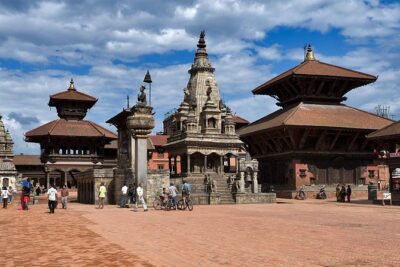
Private Bhaktapur and Nagarkot Day Tour From Kathmandu
Read our review →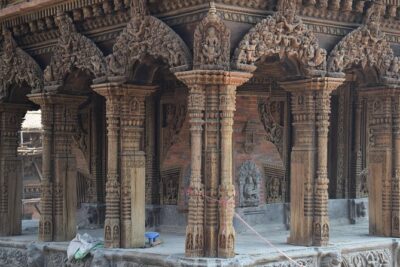
Kathmandu Spiritual Sites: Bodhnath & Pashupatinath Tour
Read our review →
Day Trip to Bhaktapur and Panauti from Kathmandu
Read our review →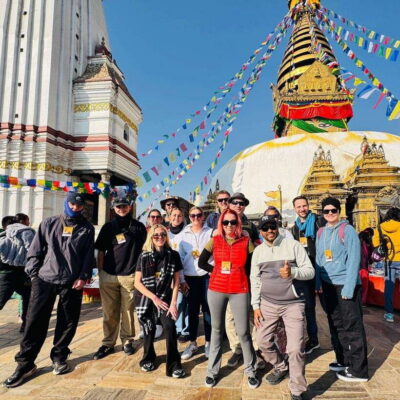
Browse the lists this tour appears in