
Reviewed · ANNAPURNA BASE CAMP TREKS
7 Days Annapurna Base Camp Trek from Pokhara
The real prize here is the change in scenery as you walk from Gurung villages and forest trails into the high mountain bowl of Annapurna Base Camp. You get suspension bridges, stone-built settlements, snowy peaks, and a quiet sense of progress that a short sightseeing trip around Pokhara cannot provide.
I like the private format, since your group gets its own English-speaking guide and private vehicle rather than being folded into a large departure. I also like the human touch promised by guides such as DB, Prem, and Krishna, with one past group even enjoying dance breaks on the trail. The main caution is the pace: six- and seven-hour trekking days, steep sections, and high altitude require strong physical fitness.
Key points to know before booking
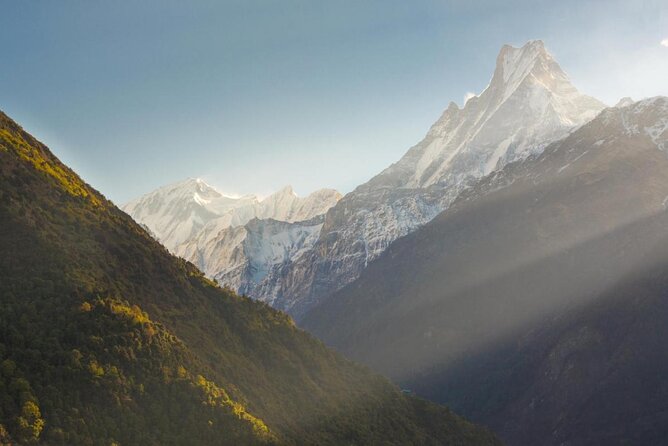
- Annapurna Base Camp at roughly 4,130 to 4,310 meters: The supplied information gives both figures, so confirm the exact altitude used by the operator.
- A seven-day route from Pokhara: You travel by road to Nayapul, trek through Ghandruk and Chhomrong, reach base camp, then return by a different route.
- Private trip with an English-speaking guide: Only your group participates, and hotel pickup and drop-off are included.
- Guesthouse accommodation with permits covered: Trekking permits and the TIMS card are included, but meals and personal expenses are not.
- A hot spring stop on Day 6: After descending through the Annapurna region, you stop at a hot spring where you can bathe.
- Good value, with important exclusions: At $287.92 per person, the package covers guiding, permits, lodging, and transport, but you must budget separately for food, personal costs, and possible rescue expenses.
Why this seven-day route works
This is a compact version of the Annapurna Base Camp trek. You start near Pokhara and reach the high sanctuary without spending extra days on a long approach from Kathmandu or a wider Annapurna circuit.
The route has a clear rhythm. The first days take you through villages and lower forests, the middle section brings colder air and dramatic mountain walls, and the final days return you to warmer country. You are not simply walking to a viewpoint, then turning around. The route gives you a sense of changing altitude and culture.
The short schedule also creates the main trade-off. Most days involve four to seven hours of walking. That is manageable for a fit person, but it leaves little spare time if you need to slow down. Your guide can help with the pace, yet the itinerary itself is fairly demanding.
Because this is a private trip, you can discuss the walking speed with your guide. Still, do not treat the seven days as a relaxed holiday. The high point comes late in the route, and altitude can make the final approach feel much harder than the distance suggests.
Other Annapurna routes from Pokhara:
- Kathmandu/Pokhara: 5-Day Annapurna Base Camp (ABC) Trek
★ 4.9 · 72 reviews - Private 7 – Day Annapurna Base Camp Trekking
★ 5.0 · 50 reviews - Annapurna Base Camp Trek (8 days)
★ 5.0 · 45 reviews
Day 1: Nayapul to Ghandruk through village country
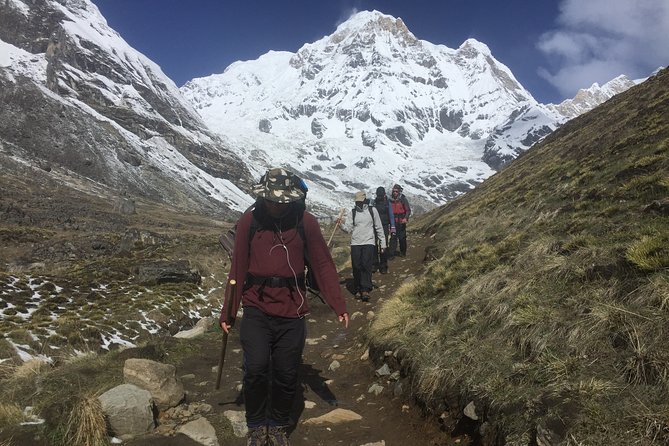
Your day begins with a drive from Pokhara to Nayapul, taking about 1 hour and 30 minutes. The road transfer is included, and the vehicle takes you to the trailhead rather than making you spend the first day walking out of town.
From Nayapul, the trek to Ghandruk takes about six hours. Ghandruk is one of the most appealing stops on this route because it introduces you to Gurung village life before the trail reaches the higher mountain zone.
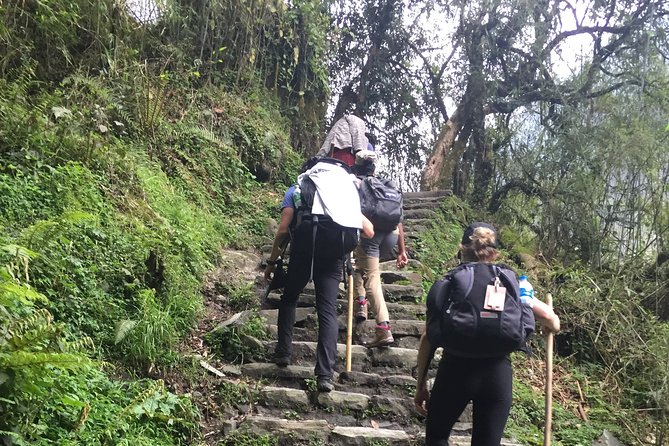
Expect a day of walking through countryside, forest, and settlement areas. The exact trail character can vary, but the trip description specifically highlights suspension bridges and village scenery, so you should be ready for uneven paths and regular changes in elevation.
Ghandruk is more than a place to sleep. It gives the trek a cultural beginning, with the mountain journey tied to the lives of the local Gurung communities. Your guesthouse stay keeps the experience simple and close to the route. Do not expect hotel-style comfort or included dining. Accommodation is covered, while meals are your responsibility.
Day 2: The six-hour climb to Chhomrong
The second day takes you from Ghandruk to Chhomrong, with about six hours on foot. This is another substantial walking day, and the route continues to shift between village paths, forest, and mountain views.
Chhomrong is an important point on the approach to the Annapurna Sanctuary. It feels like a transition from the lower settlements into the more remote section of the trek. The setting prepares you for the longer days ahead, when the trail becomes more focused on the sanctuary and base camp.
This is a good place to pay attention to how your body responds. You are still early in the trip, so do not race ahead simply because the altitude has not yet become severe. Use the private format to communicate with your guide. If you need a slower pace or more breaks, say so early.
The package includes an English-speaking trekking guide, but it does not specify a fixed guide for every departure. Names associated with the operation include DB, Prem, and Krishna. If having a particular guide matters to you, ask at booking rather than assuming who will lead your group.
Day 3: Into the Annapurna Sanctuary and on to Himalaya
Day 3 is listed as a seven-hour trek to Himalaya through the Annapurna Sanctuary. This is the longest walking day in the schedule, and it marks a clear shift toward the high mountain section.
The sanctuary is the heart of the route. The trail moves away from the broader village setting and into a contained mountain basin, where the peaks become the main event. Forest remains part of the journey, but the feeling changes as you gain height and move toward the base camp area.
A seven-hour day can feel long even at lower altitude. Here, the effort may be more noticeable, especially if you are not used to sustained uphill walking. Bring patience rather than trying to maintain a fast pace. Your goal is to arrive ready for the next morning, not to win the trail.
The guesthouse arrangement is practical. You have a place to rest along the route, but you should plan for basic facilities and keep your personal expectations realistic. Since meals are excluded, confirm with the operator how and where you will arrange food each day.
A few more things to do in Pokhara worth a look
- Poon hill Trek 3 days
★ 5.0 · 176 reviews - Trekking in Annapurna/Langtang/Everest/Upper Mustang regions
★ 5.0 · 161 reviews - Pokhara: 4-Day Ghorepani, Poonhill & Ghandruk Mountain Trek
★ 5.0 · 132 reviews - Ghorepani – Poon Hill Trek 3N-4D
★ 5.0 · 125 reviews
Day 4: Machhapuchhre Base Camp and Annapurna Base Camp
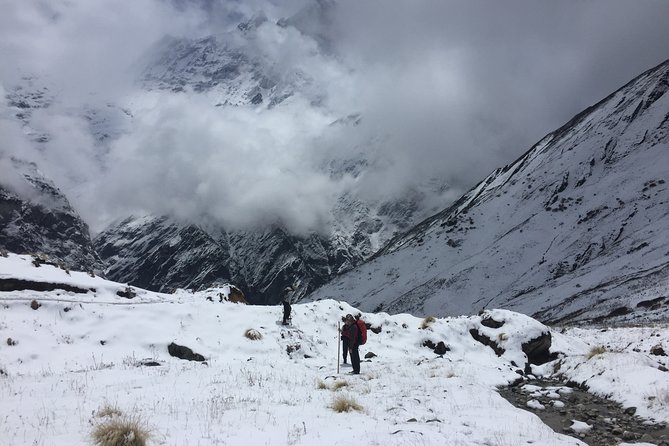
Day 4 is the high point of the experience. First, you trek about five hours to Machhapuchhre Base Camp. From there, the schedule allows another two hours to reach Annapurna Base Camp.
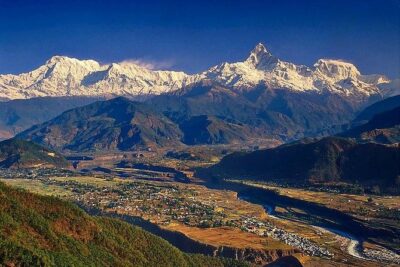
Machhapuchhre, also known as Fishtail, is one of the distinctive mountains in the region. Reaching its base camp gives you a major view stop before the final approach. The trail then continues toward the Annapurna mountain range and the main destination.
The published altitude is not fully consistent, with one description referring to about 4,130 meters and another to 4,310 meters. Either way, this is high country. You should take the altitude seriously and follow your guide’s advice about pace, rest, and how you feel.
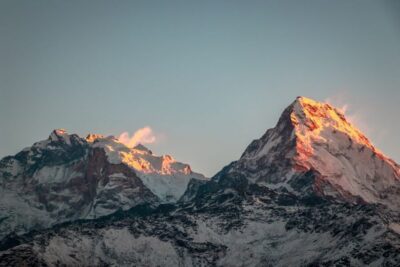
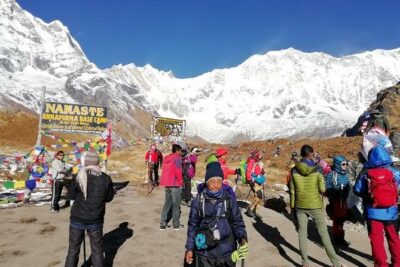
Annapurna Base Camp is valuable because it is not just a mountain viewpoint reached by vehicle. You have walked through villages, forests, bridges, and the sanctuary to arrive there. The setting feels earned. The scenery is the reason to come, but the route gives the scenery its meaning.
Your time at base camp may depend on conditions and your group’s pace. The itinerary allocates seven hours for both stages, so keep the day focused. You will want time to look around, but you also need energy for the return and the overnight schedule.
Day 5: Six hours downhill to Bamboo
After the high point, Day 5 takes you down to Bamboo in about six hours. Descending can seem easier than climbing, but it puts different pressure on your knees and legs.
The route back through the Annapurna region gives you another chance to notice details missed on the way up. The air gradually becomes less severe, and the trail returns toward forested sections. The return is not an empty afterthought. You experience the same mountain corridor from a new direction and with a different sense of pace.
This is the day when trekking poles can be useful, though the provided details do not say that equipment is supplied. You should also keep water and personal items organized, since long descents can become tiring when you are carrying a full pack.
Bamboo is a practical overnight point on the return. The schedule does not promise extra sightseeing here, so think of it as a place to rest and prepare for the next day rather than a separate attraction.
Day 6: Ghandruk and a hot spring break
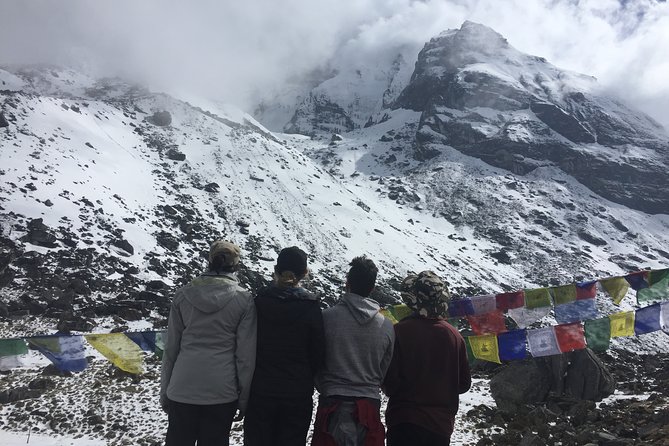
Day 6 includes about four hours of trekking to a hot spring stop near Ghandruk. After several long days, this is a welcome change in pace.
The hot spring is one of the more memorable details in the itinerary because it adds a simple physical reward to the return journey. You can take a hot spring bath, giving your legs a chance to relax before the final day.
The wording places the stop alongside Ghandruk, but it does not provide the exact hot spring name or bathing arrangements. Pack suitable personal items if you plan to use it, and confirm any local instructions with your guide.
At four hours, this is the shortest trekking day after the base camp push. That makes it a useful recovery day, though the trail can still include uneven ground and descents. Do not assume a short day means an effortless one.
Day 7: Phedi Khola, the road back to Pokhara
The final walking section takes about four hours down to Phedi. From there, a private vehicle drives you back to Pokhara Lakeside in about 45 minutes and transfers you to your hotel.
This finish is efficient. You do not need to arrange a separate ride from the trail, and the vehicle connection keeps the day straightforward. After a week on foot, arriving back at Lakeside gives you an easy endpoint for onward plans or a night near the lake.
The itinerary names Phedi Khola as the final stop before the drive. It does not give details about meals, departure time, or the exact hotel arrangement, so confirm those points if your Pokhara plans are tight.
What the $287.92 price really covers
At $287.92 per person, the price can be good value for a private seven-day trek if you want the core logistics handled. It includes hotel pickup and drop-off, private vehicle transfers according to the route, trekking permits, the TIMS card, an English-speaking guide, and guesthouse accommodation.
Those inclusions matter. Permits and transport can be a nuisance to arrange separately, while a guide adds support on a route where the walking days and altitude deserve respect. The private vehicle also saves you from piecing together local transfers at the beginning and end.
The price does not include all meals or personal expenses. That is the main budget warning. You will need extra money for food during the trek and for items you buy along the route.
Emergency rescue costs are also excluded. This does not mean an emergency will happen, but it means you should understand your travel insurance before setting out. Gratuity is optional and not included.
A low advertised price can look less low once food and personal costs are added, but the included permits, guiding, lodging, and transfers still give the package a practical base. Ask for a clear estimate of likely food costs before you book.
The private format and guide support
Only your group participates, which is useful on a trek with long days and changing energy levels. You are not tied to the walking speed of a large group, and you can speak directly with your guide about breaks and daily effort.
The guide names connected with the operation include DB, Prem, and Krishna. Past feedback gives special attention to caring service, helpful advice, and a cheerful atmosphere, including dance breaks on the trail. That suggests the guiding style may be friendly and personal, but you should still confirm who is assigned to your departure.
An English-speaking guide is included, though the information does not describe the guide’s certification, group size limits, or first-aid training. Ask those questions if they matter to your safety decisions.
Who should book this trek
I would recommend this trip to a fit person who wants a private, guided route from Pokhara to Annapurna Base Camp without arranging every permit, transfer, and guesthouse alone.
It suits you especially well if you value:
- A fixed seven-day plan
- Private transport at the start and finish
- Cultural contact in Gurung villages
- A guide who can help manage the route
- Mountain scenery combined with forests and suspension bridges
- A hot spring stop after the high section
I would be cautious if you want short walks, luxury accommodation, included meals, or a flexible itinerary with many rest days. The six- and seven-hour stages are real commitments, and the high altitude adds another challenge.
You should also be comfortable with basic guesthouse accommodation and paying for meals separately. Strong physical fitness is specifically required, so this is not a casual sightseeing excursion from Pokhara.
Booking details worth checking
Confirmation is provided at booking, and free cancellation is available if you cancel at least 24 hours before the experience start time. Cancellations within 24 hours are not refundable, and changes made within that window are not accepted.
Before paying, I would confirm the exact guide, the altitude used for Annapurna Base Camp, the guesthouse standard, meal costs, and the emergency procedure. These details do not change the route, but they help you budget and prepare honestly.
Also confirm the pickup location in Pokhara and the final hotel transfer details. Pickup and drop-off are included, but the supplied information does not specify the exact timing or accommodation name.
Should you book the Annapurna Base Camp trek?
Book it if you want a compact, private Himalayan trek with the essential arrangements in place and you are ready for long walking days. The combination of Gurung villages, forest, suspension bridges, Machhapuchhre Base Camp, Annapurna Base Camp, and a hot spring makes the route varied rather than repetitive.
The strongest reasons to choose it are the private format, included permits and transfers, and the support of an English-speaking guide. The strongest reasons to hesitate are the altitude, the demanding schedule, and the fact that food, personal expenses, and rescue costs are outside the quoted price.
My practical call is simple: this is a sensible choice for a fit first-time trekker who wants guidance and does not need luxury. Before booking, confirm the guide assignment and total daily budget. If those answers work for you, $287.92 is a reasonable starting price for a focused seven-day route from Pokhara.
FAQ
How long is the Annapurna Base Camp trek?
The experience lasts approximately seven days, including the road transfers from Pokhara to Nayapul and from Phedi back to Pokhara Lakeside.
Where does the trek start?
The trip begins with a drive from Pokhara to Nayapul, which takes about 1 hour and 30 minutes. The trek then continues on foot to Ghandruk.
Is this a private tour?
Yes. Only your group participates in the activity, and a private vehicle is used for the transfers described in the route.
Is a guide included?
Yes. An English-speaking trekking guide is included. Guides associated with the operation include DB, Prem, and Krishna, but you should confirm who will lead your departure.
Are meals included?
No. Meals and personal expenses are not included in the price.
What accommodation is provided?
Guesthouse accommodation is included during the trek. The supplied information does not name the guesthouses or describe their facilities.
What is the cancellation policy?
You can receive a full refund if you cancel at least 24 hours before the experience start time. Cancellations or changes made within 24 hours are not accepted for a refund.
Just added in Pokhara
- Pokhara: Pokhara Highlights Tour by Bus★ 3.6 · 10 reviews
- Discover Pokhara in Style: Private Vehicle Service with Driver★ 5.0 · 5 reviews
- 4 Day Mardi Himal Base Camp Trek from Pokhara★ 5.0 · 18 reviews
- Private 4 Day Poon Hill Trek from Pokhara★ 5.0 · 16 reviews
- Pokhara in 5 Hours: Lake, Museum, Cave, Falls & Pagoda Hill★ 4.5 · 16 reviews
- Beautiful Sarankot Sunrise with Full Day Sightseeing in Pokhara★ 4.5 · 3 reviews
- Annapurna Base Camp Trek from Pokhara and Kathmandu★ 5.0 · 7 reviews
- 7-Day Trek to Annapurna Base Camp from Pokhara★ 5.0 · 12 reviews
Annapurna Base Camp Treks, compared.
Kathmandu to Annapurna Base Camp (ABC) 5-Day Trek
Read our review →
11-Day Hike Tour to Annapurna Base Camp Bliss in Kathmandu
Read our review →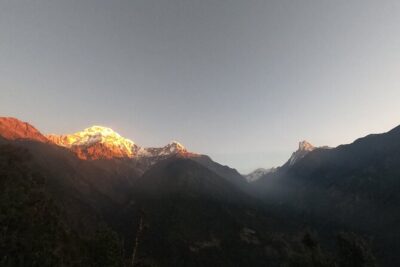
Browse the lists this tour appears in