
Reviewed · ANNAPURNA BASE CAMP TREKS
Annapurna Base Camp Trek from Pokhara and Kathmandu
The best part of this 10-day Annapurna Base Camp trek is its clear rhythm: city transfer, steady mountain walking, a night beneath the Annapurna massif, then a gradual return through forests and villages. You get a real high-altitude trek without having to arrange every permit, meal, vehicle, porter, and lodge yourself.
I especially like the private format, which gives your group more control over walking speed and rest stops, and the stop at Jhinu Danda’s natural hot springs after the hard days above. The main point to check before paying is the starting arrangement: the tour information mentions hotel pickup in Kathmandu, a Pokhara Airport meeting point, and a return to Kathmandu, so confirm the exact pickup plan and accommodation details.
Key points to know before booking
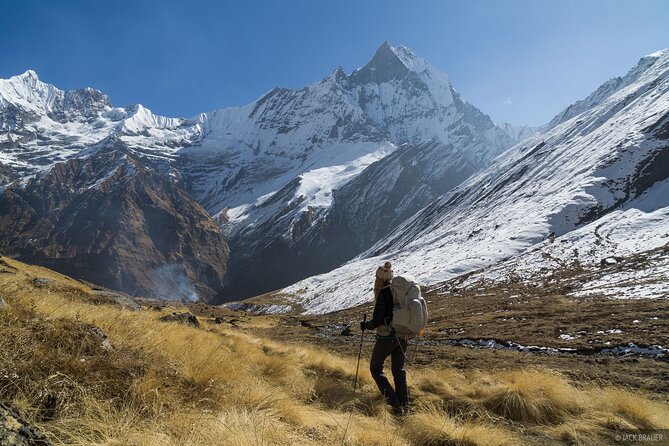
- Annapurna Base Camp is the main prize: Reach the heart of the Annapurna massif after trekking through Chhomrong, Dovan, and Deurali.
- Private transport links the route: The package includes vehicle transfers between Kathmandu, Pokhara, Nayapul, and the trail’s end.
- Jhinu Danda adds a welcome soak: Natural hot springs give you a pleasant break after the descent from Bamboo.
- The trek is privately operated: Only your group participates, with an English, Hindi, or Japanese-speaking guide.
- A full Pokhara rest day is built in: You can spend Day 9 by Phewa Lake, in cafes, or exploring at your own pace.
- The price covers much of the hard work: At $1,150 per person, the package lists transport, taxes, meals, permits, accommodation, and porters, though I would confirm the exact inclusions before booking.
What this Annapurna trek is really like
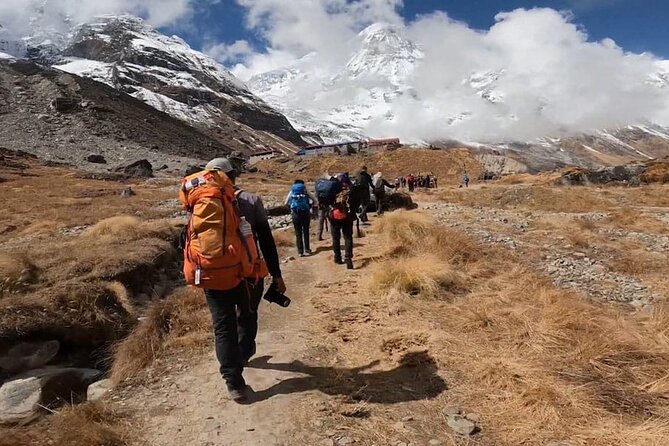
This is a compact but serious Himalayan walking trip. You are not simply sightseeing from a vehicle. The route climbs through forests and mountain villages, then reaches Annapurna Base Camp before turning back toward lower country.
The itinerary is designed to keep the hardest high-altitude section short. You spend the first trekking days moving from Chhomrong to Dovan and Deurali, reach Base Camp on Day 5, and descend to Bamboo the following day. That schedule gives you a strong mountain experience in 10 days, but it also means you should arrive ready to walk.
The tour is described as suitable for people with moderate physical fitness. That wording matters. You should expect repeated uphill and downhill walking, changing altitude, and basic mountain accommodation rather than a relaxed holiday with a few scenic strolls.
I like the balance between effort and recovery. You get the big goal at Annapurna Base Camp, then hot springs at Jhinu Danda and a complete rest day in Pokhara. That final pause is useful, especially if you are returning to Kathmandu on Day 10.
Other Annapurna routes from Pokhara:
- Kathmandu/Pokhara: 5-Day Annapurna Base Camp (ABC) Trek
★ 4.9 · 72 reviews - Private 7 – Day Annapurna Base Camp Trekking
★ 5.0 · 50 reviews - Annapurna Base Camp Trek (8 days)
★ 5.0 · 45 reviews
Day 1: Kathmandu to Pokhara and the starting details
The first day begins with pickup from your hotel in Kathmandu, according to the itinerary. You are asked to provide the hotel name and address at booking, and the operator can arrange a convenient pickup for a non-hotel accommodation if you share its details.
The tour description also lists Pokhara Airport as the meeting point, so this is one detail I would settle in writing. The itinerary appears to combine the Kathmandu arrival point with the Pokhara start point, while the final day returns you to Kathmandu by private vehicle. Ask whether your booking begins with a Kathmandu to Pokhara transfer, whether you must reach Pokhara independently, and which hotel is included at each stop.
This is not a minor question. Kathmandu and Pokhara are separate bases, and the practical value of private transportation depends on knowing exactly when it begins. Once that is clear, the rest of the plan is easy to follow.
Day 2: Nayapul, villages, and the climb to Chhomrong
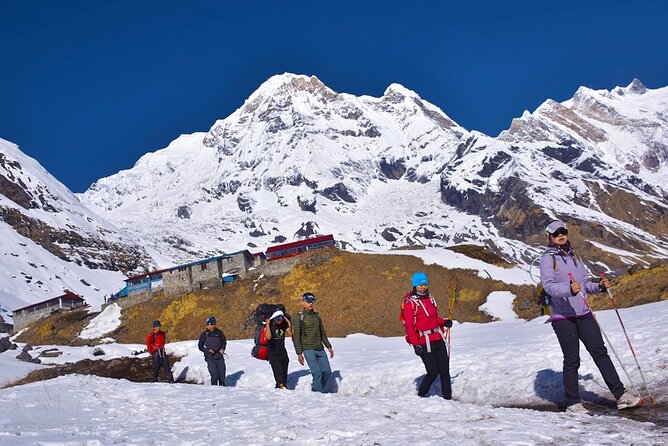
The trek begins after a drive from Pokhara to Nayapul. From there, you walk toward Chhomrong through lush forest and picturesque villages.
This opening day gives you a gradual introduction to the route. You leave the city behind, trade roads for footpaths, and begin seeing how mountain communities fit into the hills. Chhomrong is an important stop on the approach to Annapurna Base Camp, so reaching it marks the real start of the high-country section.
The drawback is that the day includes both a drive and a trek. Your exact walking time is not supplied, so you should ask the operator how long the Nayapul to Chhomrong section is expected to take and what elevation gain is involved. The answer will help you judge whether this schedule suits your fitness.
Day 3: Chhomrong to Dovan through rhododendron forest
Day 3 takes you from Chhomrong to Dovan, with the route passing through rhododendron forests and climbing toward higher ground. Breakfast, lunch, and dinner are included.
This is where the trek begins to feel more remote. The forest provides shade and changing scenery, while the steady ascent asks you to find a comfortable walking pace. I like that the itinerary does not try to rush from the lower hills straight to Base Camp. It breaks the climb into manageable stages.
You should still take the altitude seriously. The tour does not provide a detailed altitude schedule, walking hours, or acclimatization guidance, so ask your guide how the day will be paced. A private group can be helpful here because you are not tied to a large party’s speed.
A few more things to do in Pokhara worth a look
- Poon hill Trek 3 days
★ 5.0 · 176 reviews - Trekking in Annapurna/Langtang/Everest/Upper Mustang regions
★ 5.0 · 161 reviews - Pokhara: 4-Day Ghorepani, Poonhill & Ghandruk Mountain Trek
★ 5.0 · 132 reviews - Ghorepani – Poon Hill Trek 3N-4D
★ 5.0 · 125 reviews
Day 4: Dovan to Deurali and the approach to high country
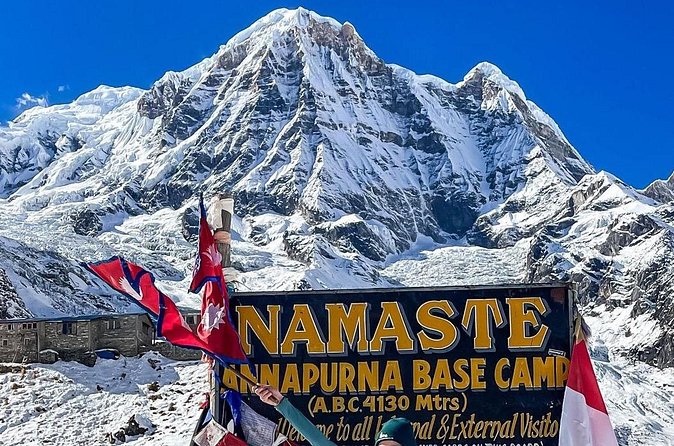
The route from Dovan to Deurali continues upward through dense forest. You gain more altitude and may see wider mountain views as the trees begin to open.
This is a useful transition day. You are moving away from the lower villages and closer to the dramatic peaks around the sanctuary. The itinerary keeps the focus on walking rather than adding side trips, which helps preserve energy for Base Camp.
The practical challenge is cumulative fatigue. By this point, the earlier uphill sections are in your legs, and the next day is the main objective. Use the day to walk steadily, eat the included meals, and ask your guide about the next morning’s conditions. Drinks are not included, so budget separately for beverages.
Day 5: Deurali to Annapurna Base Camp
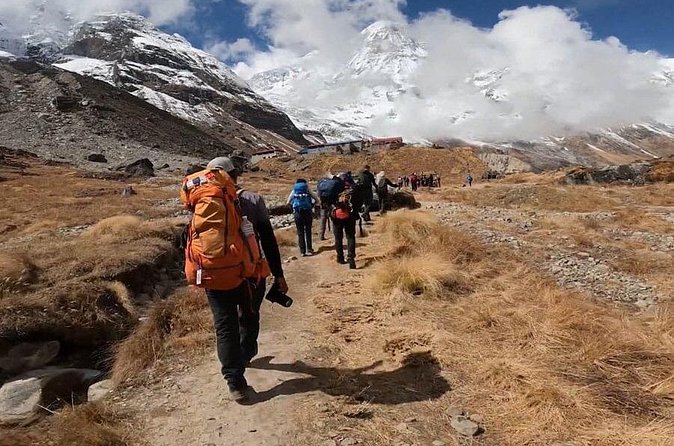
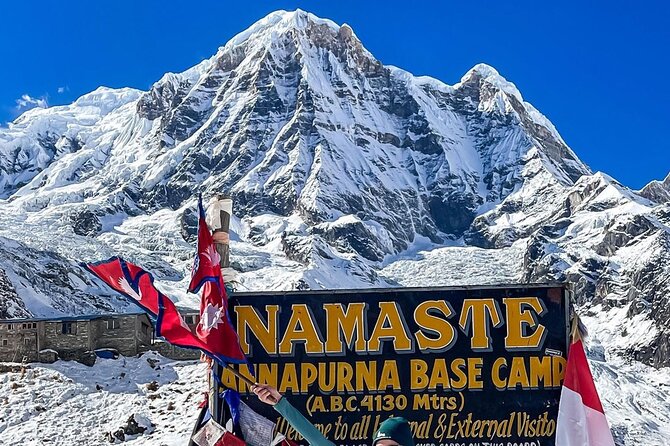
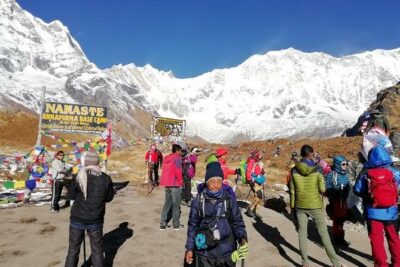
Day 5 is the high point of the trip, both literally and emotionally. You trek from Deurali to Annapurna Base Camp and arrive among the peaks of the Annapurna massif.
Base Camp is the reason to choose this route. The reward is not a single viewpoint beside a road. You have walked through forests, villages, and increasingly open mountain country to reach the center of the Annapurna setting. The surrounding peaks provide the panoramic views that make the effort worthwhile.
This is also the day when fitness and pacing matter most. The package gives no exact walking duration, so do not judge the trek only by its 10-day length. You need enough stamina for several consecutive walking days and the altitude near Base Camp.
The itinerary lists breakfast, lunch, and dinner. Confirm the overnight accommodation at Base Camp and the standard of the lodge or room before departure. The package description says accommodation is covered, but the detailed inclusions should be checked so you know what is included at every night’s stop.
Day 6: Annapurna Base Camp to Bamboo
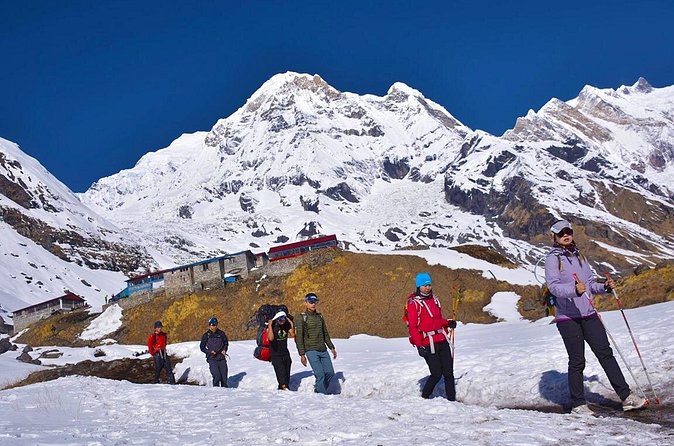
After reaching Base Camp, you descend to Bamboo. The same route now feels different as you lose altitude and move back toward thicker vegetation.
Descending is often easier on the lungs, but it can be demanding on knees and legs. A private guide can help you keep the pace sensible rather than treating the downhill as a race. This is another day when good footwear and attention on uneven paths matter.
The changing scenery is part of the appeal. You leave the high mountain setting and return toward forested sections, giving the journey a sense of progression rather than a simple out-and-back walk.
Day 7: Bamboo to Jhinu Danda and the hot springs
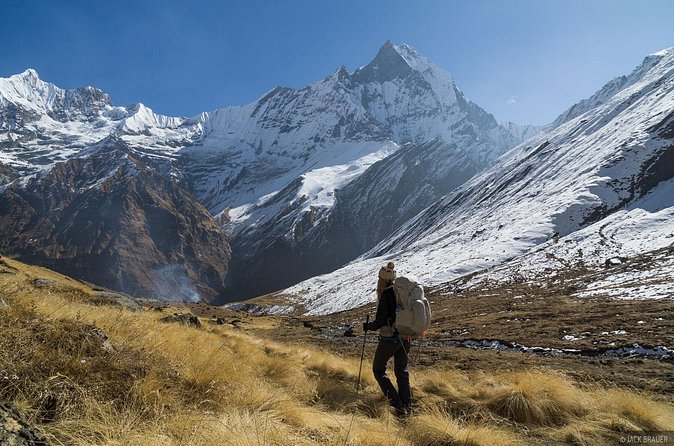
Day 7 continues from Bamboo to Jhinu Danda. The main treat comes after the walking: time to relax in the natural hot springs.
This is one of the smartest features in the schedule. After the high point and the long descent, a warm soak gives you a simple, memorable reward. It also makes Jhinu Danda more than just a place to sleep.
You should remember that the hot springs are part of the itinerary, but the supplied information does not list extra entry fees, towels, or personal items. Ask what is covered and bring any personal supplies you may need. The day’s breakfast, lunch, and dinner are included, while drinks and other personal expenses are not.
Day 8: Jhinu Danda to Nayapul, then back to Pokhara
You trek from Jhinu Danda to Nayapul, then take a vehicle back to Pokhara. This is the point where the walking portion ends.
The combination of a final trek and road transfer makes the day feel productive, but it may also be tiring. You will want a comfortable evening in Pokhara, and the plan gives you that opportunity. The private vehicle is especially useful here because you are not left to arrange the return from the trailhead yourself.
The package includes breakfast, lunch, and dinner on this day. Ask where you will stay in Pokhara and whether that hotel is included, since the tour description says accommodation is part of the package while the short inclusions list does not spell out each property.
Day 9: A full rest day in Pokhara
Day 9 is set aside for rest and independent time in Pokhara. You can spend it around the lakeside area, visit local cafes, or simply enjoy the city’s natural setting.
I like this built-in pause. Many trekking schedules send you straight from the trail to a long transfer, leaving little time to recover. Here, you have room to wash clothes, rest your legs, and enjoy Pokhara without a fixed sightseeing program.
The day is intentionally open. No meals are specifically listed for Day 9, so confirm whether breakfast or other food is included. Personal expenses, drinks, and any independent activities are your responsibility.
Day 10: Private return to Kathmandu
The final day takes you from Pokhara to Kathmandu by private vehicle. Breakfast, lunch, and dinner are listed as included.
A private return transfer gives your group more control than a shared departure, but the day may still be long. The exact travel time is not provided, so avoid booking a tight onward flight or important appointment without checking the expected arrival time.
The activity ends back at the meeting point. Because the meeting information identifies Pokhara Airport while the itinerary begins in Kathmandu and ends there, confirm the final drop-off address as well as the first pickup point.
What the $1,150 price gets you
At $1,150 per person, this is not a bare-bones trek. The package description presents an all-in-one arrangement with private transportation, permits, meals, accommodation, porters, and a local guide. It also lists all fees and taxes as included.
That can be good value if you want one company to handle the moving parts. Permits, trail transport, food, lodging, and porter arrangements add up quickly when booked separately. The private format also matters. You are paying for a trip built around your own group rather than joining a large party with a fixed pace.
Still, read the inclusions carefully. The short list specifically names private transportation, fees and taxes, meals, lunch, and guide languages. The main description says permits, accommodation, and porters are covered, but the information does not name the lodges, porter weight allowance, or room arrangements.
Before booking, ask for:
- The exact Kathmandu and Pokhara pickup plan
- The names and standard of the included accommodations
- Whether permits and porter service are fully included
- Which meals are included on Day 1 and Day 9
- Whether hot spring entry or personal equipment costs extra
- The expected walking hours for each trekking day
Those questions do not weaken the offer. They help you understand what the price really buys.
Guides, group size, and language
This is a private activity, so only your group participates. That is a major advantage for people who want personal attention, flexible breaks, and a quieter walking experience.
Guiding is available in English, Hindi, or Japanese. No individual guide names are provided, so you cannot select a named guide in advance from the available information. The company has received strong praise for professional guides, helpful planning, and smooth service across its Nepal trips, but you should still ask who will lead your trek and what language they will use.
The operator also presents its work as supporting local communities and protecting the environment. That is a positive aim, though the available details do not explain its porter standards, waste policy, or community projects. If sustainable tourism matters to you, ask for those specifics.
Who should book this trek?
You should consider this trip if you want:
- A private Annapurna Base Camp route rather than a large group
- A guide who can work in English, Hindi, or Japanese
- Transport arranged between Kathmandu, Pokhara, and the trail
- Meals and major trek logistics handled in advance
- A hot spring stop after the high-altitude section
- A rest day in Pokhara before returning to Kathmandu
This is less suitable if you want a very slow itinerary with many acclimatization days, detailed altitude planning, or a luxury lodge experience. The schedule is fairly direct, and accommodation details are not supplied. It is also not a casual walking holiday. Moderate fitness is required, and the high point comes after several days of climbing.
The 5.0 rating shown for the experience is based on seven reviews, with praise focused on professional guides, helpful office staff, organized service, and affordable pricing. Those are useful signs, especially for a trek where transport and planning can become stressful. Still, the rating is based on a small number of responses, and several comments concern other Nepal trips rather than this exact 10-day itinerary.
Free cancellation is available if you cancel at least 24 hours before the start time. Inside that window, the payment is not refunded. If poor weather causes cancellation, you are offered another date or a full refund.
Should you book the Annapurna Base Camp trek?
I would book this trek if you want a private, logistics-friendly route with the major Annapurna Base Camp experience, a Jhinu Danda hot spring stop, and recovery time in Pokhara. The combination of local guiding, private transport, included meals, and a $1,150 price can make sense for someone who values convenience over arranging every detail alone.
I would not book until the starting point, hotels, permits, porter service, and meal coverage are confirmed in writing. Once those details are clear, this looks like a practical choice for a fit trekker who wants a focused Himalayan adventure without the paperwork and transport headaches.
FAQ
How long is the Annapurna Base Camp trek?
The experience lasts approximately 10 days, including transfers, eight active itinerary days, a rest day in Pokhara, and the return to Kathmandu.
Where does the experience start?
The meeting information lists Pokhara Airport, while the itinerary says pickup is available from a hotel in Kathmandu. Contact the operator before booking to confirm your exact starting point and transfer plan.
Is this a private tour?
Yes. Only your group participates in the activity.
Which guide languages are available?
Guides are listed as available in English, Hindi, and Japanese.
Are meals included?
Meals are included on most trekking days, with breakfast, lunch, and dinner specifically listed from Day 3 through Day 8 and on the return to Kathmandu. Drinks and other beverages are not included. Confirm the meal plan for Day 1 and Day 9.
Is transportation included?
Yes. Private transportation is included, including the route between Pokhara and the trailhead and the return from Pokhara to Kathmandu.
What happens if bad weather cancels the trek?
You will be offered a different date or a full refund if poor weather causes the experience to be canceled. You can also receive a full refund when you cancel at least 24 hours before the start time.
Just added in Pokhara
- Pokhara: Pokhara Highlights Tour by Bus★ 3.6 · 10 reviews
- Discover Pokhara in Style: Private Vehicle Service with Driver★ 5.0 · 5 reviews
- Private 4 Day Poon Hill Trek from Pokhara★ 5.0 · 16 reviews
- Pokhara in 5 Hours: Lake, Museum, Cave, Falls & Pagoda Hill★ 4.5 · 16 reviews
- 4 Day Mardi Himal Base Camp Trek from Pokhara★ 5.0 · 18 reviews
- Beautiful Sarankot Sunrise with Full Day Sightseeing in Pokhara★ 4.5 · 3 reviews
- 7-Day Trek to Annapurna Base Camp from Pokhara★ 5.0 · 12 reviews
- Sarangkot Sunrise Tour from Pokhara★ 4.5 · 9 reviews
Annapurna Base Camp Treks, compared.
Kathmandu to Annapurna Base Camp (ABC) 5-Day Trek
Read our review →
11-Day Hike Tour to Annapurna Base Camp Bliss in Kathmandu
Read our review →
Browse the lists this tour appears in