
Reviewed · ANNAPURNA BASE CAMP TREKS
From Pokhara: 10-Day Poon Hill and Annapurna Base Camp Trek
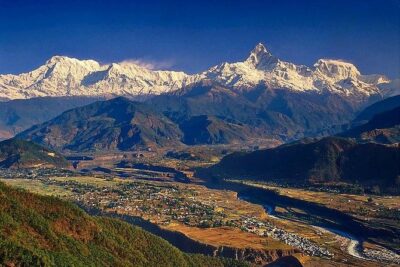
Annapurna Base Camp is the big prize here, but the route earns its finish. You begin with terraced hills and village paths, climb through rhododendron forest to Poon Hill, then continue into a high mountain bowl ringed by Annapurna, Machhapuchhre, and Hiunchuli.
I like two things right away: the 10-day pace gives you time to adjust to altitude, and the private format lets your guide slow down when your legs need it. I also like the practical finish at Jhinu Danda, where hot springs offer welcome relief after the long descent.
The main drawback is that this is a serious mountain trek, not a string of easy walks. You may hike three to six hours a day, face steep stone steps, and spend more at high altitude for hot showers, Wi-Fi, charging, and heaters. Cloud and rain can also hide the peaks.
Key points to know before booking
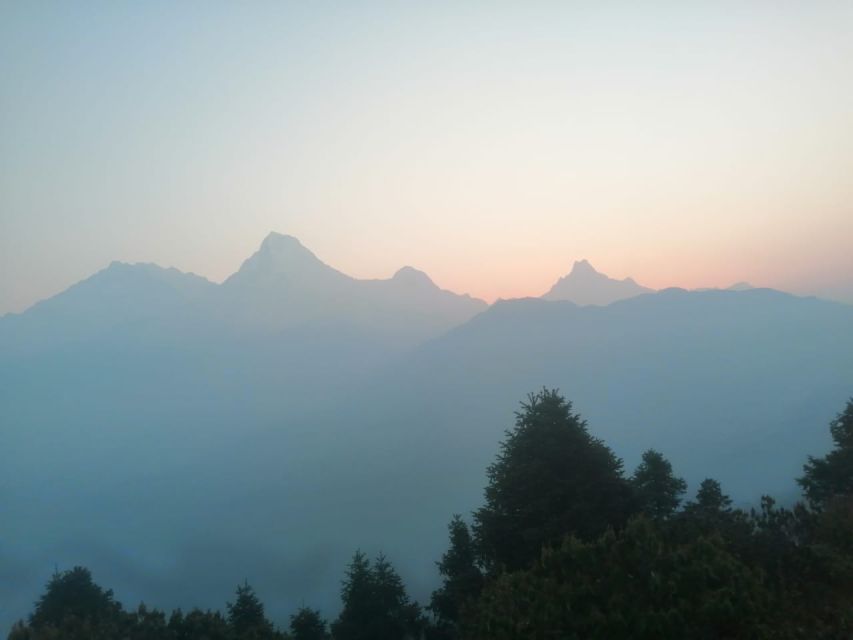
- Poon Hill comes early: Reach the 3,210-meter viewpoint for sunrise before continuing toward Annapurna Base Camp.
- Annapurna Base Camp reaches 4,130 meters: The altitude is manageable for many fit hikers, but you still need to walk slowly and report symptoms.
- Private guiding is the strong point: Guides named Biru, Arjun, and Bikram have been praised for patience, safety, route planning, and flexible pacing.
- The $310 price covers the basics: Permits, guide, guesthouse accommodation, private transfers, pickup, and drop-off are included, but meals and drinks are not.
- Jhinu Danda adds a useful reward: The natural hot springs are a pleasant way to soothe tired legs after descending from the sanctuary.
- Weather can change the experience: Spring and autumn usually offer the clearest conditions, while monsoon-season rain may block mountain views.
From Pokhara to Tikhedhunga, 1,577 meters
Your first morning begins with a private car from Pokhara’s Lakeside area to Nayapul. The drive takes about 1.5 hours, so the walking day starts without a punishing early transfer. From Nayapul, the trail follows the Modi Khola and passes small settlements, cultivated terraces, and rural hillside scenery.
The first night is in Tikhedhunga at 1,577 meters. Some versions of this route use Ulleri as the first overnight stop, but the stated plan uses Tikhedhunga. That detail matters because the next day includes the toughest early climb: the long stone staircase toward Ulleri.
This opening day is less about dramatic mountain views and more about getting your body into walking mode. You see working villages and terraced fields rather than polished sightseeing stops. I like that change of pace. You are not rushed straight into high altitude, and your guide can check how you handle the trail before the route gets harder.
Accommodation is in guesthouses. The package does not include food or drinks, so you buy meals as you go. That gives you flexibility, but you should budget beyond the advertised $310.
Other Annapurna routes from Pokhara:
- Kathmandu/Pokhara: 5-Day Annapurna Base Camp (ABC) Trek
★ 4.9 · 72 reviews - Private 7 – Day Annapurna Base Camp Trekking
★ 5.0 · 50 reviews - Annapurna Base Camp Trek (8 days)
★ 5.0 · 45 reviews
Ulleri steps and rhododendron forest to Ghorepani
Day two is short on distance compared with the effort required. You climb the famous stone steps through Ulleri, then continue toward Ghorepani at 2,874 meters. The stairs can feel relentless, especially if you are not used to hiking uphill for several hours.
After Ulleri, the trail enters forests of rhododendron and marigold. In spring, flowers can add color to the route, although the exact display depends on timing and weather. Small villages break up the woodland, giving you places to pause and catch your breath.
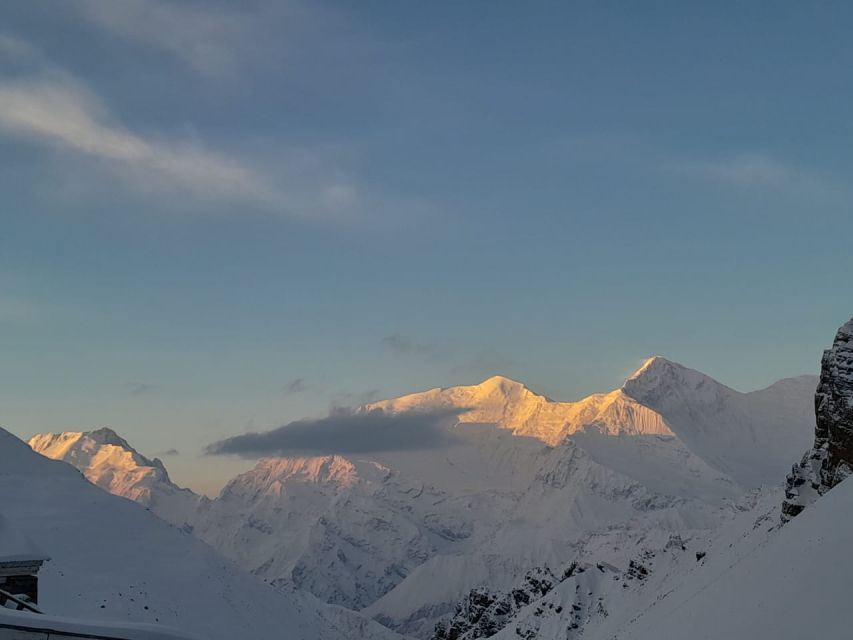
Ghorepani is important because it places you near Poon Hill and gives you your first broad mountain outlook. From here, you can see sections of the Annapurna and Dhaulagiri ranges. The altitude is now high enough that a slow pace makes sense. Do not treat the staircase as a race. Your goal is to arrive with enough energy for the early morning climb.
Poon Hill sunrise and the trail to Tadapani
You rise early on day three for the walk to Poon Hill, at 3,210 meters. The viewpoint is the first major reward of the trek. At sunrise, the changing light can reveal Annapurna, Dhaulagiri, and other snowy summits across the horizon.
This is a popular viewpoint, and conditions decide how much you see. Clear autumn mornings may produce wide mountain views, while cloud can reduce the scene to brief openings. Keep your expectations flexible. The climb is still worthwhile as a high viewpoint and a useful test of how your body responds above 3,000 meters.
You return to Ghorepani for breakfast, then continue through forest and rhododendron-filled valleys to Tadapani at 2,630 meters. The day combines an early climb, a descent, and several more hours of walking. It is a full day, but the route gives you a strong mix of forest and mountain scenery.
Tadapani is also where the trip begins to feel less like a viewpoint tour and more like a sustained Himalayan walk. You have already seen the mountains from a distance. Now you are moving toward them.
Gurung villages and Chhomrong at 2,170 meters
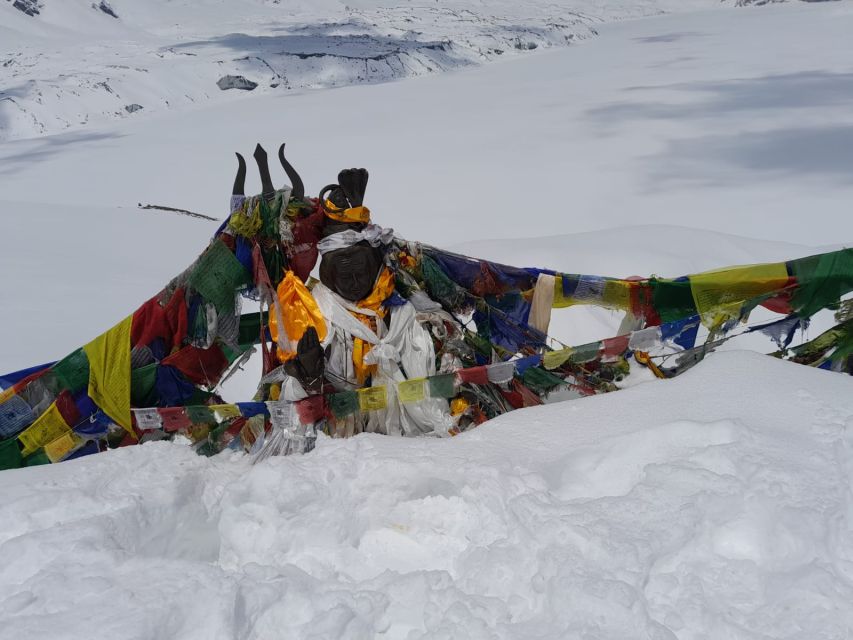
Day four descends through forest toward Gurjung village and the Kimrong Khola. The route then climbs again to Chhomrong, a large Gurung village at 2,170 meters.
The repeated pattern of descending and climbing is typical here. You lose height, cross a river, then regain it. That can be tiring on the knees and thighs, so trekking poles may be useful, although they are not listed as included equipment.
Chhomrong offers strong views toward Annapurna South and Machhapuchhre, also called Fishtail. It is one of the more memorable settlements on the route because you get both village life and a closer sense of the high peaks.
This overnight stop also helps break up the approach to the sanctuary. A shorter program might push harder, but the 10-day plan gives you time to settle into the rhythm. The private group format is helpful here. If you walk slowly, your guide can adjust the pace rather than forcing you to keep up with strangers.
Other short treks out of Pokhara:
- Poon hill Trek 3 days
★ 5.0 · 176 reviews - Pokhara: 4-Day Ghorepani, Poonhill & Ghandruk Mountain Trek
★ 5.0 · 132 reviews - Ghorepani – Poon Hill Trek 3N-4D
★ 5.0 · 125 reviews - From Pokhara: 3-Day Ghorepani Poon Hill Trek with Guide
★ 4.9 · 68 reviews
Bamboo and the Modi Khola valley
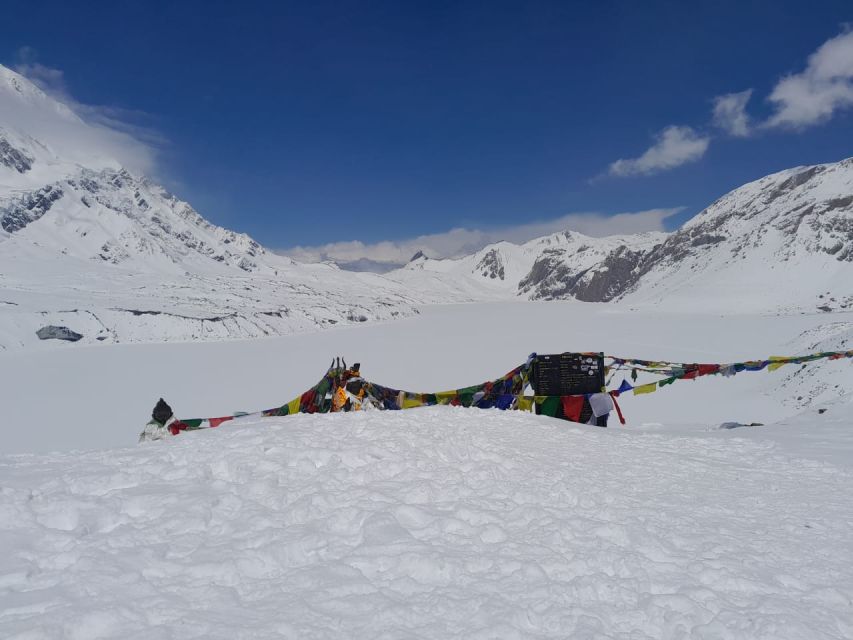
From Chhomrong, you descend to the Chhomrong Khola, cross a suspension bridge, and climb toward Sinuwa. The trail then enters thick bamboo and rhododendron forest before reaching Bamboo at 2,310 meters.
The name tells you something about the setting. This part of the route is enclosed by forest, with fewer sweeping views than Poon Hill or Chhomrong. That is not a weakness. The changing scenery keeps the trek from becoming a daily mountain postcard. You walk beside streams, through shaded sections, and along a trail that feels more remote than the early village stages.
Bamboo is a practical overnight stop. You are still below the highest part of the trek, but the route is becoming more demanding. Keep your daypack light and carry water. The package does not state that drinks are included, so you should expect to purchase them during the trek.
Deurali and the final approach to the sanctuary
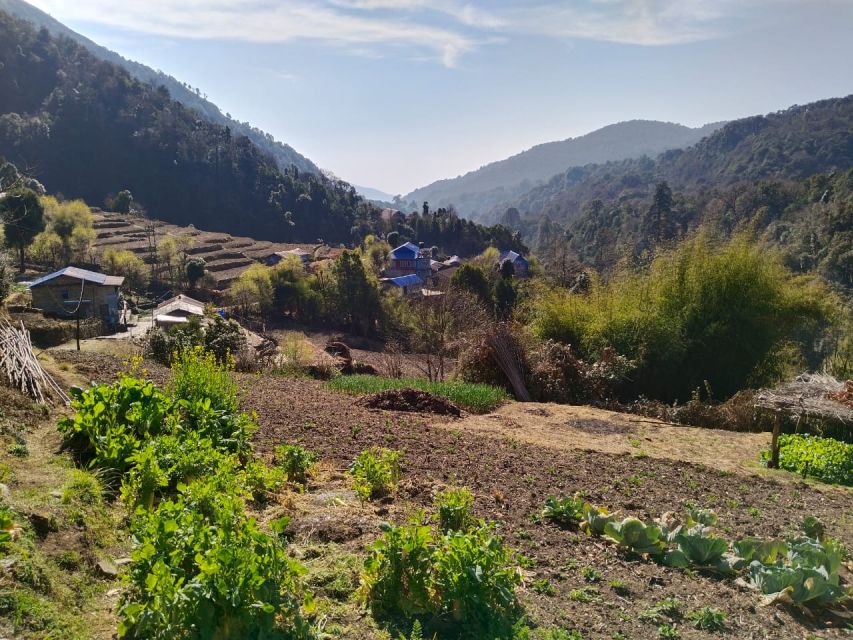
Day six continues through bamboo forest and the Modi Khola valley. You pass the Himalayan Hotel and Hinku Cave, then climb steadily to Deurali at 3,230 meters.
This is where altitude deserves more attention. The gain from 2,310 to 3,230 meters is substantial, and the trail can feel slower than the distance suggests. A good guide should watch your pace and ask how you feel. Guides such as Biru, Arjun, and Bikram have been praised for doing exactly that, but you should still speak up about headache, nausea, unusual fatigue, or other symptoms.
One useful feature of this tour is the private arrangement. A guide can adapt the day more easily than a fixed large group. On one trek, a guide extended the schedule by three days because of altitude problems. That kind of flexibility may be valuable, but it is not a guarantee that every booking will receive extra days at no charge. Confirm the plan with the operator before you travel.
Machhapuchhre Base Camp and Annapurna Base Camp
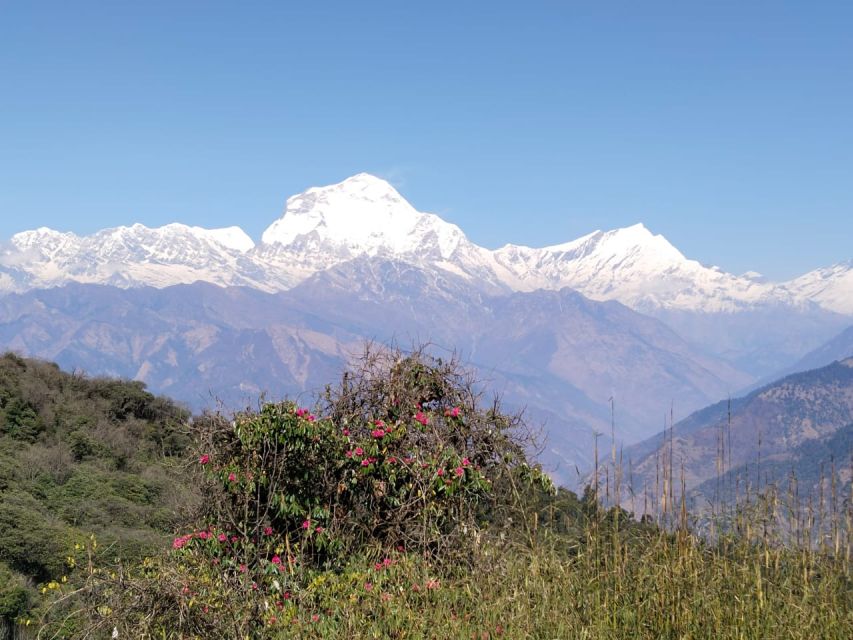
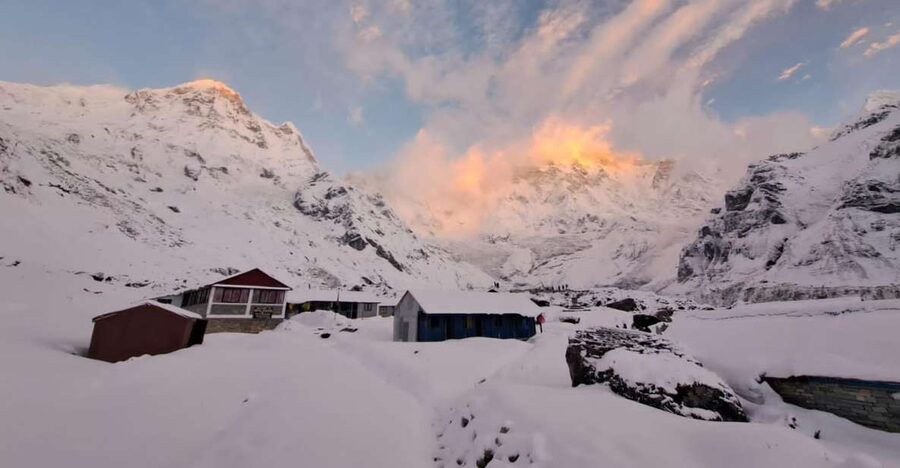
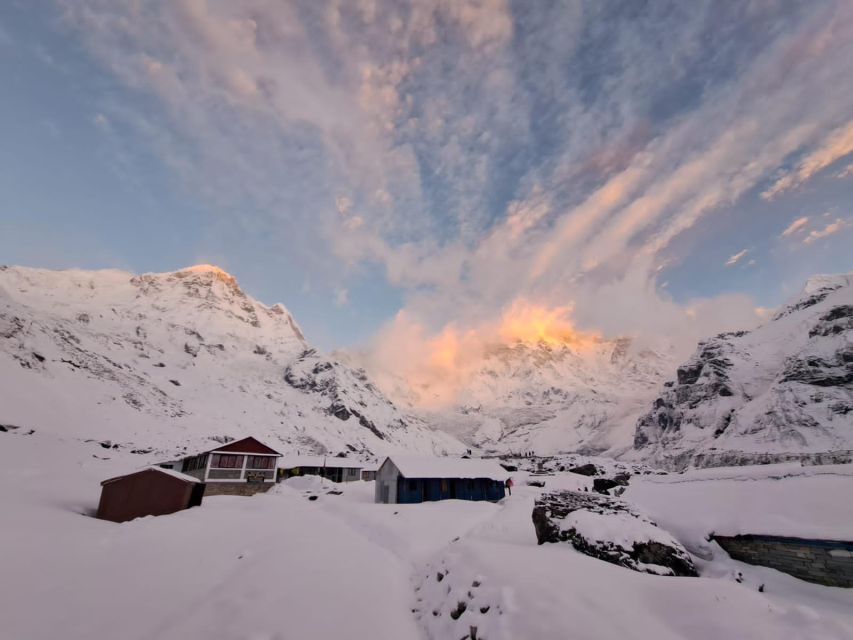
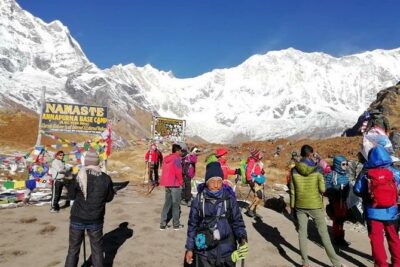
Day seven is the emotional high point. The narrow valley opens into the Annapurna Sanctuary, a mountain amphitheater surrounded by huge summits. You pass Machhapuchhre Base Camp at 3,700 meters and continue to Annapurna Base Camp at 4,130 meters.
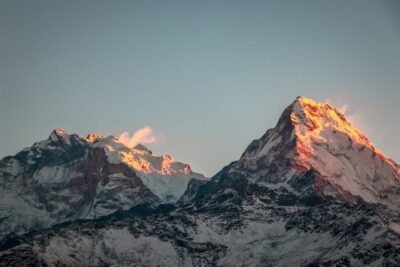
The final approach is worth taking slowly. The scenery changes from forested valley to open high mountain terrain, with Annapurna I, at 8,091 meters, towering above the area. You may also see Annapurna South, Hiunchuli, Machhapuchhre, and other peaks depending on cloud.
Annapurna I is the name most people come for, but the experience is not only about identifying summits. The high basin gives you a sense of scale. The trail has carried you from farm terraces and village paths into a bowl of rock, snow, and ice.
The overnight stay at base camp is included in the guesthouse accommodation. Conditions at this altitude are basic, and the review information points to extra costs for heating, hot showers, battery charging, and Wi-Fi. One useful budget estimate is $30 to $40 per day at higher elevations if you want several paid comforts. That is in addition to food and drinks.
Sunrise at base camp and the long return to Bamboo
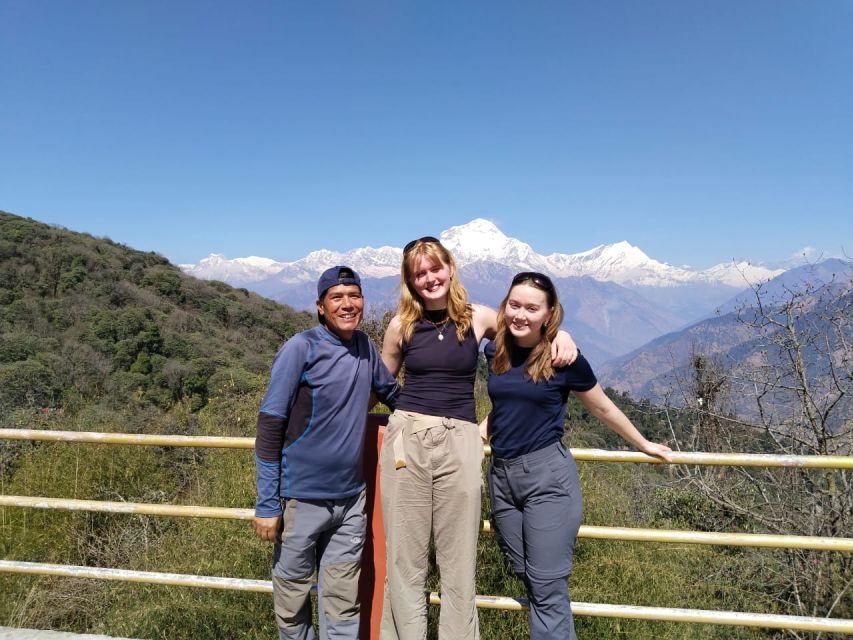
You get an early morning mountain view at Annapurna Base Camp before starting the descent. Sunrise here can be striking, but again, cloud decides what appears. The descent passes back through Deurali and continues to Bamboo.
This is a physically demanding day because you gain the high point of the trek, then lose much of that height. Descending is not automatically easy. Your knees take repeated impact, and tired legs can make uneven steps harder to manage.
The good news is that returning through familiar terrain lets you judge your progress. Forest sections provide a change from the exposed high basin, and Bamboo gives you a sensible stopping point before the final descent.
Jhinu Danda hot springs at 1,780 meters
Day nine continues downhill through forest, with lunch in Chhomrong before the route drops farther to Jhinu Danda at 1,780 meters. The hot springs are the reward here.
After several days of stairs and steep paths, soaking in natural hot water can feel wonderfully simple. Bring a swimsuit and keep your expectations practical. The springs are an optional stop within the day, not a luxury spa, but they add a pleasant local finish to the trekking section.
Jhinu Danda is also a point where some people may be tempted to leave by Jeep. The full walking route to Nayapul is part of the planned experience, and completing it gives you a more gradual transition back to road travel. If your body is exhausted, ask your guide what is possible, but do not assume a vehicle transfer is included.
Nayapul, Pokhara, and what the price covers
On day ten, you walk from Jhinu Danda to Nayapul, then take a private car back to Pokhara. Hotel pickup and drop-off within the Lakeside area are included.
At $310 per person, the package offers solid value for a private 10-day trek if you want the core logistics handled. It includes an English-speaking trekking guide, official permits and documents, guesthouse accommodation, an emergency first-aid kit carried by the guide, Poon Hill entrance, and the Pokhara to Nayapul transfers.
The price does not include meals, drinks, travel insurance, emergency rescue, or tips. Rescue costs are specifically left to your insurance, so insurance is not an optional extra in practical terms. Take proof of coverage and a passport or ID card, plus a passport-sized photo.
Guiding is the part that appears to shape the experience most. Biru has been praised for patience and organization, Arjun for adapting the route during altitude trouble, and Bikram for pacing, local knowledge, and calm support. These names may not be assigned to every departure, so ask who will guide your group.
Weather, seasons, and mountain-view expectations
Spring, from March through May, and autumn, from September through November, are the preferred seasons for stable weather and clearer views. The trek can run throughout the year, but mountain conditions change quickly.
September can still bring several rainy days. Cloud may cover the peaks even when the trail remains open. That is frustrating if your main goal is photography, but the forest and village sections still provide worthwhile walking.
Winter and other off-season periods may bring colder conditions and less predictable visibility. You should be prepared for changing temperatures and weather at all times. Comfortable shoes are required, and your insurance should cover trekking and emergency rescue.
Plastic bottles are not allowed according to the activity rules. Plan to use suitable reusable water containers, though the provided information does not state how water treatment is handled. Pets are also not allowed, and the trek is not suitable for wheelchair users or pregnant women.
Who will like this trek most
I would choose this route if you want one trip to combine a famous sunrise viewpoint with a true high mountain destination. Poon Hill gives you an early reward, while Annapurna Base Camp provides the larger goal.
It suits people who can manage repeated uphill and downhill walking and who prefer a private guide to a fixed group. A slow hiker may appreciate the flexible pace, especially if the guide is attentive. The route also works well for someone who wants village life, forest, suspension bridges, guesthouses, and mountain scenery in one 10-day plan.
It is less suitable if you want hotels, included meals, easy roads, or guaranteed clear views. You should also think carefully about altitude. The highest overnight stop is 4,130 meters, and even a well-paced itinerary cannot remove the need to acclimatize.
Should you book the Poon Hill and ABC trek?
I would book this trek if your priority is value, a private format, and a route that gives you both Poon Hill and Annapurna Base Camp. The strongest advantages are the patient guiding, adaptable pace, included permits and transfers, and the hot-spring stop at Jhinu Danda.
Before paying, confirm the guide’s name, the exact guesthouse plan, what happens if altitude or weather forces a change, and your likely food budget. Bring insurance that covers rescue, allow extra cash for high-altitude services, and accept that clouds may hide the peaks.
For a fit hiker who wants a substantial Nepal trek without arranging every detail alone, this is a sensible choice. Just treat the $310 as the starting cost, not the total cost of ten days in the mountains.
FAQ
How long is the Poon Hill and Annapurna Base Camp trek?
The planned duration is 10 days, beginning and ending in Pokhara.
What is the highest point on the route?
Annapurna Base Camp is the highest point listed, at 4,130 meters. Poon Hill reaches 3,210 meters.
Is transport from Pokhara included?
Yes. Pickup and drop-off within the Lakeside area are included, along with a private car between Pokhara and Nayapul.
Are meals and drinks included?
No. Food and drinks are available for purchase during the trek but are not included in the price.
What type of accommodation is provided?
Accommodation is in guesthouses along the route, including an overnight stay at Annapurna Base Camp.
What languages can the guide speak?
Guiding is available in Nepali, English, and Hindi. The activity specifically includes a professional English-speaking trekking guide.
What is the best time of year for this trek?
March through May and September through November are listed as the best periods because weather is generally more stable and mountain views are often clearer.
What should I bring?
Bring a passport or ID card, comfortable shoes, travel insurance, and a passport-sized photo. You should also prepare for changing weather and temperatures in the mountains.
More Hiking & Trekking in Pokhara
- Trekking in Annapurna/Langtang/Everest/Upper Mustang regions
★ 5.0 · 161 reviews - Pokhara: Annapurna Foothills Day Hike with Transfers
★ 5.0 · 100 reviews - Pokhara: 4-Day Mardi Himal Trek
★ 4.9 · 59 reviews - Pokhara: 3-Day Ghorephani and Poon Hill Private Trek
★ 5.0 · 58 reviews
Just added in Pokhara
- Tandem Paragliding in Pokhara★ 4.8 · 8 reviews
- Seti George and Thrilling Suspension Bridge Tour at Pokhara★ 4.5 · 3 reviews
- Pokhara: Suspension Bridge Private Tour- 30 Min Village Walk★ 4.8 · 9 reviews
- Pokhara: Visit Best Seven Tourist Destination by Sharing Bus★ 3.4 · 10 reviews
- Pokhara: Sunrise Tour to Sarangkot★ 5.0 · 3 reviews
- Pokhara Sightseeing By Bus: Day Trip★ 4.6 · 7 reviews
- Pokhara Sightseeing By Bus – Day Trip★ 3.2 · 8 reviews
- Pokhara Sarangkot : Cable Car (Himalayas) Sunrise Tour★ 5.0 · 6 reviews
Annapurna Base Camp Treks, compared.
Kathmandu to Annapurna Base Camp (ABC) 5-Day Trek
Read our review →
11-Day Hike Tour to Annapurna Base Camp Bliss in Kathmandu
Read our review →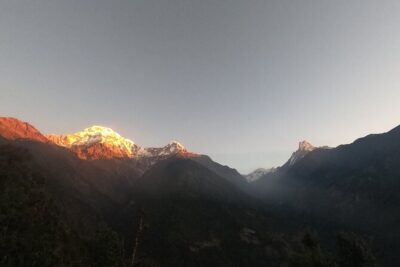
Browse the lists this tour appears in