
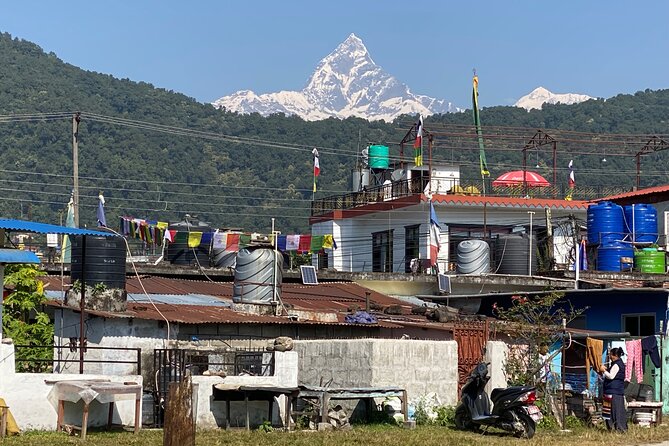
Reviewed · TIBETAN CULTURE TOURS
Half Day Tibetan Cultural tour Pokhara
Pokhara’s Tibetan Cultural Tour does more than show you a monastery. It introduces you to daily Tibetan life in Nepal through a village walk, handmade carpet production, a photo gallery, pulse reading with a Tibetan doctor, and lunch with momos and thukpa. Guide Thupten Gyatso brings personal knowledge of Tibetan culture and refugee life to the day.
I like the direct contact with local people, especially the chance to speak with a monk and a Tibetan doctor. I also like the small-group format, which gives you room to ask questions and, if the group is tiny, try your hand at carpet weaving. The one drawback is the packed schedule: with so many stops between 9 a.m. and 2 p.m., some visits may feel brief.
Key points at a glance
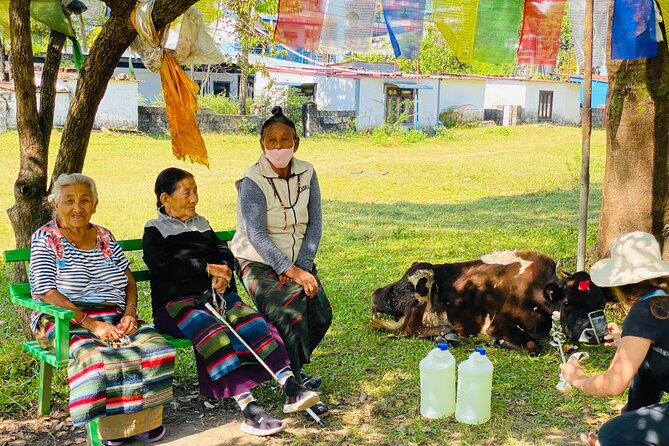
- Meet Tibetan residents in their own settlement: Walk through the village and see ordinary daily life rather than only formal religious sights.
- Learn from guide Thupten Gyatso: His focus is Tibetan culture, Buddhism, education, refugee life, and present-day Nepal.
- Watch carpets made by hand: The workshop explains each stage, followed by time in a showroom with different designs and colors.
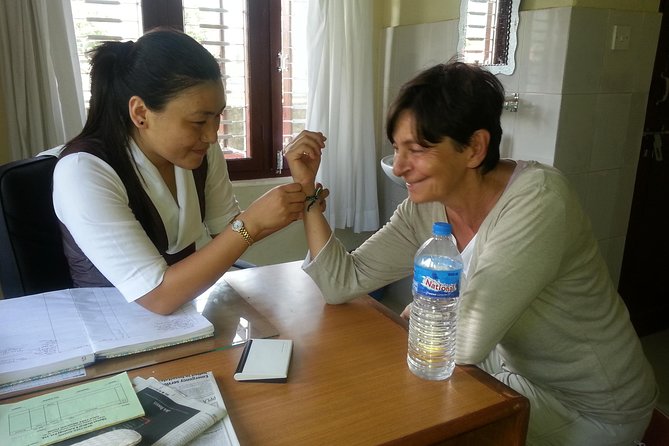
- Try a Tibetan medical consultation: A Tibetan doctor demonstrates pulse reading and explains traditional medicine.
- Finish with a proper Tibetan lunch: Momos and thukpa give you a taste of the food as well as the culture.
- Small-group setting with hotel pickup: The tour is advertised at up to eight people, although the additional booking information lists a maximum of 15.
Why this Pokhara tour feels different
Pokhara is known for mountain views, lakeside walks, and access to trekking routes. Those are good reasons to visit, but they can leave you with only a partial picture of the city. Tibetan communities are an important part of Pokhara’s modern identity, and this half-day tour gives that story a human face.
You are not simply taken from one monument to the next. You walk around a Tibetan settlement, look at the way people live, and hear about the experience of Tibetans who came to Nepal after leaving Tibet. The focus is on people, belief, work, education, and food. That makes the outing especially useful if you want to understand Pokhara beyond its outdoor attractions.
Guide Thupten Gyatso leads the experience. His role matters here because the subject is not just Buddhism in general. You will be discussing Tibetan customs, the refugee experience, schools, medicine, and the place of Tibetan communities in present-day Nepal. The best part of the day is likely to be the chance to ask direct questions instead of receiving a short, scripted explanation.
Other Tibetan sites around Pokhara:
- Full-Day Tibetan Cultural Tour to Tibetan Settlements Pokhara
★ 5.0 · 184 reviews - Afternoon Tibetan Cultural Tour to Tibetan Settlements Pokhara
★ 5.0 · 106 reviews - Morning Tibetan cultural tour to Tibetan settlements Pokhara
★ 5.0 · 66 reviews
Starting at 9 a.m. with a village walk
The tour begins at 9 a.m., with hotel transfers included. The schedule gives a return time of about 2 p.m., while the listed duration is approximately four and a half hours. In practical terms, plan on most of your late morning and early afternoon being occupied.
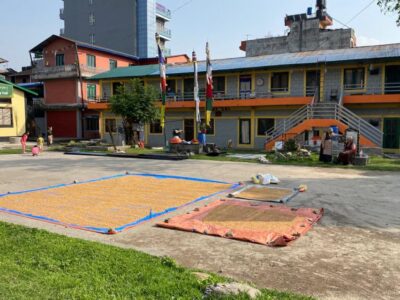
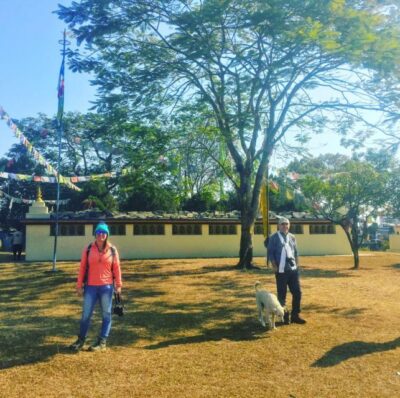
Your first major stop is a Tibetan refugee settlement. You walk through the village and see parts of everyday life. This is a useful beginning because it places the culture in a living community, not behind glass or inside a display case.
You should approach this part with respect. It is a residential setting, not a theatrical attraction. Listen to the explanations, observe quietly, and avoid treating ordinary homes and daily routines as photo props. The value comes from context: you begin to understand how Tibetan traditions continue in Nepal and how community life connects with religion, work, and education.
The exact order of visits may vary, but the tour is built around several connected themes. Tibetans in Nepal are not presented only as people who preserve old customs. You also learn about the challenges of displacement and the ways culture is taught to younger generations.
Reading the symbols at a Tibetan monastery
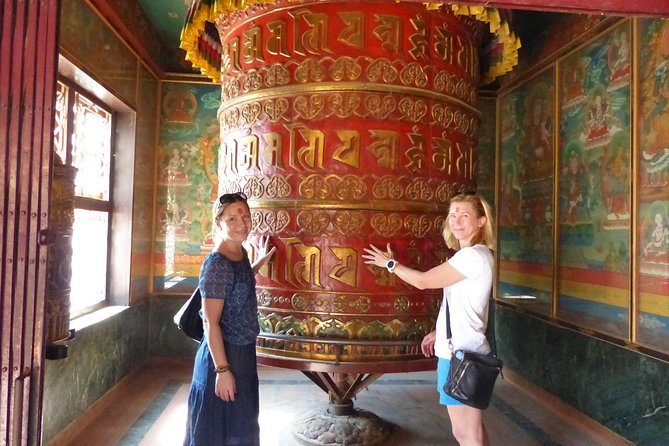
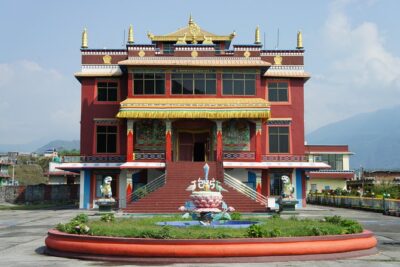
The monastery visit gives you a chance to ask what the signs and objects mean. You learn about prayer wheels, prayer flags, stupas, and other Buddhist symbols that shape daily practice.
This is where a guide can make a major difference. Without explanation, a prayer wheel may look like a colorful object to spin, and a stupa may seem like another impressive structure. With context, you begin to see how these items relate to devotion, remembrance, prayer, and the rhythm of ordinary life.
The tour also includes discussion of Tibetan religion and Buddhism. If you already know the basics, you can use the time for more specific questions. If Buddhist traditions are new to you, the visit gives you a useful foundation without requiring previous study.
A short visit can only cover so much. Do not expect a full religious course or an extended meditation session. This is an introduction, supported by conversation and observation. One particularly appealing possibility is speaking with a monk. A past tour experience included roughly half an hour talking with a young monk, showing how the day can become more personal when time and group size allow.
Understanding Tibetan schools and education
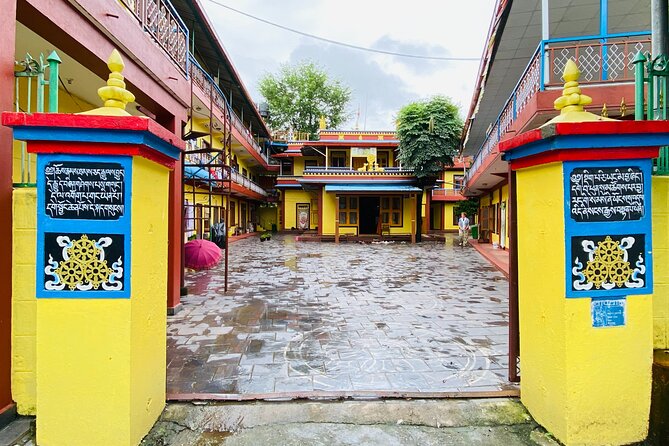
Education is another part of the tour, and it adds an important present-day angle. You learn about Tibetan schools and their educational system, including the role these institutions play in passing language, religion, and cultural practices to younger people.
This subject helps balance the focus on tradition. Tibetan culture is not frozen in the past. Schools are part of the effort to keep identity alive while children grow up in Nepal. For you, this may be one of the most useful parts of the day because it connects family life, community needs, and cultural continuity.
The amount of detail will depend on questions and timing. If education interests you, ask Thupten how Tibetan schools work and what students learn. Since the tour schedule includes many stops, it is worth raising your questions early rather than waiting until the final lunch.
A few more things to do in Pokhara worth a look
- Afternoon Tibetan cultural tour
★ 5.0 · 41 reviews - Morning Half Day Tibetan cultural tour to Tibetan Settlements
★ 5.0 · 26 reviews - Full Day Tibetan Cultural Tour
★ 5.0 · 12 reviews - Half day Tibetan cultural tour
★ 5.0 · 4 reviews
Seeing Tibetan carpets made by hand
The carpet workshop is one of the clearest hands-on stops. You watch Tibetan carpets being made by hand and receive an explanation of the process, step by step. This gives you a better understanding of the work behind the finished designs than simply seeing rugs in a shop.
If the group is small, you may get a chance to try some of the rug-making work yourself. That possibility is not guaranteed, but it can turn a demonstration into a memorable practical lesson. Do not expect to produce a full carpet in one visit. The point is to appreciate the patience, skill, and time involved.
After the workshop, you visit a carpet showroom. This changes the emphasis from production to design. You can look at the range of colors, patterns, and styles and see how the work appears when finished.
The showroom is also the point where you should keep your own priorities clear. You may enjoy looking without wanting to buy. The tour includes the visit, but the information provided does not say that a purchase is required. If you are interested in carpets, ask about the designs and methods. If you are not shopping, treat it as the second half of the craft lesson.
Seeing Tibetan refugee history through photographs
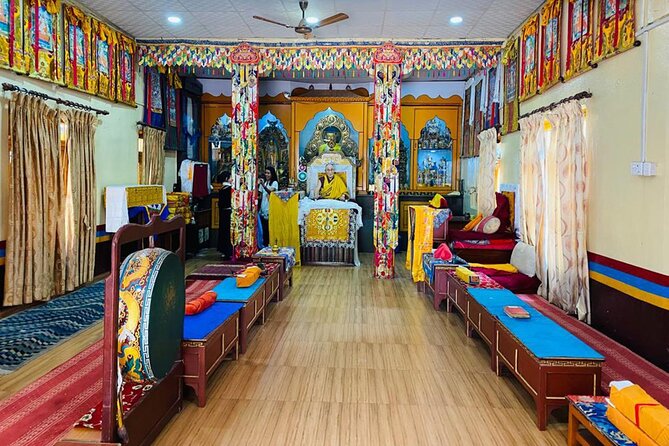
A photo gallery adds documentary context to the village walk and monastery visit. Here you learn more about the history of Tibetan refugees and the events that shaped their lives in Nepal.
Photographs can make a large political story easier to understand. Instead of hearing only broad statements about migration and displacement, you get a visual record connected to real people and places. This part of the tour is likely to be more serious than the food and craft visits, and it deserves time for reflection.
The tour aims to explain the situation of Tibetans in present-day Nepal, not only their religious traditions. That wider frame is one reason I would choose this experience over a simple monastery stop. You leave with a clearer idea of how culture, memory, and daily life fit together.
Meeting a Tibetan doctor for pulse reading
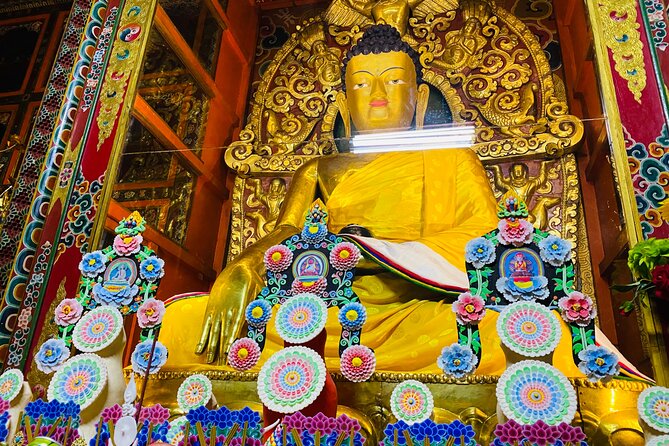
The Tibetan medicine visit is one of the most unusual parts of the itinerary. You meet a Tibetan doctor, learn about traditional medicine, and have the chance to experience pulse reading firsthand.
Pulse reading is not presented as a generic wellness treatment. It is a way to see how Tibetan medical practice interprets the body and health. The visit works best if you treat it as a cultural lesson and ask how the doctor understands the process.
Several parts of the tour can be adjusted by conversation, and this stop seems especially suited to questions. You can ask about the principles behind Tibetan medicine and how it relates to everyday life. The available time may vary, especially if the group is larger, so do not assume you will receive a long private consultation.
For some people, this will be the strongest memory of the tour. It is personal, unfamiliar, and difficult to replicate through ordinary sightseeing. For others, it may feel less convincing as medical practice. Keep an open mind, but separate cultural understanding from medical advice. The tour offers a firsthand experience of pulse reading, not a replacement for a modern medical diagnosis.
Lunch with momos and thukpa
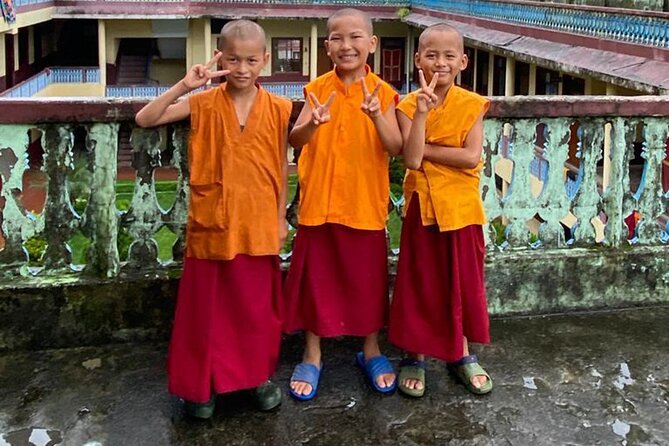
The day ends with an authentic Tibetan lunch at a local Tibetan restaurant. Momos and thukpa are specifically included, giving you two familiar Tibetan dishes to try in a local setting.
Momos are dumplings, and thukpa is a noodle soup. Together, they make a satisfying introduction to Tibetan food. The meal is not just a convenience added to a busy itinerary. Eating at a Tibetan restaurant lets you connect the earlier discussions about community and daily life with something practical and enjoyable.
Vegetarian food is available, but you need to request it when booking. Gluten-free food is also offered, including plain rice with vegetable or non-vegetable curry. If food is important to you, state your needs clearly in advance rather than hoping the restaurant can adjust at the last minute.
Lunch also gives you a natural chance to continue talking with Thupten. By this point, you will have questions from the monastery, school, workshop, gallery, and doctor visit. The meal is a good place to ask about anything that still feels unclear.
Group size, timing, and practical value
The tour is designed as a small-group experience. The main description gives a maximum of eight people, while the additional information lists a maximum of 15. That difference is worth noting when you book. A group of eight allows much more conversation and flexibility than a full group of 15.
The schedule is full. In about four and a half hours, or roughly 9 a.m. to 2 p.m. according to the timetable, you visit a settlement, monastery, school-related sites, carpet workshop, showroom, photo gallery, doctor, and restaurant. You will see a lot, but you should not expect long, unhurried time at every stop.
Hotel transfers are included, which makes the morning easier. You do not need to arrange separate transport to the settlement. Pickup details are not specified here, so confirm the time and location when you book.
Most people can take part. The information does not list special accessibility details, so contact the provider if you have mobility concerns. You should also be ready for walking around the settlement and moving between several stops.
Is $63.52 a fair price?
At $63.52 per person, this is not the cheapest way to spend a half day in Pokhara. The price makes more sense when you count what is included: hotel transfers, a guide, visits to several Tibetan cultural sites, the doctor encounter, and lunch.
You are paying for access and explanation as much as for transport. A monastery visit alone is easy to arrange, but arranging a conversation about Tibetan education, refugee life, carpet making, and Tibetan medicine would be much harder. The value is strongest if you want context and direct contact rather than a quick photo stop.
The price may feel high if you mainly want sightseeing or if you prefer to explore independently. One past participant considered the cost the weakest part of the experience, even while recognizing that water, food, and other elements were included. That is a fair way to look at it. This tour is best judged as a guided cultural program, not as a simple vehicle ride with lunch.
Group discounts are available. If you are traveling with family or friends, ask how the discount applies before booking.
Who should book this experience?
I would choose this tour if you want to understand Tibetan life in Nepal, ask questions, and meet people connected to the community. It suits curious visitors who enjoy cultural explanation, history, religion, food, and craft in one outing.
It is also a good fit for solo visitors. A very small group can give you more time to speak with Thupten, the monk, the carpet workers, and the Tibetan doctor. If you are traveling with a larger party, the experience may feel less personal, though the group discount can improve the value.
This is not the best choice if you want a slow morning, a major sightseeing landmark, or a scenic excursion outside Pokhara. The focus is conversation and community life. The schedule is busy, and some parts may feel emotionally serious, especially the discussion of refugee history.
I also recommend it to anyone who has already seen Pokhara’s main sights and wants a different angle. You get food, religion, education, craft, and personal history in a single morning. That is a lot of ground to cover, but it gives you a fuller sense of the city.
Should you book the Tibetan Cultural Tour?
Book it if your priority is meeting people and learning how Tibetan communities live in Nepal. The monastery and carpet workshop are appealing, but the most valuable parts are the conversations: with Thupten, a monk, a Tibetan doctor, and the people connected with the settlement.
Go in expecting a busy educational outing rather than a relaxed sightseeing loop. Confirm the group size, tell the provider about vegetarian or gluten-free needs, and keep space in your schedule until about 2 p.m. At $63.52, the tour earns its price when you take part, ask questions, and treat the settlement as a living community.
If that sounds like your kind of morning, this is one of Pokhara’s more thoughtful cultural choices.
FAQ
What time does the Tibetan Cultural Tour start and finish?
The tour starts at 9 a.m. and is scheduled to return at 2 p.m. The listed duration is approximately four hours and 30 minutes.
Is hotel pickup included?
Yes. Hotel transfers are included, although you should confirm the pickup time and location when booking.
Who guides the tour?
The tour is led by Mr. Thupten Gyatso, a Tibetan guide who discusses Tibetan culture, Buddhism, education, medicine, history, and refugee life in Nepal.
What places are included in the tour?
You visit a Tibetan refugee settlement, Buddhist monastery, carpet workshop, carpet showroom, photo gallery, Tibetan doctor, and local Tibetan restaurant.
Is lunch included?
Yes. The tour includes an authentic Tibetan lunch, with dishes such as momos and thukpa.
Are vegetarian and gluten-free meals available?
Yes. A vegetarian option is available if requested at booking. Gluten-free food is also offered, including plain rice with vegetable or non-vegetable curry.
What is the cancellation policy?
You can cancel up to 24 hours before the experience for a full refund. Cancellations or changes made less than 24 hours before the start time are not accepted for a refund.
Just added in Pokhara
- Tandem Paragliding in Pokhara★ 4.8 · 8 reviews
- Seti George and Thrilling Suspension Bridge Tour at Pokhara★ 4.5 · 3 reviews
- Pokhara: Suspension Bridge Private Tour- 30 Min Village Walk★ 4.8 · 9 reviews
- Pokhara: Visit Best Seven Tourist Destination by Sharing Bus★ 3.4 · 10 reviews
- Pokhara: Sunrise Tour to Sarangkot★ 5.0 · 3 reviews
- Pokhara Sightseeing By Bus: Day Trip★ 4.6 · 7 reviews
- Pokhara Sightseeing By Bus – Day Trip★ 3.2 · 8 reviews
- Pokhara Sarangkot : Cable Car (Himalayas) Sunrise Tour★ 5.0 · 6 reviews
Tibetan Culture Tours, compared.
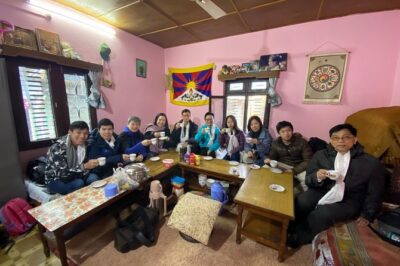
Full-Day Tibetan Cultural Tour to Tibetan Settlements Pokhara
Read our review →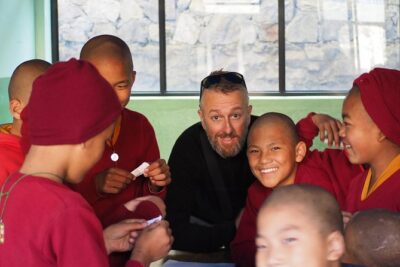
Afternoon Tibetan Cultural Tour to Tibetan Settlements Pokhara
Read our review →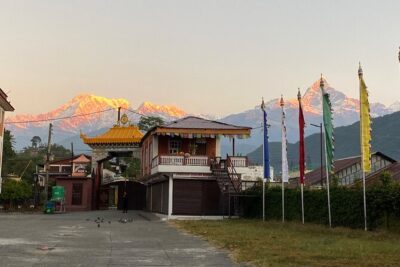
Morning Tibetan cultural tour to Tibetan settlements Pokhara
Read our review →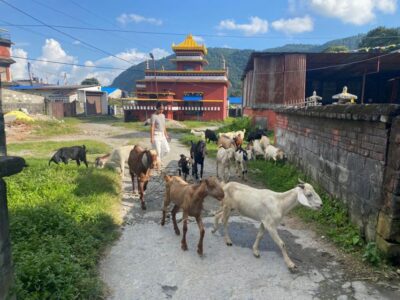
Morning Half Day Tibetan cultural tour to Tibetan Settlements
Read our review →
Browse the lists this tour appears in