
Reviewed · TIBETAN CULTURE TOURS
Half day Tibetan cultural tour
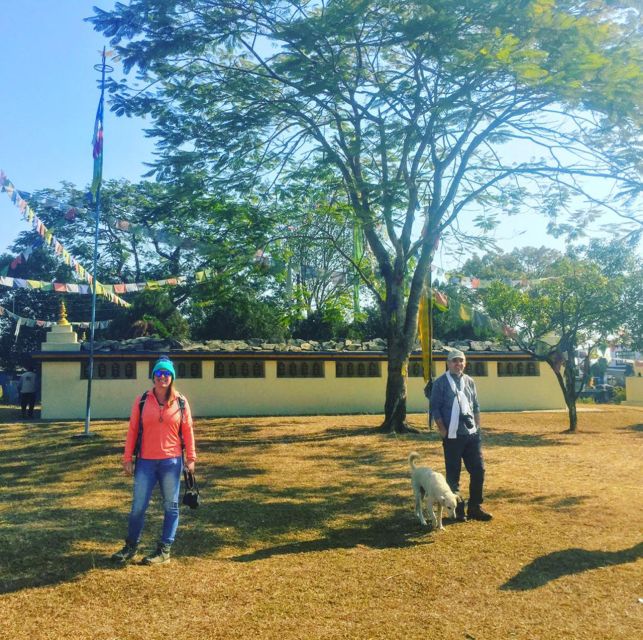
At Tashiling Tibetan settlement, you get far more than a quick look at prayer flags and a monastery. Mr. Thupten Gyatso, a Tibetan native who guides the tour, connects daily life in Nepal with Tibetan religion, education, medicine, food, and the long effort to preserve an identity in exile.
I like the small group limit of eight, which gives you a better chance to ask questions. I also like the mix of places: a school, carpet workshop, photo gallery, medical center, monastery, and restaurant. The main consideration is pace. In 4.5 hours, you cover a lot, so this suits curious learners more than people seeking a slow, unplanned village visit.
Key points at a glance
- Tashiling settlement near Pokhara: See how Tibetan families have maintained language, customs, and Buddhist practice in Nepal.
- Mr. Thupten Gyatso as your guide: Learn directly from a Tibetan guide with personal roots in the region.
- Monastery and Buddhist symbols: Understand prayer wheels, prayer flags, stupas, and their place in ordinary life.
- Handmade Tibetan carpets: Watch the work by hand, then see finished designs and colors in the showroom.
- Tibetan medicine: Meet a Tibetan doctor and receive a basic consultation and medical check-up experience.
- Momos and thenthuk: Finish with a local Tibetan meal, including vegetarian and gluten-free choices.
Why Tashiling offers more than a monastery visit
A monastery visit can sometimes become a short photo stop. Here, it is only one part of a larger picture. The tour uses Tashiling Tibetan settlement to show how people have kept their language, religion, and customs alive while living in Nepal.
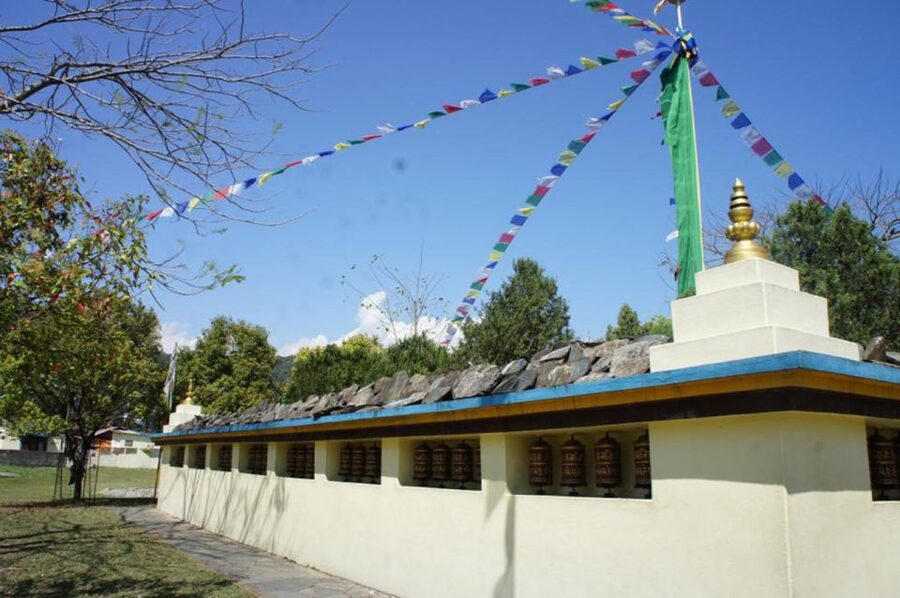
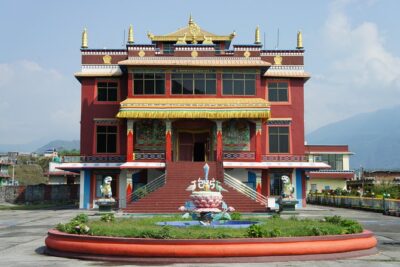
You’ll visit a monastery and learn what common Buddhist objects mean. Prayer wheels, prayer flags, and stupas are not simply decorative features for visitors to photograph. They carry religious meaning and appear in daily practice. That explanation makes the settlement easier to understand, and it gives you a better basis for seeing Buddhist sites elsewhere in Nepal.
The tour also looks at education. You’ll visit Tibetan schools and learn how education works within the settlement. This matters because language and schooling are closely tied to cultural identity. You are not just looking at a building. You are learning how Tibetan communities pass on language and traditions to younger generations.
Because the tour is led in English and limited to eight people, you should have room to ask about subjects that interest you. If you want a quick checklist of sights, the schedule may feel full. If you prefer to understand what you are seeing, the format has real value.
Other Tibetan sites around Pokhara:
- Full-Day Tibetan Cultural Tour to Tibetan Settlements Pokhara
★ 5.0 · 184 reviews - Afternoon Tibetan Cultural Tour to Tibetan Settlements Pokhara
★ 5.0 · 106 reviews - Morning Tibetan cultural tour to Tibetan settlements Pokhara
★ 5.0 · 66 reviews
Meeting Mr. Thupten Gyatso
The guide is central to this experience. Mr. Thupten Gyatso is a Tibetan native rooted in the Pokhara area, and the tour is built around his personal connection to Tibetan culture.
That makes a difference in a place where context matters. A visitor can see a prayer wheel, carpet loom, or medical center without understanding how each fits into Tibetan life. Mr. Thupten explains the objects and institutions in plain terms, while also giving space for meetings with monks, a doctor, and people connected to the settlement.
The strongest part of the guide’s role is the range of subjects. You can ask about religion, refugee life, schools, food, and medicine during the same morning or afternoon. This is more useful than a guide who only recites dates and names.
Still, keep your expectations sensible. This is a four-and-a-half-hour introduction, not a full study of Tibetan culture. The value comes from the variety of encounters and the chance to keep learning after the tour ends.
The settlement, schools, and life in exile
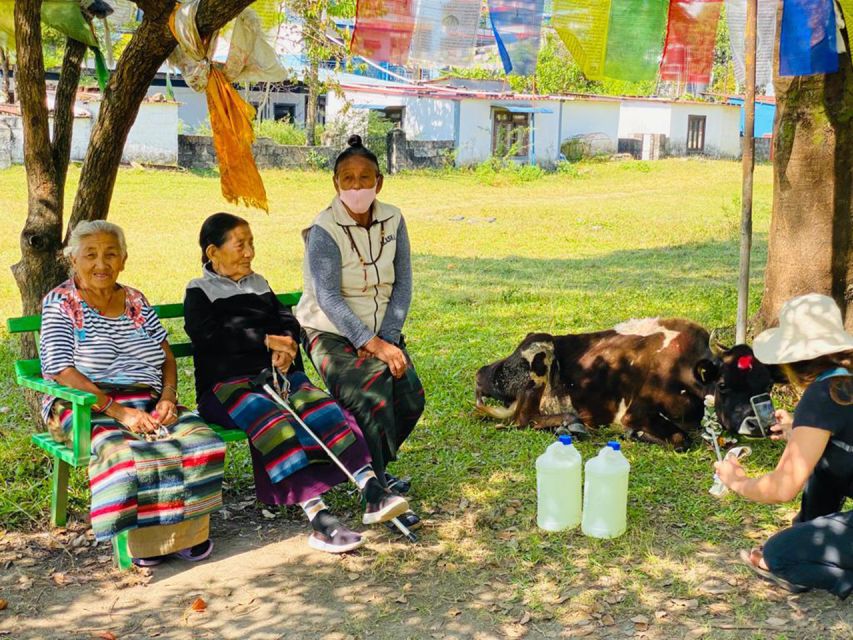
The first major part of the visit introduces you to Tibetan refugees living around Pokhara. You’ll learn how people have maintained their identity in Nepal, including the continued use of the Tibetan language and the practice of Buddhism.
A photo gallery adds a historical layer. Images show Tibetan refugee settlements in the early 1960s and help explain the changes that followed. The photographs are especially useful because they place today’s settlement in a longer story. You can see that cultural preservation did not happen by accident. It required schools, religious institutions, family traditions, and work.
The school visit gives this story a practical focus. You’ll learn about the Tibetan educational system used in the settlements. The point is not only to see classrooms, but to understand how education can protect language and cultural memory.
This section may be the most meaningful for people who want more than sightseeing. It also asks for respectful attention. The settlement is a living community, not a museum display, so listen carefully and follow your guide’s advice about photography and behavior.
Prayer wheels, flags, and stupas explained
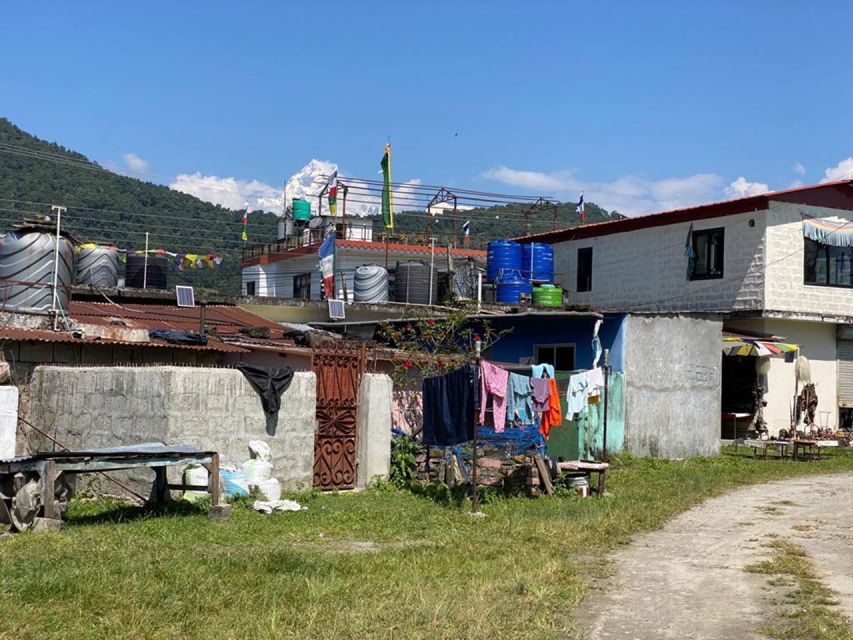
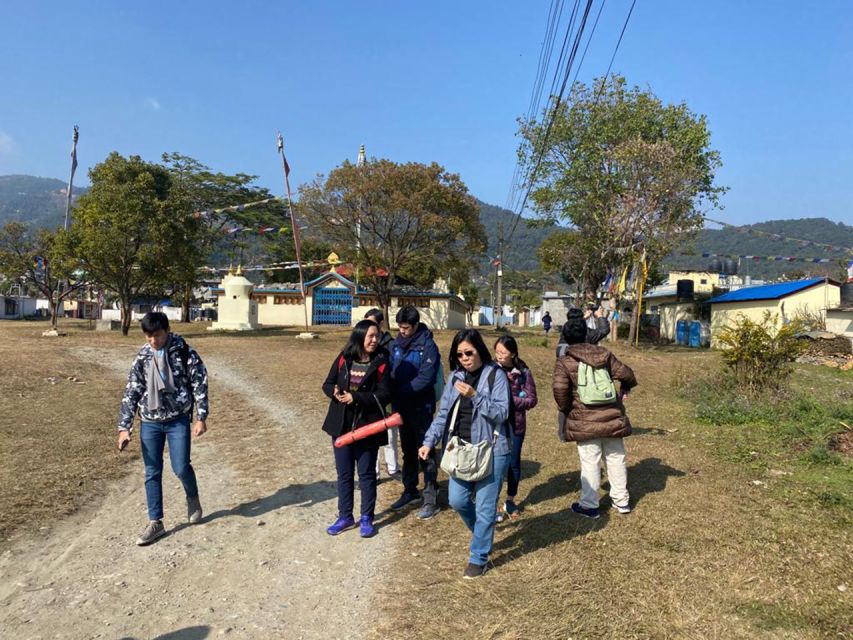
At the monastery, the guide explains the meaning of Buddhist symbols found around the settlement and in daily Tibetan life.
You’ll learn about:
- Prayer wheels
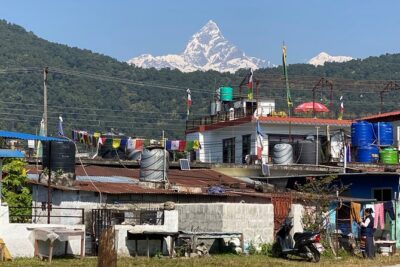
- Prayer flags
- Stupas
- Monastery spaces
- The lives of monks
These objects can look familiar after a few days in Nepal, but their meaning is not always obvious. A good explanation helps you notice details you might otherwise pass without a second thought.
I like this part because it gives you tools for the rest of your trip. Afterward, prayer flags and stupas in other parts of Nepal will not be just colorful background. You’ll have a clearer sense of why they are placed where they are and how they relate to Buddhist practice.
The monastery visit is also a reminder to keep the tone respectful. This is a religious site, not only a sightseeing stop. Dress and behavior should suit the setting, and your guide can help you understand what is appropriate.
A few more things to do in Pokhara worth a look
- Afternoon Tibetan cultural tour
★ 5.0 · 41 reviews - Half Day Tibetan Cultural tour Pokhara
★ 5.0 · 36 reviews - Morning Half Day Tibetan cultural tour to Tibetan Settlements
★ 5.0 · 26 reviews - Full Day Tibetan Cultural Tour
★ 5.0 · 12 reviews
Watching carpets made by hand
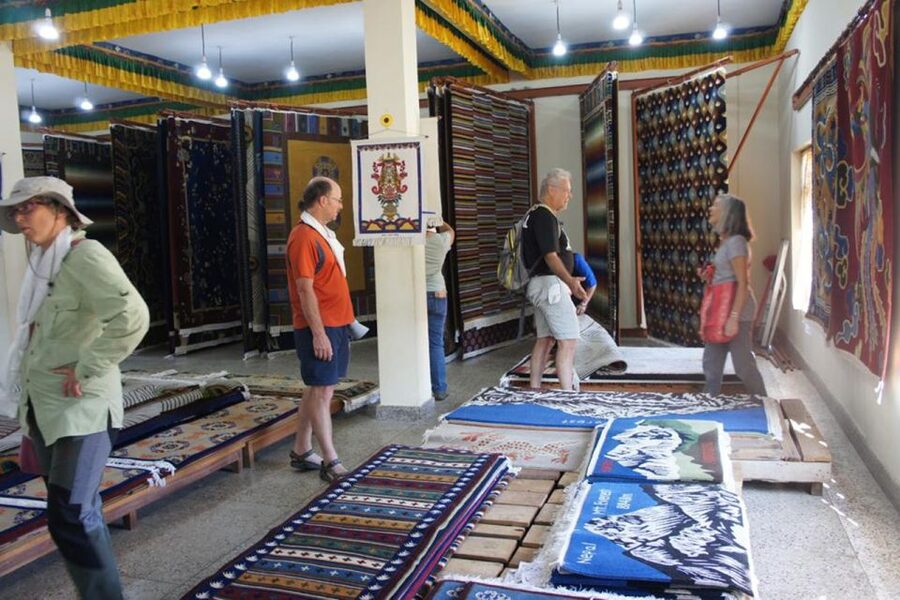
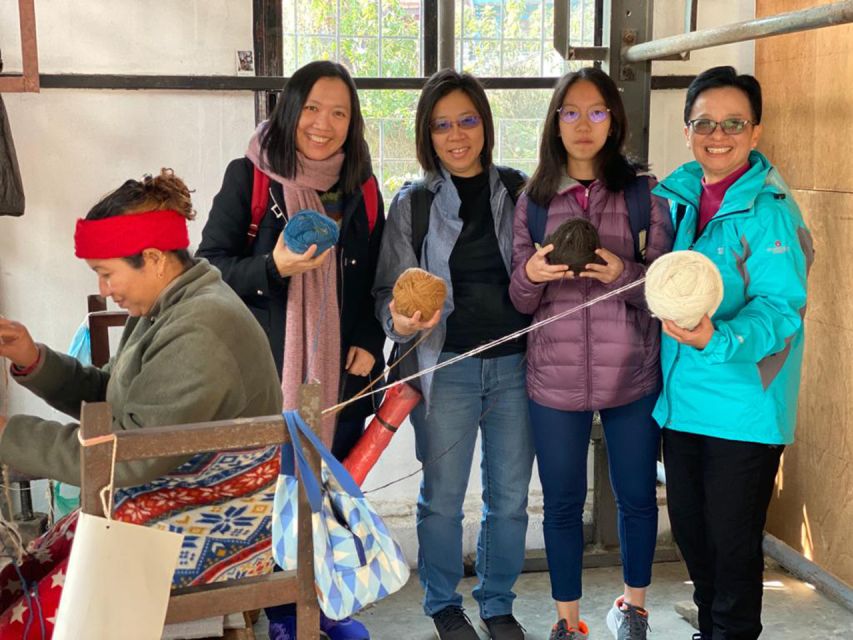
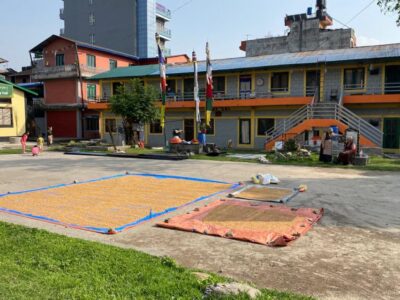
The carpet workshop offers a change of pace from the religious and historical sections. You’ll see how Tibetan carpets are made by hand, with Mr. Thupten explaining the process as you go.
Handmade work takes time, and this stop helps you understand why these carpets are different from factory-made floor coverings. You can watch the stages of production and then visit the showroom to see finished carpets in different designs and colors.
The showroom is also a practical stop for anyone considering a purchase. You can look at the patterns more closely and compare colors after seeing how the carpets are produced. There is no need to buy anything for the visit to be worthwhile.
If your interest in handicrafts is low, this section may feel less essential than the monastery or medical center. But it gives the tour a useful economic angle. Cultural preservation is not only about ceremonies and language. Skilled work and local trade also help sustain a community.
Tibetan medicine and a doctor’s consultation
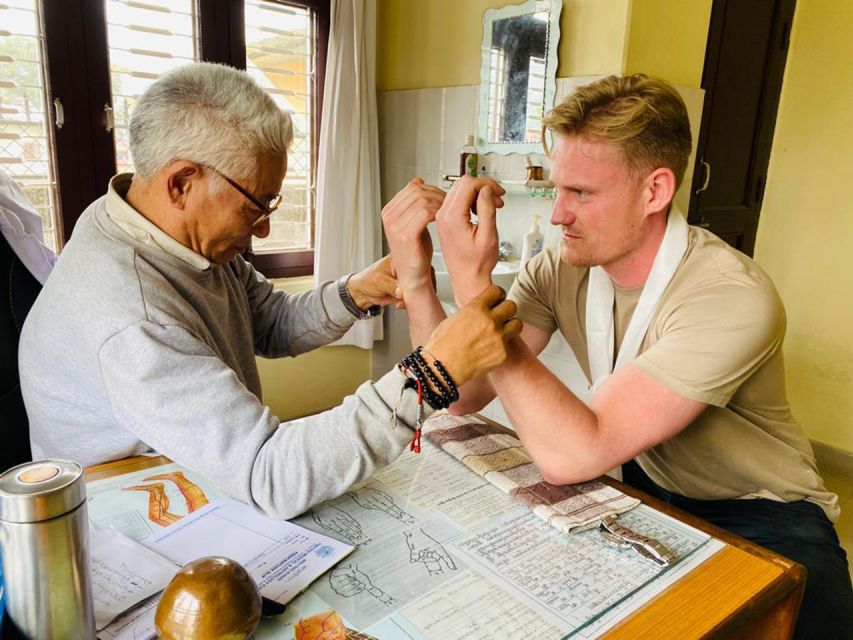
At the Tibetan medical center, you’ll meet a Tibetan doctor and learn basic information about the traditional medical system. The visit includes a consultation and first-hand experience with a medical check-up.
This is an unusual feature for a short cultural tour. It gives you a personal connection to a form of healthcare that many visitors will not encounter elsewhere. The guide can explain the basic ideas behind the system and how treatment is understood within Tibetan tradition.
Approach this as a cultural introduction, not as a substitute for medical advice from your own doctor. The supplied information describes a basic consultation and check-up experience, not a full treatment program or a promise to diagnose a particular condition.
For curious visitors, this may be one of the most memorable stops. It is a direct meeting with a professional and a chance to ask respectful questions about Tibetan medicine in practice.
Tibetan lunch: momos, thenthuk, and gluten-free choices
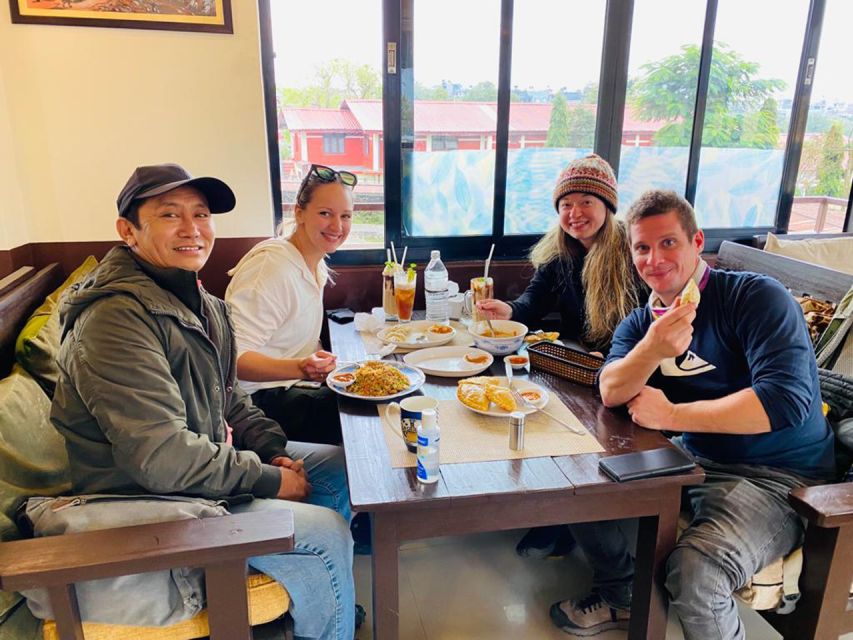
The meal brings the cultural themes down to the table. You’ll eat at a local Tibetan restaurant and can try momos, Tibetan dumplings, and thenthuk, a filling soup made with freshly kneaded dough, meat, and vegetables.
Vegetarian and non-vegetarian choices are available. Gluten-free food is also offered, including plain rice and vegetable curry. If you need a gluten-free meal, mention it when arranging the tour so the restaurant can prepare the right option.
Food is a useful way to understand culture because it is direct and social. Mr. Thupten explains Tibetan cuisine while you eat, so the meal is not simply a break between stops. It helps tie the tour’s ideas about community, work, and tradition together.
The meal is included in the $61 price, along with mineral water, fresh juice, and tea or coffee. That makes the cost easier to assess. You are paying for transport in the Lakeside area, a guide, several visits, a consultation, and lunch, rather than only for a short drive and a single attraction.
Timing, transport, and group size
The tour lasts 4.5 hours and begins with pickup from the Lakeside area of Pokhara. You return to Lakeside at the end, which makes it easy to fit around other plans.
Pickup and drop-off are included only for hotels in Lakeside. If you stay outside that area, an additional transportation charge applies depending on your hotel’s location. Check this before booking so the final price does not surprise you.
A group of up to eight is a sensible size for this kind of visit. The tour includes conversations, a school, a medical center, and a workshop, so a very large group would make questions and personal contact harder. A small group should also make it easier to hear explanations from the guide.
The tour is offered in English. It is not suitable for children under five or wheelchair users. The information provided does not specify how much walking is involved, so ask the operator if mobility is a concern.
Is $61 a fair price?
At $61 per person, the price is reasonable if you plan to take part in the full program. The cost includes a Tibetan guide, Lakeside transport, entry and visits connected with the settlement, a medical consultation, drinks, and lunch.
The value comes from access and interpretation. You could visit a monastery or eat momos on your own for less, but you would not necessarily meet a Tibetan doctor, see the carpet-making process, learn about the school system, and hear the refugee story in one organized half-day.
The price is less compelling if you only want photographs or a quick monastery stop. You are paying for conversation and explanation, not a grand monument. The tour works best when you are willing to listen and ask questions.
Free cancellation is available up to 24 hours before the start, and you can reserve now and pay later. Those policies make it easier to fit the visit into a changing Pokhara schedule.
Who should book this experience?
I would choose this tour if you want to understand Tibetan life in Nepal rather than simply see Tibetan-style architecture. It suits solo visitors, couples, and small groups who enjoy cultural questions, local food, and guided conversations.
It is also a good choice if you have already seen several temples and want a different angle. The school, photo gallery, carpet workshop, and medical center keep the visit from becoming another standard religious-site tour.
Families with very young children should choose something else because children under five are not accepted. Visitors using wheelchairs should also note that the tour is not suitable for wheelchair users.
People who want an unstructured morning may find the schedule too organized. You move through several parts of Tashiling and return to Lakeside within 4.5 hours. That structure is useful for a short stay, but it leaves limited time for wandering on your own.
Should you book the Tibetan cultural tour?
Book it if you want a clear, personal introduction to Tibetan culture, religion, refugee life, and food near Pokhara. The strongest reasons are Mr. Thupten Gyatso’s personal connection, the small group size, and the range of stops packed into half a day.
The best moments are likely to be the ones that involve people: meeting monks, speaking with a Tibetan doctor, learning from the guide, and sharing a meal. The carpet workshop and photo gallery add useful context, while the monastery and school show how culture is practiced and passed on.
Skip it if you are looking only for mountain views, shopping, or a fast list of attractions. This is an educational cultural visit, and its success depends on your interest in listening. For the right person, $61 buys a thoughtful look at a community that has worked hard to protect its language, faith, and daily traditions.
FAQ
How long does the Tibetan cultural tour last?
The tour lasts 4.5 hours, including pickup from Lakeside and return to Lakeside.
Where does the tour begin?
Pickup is provided from hotels in the Lakeside area of Pokhara.
Is transportation included?
Round-trip transportation is included for guests staying in Lakeside. Hotels outside Lakeside require an additional transportation fee based on location.
What language is the tour offered in?
The tour is offered in English.
How large is the group?
The tour is limited to eight participants.
What settlement will I visit?
You will visit Tashiling Tibetan settlement near Pokhara Valley.
Is lunch included?
Yes. Lunch at a local Tibetan restaurant is included, along with mineral water, fresh juice, and tea or coffee.
What food is served?
You can try Tibetan momos and thenthuk, a soup with freshly kneaded dough, meat, and vegetables. Vegetarian and non-vegetarian options are available.
Are gluten-free meals available?
Yes. Gluten-free options include plain rice and vegetable curry.
Can children and wheelchair users join?
Children under five are not accepted, and the tour is not suitable for wheelchair users.
Just added in Pokhara
- Tandem Paragliding in Pokhara★ 4.8 · 8 reviews
- Seti George and Thrilling Suspension Bridge Tour at Pokhara★ 4.5 · 3 reviews
- Pokhara: Suspension Bridge Private Tour- 30 Min Village Walk★ 4.8 · 9 reviews
- Pokhara: Visit Best Seven Tourist Destination by Sharing Bus★ 3.4 · 10 reviews
- Pokhara: Sunrise Tour to Sarangkot★ 5.0 · 3 reviews
- Pokhara Sightseeing By Bus: Day Trip★ 4.6 · 7 reviews
- Pokhara Sightseeing By Bus – Day Trip★ 3.2 · 8 reviews
- Pokhara Sarangkot : Cable Car (Himalayas) Sunrise Tour★ 5.0 · 6 reviews
Tibetan Culture Tours, compared.
Full-Day Tibetan Cultural Tour to Tibetan Settlements Pokhara
Read our review →
Afternoon Tibetan Cultural Tour to Tibetan Settlements Pokhara
Read our review →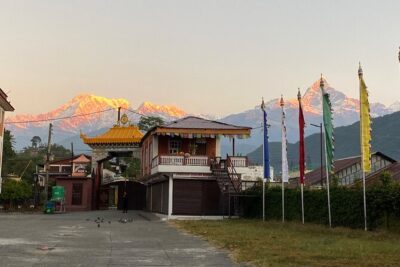
Morning Tibetan cultural tour to Tibetan settlements Pokhara
Read our review →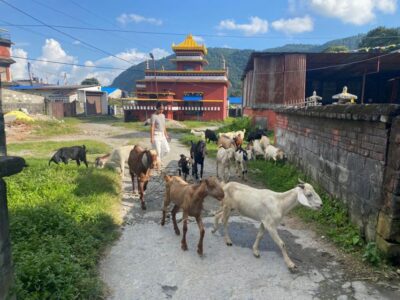
Morning Half Day Tibetan cultural tour to Tibetan Settlements
Read our review →
Browse the lists this tour appears in