
Reviewed · HISTORICAL TOURS
Kathmandu 4-Heritage Sites Tour
Kathmandu’s most powerful moments are packed into this four-site circuit: a possible glimpse toward the Living Goddess Kumari, prayer rituals at Boudhanath, hilltop views from Swayambhunath, and Hindu cremation ceremonies beside the Bagmati River. It gives you a quick but meaningful introduction to the city’s sacred core.
I like two things right away. First, the private air-conditioned vehicle keeps the day comfortable as you move between four busy sites. Second, the route balances architecture, religion, city views, and living ritual instead of giving you four similar monuments.
The trade-off is pace. You get about one hour at each stop, and that can feel short at Durbar Square and Pashupatinath. The guide also matters a great deal. One verified booking described beautiful sites and fascinating stories, but found the guide’s unusual attitude limited the day.
Key points at a glance
- Kumari Ghar at Kathmandu Durbar Square: Look for the traditional home of Nepal’s revered Living Goddess, Kumari.
- Swayambhunath hilltop views: See Kathmandu spread out below the ancient stupa and surrounding shrines.
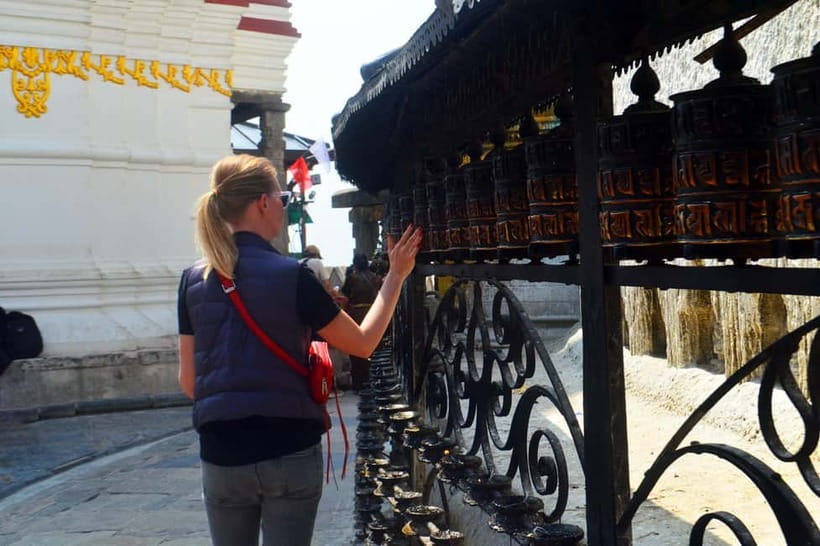
- Boudhanath’s enormous white stupa: Slow down for a quieter hour of prayer flags, turning prayer wheels, and contemplation.
- Pashupatinath by the Bagmati River: Observe Hindu worship and cremation rituals from a respectful distance.
- Private six-hour format: Travel with your own group, guide, and vehicle rather than joining a large coach.
- Low advertised price, extra ticket costs: The $3.94 per person price is attractive, but monument entry fees and meals are not included.
Four sacred places in one Kathmandu day
This is a compact introduction to Kathmandu Valley culture. In six hours, you move from royal courtyards to Buddhist shrines, then finish at one of Nepal’s most important Hindu sites.
I see the route as a good first-day plan. It gives you a sense of how Kathmandu works: old royal power, Buddhist devotion, and Hindu ritual all sit within a short driving circuit. You will not have unlimited time at any one place, but you will cover the city’s four major heritage stops without arranging separate transport.
The tour begins with hotel pickup in Thamel or another stated pickup point in Kathmandu. You are asked to wait in your hotel lobby or at your apartment entrance five minutes before the scheduled time. The private vehicle is air-conditioned, and bottled water is included.
An English-speaking guide accompanies the group. Since the tour is private, you can ask questions and adjust the pace within the limits of the six-hour schedule. Still, I would tell you to make your priorities clear at the start. If you care most about Kumari Ghar, Buddhist practice, photography, or the Bagmati rituals, say so early.
A few more things to do in Kathmandu worth a look
- Private Kathmandu Sightseeing Tour | UNESCO World Heritage sites
★ 5.0 · 756 reviews - UNESCO Seven World Heritage Tour in Kathmandu
★ 5.0 · 253 reviews - Kathmandu Private Sightseeing Tour | UNESCO World Heritage Sites
★ 5.0 · 109 reviews
Kathmandu Durbar Square and the Living Goddess
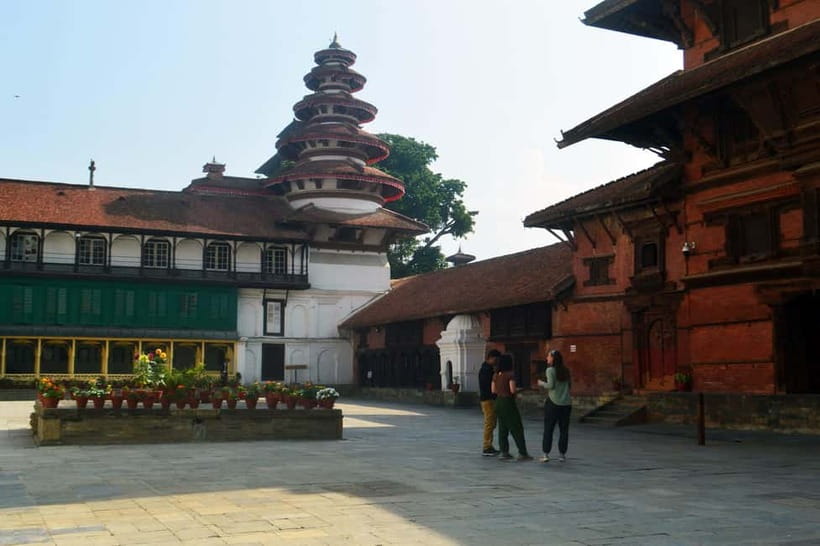
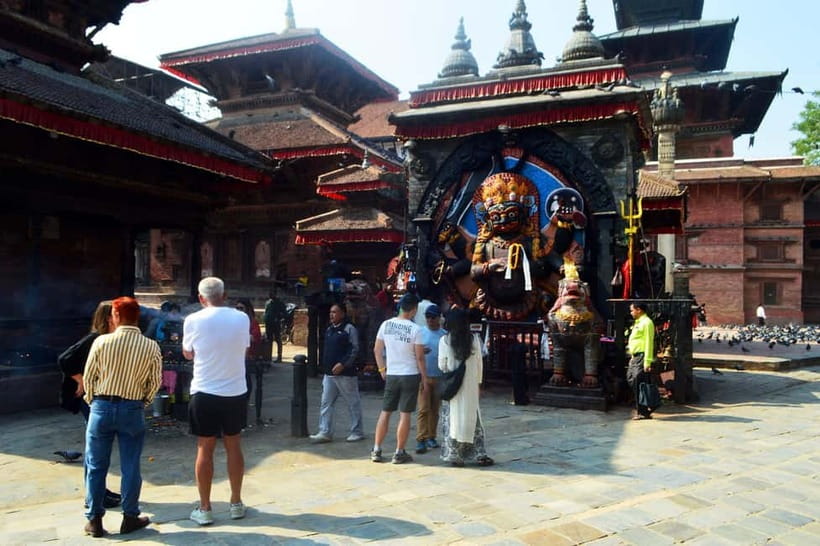
Kathmandu Durbar Square is the natural opening stop. This former royal center brings together palace buildings, courtyards, carved timber, shrines, and the Kumari Ghar, home of the Living Goddess Kumari.
The Kumari tradition is one of the most unusual parts of Kathmandu’s religious life. The Kumari is a young girl chosen according to strict religious customs and revered as a living form of the goddess Taleju. Visitors may have an opportunity to see her at a window, but you should not expect a guaranteed appearance. Photography rules and local customs must be respected.
I like this first stop because it gives the rest of the day a useful frame. You are not simply looking at old buildings. You are seeing a place where royal history and active religious practice meet. The courtyards can feel visually crowded with details, so a guide’s explanations are especially helpful here.
The scheduled guided visit lasts about one hour. That is enough for an introduction, but not enough for a slow architectural study of every courtyard and shrine. If you want photographs, keep your camera ready and avoid using the whole hour on one façade.
Monument entrance fees are not included in the tour price. The booking information says an entrance add-on is available, so check the exact arrangement before you go. Carry cash, as requested in the practical information, and bring your passport.
Swayambhunath, the Monkey Temple on the hill
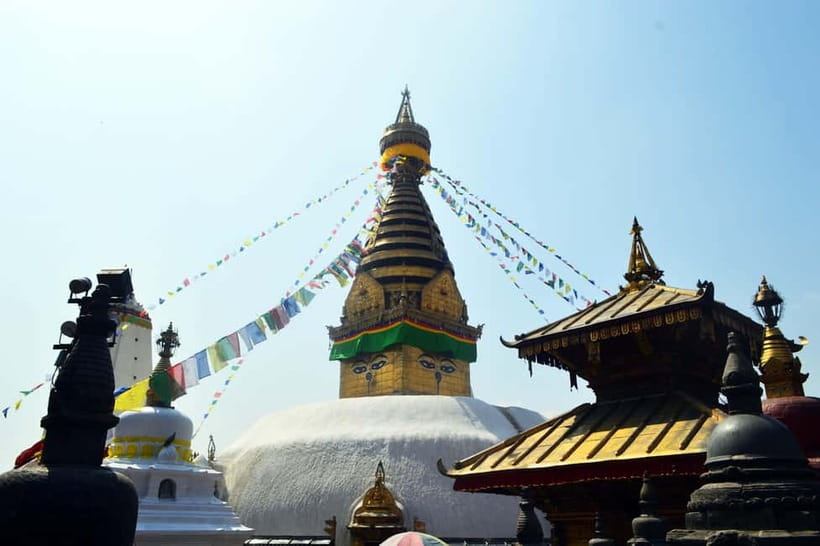
From the royal square, the route continues to Swayambhunath, often called the Monkey Temple. The site includes an ancient stupa, smaller shrines, and a hilltop position with broad views across Kathmandu.
The views are one of the strongest reasons to keep this stop in the plan. After the close courtyards of Durbar Square, the open outlook gives you a clearer sense of the capital’s size. You can pause here to take photographs and see the city from above.
Swayambhunath is also a working religious site, not just a viewpoint. Prayer flags, stupas, and shrine details make the visit more than a quick photo stop. Your guide can help explain what you are seeing, while you take care to behave respectfully around worshippers.
The visit is planned for about one hour. That should give you time to see the principal parts of the site and enjoy the view, but the stop may be tiring for anyone with difficulty walking. This tour is specifically not suitable for wheelchair users or people with mobility impairments.
I would wear practical shoes and carry only a small daypack. The tour does not promise an easy-access route, so anyone with limited mobility should ask detailed questions before booking rather than assuming the private vehicle solves every access problem.
Boudhanath and a quieter hour of prayer
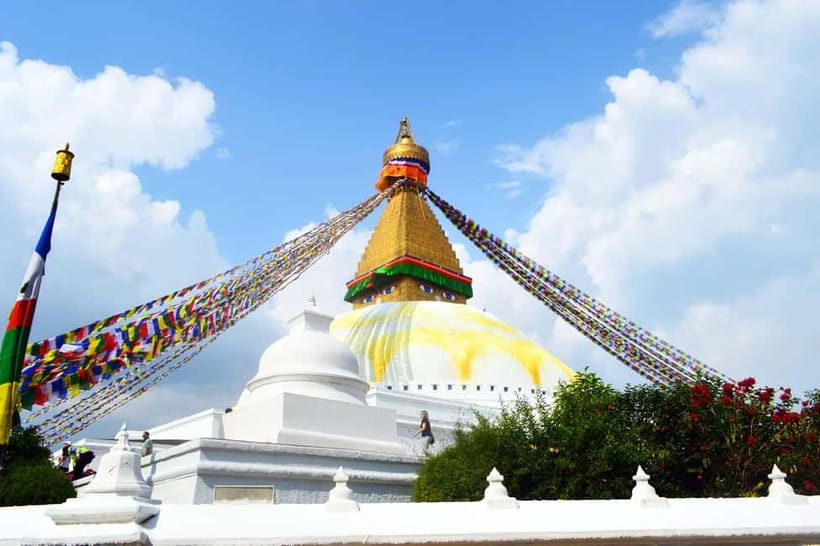
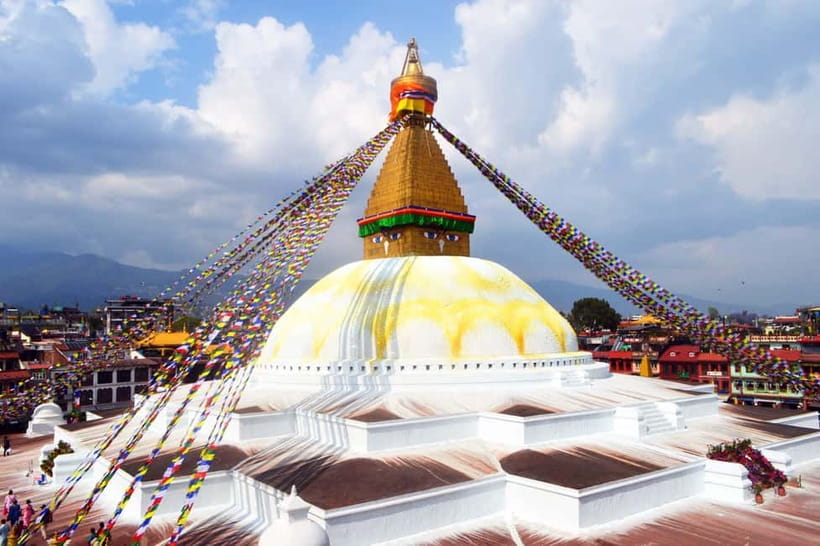
Boudhanath offers a change of mood. The great spherical stupa is one of the world’s largest, and the surrounding area is known for prayer flags, Buddhist shrines, and a steady sense of devotion.
I find this the most useful place to slow down. The first two stops ask you to look at royal buildings, carved details, and a city view. Boudhanath asks you to watch a religious routine. You may see people walking around the stupa, turning prayer wheels, and pausing in contemplation.
The one-hour guided visit is well suited to the site. You can take in the broad white structure, study the painted details, and allow a little quiet time. The tour description presents Boudhanath as a place of calm, and that is an important contrast in a six-hour city circuit.
Photography is tempting, but I would keep it secondary to observation. Prayer flags and the stupa make strong subjects, yet the site remains sacred. Follow your guide’s instructions and avoid treating active worship as a stage set.
Boudhanath is also a useful stop for people who want more than monuments. You can see how Buddhism is practiced in public space, not just preserved behind glass or described on a sign. That living quality gives the middle of the tour its best pause.
Same base, a different kind of day:
- Everest Base Camp Trek – 14 Days
★ 5.0 · 1,499 reviews - Everest Base Camp Helicopter Tour landing at Everest View Hotel
★ 5.0 · 668 reviews - Half day cooking class in Thamel kathmandu
★ 5.0 · 607 reviews - Everest Base Camp Trekking
★ 5.0 · 485 reviews
Pashupatinath and the Bagmati River
The final main stop is Pashupatinath Temple, one of Nepal’s most important Hindu religious sites. The temple complex lies along the Bagmati River, where sacred rituals and cremation ceremonies take place.
This can be the most affecting part of the day. You may witness Hindu worship and cremation rituals, but you need to approach the river with care. These are private religious moments for families, not a performance arranged for visitors.
I recommend listening closely to the guide’s explanation and keeping your camera use restrained. Stand back, avoid blocking paths, and follow any instructions about where you may go. The value of this stop comes from seeing a major religious tradition practiced openly, while remembering that the people involved deserve privacy.
The tour allows about one hour here. That gives you a focused introduction to the temple area and river ceremonies, but the experience can feel intense after three earlier sites. If you prefer a slower visit, you may wish for more time here, especially if a ritual is taking place when you arrive.
Pashupatinath also gives the day a clear closing point. Durbar Square shows royal power, Swayambhunath and Boudhanath show Buddhist devotion, and Pashupatinath brings you into the heart of Hindu practice. The route is short in theory, but the ideas it covers are large.
What the $3.94 price really covers
The advertised price of $3.94 per person is unusually low for a private six-hour outing, so read the inclusions carefully. You receive hotel pickup and drop-off, a private air-conditioned vehicle, an English-speaking guide, bottled drinking water, and visits to all four sites.
Meals are not included. Monument entrance fees are also extra, although an add-on may be available. Those costs can change the final amount, so compare the full price rather than judging the tour by the headline figure alone.
Even with tickets added, the private transport can make the arrangement worthwhile if you are short on time. Organizing four major sites yourself would require finding transport, checking directions, and arranging explanations at each location. Here, the basic structure is already set.
The main question is how much personal attention you want. A private group gives you more control than a large shared bus, and you can ask questions directly. However, the quality of the day depends heavily on the assigned guide. One verified Spanish booking rated the experience four out of five and praised the beautiful places and interesting stories, while also noting that the guide’s peculiar attitude reduced the sense of getting the most from the day.
That is useful advice. The monuments are the reliable part of the experience. The storytelling and personal connection may vary. If you book, treat the low price as a good starting point, but confirm exactly what your entrance fees and final total will be.
Timing, comfort, and practical limits
The tour lasts six hours, with roughly one hour of guided time at each site plus driving and transfers. That makes it a full morning and afternoon rather than a brief walk through one neighborhood.
Hotel pickup and drop-off are included. The stated pickup options include Thamel, and the drop-off options include Kathmandu and Thamel. Wait five minutes early in the hotel lobby or at the entrance of your apartment so the group does not lose time at the start.
The air-conditioned vehicle matters in Kathmandu, especially when you are moving between four stops. You also receive bottled water, but meals are not provided. Bring a daypack with the basics, cash for costs not included, a camera if you want one, and your passport.
The tour offers free cancellation up to 24 hours before departure and a reserve-now, pay-later option. Those terms are useful if your Kathmandu schedule may change. Starting times depend on availability, so check the departure slot before booking.
This is not a wheelchair-friendly choice, and the activity is not suitable for people with mobility impairments. The day includes several heritage compounds and religious areas, so you should be comfortable walking and standing for extended periods.
Who will get the most from this tour
I would recommend this tour to a first-time visitor who wants the main heritage sites in one organized day. It suits you especially well if you have limited time in Kathmandu and want a private vehicle instead of piecing together several local rides.
It is also a good fit if you want a mix of experiences. You get palace courtyards, a city overlook, a Buddhist stupa, and Hindu rituals. That range is more useful than visiting four sites that all tell the same story.
The tour may feel too quick for a serious photographer, architecture student, or religious studies enthusiast. You will have one hour at each stop, and the schedule does not promise long unstructured periods. A guide whose style does not suit you could also affect the experience, as the four-star booking makes clear.
Families with young children should consider the pace and the cremation ceremonies at Pashupatinath. The supplied information does not give a child age policy or describe the visit as family-specific, so ask before booking if that matters to you.
Should you book the Kathmandu four-site tour?
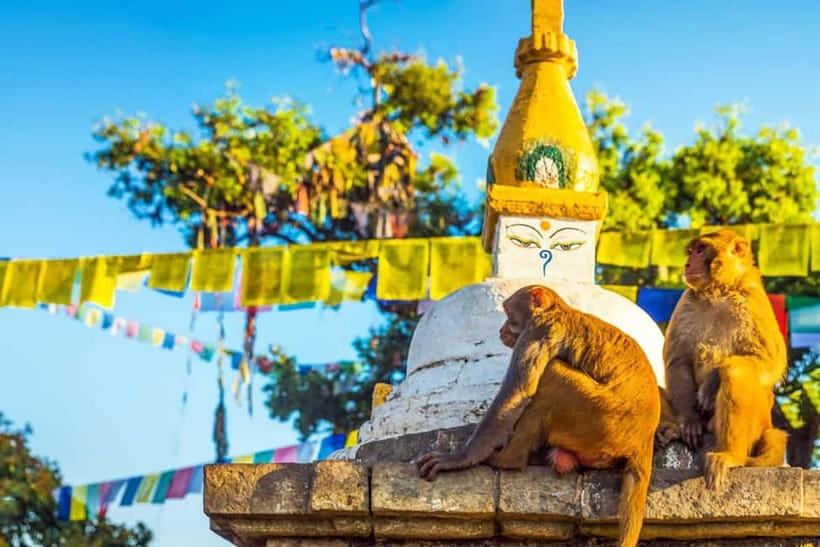
Book it if you want an efficient first look at Kathmandu’s most important sacred and historic places, with private transport and an English-speaking guide. The strongest parts are the range of sites, the hilltop views at Swayambhunath, the quiet pause at Boudhanath, and the chance to understand Hindu rituals beside the Bagmati River.
Go in with realistic expectations. The $3.94 starting price does not include meals or monument entrance fees, six hours is a brisk schedule, and the guide’s approach can shape the day. Confirm the full cost, wear practical shoes, carry cash, and tell the guide what interests you most.
For a quick introduction to Kathmandu, I think the route makes sense. For a slow and detailed study of each monument, choose a longer or more specialized visit.
FAQ
How long does the Kathmandu four-site tour last?
The tour lasts six hours, including the visits and transfers between the four sites.
Which places are included?
The tour visits Kathmandu Durbar Square, Swayambhunath Temple, Boudhanath Stupa, and Pashupatinath Temple.
Is hotel pickup included?
Yes. Hotel pickup and drop-off are included. Pickup is available from the stated Kathmandu options, including Thamel. You should wait in your hotel lobby or at your apartment entrance five minutes before pickup.
Are entrance fees included in the price?
No. Monument entrance fees are not included, though an entrance-fee add-on may be available. Meals and personal expenses are also excluded.
Is the tour private?
Yes. The activity is arranged as a private group tour with a private air-conditioned vehicle and an English-speaking live guide.
Is this tour suitable for wheelchair users?
No. The activity is listed as unsuitable for wheelchair users and people with mobility impairments.
Just added in Kathmandu
- Kathmandu to Chitwan Tour by Tourist Bus – A Convenient and Affordable Way★ 4.0 · 4 reviews
- Changunarayan Hill to Telkot Hike Near Kathmandu Day Tour★ 5.0 · 6 reviews
- Mt Everest Base CampTrek | Budget Package★ 5.0 · 4 reviews
- Chitwan Jungle Safari 3-Day Tour★ 5.0 · 9 reviews
- Chandragiri Hill Station Tour by Cable Car★ 5.0 · 4 reviews
- Chandragiri Hills cable car day trip, private car with driver from Kathmandu★ 5.0 · 8 reviews
- Chandragiri to Taudaha Nature Day Hiking from Kathmandu★ 5.0 · 13 reviews
- Chandragiri Cable Car & Monkey Temple Private Guided Day Tour★ 5.0 · 5 reviews
Historical Tours, compared.
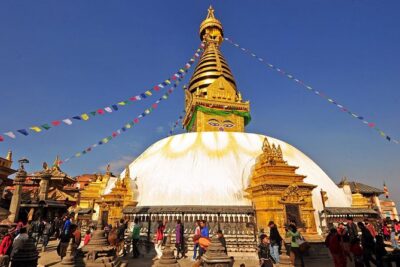
Private Kathmandu Sightseeing Tour | UNESCO World Heritage sites
Read our review →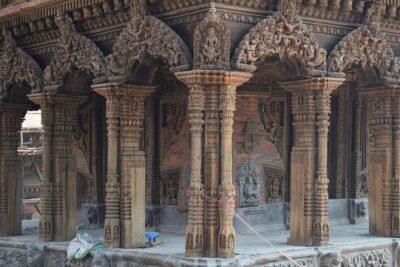
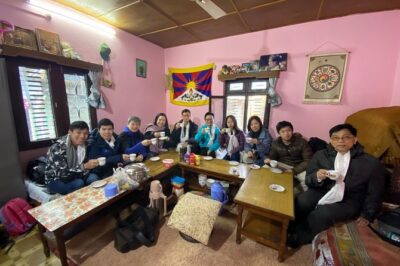
Full-Day Tibetan Cultural Tour to Tibetan Settlements Pokhara
Read our review →
Afternoon Tibetan Cultural Tour to Tibetan Settlements Pokhara
Read our review →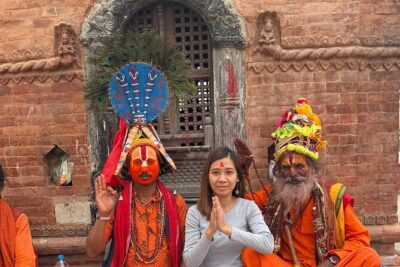
Full Day Private Top 4 UNESCO Heritage Tour W/Lunch.
Read our review →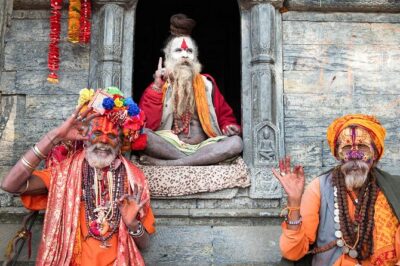
Nagarkot Sunrise & Bhaktapur UNESCO Heritage Private Tour
Read our review →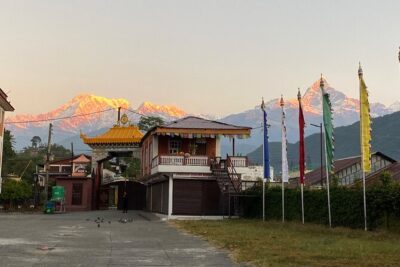
Morning Tibetan cultural tour to Tibetan settlements Pokhara
Read our review →Browse the lists this tour appears in