
Reviewed · KATHMANDU UNESCO HERITAGE TOURS
Kathmandu UNESCO World Heritage Tour
Kathmandu’s seven UNESCO sites pack centuries of royal power, Hindu devotion, Buddhist faith, and Newar craftsmanship into one long day. This tour takes you from Kathmandu Durbar Square to hilltop Swayambhunath, with Patan, Bhaktapur, Pashupatinath, Boudhanath, and Changu Narayan in between.
I like the chance to see all seven major sites with a guide who can explain what you’re looking at, and I like the mix of grand monuments and living religious places. Deepak Kushwaha receives especially warm praise for his personal approach, while Rabina is noted for her historical knowledge and for giving people time to look around. The trade-off is simple: seven sites in about nine hours is a demanding schedule, and admission fees, meals, tips, personal expenses, and an air-conditioned vehicle are not included.
Key things to know before booking
- Seven UNESCO sites in about nine hours: This is a full Kathmandu overview, not a slow visit to one or two monuments.
- Deepak Kushwaha leads the experience: Multilingual male and female guides are offered, with Deepak and Rabina specifically associated with the tour.
- Three royal squares form the core: Kathmandu, Patan, and Bhaktapur each show a different side of the Kathmandu Valley’s architecture and courtly past.
- The religious stops are still active: Pashupatinath and Boudhanath are places of worship, not simply museum pieces.
- Admission costs extra: The tour price is $99 per person, but entrance tickets are not included.
- The day begins and ends at Kaiser Library: The meeting point is on Kanti Path in central Kathmandu, and the activity returns there.
Seven UNESCO sites, one very full day
The appeal here is clear. Instead of arranging separate taxis, guides, and entrance visits for each site, you get one organized day that links the Kathmandu Valley’s major cultural landmarks.
The route covers a lot of ground. The listed time is about nine hours, with roughly one hour assigned to each of the seven stops. That leaves limited time for driving, traffic, and transitions. You should think of this as a well-packed introduction to Kathmandu, not a leisurely archaeological study.
That pace can work well early in a Nepal visit. It gives you a useful map of the valley and helps you decide where you might want to return. If you already know that you prefer long photography sessions, quiet temple visits, or detailed museum time, the schedule may feel brisk.
A multilingual guide matters here. The monuments are filled with carved figures, ritual objects, royal courtyards, and religious symbols that can be hard to interpret on your own. Deepak is repeatedly singled out for his warmth, clear explanations, and personal attention. Rabina is also specifically praised for guiding with a female perspective and allowing free time at each location.
More temple and square walks around Kathmandu:
- Private Kathmandu Sightseeing Tour | UNESCO World Heritage sites
★ 5.0 · 756 reviews - Kathmandu: Full Day 7 UNESCO Tour with Lunch – Private/Group
★ 5.0 · 415 reviews - Private Bhaktapur and Nagarkot Day Tour From Kathmandu
★ 5.0 · 305 reviews
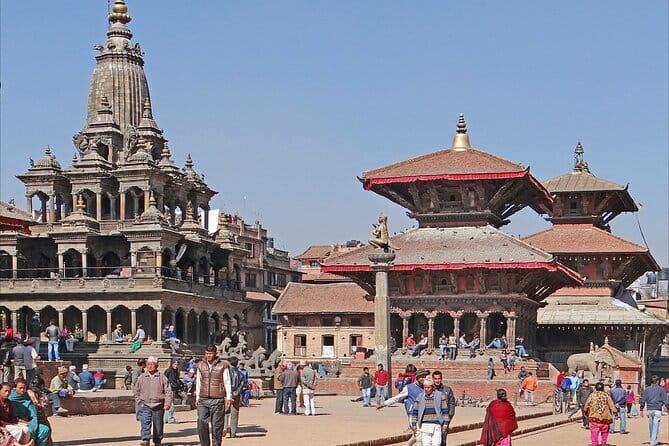
Kathmandu Durbar Square: a royal opening
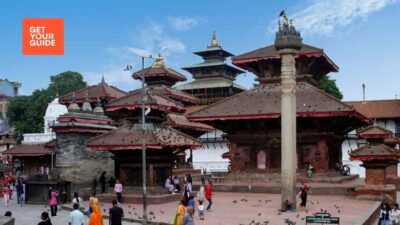
The first stop is Kathmandu Durbar Square, the old royal center of the city. You’ll find temples, courtyards, palace buildings, and carved architectural details gathered in a compact historic district.
An hour gives you enough time to get oriented and hear the main story of the square. Your guide can point out how royal power, Hindu worship, and traditional Newar design come together here. The value of a guide is especially clear at a place like this, where a carved doorway or shrine may look decorative until you understand its religious purpose.
Do not expect a quiet first stop. Kathmandu Durbar Square is in the middle of the capital, and the setting is part historic monument, part working city. That contrast is one of its strengths. You are not viewing a sealed-off ruin. You are seeing heritage within daily urban life.
Admission is not included, so budget separately for entry fees. The tour description assigns one hour here, which is enough for a guided introduction but may not satisfy you if you want to examine every palace room and temple facade.
Patan Durbar Square: fine detail and courtyards
Patan Durbar Square is often a favorite for people who enjoy architectural detail. The square is known for its temples, palace buildings, courtyards, and skilled Newar workmanship. The stop also includes attention to the Mahabouddha Temple, an important example of the area’s Buddhist artistic tradition.
Here, look closely rather than simply counting monuments. Patan rewards the eye with repeated patterns, brickwork, metal details, carved wood, and carefully proportioned temple forms. A guide can help you see why the area is more than a collection of attractive buildings.
The one-hour visit gives you a focused look at the square, but it will not allow unlimited wandering. Keep your camera ready, listen for the guide’s explanation, and save detailed exploration for another visit if Patan captures your interest.
The three durbar squares can begin to blur together during a fast day. That is another reason to ask your guide to explain the difference between them. Kathmandu is the capital’s old royal center, Patan is closely associated with refined Newar artistry and Buddhist-Hindu traditions, and Bhaktapur has a more medieval town character.
Bhaktapur Durbar Square: medieval character in a larger setting
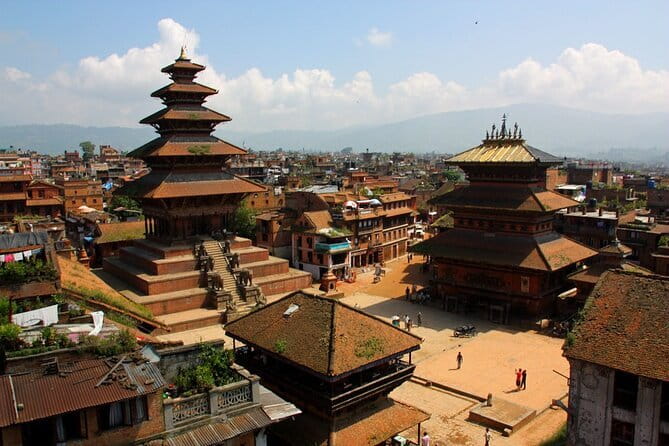
Bhaktapur offers a different feel from the two squares inside Kathmandu’s urban core. Its temples, palaces, statues, and courtyards create a broad historic setting, with the Nyatapola Temple and Vatsala Temple among the major sights highlighted for the visit.
This is the stop where the old city atmosphere may feel most pronounced. Bhaktapur’s appeal is not just one building. It comes from the relationship between the square, surrounding lanes, traditional architecture, and the sense of a former royal town.
An hour is useful for the main square and its signature buildings, though the area can reward much longer. If you want time for local crafts, food, photography, and side streets, you may need to return independently.
The practical point is stamina. By Bhaktapur, you will already have seen two major heritage squares. Comfortable shoes and a willingness to keep moving will make the day easier. The tour is designed to show you the valley’s headline sites in one sweep, not to offer extended free time at each one.
A few more things to do in Kathmandu worth a look
- UNESCO Seven World Heritage Tour in Kathmandu
★ 5.0 · 253 reviews - Kathmandu Private Sightseeing Tour | UNESCO World Heritage Sites
★ 5.0 · 109 reviews - Kathmandu: Full Day Private Top 4 UNESCO Heritage Tour W/Lunch.
★ 5.0 · 86 reviews - Kathmandu World Heritage Tour
★ 5.0 · 74 reviews
Changu Narayan: a quieter hilltop stop
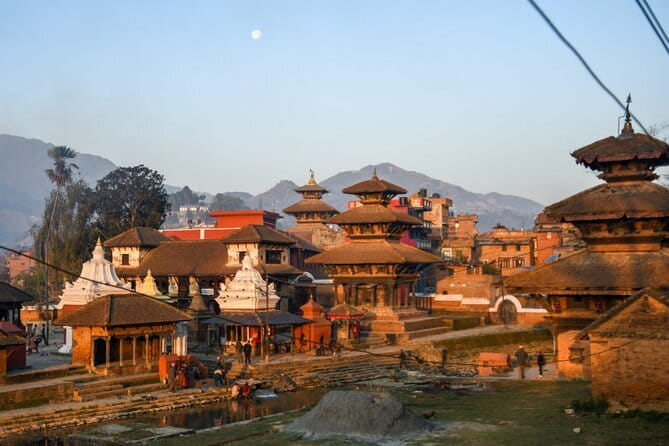
Changu Narayan Temple is described as Nepal’s oldest Hindu temple and is another UNESCO site. Compared with the main durbar squares, it offers a change of setting and mood.
The temple is known for old architecture, sculpture, and inscriptions. This is a place where your guide’s explanation can turn small details into the main attraction. Look for the ancient carvings and listen for the story behind the temple’s religious importance.
The stop is scheduled for about an hour. Since the tour includes seven locations, you should not expect a long independent walk around the surrounding area. Still, Changu Narayan helps prevent the day from becoming a string of similar palace squares.
It also adds geographic variety. The tour is not limited to central Kathmandu. It reaches the broader Kathmandu Valley, showing how the valley’s sacred sites connect royal cities, temple towns, and hilltop shrines.
Pashupatinath: Hindu worship beside the river
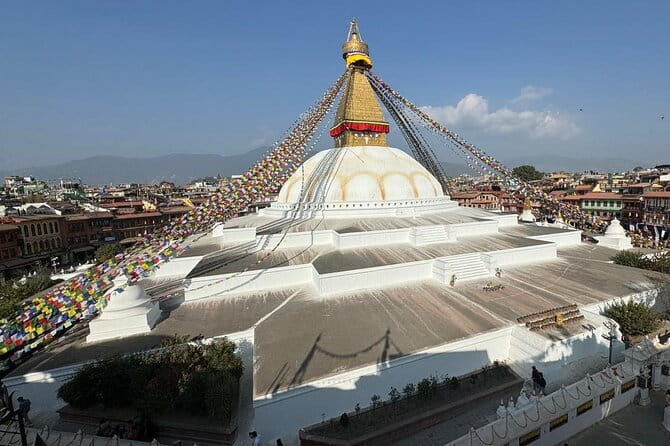
Pashupatinath Temple is one of Nepal’s most important Hindu religious sites. The complex is known for its shrines, rituals, and spiritual atmosphere along the Bagmati River.
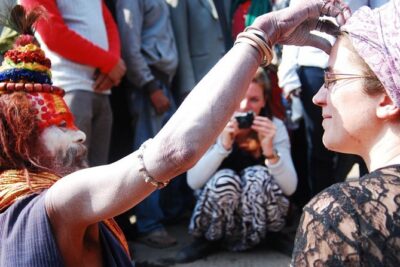
This is not simply a stop for architectural sightseeing. Religious activity continues here, and the experience calls for care and respect. Follow your guide’s instructions about where to stand, what may be photographed, and how to behave near ceremonies.
The tour description highlights the chance to witness traditional rituals. That can be one of the day’s most meaningful moments, but it is also the part that requires the most sensitivity. You are entering a living place of worship, so keep your voice low and avoid treating ceremonies as a show.
The listed visit lasts about an hour. That gives you a useful introduction to the complex and its role in Nepalese Hindu life. It may feel short if you want to see every shrine or spend time watching activity by the river.
Pashupatinath also adds an important balance to the itinerary. The durbar squares show courtly and civic life. Pashupatinath shows faith in practice, with rituals that continue regardless of a visitor’s schedule.
Boudhanath: walking the circle around the stupa
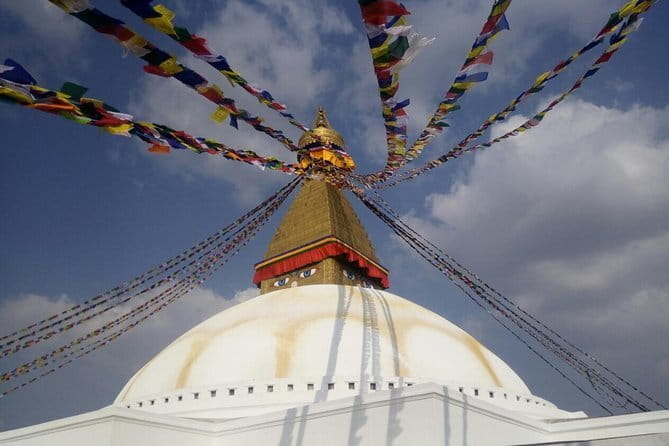
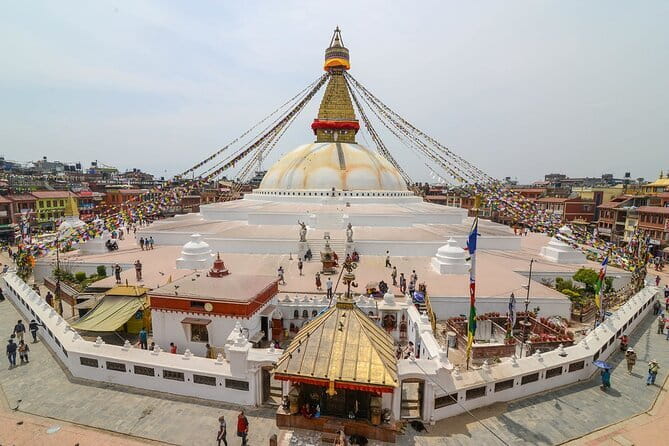
Boudhanath Stupa is one of Nepal’s most important Buddhist monuments. Its huge white dome and watchful Buddha eyes make it one of Kathmandu’s most recognizable sights, but the experience is more than a photo stop.
The traditional way to experience the stupa is to walk around it, following the flow of worshippers and turning prayer wheels where appropriate. Your guide can explain the symbolism of the structure and the role Boudhanath plays in Tibetan Buddhist life in Kathmandu.
The surrounding streets add to the visit. Shops, monasteries, cafes, and religious activity gather around the stupa, giving the area a lived-in quality. You may find the atmosphere more active than at Changu Narayan, with plenty to observe even within a short visit.
Again, respect matters. Let people pray without interrupting them, and ask before taking close-up photographs of individuals. An hour should cover the main stupa and a basic explanation, but it is not enough for a full study of nearby monasteries.
Boudhanath is also a good place to notice the difference between a monument and a religious center. The stupa is visually striking, but its meaning comes from the people who circle it, pray there, and return as part of ordinary life.
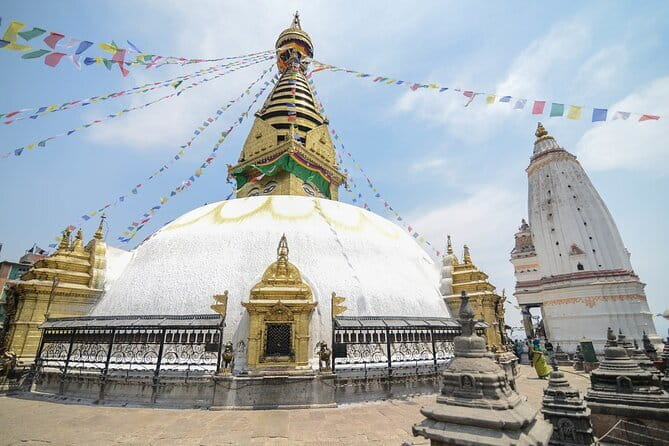
Swayambhunath: the view that closes the day
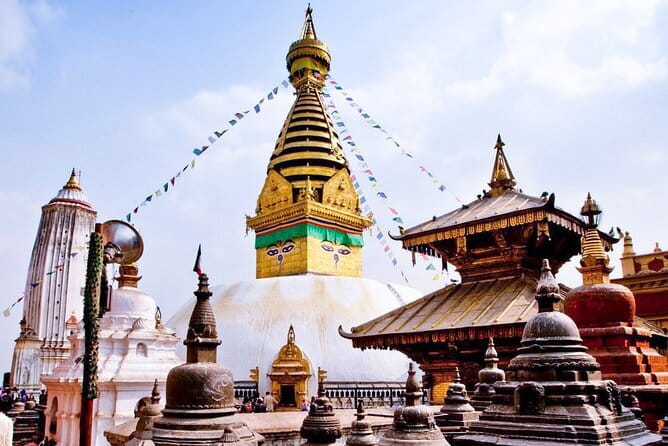
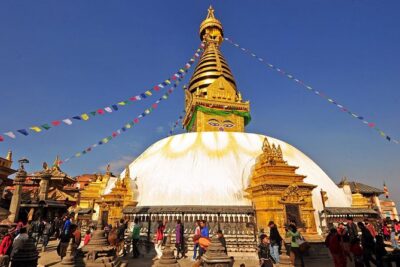
Swayambhunath, also called the Monkey Temple, sits on a hill above Kathmandu. The stupa, shrines, and city views make this a strong final stop.
The panoramic outlook gives you a chance to understand the valley as a whole after spending the day moving through its historic centers. From the hill, Kathmandu appears as a broad urban basin surrounded by mountains, though visibility can vary.
The site includes stairs and uphill movement, so the final hour may feel more demanding after six earlier stops. Take your time where you can, watch your footing, and stay aware of the schedule.
The religious and architectural details deserve attention too. Swayambhunath combines Buddhist and Hindu elements, reflecting the way traditions have developed side by side in the Kathmandu Valley. A guide can help explain that shared setting rather than reducing the visit to a viewpoint and a few photographs.
Ending here makes sense. You finish with a wide view and a final lesson in the valley’s religious mix. Just remember that the schedule may not leave much room to linger after sunset or wait for changing light.
What the $99 price really covers
At $99 per person, this is not the cheapest way to see Kathmandu’s monuments. The value comes from the scope of the day and the guide’s role.
You are paying for a planned route through all seven UNESCO sites, plus a multilingual male or female guide. That can save considerable effort if you have only one full day and want an explanation at each place rather than a series of unconnected visits.
The price does not include lunch, dinner, tips, personal expenses, or admission tickets. An air-conditioned vehicle is also specifically excluded. Since pickup is offered but the stated meeting point is Kaiser Library, confirm the pickup arrangement and transport details before you go.
The size limit is listed as 100 people, which is a large possible maximum. That does not mean every departure will have 100 people, but you should ask about the expected group size if personal attention is important to you. The strong feedback about Deepak and Rabina suggests a guide-led experience can feel personal, yet group size will affect how easily you can hear explanations and ask questions.
Who will enjoy this day most
I would recommend this tour to you if you want a broad first look at Kathmandu and prefer having the cultural background explained as you go. It suits people with limited time, first visits to Nepal, and anyone who would rather not arrange seven separate site visits.
It is also a good fit if you care about the difference between a palace square and a functioning temple. The itinerary includes royal architecture, Buddhist monuments, Hindu shrines, ritual settings, and a hilltop view, giving you a useful introduction to the valley’s many traditions.
I would hesitate if you want a slow, unhurried day. Seven sites in nine hours means each stop has a firm limit. People who need extended rest periods, long meals, or quiet photography time may prefer to split the route across two days.
The schedule also requires some flexibility. Traffic between sites can affect how long you actually spend at each place, and the excluded admission fees and vehicle details make it important to check the practical arrangements before departure.
Simple ways to get more from the tour
Wear shoes that can handle a full day of walking and temple approaches. The itinerary includes courtyards, historic districts, and a hilltop site, so comfort will matter more than dressing for photographs alone.
Carry money for entrance tickets, food, personal purchases, and a tip if you feel the guide has served you well. Lunch and dinner are not provided, so ask how the meal break fits into the nine-hour schedule.
Keep your expectations realistic. You will see the major features of each UNESCO site, but you may not have time for every museum room, side shrine, monastery, or market lane.
If Deepak is your guide, ask him questions early in the day. His strongest quality is his personal explanation of Nepalese culture, and the experience will be better if you treat the day as a conversation rather than simply following a route.
If Rabina leads your visit, her background in Nepalese history and willingness to allow free time can help you balance instruction with independent looking. The tour offers male and female guides, so you can confirm who will lead before setting out.
Free cancellation is available if you cancel at least 24 hours before the start time. Changes or cancellations inside that window are not refunded, and the cut-off follows local time.
Should you book the Kathmandu UNESCO World Heritage Tour?
Book it if you have one full day and want the Kathmandu Valley’s major UNESCO sites explained in a single sweep. The combination of three durbar squares, Changu Narayan, Pashupatinath, Boudhanath, and Swayambhunath gives you an unusually broad introduction for the price.
The best reason to choose it is the guide. Deepak Kushwaha is associated with warm, personal explanations, and Rabina offers another strong guiding option. Their role matters because these sites are full of symbols and rituals that are easy to miss when you visit alone.
Skip it, or split the sights over several days, if your ideal day is slow and spacious. This is a packed cultural survey. Go in prepared for extra entrance costs, a long schedule, and limited time at each stop, and you’ll get a practical first chapter in Kathmandu’s heritage.
FAQ
How long does the Kathmandu UNESCO World Heritage Tour last?
The tour lasts approximately nine hours.
Which sites are included?
The route includes Kathmandu Durbar Square, Patan Durbar Square, Bhaktapur Durbar Square, Changu Narayan Temple, Pashupatinath Temple, Boudhanath Stupa, and Swayambhunath.
Where does the tour start and finish?
It starts at Kaiser Library, P878+H4G, Kanti Path, Kathmandu 44600, Nepal. The activity ends back at the meeting point.
Are admission tickets included?
No. Admission tickets for the sites are not included in the tour price.
Is food included?
No. Lunch and dinner are not included. Tips, gratuities, and personal expenses are also extra.
What is the cancellation policy?
You can receive a full refund if you cancel at least 24 hours before the experience start time. Cancellations or changes made less than 24 hours in advance are not refunded or accepted.
Just added in Kathmandu
- Kathmandu to Chitwan Tour by Tourist Bus – A Convenient and Affordable Way★ 4.0 · 4 reviews
- Changunarayan Hill to Telkot Hike Near Kathmandu Day Tour★ 5.0 · 6 reviews
- Mt Everest Base CampTrek | Budget Package★ 5.0 · 4 reviews
- Chitwan Jungle Safari 3-Day Tour★ 5.0 · 9 reviews
- Chandragiri Hill Station Tour by Cable Car★ 5.0 · 4 reviews
- Chandragiri Hills cable car day trip, private car with driver from Kathmandu★ 5.0 · 8 reviews
- Chandragiri to Taudaha Nature Day Hiking from Kathmandu★ 5.0 · 13 reviews
- Chandragiri Cable Car & Monkey Temple Private Guided Day Tour★ 5.0 · 5 reviews
Kathmandu UNESCO Heritage Tours, compared.
Private Kathmandu Sightseeing Tour | UNESCO World Heritage sites
Read our review →
Full Day 7 UNESCO Tour with Lunch – Private/Group
Read our review →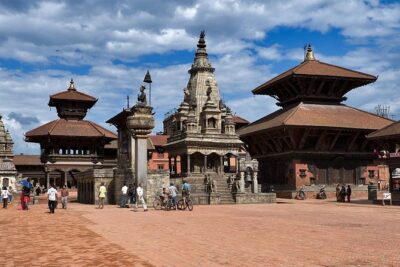
Private Bhaktapur and Nagarkot Day Tour From Kathmandu
Read our review →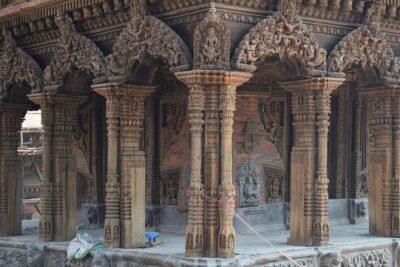
Kathmandu Spiritual Sites: Bodhnath & Pashupatinath Tour
Read our review →
Day Trip to Bhaktapur and Panauti from Kathmandu
Read our review →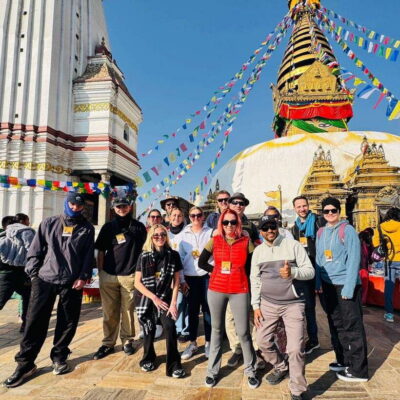
Browse the lists this tour appears in