
Reviewed · KATHMANDU UNESCO HERITAGE TOURS
Patan Heritage Tour – Private/Small Group
Patan is at its best on foot, where a short lane can lead from a royal courtyard to a working neighborhood shrine. This small-group walk connects the Golden Temple, Patan Durbar Square, and the excellent Patan Museum while explaining the Newar customs behind what you see. I like the access to narrow passages and courtyards, and I like that guides such as Santosh, Baje, and Shreya Karki adjust the pace and level of detail to your interests.
The tour also offers unusually good value at $5 per person, especially with a maximum of five participants. You should budget extra for entrance fees, though: the Durbar Square charge is listed at NRP 1,000, about $9, and the tour does not include coffee, tea, or other refreshments.
Five things to know before walking into Patan
- The small group matters: With no more than five people, you can ask questions and follow your guide through tight lanes without being part of a large crowd.
- Newar culture is the main story: Expect discussion of Vajrayana Buddhism, Hindu traditions, local customs, and the way they continue to shape daily life.
- The Golden Temple is a key stop: This 14th-century Newari Buddhist monastery gives the walk its strongest religious focus.
- Patan Museum deserves the full hour: Its collection of sacred Nepalese art is housed in a former Malla royal residence.
- The tour is flexible: Guides have adjusted the detail, route pace, and time spent according to what visitors wanted to see and learn.
Why Patan works so well as a walking tour
Patan, also called Lalitpur, rewards slow looking. The important sights are not isolated behind wide lawns or separated by long drives. They sit among lanes, shrines, courtyards, gates, homes, shops, and places of worship.
That setting gives the tour a useful purpose. You are not only checking off a monastery, a palace, and a museum. You are learning how those places fit into the city around them. A guide can point out the connection between religious buildings and daily routines, then explain why a small shrine matters even when it receives little attention from people passing by.
I particularly like the way this walk begins at Patan Dhoka rather than dropping you directly at the main square. The gate offers a starting point for the city’s story. You learn how the Malla kings arranged security around old Patan and hear about the murals on the gate walls before moving toward the central sights.
The tour lasts about three hours, though the scheduled stops add up to roughly two and a half hours. That small difference gives the guide room to manage the walk, questions, and transitions. One useful feature is the flexible pace. If you want more detail about Buddhism, art, architecture, or local customs, you can ask for it. If you prefer to keep moving, the guide can avoid turning each stop into a lecture.
More temple and square walks around Kathmandu:
- Private Kathmandu Sightseeing Tour | UNESCO World Heritage sites
★ 5.0 · 756 reviews - Kathmandu: Full Day 7 UNESCO Tour with Lunch – Private/Group
★ 5.0 · 415 reviews - Private Bhaktapur and Nagarkot Day Tour From Kathmandu
★ 5.0 · 305 reviews
Patan Dhoka and Ganesh Mandir: starting with local symbols
The meeting point is Patan Dhoka, Lalitpur 44600, and the walk ends back there. At the gate, your guide introduces the old city and explains how the Malla kings protected Patan. This is a practical opening because it gives you a sense of the city as a planned and defended place, rather than simply a collection of monuments.
From there, you pass Ganesh Mandir on the way to the Golden Temple. The shrine is dedicated to Lord Ganesha, and the guide shares the familiar story of how Ganesha received an elephant head. The stop lasts about 15 minutes and has no admission charge.
I like this first stop because it starts with a compact story that many people can follow, even if they know little about Hindu traditions. It also shows how religious sites appear within the city rather than only inside major temple compounds.
Do not expect a long visit here. Ganesh Mandir is an introductory stop, not the main attraction. Its value comes from the explanation and from seeing how a small shrine fits into the route through Patan.
The Golden Temple and Patan’s Buddhist traditions
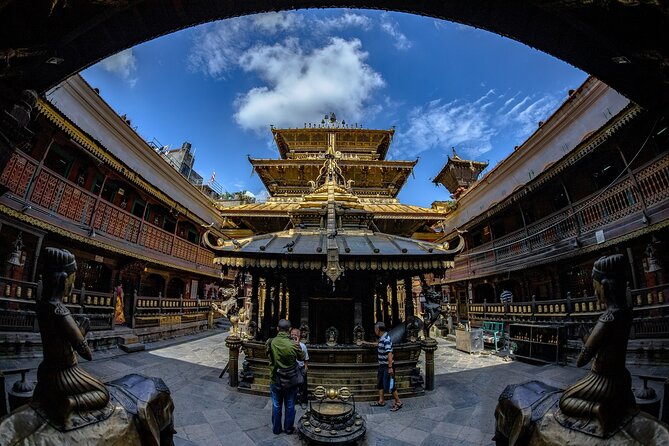
The Golden Temple, formally Hiranya Varna Mahavihar, is a 14th-century Newari Buddhist monastery. The visit lasts about 15 minutes, with admission not included in the $5 tour price.
This is one of the most important stops for understanding the religious character of Patan. The guide discusses Buddha’s teachings and Vajrayana Buddhism, including the relationship between local Newar practice and wider Buddhist traditions. The tour description also refers to Vajrayana as influenced by Theravada, so this is a good place to ask for clarification if you want to understand the distinctions.
The short scheduled time means you will get an introduction rather than a long religious study. Still, the stop gives the rest of the walk a useful frame. Patan is not presented only as an old royal city. Its Buddhist traditions are treated as part of the city’s living identity.
Your guide may be especially helpful here if you want to ask about the difference between Hindu and Buddhist customs in the Kathmandu Valley. Several guides associated with this experience, including Santosh and Shreya Karki, have been praised for explaining both traditions clearly and patiently.
Because admission is not included, check the amount requested at the entrance on the day of your visit. The supplied information specifically lists entrance costs for Durbar Square, but it does not give a separate Golden Temple fee.
Patan Durbar Square: royal architecture with an extra charge
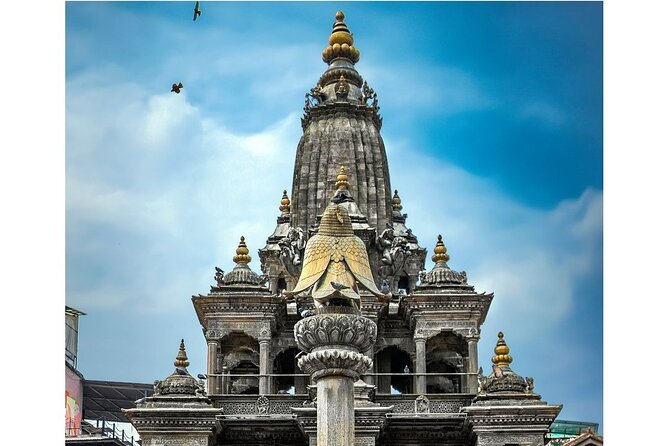
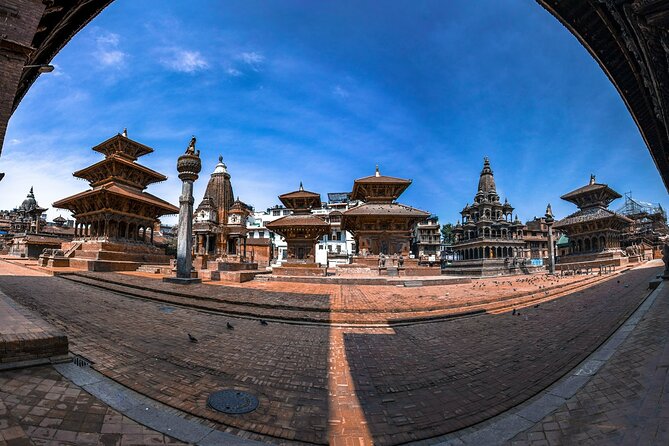
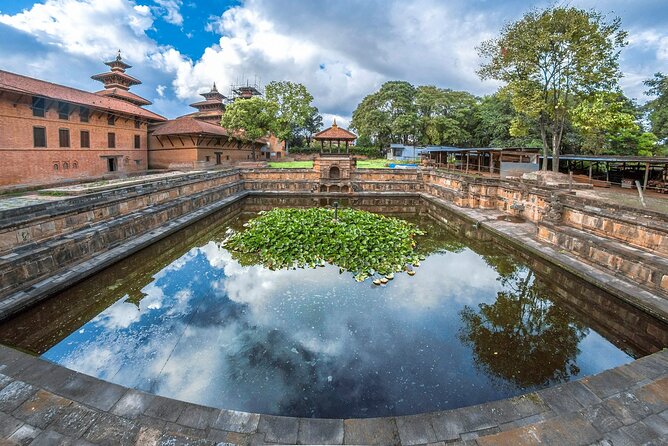
Patan Durbar Square was the royal palace area where the Malla kings of Patan lived. The scheduled visit lasts about 45 minutes, and entrance is not included.
This is the grandest part of the walk. You examine Nepalese architecture, shrines, palace buildings, and the history of Kathmandu Valley through the former royal center. A guide adds value here because the square can otherwise become a visual overload of carved wood, brick buildings, statues, and religious structures.
I would use this part of the tour to ask specific questions. You can ask how the palace complex functioned, what the shrines represent, and how the Malla period shaped Patan. The route is not only about looking at façades. It is about tying the buildings to royal power, worship, and city life.
The important practical issue is the admission fee. The tour information lists NRP 1,000, about $9, payable in cash at the entrance. That fee is higher than the tour itself, so the total cost is not really $5. Plan for at least $14 per person once the listed Durbar Square charge is added, and carry Nepalese rupees.
You are also encouraged to make a donation of at least NRP 100 to the Royal Kumari. The information provided does not guarantee that you will see the Kumari, but one account describes seeing the living goddess while not receiving a blessing because a ritual was taking place. Treat that as a possible part of the setting, not a promised feature.
A few more things to do in Kathmandu worth a look
- UNESCO Seven World Heritage Tour in Kathmandu
★ 5.0 · 253 reviews - Kathmandu Private Sightseeing Tour | UNESCO World Heritage Sites
★ 5.0 · 109 reviews - Kathmandu: Full Day Private Top 4 UNESCO Heritage Tour W/Lunch.
★ 5.0 · 86 reviews - Kathmandu World Heritage Tour
★ 5.0 · 74 reviews
Patan Museum: the strongest stop for art lovers
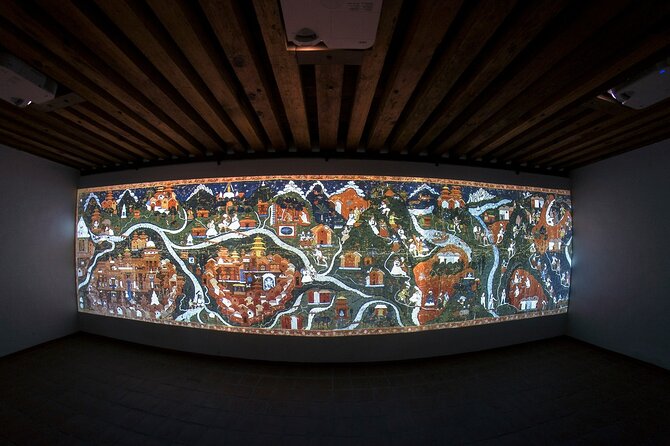
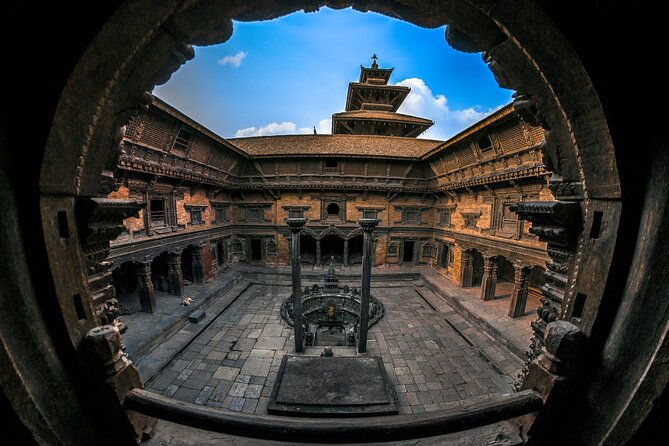
The Patan Museum receives about one hour, making it the longest stop on the route. Its collection focuses on Nepal’s traditional sacred arts, and the museum occupies an old residential court within a former Malla royal palace.
This is where the tour shifts from street observation to careful viewing. You can take your time with the objects and then connect them to the temples and shrines you have just seen. If you want to understand Nepalese art rather than simply photograph it, the museum is likely to be the most useful stop.
I like that the museum is placed after the Durbar Square visit. The architecture and religious buildings give you visual context, while the museum helps explain the artistic tradition behind them. You may notice details in sculpture, metalwork, or architectural decoration with more purpose after the guide has discussed Patan’s religious life.
The museum is also a good reason to choose this tour over a quick independent walk through the square. You still need to give yourself time to look. One hour can pass quickly if you stop for labels and details, so keep your questions focused if you also want time for the outdoor parts of the route.
The entrance fee is not included. The supplied information does not state the museum’s separate admission price, so carry cash and confirm the current amount at the entrance.
The lanes are part of the real experience
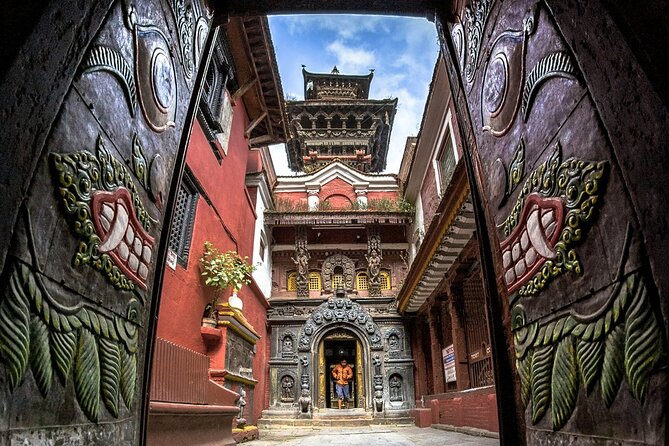
The main monuments are only half the reason to book. Guides have led people through narrow alleys, small courtyards, and passages that are easy to miss when walking alone. This is where the tour becomes more personal and less like a basic palace-square visit.
Baje, in particular, has been associated with a strong knowledge of Patan’s streets. Santosh has also guided walks through small lanes while explaining Hinduism, Buddhism, and local life. The important point is not simply the guide’s name. It is the format: a group of five or fewer makes it easier to pause in a tight space, ask a question, or change the level of detail without holding up a large party.
You should expect an active walking experience through both small and large parts of the city. The information does not give a distance or accessibility rating, but most people can participate, and service animals are allowed. Since the route uses streets, alleys, courtyards, and historic sites, comfortable shoes are a sensible choice.
The walk returns to Patan Dhoka. That makes the start and finish simple, especially if you are using public transportation. The meeting point is near public transportation, but pickup from a hotel is not listed.
Guides and the value of a flexible small group
The experience is led in English, and several guide names appear in the available feedback: Baje, Santosh or Santos, and Shreya Karki. Names may depend on the date and assignment, so you should not book expecting one specific person unless the operator confirms it.
The strongest feature is the guide’s ability to tailor the walk. One guide adjusted the level of detail based on personal interests, and the duration depended on how much the group wanted to see and learn. Another guided people through lanes they would not have found alone. That flexibility is useful if you have a particular interest in Buddhism, Hinduism, architecture, royal history, or Newar daily life.
A small group also helps with conversation. You can ask why a shrine is important, how a ritual works, or what a symbol means without waiting through a long list of other questions. If you prefer a quiet sightseeing walk, the guide can likely keep explanations shorter, but the format is best for people who enjoy interaction.
The rating information is very strong, with 100 percent recommending the experience and 14 reviews recorded at a five-star level. The most consistent praise focuses on personal attention, useful explanations, the narrow lanes, and guides who create a friendly and respectful atmosphere. Those are the qualities I would value most here, since the monuments themselves can be visited without a tour.
Is $5 really the full cost?
At $5 per person, the guiding fee is remarkably low for a three-hour private or small-group walk. Group discounts are available, and the maximum group size is five. For a solo visitor or couple, this can be a good way to get context without paying for a full private guide.
But the headline price needs a little adjustment. Patan Durbar Square requires NRP 1,000 in cash, listed as about $9, and the tour does not include entrance fees. The recommended donation to the Royal Kumari is extra, and any Golden Temple or museum admission fee should be checked separately because no amount is provided.
Coffee and tea are also not included. That is hardly a serious drawback on a three-hour walk, but it means you should not expect refreshments as part of the booking.
The best value comes when you care about explanation and access to less obvious lanes. If you only want to stand in Durbar Square for photographs, the added fee may feel less worthwhile. If you want to understand how Buddhist, Hindu, royal, and artistic traditions overlap in Patan, the price is easy to justify.
Who should book this Patan walk?
I would recommend it to first-time visitors to Patan, solo visitors who want company, couples, and anyone interested in Newar culture. It also suits people who prefer a local guide to a large coach tour.
Art lovers should pay special attention to the museum portion. People interested in religion will get the most from the Golden Temple and the discussion of Buddha’s teachings, Vajrayana Buddhism, and Hindu practice. Photographers may enjoy the contrast between palace courtyards, shrines, gates, and narrow lanes, though photography rules can vary at religious sites.
You may want a different plan if you dislike walking, want a guaranteed visit with the Kumari, or need every entrance fee included upfront. The Kumari appearance and blessing are not guaranteed, and the listed cost does not cover the main Durbar Square admission.
The tour is confirmed at booking, and free cancellation is available up to 24 hours before the start time. Cancellations made less than 24 hours ahead are not refunded, and changes inside that window are not accepted.
Should you book it?
Book this tour if you want Patan explained rather than simply photographed. The combination of a very small group, an English-speaking guide, the Golden Temple, Durbar Square, Patan Museum, and side streets gives you a fuller sense of the city than a quick self-guided loop.
The main caution is cost planning. The tour is $5, but the NRP 1,000 Durbar Square admission and other possible fees can make the final amount much higher. Bring cash, allow about three hours, and choose it for the stories, religious context, and local lanes. If those are what you want, this is a strong-value introduction to Patan.
FAQ
How long does the Patan Heritage Tour last?
The tour lasts approximately three hours. The scheduled stops include about 15 minutes at Ganesh Mandir, 15 minutes at the Golden Temple, 45 minutes at Patan Durbar Square, one hour at Patan Museum, and 15 minutes at Patan Dhoka.
Where does the tour begin and end?
The tour begins at Patan Dhoka, Lalitpur 44600, Nepal, and ends back at the same meeting point.
How many people can join the tour?
The tour has a maximum of five participants. Group discounts are available.
Is the entrance fee included?
No. The entrance to Patan Durbar Square is listed at NRP 1,000, about $9, and must be paid in cash at the entrance. Other entrance fees are also not included.
Is the tour conducted in English?
Yes. An English-speaking guide is included.
Can students receive the youth price?
The youth price applies to students who have a student card.
Can I cancel the booking for a refund?
Yes. You can cancel up to 24 hours before the experience start time for a full refund. Cancellations or changes made less than 24 hours before the start time are not accepted for a refund.
Just added in Kathmandu
- Traditional Momo Making Class★ 5.0 · 10 reviews
- Women Empowerment Project(Nepali cooking class & jewelry workshop★ 5.0 · 15 reviews
- Kathmandu 2 Nights 3 Days Chitwan Jungle Safari Tour★ 5.0 · 9 reviews
- Walking tour of Kathmandu with awesome local guides★ 5.0 · 4 reviews
- Wildlife Adventure in Chitwan Nepal★ 4.0 · 4 reviews
- Kathmandu to Pokhara Premium sofa bus ticket★ 4.0 · 17 reviews
- Regular Yoga for all levels of practitioners in Kathmandu★ 5.0 · 4 reviews
- Kathmandu Street Food Walking Tour – Eat Like a Local★ 5.0 · 3 reviews
Kathmandu UNESCO Heritage Tours, compared.
Private Kathmandu Sightseeing Tour | UNESCO World Heritage sites
Read our review →
Full Day 7 UNESCO Tour with Lunch – Private/Group
Read our review →
Private Bhaktapur and Nagarkot Day Tour From Kathmandu
Read our review →
Kathmandu Spiritual Sites: Bodhnath & Pashupatinath Tour
Read our review →
Day Trip to Bhaktapur and Panauti from Kathmandu
Read our review →
Browse the lists this tour appears in