
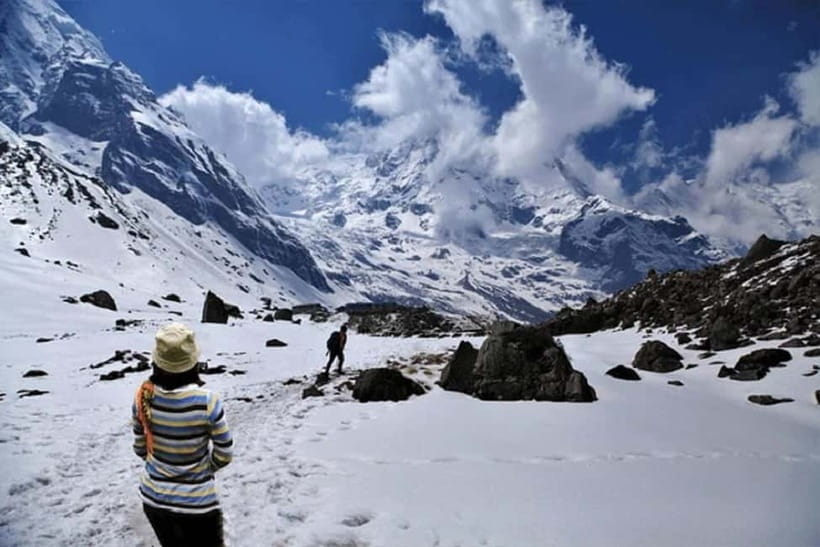
Reviewed · ANNAPURNA BASE CAMP TREKS
Pokhara: 7-Day Annapurna Base Camp Trek via Ghandruk
Annapurna Base Camp is the prize here: you sleep at 4,130 meters inside a huge ring of snowy peaks, then watch sunrise brighten Annapurna I, Machapuchare, and Hiunchuli. The approach mixes Gurung villages, rice terraces, stone stairways, bamboo, and rhododendron forest.
I like the compact seven-day plan and the Ghandruk finish, which adds culture and a change of scenery after the mountain trail. I also like that the package includes permits, meals, tea house lodging, transport, a registered guide, and trekking gear such as a sleeping bag or trekking stick when needed. The main caution is that much of the route to ABC is retraced on the way back, and one serious complaint concerns poor transport coordination and extra charges for Wi-Fi and drinking water.
Key points to know before booking
- The sunrise at Annapurna Base Camp is the main event: You wake inside the Annapurna Sanctuary amphitheater, surrounded by high peaks.
- The route begins gently at Kande: Australian Camp and Pothana offer ridge views before the descent to Landruk.
- The hardest day is usually the climb toward Deurali: Expect six to seven hours through forest, stairs, and rising altitude.
- The return is partly the same trail: You retrace the Modi Khola valley before turning toward Ghandruk.
- The $179 price covers many basics: Permits, meals, lodging, transport, guide costs, taxes, and some gear are included.
- You still need a travel budget: Insurance, snacks, drinks, Wi-Fi, bottled or filtered water, and a porter are not fully covered.
Why Annapurna Base Camp is worth seven walking days
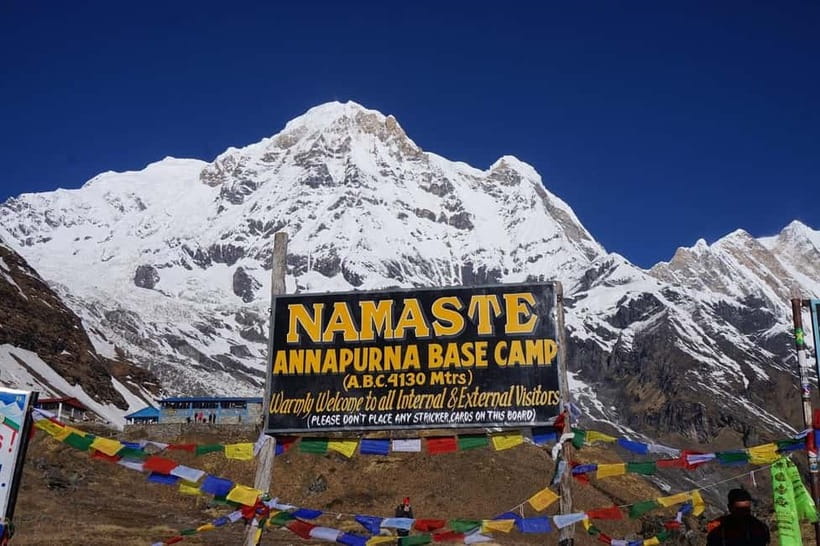
This trek gives you a lot of Nepal in a short package. You begin with lower mountain villages and farm terraces, pass through thick forest, enter an alpine valley, and finish among some of the Himalaya’s most recognizable peaks.
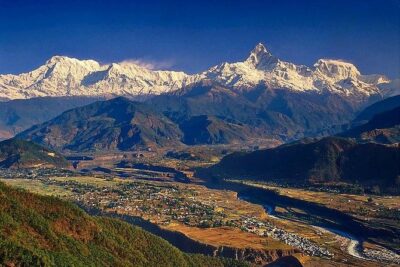
The destination is special because Annapurna Base Camp is not simply a viewpoint. It sits inside a natural amphitheater, with mountain walls rising around you. Annapurna I, Machapuchare, Hiunchuli, and nearby summits feel close from the camp. The sunrise is the clear highlight, but the setting at the end of day four is just as memorable.
You should also understand what this is not. It is not a seven-day circuit with a different route every day. The trail to ABC follows the Modi Khola valley, so the descent retraces much of the same path. The Ghandruk section gives the return a fresh finish, but the middle portion is an out-and-back trek.
The private group format is useful if you want a more personal pace. Your guide speaks English, Hindi, or Nepali, and the guide is described as government registered. No individual guide name is provided, so confirm the guide’s name and experience before departure.
Other Annapurna routes from Pokhara:
- Kathmandu/Pokhara: 5-Day Annapurna Base Camp (ABC) Trek
★ 4.9 · 72 reviews - Private 7 – Day Annapurna Base Camp Trekking
★ 5.0 · 50 reviews - Annapurna Base Camp Trek (8 days)
★ 5.0 · 45 reviews
Day 1: Kande to Australian Camp, Pothana, and Landruk
Your first morning begins with about a one-hour drive from Pokhara to Kande. Pickup is offered from hotels in the Lakeside and Sarangkot areas, as well as Pokhara International Airport. The guide and car are scheduled to arrive five minutes early with a sign showing your name and booking details.
From Kande, you walk toward Australian Camp and Pothana. This is a pleasant opening because the trail starts with ridge walking and mountain views rather than a long road march. Forest and village paths soon replace the vehicle route.
The day takes about four to five hours. You then descend toward Landruk, a Gurung village at 1,565 meters. That descent matters: the trek starts with a scenic ridge and ends lower, giving your legs an easier introduction before the longer climbing days.
Landruk is also your first good look at the local village setting. Expect a basic tea house or lodge rather than a hotel. The accommodation is practical, and you should be ready for simple rooms and paid extras such as Wi-Fi and drinking water.
Day 2: Landruk, Chhomrong, and Sinuwa
Day two is longer, at six to seven hours. You descend toward the river, then climb toward Chhomrong. This up and down pattern is typical of the Annapurna foothills, and it can feel tougher than a steady climb because your legs work both ways.
Chhomrong is an important point on the route. From here, the trail continues through forest and along stone steps toward Sinuwa at 2,340 meters. The stairways are a real feature of this trek. They are manageable with steady pacing, but they make comfortable shoes and trekking poles especially useful.
The move from Landruk to Sinuwa also shows how quickly the setting changes. You leave open farmland and village views, then enter thicker woodland. Bamboo and rhododendron become more common as you follow the route into the sanctuary.
Sinuwa is a useful overnight stop because it places you at the edge of the higher section without forcing one huge day from the lower villages. Still, you are gaining altitude quickly over the first two days. Tell your guide if you develop a headache, unusual fatigue, or other altitude-related symptoms.
Day 3: Bamboo and Dovan to Deurali
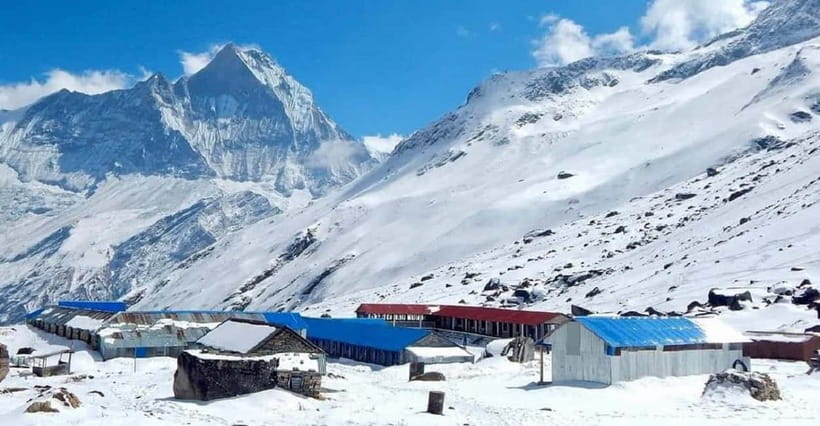
This is another six to seven-hour walking day. From Sinuwa, you follow the Modi Khola valley through bamboo and rhododendron forest, passing Bamboo and Dovan before reaching Deurali at 3,230 meters.
The forest keeps the route cool in places, but the trail is not flat. You can expect stone steps, uneven sections, and steady climbing. The river valley gives the day a clear sense of direction, but the altitude gradually becomes more important than the distance.
Deurali marks the approach to the alpine zone. The trees thin as you climb, and the open mountain setting begins to replace the enclosed forest. This is a good point to keep your pace slow and your layers handy. Temperatures can change sharply as you gain height.
The basic tea house system is part of the experience, but it also requires patience. Services are more limited high on the route, and costs for water, Wi-Fi, snacks, and drinks may be separate. Carry enough Nepalese cash for these small but steady expenses.
Other short treks out of Pokhara:
- Poon hill Trek 3 days
★ 5.0 · 176 reviews - Pokhara: 4-Day Ghorepani, Poonhill & Ghandruk Mountain Trek
★ 5.0 · 132 reviews - Ghorepani – Poon Hill Trek 3N-4D
★ 5.0 · 125 reviews - From Pokhara: 3-Day Ghorepani Poon Hill Trek with Guide
★ 4.9 · 68 reviews
Day 4: Deurali to Machapuchare Base Camp and ABC
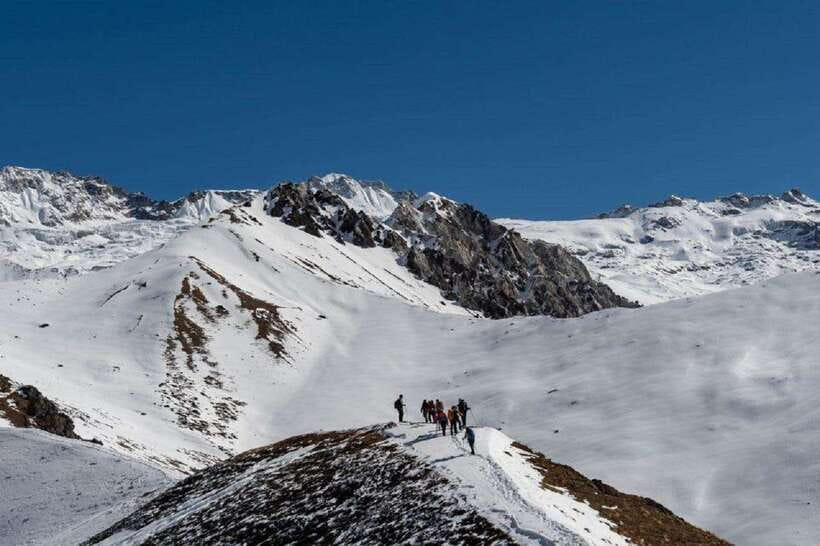
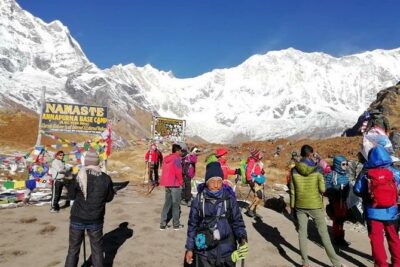
Day four is the shortest walking day by time, at five to six hours, but it is the trek’s most important physical test. You leave Deurali, enter more open alpine terrain, pass Machapuchare Base Camp, and continue to Annapurna Base Camp at 4,130 meters.
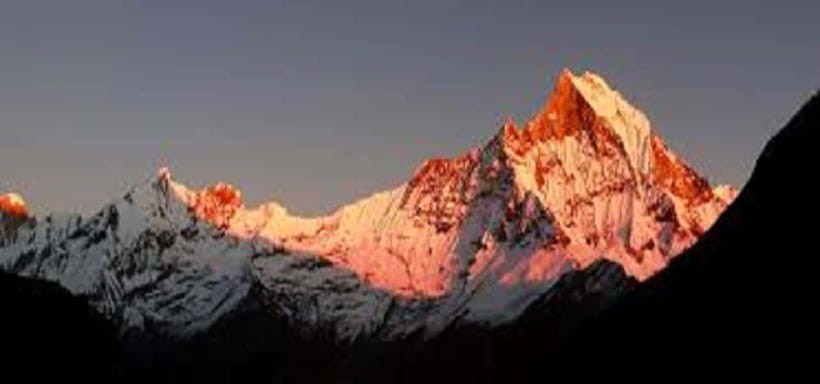
Machapuchare, also called Fishtail, is one of the defining peaks of the route. The mountain views become more dramatic as you leave the forest behind. The trail feels exposed in comparison with the earlier woodland, and the cold can be sharper.
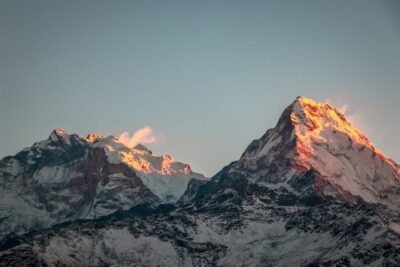
From Machapuchare Base Camp, you continue toward ABC. The destination is surrounded by a broad circle of snow-covered peaks. Annapurna I and Hiunchuli are among the major sights, with Machapuchare and other summits completing the mountain wall.
The overnight stay at 4,130 meters is the biggest consideration in this itinerary. You should already be prepared for cold conditions, even if the lower parts of the trek feel warm. Bring warm clothing, a jacket, a hat, gloves if needed, and a flashlight. A sleeping bag may be provided as part of the trekking gear, but confirm this before leaving Pokhara.
Sunrise inside the Annapurna Sanctuary
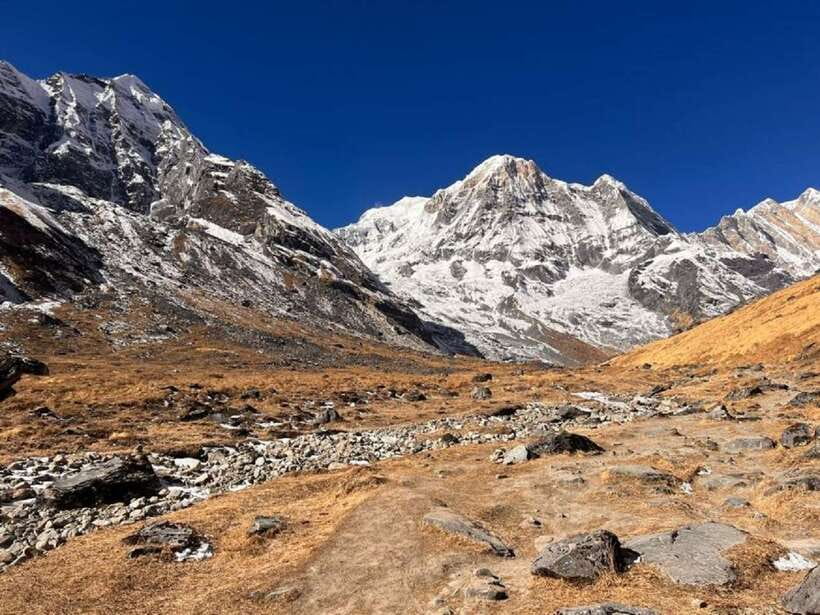
The sunrise at ABC is the reason many people accept the early wake-up and basic accommodation. From the camp, you look into a mountain amphitheater as the first light reaches the surrounding peaks.
This is a quiet, visual moment rather than a guided attraction with a fixed presentation. Your guide will help manage the morning routine, but the value is the setting itself. The combination of high altitude, snow peaks, and changing light is the trek’s strongest reward.
Cold is part of the deal. Keep your warm layer close rather than buried in your bag, and set aside your camera and headlamp the night before. A camera is listed as a useful item, but spare batteries or a power bank are sensible because charging may not be convenient.
Day 5: Descending from ABC through the Modi Khola valley
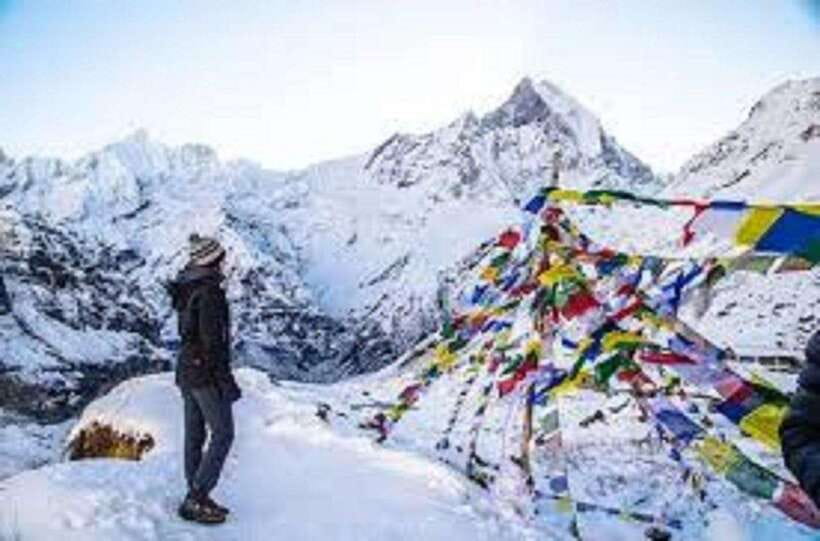
After sunrise, you descend through Machapuchare Base Camp, Deurali, and Dovan. The walking time is listed at six to seven hours, with an overnight stay at Bamboo or Sinuwa depending on pace.
This is a long downhill day. Descending can feel easier for your breathing, but it puts plenty of pressure on knees and toes. Trekking poles, good socks, and shoes with a firm grip will help.
The return route is partly the same route you used on the way up. That is not a flaw in the mountain geography, but it is important to know before booking. The promise of many different overnight villages can create the wrong expectation. The trek’s variety comes from moving through very different altitude zones, not from following a full loop.
Your exact stop may depend on walking speed and conditions. Sinuwa is lower than Bamboo and gives you a longer descent, while Bamboo breaks up the return. Ask the guide each morning where the group is aiming to sleep.
Day 6: Sinuwa to Chhomrong and Ghandruk
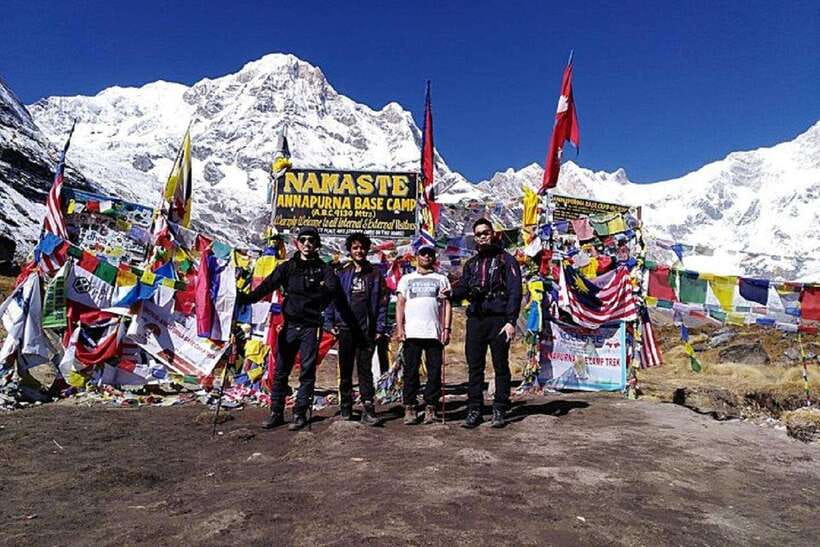
From Sinuwa, you retrace the trail toward Chhomrong, then take the route toward Ghandruk. This five to six-hour day gives the trek a welcome change after the out-and-back section.
Ghandruk sits at about 1,940 meters and is known for Gurung culture, village life, and mountain views. It is a fitting place to end the walking portion because the setting feels more settled and agricultural than ABC. You are back among homes, terraces, and local community life rather than high mountain lodges.
The Ghandruk finish also improves the trip’s cultural balance. The high point is dramatic, but the village sections help you understand how people live in the foothills. You see the connection between mountain routes, farming terraces, and traditional settlements.
Day six may feel easier than the high-altitude days, but it still includes stairs and uneven ground. Keep your daypack light and save some energy for the final descent.
Day 7: Ghandruk to Birethanti and Pokhara
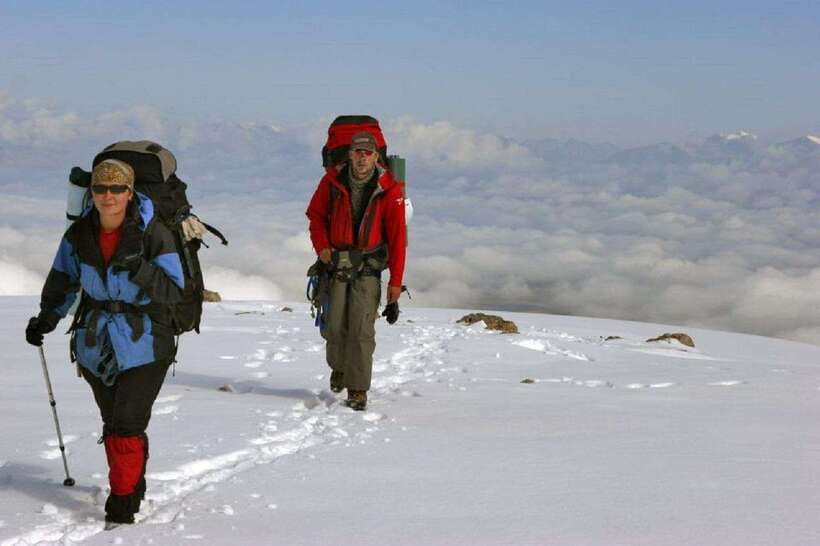
The last walking day takes three to four hours. You descend through villages and farmland to Birethanti at 1,025 meters, then drive about one hour back to Pokhara.
This is a short, practical finish. You get a final morning on foot rather than leaving Ghandruk by vehicle, and the road transfer begins only after the walk is complete. The trip ends in Pokhara.
Transport planning deserves direct attention. One account describes an early return caused by faster walking, followed by difficulty arranging a Jeep and an uncomfortable bus journey. I would confirm the return vehicle, especially if you have a flight, hotel booking, or other fixed plan in Pokhara. A private group does not automatically mean every transfer will be private, so ask exactly what is included.
What the $179 price really covers
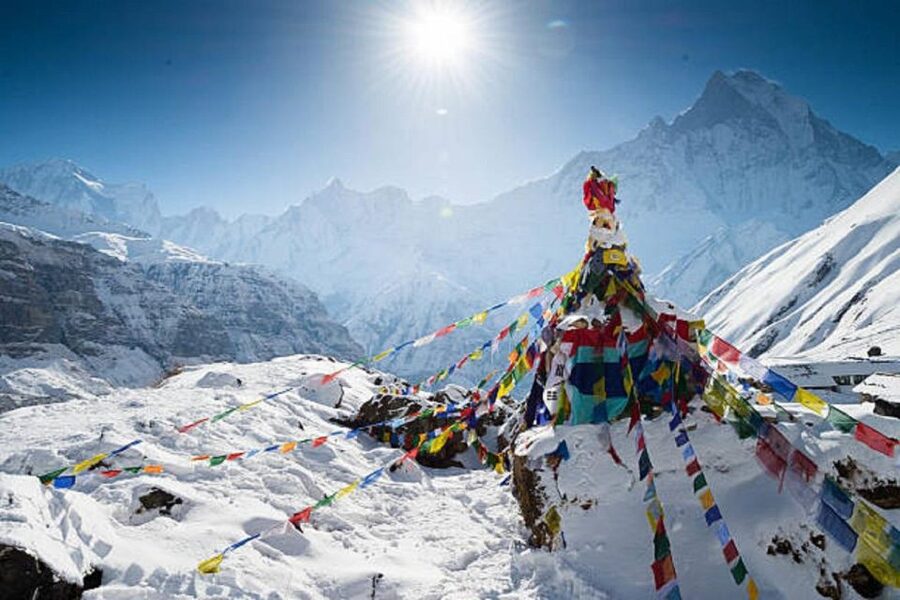
At $179 per person, this is a low-cost way to arrange a major Nepal trek, especially if the price is honored as described. The package includes:
- Round-trip transport between your Pokhara hotel, Pokhara International Airport, and the trail access points
- Trekking permits and local fees
- Basic tea house or lodge accommodation
- Meals during the trek, depending on the option selected
- A government-registered trekking guide
- Guide and porter food, lodging, insurance, salary, transport, and equipment
- Government and local taxes
- A first aid kit
- Trekking sticks and a sleeping bag when needed
The important phrase is depending on the option selected. Confirm whether your booking includes all meals before you pay. Also ask what type of room and bedding are included at ABC and the other tea houses.
A porter is listed separately at $20 per day if needed. That can be good value if you want to walk with only a small daypack. Do not assume porter service is included simply because guide support is included.
The package does not include travel insurance, personal snacks and drinks, emergency rescue costs, or all personal purchases. Wi-Fi and drinking water have also caused frustration, so budget for these separately. Travel insurance is mandatory, and it should cover trekking at the planned altitude and emergency evacuation.
Fitness, clothing, and small practical details
You need a reasonable level of fitness for six to seven-hour walking days, repeated stone steps, and a high overnight at 4,130 meters. You do not need to be a technical climber, but you should be comfortable walking for several hours on uneven mountain trails.
Pack for two climates. Lower sections may feel mild, while ABC can be very cold. Useful items include:
- Comfortable hiking shoes with good grip
- Warm layers, a jacket, and a hat
- Hiking pants and a change of clothes
- A flashlight or headlamp
- Cash for drinks, snacks, water, Wi-Fi, and other personal costs
- Passport or identification, with a copy accepted
- Hand sanitizer or tissues
- Camera and trekking gear
- A hair tie if you have long hair
You must provide a passport copy at least one day before the trek so permits can be arranged. That is a simple step, but missing it can delay the start.
Free cancellation is available up to 24 hours in advance, and you can reserve now and pay later. These terms help if your Pokhara plans are still moving, but they do not replace travel insurance.
Who should book this trek
I would recommend this trip to a fit first-time Himalayan trekker who wants ABC without committing to a much longer route. It suits you if you want a private group, guide support, basic lodging, mountain villages, and a clear seven-day schedule from Pokhara.
It is also a good choice if sunrise at ABC matters more to you than having a completely different trail every day. The route offers strong scenery and a satisfying cultural finish at Ghandruk.
I would be more cautious if you need polished transport, predictable hotel-style service, or every expense included in advance. Confirm meals, water, Wi-Fi, porter service, and the return vehicle in writing. If the operator cannot explain those points clearly, the low price may not feel like good value.
Should you book the 7-day Annapurna Base Camp trek?
Book it if your priority is the mountain experience: Annapurna Base Camp at sunrise, a private guide, Gurung villages, forest trails, and a compact itinerary from Pokhara. The scenery is the strongest part, and the route includes a useful mix of lower villages and high alpine views.
Before committing, ask for the guide’s name, confirm the meal plan, check exactly which transport is provided, and budget for water, Wi-Fi, snacks, insurance, and possible rescue costs. The trek itself offers excellent rewards, but the organization needs clear communication.
FAQ
How long does the Annapurna Base Camp trek take?
The trek lasts seven days, beginning with a drive from Pokhara to Kande and ending with the drive from Birethanti back to Pokhara.
What is the highest point of the trek?
Annapurna Base Camp is the highest overnight stop at 4,130 meters. Machapuchare Base Camp is reached earlier at about 3,700 meters.
Is transportation from Pokhara included?
Yes. Pickup is offered from hotels in the Pokhara Lakeside and Sarangkot areas, as well as Pokhara International Airport. Transport to the trek starting point and the return to Pokhara are included in the stated package.
Are meals and accommodation included?
Basic tea house or lodge accommodation is included. Meals are included depending on the option selected, so confirm your exact booking before departure.
Is travel insurance required?
Yes. Travel insurance is mandatory. Emergency rescue services are available if needed, but rescue costs are not included in the stated price.
Can I hire a porter?
Yes. A porter can be arranged for $20 per day if needed. Porter food, accommodation, insurance, salary, transportation, and equipment are listed among the covered guide and porter costs, but confirm how this applies to your personal booking.
More Hiking & Trekking in Pokhara
- Trekking in Annapurna/Langtang/Everest/Upper Mustang regions
★ 5.0 · 161 reviews - Pokhara: Annapurna Foothills Day Hike with Transfers
★ 5.0 · 100 reviews - Pokhara: 4-Day Mardi Himal Trek
★ 4.9 · 59 reviews - Pokhara: 3-Day Ghorephani and Poon Hill Private Trek
★ 5.0 · 58 reviews
Just added in Pokhara
- Tandem Paragliding in Pokhara★ 4.8 · 8 reviews
- Seti George and Thrilling Suspension Bridge Tour at Pokhara★ 4.5 · 3 reviews
- Pokhara: Suspension Bridge Private Tour- 30 Min Village Walk★ 4.8 · 9 reviews
- Pokhara: Visit Best Seven Tourist Destination by Sharing Bus★ 3.4 · 10 reviews
- Pokhara: Sunrise Tour to Sarangkot★ 5.0 · 3 reviews
- Pokhara Sightseeing By Bus: Day Trip★ 4.6 · 7 reviews
- Pokhara Sightseeing By Bus – Day Trip★ 3.2 · 8 reviews
- Pokhara Sarangkot : Cable Car (Himalayas) Sunrise Tour★ 5.0 · 6 reviews
Annapurna Base Camp Treks, compared.
Kathmandu to Annapurna Base Camp (ABC) 5-Day Trek
Read our review →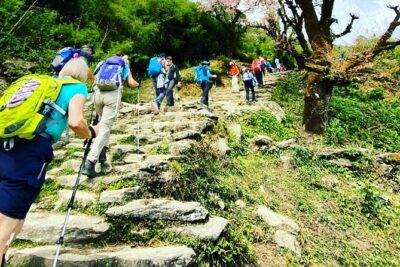
11-Day Hike Tour to Annapurna Base Camp Bliss in Kathmandu
Read our review →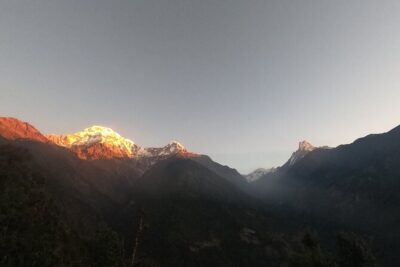
Browse the lists this tour appears in