
Reviewed · TOURS IN POKHARA
Pokhara Sightseeing By Bus – Day Trip
Pokhara’s big sights are scattered around the valley, and this $17 shared bus tour links them in one busy day. You’ll see caves, temples, a gorge, waterfalls, a lake, and hilltop views without arranging several separate rides.
I like the low price and the chance to ride with local and Indian passengers rather than only an international tour group. I also like the broad route, which gives you a useful first look at Pokhara. The main drawback is uneven organization: pickup has failed for some bookings, and the bus may leave you to visit sights on your own with little explanation.
Key points to know
- Eight major stops: The route includes Pumdikot Mahadev View Point, Bindyabashini Temple, Mahendra Cave, Seti River Gorge, Peace Stupa, Devi’s Fall, Gupteshwor Mahadev Cave, and Fewa Lake.
- Very low base price: The tour costs $17 per person, but entrance and monument charges add about $10.
- Shared local transport: You ride with people from Nepal, India, and other countries, which gives the day a more ordinary local feel.
- Seven hours on the road: This is a full sightseeing day, not a relaxed lakeside outing.
- Guide support is limited: An English-speaking guide or local assistant accompanies the bus, but detailed commentary is not guaranteed.
- Pickup needs care: Pickup is offered in Lakeside or at the tourist bus park, though you should confirm the exact meeting point and time.
What a $17 Pokhara bus day really delivers
This is best understood as a sightseeing shuttle with a guide, not a polished private tour. The bus does the hard work of connecting Pokhara’s spread-out sights, while you get a quick visit at each place.
That distinction matters. If you want transportation, a fixed route, and a full list of famous stops at the lowest possible price, this can be a smart choice. If you want long visits, thoughtful interpretation, or a guide walking beside you at every stop, you may find it thin.
The published duration is about seven hours. Pickup is listed for 9:30 AM from your hotel in Lakeside, though other wording describes an early-morning start. I would confirm the departure time directly before setting aside the day.
The group format is part of the point. You may share the bus with local and Indian passengers as well as people from other countries. That can feel more like ordinary regional transport than a private sightseeing bubble, but it also means the pace and communication may be less controlled.
A few more things to do in Pokhara worth a look
- 1-Day Private Dhampus Trekking Tour
★ 5.0 · 35 reviews - Pokhara: 1-Day Scenic Australian Camp & Dhampus Guided Hike
★ 4.9 · 24 reviews - Pokhara Sightseeing By Bus: Day Trip
★ 4.6 · 7 reviews
Pumdikot Mahadev View Point begins the wide-angle tour
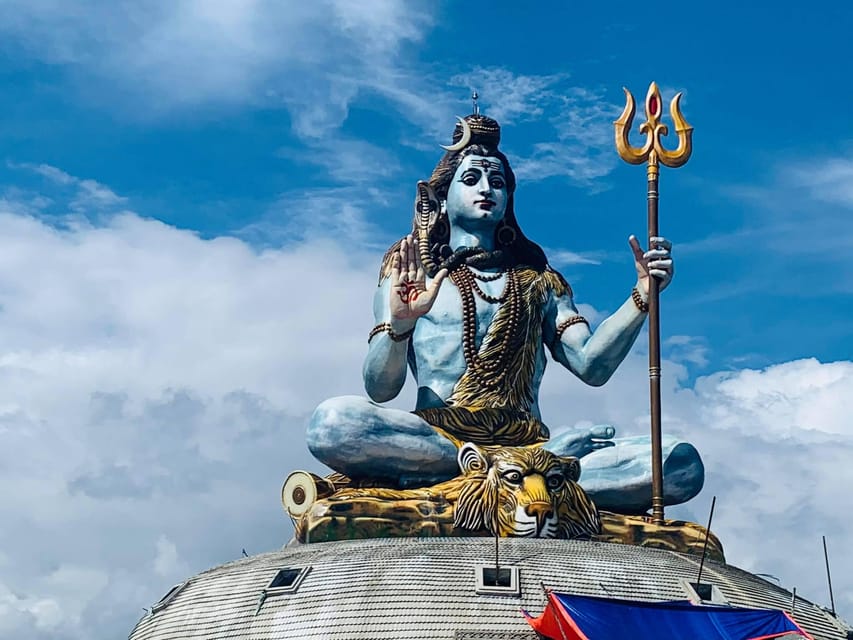
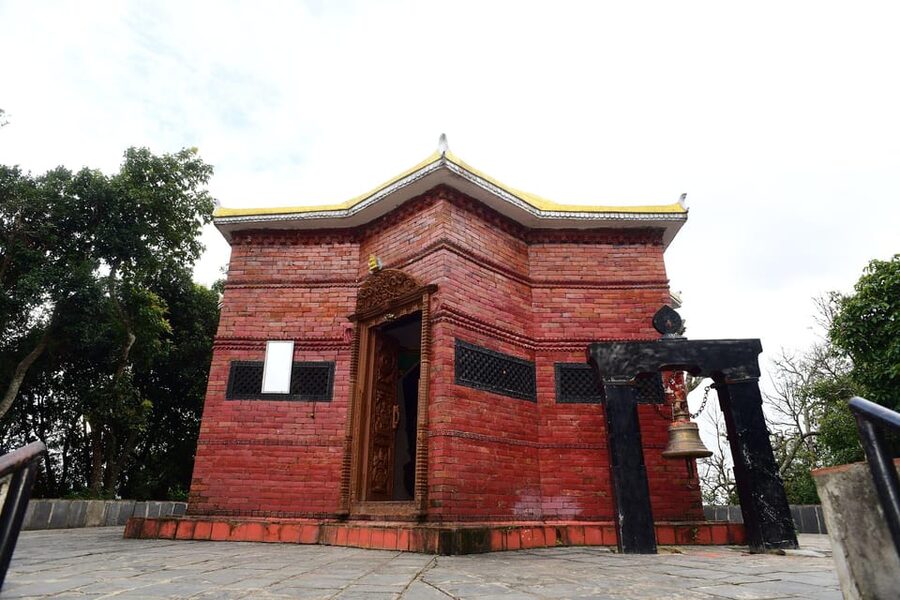
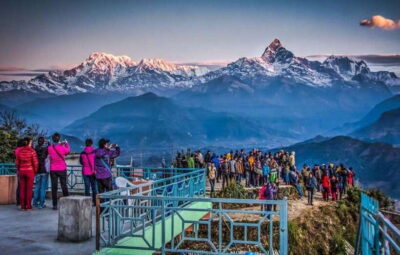
Pumdikot Mahadev View Point gives the day a high starting point, with broad views over Pokhara Valley. The stop is tied to the Mahadev shrine, so it combines a religious site with a scenic overlook.
This is the kind of place where a short visit can still work well. You can take in the valley, look around the temple area, and get a sense of Pokhara’s setting before moving on.
The practical issue is time. The route covers many stops in a single day, so do not expect a long pause for photography or quiet reflection. Keep your camera ready, but also watch the bus departure time.
Bindyabashini Temple adds a living religious stop
Bindyabashini Temple gives the route a cultural focus. It is not simply another viewpoint or natural attraction. You are visiting an active place of worship, so modest dress and respectful behavior are sensible.
This stop helps break up the caves and waterfalls with a look at local religious life. The tour’s value comes partly from this mix: you are not spending seven hours seeing only scenic points designed for visitors.
Because the tour is shared, the guide may provide only basic direction about where to go and when to return. Stay aware of the agreed meeting point. The bus may not wait for extended wandering.
Mahendra Cave keeps the route underground
Mahendra Cave brings a different mood to the day. Instead of open views, you enter a natural cave, where the attraction is the change in light, sound, and texture.
You should carry a small daypack and cash. The tour requires you to handle your own extra purchases and entrance charges, and the listed monument and admission costs total about $10 per person in addition to the tour price.
The cave is one reason this route feels varied. In a single day, you move from a hilltop shrine to an underground site, then back to open river and lake views. That range is useful if you have limited time in Pokhara.
Same base, a different kind of day:
- ZipFlyer Nepal – The World’s Steepest Zip-line
★ 5.0 · 608 reviews - Bungee Pokhara by HighGround Adventures
★ 5.0 · 366 reviews - From Pokhara: Sarangkot Sunrise Himalayas Tour
★ 4.7 · 218 reviews - ATV Adventure Tour in Pokhara, Nepal
★ 5.0 · 194 reviews
Seti River Gorge shows the city’s natural split
The Seti River Gorge is one of the tour’s sharper changes of scene. The Seti cuts through Pokhara in a narrow channel, creating dramatic drops and pale rock views in places where the city can otherwise feel calm and open.
The stop is likely to be fairly quick, given the number of sites on the route. You may have enough time to look, take photographs, and hear a short explanation, but this is not a long riverside walk.
I like this stop because it gives the day some physical character. The river is not just a pleasant backdrop. It helps explain why Pokhara has such striking changes in elevation and form within a compact urban area.
Peace Stupa needs a careful eye on the clock
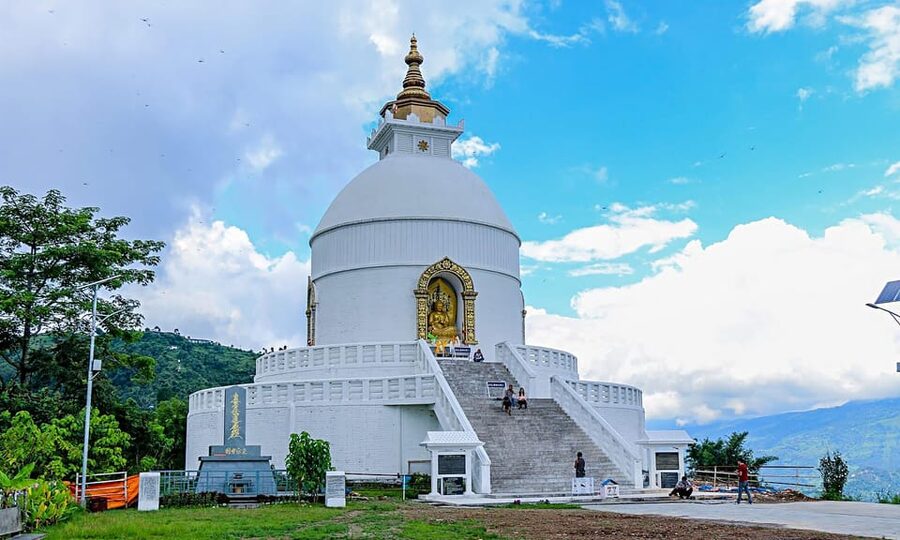
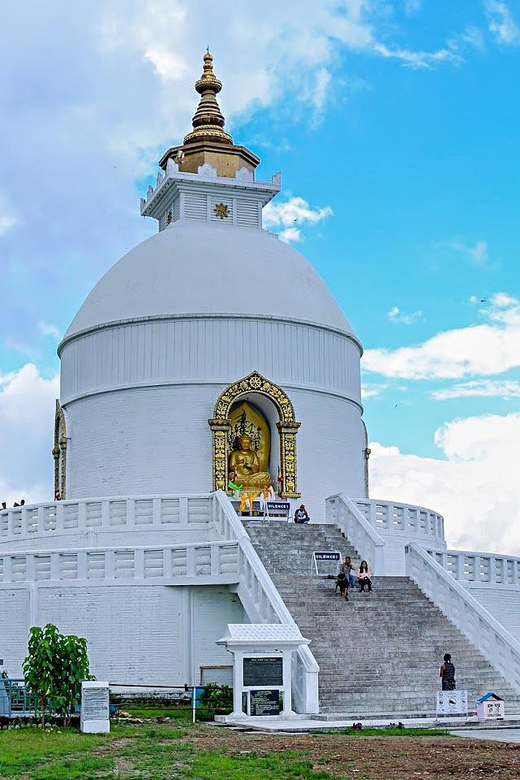
Peace Stupa is one of the day’s major scenic stops. Set above the valley, it is associated with Buddhist peace traditions and offers views toward Pokhara and the surrounding hills.
This is also where the schedule can feel tight. One account of the trip found the stop far too short, so you should not assume you will have time for an unhurried visit, extended photographs, and a long look around the stupa grounds.
The bus may simply drop you at the site, leaving you to explore without continuous guide commentary. That is not automatically a problem. Independent visitors can move at their own pace, but only if the allotted time is clear and the meeting point is obvious.
Devi’s Fall is brief, loud, and easy to pair with nearby sights
Devi’s Fall gives you one of Pokhara’s most familiar water attractions. Water passes through a narrow rocky channel and drops below ground level, making the sight more enclosed than a broad open waterfall.
This is a good short stop on a packed itinerary. You can see the water, take photographs, and move on without needing a long hike.
The attraction becomes more useful because it is paired with Gupteshwor Mahadev Cave nearby on the same general part of the route. You get two different experiences in one area: rushing water above ground and a religious cave below it.
Gupteshwor Mahadev Cave adds a sacred underground layer
Gupteshwor Mahadev Cave is more than a natural cavern. It has a religious purpose connected with Mahadev, and the cave setting gives the visit a distinctly different feel from the open-air viewpoints.
As with Mahendra Cave, entrance fees are not included in the $17 tour price. Keep cash with you, and remember that the stated extra cost is approximate rather than a fixed amount guaranteed for every visitor.
The cave may not suit anyone who dislikes confined spaces, though the available tour details do not provide a formal restriction beyond the fact that the trip is not suitable for wheelchair users. Treat the cave and temple area respectfully, and follow local instructions.
Fewa Lake closes the day on a gentler note
Fewa Lake is Pokhara’s best-known water setting and a natural way to finish a long sightseeing circuit. After caves, temple grounds, a gorge, and waterfalls, the lake gives you a more open and relaxed final stop.
Do not assume this includes a boat ride. The listed tour provides sightseeing by bus and a stop at Fewa Lake, but it does not include a separate boating activity.
The lake stop can also help you place the other sights on a map. Pokhara is not one compact attraction district. The day shows you how the valley’s religious sites, natural features, and visitor areas fit together.
Shared transport is both the strength and the catch
The bus keeps the price down. At $17 per person, the basic cost is much lower than arranging private transport for eight separate sights, especially if you are alone or traveling as a couple.
Add about $10 for entrance and monument fees, and the day comes to roughly $27 before meals and any other personal spending. That remains a strong price for a seven-hour route, provided the bus runs as planned and you are comfortable with quick stops.
The catch is reduced control. You cannot choose to linger at Peace Stupa, skip a cave, or spend extra time at the lake without affecting the group. The vehicle may also feel less comfortable than private transport, though no specific bus size or seating arrangement is provided.
The shared setup can be socially interesting. Riding with local and Indian passengers gives the day a more grounded feel than a group made only of foreign visitors. It also means English explanations may be brief, and the group may not move with the smooth rhythm of a private tour.
Guide support may mean direction, not a running lesson
The activity is described as having an English-speaking live guide, with a local assistant accompanying the bus. You can ask the assistant questions, which is useful when you need help finding a meeting point or understanding what happens next.
At the same time, you should set your expectations carefully. Detailed commentary is not assured, and the bus may leave you at a site while you explore independently. One account of the trip found no guide commentary and confusion about how the booking had been placed on the bus.
No guide name is supplied, so you cannot choose a particular guide in advance. If local history and detailed cultural context are central to your plans, a private guide or a smaller specialist tour may suit you better.
Pickup is the detail I would confirm twice
Hotel pickup is included from the Lakeside area, and pickup is also offered at the tourist bus park. In practice, you should not simply wait in your room and assume the bus will find you.
A past pickup problem involved a delay of about 20 minutes, followed by a phone call to the operator. The operator needed time to locate the reservation and then gave directions about where to go. Two other bookings were recorded as no-shows, with one person waiting at the agreed place and time without receiving notice.
That makes confirmation especially important. Ask for the exact pickup point, the expected time, and a local phone contact. If you are staying outside Lakeside, do not assume pickup is included.
The activity offers free cancellation up to 24 hours before departure and a reserve-now, pay-later option. Those terms help if your plans are still moving, but they do not remove the need to verify the actual departure arrangement.
Food, fees, and what to carry
Meals are not included. Food is available for purchase, and one account of the day describes a good lunch, but the tour details do not promise a particular restaurant or meal.
Carry cash for entrance fees, food, and small personal needs. The operator estimates monument and admission charges at about $10 per person. Since the tour price excludes these costs, budget closer to $27 before meals rather than thinking of the experience as a $17 all-in day.
A passport or other ID card is listed among the items to bring. You should also carry a daypack, water, and anything you need for several hours away from your hotel, though only the passport or ID, cash, and daypack are specifically required.
Wear practical clothing for temple visits and cave stops. The tour details do not provide a dress code, but respectful clothing is a sensible choice at Bindyabashini Temple and Gupteshwor Mahadev Cave.
Who will get the most from this tour
I would choose this bus day if I had limited time in Pokhara and wanted to cover the main sights without paying for private transport. It suits solo visitors, budget-minded couples, and anyone who enjoys a shared ride with a local flavor.
It also works well as a first look at the city. You can use the day to decide which places deserve a later, slower visit, especially Peace Stupa, Fewa Lake, or one of the caves.
I would hesitate if you need dependable hotel pickup, wheelchair access, or detailed guiding at every stop. The activity is not suitable for wheelchair users, and the mixed operational record means you should be ready to make a phone call if the bus is not where expected.
The overall rating is 3.2 out of 5 from eight recorded bookings, which fits the pattern here: some days appear friendly, varied, safe, and well paced, while others have had serious pickup or communication problems. The positive side is clear, but the weak point is not something to ignore.
Should you book the Pokhara bus day?
Book it if low cost and broad coverage matter more to you than comfort and depth. For about $27 plus meals, you can reach eight major Pokhara sights in roughly seven hours and share the road with a mixed local and international group.
Skip it if your day depends on precise timing, long visits, or a guide who explains every site. Before paying, confirm the pickup point, departure time, and the approximate entrance fees. If those details are clear and you can accept a quick, independent stop style, this is a useful budget introduction to Pokhara.
FAQ
How long does the Pokhara sightseeing bus tour last?
The tour duration is listed as seven hours.
What time does the tour begin?
Hotel pickup is listed for 9:30 AM. Other activity information describes an early-morning start, so confirm the exact departure time when booking.
Where is pickup available?
Pickup is included from the Lakeside area or the tourist bus park.
Which places does the bus visit?
The route includes Pumdikot Mahadev View Point, Bindyabashini Temple, Mahendra Cave, Seti River Gorge, Peace Stupa, Devi’s Fall, Gupteshwor Mahadev Cave, and Fewa Lake.
Is this a private tour?
No. It is a shared reserve bus tour and group sightseeing experience.
Is a guide included?
An English-speaking guide or local assistant accompanies the bus. The activity information also says detailed guide service is not included, so commentary may be limited.
Are entrance fees included?
No. Monument and entrance fees are estimated at about $10 per person and must be paid separately.
Are meals included?
No. Meals are not included, but food is available for purchase.
Is the tour suitable for wheelchair users?
No. The activity is listed as unsuitable for wheelchair users.
Just added in Pokhara
- Tandem Paragliding in Pokhara★ 4.8 · 8 reviews
- Seti George and Thrilling Suspension Bridge Tour at Pokhara★ 4.5 · 3 reviews
- Pokhara: Suspension Bridge Private Tour- 30 Min Village Walk★ 4.8 · 9 reviews
- Pokhara: Visit Best Seven Tourist Destination by Sharing Bus★ 3.4 · 10 reviews
- Pokhara: Sunrise Tour to Sarangkot★ 5.0 · 3 reviews
- Pokhara Sightseeing By Bus: Day Trip★ 4.6 · 7 reviews
- Pokhara Sarangkot : Cable Car (Himalayas) Sunrise Tour★ 5.0 · 6 reviews
- Pokhara: Horseback Adventure★ 4.8 · 5 reviews
Tours in Pokhara, compared.
ZipFlyer Nepal – The World’s Steepest Zip-line
Read our review →

Full-Day Tibetan Cultural Tour to Tibetan Settlements Pokhara
Read our review →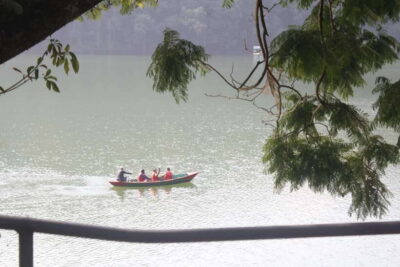
Full-Day Sharing Bus Tour on 7 Iconic Destination
Read our review →
Trekking in Annapurna/Langtang/Everest/Upper Mustang regions
Read our review →Browse the lists this tour appears in