
Reviewed · KATHMANDU UNESCO HERITAGE TOURS
Folklore and Everyday Life in Ancient Patan
Ancient Patan is best understood away from its famous palace square. This two-hour to two-and-a-half-hour walk leads you through courtyards, monastery spaces, shrines, resting shelters, and ordinary lanes where old Newar customs still shape daily life. I like that the route looks beyond grand monuments, and I like the attention given to both Newar Buddhism and Tantric Hinduism.
The tour also gives you useful cultural context rather than a quick parade of temples. Guides such as Sandip explain folklore, local traditions, and even the outside influences visible in Patan’s art. The main consideration is simple: Patan Durbar Square is not included, so you will need a separate ticket and extra time if you want to visit the palace complex and museum afterward.
Key points about the Patan old-town walk
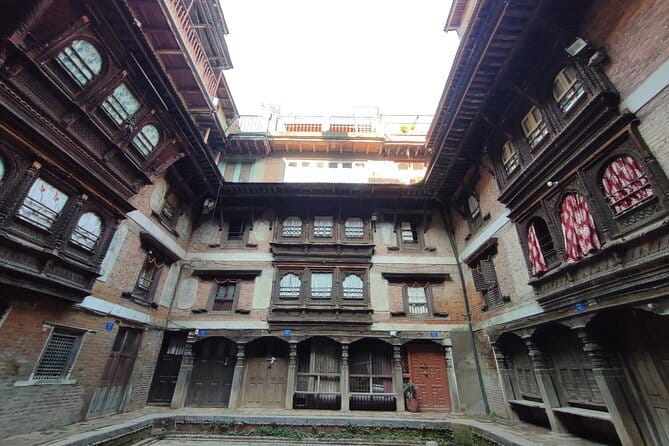
- Pimbahal introduces courtyard life: Learn how traditional Newar settlements linked spiritual practice, community space, and local know-how.
- Nyakhachowk brings architecture close: See falchaa resting areas, ancestral shrines, vernacular houses, and an important Buddhist monastery.
- Nag Bahal connects Patan to distant cultures: Look for Greek and Hellenistic influence in Buddhist and Hindu images.
- Swotha Square makes a useful finish: End near temples, shrines, tea shops, and the entrance to Patan Durbar Square.
- Small groups keep the walk focused: The maximum group size is 10 people, making questions and conversation easier.
- The route is about modern Patan as well as old Patan: You will hear how young Nepalis keep cultural practices while taking on modern values.
Why this Patan walk takes a different route
Many first visits to Patan begin and end at Patan Durbar Square. That is understandable. The palace complex has some of the Kathmandu Valley’s finest temples, carved details, and museum displays.
This walk deliberately goes elsewhere. It starts at Patan Dhoka and works through the old town around the main square. You still see temples, shrines, monasteries, and fine woodwork, but the focus shifts from royal display to community life.
That change matters. A palace square tells you what rulers and major religious institutions wanted people to see. A courtyard can tell you how neighbors gathered, worshiped, rested, and maintained shared spaces. The route helps you connect grand architecture with the smaller places that made old Patan work.
I also like the way the tour links the past with the present. You are not asked to treat Patan as a frozen museum. The discussion includes young Nepalis, changing social values, globalization, and the way old religious customs continue in a modern city.
The walk begins at 10:00 am at Patan Dhoka. From there, expect narrow lanes and open courtyards rather than a straight route along a main road. Comfortable footwear is sensible, since the experience is entirely on foot and the old-town paths may be uneven.
More temple and square walks around Kathmandu:
- Private Kathmandu Sightseeing Tour | UNESCO World Heritage sites
★ 5.0 · 756 reviews - Kathmandu: Full Day 7 UNESCO Tour with Lunch – Private/Group
★ 5.0 · 415 reviews - Private Bhaktapur and Nagarkot Day Tour From Kathmandu
★ 5.0 · 305 reviews
Pimbahal and the logic of Newar courtyards
The first main stop is Pimbahal, reached through traditional courtyards in Patan’s old settlement. This section lasts about 30 minutes and is useful for setting up the ideas that return throughout the walk.
Here, the guide explains how Newar urban design brought spiritual practice into everyday surroundings. Courtyards were not simply shortcuts or pleasant open spaces. They could connect homes, shrines, monastic buildings, and community activity in a compact neighborhood.
Pimbahal is also tied to a Newar Buddhist monastery that dates back several centuries. The setting gives you a chance to consider how Buddhism operated within the city, not only inside a large, isolated religious compound.
Look around as you walk. The important details may be small: a shrine tucked beside a passage, a carved doorway, a worn surface shaped by years of use, or the way buildings face a shared courtyard. The guide’s role is especially valuable here because many of these features do not explain themselves.
This is one of the strongest parts of the tour for anyone who wants to understand how religious life and city planning meet. It is less useful if you only want a checklist of major monuments. The value lies in learning how people used these spaces and why the layout still matters.
Nyakhachowk, resting shelters, and local architecture
The route continues along a cozy path toward Nyakhachowk, another courtyard with a more intimate feel than the large palace complex. Plan on roughly 30 minutes here.
The walk introduces falchaa, traditional resting places, along with ancestral shrines and vernacular houses. These details help you read Patan at street level. A falchaa is not just an architectural ornament. It reflects the practical need for shade, rest, and shared public space in a dense town.
The houses and shrines also show how old neighborhoods blended home life with religious practice. A shrine may be close to a doorway or passage instead of placed behind a formal boundary. That closeness is part of the character of Patan, where the sacred and ordinary often sit side by side.
Nyakhachowk is also connected with one of the area’s important Buddhist monasteries. The description of the site refers to a respected and heavily decorated monastery associated with more than 4,000 ordained monks in its monastic order. That figure gives a sense of the institution’s scale and importance, though the walk itself remains centered on the old town rather than a long formal monastery visit.
You should expect the guide to explain woodwork, metalwork, iconography, and the role of the monastery in the area. Sandip is particularly associated with clear explanations of local customs, Hinduism, Buddhism, and small details that are easy to miss on your own. Pinhua is also named as part of the guiding team.
The short walking distance between Pimbahal and Nyakhachowk is part of the point. You are not being driven from one attraction to another. You are moving through the spaces between them, where the ordinary buildings and small sacred objects help complete the story.
Nag Bahal and Patan’s international artistic links
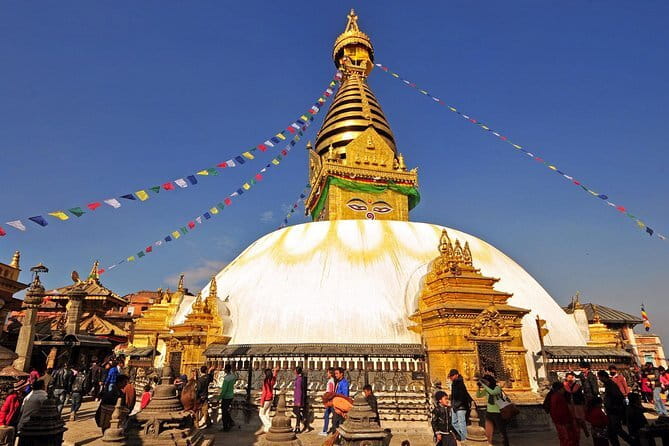
Nag Bahal is one of the largest courtyards in old Patan, and the visit lasts about 15 minutes. It is a compact stop, but the subject is a good one: how contact with the wider world shaped local art long before modern tourism and air travel.
The guide points out Greek influence and Hellenistic impressions in Buddhist and Hindu iconography. This is a useful reminder that Patan’s art did not grow in isolation. Artistic ideas traveled across long-distance trade and cultural routes, then changed as local craftspeople adapted them to their own religious and artistic traditions.
You may find this stop most rewarding if you enjoy looking closely at images instead of simply photographing an entire shrine. Ask the guide to point out what makes a figure or decorative detail look different. Without that help, the outside influence may not be obvious.
Nag Bahal also reinforces one of the walk’s larger themes. Patan has long absorbed ideas from beyond the Kathmandu Valley while keeping a strongly local identity. The result is not a simple blend of foreign and local styles. It is a record of adaptation, faith, and skilled craft.
Because the stop is brief, do not expect a full art-history lecture. Instead, treat it as a focused explanation that gives you a better eye for the details you will see elsewhere in Patan.
Same base, a different kind of day:
- Everest Base Camp Trek – 14 Days
★ 5.0 · 1,499 reviews - Everest Base Camp Helicopter Tour landing at Everest View Hotel
★ 5.0 · 668 reviews - Half day cooking class in Thamel kathmandu
★ 5.0 · 607 reviews - Everest Base Camp Trekking
★ 5.0 · 485 reviews
Swotha Square and the walk toward the palace
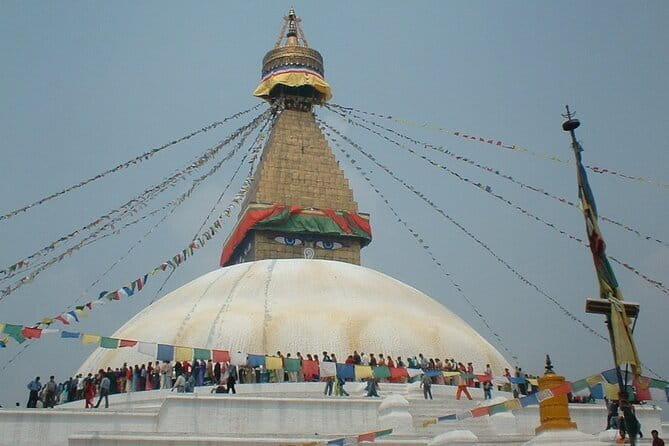
The tour ends at Swotha Square after about 15 minutes of exploration there. This square has several temples, shrines, and tea shops, making it a pleasant place to pause after the tighter lanes and courtyards.
Swotha is also practical. It is only a couple of minutes from Patan Durbar Square, so you can continue to the palace complex on your own. That makes the walking tour easy to pair with a half-day visit to the square and museum.
The order matters. After hearing about neighborhood life, monasteries, folklore, and local art, you will arrive at the royal center with more context. The palace complex can then feel like part of a larger city rather than the whole story of Patan.
You need to pay an additional admission fee for Patan Durbar Square, and the palace museum is strongly recommended as a separate visit. Since the museum is not part of the $65 tour, budget for that extra cost and allow time for it if you want a fuller Patan outing.
Swotha Square is also a sensible place to end if you prefer to stop for tea or continue exploring independently. The tour does not include hotel pickup or drop-off, so you will arrange your own way to Patan Dhoka and onward from Swotha.
Folklore, faith, and the modern Kathmandu Valley
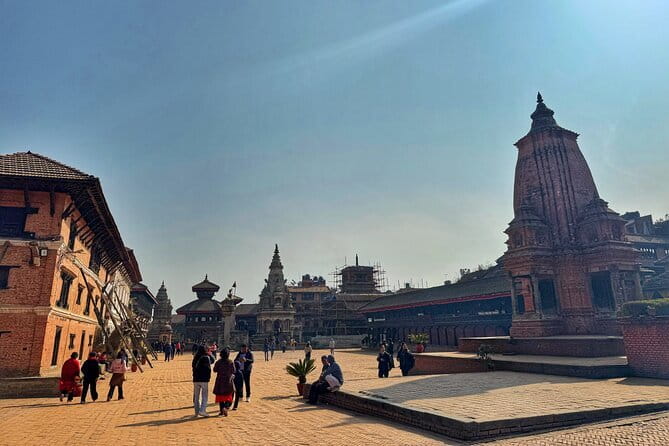
The title promises folklore, and that is an important part of the experience. The guide uses stories and myths to explain why particular spaces matter, how traditions developed, and how people relate to the sacred places around them.
The religious content covers Newar Buddhism and Tantric Hinduism. That makes the tour a better fit for you if you want more than broad statements about Nepal being religious. The goal is to explain how beliefs appear in daily practice and local customs.
Tantric traditions can be difficult to understand from the outside, especially when symbols and rituals are unfamiliar. A local guide can provide needed context while keeping the discussion connected to places you are actually seeing. You can also ask questions in the moment instead of trying to decode an object later from a guidebook.
The tour is not presented as a formal theology class. It is a street-level introduction to the traditions that shape Patan. Expect stories, visual clues, and explanations of how customs continue as the city changes.
The modern angle is just as useful. Young Nepalis are described as maintaining cultural norms while also taking on modern values and ambitions. That gives the tour a forward-looking quality. You are not only learning what Patan used to be. You are considering what it means for the city to keep its identity while society changes.
What $65 gets you

At $65, the tour is not the cheapest way to walk around Patan. You can enter the old town without paying for a guide, and many courtyards can be reached independently.
The value comes from interpretation. The route includes places you might pass without recognizing, and the guide connects architecture, religion, folklore, art, and social change. If you tried to assemble that context from signs and guidebooks alone, you would likely miss the links between the sites.
A maximum of 10 people also matters. This is not a large coach tour. A small group makes it easier to hear in narrow lanes, ask about religious objects, and pause when a courtyard or carved detail catches your attention.
The price does not include transportation, Patan Durbar Square, or the museum. Keep those limits clear before booking. For someone who wants only the palace complex, this tour may feel like an unnecessary extra. For someone who wants to understand the town around the palace, the price is more defensible.
The reviews of the guiding style are consistently strong. Sandip is described as easygoing, attentive, humorous, and able to explain a large amount without making the walk feel stiff. That combination matters in a two-hour cultural tour. Dense subjects are easier to absorb when the guide can keep the conversation relaxed.
Who will get the most from this walk
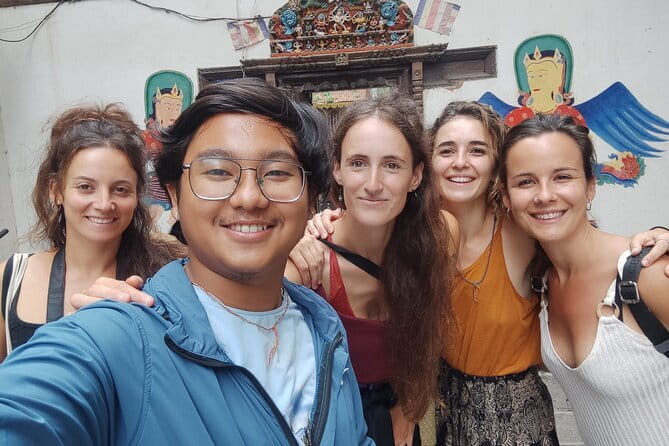
I would choose this experience if you have already seen famous temples and want help interpreting the spaces between them. It also suits a first-time visitor who prefers local streets and smaller religious sites to a rapid tour of major monuments.
It is especially useful for you if you enjoy:
- Newar architecture and courtyard design
- Buddhist and Hindu art
- Folklore and local customs
- The relationship between religion and daily life
- Small groups and question-friendly guiding
- Seeing how tradition changes in a modern city
The walk is suitable for most people, and service animals are allowed. It operates near public transportation, but pickup and drop-off are not provided. Confirmation arrives at booking, and the group can include no more than 10 people.
The experience requires good weather. You can cancel up to 24 hours before the 10:00 am start for a full refund. A cancellation made less than 24 hours before the start does not qualify for a refund, and poor weather may lead to a new date or full refund.
A few limits to keep in mind
The route is not a substitute for Patan Durbar Square. You will not receive the palace complex, its ticket, or its museum as part of this experience. If the square is your main reason for coming to Patan, visit it separately.
The tour is also relatively short. Two hours to two-and-a-half hours is enough for an introduction, but not enough to examine every monastery, shrine, and courtyard in detail. You will need to accept a steady pace and save some questions for later if the group becomes engaged in a topic.
The route’s appeal depends on interpretation. Without a guide, a narrow lane or small shrine may seem ordinary. With a good guide, the same place can reveal a story about settlement, faith, trade, or family tradition. This means the quality of the guide matters a great deal. Sandip and Pinhua are the named guides associated with the experience, with Sandip receiving particular praise for humor, patience, and clear explanations.
Should you book Folklore and Everyday Life in Ancient Patan?
Book it if you want Patan explained through its courtyards, neighborhood shrines, Buddhist monasteries, local myths, and living customs. The strongest reason to go is the route itself: it takes you beyond the obvious palace square and shows how the old town works at a more personal scale.
Pair it with Patan Durbar Square afterward, not instead. Start at 10:00 am, finish at Swotha Square, visit the palace and museum independently, then stop for tea nearby.
Skip it if you want a grand-monument tour, hotel transportation, or a full visit to the main square included in one price. For curious visitors who value context and small details, this is a well-focused way to meet Patan.
FAQ
Does this tour include Patan Durbar Square?
No. The walk ends at Swotha Square, which is a couple of minutes from Patan Durbar Square. You can visit the palace complex and museum independently, with separate admission fees.
Where does the tour start?
The meeting point is Patan Dhoka on Patandhoka Road in Lalitpur. The scheduled start time is 10:00 am.
Where does the tour end?
The walk ends at Swotha Square in Lalitpur. From there, you can continue on foot to Patan Durbar Square.
How long does the experience last?
The tour lasts about two hours to two-and-a-half hours. The listed stops include roughly 30 minutes at Pimbahal, 30 minutes at Nyakhachowk, 15 minutes at Nag Bahal, and 15 minutes at Swotha Square.
How large is the group?
The maximum group size is 10 people. An experienced local guide is included.
Can I cancel for a full refund?
Yes, if you cancel at least 24 hours before the experience start time. Cancellations or changes made less than 24 hours before the start are not refundable. If poor weather causes the tour to be canceled, you will be offered another date or a full refund.
Just added in Kathmandu
- Traditional Momo Making Class★ 5.0 · 10 reviews
- Women Empowerment Project(Nepali cooking class & jewelry workshop★ 5.0 · 15 reviews
- Kathmandu 2 Nights 3 Days Chitwan Jungle Safari Tour★ 5.0 · 9 reviews
- Walking tour of Kathmandu with awesome local guides★ 5.0 · 4 reviews
- Wildlife Adventure in Chitwan Nepal★ 4.0 · 4 reviews
- Kathmandu to Pokhara Premium sofa bus ticket★ 4.0 · 17 reviews
- Kathmandu Street Food Walking Tour – Eat Like a Local★ 5.0 · 3 reviews
- Walking tour of real Kathmandu through back streets.★ 5.0 · 3 reviews
Kathmandu UNESCO Heritage Tours, compared.
Private Kathmandu Sightseeing Tour | UNESCO World Heritage sites
Read our review →
Full Day 7 UNESCO Tour with Lunch – Private/Group
Read our review →
Private Bhaktapur and Nagarkot Day Tour From Kathmandu
Read our review →
Kathmandu Spiritual Sites: Bodhnath & Pashupatinath Tour
Read our review →
Day Trip to Bhaktapur and Panauti from Kathmandu
Read our review →
Browse the lists this tour appears in