Reviewed · TOURS IN KATHMANDU
Gurkha Knife Making
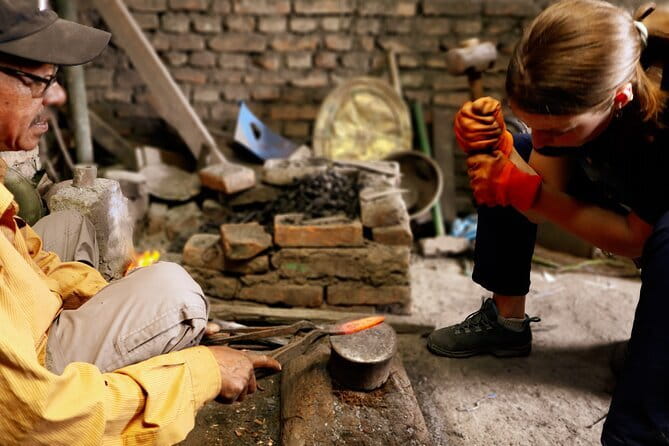
The most unusual souvenir in Kathmandu may be the one you help make. At a small forge, you work with a local knife maker to shape a Gurkha kukri, hear stories about the famous Gurkha warriors, and leave with a blade marked with your own initials. This is hands-on metalwork, not a quick demonstration.
I like two things right away: the group is limited to four, so you should get real help at the forge, and the finished knife uses quality Indian rosewood for its handle. I also like the warm, social touch of tea and cookies. The main consideration is practical: this is a working forge, so it may not suit anyone who prefers a polished museum-style activity or who is uncomfortable handling hot metal.
Key points
- You help make a real Gurkha kukri, rather than simply buying one in a shop.
- The group maximum is four, allowing close guidance from the smith and host.
- Guide Aayam and knife maker Indra are named in the experience feedback, while Aachal is also praised for friendly hosting and clear communication.
- Your initials are stamped on the blade, giving the souvenir a personal mark.
- The handle uses Indian rosewood, and each knife comes with a stated 100-year guarantee.
- The morning session begins at Garden of Dreams, with pickup offered and the activity returning to the same meeting point.
Why a Gurkha knife makes a meaningful Kathmandu souvenir
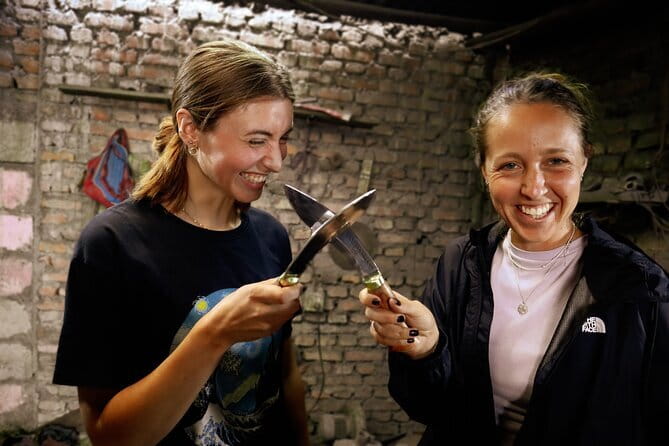
A kukri is not just a curved knife with a dramatic shape. It is tied to the identity of the Gurkha warriors and to stories of strength, resistance, and service. This experience gives you a way to understand that symbol through the work of making it.
That matters because Kathmandu has no shortage of souvenirs. Many are easy to buy and just as easy to forget. A knife you helped shape has a different kind of value. You remember the heat, the hammering, the decisions about the handle, and the final mark pressed into the blade.
The experience also gives you a look at a craft that is usually kept behind the counter. You are not expected to arrive as a blacksmith. The point is to take part, ask questions, and learn the basic stages under supervision from a long-time maker.
The cultural story is part of the appeal, but the workshop itself is the heart of the morning. If you want a quiet lecture, this is not the right choice. If you like making something with your hands, it offers a rare chance to connect a famous Nepali object with the people and skills behind it.
Other trips people book in Kathmandu:
- Everest Base Camp Trek – 14 Days
★ 5.0 · 1,499 reviews - Private Kathmandu Sightseeing Tour | UNESCO World Heritage sites
★ 5.0 · 756 reviews - Everest Base Camp Helicopter Tour landing at Everest View Hotel
★ 5.0 · 668 reviews
Starting at Garden of Dreams in central Kathmandu
The meeting point is Garden of Dreams on Tridevi Sadak, Kathmandu 44600. Pickup is offered, but the published start point gives you a clear place to meet if you are making your own way there.
The listed operating window is Monday through Sunday from 7:15 AM to 10:15 AM, while the activity itself takes about four hours. Since those details do not line up perfectly, I would confirm your exact pickup and start time when booking. That is especially useful if you have a flight, a guided city tour, or a fixed morning plan afterward.
A morning start makes sense for this type of outing. You can finish before the heat and noise of the day build, then continue with sightseeing in Kathmandu. Still, allow extra time beyond the stated four hours for transport, the final knife inspection, and any delays at the workshop.
The activity ends back at the meeting point. That is convenient if you want to begin and finish in a familiar central location, though you should not assume that the return will place you at your hotel unless pickup arrangements say so.
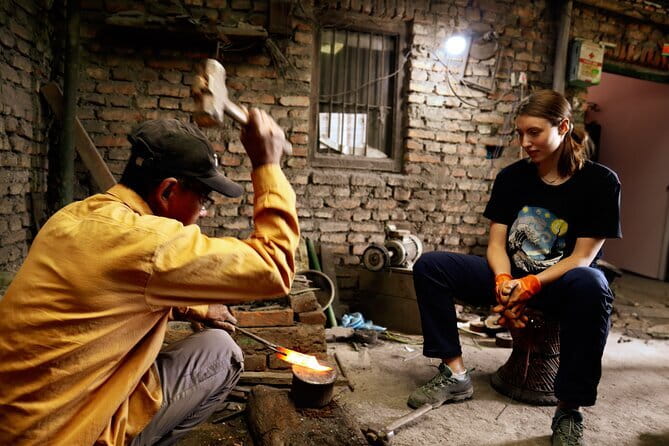
Inside the small forge with Indra and the host team
The forge is described as small, which is a useful detail rather than a drawback. With a maximum of four people, you should not be lost in a large class. The setting is more personal, and you have a better chance to watch the maker closely and ask for help when a step feels uncertain.
Indra is identified as the knife maker in the experience feedback. He works with an apprentice or assistant and guides you through the knife-making process. Aayam is named as the guide who helps explain the activity and keeps the morning moving with humor. Aachal is also praised for friendly hosting, patient answers, and good communication, including for a last-minute booking.
The language support matters. A blacksmithing session involves many small instructions, and clear translation can make the difference between feeling involved and simply watching. The guide is there to help bridge that gap while the smith focuses on the technical work.
You should expect a relaxed, friendly mood rather than a formal classroom. Tea and cookies are part of the experience, giving you a break from the forge and a chance to talk with the hosts. The personal welcome is one of the strongest reasons to choose this over a standard souvenir-shopping stop.
Shaping the blade instead of watching from the side
The exact minute-by-minute order is not provided, but the activity is built around making your own knife from start to finish. The process includes working with metal, helping shape the blade, and taking part in the finishing stages.
Some feedback describes the material as scrap metal. That detail adds interest, since you can see how a skilled smith turns basic material into a useful, attractive knife. It also means the final object is tied to labor and judgment, not just to a factory design.
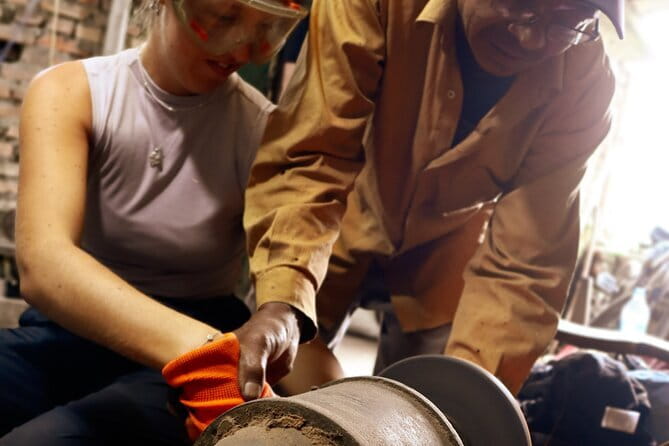
You will not be doing every technical task alone. A master smith remains responsible for the difficult and potentially dangerous work. Your role is active, but the pace and amount of participation can depend on the stage of the blade, your comfort, and the smith’s instructions.
That balance is important. The activity lets you take part without pretending that a four-hour session can turn you into a trained blacksmith. You get a real introduction to the process, while an experienced maker protects the quality of the final piece.
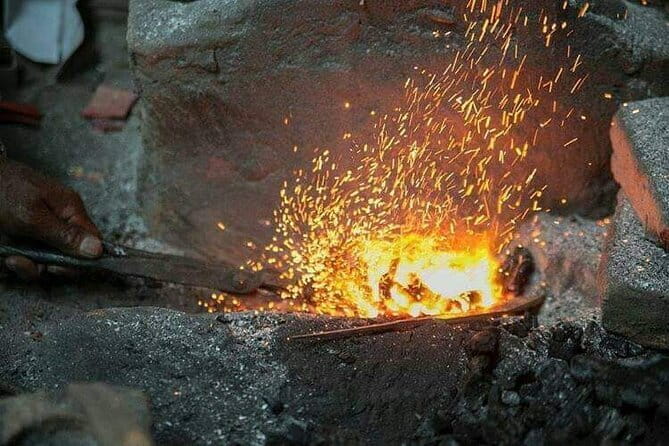
Expect the work to be physical. There may be heat, noise, smoke, and repeated effort. The provided information does not specify safety equipment, clothing requirements, or age restrictions, so ask about those points before you arrive. Wear practical clothes and shoes you do not mind using around a working forge.
Same base, a different kind of day:
- Half day cooking class in Thamel kathmandu
★ 5.0 · 607 reviews - Everest Base Camp Trekking
★ 5.0 · 485 reviews - Nagarkot Sunrise View and Day Hiking from Kathmandu
★ 5.0 · 471 reviews - Kathmandu: Full Day 7 UNESCO Tour with Lunch – Private/Group
★ 5.0 · 415 reviews
Choosing the rosewood handle and personal blade mark
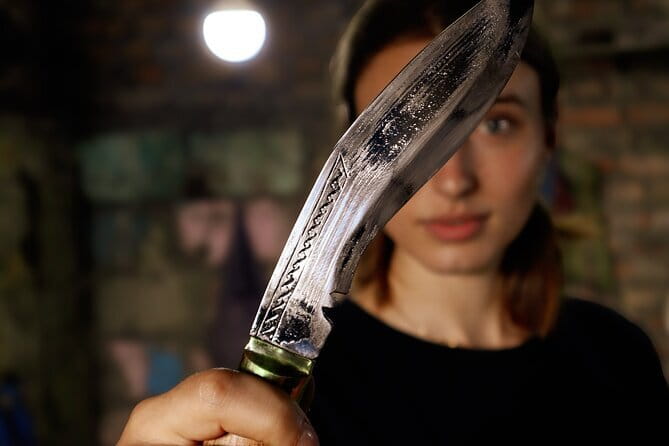
The handle is made with Indian rosewood, a detail that gives the finished knife a warmer and more refined feel than a plain utilitarian grip. The handle is not an afterthought. It is the part you hold, display, and remember long after the metalwork is over.
The experience also lets you stamp your initials on the blade. This is one of the best details for anyone buying the knife as a personal keepsake or gift. The mark turns a traditional object into something connected to your own visit to Nepal.
Do not expect every finished knife to look identical. Handmade work has small variations, and the point is not factory uniformity. The quality depends on the smith’s skill, the material available, and the decisions made during the session.
A 100-year guarantee is offered with each knife. That is an unusually strong promise and suggests that the maker wants the knife treated as a lasting object rather than a disposable souvenir. You should ask what the guarantee covers and how a claim would be handled, especially if you plan to take the knife home internationally.
What the four-hour schedule really gives you
Four hours is long enough to make the session feel substantial. You are not rushing in for a ten-minute photo opportunity, and there is time for explanation, practical work, breaks, and finishing details.
The small group helps here. With only four participants, the smith can give attention to individual pieces, and the guide can keep everyone involved. If you book alone, you may still be able to join the activity, and the experience is specifically described as suitable for solo participation or small groups.
The time can pass quickly because the work changes from stage to stage. You might begin with background on the Gurkha knife, move into the forge work, then spend time on the handle and final touches. The initials stamping provides a clear personal finish.
At the same time, four hours around a forge is more demanding than a short craft lesson. If you have limited stamina, mobility concerns, or dislike hot working spaces, think carefully before booking. The information says most people can participate, but it does not provide detailed accessibility information.
Is $66 a good value for a handmade knife?
The price is $66 per person. I see the value in several parts of the package: a four-hour activity, a small group capped at four, guide support, direct time with a local knife maker, a handmade kukri, Indian rosewood for the handle, initials on the blade, and the stated 100-year guarantee.
That is different from paying $66 for a factory-made knife and a short explanation. You are paying for instruction, labor, materials, and the chance to participate in a traditional craft. The finished knife is also a physical souvenir that can last far longer than a standard trinket.
The value is strongest if you care about the making process. If you only want the cheapest kukri in Kathmandu, local shops may offer simpler options. If you want a story attached to the object and enjoy practical activities, the price is easier to justify.
The maximum group size is another part of the calculation. A four-person class gives you more access to the smith than a large workshop would. I would still ask whether the quoted amount includes pickup, since pickup is offered but the supplied price details do not explain its exact coverage.
Who should book this forge experience
I would suggest this activity to anyone who likes craft, tools, local stories, and unusual souvenirs. It suits couples, friends, solo participants, and small families with older children, provided everyone can follow forge instructions and handle a physical workshop setting.
It is also a good fit for people who have already seen Kathmandu’s major temples and want an activity with more direct contact. The session supports the local smith and his apprentice, while also connecting you with a welcoming queer tour provider, Queermandu, known as Gay Tours Nepal.
The activity may appeal especially to people who want to support the queer community in Nepal. That social purpose is not separate from the craft experience. It is part of the setting and the way the hosts welcome participants.
I would be more cautious about booking it for very young children, anyone who wants a completely passive tour, or anyone with strict timing after the session. The exact safety and accessibility arrangements are not listed, so ask before paying if those points matter to you.
Booking, cancellation, and a few practical checks
Confirmation is provided when you book. You can cancel for a full refund up to 24 hours before the local start time. Cancellations or changes made less than 24 hours before the experience are not accepted for a refund.
The activity is available every day during the stated operating period, from March 22, 2024, through December 15, 2026. Since the booking pattern shows that it is often reserved about nine days ahead, I would not leave it until the last morning if your schedule is fixed.
Before booking, I would check four points:
- The exact start time, since the four-hour duration extends beyond the listed 7:15 AM to 10:15 AM window.
- Whether pickup is included from your accommodation or arranged at an added cost.
- Any clothing, footwear, or safety requirements.
- The rules for transporting a knife on your flight and through customs.
That last point is your responsibility. A knife is a practical souvenir, but you should plan to pack it according to airline and border rules rather than carry it casually.
FAQ
Where does the Gurkha knife-making experience start?
It starts at Garden of Dreams on Tridevi Sadak in Kathmandu, Nepal. Pickup is offered, but the listed meeting point is Garden of Dreams.
How long does the activity last?
The session lasts approximately four hours. The listed morning operating hours are 7:15 AM to 10:15 AM, so you should confirm the exact start time when booking.
How many people can join?
The maximum group size is four people. This makes it a small-group workshop with more direct access to the knife maker and guide.
Do I make my own knife?
Yes. The session is designed for you to take part in creating your own Gurkha knife, including metalwork and finishing. You can use Indian rosewood for the handle and stamp your initials on the blade.
Who runs the experience?
The provider is Queermandu, also known as Gay Tours Nepal. The knife maker named in the experience details is Indra. Aayam is named as a guide, and Aachal is also identified as a friendly host in the experience feedback.
Can I cancel for a full refund?
Yes, if you cancel at least 24 hours before the local start time. Cancellations or changes made less than 24 hours before the start are not eligible for a refund.
Should you book the Gurkha knife-making experience?
Book it if you want more than a purchased souvenir. The best parts are the small group, the close help from the smith and guide, the chance to stamp your initials, and the fact that you leave with an object tied to your own time in Kathmandu.
The main cautions are the unclear timing around the morning hours, the physical nature of forge work, and the need to check how you will transport the knife home. If those points work for you, $66 is a fair price for a four-hour craft session and a lasting handmade keepsake. This is one of the better choices for a hands-on morning in Kathmandu, especially if you value local skill and a personal connection to what you bring home.
Just added in Kathmandu
- Traditional Momo Making Class★ 5.0 · 10 reviews
- Women Empowerment Project(Nepali cooking class & jewelry workshop★ 5.0 · 15 reviews
- Kathmandu 2 Nights 3 Days Chitwan Jungle Safari Tour★ 5.0 · 9 reviews
- Walking tour of Kathmandu with awesome local guides★ 5.0 · 4 reviews
- Wildlife Adventure in Chitwan Nepal★ 4.0 · 4 reviews
- Kathmandu to Pokhara Premium sofa bus ticket★ 4.0 · 17 reviews
- Regular Yoga for all levels of practitioners in Kathmandu★ 5.0 · 4 reviews
- Kathmandu Street Food Walking Tour – Eat Like a Local★ 5.0 · 3 reviews
Tours in Kathmandu, compared.


Private Kathmandu Sightseeing Tour | UNESCO World Heritage sites
Read our review →
Everest Base Camp Helicopter Tour landing at Everest View Hotel
Read our review →

Nagarkot Sunrise View and Day Hiking from Kathmandu
Read our review →
Full Day 7 UNESCO Tour with Lunch – Private/Group
Read our review →