Reviewed · TOURS IN KATHMANDU
Thamel Rickshaw tour
Kathmandu’s best introduction may be a slow ride through its crowded lanes, where a rickshaw puts you close to spice stalls, temple courtyards, and the daily rush. This tour connects Ason Market with Kathmandu Durbar Square, then adds Thamel, Freak Street, and Tibetan snacks near Shree Gha Stupa.
I like the chance to taste sel roti, samosas, masala chai, momos, and lassi without committing to a formal food tour. I also like the direct support for local rickshaw drivers, who provide the ride and often add useful facts about the places you pass.
The main consideration is that this is not a fully guided museum tour. Your driver speaks English, Nepali, or Hindi and can explain plenty, but entry fees, food, and the optional challenge cost extra. Traffic, crowds, and the flexible schedule can also stretch the advertised four hours.
Key points to know before booking
- Ason Market comes first: Start with local breakfast, spices, produce, temples, and handmade goods in one of Kathmandu’s oldest market areas.
- Kathmandu Durbar Square takes two hours: Allow time for Hanuman Dhoka Palace, Kumari Ghar, Kasthamandap, Taleju Temple, Gaddi Baithak, and nearby Freak Street.
- The Living Goddess has viewing hours: You may see Kumari from her balcony between 9 and 11 in the morning or 4 and 6 in the afternoon.
- The $5 food challenge is optional: Momos, pani puri, lassi, laphing, Newari food, cake, and tea are paid from your own pocket.
- The private ride is flexible: Pickup and return are arranged around Thamel, with starting times generally available from 9:30 a.m. to 12:30 p.m.
- The price covers transport, not everything: At $14 per person, the ride is good value, but food, admission fees, and a dedicated guide are not included.
Why a rickshaw is a good way to see Kathmandu
A cycle rickshaw moves at the right speed for central Kathmandu. You are not sealed inside a car, yet you are not forced to walk every block through traffic. The open sides give you a close view of shopfronts, shrines, delivery carts, market tables, and street life.
That closeness is the point. A rickshaw is not a luxury vehicle, and the ride may feel bumpy on uneven streets. It also cannot remove the noise or congestion. Still, for a first look at the city, the slower pace helps you notice details you might miss from a taxi.
The tour is arranged as a private group, so you are not tied to strangers or a fixed large-group pace. Pickup is included from your Thamel hotel or a nearby meeting point. The driver languages are English, Nepali, and Hindi. One important distinction: the experience does not include a separate tour guide. Your driver leads the route and may offer useful information, but you should not expect the same depth of commentary as you would get from a licensed cultural guide.
The ride supports local rickshaw drivers directly. That matters in Thamel, where these drivers once played a central role in taking visitors around the city but have had fewer opportunities as digital booking services changed how people arrange transport. Your fare helps keep that work available and gives the driver a chance to build stronger communication with international visitors.
Other trips people book in Kathmandu:
- Everest Base Camp Trek – 14 Days
★ 5.0 · 1,499 reviews - Private Kathmandu Sightseeing Tour | UNESCO World Heritage sites
★ 5.0 · 756 reviews - Everest Base Camp Helicopter Tour landing at Everest View Hotel
★ 5.0 · 668 reviews
Ason Market: breakfast beside old temples
Ason is the strongest opening stop because it puts you in the middle of ordinary Kathmandu life. The market is filled with local produce, spices, handmade goods, and small religious sites. This is not a polished shopping district. You should expect narrow lanes, close traffic, and a lot of movement.
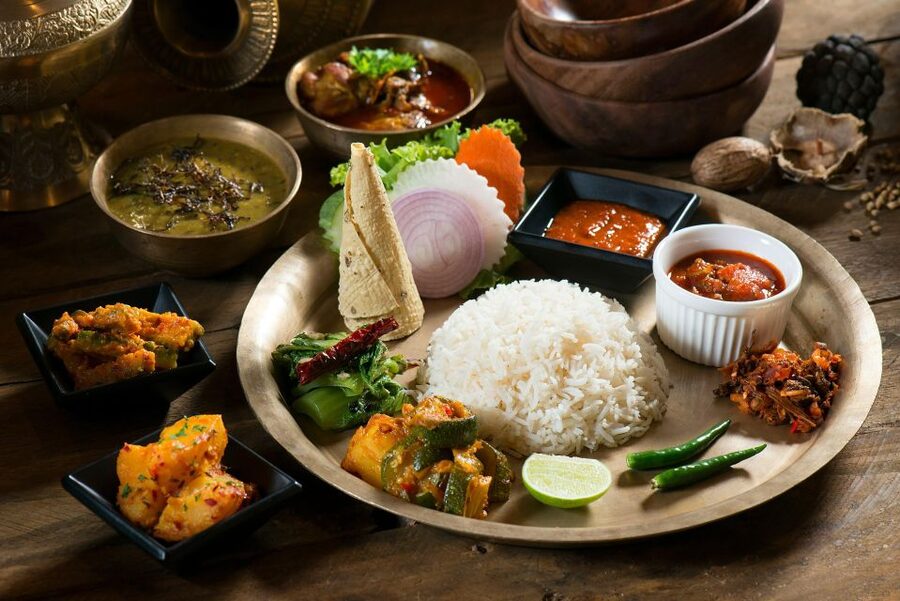
The food begins simply. Sel roti, a ring-shaped rice doughnut, is one of the local specialties to try. Samosas and masala chai offer familiar points of entry if you are cautious about new flavors. These snacks are more useful than a staged tasting because they show you what people actually buy during the day.
Nearby Annapurna and Ganesh temples add a cultural layer to the market visit. You can look at the carved details, watch local worship, and see how commerce and religious practice share the same streets. The combination is one reason I prefer Ason to a quick pass through a shopping area.
You should keep some cash available for food and small purchases. The tour price does not cover your snacks, and the optional food challenge is also treated as a personal expense. If you want to try several things, budget more than the basic tour price.
The stated stop lasts about an hour. That is enough for a first taste, but not enough for a slow, detailed market study. If you are especially interested in photography, food, or religious architecture, ask about the timing before the ride begins.
Kathmandu Durbar Square: royal buildings and the Kumari Ghar
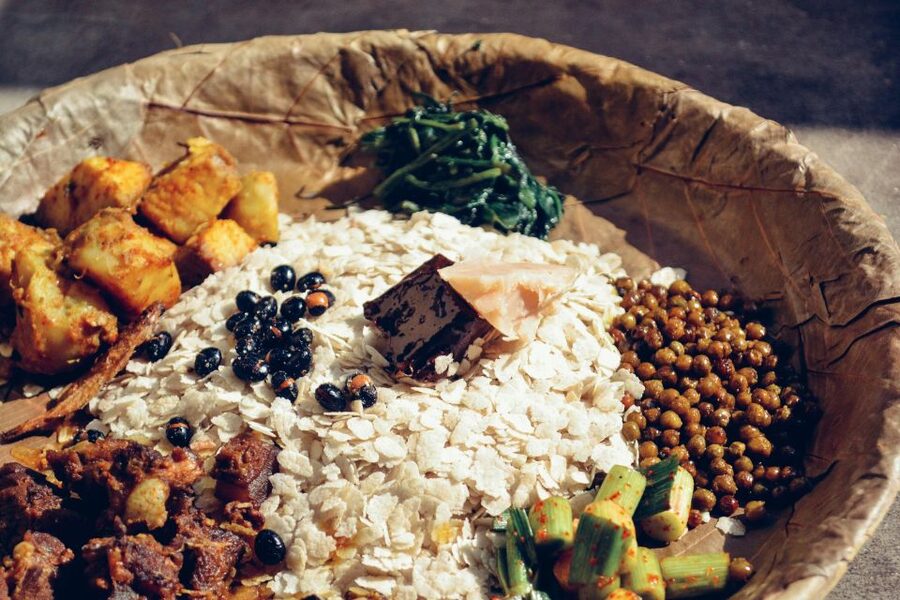
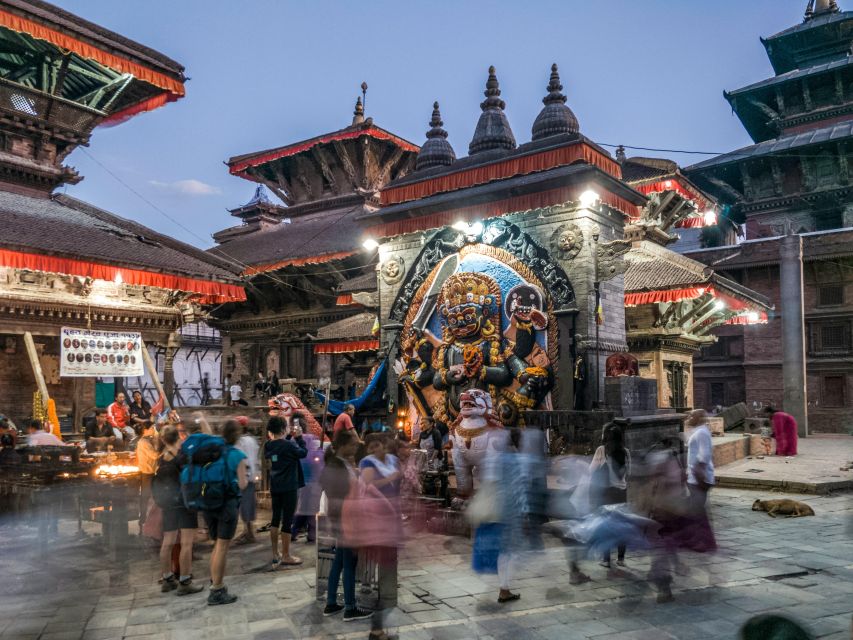
Kathmandu Durbar Square is the main historical stop, with about two hours set aside. This is where the ride shifts from market life to royal and religious heritage.
Hanuman Dhoka Palace was once the royal center and now contains a museum. Kasthamandap, an old wooden structure, gives the square its name and remains one of its key landmarks. Taleju Temple is linked to the Malla kings, while Gaddi Baithak brings a different visual note with its neoclassical design and connection to Nepal’s colonial period.
Kumari Ghar is the stop many people most want to see. The courtyard is associated with the Kumari, Nepal’s Living Goddess, who may appear at a balcony during the stated viewing periods of 9 to 11 a.m. and 4 to 6 p.m. You should not count on a sighting outside those hours, and the tour’s flexible start means timing matters.
If seeing the Kumari is important to you, choose a morning start that reaches the square before 11. The available start window runs from 9:30 a.m. to 12:30 p.m., so a late start will not fit the morning viewing period. An afternoon start may work for the 4 to 6 p.m. window, but the advertised route takes roughly four hours and may not be scheduled around that later period.
Freak Street is close by and gives the square visit a modern, slightly scruffy finish. It was once associated with Kathmandu’s hippie era and now serves as a lively area for both local people and tourists. It is also one of the places used for the optional food challenge.
Entry fees are not included. The tour allows you to see the square, but you should expect to pay separately if you want access to chargeable monuments or museum areas. Ask the driver what is included before entering, since the base price covers transport, allowances, taxes, and service charges rather than admission.
The optional $5 food challenge
The food challenge is a fun addition if you enjoy making a meal out of small bites. It is not included in the $14 price, despite the suggested $5 target. Treat that amount as a spending guide, not as a covered part of the booking.
At Freak Street and Indrachowk, the suggested stops include momos, pani puri, cake at Snowman Cafe, a corn dog from Suju Corn Dog, lassi from Janakpur Dahi Lassi Bhandar, Newari food at Bhatti Restro, and tea at Mama Chiya.
You will not need to order everything. The point is to build a small tasting route and choose what appeals to you. Momos are the obvious starting point for many people, while pani puri is more playful and messy. Lassi adds a cool, sweet drink, and Newari dishes offer a more local direction than standard tourist snacks.
There is one practical catch. The supplied information also lists lactose intolerance among the conditions for which this activity is not suitable. That makes sense given the lassi, dairy-based cake, kulfi, and other possible food choices. If dairy is a concern, ask clearly about ingredients and skip anything that does not work for you.
Food safety is personal here. You are buying from vendors rather than eating at a restaurant arranged as part of the tour. That gives you a more direct taste of the city, but it also means you should choose carefully, especially if you have a sensitive stomach.
Same base, a different kind of day:
- Half day cooking class in Thamel kathmandu
★ 5.0 · 607 reviews - Everest Base Camp Trekking
★ 5.0 · 485 reviews - Nagarkot Sunrise View and Day Hiking from Kathmandu
★ 5.0 · 471 reviews - Kathmandu: Full Day 7 UNESCO Tour with Lunch – Private/Group
★ 5.0 · 415 reviews
Shree Gha Stupa and Tibetan-style snacks
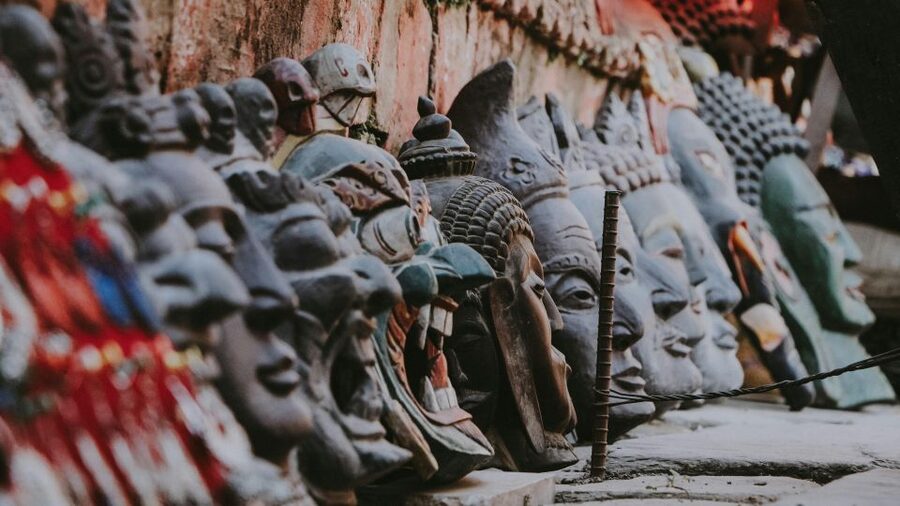
Shree Gha Stupa offers a change of pace after the market and square. It is a small, quiet stupa near Thamel and Kathmandu Durbar Square, where you can light butter lamps and turn prayer wheels.
The stop is less about a major monument checklist and more about a short pause. After crowded streets, a calmer religious site gives the route some breathing room. You can also try laphing, a cold noodle dish, or keema noodles in the area. Kulfi, a traditional ice cream, is another suggested treat.
Because food purchases are separate, you can choose based on appetite and budget. If you have already sampled several dishes at Ason and Freak Street, Shree Gha may work better as a cultural stop than another full snack break.
The activity notes that the route is not suitable for people with lactose intolerance, back problems, heart problems, high blood pressure, or mobility impairments. Wheelchair users are also excluded, and the ride is not intended for children under five, people over 95, or anyone over 110 kilograms. These are important limits, not fine print to ignore.
Riding back through Thamel
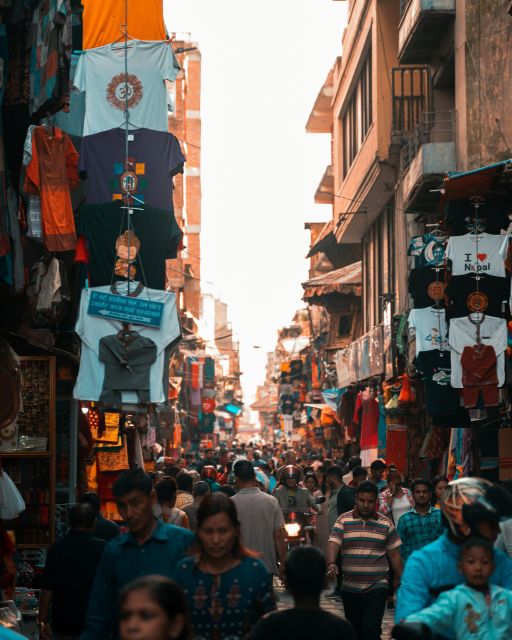
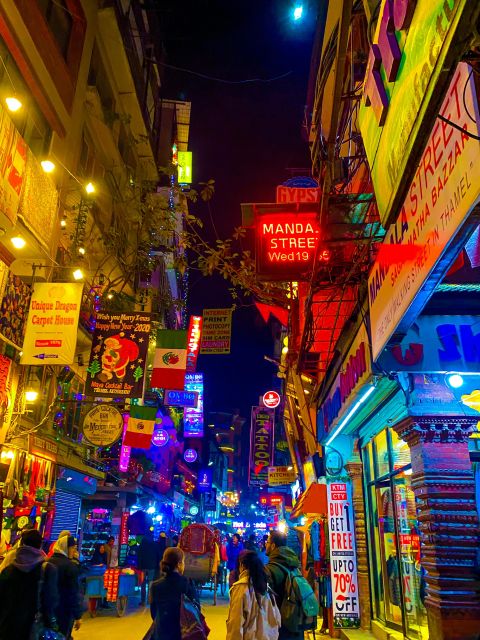
The final ride passes through Thamel, Kathmandu’s main tourist district. You will see colorful markets, cafes, and shops from the rickshaw rather than stopping at every one.
This part is useful for orientation. If you are staying in Thamel, the ride helps you understand how the lanes connect and may point out areas you want to revisit on foot. It also gives the driver a chance to return you to your hotel or an agreed drop-off point.
Thamel can be crowded and noisy, and a cycle rickshaw does not move quickly through its streets. That is not a flaw if you want to watch daily life at close range. It can be frustrating if you expect a fast transfer.
The driver’s role deserves emphasis. A verified booking praised the driver’s punctuality, polite manner, careful driving, and willingness to show more than the listed stops. That suggests you should treat the driver as an important part of the experience, while still remembering that the quality of commentary may depend on the individual driver assigned to you.
Price, timing, and what you actually get
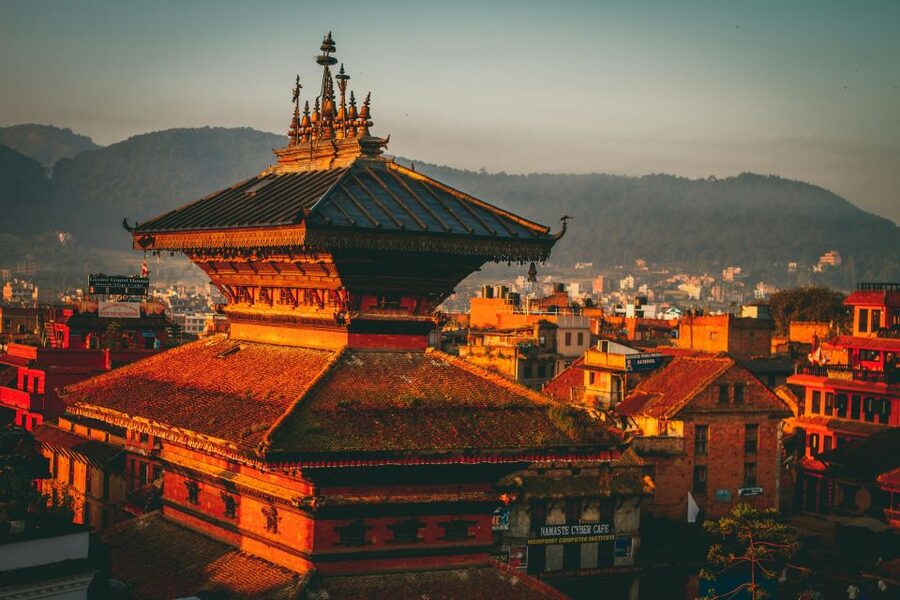
At $14 per person, the tour offers a low-cost way to cover several central Kathmandu sights with private transport. You receive rickshaw pickup and drop-off, allowances, taxes, and service charges.
You do not receive food, monument entry, personal purchases, or a dedicated guide. The optional food challenge comes from your own spending money. Once you add snacks and entry fees, your final cost will be higher than $14, but it can still be good value for a half-day outing.
The timing needs a little care. The main description says four hours, while the transport section lists about 4.5 hours. Plan for roughly four hours and allow an extra 30 minutes, especially if traffic is heavy or you stop for several foods.
The listed start window is flexible, from 9:30 a.m. to 12:30 p.m., with the main description referring to a 10 a.m. to noon start. Confirm your chosen time in advance. An early morning start gives you the best chance of reaching Kumari Ghar during the 9 to 11 viewing period.
Free cancellation is available up to 24 hours before the start, and you can reserve now and pay later. Large bags and luggage are not allowed in the vehicle. Alcohol, drugs, littering, jumping, open fires, and alcoholic drinks in the vehicle are also prohibited.
Who will enjoy this ride most
I would recommend this tour to a first-time visitor who wants a broad taste of central Kathmandu without spending a full day on foot. It suits people who enjoy short food stops, historic squares, local markets, and open-air transport.
It is also a good fit if you want to support local drivers directly. The private format gives you more freedom than a large group, and the flexible start time helps if your morning plans are uncertain.
You may prefer another option if you want a detailed historical lecture, a carefully planned restaurant meal, or step-free access. The route includes uneven streets, walking, food stalls, and a rickshaw ride that may be uncomfortable for anyone with back or mobility problems.
Families with children under five should not book it. The same applies to anyone in the listed medical or weight categories. The activity also excludes people with hearing impairments, so confirm communication needs before paying.
Should you book the Thamel Rickshaw tour?
Book it if you want a practical introduction to Kathmandu built around movement, small food tastes, and major central sights. The best parts are the Ason breakfast stop, the close-up view of Kathmandu Durbar Square, and the chance to add your own food route for about $5.
Book with realistic expectations. This is a transport-led outing rather than a fully guided cultural tour, and the price leaves food and entrance fees to you. Confirm the start time if seeing the Kumari matters, carry small spending money, and allow extra time beyond the advertised four hours.
For an affordable private ride that supports local rickshaw drivers, it is a sensible choice. For a slow, detailed study of Kathmandu’s monuments, choose a dedicated guide instead.
FAQ
How long does the Thamel Rickshaw tour last?
The activity is advertised as four hours, while the transport details list about 4.5 hours. Plan for roughly four hours and allow some extra time for traffic and food stops.
Where does the tour start and finish?
Pickup and drop-off are arranged in Thamel, usually at your hotel or a nearby meeting point. The route returns to Thamel or another pre-arranged drop-off point.
Is food included in the tour price?
No. Snacks, drinks, personal expenses, and the optional food challenge are paid separately. The suggested food challenge budget is $5.
Can I see the Living Goddess during the tour?
Kumari Ghar viewing is listed between 9 and 11 a.m. and 4 and 6 p.m. Choose your starting time carefully, since the tour can begin between about 9:30 a.m. and 12:30 p.m.
Is a tour guide included?
No separate tour guide is included. The rickshaw driver speaks English, Nepali, or Hindi and handles the ride. Drivers may also provide information about the places along the route.
Can I cancel or pay later?
You can cancel up to 24 hours before the activity for a full refund. Reserve now and pay later is also available.
Just added in Kathmandu
- Kathmandu to Chitwan Tour by Tourist Bus – A Convenient and Affordable Way★ 4.0 · 4 reviews
- Changunarayan Hill to Telkot Hike Near Kathmandu Day Tour★ 5.0 · 6 reviews
- Mt Everest Base CampTrek | Budget Package★ 5.0 · 4 reviews
- Chitwan Jungle Safari 3-Day Tour★ 5.0 · 9 reviews
- Chandragiri Hill Station Tour by Cable Car★ 5.0 · 4 reviews
- Chandragiri Hills cable car day trip, private car with driver from Kathmandu★ 5.0 · 8 reviews
- Chandragiri to Taudaha Nature Day Hiking from Kathmandu★ 5.0 · 13 reviews
- Chandragiri Cable Car & Monkey Temple Private Guided Day Tour★ 5.0 · 5 reviews
Tours in Kathmandu, compared.
Private Kathmandu Sightseeing Tour | UNESCO World Heritage sites
Read our review →
Everest Base Camp Helicopter Tour landing at Everest View Hotel
Read our review →
Nagarkot Sunrise View and Day Hiking from Kathmandu
Read our review →
Full Day 7 UNESCO Tour with Lunch – Private/Group
Read our review →