Reviewed · TOURS IN KATHMANDU
Discover Ranjana Lipi the Traditional Newari Script
Ranjana Lipi is not just a handwriting lesson. It is a hands-on way to meet Newari culture through script, food, drink, and ritual in one three-hour session at Jatra Restaurant in Kirtipur. You practice the curved letters with a bamboo pen, then leave with your own framed piece of writing.
I like the small group size, capped at 15, because an instructor can give useful help with each stroke. I also like the way the food is built into the experience: Sagun arrives as a welcome snack, followed by a traditional Samay Baji platter and a Newari drink.
The main consideration is communication. One participant noted that the teachers did not speak English, although the instruction was still manageable through demonstration and guidance. If you need a polished calligraphy class with lengthy explanations in English, this may feel basic. If you are happy to learn by watching and practicing, it has real appeal.
Key Points Before You Book
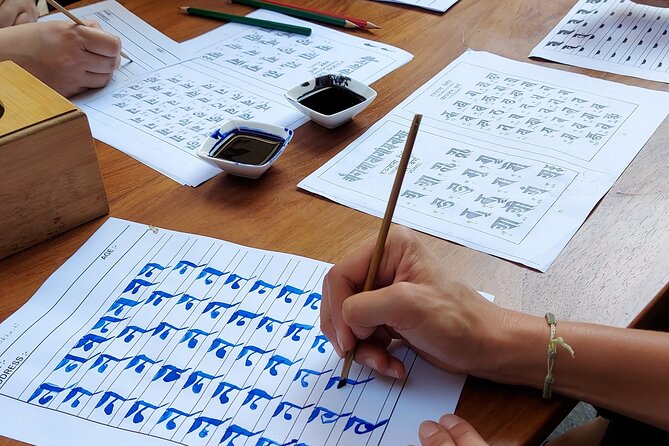
- Ranjana Lipi by hand: Practice the historic Newari script with a customary bamboo pen, ink, and canvas paper.
- Three hours at Jatra Restaurant: The session begins and ends at Chithu Road in Kirtipur.
- Morning or evening choice: Book 8 am to 11 am or 5 pm to 8 pm.
- Food is part of the lesson: You receive welcome Sagun snacks, a Newari Samay Baji platter, and an alcoholic or nonalcoholic drink.
- A useful keepsake: Your finished Ranjana script is framed for you to take home.
- Good for small groups: A maximum of 15 people allows for personal help without making the event private.
Why Ranjana Lipi Makes a Memorable Kathmandu Activity
Many cultural activities in Kathmandu ask you to look, listen, and take a photograph. This one asks you to hold a pen and make something. That small shift matters. You are not simply hearing that Ranjana Lipi is important. You are learning how its letters are formed, one careful stroke at a time.
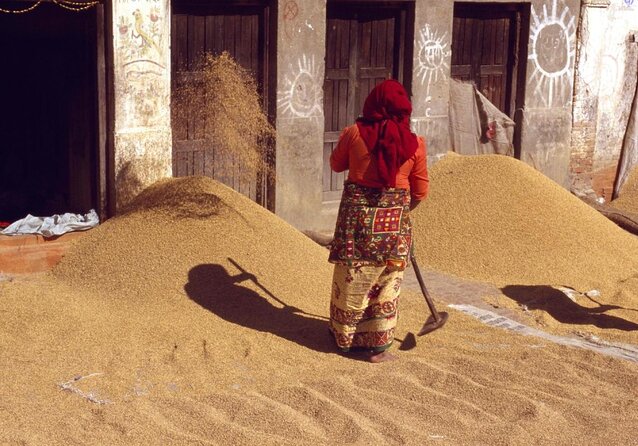
Ranjana Lipi is the traditional Newari script associated with the Newar people of the Kathmandu Valley. It is also seen in Buddhist writing, scriptures, and thangka art. One participant booked the class after seeing the Buddhist mantra Om Mani Padme Hum written in Ranjana script. That is a good reason to attend: once you know the letter shapes, you can look at familiar religious art and written symbols with a sharper eye.
You should not expect to master the entire script in three hours. The point is to become familiar with its forms and rules, practice selected letters, and understand why the script still matters. Your finished sheet becomes both a souvenir and a record of the work you did.
Other trips people book in Kathmandu:
- Everest Base Camp Trek – 14 Days
★ 5.0 · 1,499 reviews - Private Kathmandu Sightseeing Tour | UNESCO World Heritage sites
★ 5.0 · 756 reviews - Everest Base Camp Helicopter Tour landing at Everest View Hotel
★ 5.0 · 668 reviews
Arriving at Jatra Restaurant in Kirtipur
The meeting point is Jatra Restaurant on Chithu Road, Kirtipur. The activity starts and finishes here, so you do not need to arrange a separate return transfer. Public transportation is nearby, but private transportation is not included.
Kirtipur gives the session a fitting setting. The town is closely linked with Newari culture, so the class feels connected to its surroundings rather than packaged as a generic craft workshop. The supplied details do not include a hotel pickup service, a walking route, or a named guide, so plan your own way to Jatra Restaurant and allow time to arrive before the start.
You can choose the morning session from 8 am to 11 am or the evening session from 5 pm to 8 pm. The early option leaves most of the day open for other plans. The evening option may work better if you have spent the day sightseeing or prefer to combine the class with an evening meal.
The group limit is 15 people. That is large enough for a social class, but still small enough for an instructor to watch your technique. If you are booking for family or friends, group discounts are available, though the exact discount is not specified.
The Welcome: Tika, Sagun, and a Traditional Drink
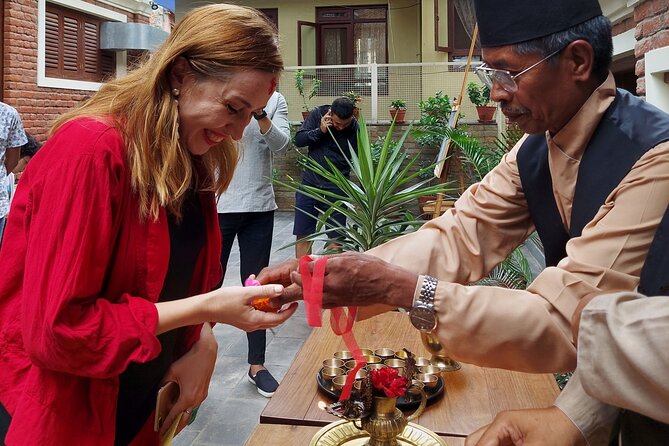
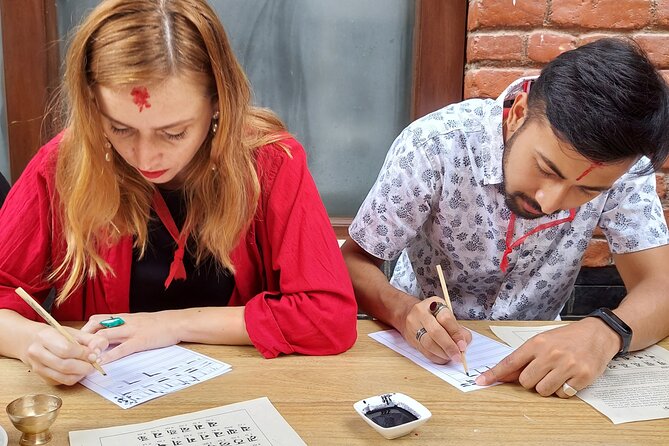
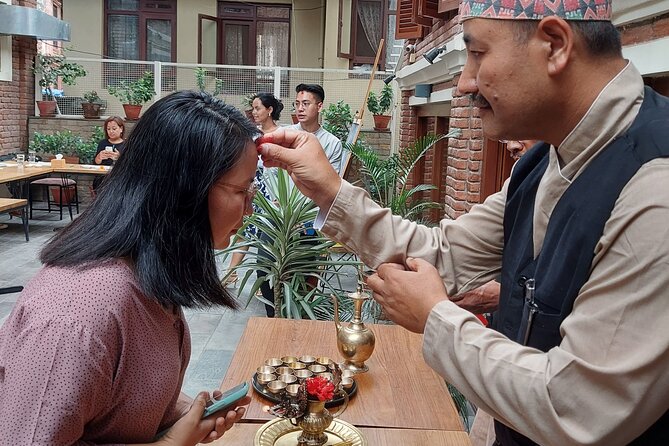
The cultural welcome begins before the writing. The program includes tika and Sagun, a set of traditional Newari welcome snacks, along with an alcoholic or nonalcoholic drink. This gives the event a social rhythm and introduces customs through food rather than a long lecture.
You may prefer the nonalcoholic option if you are driving, avoiding alcohol, or attending with children. The supplied information does not specify the exact drink or snack ingredients, so ask at the venue if you have allergies, dietary restrictions, or questions about alcohol.
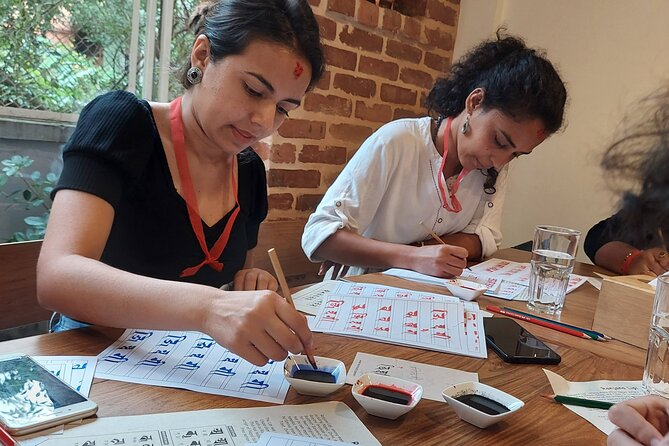
The drink is served in an earthen cup while you practice. That detail adds a tactile element to the class: bamboo pen, ink, canvas paper, and clay cup all make the session feel like a craft lesson rather than a standard restaurant meal with a short talk attached.
The welcome also includes hospitality with a traditional touch. One participant especially valued the tika, Sagun, welcome drink, and the way the team received everyone. If you enjoy cultural customs presented in a friendly, participatory way, this part will likely be as memorable as the script practice.
Learning the Curves of Ranjana Lipi
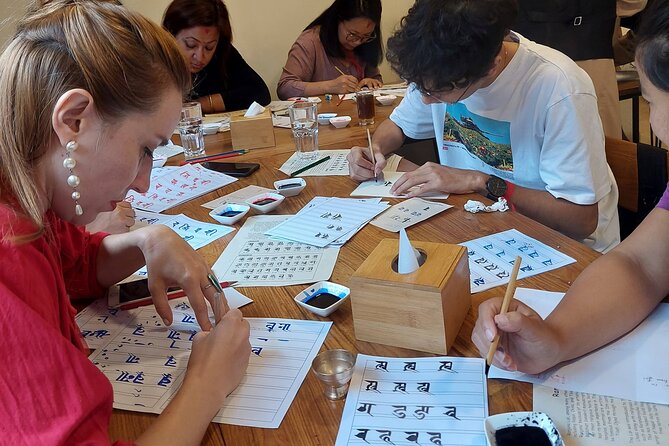
The main lesson uses bamboo pens, ink, and canvas paper. Local Ranjana Lipi instructors demonstrate the letter forms and guide you through the rules and strokes. You then practice for yourself, repeating the shapes until the pen begins to feel more natural.
This is not a passive demonstration. Your hand needs to follow the instructor closely. The script’s curves and details may feel unfamiliar at first, especially if you are used to writing the Roman alphabet. The value comes from slowing down and paying attention to the order and direction of each mark.
The class suits beginners. It is designed for people who know little about Ranjana Lipi but want to learn. Several participants praised the instructors for supporting them through each stroke, and one person with Newar roots described the class as a proud chance to reconnect with an important part of that heritage.
Instruction may not be fully in English. One participant said the teachers were professional and helpful even though they did not speak English, with demonstrations making the lesson accessible. I would treat this as a practical warning rather than a dealbreaker. Watch carefully, ask for a repeat when needed, and expect to learn partly by copying the instructor’s hand movements.
The class can also suit people who already know something about the script. A participant studying Buddhist philosophy wanted to understand the script seen in Buddhist mantras and paintings. Another Newar participant wanted to standardize existing knowledge of the letters and rules. You do not need prior study, but you also do not have to be a complete beginner to find a purpose here.
Same base, a different kind of day:
- Half day cooking class in Thamel kathmandu
★ 5.0 · 607 reviews - Everest Base Camp Trekking
★ 5.0 · 485 reviews - Nagarkot Sunrise View and Day Hiking from Kathmandu
★ 5.0 · 471 reviews - Kathmandu: Full Day 7 UNESCO Tour with Lunch – Private/Group
★ 5.0 · 415 reviews
Eating Samay Baji Between Writing Exercises
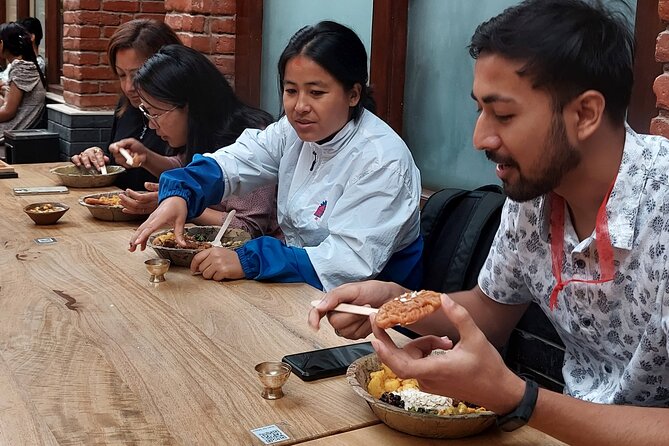
The food is more than a bonus. It gives the workshop a natural break and introduces a central part of Newari life. The included meal is a Samay Baji platter, a traditional Newari assortment served with an alcoholic or nonalcoholic drink.
The exact items on the platter are not listed, so you should not book this expecting a particular dish. What is clear is that the meal is treated as an important part of the program, not a token snack. Participants repeatedly praised the taste of the Newari food, as well as the hospitality around it.
The timing also makes sense. Writing an unfamiliar script requires concentration, and a food break keeps the three-hour session from feeling like a rigid classroom. You can eat, talk with your group, and return to the writing with a little less pressure on your hand.
Coffee and tea are not included. That is a minor point, but useful to know if you expect a standard café service. The included drink is part of the Newari offering, while coffee and tea would be a personal expense.
Finishing Your Framed Ranjana Script
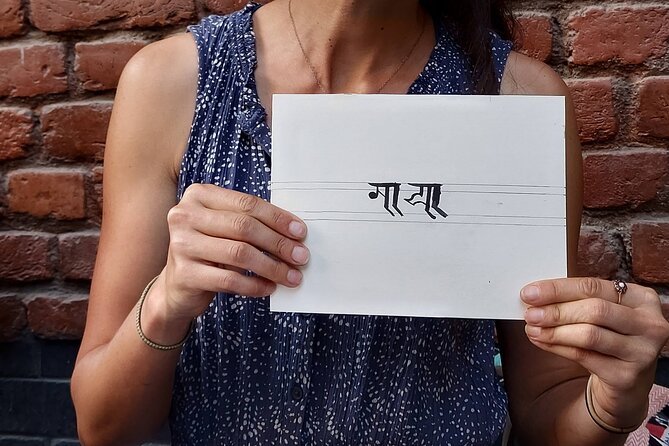
At the end, your own Ranjana script is framed as a memento. This is one of the strongest practical features of the activity. You are not leaving with loose practice paper that may disappear into a suitcase. You get a finished piece that shows what you learned.
The memento is also personal in a way that a bought souvenir is not. Your lettering may not be perfect, and that is part of its value. The framed sheet records a first attempt, a family activity, or a meaningful connection to Buddhist or Newari culture.
If you are attending with friends or relatives, the finished pieces can serve as a shared reminder of the day. If you are Newar or have a personal connection to Nepal, the keepsake may carry more weight than a standard craft purchase. If you are mainly interested in food, the framed writing may feel less important, but it still gives the class a clear ending.
Is $42 a Fair Price?
At $42 per person, the price includes about three hours of instruction, bamboo pens, ink, canvas paper, Sagun snacks, a Newari Samay Baji platter, a drink, and a framed memento. It also covers the cultural setting and the work of an instructor guiding your writing.
I consider that a fair package if you want an activity rather than a simple meal. A restaurant lunch alone would cost less in many parts of Kathmandu, and a souvenir bought in a shop might cost less too. The value here comes from combining food, instruction, participation, and a finished object in one appointment.
The value is strongest for someone who wants context. You learn why the script matters, how it is written, and how it appears in Buddhist and Newari traditions. If your main goal is an advanced calligraphy course, three hours may not be enough. If your goal is a memorable introduction, the price is easier to justify.
Group discounts may make it more attractive for families, friends, or organized groups. Since the exact terms are not provided, check the booking price for your party before assuming a particular saving.
Who Will Enjoy This Most?
I would recommend this for first-time visitors who want a cultural activity with a clear local focus. It avoids the usual sightseeing pattern and gives you something to do with your hands. It also works well for people who enjoy food, crafts, history, writing, or Buddhist art.
It is a particularly good choice for:
- Couples and friends who want a shared activity
- Families interested in a calm cultural workshop
- People studying Buddhist philosophy or Himalayan art
- Newar participants reconnecting with their heritage
- Anyone who prefers small group activities to large sightseeing tours
- Visitors looking for a useful, personal souvenir
You should think twice if you dislike structured instruction, cannot comfortably write by hand, or need detailed English commentary throughout. The class is hands-on and may rely on visual teaching. It is also not a private tour, and the group can include up to 15 participants.
Most people can participate, according to the activity information. Still, tell the provider about any food allergies or restrictions before attending. The experience requires good weather, and if poor weather causes cancellation, you are offered another date or a full refund.
Practical Details for a Smooth Visit
Book either the 8 am to 11 am session or the 5 pm to 8 pm session. The activity begins and ends at Jatra Restaurant, Chithu Road, Kirtipur. Private transportation is not included, so arrange your own route using public transportation or another option.
A mobile ticket is available, and booking confirmation is sent at the time of booking. The maximum group size is 15, while group discounts may be available.
Cancellation is free up to 24 hours before the start time for a full refund. Changes or cancellations made less than 24 hours ahead are not accepted for a refund, and the cut-off follows local time.
Tips and personal expenses are not included. Coffee and tea are also extra. The included alcoholic or nonalcoholic drink gives you a choice, but confirm the preferred option when you arrive if it matters to you.
Should You Book the Ranjana Lipi Workshop?
Book it if you want a cultural activity that combines learning, food, and a personal keepsake. The strongest parts are the patient stroke-by-stroke practice, the Newari welcome, the Samay Baji meal, and the framed script you create yourself.
I would not choose it as a substitute for a full history tour of Kirtipur or an advanced calligraphy course. It is a short introduction, and the English communication may be limited. But for $42, the package offers more than a meal and more than a souvenir: you get a small, practical connection to Newari culture that you can carry home.
FAQ
Where does the Ranjana Lipi workshop take place?
The workshop starts and ends at Jatra Restaurant on Chithu Road in Kirtipur, Kathmandu, Nepal.
How long does the experience last?
The activity lasts approximately three hours.
What times are available?
You can choose a morning session from 8 am to 11 am or an evening session from 5 pm to 8 pm.
What food and drinks are included?
The price includes Newari Sagun welcome snacks, a Newari Samay Baji platter, and an alcoholic or nonalcoholic drink. Coffee and tea are not included.
What materials are provided for the writing lesson?
Bamboo pens, ink, and canvas paper are provided. An instructor also guides you through the Ranjana Lipi writing practice.
Do I receive a souvenir?
Yes. Your own Ranjana script is framed as a memento at the end of the workshop.
Can I cancel for a full refund?
Yes. You can cancel at least 24 hours before the experience start time for a full refund. Cancellations or changes made less than 24 hours before the start time are not accepted for a refund.
Just added in Kathmandu
- Traditional Momo Making Class★ 5.0 · 10 reviews
- Women Empowerment Project(Nepali cooking class & jewelry workshop★ 5.0 · 15 reviews
- Kathmandu 2 Nights 3 Days Chitwan Jungle Safari Tour★ 5.0 · 9 reviews
- Wildlife Adventure in Chitwan Nepal★ 4.0 · 4 reviews
- Kathmandu to Pokhara Premium sofa bus ticket★ 4.0 · 17 reviews
- Walking tour of Kathmandu with awesome local guides★ 5.0 · 4 reviews
- Regular Yoga for all levels of practitioners in Kathmandu★ 5.0 · 4 reviews
- Kathmandu Street Food Walking Tour – Eat Like a Local★ 5.0 · 3 reviews
Tours in Kathmandu, compared.

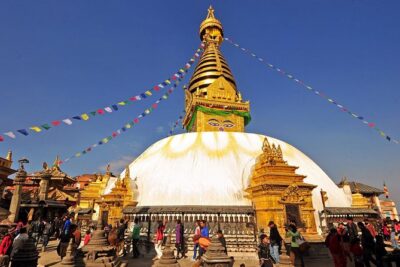
Private Kathmandu Sightseeing Tour | UNESCO World Heritage sites
Read our review →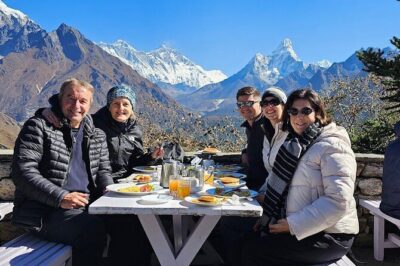
Everest Base Camp Helicopter Tour landing at Everest View Hotel
Read our review →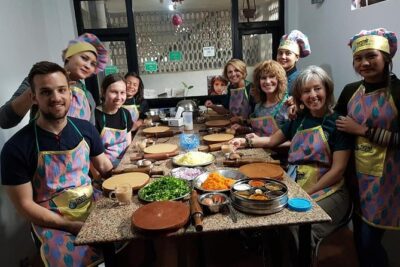
Nagarkot Sunrise View and Day Hiking from Kathmandu
Read our review →
Full Day 7 UNESCO Tour with Lunch – Private/Group
Read our review →