
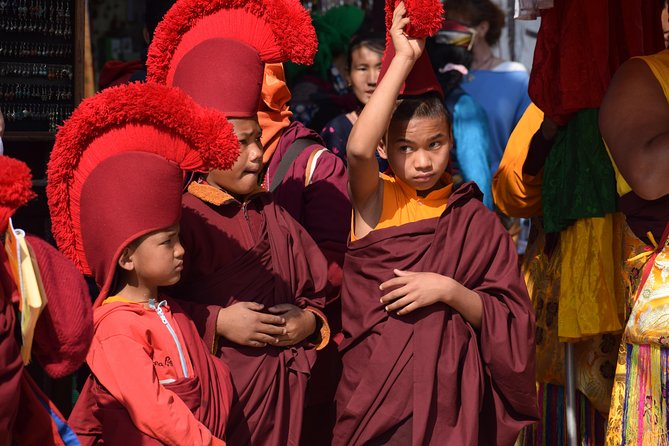
Reviewed · KATHMANDU UNESCO HERITAGE TOURS
Half Day Boudhanath Stupa Tour in Kathmandu
Boudhanath Stupa rises 36 meters above Kathmandu, yet tall buildings can hide it until you pass through the entrance. Once inside, you find a powerful Buddhist site where devotees circle the white dome, turn prayer wheels 108 times, and chant Om Mani Padme Hum. I like the private format and the fact that your guide can shape the visit around your questions. I also like the door-to-door transport, which removes the need to negotiate a taxi for a fairly short outing.
The main tradeoff is time. Three hours gives you a useful introduction, but Boudhanath rewards slow observation, and the extra Thanka stop lasts only about 10 minutes. If you want long visits inside monasteries, extended shopping, or time for food and reflection, you may find this tour too brisk.
Key points at a glance
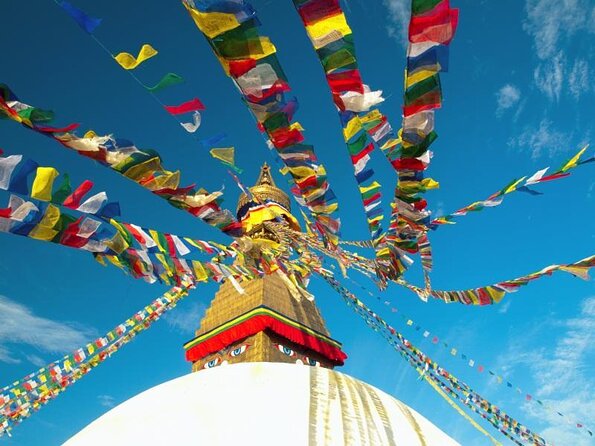
- A 36-meter Buddhist landmark: Boudhanath’s size becomes clear as you approach the central stupa and look up from the surrounding square.
- A private visit for your group: You do not share the guide with strangers, and the commentary can be adjusted to your interests.
- Prayer rituals are part of the scene: Watch devotees turn prayer wheels and circle the stupa while chanting Om Mani Padme Hum.
- Hotel pickup and drop-off are included: The transport saves time and avoids haggling over taxis in Kathmandu.
- Thanka paintings add an art stop: A nearby center displays hand-painted religious works and functions as a gallery and shop.
- $55 covers the core costs: The price includes private transportation, a guide, entrance fees, and hotel transfers, but not food or drinks.
Why Boudhanath deserves a half-day
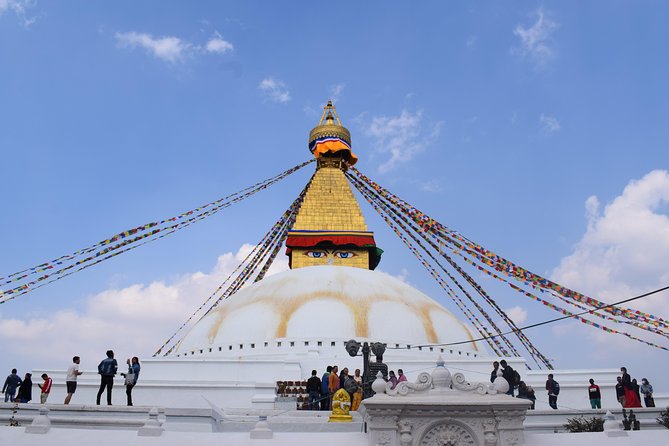
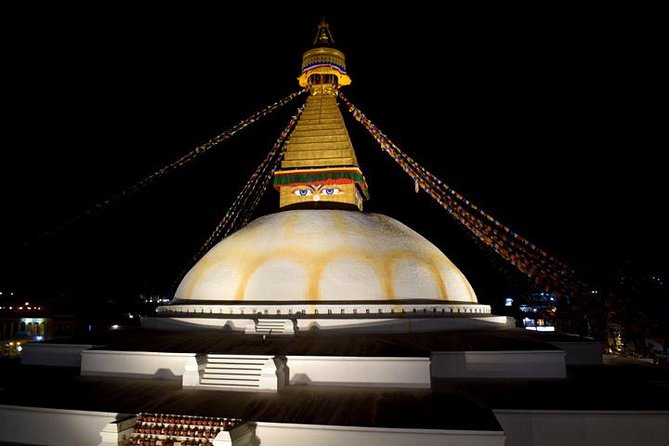
Boudhanath is not the sort of sight you understand from one photograph. Its white dome, golden details, prayer flags, and watchful Buddha eyes are instantly recognizable, but the meaning becomes clearer when you see how people use the site.
The main activity is simple: you walk around the stupa in a clockwise direction with devotees and other visitors. Prayer wheels line the route. The faithful turn them as they pass, with 108 rotations described in the tour information, while prayer flags lift in the breeze. The repeated movement gives the place its rhythm.
I like this kind of visit because the ceremony is not presented as a staged show. You are seeing a working holy site. A guide can explain what you are looking at and help you avoid treating the ritual space as just another photo stop.
Boudhanath is also described as a piece of Tibet in the middle of Kathmandu. Large, colorful monasteries surround the stupa, and the area is connected with the Tibetan refugee community. That setting gives the visit more depth than a quick monument stop. You are seeing architecture, art, belief, and daily religious practice in one compact area.
The site is a UNESCO World Heritage Site, but the important point for your visit is practical: the entrance may not be obvious from the surrounding streets. Tall buildings circle the area and can block the view until you reach the access point. Having a driver and guide makes the arrival easier, especially if you are unfamiliar with Kathmandu.
More temple and square walks around Kathmandu:
- Private Kathmandu Sightseeing Tour | UNESCO World Heritage sites
★ 5.0 · 756 reviews - Kathmandu: Full Day 7 UNESCO Tour with Lunch – Private/Group
★ 5.0 · 415 reviews - Private Bhaktapur and Nagarkot Day Tour From Kathmandu
★ 5.0 · 305 reviews
The private pickup makes a short outing easier
The tour lasts about three hours and includes pickup and drop-off at your hotel. That matters because Boudhanath is close enough to visit in a morning or afternoon, but getting there still requires dealing with Kathmandu traffic and local transport.
With private transportation, you do not need to bargain over a taxi or work out the return trip after the visit. Your own group travels together, and the guide can focus on your pace rather than keeping up with a large mixed party.
The private setup is also useful if your interests are specific. You might want more explanation of Buddhist symbols, extra time with the prayer wheels, or a quicker pass through the art center. The guide can tailor the commentary and flow to your group.
Pickup is offered, and all transportation is included in the listed $55 per-person price. That makes the cost easier to assess. You are not paying only for entry to the stupa. You are paying for a private vehicle, a professional guide, hotel transfers, and admission.
The tour information says group discounts are available, but it does not give a discount amount. If you are booking for several people, it is worth checking the final group price before deciding.
Walking the 36-meter Boudhanath Stupa
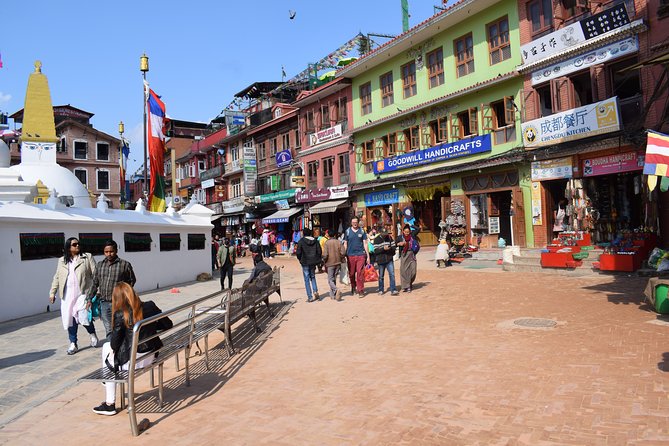
The first stop takes most of the tour, about three hours. That timing suggests a proper visit rather than a quick photograph from the edge.
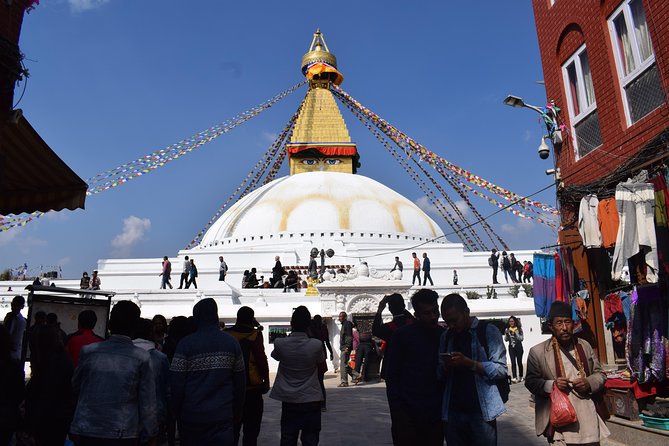
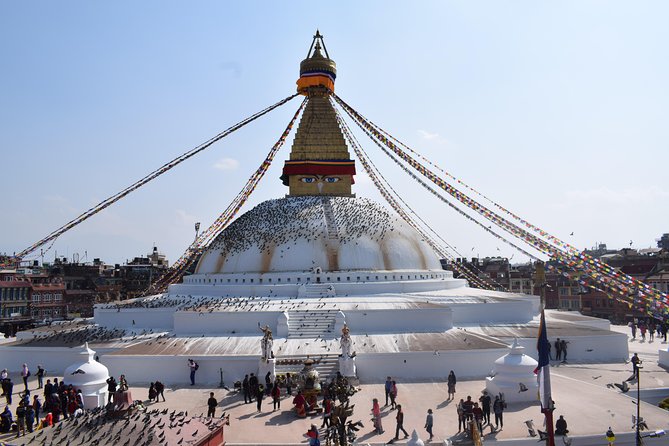
As you enter the area, the first impression is scale. The stupa rises 36 meters, or about 118 feet, above the square. The height is especially striking because the surrounding buildings can conceal the monument until the final approach.
Your guide can help you read the site as you circle it. Look for the prayer wheels along the route, the prayer flags above, and the monasteries around the square. The central stupa is the focus, but the surrounding religious buildings help explain why this is an active center rather than an isolated monument.
The circling walk is easy, according to the tour description. You do not need a strenuous hike or a special level of fitness. Most people can participate, and the activity is suitable for a short cultural outing during a Kathmandu stay.
Still, easy does not mean empty. You are walking in a functioning religious space, so the best approach is to move with care. Give devotees room, follow your guide’s instructions, and treat photography as secondary to the setting. The tour provides an opportunity to observe religious practice, not just to collect an image of the stupa.
A guide adds real value here. Without context, you might notice the prayer wheels but not understand their repeated use, or see the flags without appreciating their religious role. The recorded experience with Kabita describes a guide who was kind and well informed, and her name is useful to know if you are hoping to request her. The supplied information does not promise that every departure will be led by Kabita, so confirm the guide assignment when booking.
Prayer wheels, flags, and the sound of the circuit
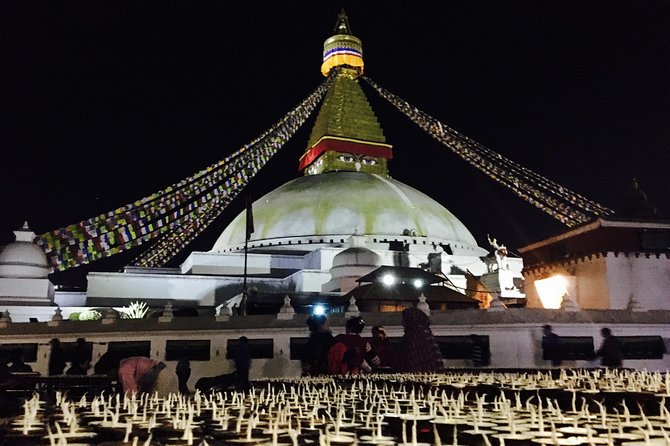
The most memorable part of Boudhanath may be the movement around the stupa. Devotees circle the monument, turning prayer wheels 108 times and chanting Om Mani Padme Hum. Prayer flags flutter overhead, with the belief that prayers are carried to the heavens.
You do not have to take part in every ritual to appreciate the setting. You can walk quietly, watch the pattern of movement, and ask your guide about what you see. The private format gives you room to pause without worrying about holding up a large group.
This is also where the tour’s short length becomes both a strength and a weakness. Three hours is enough for a focused introduction, especially if you have only limited time in Kathmandu. But Boudhanath is not a place that needs to be rushed. If you prefer sitting, watching, and returning to details, ask your guide early whether the schedule allows it.
The site can be especially useful for someone seeing Buddhist practice for the first time. The ritual is visible and easy to follow, while the guide supplies the background that a solo visit may lack. You can visit alone, but you may miss the meaning of the symbols and the reasons behind the circuit.
Same base, a different kind of day:
- Everest Base Camp Trek – 14 Days
★ 5.0 · 1,499 reviews - Everest Base Camp Helicopter Tour landing at Everest View Hotel
★ 5.0 · 668 reviews - Half day cooking class in Thamel kathmandu
★ 5.0 · 607 reviews - Everest Base Camp Trekking
★ 5.0 · 485 reviews
The monasteries and Tibetan character around the stupa
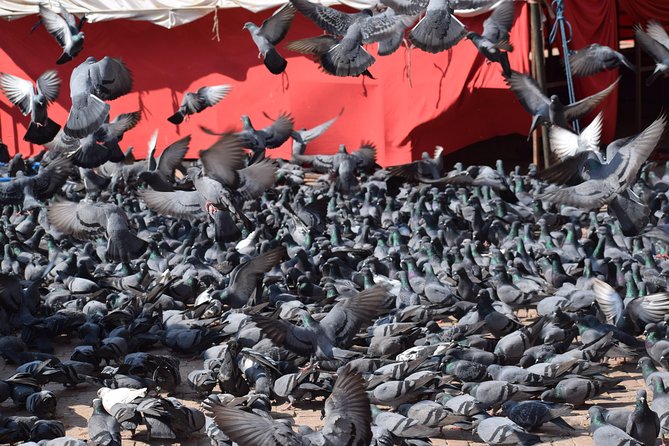
Boudhanath is surrounded by large, colorful monasteries. The tour description also identifies the area with the largest Tibetan refugee community, giving the neighborhood a distinct cultural connection beyond the stupa itself.
You should not assume that the three-hour stop includes detailed visits to every monastery. The provided schedule centers on circling the stupa and receiving commentary. If a particular monastery matters to you, bring it up with the guide so the private format can work in your favor.
The monasteries add visual variety to the visit. The stupa provides the central form, while the surrounding buildings, colors, flags, and religious activity give the area its character. I like that the tour does not treat Boudhanath as a single object with a short explanation. The setting around it is part of what makes the visit worth your time.
That said, this is still a city tour. The stupa is surrounded by tall buildings, and the approach is not presented as a quiet countryside arrival. If you want wide-open views or a peaceful rural setting, this experience will feel urban. Its appeal comes from seeing a sacred place integrated into Kathmandu.
A 10-minute visit to the Boudha Stupa Thanka Center
The second stop is the Boudha Stupa Thanka Center, located near Boudhanath. The visit lasts about 10 minutes and has no separate admission fee.
The center displays Thanka paintings in a gallery-like setting. These are described as authentic works made by professional painters using fine, authentic materials. You can look at the paintings as religious art, ask the guide about their imagery, or consider purchasing one.
Ten minutes is enough for a brief introduction, but not a long art lesson. If you have serious interest in Thanka painting, the stop may feel more like a sample than a full workshop or museum visit. The tour does not state that a purchase is required, so you can treat it as an optional cultural stop within the route.
This visit also changes the pace. After the outdoor circuit around the stupa, you move into a more focused art setting. I find that useful because it connects the religious world of Boudhanath with the paintings and visual traditions created around it.
Keep your expectations clear. This is a short stop at a shop and gallery, not a separate major attraction. Its value is in seeing the art close to the stupa without giving up much of your half-day.
What $55 per person really covers
At $55 per person, the tour is reasonably easy to judge because several costs are bundled together. You receive:
- Private transportation
- Hotel pickup and drop-off
- A professional guide
- Entrance fees
Food and drinks are not included, so plan to buy those separately if needed. The total duration is about three hours, which makes this a compact cultural tour rather than a full-day Kathmandu program.
The strongest value comes from the private vehicle and guide. If you are comfortable arranging local transport and reading about Boudhanath on your own, you could spend less independently. But a solo visit would not provide the same tailored explanation, and you would need to manage the route and taxi arrangements yourself.
For a couple, family, or small group, the private format can make the price more attractive. The tour is for your party only, and group discounts are offered, though no exact discount is listed. Ask for the group rate if you are booking several places.
I would choose this tour when convenience matters and when I want the visit explained without committing an entire day. I would hesitate only if I wanted a slow, unstructured morning or planned to spend several hours on Tibetan art and monastic visits.
Who will get the most from this visit
This experience suits you if you are staying in Kathmandu and want a focused introduction to one of its major religious sites. It is also a good match if you prefer private guiding to a large group, or if you want hotel transport included.
First-time visitors to Boudhanath may get the most from the guide’s explanations. The prayer wheels, chants, flags, monasteries, and stupa have meaning that is easy to miss when you simply walk around taking photographs.
The tour also works well for people with limited time. At roughly three hours, it can fit into a morning or afternoon. Most people can participate, and the walking is described as easy.
You may want a different arrangement if you need a food stop, want to visit several Kathmandu sights in one day, or prefer a tour built around extended shopping. Food and drinks are not included, and the Thanka visit is brief.
Confirmation is provided at booking. The tour is near public transportation, though the included private transport means you do not need to use it. Free cancellation is available if you cancel at least 24 hours before the start time. Changes or cancellations inside that period are not accepted for a refund.
Should you book the Boudhanath Stupa tour?
Book it if you want a short, private, well-organized introduction to Boudhanath with hotel transport and a guide who can explain the religious details. The stupa’s scale, prayer-wheel circuit, Tibetan connections, and surrounding monasteries give you plenty to see in three hours.
The tour is especially appealing if you have never visited Boudhanath and do not want to spend time finding the entrance or arranging a return taxi. A guide such as Kabita can make the difference between simply seeing the site and understanding what is happening around you.
Skip it if you want a long, slow visit with extended monastery time, a substantial meal, or a full afternoon devoted to Thanka art. For most people seeking a convenient cultural stop in Kathmandu, though, the $55 price is fair because it includes the transport, guide, and entrance costs in a private setting.
FAQ
How long does the Boudhanath Stupa tour last?
The tour lasts approximately three hours.
Is this a private tour?
Yes. Only your group participates in the activity.
Is hotel pickup included?
Yes. Hotel pickup and drop-off are included.
Is transportation included?
Yes. Private transportation is included for the tour.
Is a guide included?
Yes. A professional tour guide is included. The available information names Kabita in one experience, but it does not guarantee that she leads every departure.
Are entrance fees included?
Yes. All entrance fees are included.
Is the Thanka painting center included?
Yes. The tour includes a visit to the nearby Boudha Stupa Thanka Center, which lasts about 10 minutes and has no separate admission fee.
Are food and drinks included?
No. Food and drinks are not included.
Can I cancel for a full refund?
Yes, if you cancel at least 24 hours before the experience start time. Cancellations or changes made less than 24 hours in advance are not accepted for a refund.
Just added in Kathmandu
- Traditional Momo Making Class★ 5.0 · 10 reviews
- Women Empowerment Project(Nepali cooking class & jewelry workshop★ 5.0 · 15 reviews
- Kathmandu 2 Nights 3 Days Chitwan Jungle Safari Tour★ 5.0 · 9 reviews
- Walking tour of Kathmandu with awesome local guides★ 5.0 · 4 reviews
- Wildlife Adventure in Chitwan Nepal★ 4.0 · 4 reviews
- Kathmandu to Pokhara Premium sofa bus ticket★ 4.0 · 17 reviews
- Regular Yoga for all levels of practitioners in Kathmandu★ 5.0 · 4 reviews
- Kathmandu Street Food Walking Tour – Eat Like a Local★ 5.0 · 3 reviews
Kathmandu UNESCO Heritage Tours, compared.
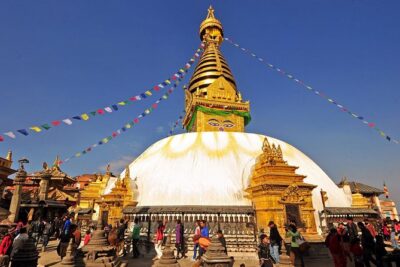
Private Kathmandu Sightseeing Tour | UNESCO World Heritage sites
Read our review →
Full Day 7 UNESCO Tour with Lunch – Private/Group
Read our review →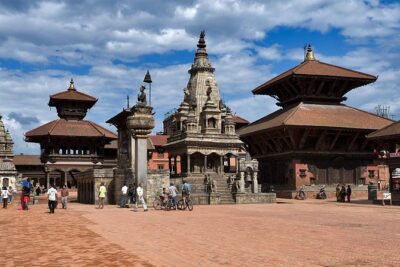
Private Bhaktapur and Nagarkot Day Tour From Kathmandu
Read our review →
Kathmandu Spiritual Sites: Bodhnath & Pashupatinath Tour
Read our review →
Day Trip to Bhaktapur and Panauti from Kathmandu
Read our review →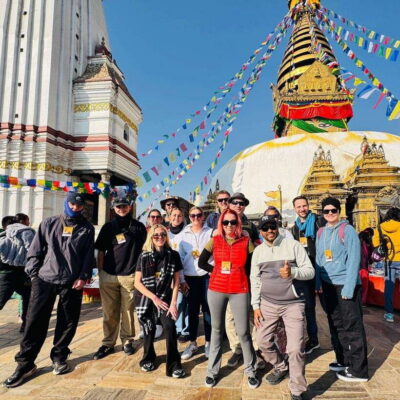
Browse the lists this tour appears in