
Reviewed · KATHMANDU UNESCO HERITAGE TOURS
Kathmandu: 7 UNESCO-Listed city sites group day trip
Kathmandu’s seven UNESCO sites make one remarkable day, but the real prize is the way the stops connect Nepal’s royal past, Hindu worship, and Buddhist practice. You move from Swayambhunath’s hilltop stupa to ancient palace squares, then finish among the prayer wheels of Boudhanath. It is a big cultural meal, not a light snack.
I like the private group format, which gives you room to ask questions and adjust the pace. I also like the guide-led context at Pashupatinath, where a respectful explanation helps you understand cremation rites and daily worship without treating a sacred place like a photo prop.
The drawback is simple: seven sites in eight hours means a brisk day, with plenty of van time and walking. Tickets are not included in the $64 price, and the stairs, uneven surfaces, and motion on city roads may be hard for some people.
Key points at a glance
- Seven UNESCO sites in one day: Visit Swayambhunath, Kathmandu Durbar Square, Patan Durbar Square, Bhaktapur Durbar Square, Changu Narayan, Pashupatinath, and Boudhanath.
- A guide who adds meaning: Guides named Karma and Pooja have been praised for clear explanations, patience, and answers tailored to individual questions.
- A strong mix of places: You see royal courtyards, Hindu temples, Buddhist stupas, old Newari architecture, and riverside religious practice.
- A long but efficient schedule: The planned visits total about eight hours, with stops ranging from 30 minutes at Changu Narayan to two hours in Bhaktapur.
- Private transport and pickup: Hotel pickup, drop-off, transportation, and a licensed English-speaking guide are included.
- Budget for entrance fees: Heritage-site tickets and food are extra, so the final cost will be higher than the advertised $64.
Why this day works for first-time Kathmandu visitors
Kathmandu’s cultural sites are spread across the valley. Seeing them independently can mean arranging several rides, finding each entrance, and trying to work out what you are looking at once you arrive. This tour solves much of that problem in one sweep.
I especially like the range. You are not spending eight hours looking at one kind of monument. The day includes Buddhist stupas, Hindu temples, royal courtyards, carved woodwork, stone sculpture, and living religious customs. That variety helps you see Nepal as more than a collection of old buildings.
The schedule also gives the day a useful arc. Swayambhunath and Boudhanath show Buddhist devotion in two very different settings. Kathmandu, Patan, and Bhaktapur show the power and artistry of the old city kingdoms. Pashupatinath brings you close to Hindu rites beside the Bagmati River, while Changu Narayan offers a quieter stop with old carvings and inscriptions.
The private-group setup matters here. With your own small party, you can ask why a ritual is performed, pause at a detail in a palace window, or request a little more time at a favorite site. Previous bookings have identified guides Karma and Pooja by name, with particular praise for their clear storytelling and willingness to answer questions. Your assigned guide may differ, but the tour is designed around live guidance rather than a recorded commentary.
More temple and square walks around Kathmandu:
- Private Kathmandu Sightseeing Tour | UNESCO World Heritage sites
★ 5.0 · 756 reviews - Kathmandu: Full Day 7 UNESCO Tour with Lunch – Private/Group
★ 5.0 · 415 reviews - Private Bhaktapur and Nagarkot Day Tour From Kathmandu
★ 5.0 · 305 reviews
Swayambhunath begins the day above the valley
After pickup in Kathmandu, the van ride to Swayambhunath takes about 20 minutes. You have roughly 75 minutes at the site, including guided sightseeing, free time, photos, and some opportunity to shop.
Swayambhunath is often called the Monkey Temple, but the monkeys should not distract you from the setting. The stupa sits on a hill and offers broad views across the Kathmandu Valley. It is a smart first stop because the high position helps you understand the shape and spread of the city before you spend the rest of the day at street level.
You can expect stairs and walking here. The site is not a relaxed, flat museum visit, so wear shoes with a firm sole and keep your passport or ID card with you as requested. Use the guide’s explanation to read the place as a living center of worship, not just a lookout with an impressive dome.
The 75-minute stop is enough for a guided visit and photos, but it is not an invitation to wander every corner at leisure. If you enjoy taking many photographs, you will need to manage your time.
Kathmandu Durbar Square brings royal Nepal into view
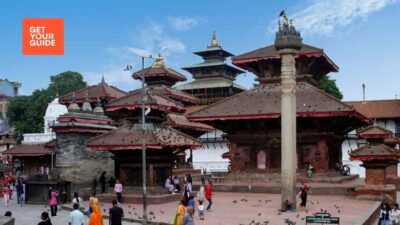
The next van ride is about 15 minutes, followed by 90 minutes at Kathmandu Durbar Square. This is where the former royal center becomes a lesson in power, craftsmanship, and urban life.
Expect palace courtyards, temples, carved details, and stories tied to Nepal’s former rulers. The guide can help you notice the work that is easy to miss when you simply walk through: wood carvings, shrine layouts, and the way religious and political spaces sit side by side.
This is a good place to ask questions. What looks like decoration may carry religious meaning, while a palace building may explain how the city was governed. I would keep your camera ready, but give equal attention to the guide’s explanation. The value here lies in making sense of the many structures rather than collecting a quick photograph of each one.
The stop includes free time and shopping. That flexibility is useful, though the overall schedule remains tight. If you want a long browsing session, this tour may feel too structured.
Patan shows Newari artistry at close range
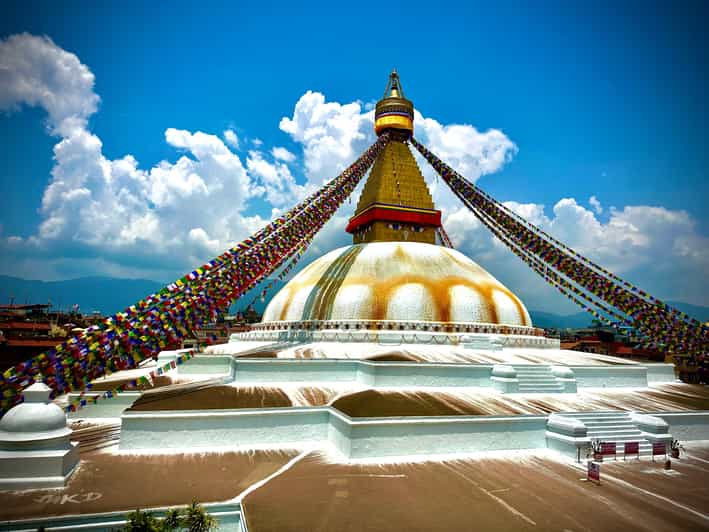
A 20-minute ride brings you to Patan Durbar Square for about 90 minutes. Patan is especially useful for seeing the close relationship between Hindu and Buddhist traditions and for appreciating Newari craftsmanship.
The square gives you time to walk, photograph, and listen without having to rush through in half an hour. Look for the careful proportions, carved surfaces, and repeated religious motifs in the old buildings. Your guide can connect the details to the wider development of the city and its traditions.
I find Patan an important counterpoint to Kathmandu Durbar Square. The two royal areas share a broad cultural setting, but visiting both helps you compare their architecture and atmosphere. If you only visited one, you could easily treat the valley’s old cities as interchangeable. A good guide helps you see their differences.
The practical issue is that old squares are made for walking, not rolling luggage or smooth wheelchair access. This tour specifically warns about stairs and mobility limits. Take your time on uneven surfaces and keep some water handy.
A few more things to do in Kathmandu worth a look
- Kathmandu: 7 UNESCO Sites Tour in 1 Day (Private Tour)
★ 4.9 · 204 reviews - Day Trip to Bhaktapur and Panauti from Kathmandu
★ 5.0 · 184 reviews - The Most Beautiful 1 Day Experience in Kathmandu Nepal
★ 5.0 · 84 reviews - Nagarkot Sunrise & Bhaktapur Heritage Tour -Private Full Day Trip
★ 4.0 · 42 reviews
Bhaktapur is the longest and most rewarding square stop
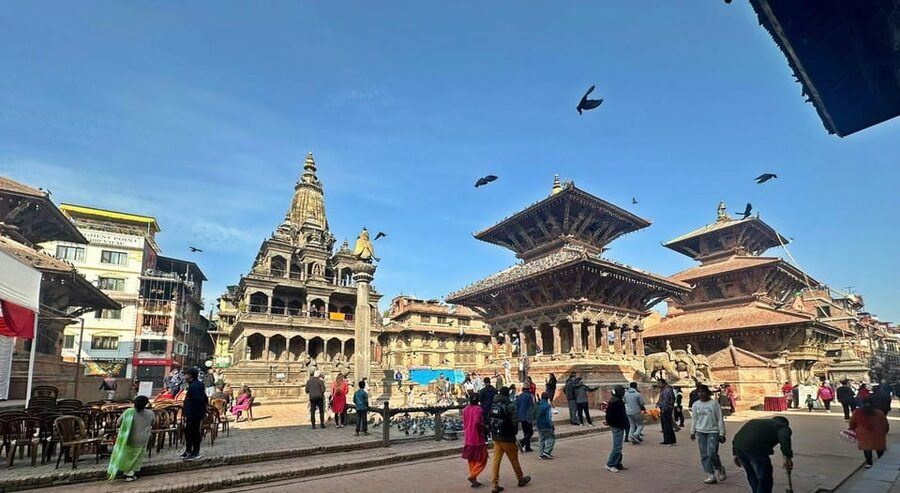
The drive to Bhaktapur takes around 30 minutes, and the visit lasts about two hours. That makes it the longest stop of the day, and rightly so. Bhaktapur offers old streets and squares where the medieval character is easier to feel than in a quick pass-through.
The two-hour window gives you space to listen, walk, take photos, and browse. The guide’s role is important here because the square can otherwise become a string of attractive façades without a clear story. Ask about the buildings, the craft traditions, and how Newari culture remains visible in the city.
The supplied schedule suggests that Bhaktapur may be visited later in the day, as twilight approaches. That can give the old streets a softer mood, but daylight can vary by season and starting time, so do not count on a particular light effect.
Bhaktapur is also where the pace may catch up with you. By this point, you have already visited three major sites and spent much of the day getting in and out of the van. The two-hour stop is generous, but the complete program is still demanding.
Changu Narayan offers a shorter, quieter pause
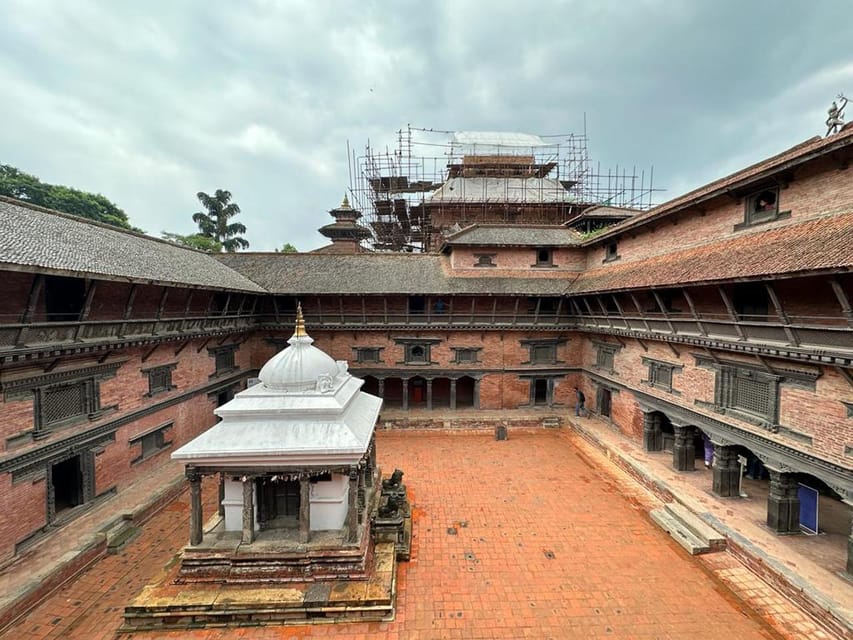
After roughly 20 minutes on the road, you reach Changu Narayan Temple for about 30 minutes. This is the briefest stop, so think of it as a focused visit rather than a full exploration.
The temple is noted for sculpture and ancient inscriptions. Those details give the stop a different purpose from the large Durbar Squares. Instead of broad royal courtyards, you get a concentrated look at old religious art and written records.
Thirty minutes can work if your guide points out the key features efficiently. It will feel short if you want to linger over every carving or shop. I would pay close attention here and ask the guide to identify the most important inscriptions before using your remaining time for photos.
The road sequence also matters. Changu Narayan is followed by a longer 40-minute ride to Pashupatinath, so this is a good moment to rest, drink water, and reset for the final part of the day.
Pashupatinath demands respect, not just photographs
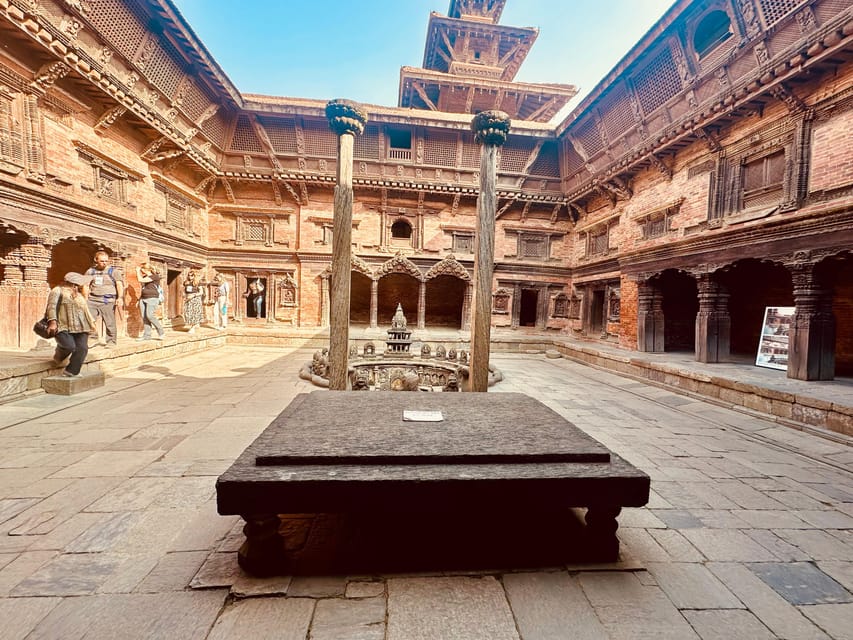
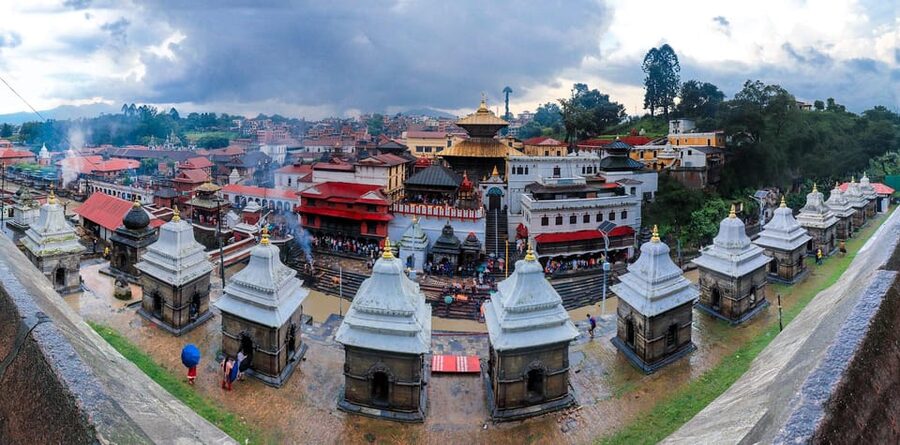
The ride to Pashupatinath takes about 40 minutes, with around 40 minutes at the temple complex. The site sits beside the Bagmati River and is one of the most serious stops on the program.
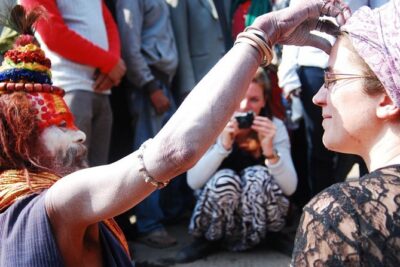
This is where the tour’s promise of cultural explanation matters most. Hindu rituals, including cremation practices by the river, are part of the setting. You should follow your guide’s instructions about where to stand, what to photograph, and how to behave. Treat the area as a place of worship and mourning, not as a performance arranged for sightseers.
The short visit means you may see only part of the complex. That is not necessarily a flaw. A respectful, guided look is better than a hurried attempt to inspect everything. Your guide can explain what you are seeing and help you avoid careless behavior.
This stop may be emotionally intense. If you are uncomfortable around cremation rituals, be honest with your guide and keep your distance. The experience is valuable because it shows religion as part of daily life, but it is not a light sightseeing stop.
Boudhanath closes the day with Buddhist rhythm
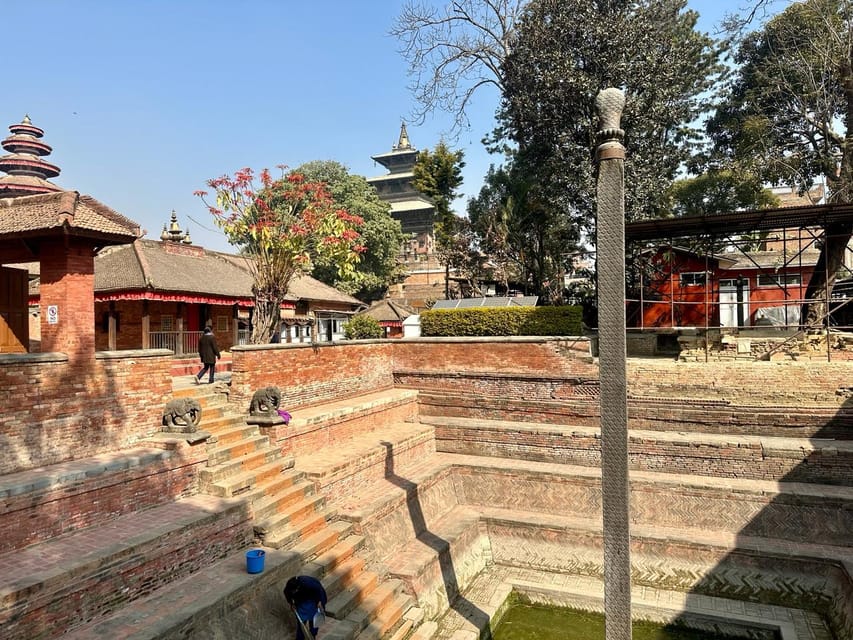
A 10-minute ride takes you from Pashupatinath to Boudhanath Stupa, where you have about an hour. The final 30-minute drive returns you to Kathmandu.
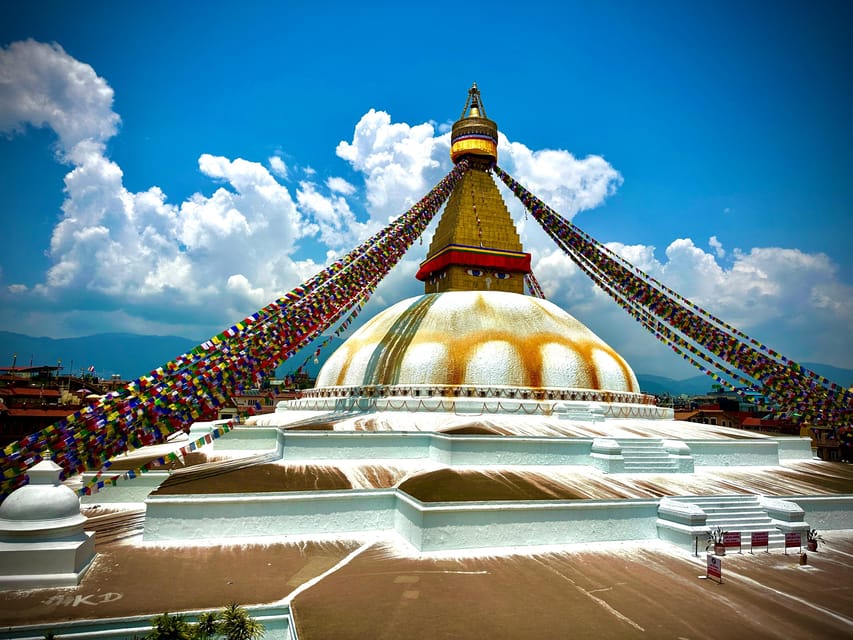
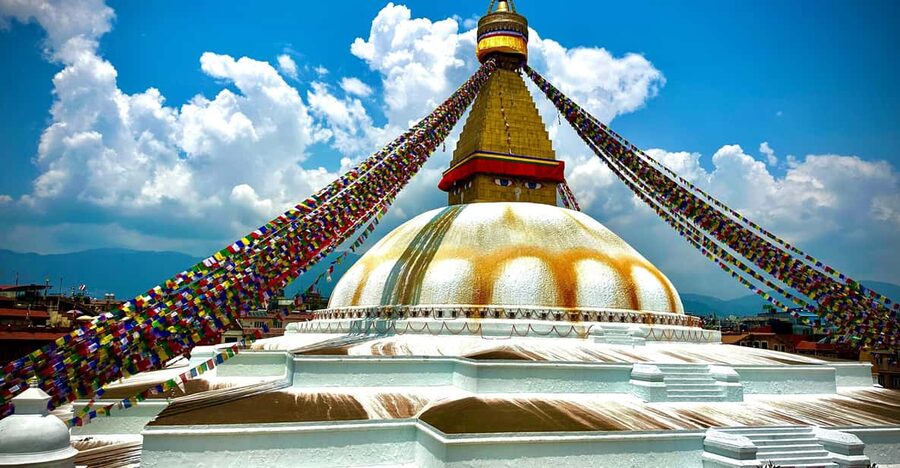
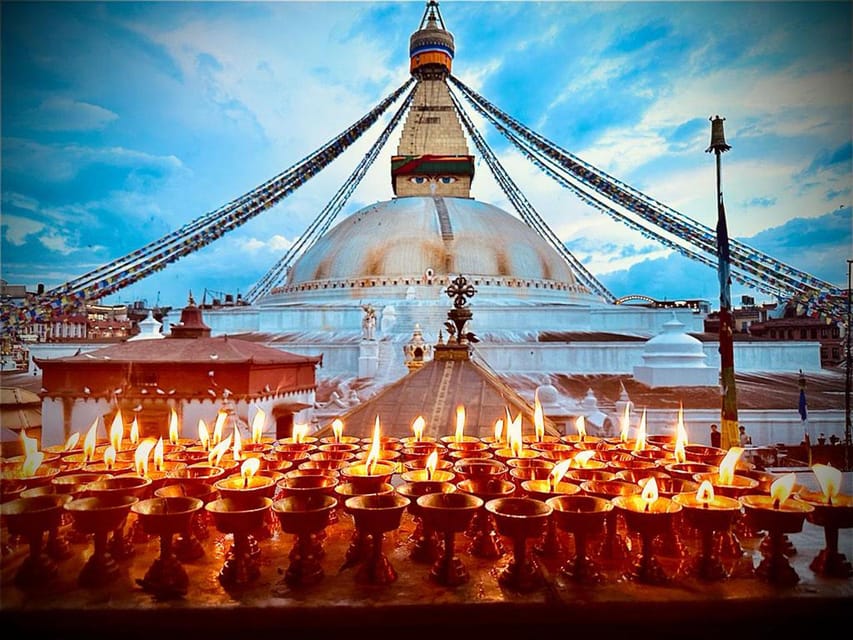
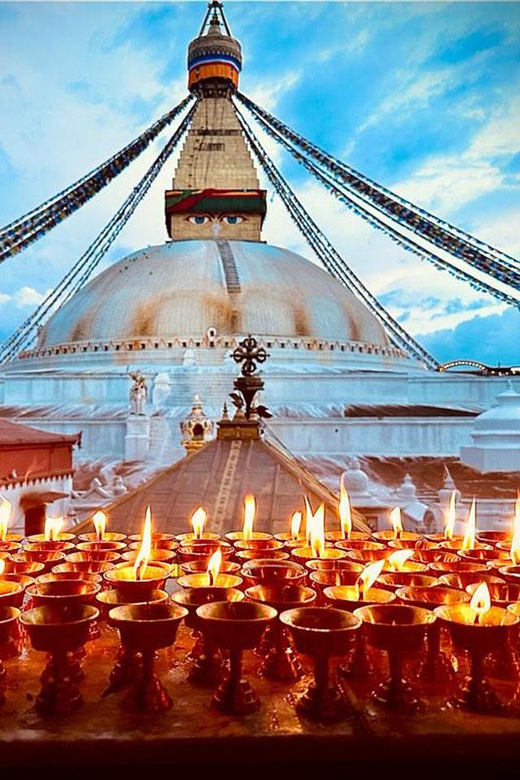
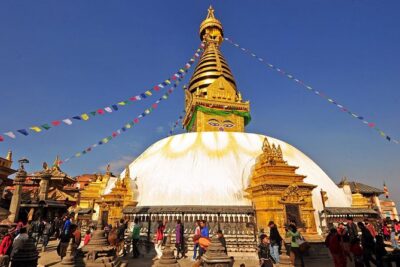
Boudhanath is a large Buddhist stupa surrounded by devotional movement, prayer, and shops. You can walk around the stupa, watch people circle it, and notice the steady rhythm of the site. After the solemn atmosphere at Pashupatinath, Boudhanath offers a different kind of spiritual setting, one shaped by repeated movement and communal worship.
The hour is enough to get a feel for the place and take photos, but not enough for a slow, extended stay in every surrounding shop. If Boudhanath is the site you most want to study, tell your guide early in the day. The private format may make a small adjustment possible, but the full schedule and return transfer still set limits.
Ending here makes sense. You finish with a major Buddhist center rather than a final rush through another palace square, and the short transfer back to Kathmandu keeps the last leg manageable.
What the $64 price really covers
At $64 per person, the tour is priced as a practical full-day cultural circuit rather than a cheap entrance-only outing. You are paying for hotel pickup and drop-off, a private group, transportation, and a licensed English-speaking guide.
The cost does not include food, personal expenses, or heritage-site tickets. This is the most important budget detail. Your final spending will be higher, and you should carry a passport or ID card as requested. The advertised skip-the-line feature may save time at entrances, but it does not remove the ticket cost.
The value is strongest if you want one organized day and do not want to arrange several rides across the valley. It is also strong for solo visitors or small groups who want to ask questions without joining a large public crowd. If you already have transport and prefer to spend a whole morning at one square, paying for this many stops may be less appealing.
The reserve-now, pay-later option and cancellation up to 24 hours before departure provide useful flexibility. Starting times depend on availability, so confirm the departure time before you plan other activities.
Who should book this Kathmandu day trip?
I would recommend it to a first-time visitor with only a short stay in Kathmandu, especially someone who wants cultural context rather than independent sightseeing with a map. It suits people who enjoy moving at a steady pace and want the main UNESCO sites covered in one day.
It is also a good choice for a private family or friend group whose interests differ. One person may care about royal architecture, another about Buddhist practice, and another about Hindu ritual. The guide can help connect all three.
I would hesitate to recommend it to anyone who dislikes long road transfers, gets motion sickness, or wants a slow photographic study of each location. Children under 10, pregnant women, wheelchair users, and people with mobility problems are listed as unsuitable for this activity. The walking and stair climbing are real considerations, not minor footnotes.
Bring your passport or ID card, comfortable walking shoes, water, and modest clothing suitable for religious sites. Alcohol and drugs are not allowed, and party groups are not accepted.
My verdict on the seven-site route
You should book this tour if your priority is coverage, context, and simple transport between Kathmandu Valley’s major cultural sites. The day is full, but it gives you a clear introduction to royal Nepal, Hindu worship, Buddhist devotion, and Newari design.
You should skip it if you want a relaxed schedule or plan to return to Kathmandu for several days and can spread the sites across separate outings. For most first-time visitors with one open day, though, the combination of private transport and a live guide makes the $64 starting price sensible, provided you budget separately for entrance tickets and food.
FAQ
How long does the tour last?
The activity lasts eight hours, including transportation between Kathmandu and the seven UNESCO sites.
Which UNESCO sites are included?
The route includes Swayambhunath Temple, Kathmandu Durbar Square, Patan Durbar Square, Bhaktapur Durbar Square, Changu Narayan Temple, Pashupatinath Temple, and Boudha Stupa.
Is hotel pickup included?
Yes. Hotel pickup and drop-off in Kathmandu are included. The driver or guide will call to confirm the pickup details, and you should wait in your hotel lobby.
Is transportation included?
Yes. Transportation by van is included in the tour.
Is an entrance ticket included in the price?
No. Tickets to the heritage sites are not included. Food and personal expenses are also separate.
What language does the guide speak?
The live tour guide speaks English.
Can wheelchair users or young children join?
The activity is not suitable for wheelchair users, children under 10, pregnant women, or people with motion sickness. It includes walking and stair climbing.
Just added in Kathmandu
- Kathmandu to Chitwan Tour by Tourist Bus – A Convenient and Affordable Way★ 4.0 · 4 reviews
- Chitwan Jungle Safari 3-Day Tour★ 5.0 · 9 reviews
- Changunarayan Hill to Telkot Hike Near Kathmandu Day Tour★ 5.0 · 6 reviews
- Mt Everest Base CampTrek | Budget Package★ 5.0 · 4 reviews
- Chandragiri Hill Station Tour by Cable Car★ 5.0 · 4 reviews
- Chandragiri Hills cable car day trip, private car with driver from Kathmandu★ 5.0 · 8 reviews
- Chandragiri to Taudaha Nature Day Hiking from Kathmandu★ 5.0 · 13 reviews
- Chandragiri Cable Car & Monkey Temple Private Guided Day Tour★ 5.0 · 5 reviews
Kathmandu UNESCO Heritage Tours, compared.
Private Kathmandu Sightseeing Tour | UNESCO World Heritage sites
Read our review →
Full Day 7 UNESCO Tour with Lunch – Private/Group
Read our review →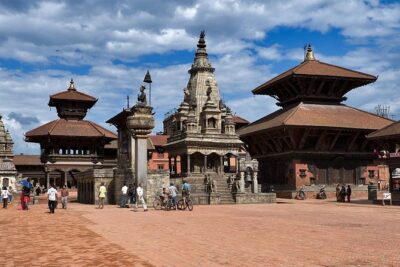
Private Bhaktapur and Nagarkot Day Tour From Kathmandu
Read our review →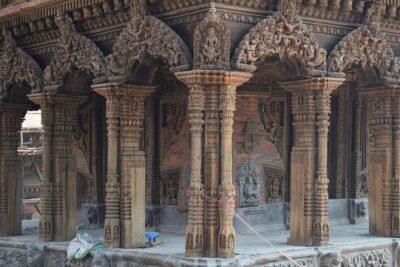
Kathmandu Spiritual Sites: Bodhnath & Pashupatinath Tour
Read our review →
Day Trip to Bhaktapur and Panauti from Kathmandu
Read our review →
Browse the lists this tour appears in