
Reviewed · KATHMANDU UNESCO HERITAGE TOURS
Kathmandu Sunset Tour by Rickshaw Including Durbar Square Visit
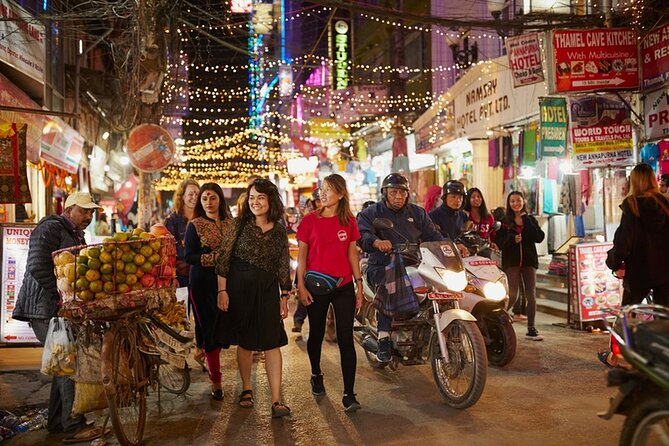
Kathmandu gets most interesting when the day cools and the streets begin their evening shift. From Thamel, your rickshaw threads through narrow lanes toward Asan market and Kathmandu Durbar Square, giving you a close view of spice sellers, shrines, motorbikes, pedestrians, and street food without asking you to keep pace on foot.
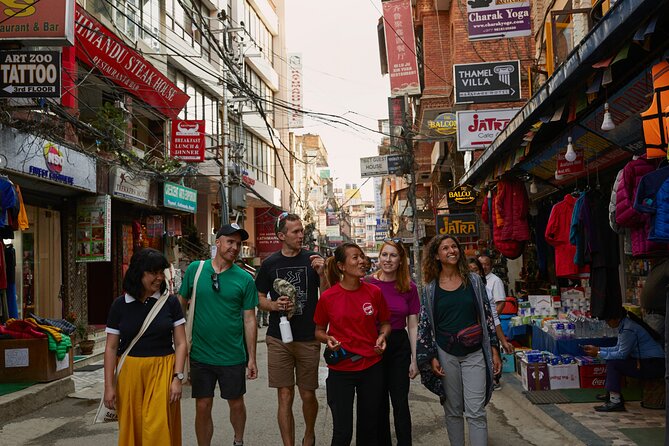
I like the mix of rickshaw riding and walking, and I like that the Durbar Square admission is included. Your guide may be Nikita or Sanjeeb, both praised for clear explanations and a warm manner. The main drawback is timing: darkness comes quickly, and some streets and temple details may be hard to see after sunset.
Key points to know before booking
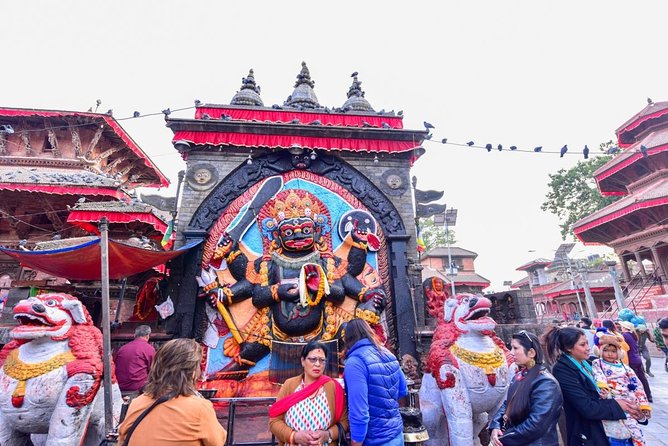
- Asan market is the heart of the route: See spices, vegetables, clothing, electronics, and small temples packed into Kathmandu’s oldest food market.
- Durbar Square gets the longest stop: You have about 85 minutes to see palaces, courtyards, temples, shrines, food stalls, and Freak Street.
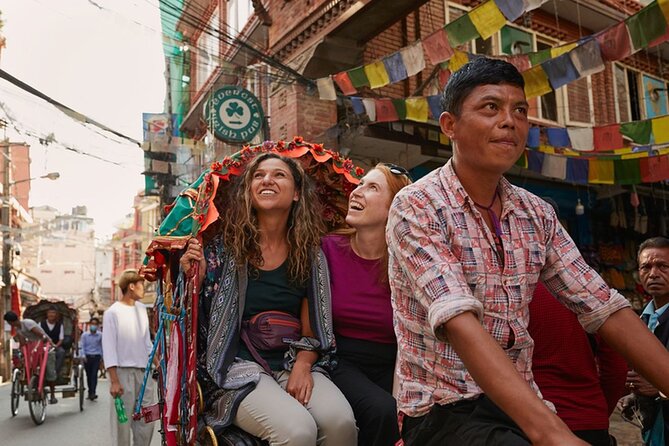
- The rickshaw handles the busy streets: Your driver takes on the tight turns and uneven lanes while you watch from your seat.
- The group stays small: A maximum of 12 people makes it easier to hear the guide and ask questions.
- The $50.30 price includes useful extras: Rickshaw hire and the Kathmandu Durbar Square entrance fee are covered, but food and drinks are not.
- It supports local operators: The company hires rickshaws directly from drivers and describes the tour as carbon neutral and B Corp certified.
Why an evening rickshaw works well in Kathmandu
This is not a grand sightseeing circuit with long stops at every monument. It is a short introduction to central Kathmandu, built around movement, street life, and one major historic site.
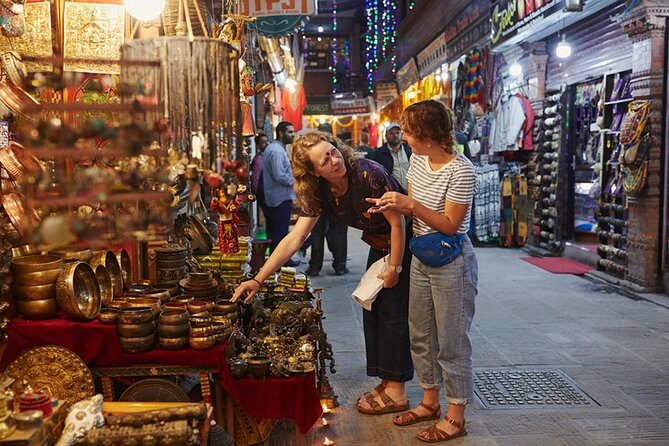
That format suits you if you want to get your bearings early in a Nepal trip. You pass from Thamel’s tourist shops and restaurants into streets used for daily shopping and worship. The change happens quickly. Scarves, baked goods, herbs, vegetables, clothing, and electronics appear in storefronts and market stalls. Temples turn up in places that might otherwise look like ordinary street corners.
A rickshaw also solves a practical problem. Kathmandu’s central streets can be crowded and awkward to cross, especially around Asan. You can sit back while the driver works through the traffic and narrow lanes. The seat gives you a clear view of the street without requiring a long walk before you reach the main sights.
The ride is not silent or smooth. You will hear rickshaw horns, motorbikes, vendors, and people calling to one another. The road can be uneven. That is part of the setting, but it also means this tour is not a quiet sunset outing. Think of it as a moving street-level introduction.
More temple and square walks around Kathmandu:
- Private Kathmandu Sightseeing Tour | UNESCO World Heritage sites
★ 5.0 · 756 reviews - Kathmandu: Full Day 7 UNESCO Tour with Lunch – Private/Group
★ 5.0 · 415 reviews - Private Bhaktapur and Nagarkot Day Tour From Kathmandu
★ 5.0 · 305 reviews
Meeting in Thamel at 6 pm
The tour begins at Hotel Marshyangdi on Chaksibari Marg in Thamel. The start time is 6 pm, and the full outing lasts about two hours and 30 minutes. You return to the same meeting point at the end.
Thamel is a useful place to begin because it is Kathmandu’s main tourist district. Hotels, restaurants, shops, spas, clubs, and travel offices fill the area. You will not begin in a remote or difficult-to-find corner of the city. The first 15 minutes are spent boarding and riding from Thamel toward Asan.
This opening stretch gives you a quick look at the difference between tourist-oriented Kathmandu and the older commercial streets nearby. It is short, so do not expect a full tour of Thamel. The point is to get moving and leave the familiar hotel-and-restaurant zone behind.
The small-group limit of 12 people matters here. In a larger group, it would be easy to lose the guide’s comments amid the traffic noise. With fewer people, you have a better chance of hearing explanations and asking about a shrine or market custom as you go.
Asan market, where shopping and worship share the street
The Asan stop lasts about 50 minutes, making it the most useful part of the ride for seeing everyday Kathmandu. This historic market is known for spices and vegetables, but you can also find clothing, electronics, herbs, and many other goods.
The market is crowded with shoppers, and the narrow streets are lined with occasional temples and old monuments. The setting gives you a useful lesson in how Kathmandu works. Sacred places are not separated from commercial life. A shrine can sit beside a shop, while people buy food, pause to pray, and continue on their way.
Your guide points out Annapurna Temple, linked with the Goddess of abundance. The name Annapurna refers to food and fullness, an apt association in a food market. You also stop near Seto Machindranath, also called Janabaha Dyo, a deity respected by both Hindus and Buddhists in Kathmandu.
Another important shrine is Aakash Bhairab, associated with Yalambar, described as the first king in Nepal Bhasa. These stops add context that you might miss if you simply passed through Asan on your own. You are not only seeing old buildings. You are learning why small shrines still matter in the middle of a working market.
The practical drawback is that Asan can feel crowded and noisy. You will need to pay attention when boarding and leaving the rickshaw, and you should keep personal items secure in the tight streets. The tour is not designed for a slow, independent market-shopping session. You have a route to follow and a group to stay with.
From Asan, the rickshaw continues through narrow lanes toward Kathmandu Durbar Square. This is one of the route’s best transitions. You move from the present-day market into an older center of royal power, with the street activity continuing around you.
Kathmandu Durbar Square after sunset
You spend about 85 minutes at Kathmandu Durbar Square, and this is where the tour changes from a ride into a walking visit. The entrance fee is included, so you do not need to arrange that separately.
The square contains more than 50 temples and shrines within a compact area. Palaces, courtyards, and temples were built between the 12th and 18th centuries, and the complex served as the seat of Kathmandu’s Malla kings. It is also a UNESCO World Heritage site.
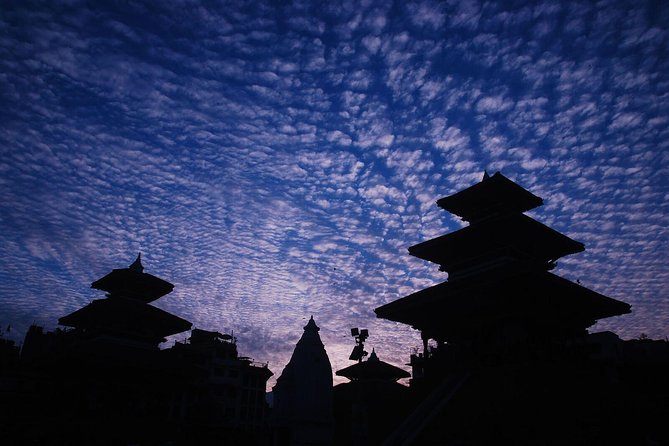
The early-evening light gives the place a different feel from a midday visit. Temple roofs and carved wooden structures can appear in silhouette, while shops and food stalls begin their nighttime business. The supplied information does not promise a particular sunset, so keep expectations sensible. Weather, season, and the exact light will shape what you see.
Your guide explains the monuments before you have time to wander. That guidance is valuable because the square contains so many structures in a small area. Without context, the carved windows, courtyards, shrines, and palace buildings can blur together. With a guide, you can connect each place with its religious or royal role.
One building worth watching for is Gaddhi Baithak. Its white exterior has a European influence and contrasts sharply with the older wooden temples and palace structures around it. It was built during the Rana regime, and ceremonial programs still take place from its balcony.
You also have time to sit on a bench and watch local life, stop at a food stall, or visit a pub for chai. Freak Street lies within the area and recalls Kathmandu’s 1960s hippie period, with shops lining the street. This gives the stop more range than a standard monument visit. You see royal architecture, religious activity, ordinary people, and a later chapter of Kathmandu’s visitor culture in one compact place.
The tradeoff is that some details may be less visible at night. If you care most about fine wood carving and architectural photography, a daylight visit to Durbar Square may be better. This tour gives you atmosphere and a look at the square’s evening life, not the best possible light for every carving.
Same base, a different kind of day:
- Everest Base Camp Trek – 14 Days
★ 5.0 · 1,499 reviews - Everest Base Camp Helicopter Tour landing at Everest View Hotel
★ 5.0 · 668 reviews - Half day cooking class in Thamel kathmandu
★ 5.0 · 607 reviews - Everest Base Camp Trekking
★ 5.0 · 485 reviews
The return ride and what the pace feels like
After exploring the square, you board the rickshaw again and return to Hotel Marshyangdi. The route brings back the sound of vendors, motorbikes, and rickshaw horns. By this point, the ride can feel more relaxed because you have already seen the main site and know the shape of the evening.
The entire tour is about two and a half hours, but the time is divided among three very different activities: a short departure from Thamel, a substantial ride and stop in Asan, and the longest period on foot in Durbar Square. You should not book it expecting two and a half hours of continuous rickshaw travel.
The driver is an important part of the outing. The route uses narrow, uneven, busy streets, and an experienced driver can make the ride feel far less stressful than trying to cross the same area alone. One reported outing praised the driver’s ability to handle the streets, while the guide handled the historical explanations.
At the end, you return to the original meeting point. If you plan to continue elsewhere, remember that this is an evening activity and the tour does not include a transfer to your hotel.
Guides, group size, and the quality of the explanation
The guide can make a major difference on a route with so many small shrines. Nikita and Sanjeeb are two guides associated with especially strong outings. Nikita was praised for giving a good introduction to Kathmandu, while Sanjeeb was described as welcoming and warm in his explanations.
You are not guaranteed either guide, so book for the route rather than a specific person. Still, the feedback suggests the guide’s role is more than pointing out monuments. The best version of this tour helps you understand the links among market life, Hindu and Buddhist worship, royal history, and modern Kathmandu.
The maximum group size is 12. That is small enough to keep the walking portion manageable and to make questions practical. It also helps at the temples, where a large group would be harder to keep together.
Festival timing can change the mood completely. One outing happened during a festival, with drums, chanting, dancing, and large crowds of local people and visitors. That is a wonderful bonus if the timing happens to match, but it is not an advertised guarantee. You should expect ordinary evening street life, not plan your booking around a festival unless you have separate confirmation.
Price, inclusions, and practical value
At $50.30 per person, this is not the cheapest way to get from Thamel to Durbar Square. The value comes from combining transport, a guide, market interpretation, and the square’s admission in one short evening.
You receive:
- Rickshaw hire for the route
- A local guide and driver
- Entrance to Kathmandu Durbar Square
- A guided visit around temples and shrines
- Advice on other places to see, eat, and visit in Kathmandu
- A small-group setting with no more than 12 people
Food and drinks cost extra. That is not a serious issue because the route passes food stalls and vendors, and you can buy chai or snacks during the Durbar Square stop. Bring money if you want that flexibility.
The local support is a useful part of the price. The operator hires rickshaws directly from their drivers, giving them business in a city where motorbikes and cars now dominate much of the road. The Durbar Square entrance fee also supports the site’s cultural preservation.
The tour is described as carbon neutral and operated by a B Corp certified company. If responsible tourism affects your booking choices, those policies add value. They do not change the street conditions or guarantee a particular guide, but they show that the price includes more than a vehicle and a short ride.
Who will enjoy this tour most
I would choose this tour if you are new to Kathmandu and want a guided first look at the central city without committing to a full-day sightseeing program. It is also a good fit if you enjoy markets, street scenes, and people-watching as much as formal monuments.
Families can join, and children under six are admitted free. Most people can participate, but the supplied information does not give detailed accessibility specifications. The rickshaw route uses narrow, uneven streets, and the walking portion covers a historic square, so ask the operator directly if you have specific mobility needs.
You may want a different plan if you have already taken a central Kathmandu city tour. The route overlaps with the main market and temple area, and one assessment specifically noted that some sights can repeat. In that case, the evening light and rickshaw format may still add something, but the content will not all be new.
The tour also suits solo visitors arriving before a larger group. It gives you a structured introduction to the city and a way to see key places without organizing transport or negotiating every short ride yourself.
Small details that will make the evening easier
Wear shoes you can walk in comfortably. You will leave the rickshaw to explore Durbar Square, and the historic streets are not presented as smooth or even.
Keep your phone and wallet secure in Asan and around the square. The market is crowded, and the rickshaw moves close to other traffic.
Bring a light layer if you tend to cool off after sunset. The tour begins at 6 pm, and the ride continues into the evening.
Plan your food budget. Snacks and chai are not included, but the route gives you chances to buy them.
If you need to cancel, free cancellation is available until 24 hours before the start time. Changes or cancellations made within 24 hours are not accepted for a refund.
Should you book the Kathmandu sunset rickshaw tour?
Book it if you want a lively first taste of Kathmandu, especially if markets, shrines, and street scenes appeal to you. The combination of Asan and Durbar Square is strong, and the rickshaw makes the movement between them easier and more enjoyable than a long walk through traffic.
Skip it if you want a quiet sunset, a full architectural study, or a completely new route after taking a central Kathmandu city tour. Darkness limits some visual detail, and the market and Durbar Square may overlap with other sightseeing plans.
For most first-time visitors, the $50.30 price is fair because it covers the ride, guide, and admission, while supporting local drivers and heritage preservation. Just book it for the atmosphere and orientation, not as a substitute for a detailed daytime tour of Kathmandu’s historic monuments.
FAQ
Where does the Kathmandu Sunset Tour begin?
The tour begins at Hotel Marshyangdi on Chaksibari Marg in Thamel, Kathmandu.
What time does the tour start?
The tour starts at 6 pm.
How long does the tour last?
The tour lasts approximately two hours and 30 minutes.
Where does the tour finish?
The activity ends back at Hotel Marshyangdi, the original meeting point.
Is the Kathmandu Durbar Square entrance fee included?
Yes. The Durbar Square entrance fee is included in the tour price.
Is rickshaw hire included?
Yes. Rickshaw hire is included, along with the local guide and driver.
How many people can join the tour?
The maximum group size is 12 people.
Are children allowed to join?
Yes. The tour is child-friendly, and children under six can join free of charge.
Are food and drinks included?
No. Food and drinks are not included, though you can buy chai and other items from local vendors during the visit.
Can I cancel for a full refund?
Yes, if you cancel at least 24 hours before the experience start time. Cancellations or changes made less than 24 hours before the start time are not refunded.
Just added in Kathmandu
- Kathmandu to Chitwan Tour by Tourist Bus – A Convenient and Affordable Way★ 4.0 · 4 reviews
- Changunarayan Hill to Telkot Hike Near Kathmandu Day Tour★ 5.0 · 6 reviews
- Mt Everest Base CampTrek | Budget Package★ 5.0 · 4 reviews
- Chitwan Jungle Safari 3-Day Tour★ 5.0 · 9 reviews
- Chandragiri Hill Station Tour by Cable Car★ 5.0 · 4 reviews
- Chandragiri Hills cable car day trip, private car with driver from Kathmandu★ 5.0 · 8 reviews
- Chandragiri to Taudaha Nature Day Hiking from Kathmandu★ 5.0 · 13 reviews
- Chandragiri Hill Day Tour★ 5.0 · 4 reviews
Kathmandu UNESCO Heritage Tours, compared.
Private Kathmandu Sightseeing Tour | UNESCO World Heritage sites
Read our review →
Full Day 7 UNESCO Tour with Lunch – Private/Group
Read our review →
Private Bhaktapur and Nagarkot Day Tour From Kathmandu
Read our review →
Kathmandu Spiritual Sites: Bodhnath & Pashupatinath Tour
Read our review →
Day Trip to Bhaktapur and Panauti from Kathmandu
Read our review →
Browse the lists this tour appears in