
Reviewed · KATHMANDU UNESCO HERITAGE TOURS
Kathmandu UNESCO Heritage Tour with Local Food Tasting
Kathmandu’s best introduction may be a half-day that moves from Swayambhunath’s hilltop calm to the noise and color of Asan Market. This private tour ties together temples, old royal courtyards, street food, and ordinary city life, rather than treating each sight as a separate stop.
I especially like the generous food tasting and the chance to see the Kumari at Kathmandu Durbar Square. Guide Rajan has been praised for explaining local customs clearly and adjusting the schedule when needed. The main consideration is pace: five hours covers a lot, and Asan’s crowded lanes, temple steps, and busy traffic may feel tiring if you prefer slow sightseeing.
Key points to know
- Swayambhunath begins the cultural story: See the hilltop stupa, prayer flags, chanting monks, and broad views over Kathmandu Valley.
- The Kumari may appear at Durbar Square: Your guide can explain the Living Goddess tradition and point out Kal Bhairav and Swet Bhairav.
- The food tasting is a full meal-sized experience: Expect momos, Newari samaybaji, yomari, bara, chatamari, gwaramari, and Indrachowk lassi.
- Asan Market shows daily Kathmandu: Spice, grain, sari, jewelry, brassware, and produce stalls fill the old lanes.
- You travel in a private group: Transport, entrance fees, bottled water, taxes, and an English-speaking guide are included.
- The tour suits curious eaters: Personal expenses are extra, but the listed local food is included and you can taste a broad range of dishes.
From Thamel to the Monkey Temple
The tour starts with pickup in Kathmandu or Thamel, making it handy if you are staying in the city’s main tourist district. Thamel gives you a quick look at Kathmandu’s international side, with trekking shops, handicrafts, restaurants, and travelers moving through its narrow streets.
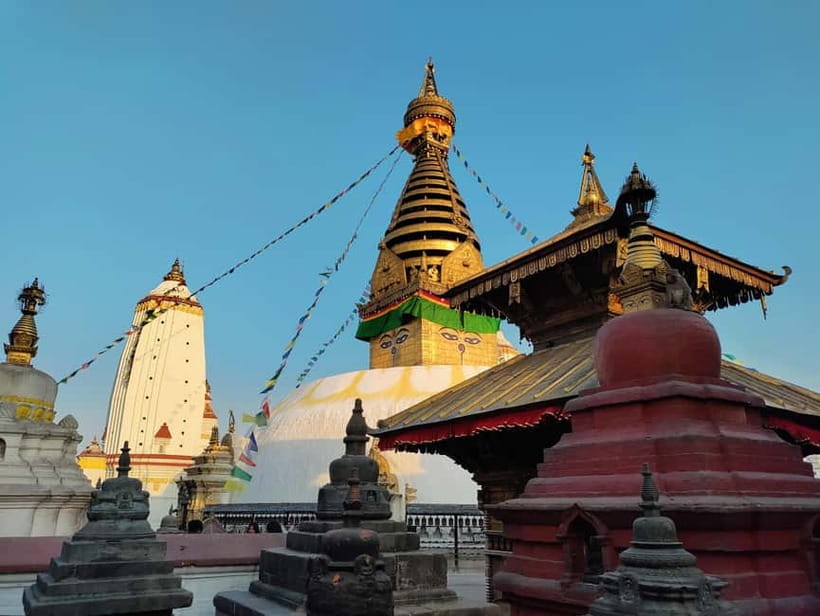
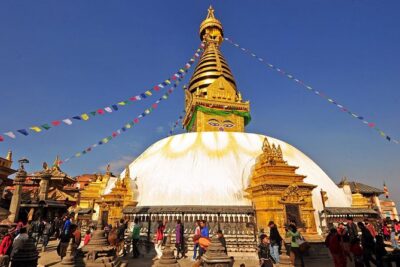
From there, transport takes you toward Swayambhunath, also called the Monkey Temple. The name is familiar, but the setting is more important than the nickname. The stupa sits on a hill above Kathmandu, where prayer flags, Buddhist symbols, and views across the valley create a sharp change from the busy streets below.
You have about an hour here with your guide. That is enough time to see the main religious features, hear about Buddhist culture, and take in the view without letting the first stop swallow the whole tour. Ask your guide to explain the meaning of the stupa’s eyes and the role of prayer flags, rather than treating the visit as a quick photo stop.
Swayambhunath is both a religious site and a working place of worship. The supplied tour details note the sound of monks chanting and the peaceful feel of the hilltop. These details matter because the stop is not simply about architecture. You are seeing a place where spiritual practice remains part of daily life.
The hilltop setting also gives you useful orientation. From above, Kathmandu appears as a wide urban basin surrounded by hills. The view helps you understand the city before you return to its older streets and market lanes.
More temple and square walks around Kathmandu:
- Private Kathmandu Sightseeing Tour | UNESCO World Heritage sites
★ 5.0 · 756 reviews - Kathmandu: Full Day 7 UNESCO Tour with Lunch – Private/Group
★ 5.0 · 415 reviews - Private Bhaktapur and Nagarkot Day Tour From Kathmandu
★ 5.0 · 305 reviews
Kathmandu Durbar Square and the Living Goddess
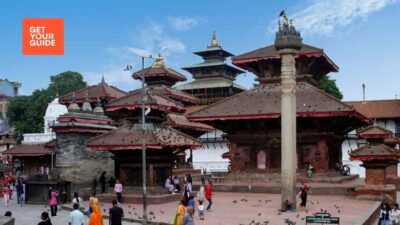
The next major stop is Kathmandu Durbar Square, another UNESCO World Heritage Site. You have about an hour for a guided visit, sightseeing, and historical explanation.
This old royal square brings together temples, palace buildings, carved wooden details, and active religious traditions. It is the kind of place where simply walking from one courtyard to another can reveal a new shrine, carving, or view through a temple doorway. Your guide’s role matters here because the square can otherwise feel like a collection of impressive but unfamiliar buildings.
One of the tour’s most memorable possibilities is seeing the Kumari, Nepal’s Living Goddess, at a window. The appearance is not something you should treat as guaranteed, but the tour specifically includes the chance to see her. Your guide can explain the tradition and the care needed around this sacred figure.
You will also see important icons such as Kal Bhairav and Swet Bhairav. These figures carry strong religious meaning, and their appearance can be striking even if you know little about Kathmandu’s traditions. I would give this part your full attention, since a good explanation turns the square from an old monument into a place connected to present-day belief.
The square is also a reminder that Kathmandu’s heritage is not locked away in a museum. Sacred images, worship, local customs, and daily movement continue around the historic buildings. That mixture is one of the tour’s strengths.
The tradeoff is time. One hour is useful for an introduction, but it will not allow a slow look at every courtyard, temple, and carving. If Kathmandu Durbar Square is your main priority, you may want to return independently after the tour.
Asan Market, where Kathmandu buys and sells
The tour then heads into Asan Street and Market for about an hour of guided walking, free time, shopping, sightseeing, and food tasting. This is where the schedule shifts from royal and religious Kathmandu to the city’s working rhythm.
Asan has long been associated with trade in everyday goods. You may find stalls selling spices, grains, seasonal produce, saris, handmade jewelry, brass utensils, and other traditional items. The value of having a local guide here is practical: you can learn what you are looking at, follow the right lanes, and see the market as more than a colorful shopping scene.
Expect narrow streets and plenty of activity. The market can be noisy and crowded, so keep your belongings secure and stay close enough to hear your guide. Comfortable shoes will help, since this is a walking tour through old city lanes rather than a coach-based sightseeing trip.
The free time gives you room to browse. You are not forced to shop, and personal purchases are not included in the price. If you want souvenirs, this may be the best place to compare handmade goods and everyday items, but ask about prices before buying and let your guide help you understand what you are seeing.
I like this stop because it adds ordinary life to the temples. Swayambhunath and Durbar Square show Kathmandu’s spiritual and royal past. Asan shows people buying food, selling household goods, and carrying on local trade. You get a more useful picture of the city by seeing all three.
A serious Nepali food tasting
Food is not a small add-on here. It is one of the main reasons to choose this tour, and the range is unusually broad for a five-hour city walk.
You may taste:
- Momo: Nepali dumplings, a familiar favorite with plenty of local character.
- Newari samaybaji: A ceremonial platter that can include beaten rice, marinated meat, fried eggs, and pickles.
- Yomari: A sweet steamed dumpling filled with jaggery.
- Bara: A savory lentil pancake.
- Chatamari: A rice-flour crepe often described as Nepali pizza.
- Gwaramari: Crisp fried bread.
- Indrachowk lassi: A cool, sweet drink that rounds out the tasting.
This menu gives you more than one style of Nepali food. You get dumplings, fermented and beaten-rice traditions, lentils, sweet fillings, fried breads, pickles, and a dairy drink. The variety helps you understand how Newari food differs from the generic idea of Himalayan cuisine.
The tasting is included, and the description indicates that you can eat generously. That is good value at $64 per person, especially since entrance fees, transport, bottled water, guide service, and government taxes are also covered. Personal expenses are not included, so keep some money for shopping or anything beyond the planned tasting.
One useful warning: come hungry. The spread may be much larger than you expect, as Jacqueline noted after finding the food plentiful as well as delicious. If you have dietary restrictions, the supplied information does not specify available substitutions, so ask before booking or tell the operator in advance.
Food also gives you a natural way to ask questions. Ask what is eaten during ceremonies, which dishes are Newari, and how sweet snacks such as yomari fit into local celebrations. This turns lunch and snacks into cultural learning rather than a checklist of things to swallow.
A few more things to do in Kathmandu worth a look
- Kathmandu Food and Drink Walking Tour
★ 5.0 · 266 reviews - Kathmandu: Food and Drink Walking Tour
★ 4.9 · 119 reviews - Walking Street Food Tour in Kathmandu
★ 5.0 · 111 reviews - Secret Food Tour – Food Bites and Sights Kathmandu 14+ Testings
★ 5.0 · 82 reviews
Why a private guide changes the day
This is a private-group experience with an English-speaking guide. That setup is especially useful in Kathmandu, where traffic, market crowds, religious customs, and unfamiliar food can make independent exploring less smooth.
Rajan is the guide named in the available tour information, and the feedback about his work highlights clear explanations, courtesy, care, and flexibility with timing. One account also praised the driver’s warm manner and careful driving. Those details matter because the day includes short transport sections between walking stops, and a helpful team can make the transitions easier.
A private tour also lets you ask more questions. You can spend a little longer on the Kumari tradition, ask about a spice stall, or adjust the balance between shopping and food if the schedule allows. Jessica specifically found the guide flexible, which is useful when you want the day to match your interests.
Still, private does not mean slow. The stated duration is five hours, with roughly one hour assigned to each main stop and time used for transfers and tasting. Tell the guide early if food matters most to you, or if you want more time at the monuments.
Is $64 a fair price?
At $64 per person, the tour sits in a sensible range for a private half-day experience because several costs are bundled together. You receive a guide, transportation, entrance fees, local food, bottled water, and government taxes.
The value is strongest if you want a compact introduction to Kathmandu. Paying separately for site entry, local transport, several food stops, and a guide could become less simple, even if the exact independent cost depends on your choices. The private format is also more valuable for couples, families, or small groups who prefer direct help instead of following a large crowd.
The price is less attractive if you mainly want free time. You will spend much of the five hours moving between selected sights and following a set food route. Independent visitors who already know Kathmandu and want to linger at one temple or shop may prefer to arrange their own day.
The included tasting is the big financial advantage. Since it covers several named dishes rather than one snack, the tour offers a proper introduction to Nepali flavors. Just remember that shopping and other personal spending remain separate.
Who should book this Kathmandu tour?
I would recommend it to first-time visitors who want the city explained, not merely photographed. It works well for people who enjoy food, local markets, religious sites, and a brisk schedule.
It is also a good fit if you are staying in Thamel and want pickup and drop-off there. The five-hour length leaves room for another activity later in the day, though the food tasting may leave you ready for a quiet afternoon.
Families and small private groups may appreciate the flexible format. The guide can explain unfamiliar customs in plain English, and the private setting avoids the awkwardness of joining strangers for every stop.
I would think twice if you dislike crowded markets, do not enjoy tasting unfamiliar dishes, or want a long, unhurried museum-style visit. The tour is built around movement and contrast: hilltop shrine, historic square, market lanes, then a large food experience.
Final call: a strong first taste of Kathmandu
Book this tour if you want one focused day to connect Kathmandu’s major sights with its food and everyday life. The best parts are the contrast between peaceful Swayambhunath and busy Asan, the chance to see the Kumari, and the unusually broad tasting menu.
The main limitation is the compressed schedule. You will get an excellent introduction, not a complete study of every temple or market corner. For most first-time visitors, that is a fair trade, especially with a private guide such as Rajan and transport included.
The flexible cancellation policy allows a full refund when you cancel at least 24 hours ahead, and you can reserve now and pay later. That makes the booking less rigid, but the real decision is simple: if you want culture explained through places, people, and food, this is a practical and flavorful way to begin Kathmandu.
FAQ
How long does the Kathmandu UNESCO Heritage Tour last?
The tour lasts five hours.
Which places does the tour visit?
It visits Swayambhunath Temple, Kathmandu Durbar Square, and Asan Street and Market.
Can I see the Kumari, Nepal’s Living Goddess?
The tour gives you a chance to see the Kumari at Kathmandu Durbar Square, but an appearance is not guaranteed.
What food is included?
The tasting can include momos, Newari samaybaji, yomari, bara, chatamari, gwaramari, and Indrachowk lassi.
Is transportation included?
Yes. Transportation between the tour stops is included, along with pickup and drop-off in Kathmandu or Thamel.
Is the tour private?
Yes. It is offered as a private-group experience with an English-speaking guide.
What is included in the $64 price?
The price includes entrance fees, local food, an English-speaking guide, transportation, one bottle of drinking water, and government taxes. Personal expenses are not included.
More Historical Tours in Kathmandu
- UNESCO Seven World Heritage Tour in Kathmandu
★ 5.0 · 253 reviews - Kathmandu Private Sightseeing Tour | UNESCO World Heritage Sites
★ 5.0 · 109 reviews - Kathmandu: Full Day Private Top 4 UNESCO Heritage Tour W/Lunch.
★ 5.0 · 86 reviews - Kathmandu World Heritage Tour
★ 5.0 · 74 reviews
More Food in Kathmandu
- Kathmandu Secret Food Crawl & Local Market Tour
★ 4.7 · 54 reviews - Kathmandu Food & Drink and Shopping Rickshaw Tour
★ 5.0 · 48 reviews - Walking Food Tour in Hidden Local Eateries of Kathmandu
★ 5.0 · 40 reviews - Kathmandu Food Crawl & Market Tour
★ 5.0 · 26 reviews
Just added in Kathmandu
- Kathmandu to Chitwan Tour by Tourist Bus – A Convenient and Affordable Way★ 4.0 · 4 reviews
- Changunarayan Hill to Telkot Hike Near Kathmandu Day Tour★ 5.0 · 6 reviews
- Mt Everest Base CampTrek | Budget Package★ 5.0 · 4 reviews
- Chitwan Jungle Safari 3-Day Tour★ 5.0 · 9 reviews
- Chandragiri Hill Station Tour by Cable Car★ 5.0 · 4 reviews
- Chandragiri Hills cable car day trip, private car with driver from Kathmandu★ 5.0 · 8 reviews
- Chandragiri to Taudaha Nature Day Hiking from Kathmandu★ 5.0 · 13 reviews
- Chandragiri Cable Car & Monkey Temple Private Guided Day Tour★ 5.0 · 5 reviews
Kathmandu UNESCO Heritage Tours, compared.
Private Kathmandu Sightseeing Tour | UNESCO World Heritage sites
Read our review →
Full Day 7 UNESCO Tour with Lunch – Private/Group
Read our review →
Private Bhaktapur and Nagarkot Day Tour From Kathmandu
Read our review →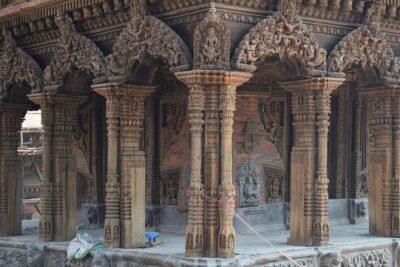
Kathmandu Spiritual Sites: Bodhnath & Pashupatinath Tour
Read our review →
Day Trip to Bhaktapur and Panauti from Kathmandu
Read our review →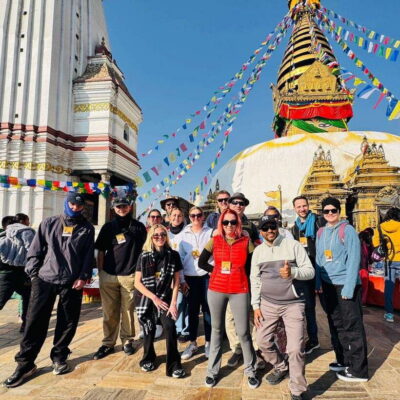
Browse the lists this tour appears in