
Reviewed · KATHMANDU UNESCO HERITAGE TOURS
Nagarkot Sunrise With 7 UNESCO World Heritage Private Tour
Nagarkot sunrise is the hook: from this hill station, the first light can spread across the Himalayan range, with Mount Everest sometimes visible on a clear day. Then you return to the valley for seven UNESCO World Heritage sites, from royal squares to major Hindu and Buddhist shrines.
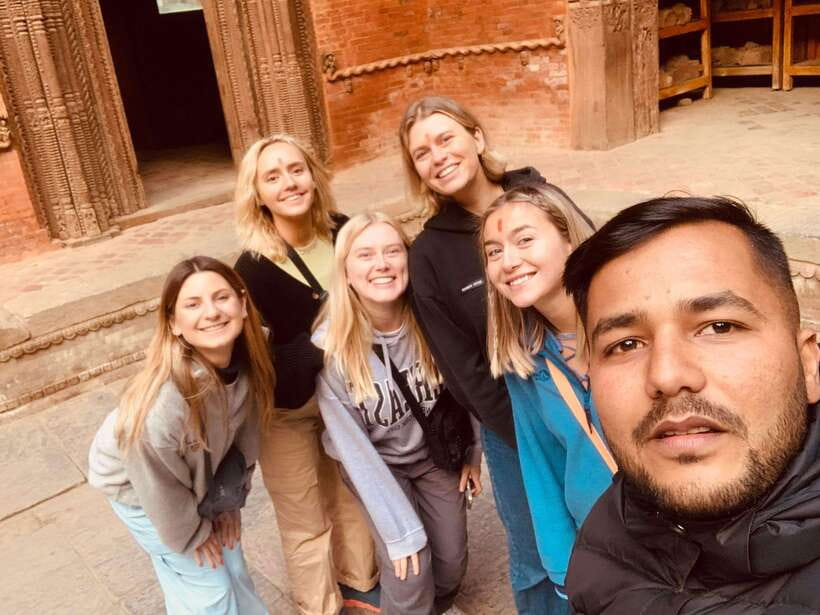
I like the efficient private format and the chance to connect Nepal’s religious sites with its living customs. I also like that the guide is not limited to dates and names. Santosh, one guide associated with this experience, is described as explaining rituals, festivals, religion, and daily life with real enthusiasm.
The drawback is simple: this is a very full 12-hour day. You will see a great deal, but you will not have time to linger everywhere. Entrance fees, food, and drinks are extra, so the $172 price is not the final cost.
Key points to know before booking
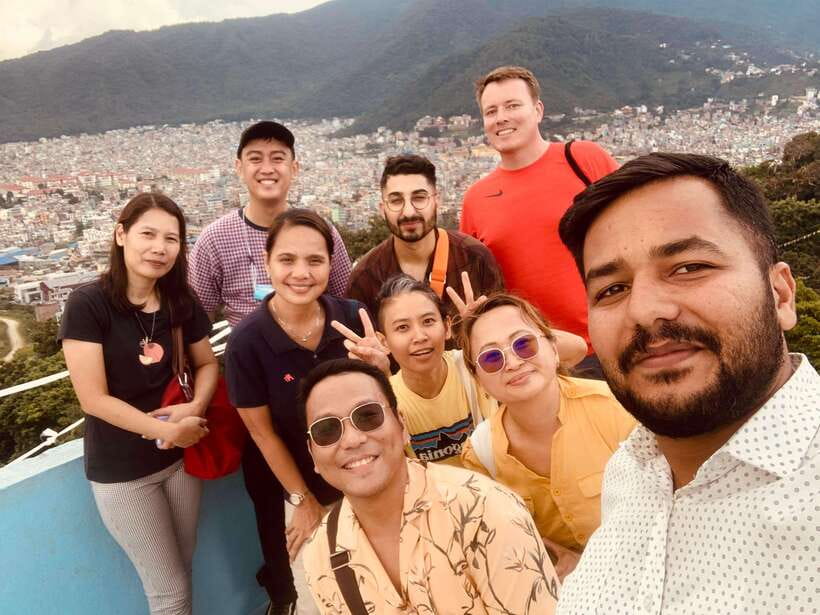
- Nagarkot begins the day at 2,175 meters, with sunrise views toward the Himalayas and possible views of Mount Everest in clear weather.
- Seven Kathmandu Valley UNESCO sites fit into one private route, including four major squares and three important religious centers.
- Santosh may be your guide, and his approach includes Hindu and Buddhist beliefs, festivals, rituals, and ordinary life.
- Pashupatinath can be emotionally powerful, especially when religious cremation rites are taking place along the Bagmati River.
- The pace is demanding, with about 12 hours of sightseeing, driving, and early-morning activity.
- The $172 rate excludes roughly 6,000 Nepalese rupees in entrance fees, as well as meals and drinks.
Why this Nagarkot and Kathmandu tour works
This experience gives you two very different views of Nepal in one day. At Nagarkot, you begin in the quiet hill country before sunrise. Later, you move through Kathmandu Valley’s dense cultural core, where temples, shrines, palaces, prayer wheels, courtyards, cremation ghats, and everyday city life all sit close together.
I like this contrast. Nepal is not only about mountain views, and Kathmandu is not only about old buildings. The morning offers a chance to see the Himalayas. The rest of the day explains the beliefs and craftsmanship that shaped the valley below.
The private vehicle matters here. You are picked up and returned to your hotel inside Kathmandu Valley, and the air-conditioned vehicle gives you a place to rest between stops. A private group also lets you ask questions as you go, rather than following a fixed explanation meant for a large crowd.
Still, you need to enjoy full days. The route covers a lot of ground, and several sites require walking through courtyards, temple areas, or hilltop compounds. You should book this if your priority is seeing the major sights in one sweep. If you prefer slow visits, quiet meals, and time for photography, split the route over two days.
More sunrise viewpoints within reach of Kathmandu:
- Nagarkot Sunrise View and Day Hiking from Kathmandu
★ 5.0 · 471 reviews - Private Bhaktapur and Nagarkot Day Tour From Kathmandu
★ 5.0 · 305 reviews - Kathmandu: Nagarkot Sunrise View & Morning Hike with Lunch
★ 4.9 · 188 reviews
Nagarkot sunrise at 2,175 meters
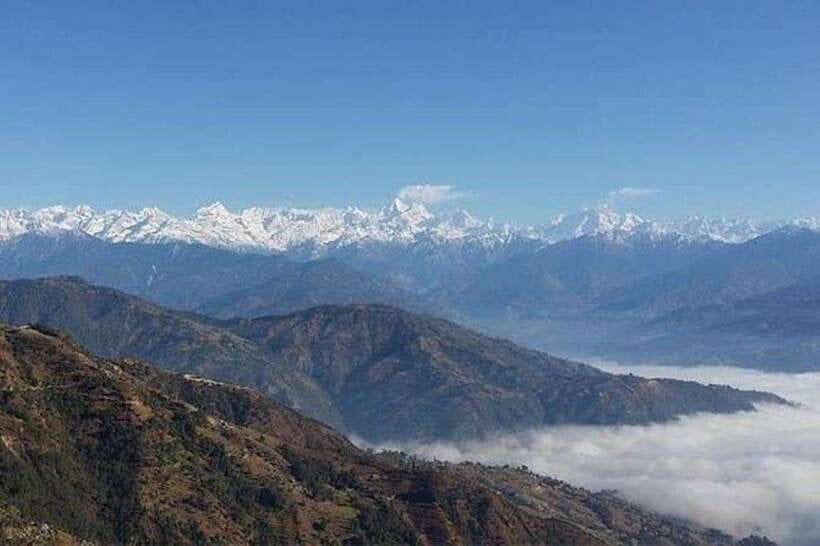
The day starts with a drive from Kathmandu to Nagarkot for sunrise. The sunrise portion is scheduled for about two hours, which gives you time to wait for the light, look across the Himalayan range, and take in the hill-station setting.
Clear weather controls the quality of this part of the experience. On a good morning, the mountains can catch the first gold of the day, and Mount Everest may be visible. Clouds or haze can reduce the view, so you should treat the mountain panorama as a possibility, not a promise.
I like beginning here because it gives the tour a strong sense of place. You are not simply checking off monuments in the city. You first see the high country that shapes Nepal’s identity, then spend the day learning how people in the valley worship, build, celebrate, and remember.
Bring patience for the early start and a warm layer. The information provided does not specify the exact pickup time, so confirm it before booking. Sunrise schedules change through the year, and the drive from Kathmandu needs to happen before dawn.
Changunarayan, the oldest temple stop
After Nagarkot, the route goes to Changunarayan Temple for about 30 minutes. The temple is dedicated to Lord Vishnu and is described as the oldest Hindu temple in Kathmandu Valley, with origins reaching back to the fourth century.
This is a short stop, but it adds something important to the day. Changunarayan is known for detailed carvings and traditional Nepali architecture. The visit helps you see that the valley’s sacred buildings are not all concentrated in large city squares. Some sit on hillsides and preserve older forms of religious art.
Thirty minutes will give you an introduction rather than a full study of the temple. Listen closely to the guide here, since a good explanation can make the carvings and religious symbols much easier to understand.
Bhaktapur Durbar Square and Newari craftsmanship
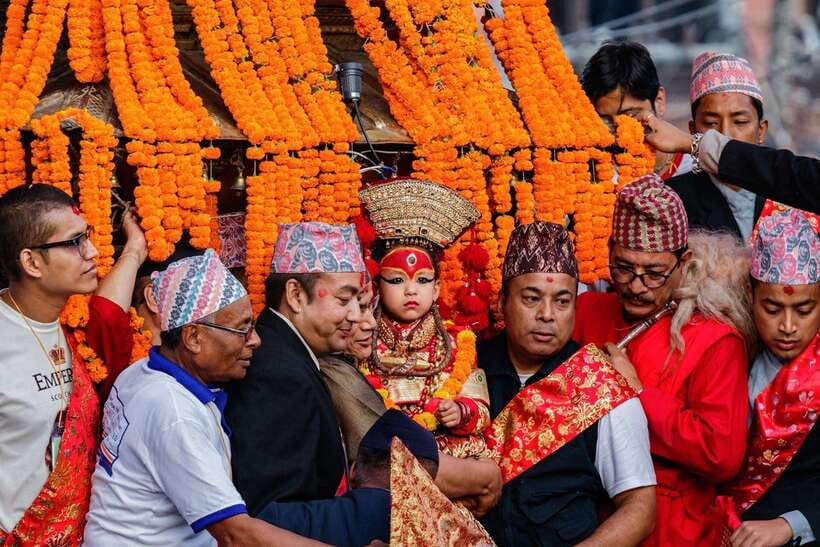
Bhaktapur Durbar Square receives about 90 minutes. This is one of the stronger stops for architecture and traditional culture, with the 55-Window Palace, Vatsala Temple, and Nyatapola Temple among the main sights.
Bhaktapur is known for its Newari buildings, temples, courtyards, and traditional arts. The square feels like a living cultural center rather than a single monument. You may find yourself looking as much at the brickwork, wood carving, and street activity as at the famous temples.
I would use this stop to ask about Newari traditions, food, festivals, and local design. One of the stated aims of the experience is to explain local food, customs, and daily life, and Bhaktapur is a natural place for those subjects.
Ninety minutes is useful but limited. You will get a broad introduction, not an unhurried exploration of every lane. Keep an eye on the time, especially if you want photographs.
More temple and square walks around Kathmandu:
- Private Kathmandu Sightseeing Tour | UNESCO World Heritage sites
★ 5.0 · 756 reviews - Kathmandu: Full Day 7 UNESCO Tour with Lunch – Private/Group
★ 5.0 · 415 reviews - Kathmandu: Full Day Top 4 UNESCO Tour with Lunch – Private/Group
★ 5.0 · 269 reviews - UNESCO Seven World Heritage Tour in Kathmandu
★ 5.0 · 253 reviews
Patan Durbar Square and the Malla period
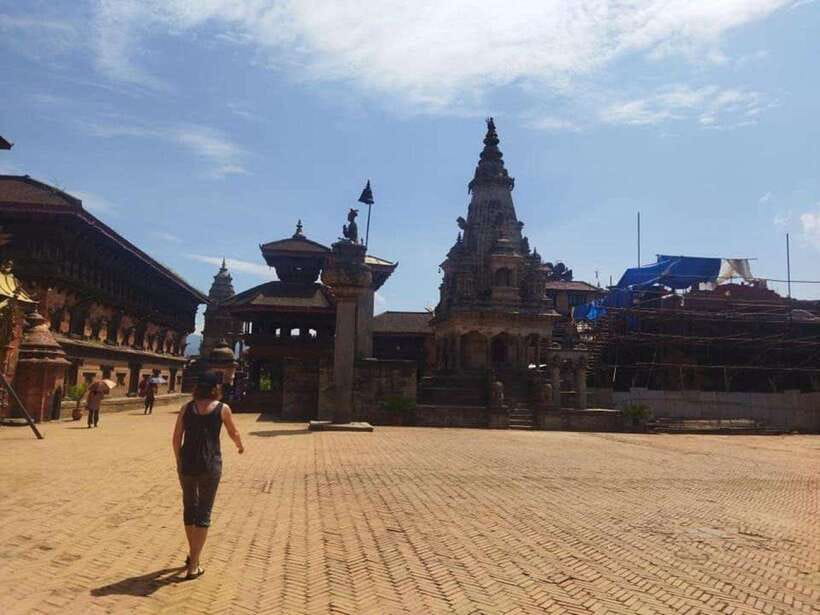
The next major square is Patan Durbar Square in Lalitpur, with about one hour set aside. Patan is known for Newari architecture, royal courtyards, and temples from the Malla period. Krishna Mandir is one of the key religious buildings here.
Patan helps you compare two historic centers rather than treating Kathmandu Valley as one undifferentiated place. The buildings share artistic traditions, but each square has its own arrangement and feel. Your guide can help explain how royal power, religion, and skilled craft came together in these spaces.
One hour is enough for the main sights and a basic explanation. It is not enough for a detailed museum visit or a slow architectural study. If you become especially interested in Newari metalwork, wood carving, or temple design, Patan may deserve a separate return visit.
Boudhanath and Tibetan Buddhist practice
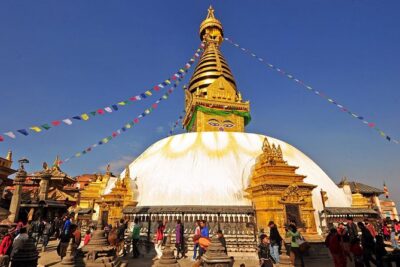
Boudhanath Stupa receives about one hour. This is one of Nepal’s largest stupas and a major center of Tibetan Buddhism. Its great spherical form, broad mandala design, prayer wheels, monasteries, and surrounding religious culture make it one of the most visually distinctive stops.
This is a good place to slow your pace for a moment. The tour is busy, but Boudhanath is best understood through its ritual movement and symbols, not only through a quick photograph. Ask your guide how the stupa functions in Buddhist practice and how the surrounding monasteries connect to the area.
The hour should cover the central sight and an explanation of its importance. Food is not included, so this is not automatically a meal stop. Bring water, which is provided as part of the tour, and plan to purchase anything else you need.
Pashupatinath on the Bagmati River
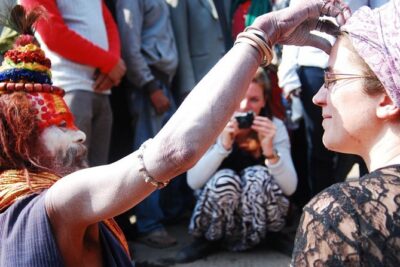
Pashupatinath Temple is a major Hindu pilgrimage site dedicated to Lord Shiva. It sits beside the Bagmati River and is known for religious ceremonies, temple architecture, and traditional cremations along the riverbank.
This can be the most emotionally direct part of the day. You may see a funeral procession or cremation activity, and the experience can feel confronting. A guide who explains the customs carefully can help you understand what you are seeing without turning a sacred ceremony into a spectacle.
The schedule presents the Pashupatinath stop as 40.67 hours, which cannot fit inside a 12-hour tour. That appears to be a timing error. Confirm the planned visit length before you book, especially because the difference between roughly 40 minutes and several hours would change the pace of the entire day.
This stop calls for respectful behavior. Keep your distance from ceremonies and follow your guide’s instructions about where you may stand and what you may photograph. The value here is not just the architecture. It is the chance to see how Hindu faith is practiced in public life.
Kathmandu Durbar Square in the old royal center
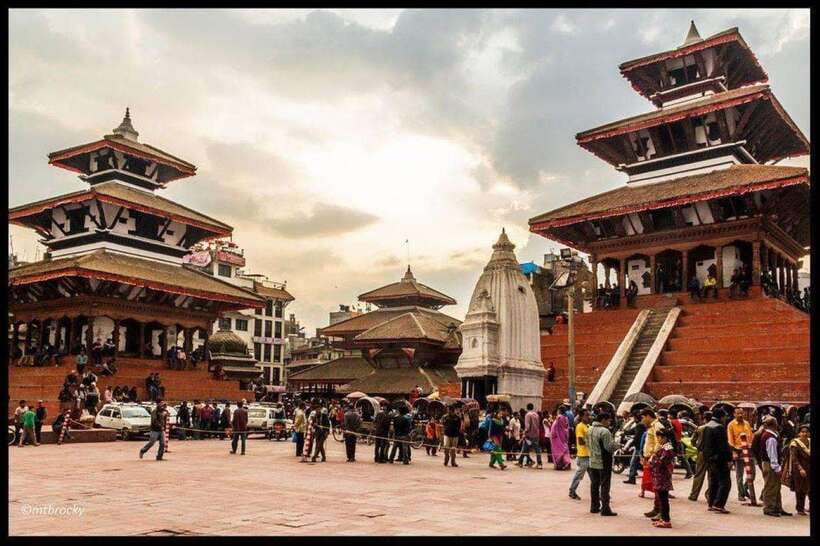
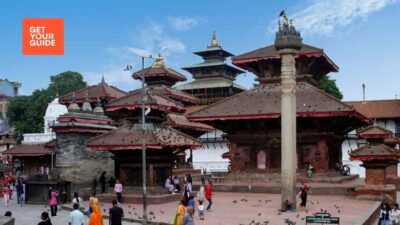
Kathmandu Durbar Square receives about one hour. This historic plaza was once the royal center of the Malla kings and contains palaces, courtyards, and temples connected with important festivals.
The square gives you a useful link between political power and religious life. Royal buildings and sacred structures share the same setting, and festivals continue to give the area cultural meaning.
After several major sites, you may feel tired by this point. That is one reason the private format helps. You can use the vehicle between stops to rest, and you can ask the guide to focus on the buildings or customs that interest you most.
Swayambhunath, the Monkey Temple
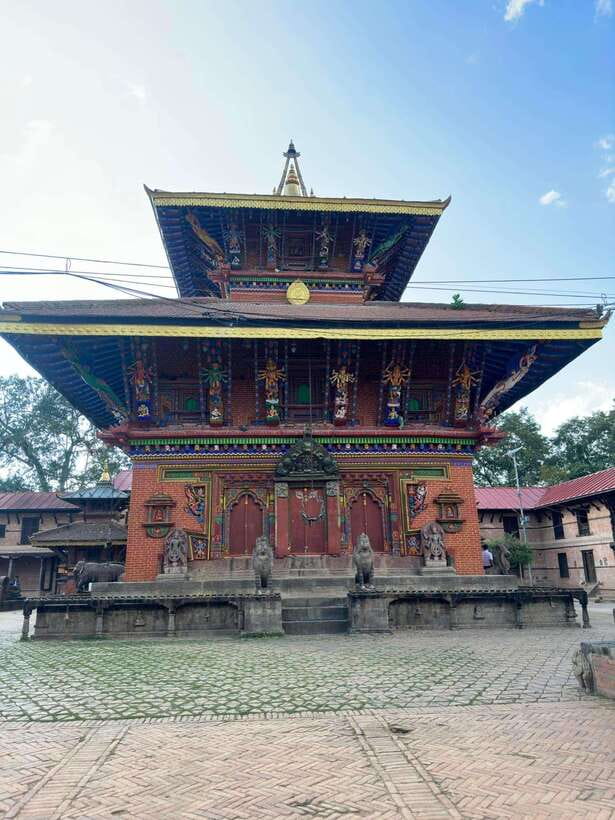
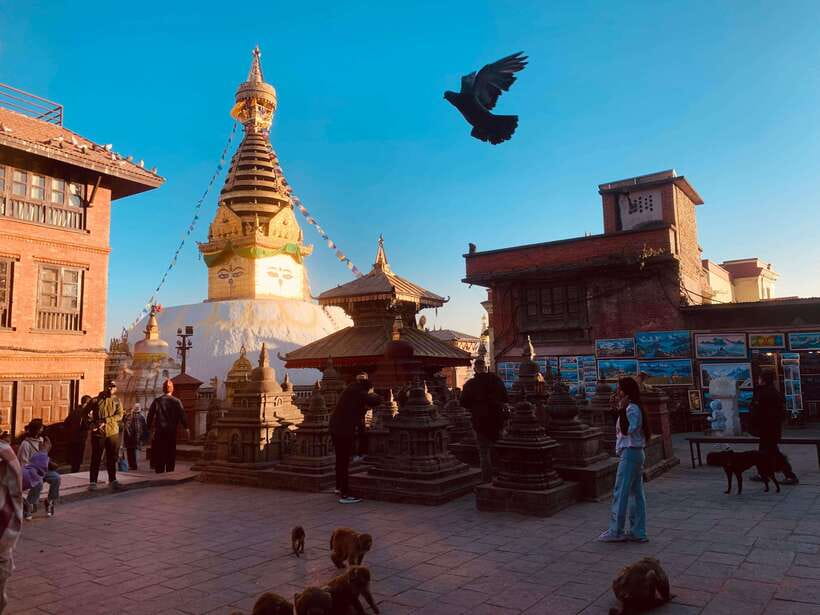
The final major stop is Swayambhunath, often called the Monkey Temple. The ancient complex sits on a hill and is important to both Buddhism and Hinduism. It is known for the stupa, prayer wheels, city views, and monkeys that live around the site.
The hilltop position gives Swayambhunath a different character from Boudhanath. Boudhanath is broad and open around its stupa, while Swayambhunath combines religious structures with a high viewpoint over Kathmandu.
Only about 30 minutes is assigned here, so expect a quick visit. If you want a long climb, extended photography, or time to study every shrine, this schedule may feel rushed. Still, the stop is a fitting end because it brings together the Buddhist and Hindu traditions that appear throughout the day.
What the $172 price really includes
At $172 per person, this is not a bargain sightseeing bus. It is a private, full-day service with an English-speaking guide, an air-conditioned vehicle, hotel pickup and drop-off within Kathmandu Valley, and bottled mineral water.
The value depends on how you use it. Seven major heritage sites would be difficult to organize efficiently on your own in one day, especially when you add a pre-dawn trip to Nagarkot. A private vehicle also saves you from arranging separate transport between distant parts of the valley.
You still need to budget for entrance fees, listed at around 6,000 Nepalese rupees in total. Food and drinks are also excluded. The final cost can therefore be much higher than the headline price, particularly if you want a proper meal and additional refreshments.
For someone with only one full day in Kathmandu, the package can make sense. For a longer stay, you may prefer to visit fewer sites each day and spend more time inside the squares and religious complexes.
Guide quality and the human side of the day
The guide is central to this experience. The tour is designed to cover Hinduism, Buddhism, history, festivals, local traditions, food, and daily life. That is a lot of ground, and the quality of the explanations will shape how meaningful the sites feel.
Santosh is named as a guide connected with the experience. His approach includes discussion of religions, rituals, and the rhythm of life in Kathmandu, with a particularly strong focus on explaining festival days and customs. The guide is also expected to answer questions patiently and keep a friendly manner.
The best use of your guide is to ask specific questions. Ask why a shrine matters, how a festival changes a square, what the prayer wheels represent, or how cremation rites fit into Hindu belief. Those questions turn a fast sightseeing day into a clearer cultural experience.
The tour is offered in English, with a private group rather than a shared coach. That makes it a good fit if you want conversation and explanation instead of a recorded audio guide.
Who should book this experience?
I would choose this tour if you have one free day, want the major UNESCO sites, and care about cultural context. It also suits first-time visitors who want hotel pickup, private transport, and a guide to handle the route.
It is a good match for people who like variety. You get a mountain viewpoint, royal squares, Buddhist worship, Hindu ceremonies, traditional architecture, and city views in one day.
I would hesitate if you dislike early mornings, long sightseeing days, or emotionally serious religious sites. Pashupatinath can be difficult to process, and the schedule leaves little room for a slow lunch or an unplanned stop.
Free cancellation is available up to 24 hours before the experience, and you can reserve now and pay later. Those terms help if your plans are still changing, but they do not solve the main issue: you need enough energy for the pace.
Should you book this Nagarkot tour?
Book it if your priority is breadth. You will see the Himalayan sunrise, visit all seven UNESCO areas named for Kathmandu Valley, and have a private English-speaking guide to connect the buildings with Hindu and Buddhist life.
Skip it in favor of a slower plan if you want long visits, relaxed meals, or detailed photography. Before paying, confirm the pickup time, the actual Pashupatinath duration, entrance-fee total, and how the guide will handle the sunrise if clouds hide the mountains.
For an ambitious first day in Kathmandu, this is a strong cultural overview. Just understand that it is a fast-moving overview, not a leisurely tour.
FAQ
How long is the Nagarkot sunrise and UNESCO sites tour?
The experience lasts 12 hours, including the early-morning visit to Nagarkot and sightseeing at seven UNESCO sites in Kathmandu Valley.
What time does the tour start?
The exact starting time is not provided. Since the tour includes sunrise at Nagarkot, you should confirm the pickup time before booking.
Is hotel pickup included?
Yes. Pickup and drop-off are included for hotels inside Kathmandu Valley.
Is the tour private?
Yes. It is offered for a private group and includes a private air-conditioned vehicle.
What language does the guide speak?
The live tour guide speaks English.
Are entrance fees included?
No. Entrance fees for the UNESCO sites are extra and are estimated at around 6,000 Nepalese rupees.
Are food and drinks included?
No. Food and drinks are not included. Bottled mineral water is provided.
More Historical Tours in Kathmandu
- Kathmandu Private Sightseeing Tour | UNESCO World Heritage Sites
★ 5.0 · 109 reviews - Kathmandu: Full Day Private Top 4 UNESCO Heritage Tour W/Lunch.
★ 5.0 · 86 reviews - Kathmandu World Heritage Tour
★ 5.0 · 74 reviews - Nagarkot Sunrise & Bhaktapur UNESCO Heritage Private Tour
★ 5.0 · 66 reviews
Just added in Kathmandu
- Kathmandu to Chitwan Tour by Tourist Bus – A Convenient and Affordable Way★ 4.0 · 4 reviews
- Changunarayan Hill to Telkot Hike Near Kathmandu Day Tour★ 5.0 · 6 reviews
- Mt Everest Base CampTrek | Budget Package★ 5.0 · 4 reviews
- Chitwan Jungle Safari 3-Day Tour★ 5.0 · 9 reviews
- Chandragiri Hill Station Tour by Cable Car★ 5.0 · 4 reviews
- Chandragiri Hills cable car day trip, private car with driver from Kathmandu★ 5.0 · 8 reviews
- Chandragiri to Taudaha Nature Day Hiking from Kathmandu★ 5.0 · 13 reviews
- Chandragiri Cable Car & Monkey Temple Private Guided Day Tour★ 5.0 · 5 reviews
Kathmandu UNESCO Heritage Tours, compared.
Private Kathmandu Sightseeing Tour | UNESCO World Heritage sites
Read our review →
Full Day 7 UNESCO Tour with Lunch – Private/Group
Read our review →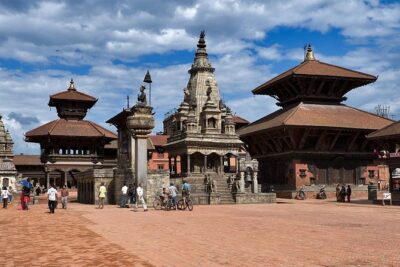
Private Bhaktapur and Nagarkot Day Tour From Kathmandu
Read our review →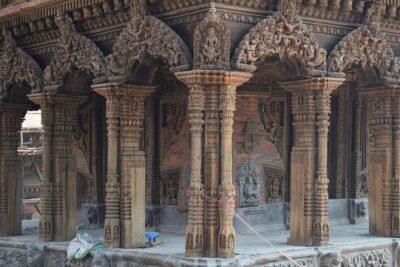
Kathmandu Spiritual Sites: Bodhnath & Pashupatinath Tour
Read our review →
Day Trip to Bhaktapur and Panauti from Kathmandu
Read our review →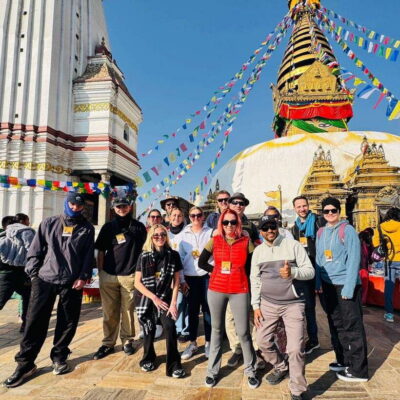
Browse the lists this tour appears in