
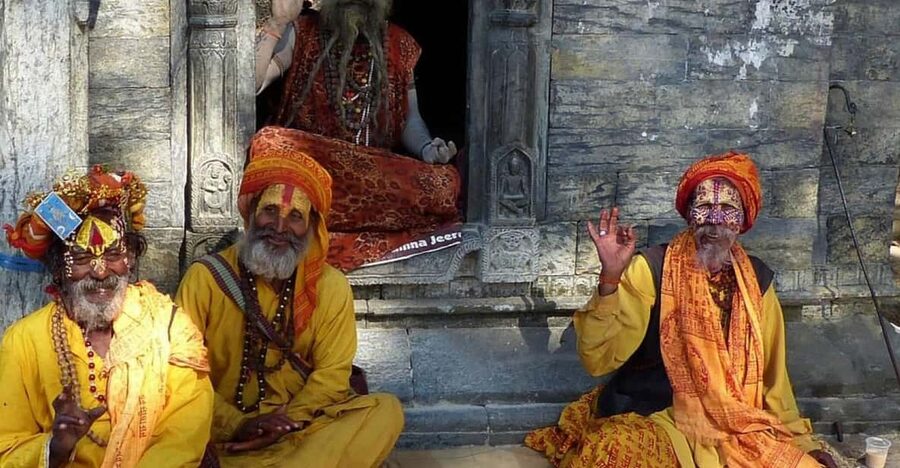
Reviewed · KATHMANDU UNESCO HERITAGE TOURS
Pashupatinath: Evening tour of temple and Aarati ceremony
Pashupatinath is at its most powerful when the evening Aarati begins beside the Bagmati River. Priests raise oil lamps to the rhythm of drums and sacred chants, while the temple roofs and river ghats frame a ceremony that feels both public and deeply personal.
I like the mix of living worship and historic architecture, and I like having private transport and an English-speaking guide included in a three-hour visit. The main consideration is the cremation ghats: this is not a light sightseeing stop, and you need to watch quietly and respectfully.
Key points
- Sunset Aarati beside the Bagmati River: Watch priests perform a ritual of lamps, chanting, and drums as daylight fades.
- Temple complex and pagoda architecture: See shrines, murtis, bells, and the golden spire of the main Pashupatinath Temple.
- Cremation ghats: Observe Hindu funeral customs from the riverbank, with care and proper distance.
- Private three-hour outing: Transportation, entry fees, and an English-speaking guide are included.
- Skip-the-line access: Spend more of your limited evening inside the complex rather than waiting for tickets.
- Strong fit for culture-focused visitors: The visit offers more than a photo stop, but it may not suit people seeking a casual or fully accessible walk.
Why Pashupatinath feels different at dusk
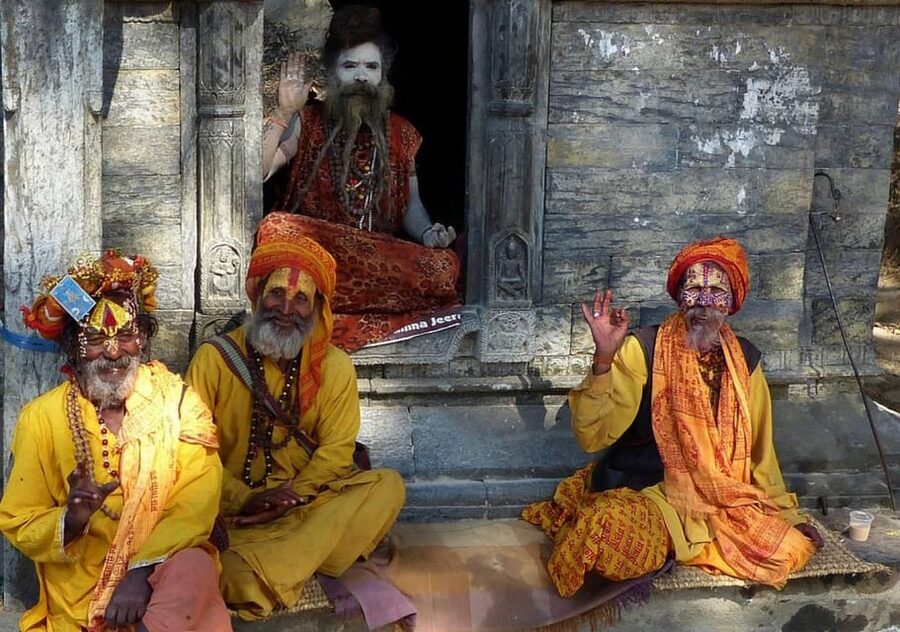
Many temple visits are mainly about buildings. Pashupatinath is different because worship, death, music, architecture, and ordinary daily life all share the same space.
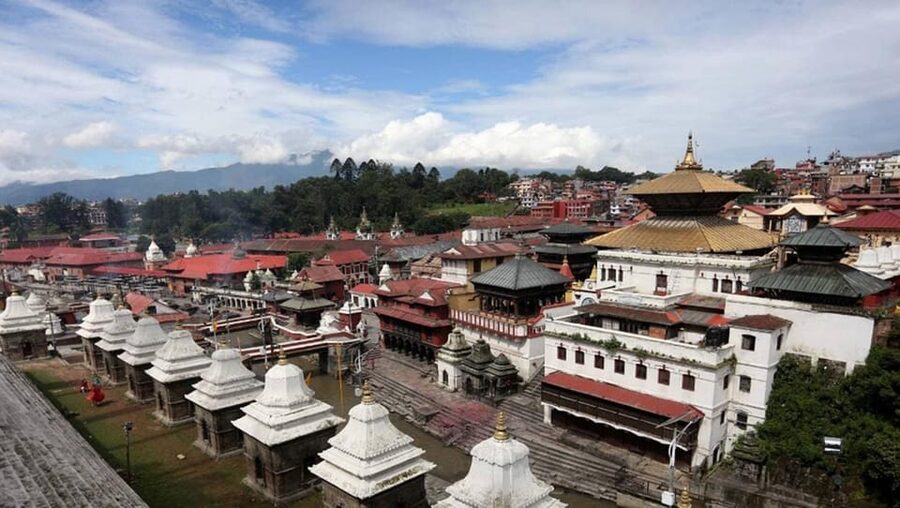
The complex sits along the Bagmati River, one of Nepal’s most sacred waterways. The riverbank contains cremation ghats, while the temple grounds hold shrines, statues, bells, and places of prayer. You are not looking at a preserved monument behind glass. You are entering an active religious site where people come to worship, mourn, make offerings, and follow customs passed down through generations.
That makes the visit rewarding, but it also asks something from you. Keep your voice low near funeral rites. Do not treat cremations as entertainment. Photography may feel tempting, yet the families gathered at the ghats deserve privacy. Your guide can help you understand what you are seeing and where to stand.
The timing helps. The tour lasts three hours and is arranged around the evening ceremony, so you see the complex during a gradual change in mood. The late light brings out the temple roofs and river setting, then the lamps and chanting take over as night approaches.
More temple and square walks around Kathmandu:
- Private Kathmandu Sightseeing Tour | UNESCO World Heritage sites
★ 5.0 · 756 reviews - Kathmandu: Full Day 7 UNESCO Tour with Lunch – Private/Group
★ 5.0 · 415 reviews - Private Bhaktapur and Nagarkot Day Tour From Kathmandu
★ 5.0 · 305 reviews
Entering the centuries-old temple complex
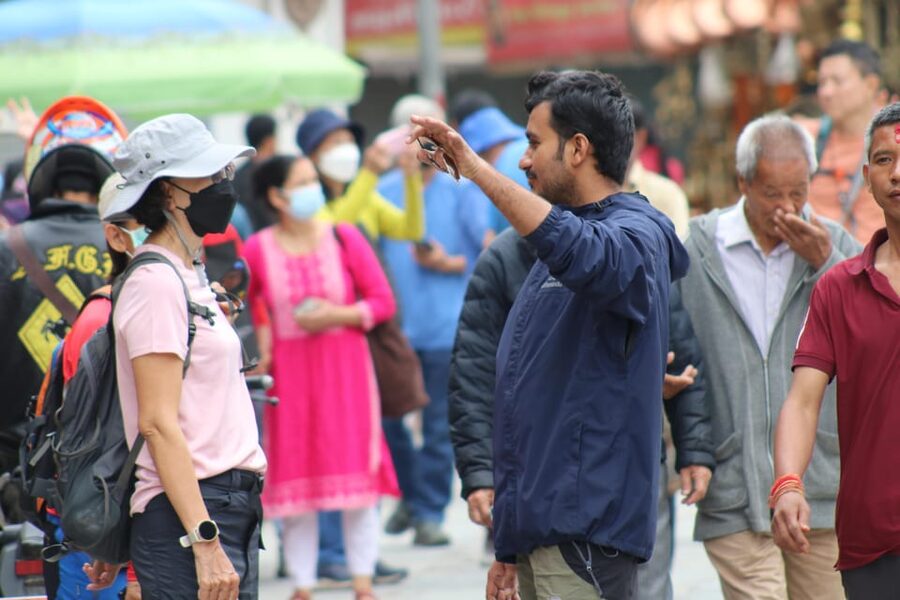
Your visit begins with the approach to Pashupatinath. The main temple is known for its pagoda-style form and golden spire, with the sacred lingam of Lord Pashupatinath inside. Pashupatinath is a manifestation of Lord Shiva and one of Nepal’s most important Hindu places of worship.
The main temple is not simply an architectural display. Its religious importance shapes how the site operates and how you should move through it. You will see devotees, pilgrims, priests, and worshippers among the buildings. Incense hangs in the air, bells ring, and small shrines appear throughout the grounds.
The complex includes many murtis, or sacred statues, each tied to Hindu stories and religious practice. An English-speaking guide is especially useful here. Without context, you may see a collection of roofs and images. With explanation, the details begin to connect: the placement of shrines, the meaning of offerings, and the reason this site has remained central to Nepalese religious life.
The visit also gives you a sense of Nepalese architecture beyond a single famous building. Look for carved details, tiered roofs, religious images, and the way the complex works as a group of sacred spaces. The main temple may attract the most attention, but the smaller shrines often provide a quieter look at daily devotion.
Pashupatinath has UNESCO heritage status, which adds cultural importance but does not turn it into a silent museum. Expect an active place of worship. That distinction matters. You are there to observe a living tradition, not just admire an old structure.
Walking beside the Bagmati River
The route along the Bagmati brings the most serious part of the visit. The riverbank contains ghats used for Hindu cremation ceremonies. Families gather there to say goodbye to loved ones, while priests lead rituals connected with death, farewell, and the hope of rebirth.
For many people, this is the moment that gives the tour its emotional weight. You may find the ceremonies difficult to watch. That is normal. The customs can be unfamiliar, and the closeness of religious ritual and public space may challenge the way you think about privacy, mourning, and death.
Your guide can provide cultural background without turning the moment into a lecture. Listen first, then ask questions at an appropriate time. Avoid pointing cameras toward mourners or treating the ceremony as a performance. A respectful distance and quiet behavior are more important than getting a close look.
The ghats also explain why Pashupatinath matters beyond its buildings. The site connects worship with the cycle of life and death in a direct way. You see a place where spiritual beliefs are not separated from ordinary family responsibilities. That can be moving, but it is not designed for everyone.
If you prefer easygoing sightseeing, this section may feel heavy. If you want to understand Nepal through its religious customs rather than through monuments alone, it is one of the most meaningful parts of the evening.
The golden spire and the smaller shrines
The main Pashupatinath Temple provides the visual anchor for the visit. Its golden spire rises above the complex, while the pagoda form gives it a distinctly Nepalese character. Inside is the sacred lingam associated with Lord Pashupatinath.
You should not expect the tour to feel like a standard European church visit, where a visitor may freely enter every interior. This is an important Hindu temple, and access can depend on religious rules. Your guide will help you understand what you can see and how to behave in the spaces open to you.
Around the main temple, the smaller shrines and statues reward slow looking. Notice the variety of forms and the constant movement of worship: people lighting incense, ringing bells, placing offerings, or pausing in prayer. These details make the complex feel personal rather than grand only for show.
I like this portion because it balances the solemnity of the ghats with the visual pleasure of the architecture. You can pay attention to carved surfaces and roofs, then notice how quickly your focus shifts to a worshipper’s quiet gesture or a priest preparing a ritual.
An evening visit also helps with the atmosphere. The fading light softens the stone and metal surfaces, while lamps begin to become the main source of illumination. Bring patience. The best parts are often small: a bell, a row of lamps, incense smoke, or a short chant carried across the courtyard.
Same base, a different kind of day:
- Everest Base Camp Trek – 14 Days
★ 5.0 · 1,499 reviews - Everest Base Camp Helicopter Tour landing at Everest View Hotel
★ 5.0 · 668 reviews - Half day cooking class in Thamel kathmandu
★ 5.0 · 607 reviews - Everest Base Camp Trekking
★ 5.0 · 485 reviews
The Pashupati Aarati ceremony after sunset
The central event is the Pashupati Aarati, an evening ceremony offered to Lord Pashupatinath. It takes place near the riverbank and draws people toward the ritual space as daylight fades.
Priests in traditional dress perform coordinated movements with oil lamps, also called diyas. Chants and mantras provide the vocal rhythm, while drums give the ceremony a steady pulse. The lamps move through the air in deliberate patterns, creating a strong visual focus against the darkening river setting.
You do not need specialist knowledge to appreciate the ceremony. Watch the sequence and notice how sound, movement, flame, and prayer work together. The ritual is not staged for tourists. You are observing a religious act that matters to the people taking part.
This is also where the tour’s timing earns its keep. A daytime visit can show you the buildings, but the evening visit gives you the ceremony that brings the riverfront to life. The change from ordinary temple activity to formal prayer makes the three-hour schedule feel purposeful rather than rushed.
The Aarati can be crowded around the viewing area, although this is a private group tour. Private touring does not mean you have the entire riverbank to yourself. It means your own group travels together and your guide can explain what is happening without you being folded into a large tour party.
Give yourself permission to simply watch for part of the ceremony. You do not need to photograph every lamp movement. The chanting and drums are easier to appreciate when your attention is not fixed on a phone screen.
What the private format adds
This is a private group outing rather than a large shared coach tour. That matters most at a religious site where questions can arise quickly and respectful behavior is important.
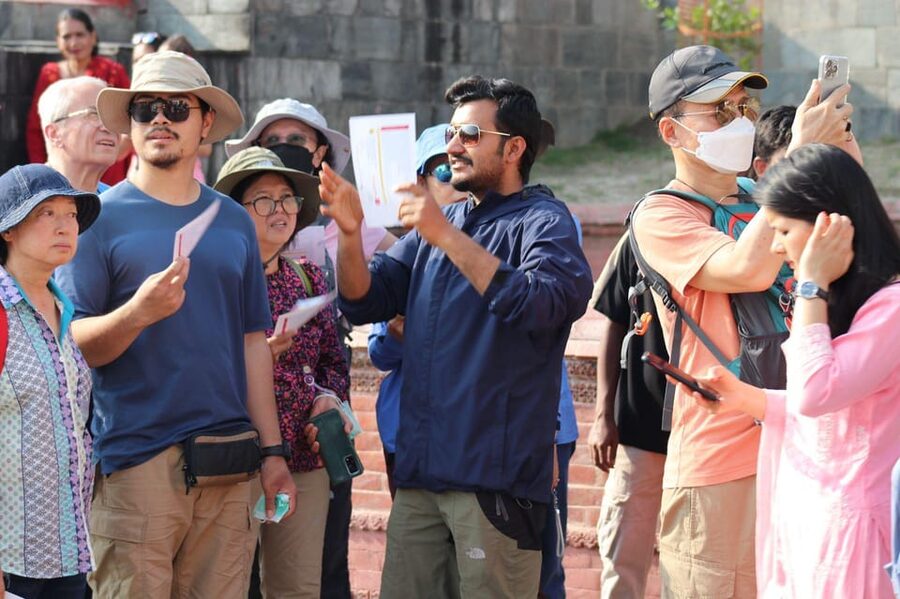
You have an English-speaking guide to explain the temple’s history, the religious figures represented by the murtis, and the meaning of the rituals. The guide can also help you understand the cremation ghats without reducing them to a tourist attraction.
Transportation is included, as are entry fees. That keeps the evening simple. You do not have to arrange your own ride to the temple or work out ticket details after arriving. Skip-the-line access is also included, which can save useful time during a short visit.
The experience received a full five-star rating from three verified bookings, with praise focused on the spiritual impact, the pleasant guide, and the overall quality of the visit. One French guest described it as a very beautiful, complete immersion in the place, while a Japanese guest found the temple, funeral rites, and ceremony deeply affecting. A Nepal-based guest called it fantastic. The comments are brief, but they point to the same strength: this tour is about personal connection and cultural understanding, not just transportation to a famous site.
No guide name is provided, so you should not book this expecting a named specialist. What is clear is that the guide speaks English and is expected to accompany your private group throughout the visit.
Is $57 a fair price?
At $57 per person, the price is reasonable if you value convenience and interpretation. You are paying for a three-hour private outing with transportation, entry fees, an English-speaking guide, and skip-the-line access.
A cheaper self-guided visit might be possible, but the savings would come with tradeoffs. You would need to arrange transportation, understand the entry process, and make sense of rituals that may be unfamiliar. At Pashupatinath, that last point matters. A guide can help you distinguish ordinary temple activity from formal ceremony and can advise you on respectful conduct near the cremation ghats.
The value is less convincing if you only want to see the exterior of the temple and take a few photographs. You could find the three-hour format too focused on ritual and cultural explanation. The tour earns its price for people who want the ceremony, the riverbank, and the background behind what they are seeing.
The private format is another reason to consider the cost. You are not paying only for a ticket. You are buying a more controlled evening, with transport and a guide included. For a first visit to Kathmandu, that can be worth the added expense.
Practical points before you go
Plan for a serious cultural visit, not a quick attraction stop. The cremation ghats can be emotionally difficult, and the ceremony may feel intense if you are not used to public religious ritual.
The experience is not suitable for wheelchair users. The temple complex and riverbank setting may involve uneven access, and the activity is not presented as wheelchair accessible.
Wear clothing suitable for a place of worship and keep your conduct restrained near the ghats. The supplied details do not specify a dress code, so the safest approach is modest clothing and a quiet manner.
The tour lasts three hours, but the precise starting time varies. Check availability for the date you want, since the evening Aarati is the key timing point. Transportation and entry fees are included, so you can focus on arriving at the right time rather than arranging those pieces yourself.
You can cancel up to 24 hours before the activity for a full refund, and the reserve-now, pay-later option lets you hold a place without paying immediately. These terms are helpful if your Kathmandu plans are still shifting.
Who should book this Pashupatinath visit?
I would choose this tour if you want a guided introduction to Hindu worship in Nepal and are comfortable seeing funeral rites. It suits first-time visitors who want transport, entry, and interpretation handled together.
It is also a good match for photographers and architecture lovers, though the strongest reward comes from watching rather than collecting images. The pagoda roofs, golden spire, shrines, river, lamps, and incense give you plenty to notice, but the ceremony is the heart of the outing.
I would think twice if you want a relaxed evening with little walking, dislike religious ceremonies, or feel uncomfortable near cremation grounds. The tour is respectful, but it cannot remove the seriousness of what takes place beside the river.
Should you book it?
Book it if the Pashupati Aarati and the cremation ghats are central to what you want to understand about Kathmandu. The private format, included transportation, and English-speaking guide make the visit easier, while the three-hour timing gives you enough space for the temple grounds, riverbank, and ceremony.
Skip it if you only want a quick architectural stop or need wheelchair access. For everyone else, this is a focused way to encounter Nepalese religious life at its most direct: bells and incense in the temple, farewells at the river, and lamps rising into the evening.
FAQ
How long does the Pashupatinath evening tour last?
The tour lasts three hours.
What does the tour include?
It includes transportation, entry fees, and an English-speaking guide.
Is the tour private?
Yes. The activity is offered for a private group.
What language does the guide speak?
The live guide speaks English.
Does the tour include the Pashupati Aarati ceremony?
Yes. The evening itinerary includes the Pashupati Aarati ceremony near the Bagmati River.
Can I see cremation rituals during the visit?
Yes. The tour includes a walk along the riverbank where cremation ceremonies take place at the ghats.
Is skip-the-line access included?
Yes. Skip-the-ticket-line access is included.
Is the tour suitable for wheelchair users?
No. The activity is listed as not suitable for wheelchair users.
Can I cancel for a full refund?
Yes. You can cancel up to 24 hours in advance for a full refund.
Just added in Kathmandu
- Kathmandu to Chitwan Tour by Tourist Bus – A Convenient and Affordable Way★ 4.0 · 4 reviews
- Changunarayan Hill to Telkot Hike Near Kathmandu Day Tour★ 5.0 · 6 reviews
- Mt Everest Base CampTrek | Budget Package★ 5.0 · 4 reviews
- Chitwan Jungle Safari 3-Day Tour★ 5.0 · 9 reviews
- Chandragiri Hill Station Tour by Cable Car★ 5.0 · 4 reviews
- Chandragiri Hills cable car day trip, private car with driver from Kathmandu★ 5.0 · 8 reviews
- Chandragiri to Taudaha Nature Day Hiking from Kathmandu★ 5.0 · 13 reviews
- Chandragiri Cable Car & Monkey Temple Private Guided Day Tour★ 5.0 · 5 reviews
Kathmandu UNESCO Heritage Tours, compared.
Private Kathmandu Sightseeing Tour | UNESCO World Heritage sites
Read our review →
Full Day 7 UNESCO Tour with Lunch – Private/Group
Read our review →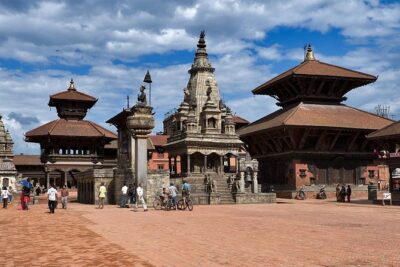
Private Bhaktapur and Nagarkot Day Tour From Kathmandu
Read our review →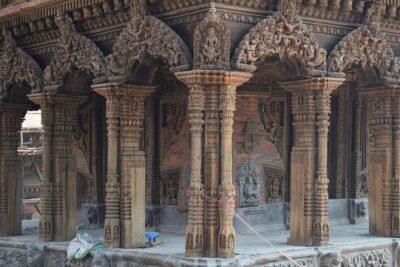
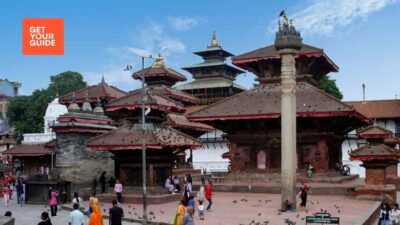

Kathmandu Spiritual Sites: Bodhnath & Pashupatinath Tour
Read our review →
Day Trip to Bhaktapur and Panauti from Kathmandu
Read our review →
Browse the lists this tour appears in