
Reviewed · KATHMANDU UNESCO HERITAGE TOURS
Sacred Pashupatinath: Aarati,Cremation Rites & Boudha Stupa
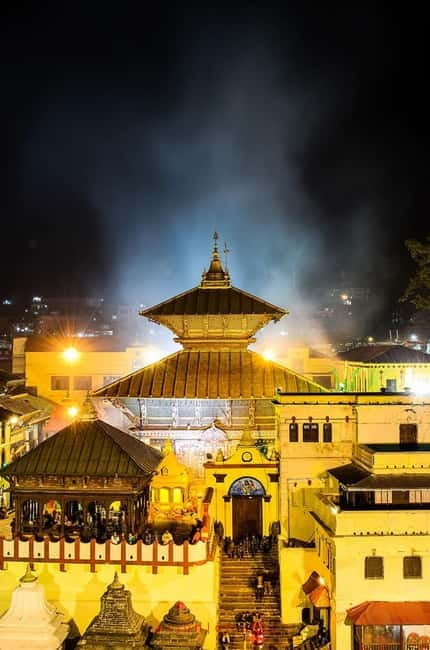
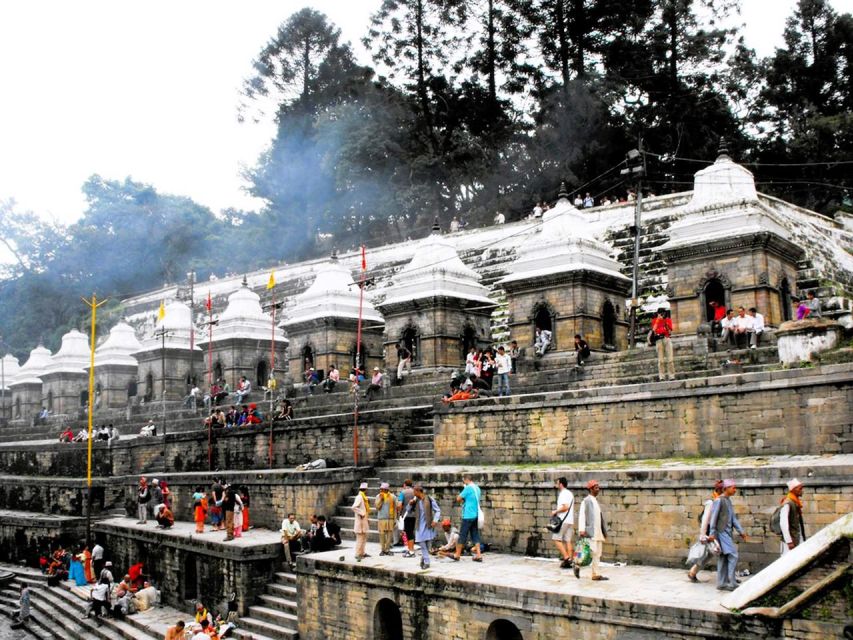
At Pashupatinath, funeral pyres burn beside the Bagmati River while bells, chants, and conch shells mark the evening Aarati. It is a serious, powerful introduction to Kathmandu’s living faith, not a polished sightseeing stop. You visit the temple’s outer complex because non-Hindus cannot enter the main shrine.
I like the pairing of Boudhanath’s calm Buddhist rhythm with Pashupatinath’s emotional Hindu ceremonies. I also like the guide-led context: guides such as Razz and Pranav explain what you are seeing instead of leaving you to guess.
The main consideration is the subject matter. Cremation rites can be difficult to watch, and the tour is not suitable for children under 12 or people with respiratory issues. You should approach the river ghats quietly and respectfully.
Key points to know before you book
- Walk the kora at Boudhanath: Circle the great white stupa, turn prayer wheels, and watch daily worship around one of Kathmandu’s key Buddhist sites.
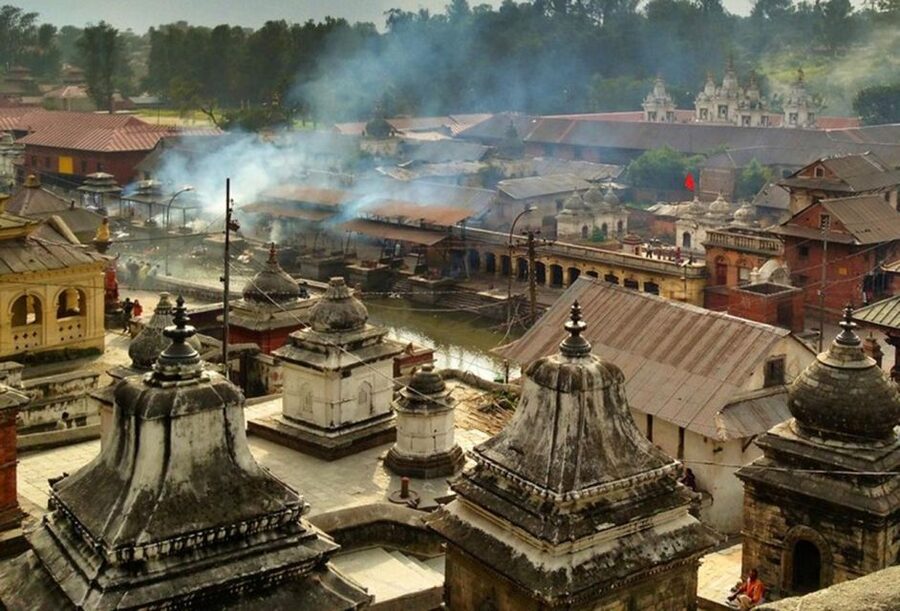
- See Pashupatinath’s river ceremonies: Learn about Hindu funeral customs from your guide while keeping a respectful distance from the cremation ghats.
- Stay for Aarati: Evening lamps, chanting, bells, and conch shells create the tour’s most striking moment.
- Expect two different moods: Boudhanath feels contemplative, while Pashupatinath can feel intense and emotionally heavy.
- Budget for entrance fees: The listed price is $11 per person, but Pashupatinath costs NRs 1,000 and Boudhanath costs NRs 400.
- Choose transport carefully: Hotel pickup and drop-off may be available, but some options require you to arrange your own transport.
Why these two holy sites belong together
Kathmandu can feel noisy and crowded, but these two places show how faith shapes ordinary life in the valley. At Boudhanath, worship takes the form of steady movement, prayer wheels, incense, painted symbols, and quiet concentration. At Pashupatinath, worship is tied to the river, death, family duty, and public ceremony.
I like the structure because you do not spend the whole visit looking at one type of religious monument. You get a Buddhist pilgrimage center and a major Hindu shrine in one outing, with enough time at each site to understand the difference.
The tour lasts between two and five hours, depending on the option you choose and the amount of time spent at each stop. The scheduled visits are roughly one hour at Boudhanath and one hour at Pashupatinath, with transport and possible breaks around them.
This is not a museum tour. Both places remain active religious centers. You may see people praying, shopping for ritual items, walking in pilgrimage, making offerings, or attending a funeral. Your guide’s role is important because the meaning of these actions is not always obvious from the outside.
More temple and square walks around Kathmandu:
- Private Kathmandu Sightseeing Tour | UNESCO World Heritage sites
★ 5.0 · 756 reviews - Kathmandu: Full Day 7 UNESCO Tour with Lunch – Private/Group
★ 5.0 · 415 reviews - Private Bhaktapur and Nagarkot Day Tour From Kathmandu
★ 5.0 · 305 reviews
Boudhanath Stupa and the steady rhythm of the kora
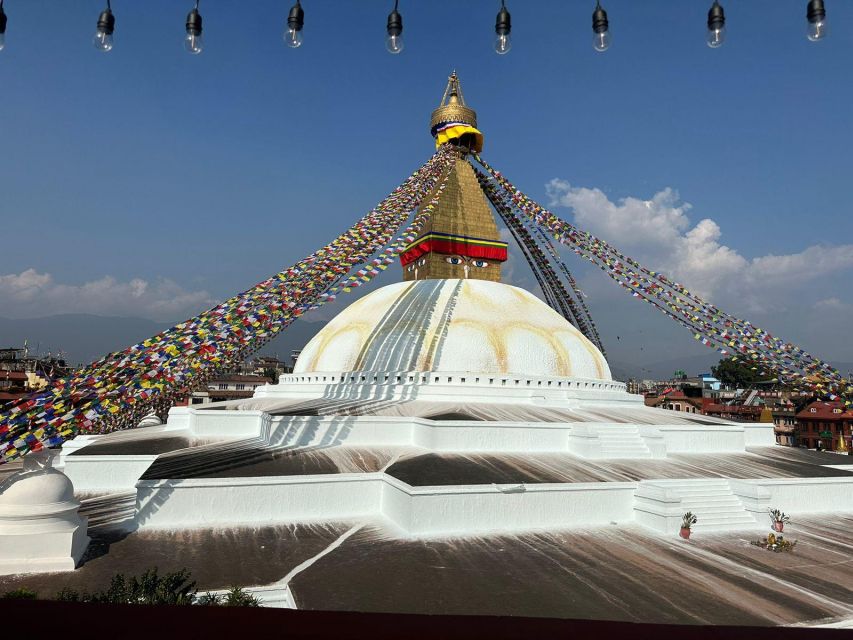
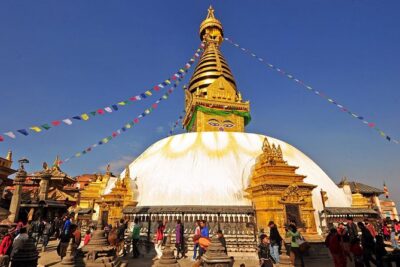
Boudhanath is the gentler opening. The huge white dome and golden spire draw your eye immediately, but the real pleasure comes from walking around it rather than simply taking a photograph.
The sacred circuit is called a kora. You walk clockwise around the stupa, following the same basic path used by pilgrims. Along the route, you can turn prayer wheels, look into monastery courtyards, and pause at shops selling Buddhist objects, paintings, and other souvenirs.
Your guide can explain the symbols on the stupa and the purpose of the rituals taking place around it. That explanation helps you see Boudhanath as more than an impressive building. It is a place where architecture, prayer, trade, and everyday life all occupy the same small area.
The nearby cafés give you a useful pause. You might sit with tea on a rooftop and watch people circle the stupa below. The view is especially appealing when the dome catches changing light, though the café stop is not presented as a meal included in the tour.
Allow yourself to browse, but keep your spending in check. The shops near Boudhanath sell attractive religious objects, including art and handmade items, but purchases are personal expenses. One useful lesson from this stop is that saying no politely is usually enough when a shopkeeper approaches you.
A short meditation or singing bowl demonstration may be offered during some visits, and one past outing also included a massage. These extras do not appear guaranteed, so treat them as possible additions rather than part of the core tour.
What makes Boudhanath more than a photo stop
The stupa is visually memorable, but the movement around it is what gives the visit meaning. You can watch pilgrims repeat the same circuit, prayer wheel after prayer wheel, while shopkeepers open their doors and cafés serve tea nearby.
I would give Boudhanath your full attention instead of rushing through for a few photographs. Look upward at the painted eyes and gold details, then look down at the feet moving around the base. The contrast between the monumental structure and the simple act of walking is the point.
You may also see artists working on Thangka paintings, a traditional form of Buddhist religious art. If that interests you, the surrounding market gives you a chance to watch the work and ask questions, though buying anything is optional.
The monastery courtyards may not always be open. One visit found a monastery closed, so do not plan your entire stop around entering a particular building. The stupa and surrounding public areas remain the main attraction.
Pashupatinath Temple, Shiva worship, and the Bagmati River
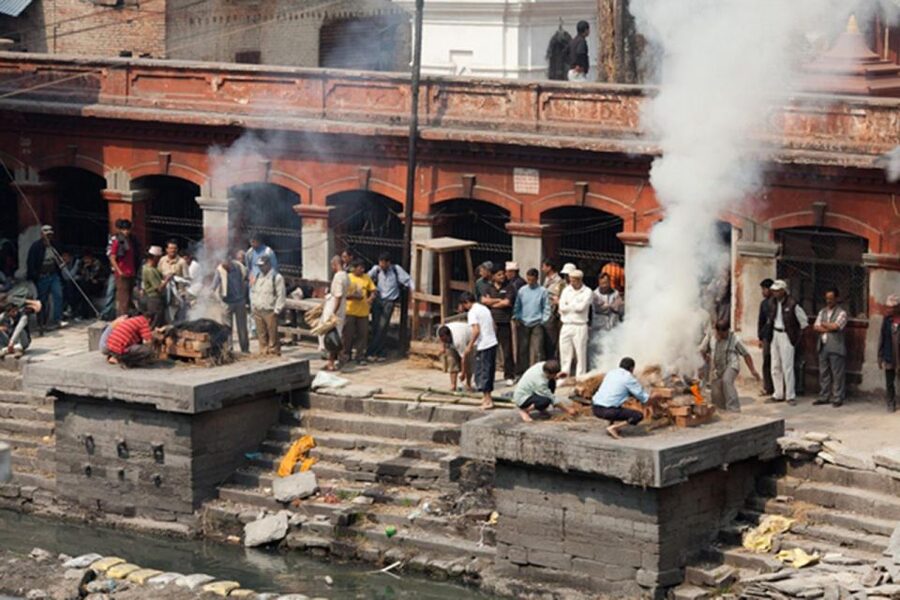
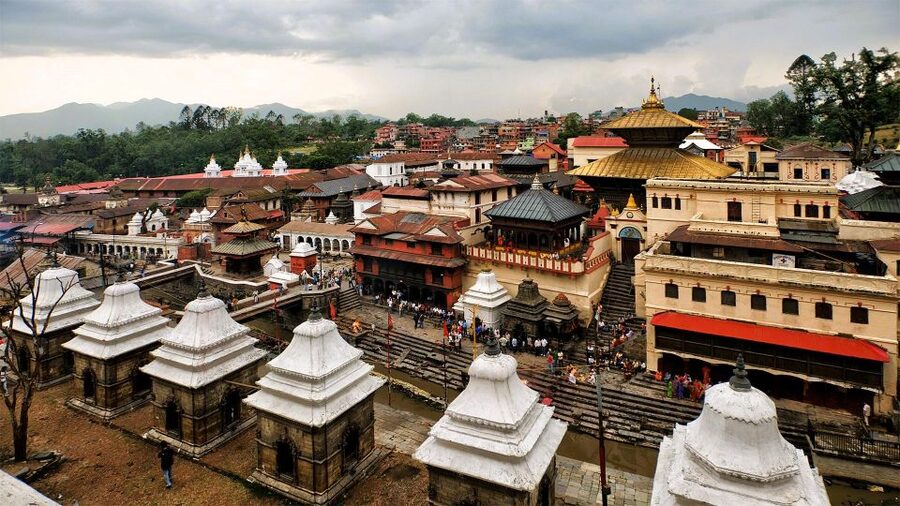
Pashupatinath brings a sharp change of mood. It is the holiest Hindu temple in Nepal and one of the important Shiva shrines in the world. The complex lies beside the Bagmati River, where religious ceremonies and cremations take place in public view.
Non-Hindus cannot enter the main sanctum. You can still explore the outer complex with your guide, seeing temple buildings, shrines, statues, and architectural details from the permitted areas.
This is where a good guide earns the fee. Names associated with this tour include Razz, Pranav, Karma, Anish, and Sudhir, although the guide you receive depends on availability. The strongest part of their role is explaining the rituals and customs without turning them into a spectacle.
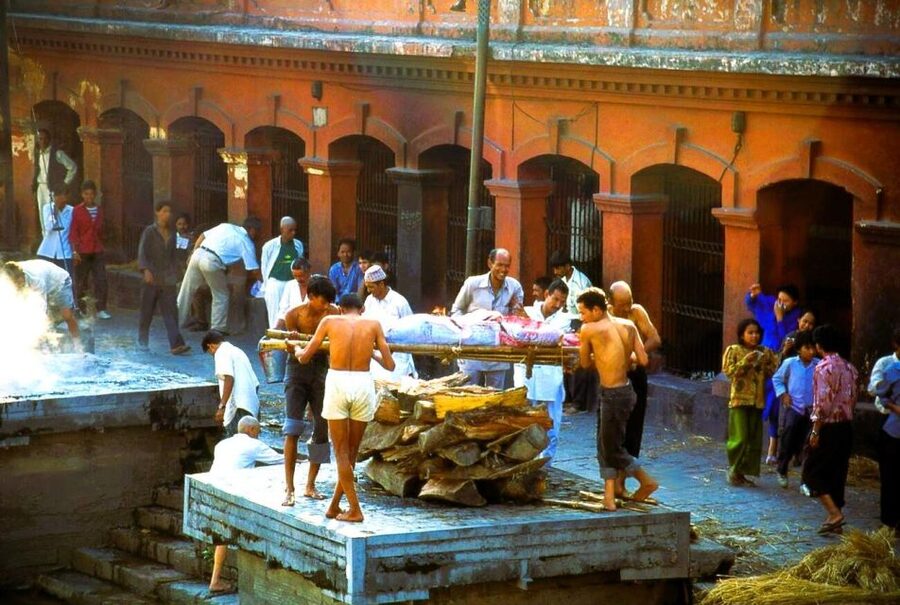
Cremation is the most sensitive part of the visit. Open-air funeral rites happen along the river ghats, and you may see a body being prepared, a pyre burning, or family members taking part in the ceremony. The experience can feel sad, dark, and emotionally heavy, as one visitor described it.
I would not treat this as an unusual show. It is a private family rite carried out in a public religious setting. Keep your voice low, follow the guide’s directions, and ask before taking photographs. The provided information does not promise a specific viewing position, and respectful distance matters more than getting a close look.
The guide explains the meaning of the sacred fire, the river, and the idea of the soul’s passage in Hindu belief. That context can make the scene easier to understand, but it will not remove the emotional weight. People with respiratory issues should take particular care, since smoke may be present and the activity specifically warns against joining if you have breathing problems.
Same base, a different kind of day:
- Everest Base Camp Trek – 14 Days
★ 5.0 · 1,499 reviews - Everest Base Camp Helicopter Tour landing at Everest View Hotel
★ 5.0 · 668 reviews - Half day cooking class in Thamel kathmandu
★ 5.0 · 607 reviews - Everest Base Camp Trekking
★ 5.0 · 485 reviews
The Aarati ceremony after sunset
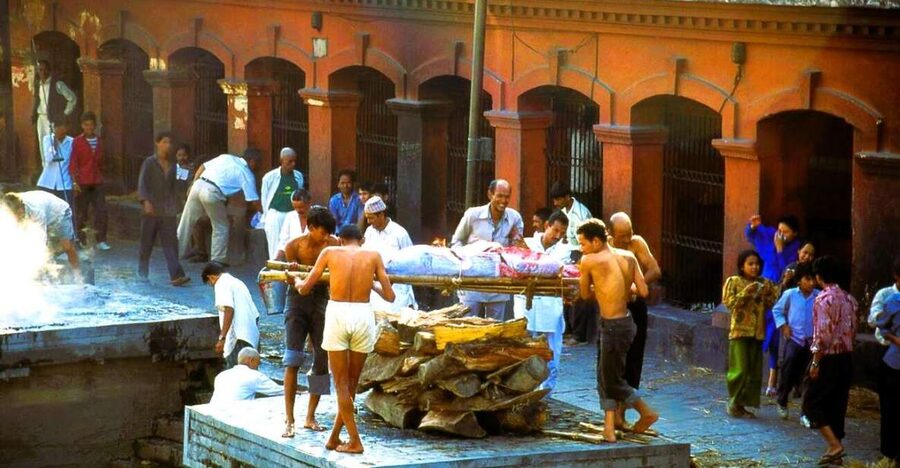
The Aarati is often the emotional high point. As daylight fades, the temple area fills with bells, chants, lamps, and conch-shell sounds. The ceremony gives Pashupatinath a different energy from the daytime visit, when your attention may be on buildings, shrines, and the river.
Your guide helps you find a suitable place to watch and explains the sequence as it unfolds. Pranav, for example, is specifically associated with explaining each part of the ceremony and helping visitors see clearly. You should still expect crowds and movement around you, since this is a public religious event rather than a performance arranged for the tour.
The ceremony may feel beautiful, but it can also feel intense. The combination of fire, chanting, death rituals nearby, and devotional music is not light entertainment. I would recommend it to adults who want a serious cultural encounter and are willing to watch with care.
If you prefer quiet historic sites and dislike emotionally charged ceremonies, this may not be the right outing. If you want to understand how religion remains part of public life in Kathmandu, the Aarati offers a clear and memorable example.
Timing, transport, and what the $11 price really covers
At $11 per person, the tour is inexpensive for a guided visit to two major religious sites. The price makes the most sense if you value interpretation, help with the route, and assistance during the Aarati rather than simply wanting a driver.
The advertised duration is two to five hours. A shorter option may feel brisk, especially if you want time for cafés and market browsing at Boudhanath. A longer option gives you more room to walk the kora, pause for explanations, and stay for the evening ceremony.
Read the selected option carefully before paying. Hotel pickup and drop-off are optional, and some arrangements require you to reach the Pashupatinath ticket counter yourself. The guide may meet you there and accompany you through the temple visit and Aarati.
Entrance fees are not included. You should budget NRs 1,000 for Pashupatinath and NRs 400 for Boudhanath, in addition to the tour price. Food, drinks, market purchases, and optional items from Boudhanath shops are also extra.
The tour can finish in Kathmandu or Thamel, depending on the chosen option. Skip-the-line access is listed, which may save time at the ticket counter, but you should still confirm exactly what is included in your booking.
Private and small-group formats are available. A private tour gives you more freedom to ask questions and adjust the pace. A small group may offer better value if you want company but still prefer a guide who can explain the rituals.
What to bring and how to behave
Bring your passport or an accepted copy of your ID. Do not bring luggage or large bags, and drones are not allowed. Alcohol, drugs, and nudity are prohibited.
Wear practical clothing that allows you to move comfortably through temple grounds. The supplied information does not set out a formal dress code, but modest clothing and a quiet manner are sensible at both religious sites.
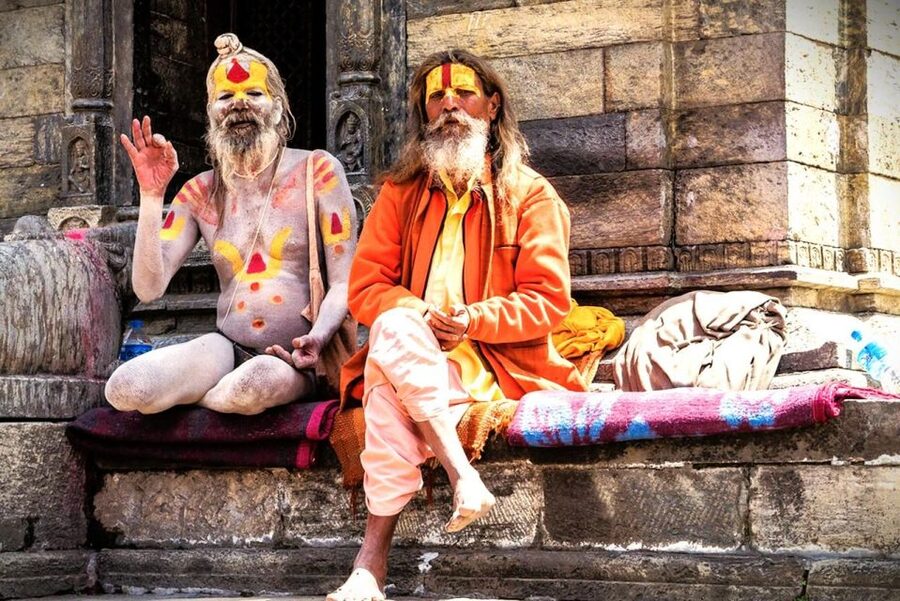
The most important preparation is emotional, not physical. You may see cremation rites, smoke, grieving relatives, holy men, and intense religious devotion in one visit. Ask your guide questions, but do so at an appropriate moment and avoid treating a funeral as a photo opportunity.
English, Chinese, Hindi, and Russian guides are available. Named guides connected with past departures include Razz, Pranav, Karma, Anish, and Sudhir. Their styles may differ, but the useful qualities to look for are clear explanations, good English or your chosen language, and respect for the ceremonies.
Free cancellation is available up to 24 hours before the start for a full refund. You can also reserve now and pay later, which helps if your Kathmandu schedule is still changing.
Who will enjoy this Kathmandu tour most
I would recommend this outing to adults who want more than a quick temple photo. It suits you if you are interested in Buddhism, Hindu practice, death rituals, architecture, local markets, and the way sacred places function in daily life.
It is also a good choice for a first visit to Kathmandu because the two stops cover different parts of the city’s spiritual identity. You see prayer wheels and Buddhist art at Boudhanath, then river ghats, Shiva worship, cremation rites, and Aarati at Pashupatinath.
It is less suitable for children under 12, people with respiratory issues, or anyone who knows that cremation scenes will be too upsetting. You should also reconsider it if you want a relaxed sightseeing trip with little walking or no difficult subject matter.
The guide makes the biggest difference. If you are assigned someone like Razz, Pranav, Karma, or Anish, use the opportunity to ask about symbols, customs, and what is happening at each stage. The best version of this tour is not about ticking off two UNESCO sites. It is about learning how people pray, mourn, trade, and gather in them.
Should you book it?
Book this tour if you want a compact, low-cost introduction to Kathmandu’s two most important spiritual centers and you are prepared for an honest look at death and devotion. The pairing is strong, the guide adds essential context, and the evening Aarati gives the visit a clear emotional finish.
Before booking, check whether your option includes transport and guided time at both sites. Add NRs 1,400 for entrance fees, leave large bags behind, and choose a longer duration if you want time for the kora, market browsing, and the ceremony.
Skip it if you want only light sightseeing or if cremation rites would make you uncomfortable. For the right visitor, though, this is one of the more direct ways to see Kathmandu as a living religious city rather than a collection of monuments.
FAQ
How long does the tour last?
The activity lasts between two and five hours. Starting times and the exact length depend on the option you select.
What sites does the tour visit?
It visits Boudhanath Stupa and Pashupatinath Temple in Kathmandu.
Can non-Hindus enter Pashupatinath Temple?
Non-Hindus cannot enter the main sanctum. You can visit the outer complex with your guide.
Are cremation ceremonies included?
The experience includes witnessing Hindu cremation rituals at Pashupatinath with a guide. These ceremonies may be emotionally difficult to watch.
Is the Aarati ceremony included?
The guide accompanies you for the Aarati ceremony. The meeting information directs participants to meet at the Pashupatinath ticket counter for the temple tour and Aarati.
What are the entrance fees?
The listed entrance fees are NRs 1,000 for Pashupatinath and NRs 400 for Boudhanath. They are not included in the $11 tour price.
Is hotel pickup available?
Hotel pickup and drop-off are available only with selected options. Some options require you to arrange your own transport to the Pashupatinath ticket counter.
Which languages are available?
Guides are available in English, Chinese, Hindi, and Russian.
Can I book a private tour?
Yes. Private and small-group formats are available.
Is the tour suitable for children?
The activity is not suitable for children under 12. It is also not suitable for people with respiratory issues.
Just added in Kathmandu
- Kathmandu to Chitwan Tour by Tourist Bus – A Convenient and Affordable Way★ 4.0 · 4 reviews
- Changunarayan Hill to Telkot Hike Near Kathmandu Day Tour★ 5.0 · 6 reviews
- Mt Everest Base CampTrek | Budget Package★ 5.0 · 4 reviews
- Chitwan Jungle Safari 3-Day Tour★ 5.0 · 9 reviews
- Chandragiri Hill Station Tour by Cable Car★ 5.0 · 4 reviews
- Chandragiri Hills cable car day trip, private car with driver from Kathmandu★ 5.0 · 8 reviews
- Chandragiri to Taudaha Nature Day Hiking from Kathmandu★ 5.0 · 13 reviews
- Chandragiri Hills Private Tour★ 5.0 · 4 reviews
Kathmandu UNESCO Heritage Tours, compared.
Private Kathmandu Sightseeing Tour | UNESCO World Heritage sites
Read our review →
Full Day 7 UNESCO Tour with Lunch – Private/Group
Read our review →
Private Bhaktapur and Nagarkot Day Tour From Kathmandu
Read our review →
Kathmandu Spiritual Sites: Bodhnath & Pashupatinath Tour
Read our review →
Day Trip to Bhaktapur and Panauti from Kathmandu
Read our review →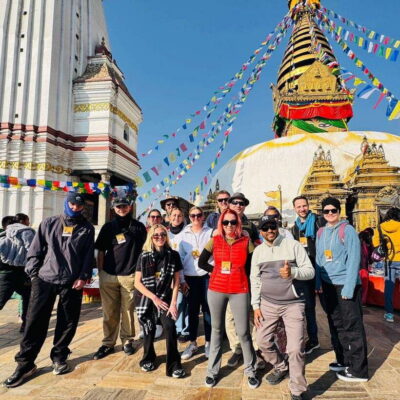
Browse the lists this tour appears in