Reviewed · TOURS IN KATHMANDU
Spiritual Nepal: Expert insight into Multifaith Journey
Boudhanath and Pashupatinath give you two very different windows into Nepalese religious life in one compact outing. You turn prayer wheels and walk the Kora at Boudhanath Stupa, then cross into the Hindu world of Sadhus, cremation rites, and evening Aarati beside the Bagmati River.
I like the way this tour puts Buddhist and Hindu traditions side by side, and I like the small private format, capped at 12 people. The main consideration is pace: four hours is enough for the essential sights, but traffic and the busy temple area can make the visit feel hurried.
Key points to know
- Two UNESCO sights in four hours: Boudhanath and Pashupatinath offer very different religious experiences.
- Join the Kora: Walk around Boudhanath’s white dome and turn its prayer wheels with local worshippers.
- See Pashupatinath at ritual time: The visit includes cremation ceremonies and the public Aarati light offering.
- Your guide matters: Previous guides named Rozit, Bini, Subash, and Bidhya earned especially warm praise for clear explanations and attentive care.
- Plan for about 2 kilometers of walking: You may walk for roughly 15 minutes between the sites, or take the provided transport.
- Budget for optional extras: Alms, palm reading, butter lamps, and paid interactions with Sadhus are not included.
Two Sacred Sites, One Compact Kathmandu Visit
This is a focused four-hour tour through two of Kathmandu’s most important religious centers. You begin at Hotel Marshyangdi, meet your English-speaking guide and group, and travel to Boudhanath. From there, the experience moves to Pashupatinath before returning to the hotel.
The route works well for a first visit to Kathmandu because it brings together two major faiths without asking you to spend a full day on religious sites. You are not required to be spiritual or deeply religious. The value comes from seeing how worship, ritual, death, pilgrimage, and daily life meet in public places.
The tour is described as a private group experience for up to 12 people. That is small enough for you to stay close to the guide and ask questions without shouting over a large crowd. It also gives the guide a better chance to explain customs as they happen, especially at Pashupatinath, where the riverfront rituals can be confusing without local context.
Traffic is the weak point. One visit was affected by delays but still covered the planned stops. Keep your expectations realistic: the schedule is well packed, and you may need to move along rather than linger at every viewpoint.
Other trips people book in Kathmandu:
- Everest Base Camp Trek – 14 Days
★ 5.0 · 1,499 reviews - Private Kathmandu Sightseeing Tour | UNESCO World Heritage sites
★ 5.0 · 756 reviews - Everest Base Camp Helicopter Tour landing at Everest View Hotel
★ 5.0 · 668 reviews
Walking the Kora at Boudhanath Stupa
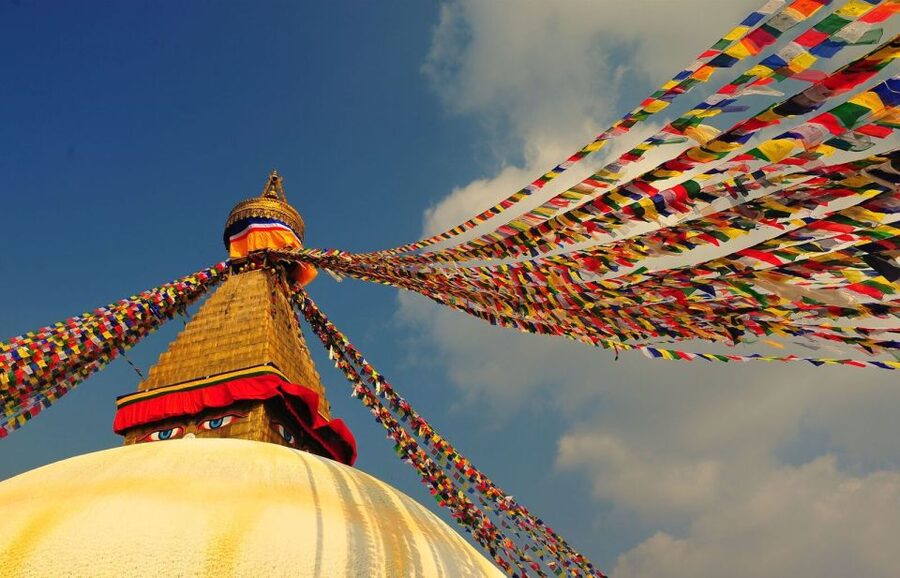
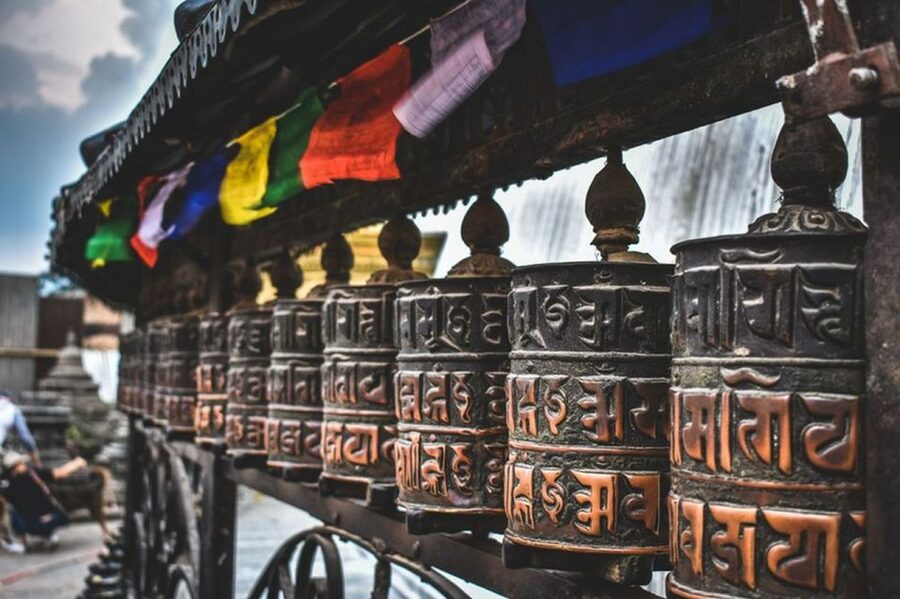
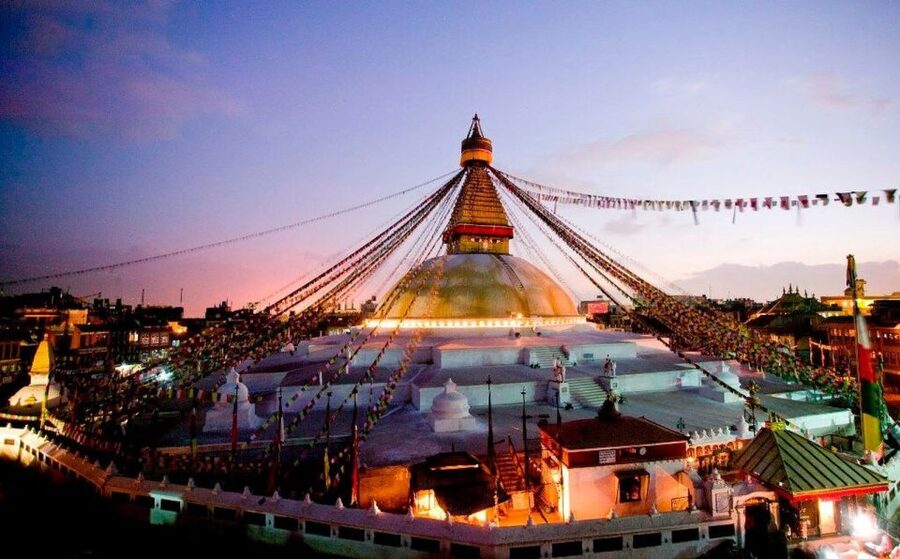
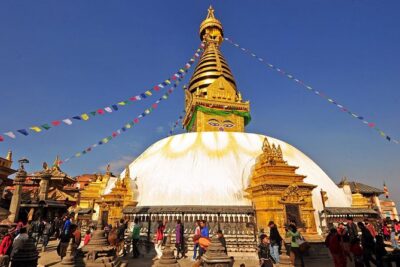
Boudhanath is the calmer and more orderly half of the visit. The huge white dome, topped by the familiar Buddha eyes, forms the center of a sacred circuit known as the Kora. Your guide will help you join people walking around the stupa in a clockwise direction.
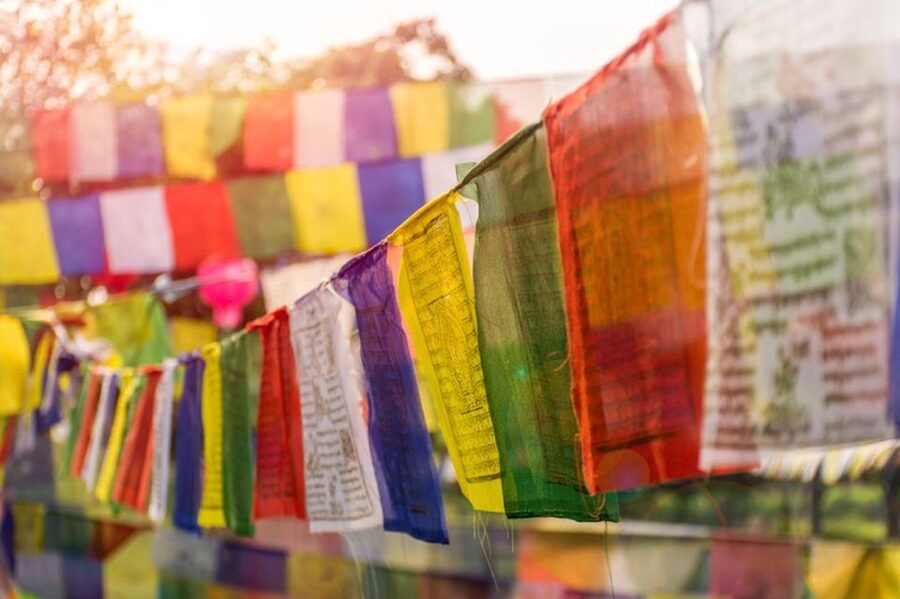
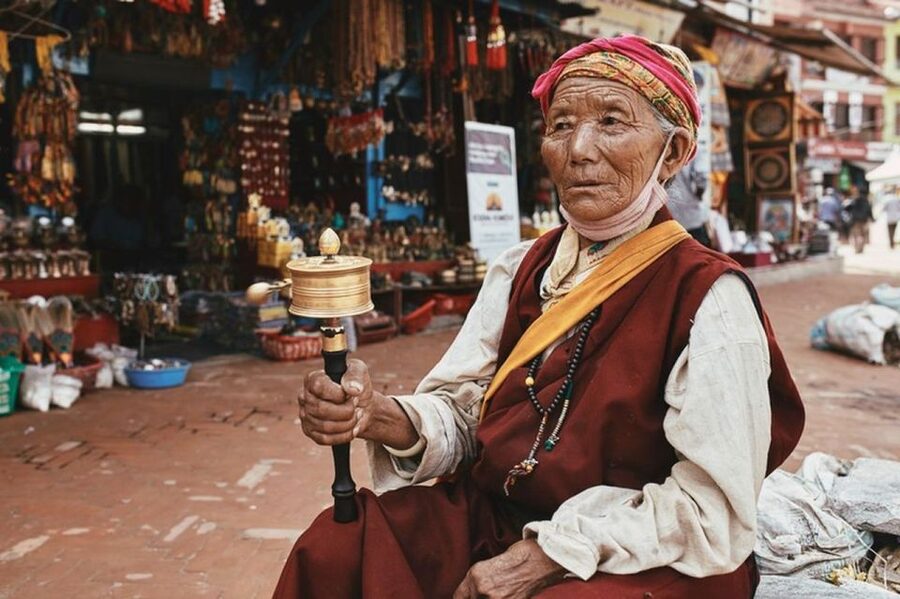
You can turn the prayer wheels as you go. This is not a staged demonstration set up only for visitors. Local Buddhists use the same circuit and wheels as part of their devotional practice, so the best approach is to watch first, follow the flow, and keep your pace respectful.
The two-hour stop allows time to look closely at the stupa and take part in the circuit rather than simply stop for a quick photo. Your guide can explain the meaning of the prayer wheels, the role of the stupa, and the Buddhist customs you are seeing. If you choose to offer butter lamps, that is an optional expense and can support local religious communities.
Boudhanath also gives you a chance to pause before the more intense scenes at Pashupatinath. The ritual here is repetitive and meditative. You walk, turn the wheels, observe worshippers, and gradually get a feel for how the space is used.
One past visit included an unscheduled stop at a traditional mandala painting school and a rooftop meal with a view of the stupa. Those additions were possible because the group was especially small and flexible. You should treat them as possible extras, not guaranteed parts of the four-hour plan.
Crossing From Buddhist Devotion to Hindu Pilgrimage
After Boudhanath, you either walk for about 15 minutes or use transport to reach Pashupatinath Temple. The total walking distance for the tour is approximately 2 kilometers, so comfortable shoes are sensible.
Pashupatinath is Nepal’s largest Hindu pilgrimage site and has a very different mood from Boudhanath. The complex is centered on the temple of Lord Pashupatinath, while the Bagmati River provides the setting for important rites connected with death and remembrance.
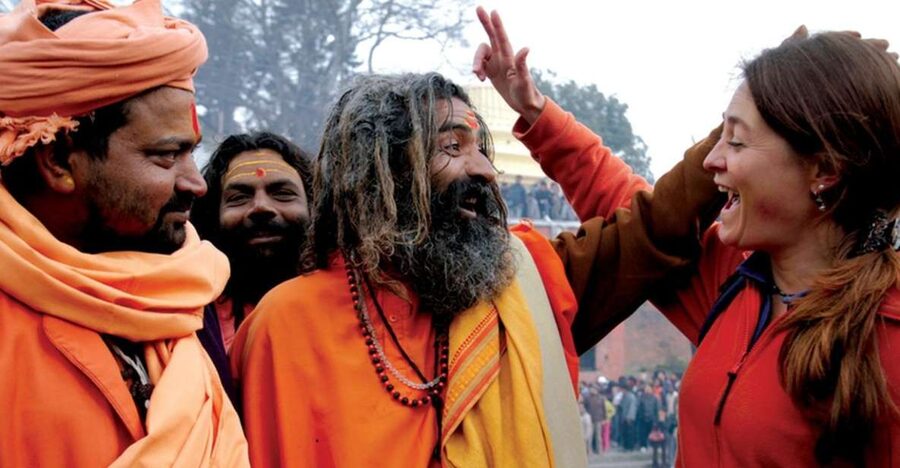
You will see Sadhus, Hindu holy men who have given up ordinary household life in pursuit of spiritual practice. They may be willing to talk, but the interaction is not automatically free. If you want to ask questions, offer alms rather than treating the encounter as a performance. The guide can help explain the situation and negotiate with Sadhus when needed.
The same applies to photographs or direct interaction. A fee of about $7.50 is listed for taking pictures or interacting with Sadhus. That money helps support people who otherwise have little access to tourist income, but you should still ask first and respect a refusal.
You can also pay for a palm reading. The listed price is about $7.50 to $9 per person, and the guide can help you negotiate with the reader. Think of this as a cultural encounter, not a factual forecast. If fortune telling is not your thing, you can simply watch the process or skip it.
The Bagmati River and Cremation Rites
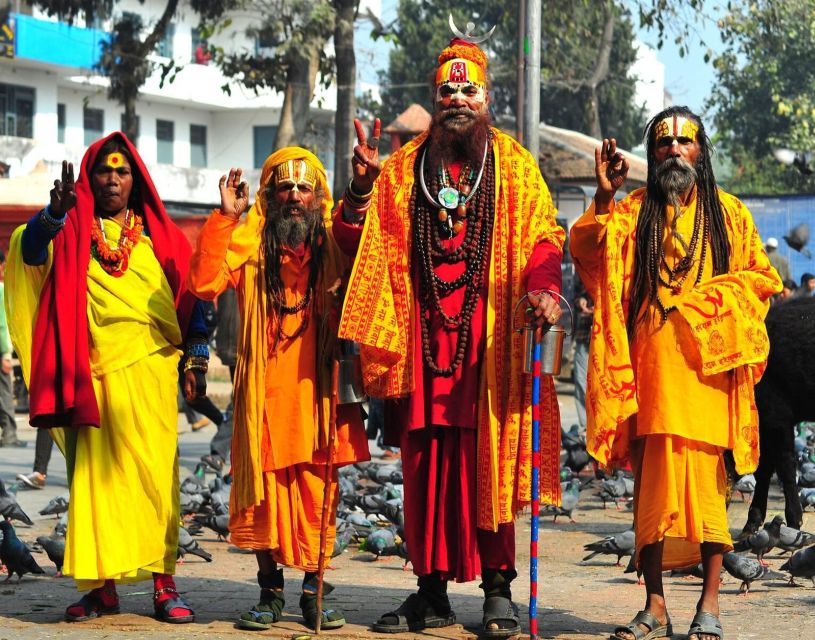
The Pashupatinath visit includes views of cremation ceremonies along the Bagmati River. This is the most sensitive part of the tour, and your behavior matters more than your camera.
Cremation is a normal and important part of Hindu funerary practice, but it is also a private family moment. Stay near your guide, follow instructions, and avoid treating the ceremony as entertainment. The tour gives you context for what you are seeing, but it does not turn grief into a public show.
The riverfront can feel crowded and difficult to navigate. Keep your group in sight, especially when moving between viewpoints. The guide’s local experience is useful here, since the site includes many people, ceremonies, and competing points of interest within a small area.
If you want a gentle introduction to Nepalese religious customs, this section may feel intense. That is not a flaw, but it is something to consider before booking. You should be ready to see real funerary rites and to respond with quiet respect.
Same base, a different kind of day:
- Half day cooking class in Thamel kathmandu
★ 5.0 · 607 reviews - Everest Base Camp Trekking
★ 5.0 · 485 reviews - Nagarkot Sunrise View and Day Hiking from Kathmandu
★ 5.0 · 471 reviews - Kathmandu: Full Day 7 UNESCO Tour with Lunch – Private/Group
★ 5.0 · 415 reviews
Watching Aarati at Pashupatinath
The visit also includes Aarati, a Hindu light offering to Lord Pashupatinath. Lamps are raised during the ritual, creating a strong visual contrast with the river and the surrounding temple area.
Aarati is one of the tour’s most memorable moments because it lets you see public worship rather than only monuments. You are not simply looking at an old building. You are watching a living ceremony attended by local people.
The timing of the ritual can affect how much time you have elsewhere at Pashupatinath. Traffic, crowd movement, and the schedule of the offering all matter. Stay close to the guide, as instructed, and do not assume you can move freely through every part of the temple grounds.
The guide can tell you what is happening and help you understand the role of the lamps. Without that explanation, it is easy to see only the surface spectacle. With context, you can better understand why the ceremony matters to those taking part.
Why the Guide Makes a Difference
This tour depends heavily on the person leading it. Boudhanath and Pashupatinath are easy enough to reach, but the customs are not always obvious. An English-speaking Nepali guide can explain what you are seeing, answer questions, and help you avoid awkward mistakes.
Several guides associated with highly praised visits include Rozit, Bini, Subash, and Bidhya. Rozit was singled out for excellent guiding, while Bini was praised for answering questions and adapting to expectations. Subash gave one couple a clear introduction to both religions, and Bidhya was noted for her strong involvement and attention.
That does not mean you can request one of those guides or that the same person will lead every departure. It does show the kind of service you should hope for: clear explanations, attention to your interests, and practical help when dealing with Sadhus or palm readers.
One less positive experience involved a guide who did not cover a cough and did not provide as much explanation about the Sadhus as expected. This is a useful reminder to judge the tour by its structure and not assume every guide will offer the same level of personal attention.
If you care most about detailed interpretation, ask questions early. Tell the guide what interests you: Buddhist practice, Hindu funerals, Sadhus, photography, or daily life. A private group gives you more room to shape the conversation.
Price, Extras, and Overall Value
The listed price is $150 per person for four hours. That is not a budget sightseeing walk, but the fee includes the English-speaking guide, entrance fees for both UNESCO sites, and transport from the meeting point to Boudhanath and from Pashupatinath back to the endpoint.
The price makes more sense if you value explanation and local support. You are paying for access to two major religious sites, an organized route, and help with cultural boundaries. You are also avoiding the work of arranging separate transport and figuring out how to approach the rituals on your own.
The value is less convincing if you want a slow, independent visit or plan to spend hours at each site. Four hours gives you a well-organized introduction, not an exhaustive study of either complex.
Set aside extra money if you want to participate in optional activities:
- Palm reading costs about $7.50 to $9 per person.
- Interaction or photographs with Sadhus cost about $7.50.
- Alms for Sadhus and monks are not included.
- Butter lamps at Boudhanath are optional and not included.
- Food and drinks are not included.
There is no need to pay for every add-on. You can have a full experience by walking the Kora, observing the ceremonies, listening to the guide, and watching Aarati.
Clothing, Children, and Practical Comfort
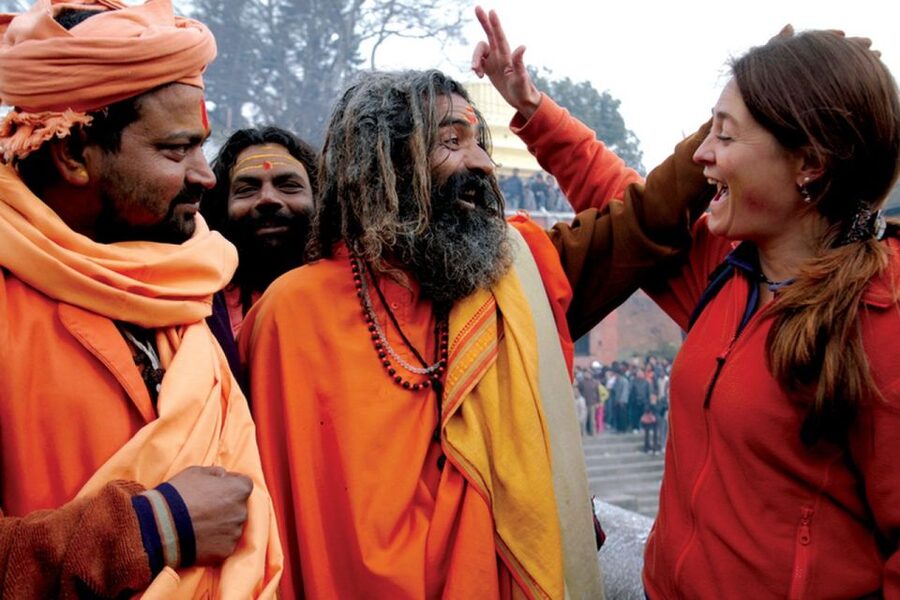
Dress modestly. Cover your shoulders and knees, and men should plan to wear long trousers at religious sites. Women may need a long skirt or sarong. Conservative clothing is the safest choice throughout the visit.
Children are welcome, and children under six can join free of charge. The walking distance is moderate, but the cremation scenes may not suit every child. Use your judgment based on your child’s age and comfort with serious religious ceremonies.
Wear shoes you can walk in for about 2 kilometers. The route includes religious compounds, riverfront areas, and public spaces where the ground may not feel as smooth or predictable as a city pavement.
The tour is listed as carbon neutral and operated by a B Corp certified company that aims to use tourism for social good. That does not change the sights themselves, but it may matter to you if environmental and community practices are part of your booking decision.
Free cancellation is available up to 24 hours before the start time, and you can reserve now and pay later. Starting times depend on availability, so check the schedule before committing your day.
Who Should Book This Experience
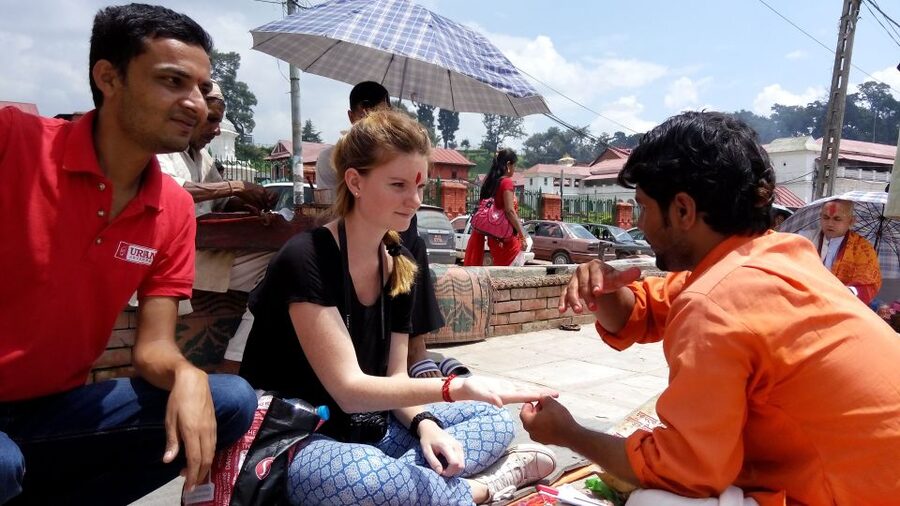
I would choose this tour if you have limited time in Kathmandu and want the main religious sights explained in one outing. It suits first-time visitors, curious families, and anyone who wants more than a quick photo stop.
It is also a good fit if you are interested in the contrast between Buddhist and Hindu practice. Boudhanath offers a participatory walking ritual, while Pashupatinath presents Sadhus, cremation rites, and Aarati in a more emotionally demanding setting.
I would think twice if you dislike crowds, do not want to see cremation ceremonies, or prefer to explore at your own pace. The four-hour schedule is efficient, but traffic and ritual timing can make it feel rushed.
Should You Book Spiritual Nepal?
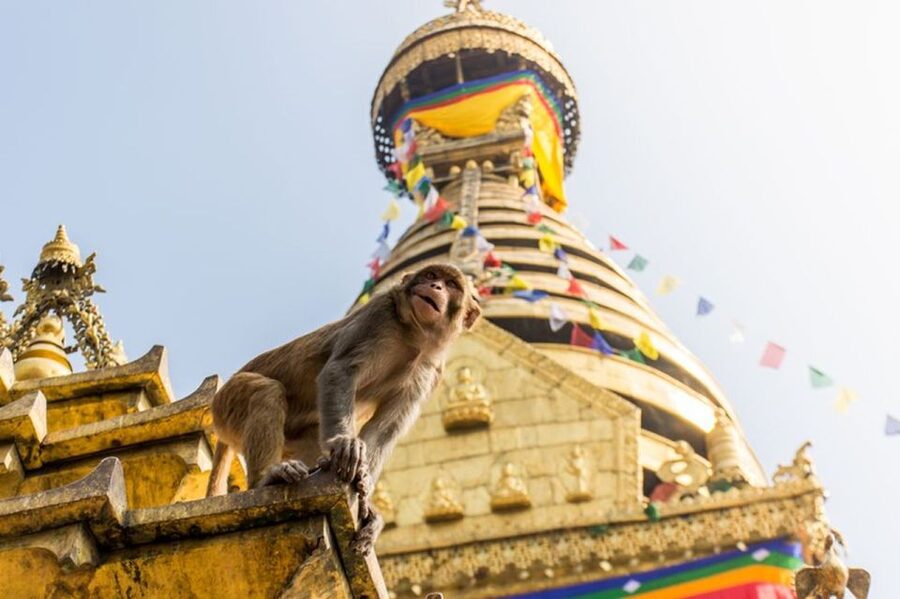
Book it if you want a guided introduction to two of Kathmandu’s most important religious sites and appreciate having someone explain customs as they happen. The strongest reasons are the small private format, included entry fees, transport, and the chance to see both the Kora at Boudhanath and Aarati at Pashupatinath.
Before booking, accept that this is not a quiet temple tour. You may see real cremations, encounter paid interactions with Sadhus, and move through crowded spaces. Dress respectfully, budget for optional extras only if they interest you, and stay close to your guide.
For a four-hour introduction to Nepal’s Buddhist and Hindu traditions, the experience offers solid value, especially when your guide is as attentive as Rozit, Bini, Subash, or Bidhya. Just keep your schedule flexible enough to allow for Kathmandu traffic.
FAQ
Where does the tour start?
The tour starts at Hotel Marshyangdi in Kathmandu.
How long does the experience last?
The tour lasts four hours, with approximately two hours at Boudhanath and two hours at Pashupatinath.
Which sites are included?
The tour visits Boudhanath Stupa and Pashupatinath Temple. Both are UNESCO Heritage Sites.
Is transportation included?
Transportation from the meeting point to Boudhanath and from Pashupatinath Temple back to the endpoint is included. You may also walk for about 15 minutes between the two sites.
Are food and drinks included?
No. Food and drinks are not included in the price.
Do palm reading and Sadhu interactions cost extra?
Yes. Palm reading costs about $7.50 to $9 per person. Alms for Sadhus and monks, butter lamps, and paid photographs or interactions with Sadhus are also extra.
What should I wear?
Wear modest clothing that covers your shoulders and knees. Men often need long trousers, and women may need a long skirt or sarong at religious sites.
Just added in Kathmandu
- Luxury Everest Base Camp Trek -11 Days★ 5.0 · 7 reviews
- 14 Days Everest Base Camp Trek★ 5.0 · 7 reviews
- Everest Base Camp Helicopter Tour★ 5.0 · 3 reviews
- Everest Base Camp Helicopter Tour★ 5.0 · 17 reviews
- Everest Base Camp Helicopter Tour★ 5.0 · 11 reviews
- Everest Base Camp Helicopter Tour★ 5.0 · 4 reviews
- Everest Base Camp Heli Tour★ 5.0 · 15 reviews
- Everest Base Camp Helicopter Tour with Stop at Everest View Hotel★ 5.0 · 19 reviews
Tours in Kathmandu, compared.
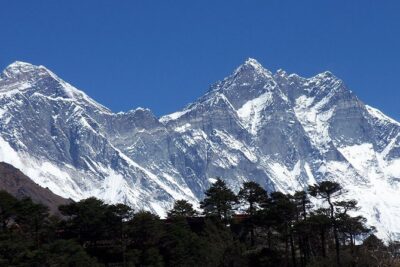
Private Kathmandu Sightseeing Tour | UNESCO World Heritage sites
Read our review →
Everest Base Camp Helicopter Tour landing at Everest View Hotel
Read our review →
Nagarkot Sunrise View and Day Hiking from Kathmandu
Read our review →
Full Day 7 UNESCO Tour with Lunch – Private/Group
Read our review →