
Reviewed · KATHMANDU UNESCO HERITAGE TOURS
Swayambhu and Kathmandu Durbar Square Half Day Tour
Kathmandu’s Swayambhunath Stupa and Kathmandu Durbar Square give you two very different views of the city in one morning or afternoon. One sits high above the valley, surrounded by prayer, monkeys, and wide city views. The other drops you into the old royal center, where courtyards, temples, palace buildings, markets, and living traditions crowd together.
I like the practical design of this tour. Hotel pickup and drop-off remove the need to sort out local transport, and admission to both main sites is already covered. I also like having a private vehicle and guide, since the short visit works better when someone helps you understand what you are seeing.
The main drawback is the tight schedule. Four hours is enough for a useful first look, but not enough for a slow examination of every temple and palace building. Traffic can also eat into sightseeing time, and some listed stops receive only 15 minutes.
Key points to know before booking
- Two UNESCO World Heritage sites in one outing: Visit Swayambhunath and Kathmandu Durbar Square without giving up a full day.
- A private tour for your group: You travel by private vehicle with a professional guide rather than joining a large shared group.
- About 45 minutes at the Monkey Temple: Expect hilltop views, Buddhist imagery, shrines, and plenty of monkeys around Swayambhu.
- Kumari Chowk is a highlight: You may have a chance to see the living Goddess Kumari, along with detailed wood carving and the famous peacock window.
- The $65 price includes the main extras: Hotel transfers, transport, guide service, and entrance fees are included, while food and drinks are not.
- Best for a first visit or short stay: This is a useful orientation tour, not a slow, specialist examination of Kathmandu’s monuments.
Why this half-day route works in Kathmandu
Kathmandu can feel confusing at first. Historic squares, small shrines, markets, traffic, and modern shops often sit within a few minutes of one another, but the connections are not always clear. This route gives you a simple frame: first see the Buddhist hilltop shrine, then visit the old royal center.
The contrast is the real value. At Swayambhunath, you look across Kathmandu from a religious site with strong Buddhist character and Hindu elements woven into the complex. At Durbar Square, you learn how Nepal’s rulers used temples, courtyards, and palace buildings as the center of political and religious life.
A guide matters here. Without one, it is easy to notice the large stupa and impressive buildings but miss the meaning behind the symbols, rituals, and carved details. The tour is designed to give you that explanation in a short period.
A previous guest singled out a guide named Pankaj for being informative and fun, while explaining both Hindu and Buddhist culture clearly. You should not assume he will lead every departure, but his approach shows what a good guide can add to a compact visit.
More temple and square walks around Kathmandu:
- Private Kathmandu Sightseeing Tour | UNESCO World Heritage sites
★ 5.0 · 756 reviews - Kathmandu: Full Day 7 UNESCO Tour with Lunch – Private/Group
★ 5.0 · 415 reviews - Private Bhaktapur and Nagarkot Day Tour From Kathmandu
★ 5.0 · 305 reviews
Swayambhunath, the hilltop Monkey Temple
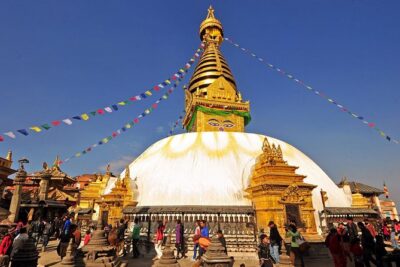
The tour begins at Swayambhunath, also called the Monkey Temple. The complex sits on a high hill above Kathmandu, so the first reward is the view across the city and the valley beyond.
The nickname comes from the many rhesus monkeys living around the site. They are part of the character of the place, but you still need to pay attention around them. Keep food packed away, and treat the shrine as a religious site rather than a simple photo stop.
Your scheduled time here is about 45 minutes. That is enough to take in the central stupa, observe the religious activity, and listen to an explanation of the Buddhist and Hindu features. It is not enough for an unhurried visit to every corner, so stay close to the guide and ask questions as you go.
The stupa’s painted eyes are likely to be one of the first details you notice. The surrounding prayer elements and smaller shrines add layers to the visit, and your guide can help explain how Buddhist and Hindu traditions share space in Kathmandu.
The hilltop setting also makes Swayambhu a strong first stop. You get your bearings quickly, both geographically and culturally. From above, Kathmandu feels easier to understand as a valley city, while the religious complex shows how daily belief remains part of its public life.
There is one practical point to keep in mind: the tour data confirms a hilltop location but does not give details about the exact walking route or number of steps. If stairs or uphill walking are a concern, ask the operator for current access information before booking.
A short look at Amideva Buddha Park
Amideva Buddha Park is given about 15 minutes within the Swayambhu visit. It includes a large statue featuring three symbols and Buddha imagery, and it is described as a quieter part of the Monkey Temple area with fewer tourists.
This is a brief stop, but it gives your guide another chance to explain Buddhist symbolism. Do not expect a separate, extended attraction. Think of it as a smaller pause within the larger Swayambhunath visit.
The short timing can work well if you want a broad introduction. You see the major hilltop site, then a less crowded corner that many people might otherwise overlook. If you are especially interested in Buddhist art or religious details, you may want to ask for a little extra explanation here, provided the schedule allows.
Kathmandu Durbar Square and the old royal center
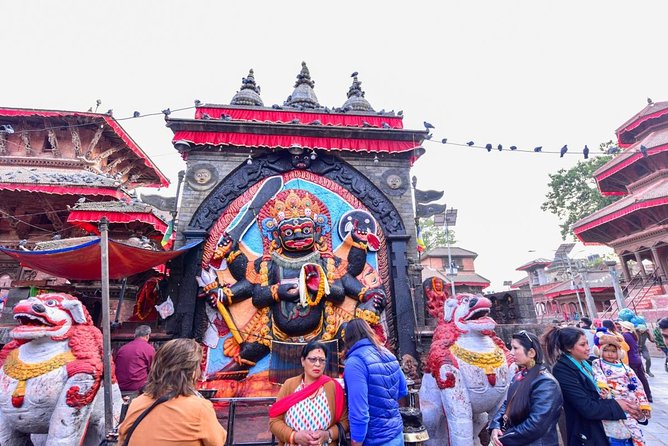
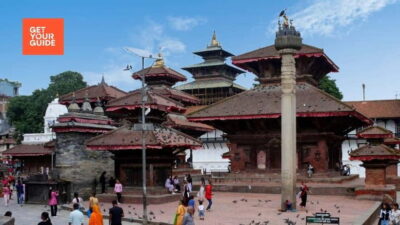
The second major site is Kathmandu Durbar Square. For more than 1,000 years, the square was linked to the royal dynasties that ruled the Kathmandu Valley. Kings were crowned, lived, and governed here until Nepal became a republic in 2008.
The square is not just a collection of old buildings. It is a working cultural area where temples, palace courtyards, local movement, and commerce meet. That mix is part of the appeal, though it can also make the visit feel busy and compressed.
The scheduled time at Kathmandu Durbar Square is about 30 minutes, followed by shorter visits to several features inside or near the square. That adds up to a useful introduction, but you will need to accept that you are sampling the area rather than fully touring it.
Your guide can help separate the major royal buildings from the religious shrines and point out details you might miss on your own. The value here is not only seeing a famous square. It is understanding why this place mattered to the rulers of the valley and why it still matters to local religious and social life.
Same base, a different kind of day:
- Everest Base Camp Trek – 14 Days
★ 5.0 · 1,499 reviews - Everest Base Camp Helicopter Tour landing at Everest View Hotel
★ 5.0 · 668 reviews - Half day cooking class in Thamel kathmandu
★ 5.0 · 607 reviews - Everest Base Camp Trekking
★ 5.0 · 485 reviews
Kumari Chowk and the living Goddess Kumari
Kumari Chowk is one of the most distinctive stops in the square. It is associated with the Kumari, Nepal’s living Goddess, and the tour gives you a chance to see her if circumstances permit.
The wording matters: you may have the opportunity, but a sighting is not guaranteed. Treat the visit with respect. This is a living religious tradition, not a staged performance designed for visitors.
Kumari Chowk is also known for fine wood carving, including a detailed peacock window. Fifteen minutes is a short amount of time, but enough to see the courtyard and hear why the Kumari tradition is important.
This is one of the stops that makes the tour more than a standard monument circuit. You are not only looking at architecture from the past. You are being introduced to a belief that remains part of Kathmandu’s present-day culture.
Hanuman Dhoka, Basantapur, and the local market
Hanuman Dhoka is another important area within Durbar Square. It is linked to the former royal complex and gives you a chance to see palace architecture alongside the everyday activity of the square.
The scheduled visit is about 15 minutes. Use that time to stay with the guide, listen for the historical context, and notice how people use the area now. The tour description also points to local life and culture here, rather than treating the buildings as empty relics.
Basantapur is described as an open area around Durbar Square and a busy street area where you can find handicrafts before entering the main square. This is a useful spot for seeing the connection between heritage sightseeing and local commerce.
You will also pass through Kathmandu’s busiest local shopping market on the way toward Durbar Square. It is included as a chance to watch local shopping and daily activity. The schedule does not promise a dedicated shopping session, so think of it as a quick look rather than time set aside for bargaining or buying souvenirs.
If you want to purchase handicrafts, tell your guide early. The tour moves quickly, and stopping for shopping could reduce time at the monuments.
Akash Bhairav Temple and a possible lassi stop
Akash Bhairav Temple is a small shrine described as one of the busiest places in town. The stop lasts about 15 minutes and adds another religious layer to the route.
The temple is dedicated to Akash Bhairav, and your guide can place it within the wider mix of Hindu worship found around Kathmandu. The site may not have the scale of Swayambhunath or Durbar Square, but small active shrines can give you a better feel for how religion fits into ordinary city life.
The stop also offers the chance to enjoy lassi nearby. Food and drinks are not included in the tour price, so budget separately if you want one. This is a simple addition, but it can make the final part of the outing feel less like a checklist of monuments.
What the four-hour schedule really means
The tour lasts about four hours, while the listed stops account for roughly two and a half hours of planned sightseeing. The remaining time is useful for hotel pickup, driving between areas, traffic, and moving through Kathmandu’s crowded streets.
That difference is not a problem, but it helps set the right expectation. You will not spend four full hours standing inside the monuments. You will spend four hours on a guided outing that combines transport, short walks, explanations, and several brief stops.
The tight timing is best for a first look. You can identify the places you want to revisit later, then return on your own with more time. If you already know Kathmandu well or want detailed architectural study, a longer private visit would suit you better.
The private format helps. Only your group participates, so you can ask questions without waiting for a large group to catch up. You may also be able to adjust the emphasis slightly, though the supplied details do not promise a fully customizable route.
Is $65 good value?
At $65 per person, the price is reasonable if you value convenience and a guide. The fee includes hotel pickup and drop-off, a private vehicle, a professional guide, and entrance fees for the sites.
You are paying for more than admission. You are also paying to avoid sorting out transport between the hilltop stupa and the old city center, and to have someone explain the cultural meaning behind what you see.
The value depends partly on group size. Since the tour is private, the price may feel better when shared by a small group that can ask questions and travel together. Solo visitors should compare the $65 cost with the convenience of a private vehicle and guided access.
Food and drinks are extra. The tour also does not promise extended shopping time, so do not choose it mainly for purchases. Choose it for the compact cultural overview.
Who should book this experience?
I would recommend this outing to anyone with limited time in Kathmandu, especially on a first visit. It works well if you want the two major sites handled in one half day and prefer a guide to explain the religious and royal background.
It also suits people who want hotel transfers and a private vehicle. You avoid the uncertainty of arranging separate transport, and your group gets a more personal setting than a large shared departure.
Families and mixed-interest groups may find the short format useful. The monkeys, city views, royal square, living Kumari tradition, markets, and lassi stop provide variety without requiring a full day of sightseeing.
I would hesitate to recommend it to anyone who wants slow photography, detailed temple study, or a long visit inside the palace complex. The 15-minute stops move fast, and traffic can reduce the time available at each place.
Booking confirmation is provided at the time of booking, and the tour is near public transportation. Most people can participate, but ask about the hilltop access if walking or stairs may be difficult. You can cancel for a full refund up to 24 hours before the start time. Changes or cancellations inside that window are not accepted for a refund.
Should you book the Swayambhu and Kathmandu Durbar Square tour?
Book it if you need a well-organized first look at Kathmandu and want Swayambhunath, Durbar Square, Kumari Chowk, and nearby highlights in one outing. The private transport, included entrance fees, and cultural explanation make the $65 price easier to justify.
Skip it if you have several free days and prefer to explore at your own pace. In that case, you may want more time at each square, more room for photography, and a separate visit to the market.
For a short stay, though, this is a sensible choice. It brings together Kathmandu’s Buddhist hilltop shrine, royal past, living Hindu traditions, and local street life in about four hours.
FAQ
How long does the Swayambhu and Kathmandu Durbar Square tour last?
The tour lasts approximately four hours, including hotel transfers, transportation, guided visits, and time at the listed stops.
Is hotel pickup and drop-off included?
Yes. Hotel pickup and drop-off are included in the tour price.
Is this a private or shared tour?
This is a private activity. Only your group participates, and transport is provided by private vehicle.
Are entrance fees included?
Yes. Entrance fees for the included sites are covered, including Swayambhunath and Kathmandu Durbar Square.
Are food and drinks included?
No. Food and drinks are not included. You may have the chance to buy lassi near Akash Bhairav Temple, but you pay for it separately.
Can I cancel for a full refund?
Yes. You can cancel at least 24 hours before the experience start time for a full refund. Cancellations or changes made less than 24 hours before the start time are not accepted for a refund.
Just added in Kathmandu
- Traditional Momo Making Class★ 5.0 · 10 reviews
- Women Empowerment Project(Nepali cooking class & jewelry workshop★ 5.0 · 15 reviews
- Kathmandu 2 Nights 3 Days Chitwan Jungle Safari Tour★ 5.0 · 9 reviews
- Walking tour of Kathmandu with awesome local guides★ 5.0 · 4 reviews
- Wildlife Adventure in Chitwan Nepal★ 4.0 · 4 reviews
- Kathmandu to Pokhara Premium sofa bus ticket★ 4.0 · 17 reviews
- Regular Yoga for all levels of practitioners in Kathmandu★ 5.0 · 4 reviews
- Kathmandu Street Food Walking Tour – Eat Like a Local★ 5.0 · 3 reviews
Kathmandu UNESCO Heritage Tours, compared.
Private Kathmandu Sightseeing Tour | UNESCO World Heritage sites
Read our review →
Full Day 7 UNESCO Tour with Lunch – Private/Group
Read our review →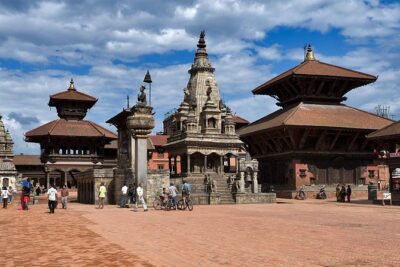
Private Bhaktapur and Nagarkot Day Tour From Kathmandu
Read our review →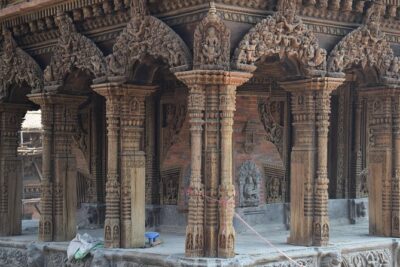
Kathmandu Spiritual Sites: Bodhnath & Pashupatinath Tour
Read our review →
Day Trip to Bhaktapur and Panauti from Kathmandu
Read our review →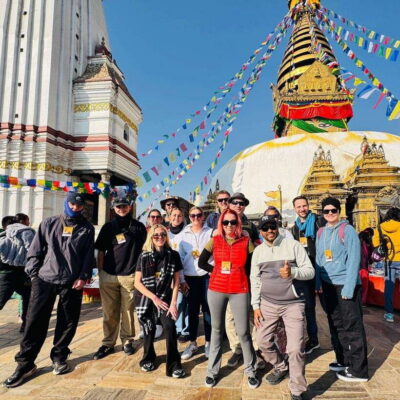
Browse the lists this tour appears in