
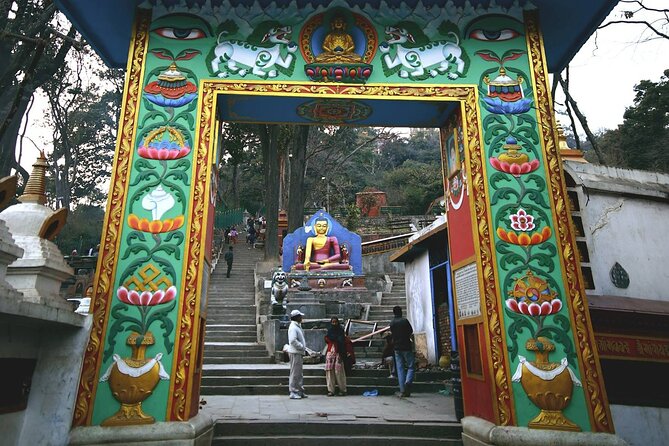
Reviewed · KATHMANDU UNESCO HERITAGE TOURS
Monkey Temple – Swayambhunath Tour – Private/Small Group
Swayambhunath is more than a quick photo stop above Kathmandu. This three-hour walk approaches the hill through local neighborhoods, small temples, ponds, and shrines before reaching the famous stupa. Along the way, an English-speaking guide explains the legends behind the Kathmandu Valley and the religious sites around Swayambhu.
I like the small maximum of five people, which gives you room to ask questions and hear the guide clearly. I also like the mix of Hindu and Buddhist sites, including Harati Ajima Temple and the enormous Buddha figures at Amideva Buddha Park. The main consideration is physical effort: the route includes the 365 steps from Bhagwan Pau, and people with severe asthma or knee problems are advised not to join.
Key points to know before booking
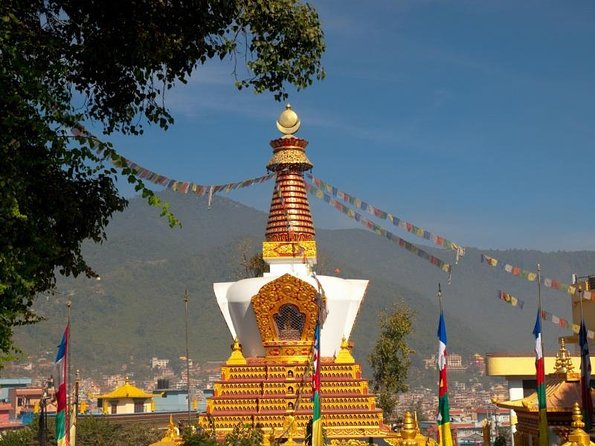
- A neighborhood walk, not just a temple visit: You walk from Thamel through Swayambhu and Saraswotithan before reaching the main stupa.
- A maximum of five people: This keeps the group personal and makes it easier to discuss local stories and customs.
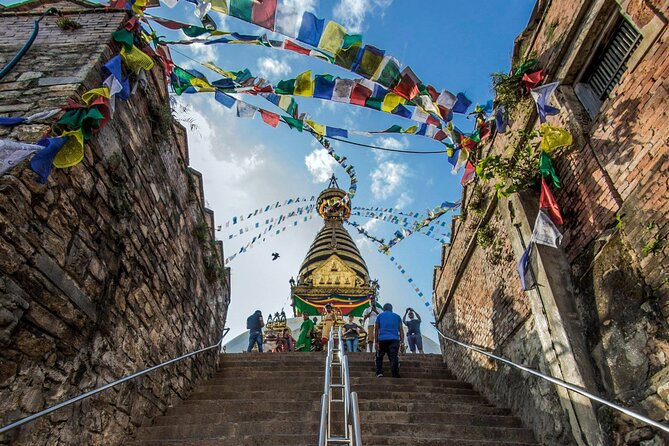
- The approach includes 365 steps: Bhagwan Pau marks the base of the main stairway up Swayambhunath.
- Hindu and Buddhist traditions share the route: Bijeshwori, Harati Ajima, Manjushree, and Swayambhunath each add a different layer.
- The temple entrance costs extra: Bring 200 Nepalese rupees in cash, about US$1.50, for Swayambhunath.
- A useful choice for solo visitors: The walk has received especially warm praise for clear explanations and for helping solo women feel comfortable.
Why the walk to Swayambhunath is better than a quick taxi ride
Many visits to Swayambhunath begin at the top of the hill, where the stupa, prayer flags, and Kathmandu views are easy to reach by road. This tour takes the slower route from Thamel. That choice matters because the religious sites are not confined to the hilltop.
You begin at Pumpernickel Bakery on Pariyan Marg in Thamel. The first section takes about 30 minutes toward Bhagwan Pau, with stops in and around the Swayambhu neighborhood. The route introduces you to ordinary streets and old shrines before the grander views appear.
I like this progression. The walk gives you time to understand why the hill matters instead of treating Swayambhunath as an isolated monument. Your guide can connect small local temples with the larger Buddhist stupa, and the stories become easier to follow as the route climbs.
The group limit is another practical advantage. With no more than five people, you are not standing at the back of a large crowd trying to hear a speech. The tour also works well for a solo visitor who wants company without joining a big organized group.
More temple and square walks around Kathmandu:
- Private Kathmandu Sightseeing Tour | UNESCO World Heritage sites
★ 5.0 · 756 reviews - Kathmandu: Full Day 7 UNESCO Tour with Lunch – Private/Group
★ 5.0 · 415 reviews - Private Bhaktapur and Nagarkot Day Tour From Kathmandu
★ 5.0 · 305 reviews
Bhagwan Pau and the 365-step climb
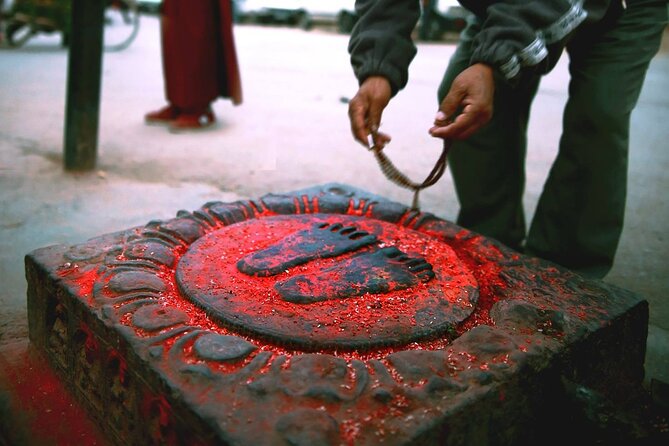
Bhagwan Pau is described as the feet of Lord Buddha and marks the lower entrance to Swayambhu Hill. From here, the main entrance begins with 365 steps. The tour allows a short rest at the base, with time to drink water and prepare for the climb.
You should take this part seriously. The overall activity lasts about three hours, but the steps make it more demanding than a simple city stroll. The physical-fitness requirement is moderate, and severe asthma or knee problems are specific reasons not to book.
The climb also gives the outing a clear sense of place. You are not simply being delivered to a monument. You are approaching it on foot, with the hill and the religious setting unfolding in stages.
If you need to manage your energy, use the rest at Bhagwan Pau. Comfortable shoes, water, and a steady pace will make the experience easier. The supplied details do not promise a particular walking speed, so ask the guide for a pause if you need one.
Small shrines before the main stupa
Before reaching Swayambhunath, the route can include Indrayani, also called Luti Ajima, and Bijeshwori Temple. Indrayani is linked to the eight Matrikas established by Licchavi King Gunakamdev when Kathmandu city was founded. That connection gives you an early look at the old religious structure of the city.
Bijeshwori is important to both Hindu and Buddhist worshippers. It is also a significant pilgrimage site for Tibetan Buddhists, while Hindu devotees honor it as well. This shared use is one of the most useful features of the walk because it shows how religious life in Kathmandu does not always fit into neat categories.
The stops are not long museum visits. They are brief encounters along a walking route, so the guide’s explanation does much of the work. If you enjoy stories, symbols, and local belief, these pauses add meaning. If you want extended time at every shrine, the three-hour schedule may feel tight.
Swayambhunath, the self-originated stupa
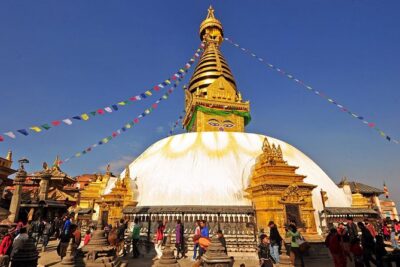
Swayambhunath is the main attraction and the point where the walk’s stories come together. Its name is linked with the idea of something self-originated, and the tour focuses on the legends surrounding both the stupa and the creation of the Kathmandu Valley.
The guide explains how the valley is said to have changed from a great lake into a place where people could build a city. The Manjushree story is central to this tradition, and the tour returns to it later at a smaller temple on the hill.
This is also the place where religious ceremonies may be taking place. The guide’s role is especially useful then, since customs and rituals can be hard to understand when you are seeing them for the first time. The focus is not only on architecture, but also on how the site functions as a living place of worship.
You pay the Swayambhunath entrance fee separately. It is 200 Nepalese rupees, about US$1.50, and must be paid in cash directly to the temple authorities. That is a small additional cost, but bring the correct kind of money so the admission does not interrupt the visit.
Allow about 40 minutes for the main Swayambhunath stop. That is enough for an introduction and a look around, but not an invitation to linger indefinitely. If you want quiet personal time for photography or prayer, you may need to use the free time carefully.
A few more things to do in Kathmandu worth a look
- Kathmandu: Full Day Top 4 UNESCO Tour with Lunch – Private/Group
★ 5.0 · 269 reviews - Kathmandu: Full-Day 7 UNESCO Tour with Lunch – Private/Group
★ 4.9 · 247 reviews - Kathmandu: 7 UNESCO Sites Tour in 1 Day (Private Tour)
★ 4.9 · 204 reviews - Kathmandu: Top 4 UNESCO Tour with Lunch – Private/Group
★ 4.9 · 181 reviews
Harati Ajima and the story of a changed demon
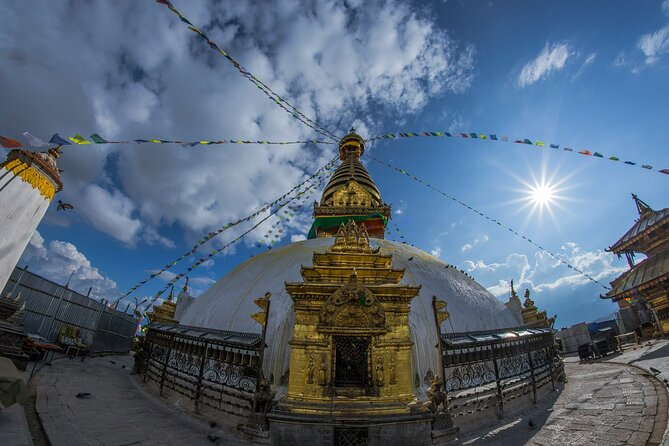
Harati Ajima Temple offers one of the route’s most memorable legends. The guide explains how a demon named Harati became Mother Harati, and why people around the valley worship her.
The temple itself shows Nepalese pagoda-style architecture. It is a short five-minute stop, so do not expect a long architectural study. Its value comes from the combination of form and story: you see a compact temple, then learn how a frightening figure became a protective mother.
This is the sort of detail that makes a guided walk worthwhile. You could pass the temple without knowing why it matters. With context, even a brief stop becomes part of the wider religious picture.
World Peace Pond and Manjushree Temple
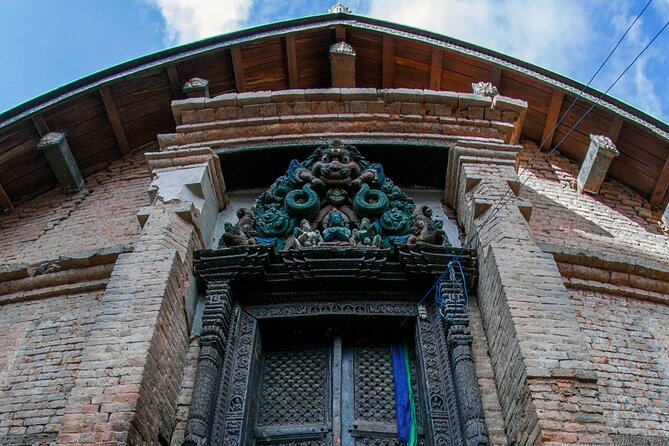
On the western side of Swayambhunath, World Peace Pond provides a quieter pause. A brass statue of Buddha standing on a lotus sits in the middle of the pond, and words on the surrounding wall are written in English.
The information provided for this stop is limited, so the guide’s explanation may shape how much you get from it. It is best viewed as a short scenic and reflective break rather than a major landmark requiring a long visit.
Manjushree Temple is a small shrine dedicated to Maha Manjushree on Swayambhu Hill. Here the guide returns to the account of the Kathmandu Valley as a former lake and explains how it became a city.
The stop lasts about 15 minutes and includes a panoramic view of the western side. I like the way this location ties a physical view to a local origin story. You are not only looking across Kathmandu; you are hearing why the valley is said to exist in its present form.
The giant Buddhas at Amideva Buddha Park
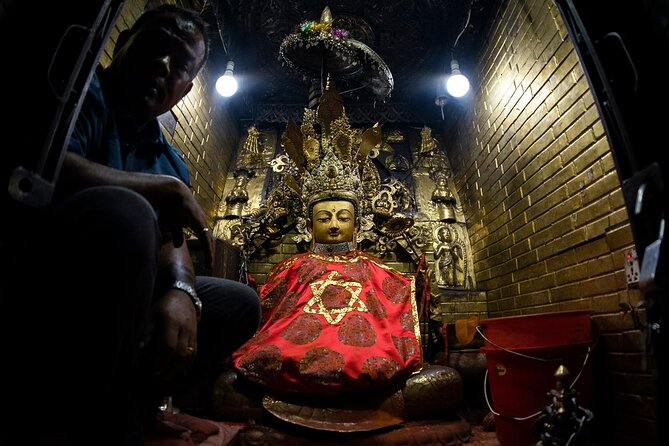
Amideva Buddha Park changes the scale of the walk. The park contains three huge statues: Amitabha Buddha, also called Amideva, at 67 feet in the center, with Chenrezig and Padmasambhava at 64 feet on either side.
You walk around the park for about 20 minutes while the guide shares the story of Siddhartha Buddha. The large figures are easy to appreciate visually, but the explanation helps place them within Buddhist practice and imagery.
This is one of the most photogenic sections of the route, though the exact conditions for photographs will depend on light, ceremonies, and how much time the group spends there. The park also gives your legs a break from the main stairway and creates a change of pace after the crowded central temple area.
Shova Bhagawati and the return to Thamel
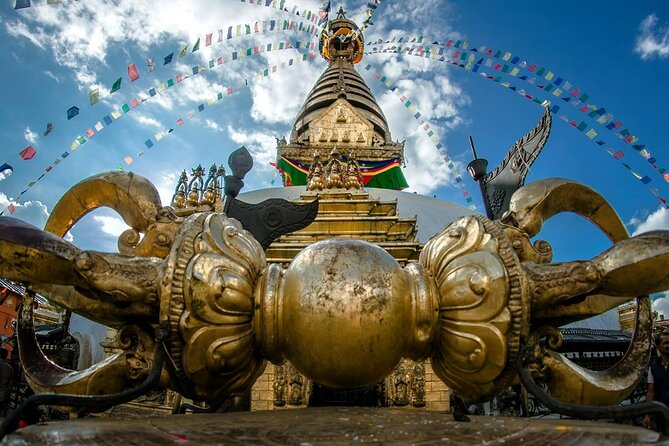
The route can also include Shova Bhagawati, a holy shrine devoted to the goddess Bhagwati on the bank of the Bishnumati River. It is one of four major Bhagwati temples in Kathmandu.
As with the earlier shrines, this stop broadens the tour beyond the famous hilltop monument. You see another important Hindu site and gain a better sense of how worship is spread through the city, not concentrated at one celebrated stupa.
The return to Thamel takes about 30 minutes, ending at Pumpernickel Bakery or the stated meeting point near Kathmandu Eco Hotel. If you want to continue exploring Swayambhu on your own, the details allow you to leave the group there and make your own way back instead.
That flexibility is useful, but confirm the plan with your guide before separating. The published end point is back at the meeting point, so an independent return is an option rather than the standard finish.
What the $15 price really covers
At $15 per person, this is a low-cost way to add structure and local explanation to a visit to Swayambhunath. The price includes an English-speaking guide and a small group capped at five people. It does not include coffee or tea, and it does not include the 200-rupee Swayambhunath entrance fee.
The best value comes from the walking route and the interpretation. A self-guided visit would cost less if you only counted entry fees, but it would not provide the same explanation of Indrayani, Bijeshwori, Harati Ajima, Manjushree, or the valley’s origin legends.
Group discounts are available, and the youth price applies to students with a student card. A mobile ticket is offered, and confirmation is received at booking. Free cancellation is allowed up to 24 hours before the start time, while later cancellations and changes are not accepted.
The tour had five or more bookings in the previous month and is recommended by all listed participants, with a 5.0 rating from 50 reviews. Those numbers suggest steady interest, but the more useful point is what the experience emphasizes: walking, stories, and personal guidance rather than a vehicle-based sightseeing circuit.
Who will enjoy this walk most
I would choose this tour if you want more than a quick photograph of the Monkey Temple. It suits you especially well if you like walking through neighborhoods, asking questions, and hearing how Hindu and Buddhist traditions connect.
It is also a good fit for a solo visitor. The small group provides company, and the route has been praised for making a solo woman feel safe and comfortable. Santosh is specifically praised for clear historical explanations and for discussing both Hinduism and Buddhism. The guide may vary, but an English-speaking guide is included.
You should think twice if stairs are a serious problem for you. The 365-step climb is a central part of the route, not a minor detail. Severe asthma and knee problems are listed as reasons not to join, and the moderate-fitness requirement is worth respecting.
The walk also may not suit someone who wants a long, unhurried temple visit with lots of time for private reflection. The itinerary includes many stops in three hours, so the guide’s storytelling and the variety of locations come at the cost of extended time in any one place.
Should you book the Swayambhunath walk?
Book it if you want a compact introduction to Swayambhu that combines a famous Buddhist stupa with smaller Hindu and Buddhist shrines. The price is modest, the group is very small, and the route gives you far more context than arriving at the hilltop alone.
I especially recommend it for first-time visitors to Kathmandu, short-stay visitors, and solo people who want a safe, guided morning walk. Bring 200 rupees in cash for admission, wear shoes suited to steps, and expect a real uphill walk.
Skip it if knee or breathing problems make 365 steps uncomfortable, or if you prefer to explore at your own pace without a fixed three-hour route. For everyone else, this is a practical way to connect the Monkey Temple with the streets, legends, and living shrines around it.
FAQ
How long does the Swayambhunath tour last?
The tour lasts approximately three hours, including the walk from Thamel, the hilltop visit, the surrounding temples, and the return toward the meeting point.
Where does the tour begin?
The meeting point is Pumpernickel Bakery on Pariyatan Marg in Thamel, Kathmandu.
How large is the tour group?
The tour has a maximum of five participants.
Is the Swayambhunath entrance fee included?
No. You pay 200 Nepalese rupees, about US$1.50, in cash directly to the temple authorities.
Does the tour include a guide?
Yes. An English-speaking guide is included. Santosh is one guide specifically praised for his historical knowledge and explanations of Hindu and Buddhist traditions.
Is the tour suitable for people with knee problems?
The tour requires a moderate level of physical fitness and includes 365 steps from Bhagwan Pau to the main entrance. People with severe asthma or knee problems are not advised to join.
Just added in Kathmandu
- Kathmandu to Chitwan Tour by Tourist Bus – A Convenient and Affordable Way★ 4.0 · 4 reviews
- Changunarayan Hill to Telkot Hike Near Kathmandu Day Tour★ 5.0 · 6 reviews
- Mt Everest Base CampTrek | Budget Package★ 5.0 · 4 reviews
- Chitwan Jungle Safari 3-Day Tour★ 5.0 · 9 reviews
- Chandragiri to Taudaha Nature Day Hiking from Kathmandu★ 5.0 · 13 reviews
- Chandragiri Hill Station Tour by Cable Car★ 5.0 · 4 reviews
- Chandragiri Hills cable car day trip, private car with driver from Kathmandu★ 5.0 · 8 reviews
- Chandragiri Cable Car & Monkey Temple Private Guided Day Tour★ 5.0 · 5 reviews
Kathmandu UNESCO Heritage Tours, compared.
Private Kathmandu Sightseeing Tour | UNESCO World Heritage sites
Read our review →
Full Day 7 UNESCO Tour with Lunch – Private/Group
Read our review →
Private Bhaktapur and Nagarkot Day Tour From Kathmandu
Read our review →
Kathmandu Spiritual Sites: Bodhnath & Pashupatinath Tour
Read our review →
Day Trip to Bhaktapur and Panauti from Kathmandu
Read our review →
Browse the lists this tour appears in