
Reviewed · KATHMANDU UNESCO HERITAGE TOURS
Kathmandu: Private Bhaktapur and Patan Sightseeing Tour
Patan and Bhaktapur give you the clearest look at Kathmandu Valley’s old Newar kingdoms. I like the way this private tour joins Patan’s stone Krishna Mandir with Bhaktapur’s Golden Gate, 55 Jhyale Durbar, and five-tiered Nyatapola Temple in one well-used day. You get hotel pickup, a private air-conditioned vehicle, bottled water, and an English-speaking guide.
I also like the cultural focus. A strong guide such as Nilakantha or Sharmila can explain the links between Hindu worship, royal power, wood carving, and daily Newari life instead of simply naming buildings. The main catch is time: six hours covers both cities, but traffic and entrance fees are extra, and you will need comfortable shoes and cash.
Key points to know before booking
- Two former kingdoms in one private outing: Visit Patan and Bhaktapur, both UNESCO World Heritage Sites.
- Excellent guide potential: Nilakantha and Sharmila have received especially strong praise for explaining Nepalese history, religion, and culture in clear English.
- Patan’s stone Krishna Mandir: See one of the square’s most famous temples and the former royal center of Lalitpur.
- Bhaktapur’s major monuments: Visit the Golden Gate, 55 Jhyale Durbar, Nyatapola Temple, and Pottery Square.
- Private transport saves effort: Hotel pickup, drop-off, and an air-conditioned car or van make the day easier in Kathmandu Valley traffic.
- Bring extra cash: Monument entrance fees are not included in the $45 price.
Why Patan and Bhaktapur belong on the same day
Kathmandu Valley was once divided among several royal kingdoms. Patan, also called Lalitpur, and Bhaktapur developed their own palace squares, temples, courtyards, and artistic traditions. Seeing both helps you compare their styles instead of treating Kathmandu Valley as one large historic center.
Patan feels closely tied to Newar craftsmanship and religious art. Bhaktapur offers a broader old-city visit, with palace buildings, large temple squares, traditional architecture, and the working atmosphere of Pottery Square. Each place has a different rhythm, so the pairing works well.
You are not simply ticking off two UNESCO sites. You are seeing how kings used temples and palace courtyards to express power, how artisans shaped wood and stone, and how old religious spaces remain part of local life.
The private format matters here. You can ask why a carving looks the way it does, pause for a photograph, or request more explanation about Hindu traditions. With a shared group, you usually move at the guide’s set pace. Here, the day is more personal and easier to adjust, although the supplied schedule still gives you a fairly tight program.
More temple and square walks around Kathmandu:
- Private Kathmandu Sightseeing Tour | UNESCO World Heritage sites
★ 5.0 · 756 reviews - Kathmandu: Full Day 7 UNESCO Tour with Lunch – Private/Group
★ 5.0 · 415 reviews - Private Bhaktapur and Nagarkot Day Tour From Kathmandu
★ 5.0 · 305 reviews
Starting from your Kathmandu hotel
The usual plan begins with pickup at 10:00 AM from your hotel in Kathmandu. The drive to Patan is listed at about 30 minutes, but the wider Kathmandu Valley is known for slow road movement, so allow some flexibility around the schedule.
Your transport is a private air-conditioned car or van. That is a useful inclusion for a six-hour outing. You do not have to arrange a taxi between two separate cities, negotiate a return fare, or carry your belongings through the valley on your own.
Bottled drinking water is included. Meals are not, so eat before departure or plan to manage until you return. The tour does not list a meal stop, and the schedule is designed around sightseeing rather than a long lunch.
The booking information also lists an express security check, but the practical benefit may depend on the site and conditions that day. The main convenience is still private door-to-door transport.
Patan Durbar Square and the art of Lalitpur
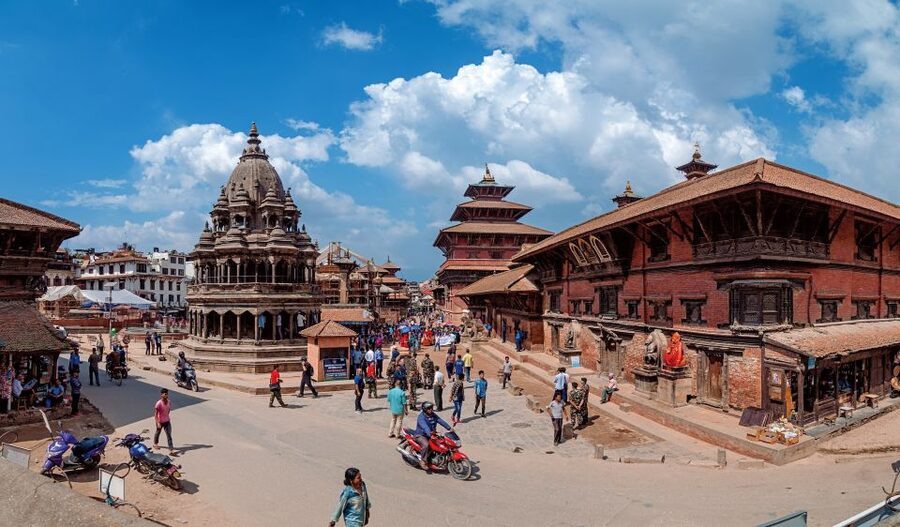
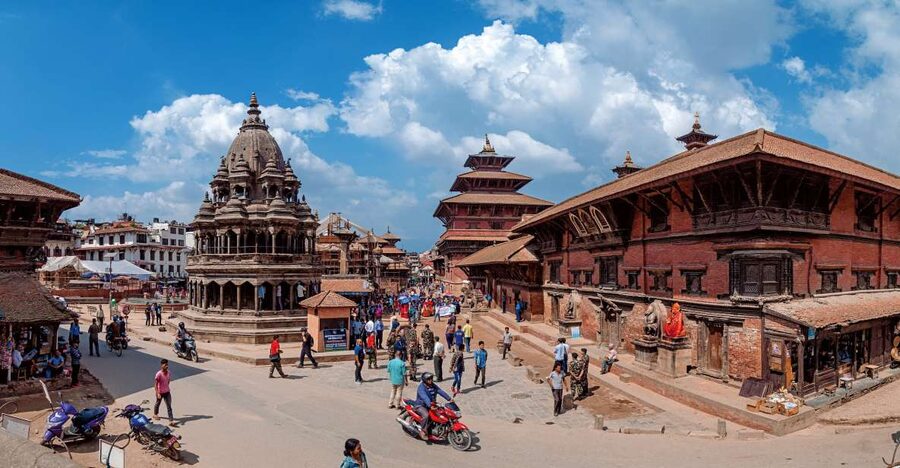
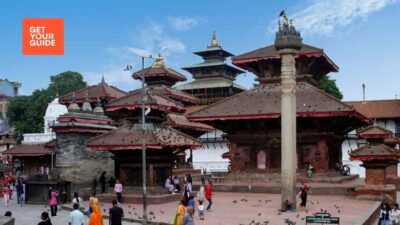
Patan Durbar Square is the first major stop in the standard schedule, with about 1.5 hours of guided sightseeing. The square is in Lalitpur, the city formerly ruled by the Malla Kings of Patan.
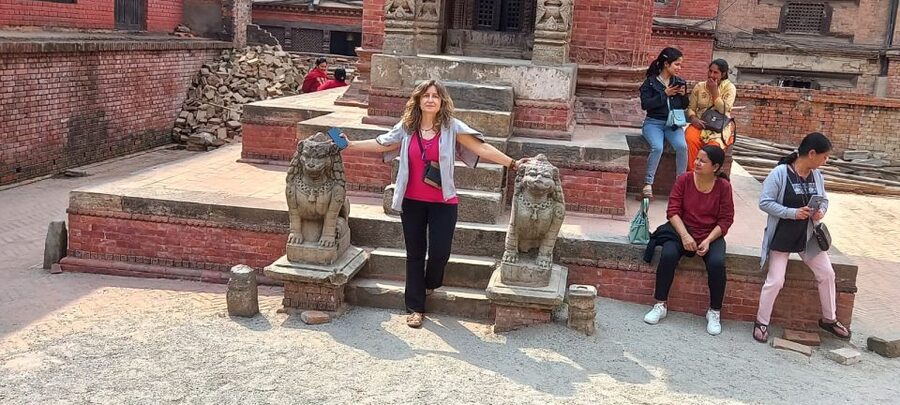
The setting is built around the old royal palace. Red brick paving, temples, statues, and palace structures create a compact area where many different architectural details sit close together. Look up and around rather than hurrying from one monument to the next. The value of a guide is greatest here, because the square can otherwise feel like a collection of ornate buildings without a clear story.
Krishna Mandir is the key attraction. This famous stone temple differs from the many brick and timber structures around it, and its presence gives Patan’s square a strong visual centerpiece. Your guide can help connect the temple with Hindu worship and the power of the former royal court.
Patan is also a good place to pay attention to Newar workmanship. The tour is designed to introduce you to old art and architecture, including the carved surfaces, temple forms, courtyards, and religious images that make the valley distinctive. You may find that the small details are as rewarding as the main monuments.
The drawback is the 1.5-hour limit. That is enough for a guided introduction, but not for a slow visit to every corner or museum in the area. The tour description mentions fascinating museums and courtyards, yet the schedule does not promise a specific museum entry. If one museum matters to you, ask the guide at the start whether it can fit.
Entrance charges are not included. Bring Nepalese rupees for monument fees, and do not assume the $45 covers every admission. The information provided gives a Bhaktapur entrance example of 1,000 NPR per person, while it does not state a Patan fee.
The drive from Patan to Bhaktapur
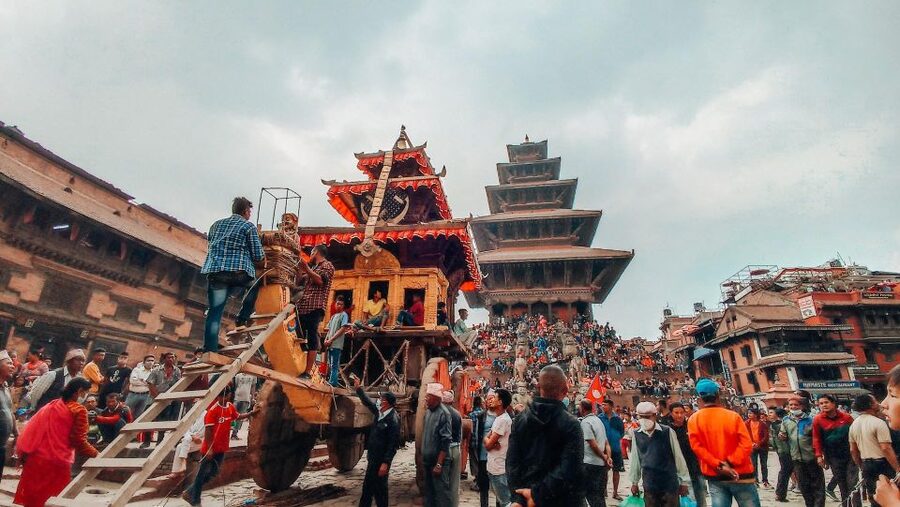
The listed drive from Patan to Bhaktapur takes about 40 minutes. That transfer is not glamorous, but it makes the private vehicle valuable. You can sit in the air conditioning, keep your camera and water with you, and continue with the same guide.
Traffic may alter the timing. One booking had a direct adjustment because the travelers were staying in Patan, so they visited Bhaktapur first and skipped a separate Patan drive. That tells you the route can be adapted when your hotel location makes a different order sensible.
For most people staying in Kathmandu, the normal order begins in Patan and then continues to Bhaktapur. Still, tell the provider your exact hotel location. A small route change can save time, especially if you are already near one of the two cities.
A few more things to do in Kathmandu worth a look
- Kathmandu: Full Day Top 4 UNESCO Tour with Lunch – Private/Group
★ 5.0 · 269 reviews - Kathmandu: Full-Day 7 UNESCO Tour with Lunch – Private/Group
★ 4.9 · 247 reviews - Kathmandu: 7 UNESCO Sites Tour in 1 Day (Private Tour)
★ 4.9 · 204 reviews - Kathmandu: Top 4 UNESCO Tour with Lunch – Private/Group
★ 4.9 · 181 reviews
Bhaktapur Durbar Square and the Malla court
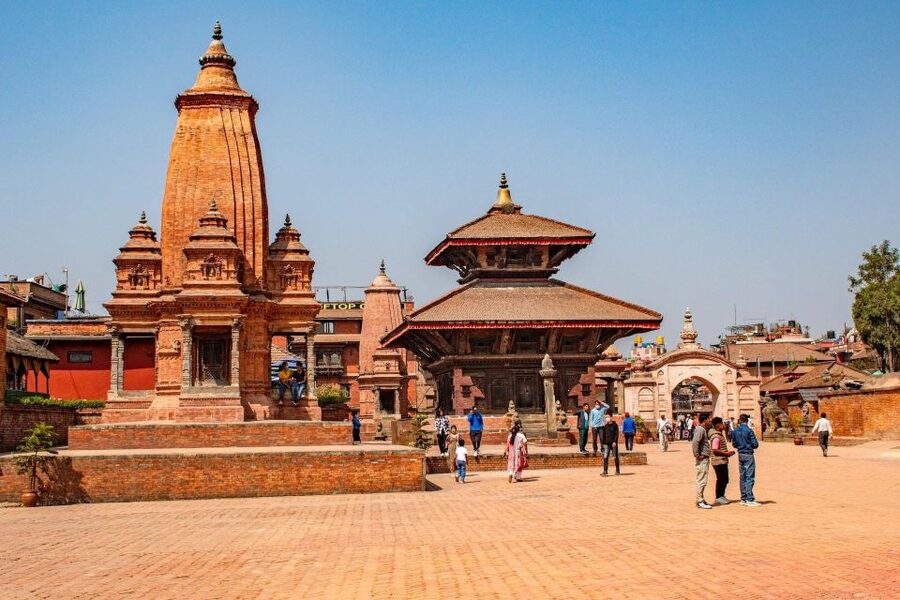
The schedule allows about 2.25 hours at Bhaktapur Durbar Square, making this the longer sightseeing stop. That extra time is justified. Bhaktapur’s former palace complex includes temples, courtyards, palace buildings, and traditional structures spread through a larger historic center.
Bhaktapur served as a royal capital under the Malla Kings from the 14th to the 15th century, then continued as the Kingdom of Bhaktapur until conquest in 1769. The old palace grounds later found practical uses as government offices, schools, and private homes. That mixture gives the area a lived-in quality rather than making it feel like a single sealed museum.
You begin around the former palace complex. The Golden Gate leads toward one of the city’s best-known buildings, 55 Jhyale Durbar. Its name refers to the many windows, and the structure is a fine place to study the detailed wood carving associated with the Malla period.
Your guide can help you read the palace area as more than a line of photo stops. Notice how the courtyards organize movement, how temples sit beside royal buildings, and how decoration carries religious and political meaning. This is where an English-speaking guide can make the visit much more useful.
Nyatapola Temple and Taumadhi Square
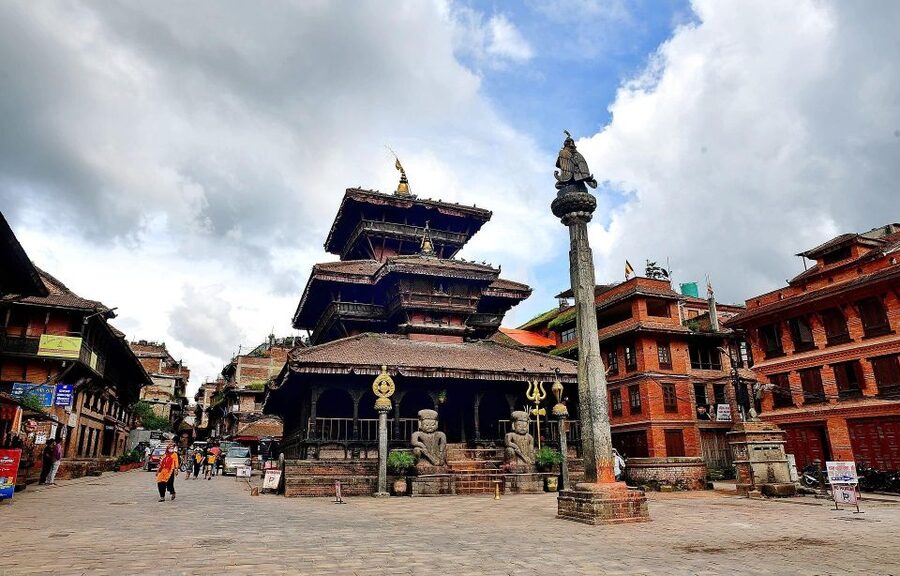
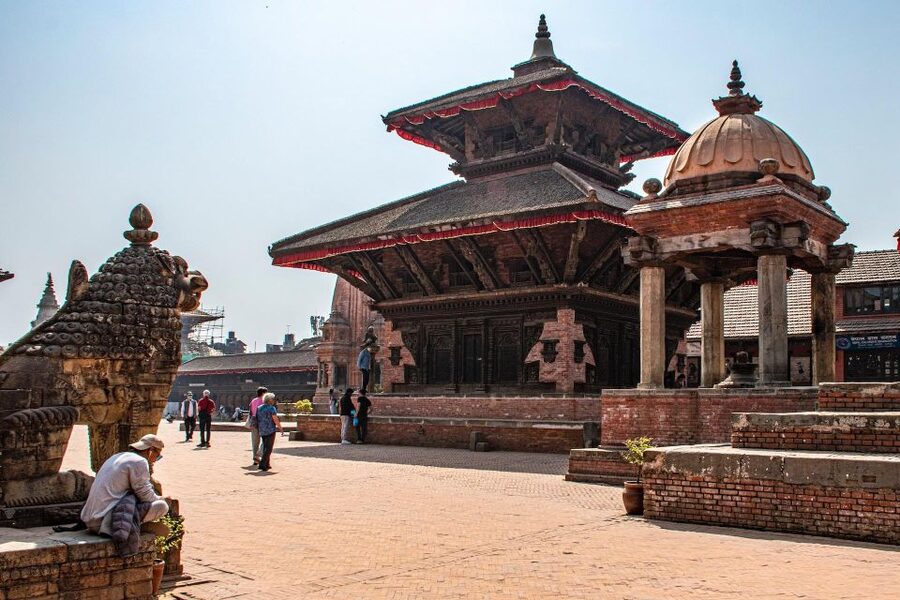
Nyatapola is Bhaktapur’s tallest monument and Nepal’s tallest temple, according to the tour information. King Bhupatindra Malla commissioned it, and construction finished in 1702.
The five-tiered form is easy to recognize from Taumadhi Square. The broad steps and stacked roof levels make it one of Bhaktapur’s strongest visual sights. Even if you are not focused on architecture, the scale gives you a clear sense of how much labor and planning went into royal religious buildings.
Use the square as a place to slow down. Look at the relationship between the temple and the surrounding buildings, then listen to the guide’s explanation of the site’s religious role. The tour is particularly useful for visitors who want context on Hindu traditions rather than just photographs.
The steps and brick paving also explain the advice to wear comfortable shoes. The tour involves walking through historic squares and courtyards, and old surfaces may not be as smooth as modern sidewalks. Sunglasses and a camera are also sensible items to bring.
Pottery Square and everyday Newari culture
Pottery Square offers a different view of Bhaktapur. It is smaller than Durbar Square and centered on pottery work and handicrafts. This is where the visit shifts from royal architecture to traditional production and shopping.
The square gives you a chance to see the craft side of Newari culture, although the supplied information does not promise a demonstration or a specific shop visit. You can browse Nepalese handicrafts and decide if you want to buy something. Bring cash if you plan to shop.
I like this stop because it keeps the tour from becoming only a palace-and-temple circuit. The old kingdoms were supported by working communities, skilled makers, merchants, and religious institutions. Pottery Square offers a practical connection to that wider culture.
Keep your expectations measured. The visit is still part of a short guided tour, not a dedicated handicraft workshop. If buying pottery or other goods is important, say so early and ask how much time can be spared.
What the private guide adds
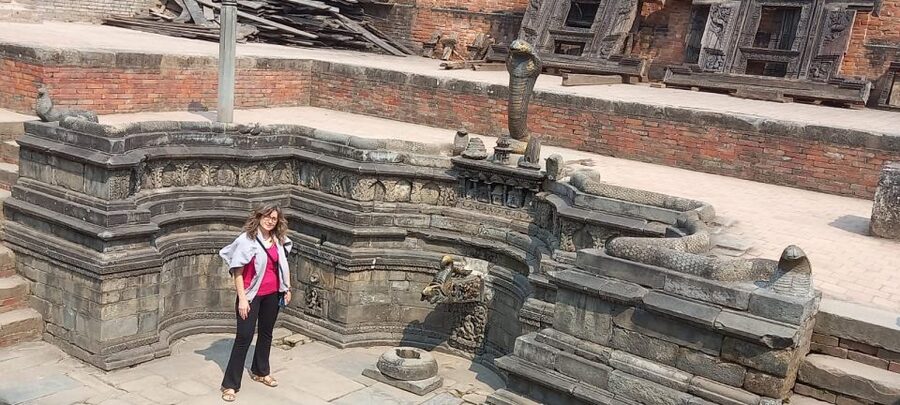
The strongest praise for this experience centers on the guides. Nilakantha has been singled out for clear English, enthusiasm, and detailed explanations of Nepalese and Hindu history and culture. Sharmila has also been praised for her command of history and religion.
Those names are useful when you book, but guide assignment can vary. Ask if a particular guide is available, without assuming the request can be guaranteed.
A good guide changes how you see the monuments. Instead of only noticing a gold-covered gate or a tall temple, you learn how the royal courts, religious traditions, and Newar artistic customs fit together. You can also ask direct questions about the symbols, ceremonies, and buildings that catch your eye.
The English-language format suits visitors who want a cultural introduction without arranging separate research. Still, guide quality is personal, and the tour description does not promise a specialist in every subject. Think of it as a well-focused orientation to two important cities, not an academic seminar.
Is $45 good value?
At $45 per person, the tour offers solid value if you want private transport and a guide in one package. Hotel pickup and drop-off, an air-conditioned vehicle, bottled water, and six hours of sightseeing remove several common costs and hassles.
The price is less attractive if you are traveling alone and mainly want transport. Monument entry fees and meals are extra, and the tour does not include a dedicated museum admission. You are paying for convenience, interpretation, and a private group rather than for every expense during the day.
For two or more people, the private arrangement becomes easier to justify. You can split the vehicle cost while keeping the freedom to ask questions and avoid a crowded group schedule.
The best value comes from using the guide actively. Ask about the difference between Patan and Bhaktapur, the Malla rulers, Newari customs, and the religious purpose of the temples. If you remain silent and rush only for photographs, you will get less from the price.
Timing, practical details, and limits
The published schedule begins around 10:00 AM and returns you to your hotel around 4:00 PM, matching the stated six-hour duration. One section also gives an earlier 3:00 PM drop-off, so confirm the exact return time when booking.
The standard plan lists Patan first, a 40-minute transfer, then Bhaktapur, with Bhaktapur receiving the longer guided visit. Traffic can change the order or reduce time at a site. If one square matters most to you, tell the guide at the start.
Bring:
- Comfortable shoes
- Cash for monument fees and possible handicraft purchases
- A camera
- Sunglasses
Oversize luggage is not allowed. Keep your day bag small enough for the private vehicle and sightseeing stops.
Cancellation is flexible up to 24 hours before departure for a full refund, and you can reserve now and pay later. Those terms help if your Kathmandu plans are still moving, but they do not remove the need to check availability and the exact pickup time.
Who should book this tour?
This outing suits a first visit to Kathmandu Valley, especially if you want cultural context without planning two complicated city visits yourself. It also works well for couples, families, or small private groups who value hotel pickup and a dedicated guide.
I would choose it if you want to compare two former kingdoms in one day, see major temples and palace squares, and learn about Newari art and Hindu traditions. It is also a good fit if you have limited time in Kathmandu.
I would hesitate if you prefer a slow, unstructured day. Six hours is efficient, but it does not leave unlimited time for museums, shopping, lingering photographs, or long meals. Visitors with mobility concerns should also think about the amount of walking over historic paving and temple areas, since no accessibility details are provided.
Should you book the Patan and Bhaktapur tour?
Book it if you want the easiest way to see both cities with private transport and a guide who can explain the culture behind the buildings. Patan gives you Krishna Mandir and a close look at Newar court architecture. Bhaktapur adds the Golden Gate, 55 Jhyale Durbar, Nyatapola, and Pottery Square.
The tour’s real strength is not simply the number of monuments. It is the chance to connect royal history, Hindu practice, Newari craftsmanship, and daily life in one focused outing. Bring cash, accept some traffic-related flexibility, and ask for the guide to explain rather than just point. For $45 per person, that is a practical and worthwhile introduction to Kathmandu Valley.
FAQ
How long does the tour last?
The activity is listed as a six-hour private tour. The standard schedule begins at about 10:00 AM and returns you to your Kathmandu hotel around 4:00 PM, though one section gives a 3:00 PM return time, so confirm the exact timing.
Where does the tour begin?
Hotel pickup is provided in Kathmandu. The pickup location is listed as Kathmandu.
Which places are included?
The tour includes Patan Durbar Square and Bhaktapur Durbar Square. The Bhaktapur visit includes the former palace area, the Golden Gate, 55 Jhyale Durbar, Nyatapola Temple, and Pottery Square.
Is the tour private?
Yes. It is described as a private group experience with private car or van transportation.
Is transportation included?
Yes. Hotel pickup and drop-off are included, along with private air-conditioned car or van transportation.
Is a guide included?
Yes. An English-speaking live guide is included. Guides named in the provided information include Nilakantha and Sharmila, though a specific guide may depend on availability.
Are meals included?
No. Meals are not included in the tour price.
Are monument entrance fees included?
No. You need to bring cash to pay monument entrance fees. The provided information gives Bhaktapur’s fee as 1,000 NPR per person in one booking, but it does not give a Patan fee.
What should I bring?
Bring comfortable shoes, cash, sunglasses, and a camera. Oversize luggage is not allowed.
Can I cancel the booking?
You can cancel up to 24 hours in advance for a full refund. The tour also offers a reserve-now, pay-later option.
Just added in Kathmandu
- Kathmandu to Chitwan Tour by Tourist Bus – A Convenient and Affordable Way★ 4.0 · 4 reviews
- Changunarayan Hill to Telkot Hike Near Kathmandu Day Tour★ 5.0 · 6 reviews
- Mt Everest Base CampTrek | Budget Package★ 5.0 · 4 reviews
- Chitwan Jungle Safari 3-Day Tour★ 5.0 · 9 reviews
- Chandragiri Hills cable car day trip, private car with driver from Kathmandu★ 5.0 · 8 reviews
- Chandragiri to Taudaha Nature Day Hiking from Kathmandu★ 5.0 · 13 reviews
- Chandragiri Hill Station Tour by Cable Car★ 5.0 · 4 reviews
- Chandragiri Cable Car & Monkey Temple Private Guided Day Tour★ 5.0 · 5 reviews
Kathmandu UNESCO Heritage Tours, compared.
Private Kathmandu Sightseeing Tour | UNESCO World Heritage sites
Read our review →
Full Day 7 UNESCO Tour with Lunch – Private/Group
Read our review →
Private Bhaktapur and Nagarkot Day Tour From Kathmandu
Read our review →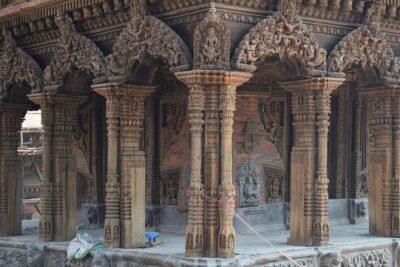
Kathmandu Spiritual Sites: Bodhnath & Pashupatinath Tour
Read our review →
Day Trip to Bhaktapur and Panauti from Kathmandu
Read our review →
Browse the lists this tour appears in