
Reviewed · KATHMANDU UNESCO HERITAGE TOURS
Kathmandu: Private Patan and Bhaktapur Sightseeing Tour
Patan and Bhaktapur give you two very different looks at the Kathmandu Valley’s Newari culture in one well-planned day. Patan brings detailed metalwork, courtyards, and temple architecture. Bhaktapur feels more like a preserved medieval town, with broad squares, carved windows, potters, and narrow lanes.
I like the private vehicle and guide, since you are not tied to a large group or a fixed pace. I also like the chance to see artisans at work, especially around Bhaktapur’s Pottery Square. The main consideration is that the $39 price does not include entrance fees or food, and six hours is a brisk amount of time for two major heritage areas.
Key points to know before you go
- Two UNESCO-listed historic centers: Patan and Bhaktapur give you different architectural moods in one outing.
- A strong Newari focus: Look for carved wood, worked metal, temple courtyards, traditional crafts, and local religious practice.
- Private touring matters: Your guide can adjust the pace, explain details, and provide some flexibility for stops and questions.
- The itinerary is full: Patan includes five major stops, followed by six Bhaktapur sights, plus driving and lunch.
- Bring Nepalese currency: Entrance fees are separate, and cash will make site visits easier.
- Good footwear is essential: Much of the experience takes place on foot inside old squares and lanes.
Why Patan and Bhaktapur work so well together
Patan and Bhaktapur are close enough to combine, but they do not feel identical. Patan, also called Lalitpur, is known for refined Newari design, metal statues, woodcarving, and compact urban lanes. Bhaktapur is prized for its old royal squares, large temples, traditional buildings, and living craft traditions.
That contrast gives the day a useful rhythm. In Patan, you pay attention to details: a metal roof ornament, a carved doorway, or the stone image of Krishna. In Bhaktapur, you get a stronger sense of space, with large public squares and temples arranged around them.
I would choose this outing early in a Kathmandu visit because it gives you a working introduction to the valley’s architecture, religious customs, and local crafts. Afterward, temples and courtyards elsewhere in Nepal will be easier to understand.
The six-hour schedule is not designed for lingering over every carving. It is a practical survey of the main sights. If you want long photography sessions, extended shopping, or a slow lunch, you may feel pressed for time.
More temple and square walks around Kathmandu:
- Private Kathmandu Sightseeing Tour | UNESCO World Heritage sites
★ 5.0 · 756 reviews - Kathmandu: Full Day 7 UNESCO Tour with Lunch – Private/Group
★ 5.0 · 415 reviews - Private Bhaktapur and Nagarkot Day Tour From Kathmandu
★ 5.0 · 305 reviews
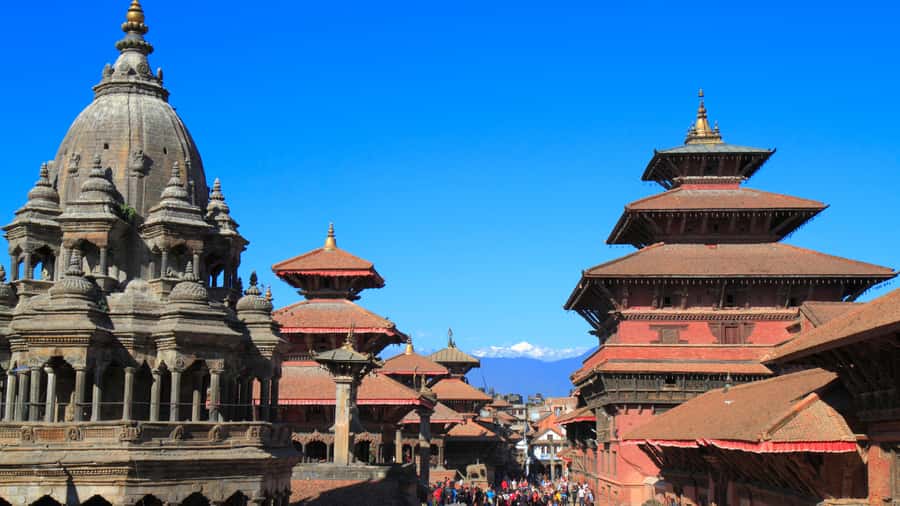
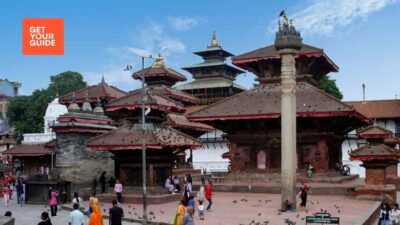
Patan Durbar Square: the day begins with carved detail
Your guide and driver pick you up at your hotel, then take you to Patan Durbar Square. This is the first major stop and the best place to begin thinking about the valley’s Newari building style.
The square gathers palaces, temples, courtyards, and carved façades in a compact area. You will walk through the site while your guide explains its historical and architectural importance. The listed visit is about 30 minutes, so expect an introduction rather than an exhaustive examination of every building.
Patan’s appeal is its close-up detail. Look at the woodcarving around windows and doorways, then compare it with the metalwork found in shrines and temple fittings. The square also gives you a chance to ask questions early in the tour, before the day’s schedule becomes more crowded.
There is also time for shopping, though this should be treated as an opportunity rather than the main purpose of the stop. If you see a craft you like, ask your guide about it before buying. The surrounding lanes are known for metalwork, pottery, and weaving.
Patan Museum: a useful pause from the street
The Patan Museum receives about 45 minutes, making it one of the longer stops in the first half of the day. That extra time matters because museums can help you read the details you have just seen outside.
The museum setting is part of the experience, with historic courtyards and palace architecture adding context to the displays. The visit is especially useful if you want to understand how religious images, metal objects, and traditional design fit into Nepal’s artistic culture.
I would pay attention here even if you are more interested in buildings than museums. The outdoor temples can look like a mass of carvings at first. Museum displays help separate the shapes, materials, and religious symbols into something easier to recognize.
The tour does not promise a long museum lecture, so use your guide for specific questions. Ask about objects or architectural details that caught your eye in the square.
Krishna Temple and Kumbheshwor Temple
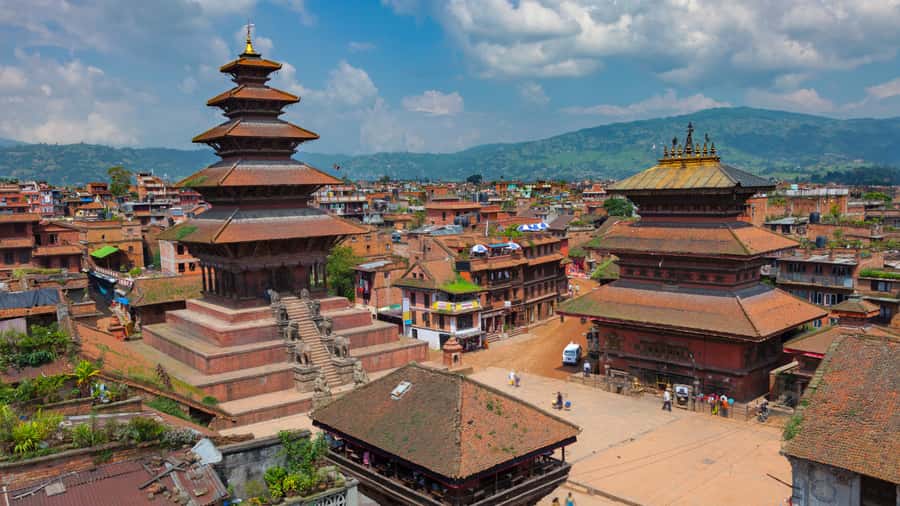
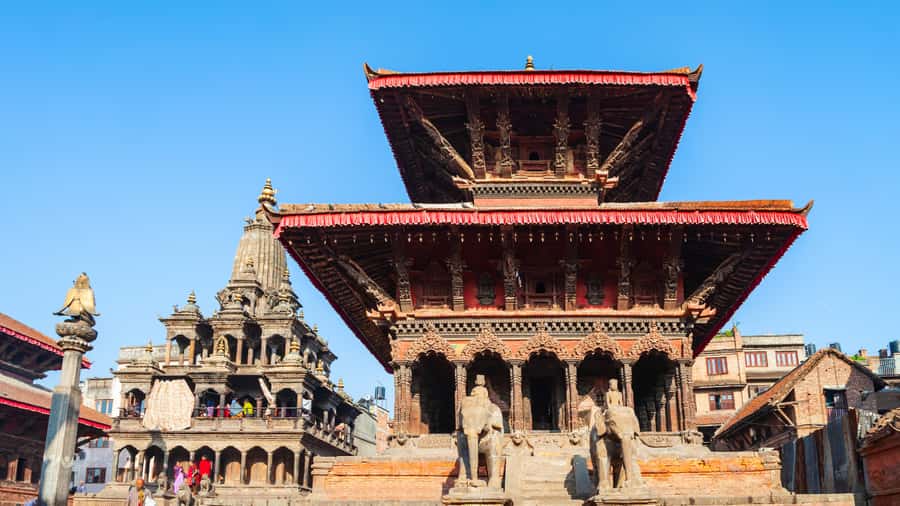
Krishna Temple is a short stop of around 10 minutes, but it is an important one. Built in stone and dedicated to Lord Krishna, it differs from many of the valley’s brick and timber structures. Its form gives you a helpful architectural comparison within Patan itself.
The short timing means you will likely hear the main points, view the temple, and continue. If you want detailed religious interpretation, ask your guide to focus on the features that interest you most.
Kumbheshwor Temple follows with about 15 minutes. This visit adds another layer to Patan’s sacred character. The compact schedule is sensible for a broad overview, but it does not leave room for a long, quiet pause at either temple.
A few more things to do in Kathmandu worth a look
- Kathmandu: Full Day Top 4 UNESCO Tour with Lunch – Private/Group
★ 5.0 · 269 reviews - Kathmandu: Full-Day 7 UNESCO Tour with Lunch – Private/Group
★ 4.9 · 247 reviews - Kathmandu: 7 UNESCO Sites Tour in 1 Day (Private Tour)
★ 4.9 · 204 reviews - Kathmandu: Top 4 UNESCO Tour with Lunch – Private/Group
★ 4.9 · 181 reviews
The Golden Temple and Patan’s metalworking tradition
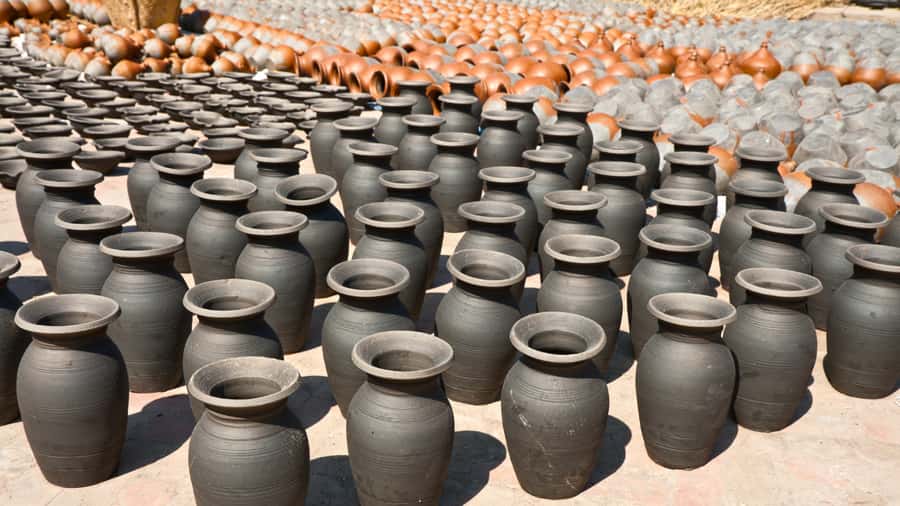
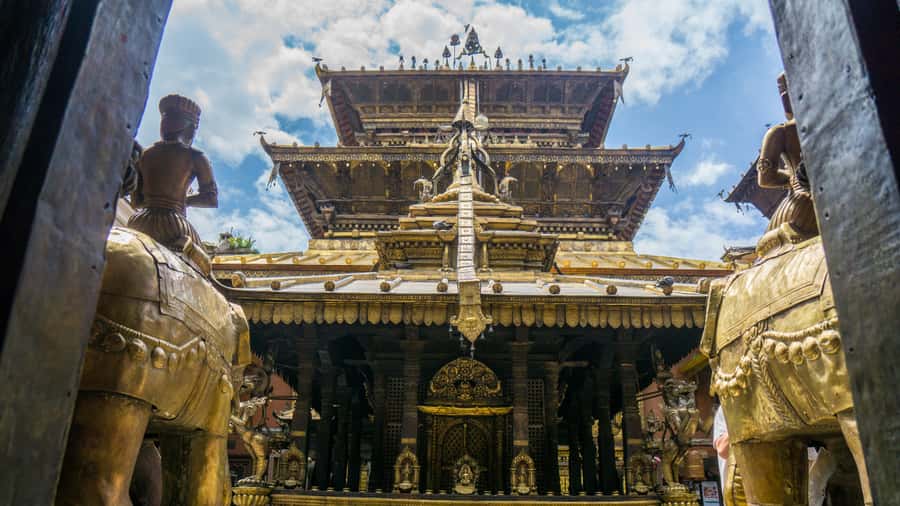
Hiranya Varna Mahavihar, commonly called the Golden Temple, receives roughly 30 minutes. It is one of Patan’s most memorable stops because of its elaborate metalwork and religious setting.
The name can create the wrong expectation. This is not simply a grand building covered in gold. The interest lies in the fine metal details, shrine elements, and the intimate courtyard atmosphere. Take time to look upward and around the edges of the courtyard, where smaller decorative features can reward a slower glance.
This stop connects the monument to Patan’s living craft tradition. The city remains known for metalworking, and the skill visible in temple decoration helps explain why local artisans have such an important place in Patan’s identity.
After Patan, you will drive to Bhaktapur. Lunch takes place between the two city visits, but the supplied details do not specify a restaurant or menu. Plan to pay for your own food and drinks, and keep some Nepalese currency with you.
Bhaktapur Durbar Square: a larger medieval stage
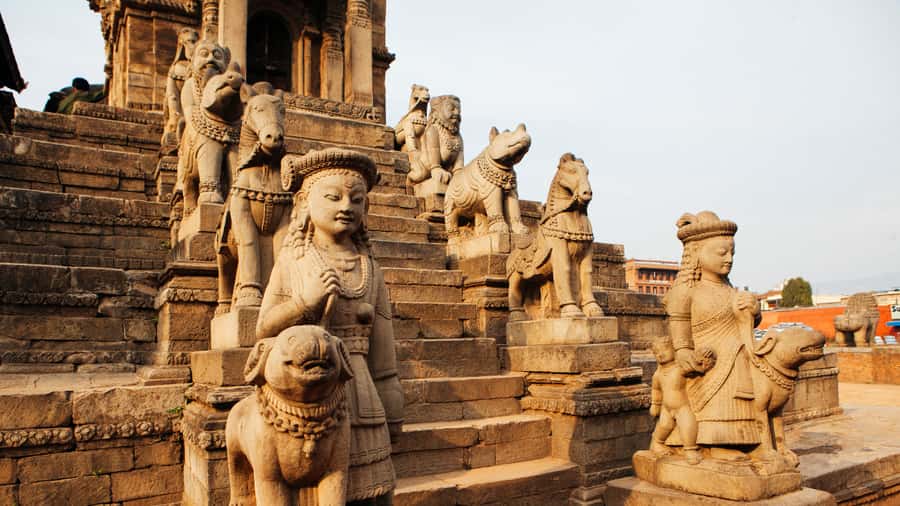
Bhaktapur Durbar Square is the main focus of the second half. The visit includes guided sightseeing, walking, photography, and some shopping, with about 45 minutes listed for the square itself.
Bhaktapur is often called the City of Devotee, and its old center has a more open, ceremonial feel than Patan’s tighter lanes. The square is lined with palace buildings, temples, and carved façades. It is a place where architecture and daily life remain closely linked.
Your guide can explain the historical and traditional meaning behind the buildings, which is valuable here because several structures may look similar at first glance. The best approach is to compare rooflines, windows, statues, and the materials used in different parts of the square.
The schedule allows a good first look, but not a leisurely study of every corner. If photography is your priority, tell the guide early so the private format can work better for you. The exact amount of free time depends on traffic, lunch, and how long you spend at earlier stops.
The 55-Window Palace and Peacock Window
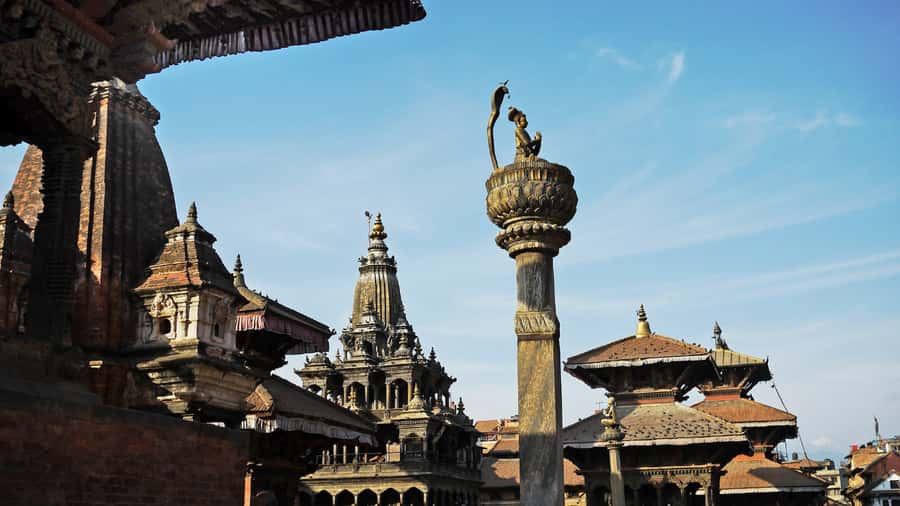
The 55-Window Palace is included as a short sightseeing stop, with about 10 minutes listed. You will pass by or view the palace as part of the square rather than receive a long standalone visit.
The palace is known for its repeated carved windows and royal character. It helps explain Bhaktapur’s former role as a seat of power. Look for the rhythm of the windows and the contrast between the palace façade and the temples nearby.
The Peacock Window is another detail to watch for as you walk through Bhaktapur. It is an example of the carved woodwork that makes the city special. Your guide’s explanation is useful because a small window can be easy to miss when larger temples dominate the square.
Taumadhi Square and Nyatapola Temple
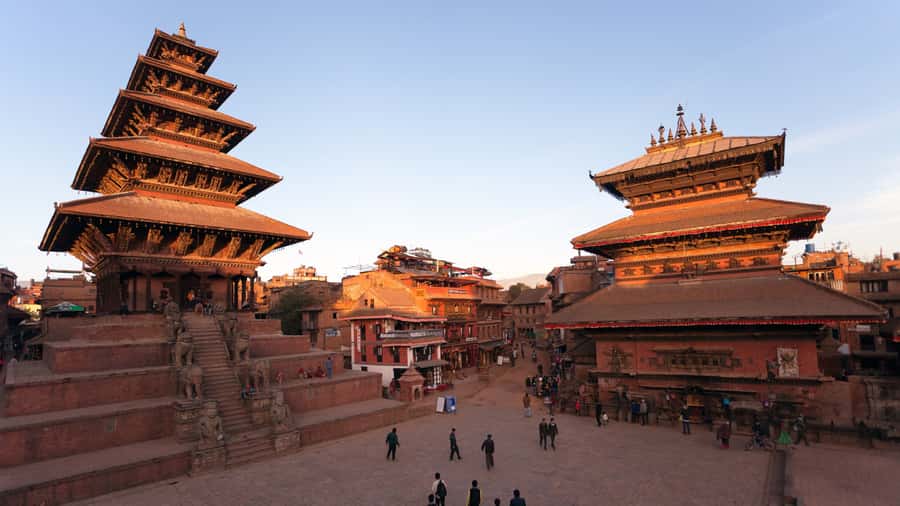
Taumadhi Square receives about 30 minutes and gives you one of Bhaktapur’s clearest architectural views. The square is associated with the famous Nyatapola Temple, whose tall, tiered form is one of the city’s most recognizable sights.
This is a good place to slow down and study how temples are positioned in public space. Rather than looking only at the highest roof, notice the stairs, guardian figures, platforms, and surrounding buildings. The square shows how religious architecture also shaped movement and gathering in the old city.
You will have a guided visit and time for photographs. The area can be active, so stay close enough to hear your guide and watch your footing on the old surfaces.
Pottery Square: the most hands-on stop
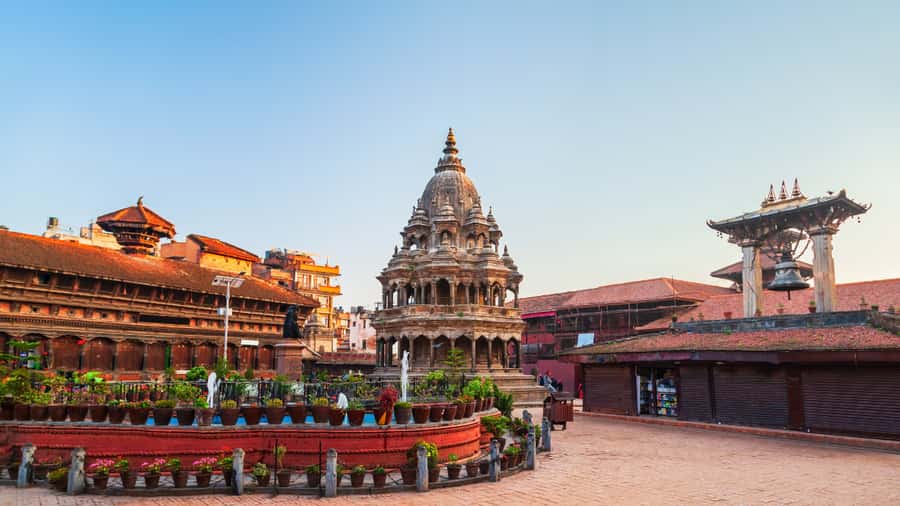
Pottery Square is one of the strongest reasons to choose this tour over a simple drive-by city visit. The stop lasts about 30 minutes and includes walking and a guided look at local craft activity.
You may see artisans at work, though the exact activity on the day can vary. The value is in watching the process rather than treating pottery as a souvenir display. This is a working part of Bhaktapur’s traditional culture, and it gives the tour a human scale after the grand palace squares.
If you want to buy something, inspect pieces carefully and ask your guide about packing and transport. The schedule is short, so do not leave all shopping until the final minutes.
Dattatraya Temple and the final walk
The final listed sight is Dattatraya Temple, with about 30 minutes for a guided visit and sightseeing. This gives the Bhaktapur portion a quieter religious finish after the larger Durbar Square and Taumadhi Square.
The temple adds another example of the city’s long-standing spiritual life and carved architecture. Use this last stop to ask questions that came up earlier, especially about the relationship between temples, festivals, and local customs.
By this point, you will have spent much of the day walking. Comfortable shoes, light clothing, sunglasses, and a sunhat are sensible choices. A passport or identification card is also listed among the items to bring.
What the $39 price really covers
At $39 per person, the experience offers good value if you want private transport, hotel pickup and drop-off, and an English-speaking guide without arranging each part yourself. The private format is especially useful for couples, families, or friends who want to ask questions and adjust the pace within the six-hour limit.
The price does not include entrance fees, lunch, or drinks. That matters because the advertised cost is not the full cost of the day. Bring Nepalese currency for site admissions and budget separately for lunch.
The tour is provided by Himalayan Social Journey. The guide is English-speaking, and the experience is described as private. One detailed account specifically praised a guide called Rameshwar ji for storytelling about dynasties and royal intrigue. Another name appears as Rajeshwar ji in the supplied information, so the guide assigned to you may differ.
The booking terms are flexible: you can cancel up to 24 hours ahead for a full refund, and a reserve-now, pay-later option is available. Starting times depend on availability.
Who should choose this tour
I would recommend it to first-time visitors who want a clear introduction to Patan and Bhaktapur without managing local transport. It also suits anyone who values an English-speaking guide and prefers a private vehicle to a large group.
It is a good match for architecture fans, photographers, craft shoppers, and people interested in Newari culture. The stops cover temples, palaces, museum displays, courtyards, crafts, and local religious sites.
You may want a different plan if you prefer to spend a full day in one city. The itinerary includes many stops, and the time at individual temples can be brief. It is also less suitable if you want a guaranteed food experience, since lunch is not included or specified.
The strongest praised features are the clear English, professional guide and driver service, and flexibility made possible by the private format. Those qualities matter because the sights are dense with detail, and a good explanation can turn a quick walk into a meaningful visit.
Should you book it?
Book this tour if you want to see both Patan and Bhaktapur in one organized half-day, with hotel transport and a guide to explain what you are seeing. The Golden Temple, Pottery Square, and the contrast between Patan’s fine craftwork and Bhaktapur’s palace squares make the route worthwhile.
Skip it if you need a slow pace, long meals, or extended time at each monument. For most first-time visitors with only one free day for the Kathmandu Valley’s two major old cities, the combination of private transport, strong cultural coverage, and a $39 starting price is a sensible choice, as long as you add entrance fees and lunch to your budget.
FAQ
How long does the Patan and Bhaktapur tour last?
The tour lasts six hours, including hotel pickup, transportation, sightseeing, a lunch break, and hotel drop-off.
What places are visited in Patan?
The Patan portion includes Patan Durbar Square, Patan Museum, Krishna Temple, Kumbheshwor Temple, and Hiranya Varna Mahavihar, also called the Golden Temple.
What places are visited in Bhaktapur?
The Bhaktapur portion includes Bhaktapur Durbar Square, the 55-Window Palace, Taumadhi Square, Pottery Square, and Dattatraya Temple.
Is transportation included?
Yes. Hotel pickup and drop-off are included, along with transportation in a private vehicle.
Is a guide included?
Yes. A professional English-speaking live tour guide is included.
Are entrance fees included in the price?
No. Entrance fees are separate. You should carry Nepalese currency to pay them.
Are food and drinks included?
No. Food and drinks are not included. A lunch break is scheduled between the Patan and Bhaktapur visits.
What should I bring?
Bring a passport or identification card, comfortable shoes, suitable clothing, sunglasses, a sunhat, and Nepalese currency for entrance fees.
Just added in Kathmandu
- Kathmandu to Chitwan Tour by Tourist Bus – A Convenient and Affordable Way★ 4.0 · 4 reviews
- Changunarayan Hill to Telkot Hike Near Kathmandu Day Tour★ 5.0 · 6 reviews
- Mt Everest Base CampTrek | Budget Package★ 5.0 · 4 reviews
- Chitwan Jungle Safari 3-Day Tour★ 5.0 · 9 reviews
- Chandragiri Hill Station Tour by Cable Car★ 5.0 · 4 reviews
- Chandragiri Hills cable car day trip, private car with driver from Kathmandu★ 5.0 · 8 reviews
- Chandragiri to Taudaha Nature Day Hiking from Kathmandu★ 5.0 · 13 reviews
- Chandragiri Cable Car & Monkey Temple Private Guided Day Tour★ 5.0 · 5 reviews
Kathmandu UNESCO Heritage Tours, compared.
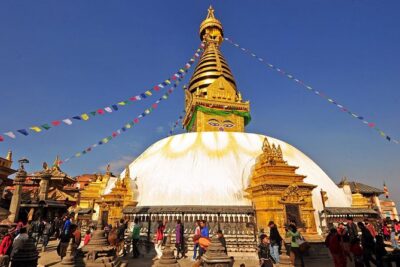
Private Kathmandu Sightseeing Tour | UNESCO World Heritage sites
Read our review →
Full Day 7 UNESCO Tour with Lunch – Private/Group
Read our review →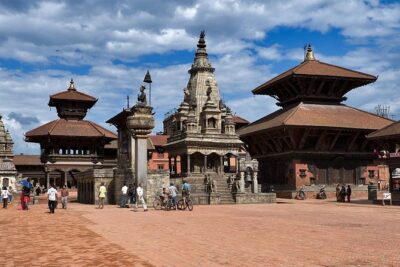
Private Bhaktapur and Nagarkot Day Tour From Kathmandu
Read our review →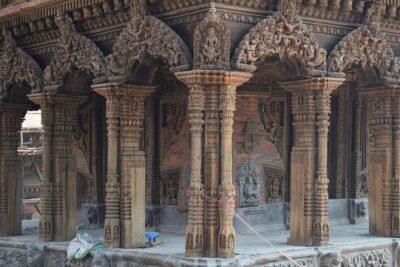
Kathmandu Spiritual Sites: Bodhnath & Pashupatinath Tour
Read our review →
Day Trip to Bhaktapur and Panauti from Kathmandu
Read our review →
Browse the lists this tour appears in