
Reviewed · MARKETS
Oldest Local Market Walking Tour With Living Goddess Kumari
Seeing a living goddess in Kathmandu is the unusual heart of this experience. The Kumari is a prepubescent girl regarded as the living form of Taleju, and her home, the Kumari Ghar, sits near Kathmandu Durbar Square. This is not a stage show. It is a religious tradition woven into daily city life.
I like the way the tour joins two very different sides of Kathmandu: the old market streets of Ason and the royal courtyards of Durbar Square. I also like the short, focused format, with an English-speaking guide such as Santos explaining Hindu and Buddhist customs as you walk. The main consideration is cost: the $39 price does not include the NPR 1,000 Durbar Square entry fee or food and drinks.
Key points to know
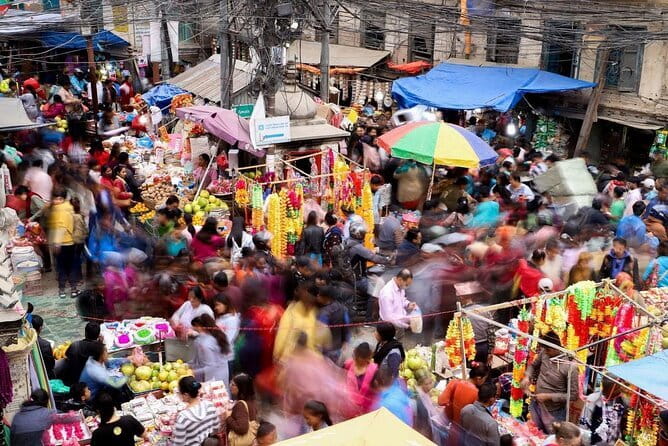
- Ason comes first: Explore Kathmandu’s oldest local market, with shops, stalls, spices, textiles, souvenirs, and traditional buildings.
- Kumari is the central draw: Visit the area associated with Kathmandu’s living goddess and learn why the tradition matters.
- Durbar Square adds royal history: See historic palaces, temples, and courtyards in the heart of the city.
- Two hours keeps it manageable: The tour begins and ends at Chhaya Devi Complex in Thamel.
- The guide makes the difference: Clear English explanations are central to the experience, with Santos specifically praised for communication and detailed teaching.
- Budget for the entry fee: Kathmandu Durbar Square costs an additional NPR 1,000 per person.
From Chhaya Devi Complex into old Kathmandu
The meeting point is the main gate side of Chhaya Devi Complex in Thamel. That gives you a simple starting place in one of Kathmandu’s best-known visitor areas, and the tour returns you there after the walk.
I would arrive a little early and use the time to get ready for city walking. The tour lasts two hours, so it is not designed as a slow, all-day wandering trip. You will want comfortable shoes, a water bottle, and enough attention left for uneven streets, shop displays, shrines, and passing activity.
The operator provides bottled mineral water, government taxes, and an English-speaking guide. Meals and other drinks are not included, so eat before the tour if you prefer to start with plenty of energy. The price is $39 per person, which is reasonable for a private-feeling cultural introduction if you value explanations, but less attractive if you only want to look around without a guide.
A few more things to do in Kathmandu worth a look
- Kathmandu Secret Food Crawl & Local Market Tour
★ 4.7 · 54 reviews - Kathmandu Food Crawl & Market Tour
★ 5.0 · 26 reviews - Best Nepali Cooking Class in Thamel with Local Market Trip
★ 5.0 · 26 reviews
Ason market, where Kathmandu shops for itself
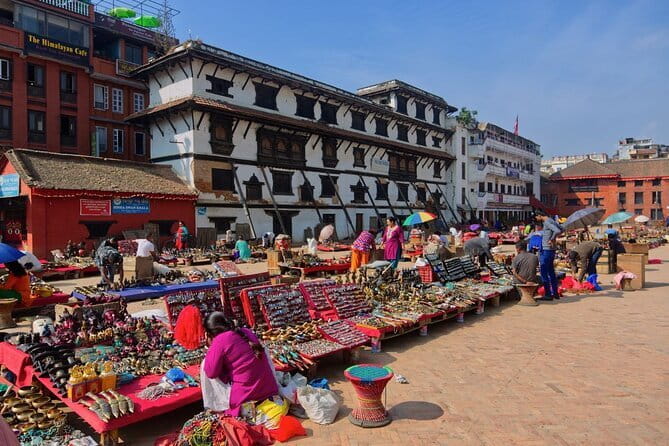
Ason is the first major point of interest, and it gives the tour its everyday character. This is described as Kathmandu’s oldest local market area, filled with shops and stalls selling goods such as spices, textiles, and souvenirs.
I like this part because it puts local commerce before the formal monuments. You are not only looking at old buildings from the outside. You are seeing a working market where traditional goods and ordinary shopping share the same narrow city setting.
Ason can also be a lot to take in quickly. The details are small and easy to miss: the products in the stalls, the way the streets connect, and the religious elements mixed into the commercial scene. A guide helps turn a walk through shops into a lesson in local culture. Ask about the goods you see, and ask how Hindu and Buddhist practice appears in the market area. The tour specifically focuses on both religions, so this is a good place to start asking questions.
Do not expect a polished shopping district arranged for sightseeing. The appeal is the opposite. Ason is useful, crowded with activity, and tied to the daily life of Kathmandu. You might find the market more interesting than a row of souvenir shops, but you should also expect less quiet time and less room to stop at every stall.
Understanding Hindu and Buddhist Kathmandu
One of the best reasons to choose a guided walk is the chance to connect places with belief. Kathmandu is not presented here as a collection of old façades. The route introduces Hinduism and Buddhism, two traditions that shape the city’s religious life and monuments.
The supplied tour details do not promise a formal lecture or a specialist religious program. Instead, you should expect explanations along the route, especially around the market and Durbar Square. That format suits me. A short story told beside a shrine or courtyard is easier to remember than a long speech delivered without a place to look at.
The guide’s role matters. Erin described the experience as very informative, while Alison singled out Santos for excellent communication and detailed explanations. A separate comment in Japanese also praised the care given to the guide’s explanations. Those details suggest that the strongest part of the outing is not simply reaching the sights. It is understanding what you are seeing.
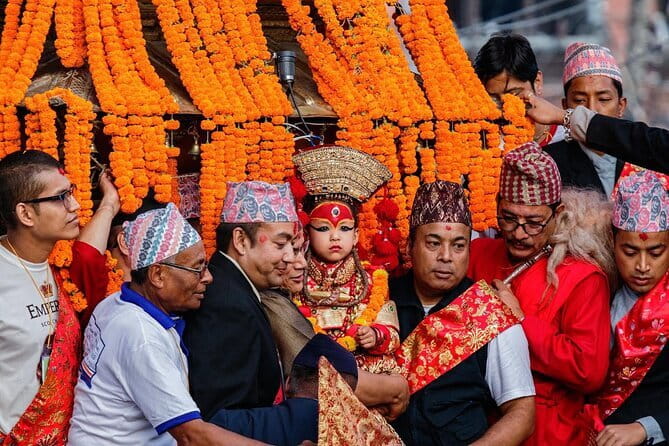
You should still approach the Kumari tradition with respect. The Kumari is not a character arranged for a tourist performance. She is a young girl regarded in Nepalese culture as the living embodiment of Taleju. The tradition has religious meaning, and the visit should be treated as a cultural and spiritual encounter rather than a photo opportunity.
Meeting the Kumari at Kumari Ghar
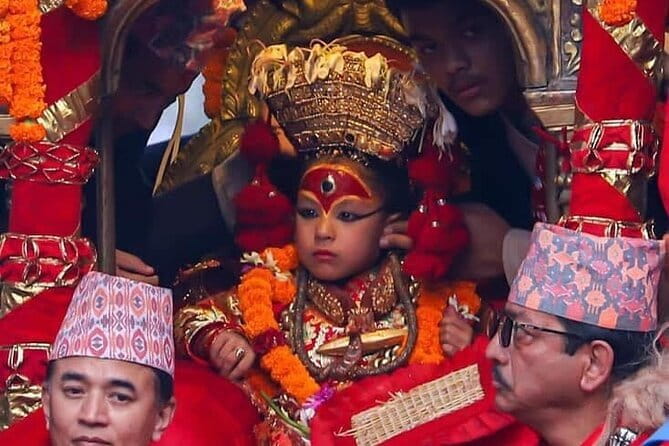
The living goddess Kumari is the special reason many people will book this tour. The Kumari resides in the Kumari Ghar, a historic building connected to Kathmandu Durbar Square. The tour gives you the chance to see the place and possibly witness the Kumari, depending on the circumstances of the visit.
That last point matters. The experience is presented as an opportunity, not a guaranteed private meeting or scheduled appearance. You should not expect conversation, a personal audience, or permission to treat the visit like an ordinary attraction. The value lies in learning about a tradition that still has a place in Kathmandu’s religious culture.
One traveler described the Kumari’s gaze as impressive and felt honored by the visit. That comment points to the quiet intensity of the moment. If you do see her, the encounter may be brief, but it can still feel powerful because the meaning comes from the tradition, not from the length of the viewing.
I would listen closely to the guide here and follow instructions about behavior and photography. The supplied information does not specify the exact viewing rules, so your guide is the right person to tell you what is permitted on the day. Keep your expectations respectful and flexible. The Kumari is the focus, but she is not a guaranteed performance timed around your schedule.
Same base, a different kind of day:
- Everest Base Camp Trek – 14 Days
★ 5.0 · 1,499 reviews - Private Kathmandu Sightseeing Tour | UNESCO World Heritage sites
★ 5.0 · 756 reviews - Everest Base Camp Helicopter Tour landing at Everest View Hotel
★ 5.0 · 668 reviews - Half day cooking class in Thamel kathmandu
★ 5.0 · 607 reviews
Kathmandu Durbar Square and its royal courtyards
Kathmandu Durbar Square is the tour’s main historic setting. It lies in the heart of Kathmandu and contains palaces, temples, and courtyards that reflect the history of the Kathmandu Valley.
The square gives the market walk a different mood. Ason shows you commerce and daily movement. Durbar Square shifts attention to royal buildings, religious architecture, and the long connection between power and worship in the valley. The two places work well together because they prevent the tour from becoming only a monument visit.
Your guide leads a two-hour tour at the square, although the entire activity is also described as two hours from departure to return. Plan on a compact visit rather than an exhaustive study of every building. You will get a broad introduction, with time for the Kumari connection and the main architectural sights, but not the kind of detailed archaeological tour that takes half a day.
The entry fee is not included. You should budget NPR 1,000 for Kathmandu Durbar Square in addition to the $39 tour price. That is the most important financial detail to note before booking. At the advertised rate, the tour costs more than a self-guided walk, but the guide’s explanations help you make sense of the square and the religious traditions behind it.
What the $39 price really buys you
The tour costs $39 per person. Included are an English-speaking guide, government taxes, and bottled mineral water. Not included are meals, beverages, personal expenses, and the NPR 1,000 Durbar Square entry fee.
I see the value mainly in the interpretation and the compact route. Ason can be confusing if you do not know what you are looking at, and the Kumari tradition deserves more than a quick glance at a doorway. If you want context for Hindu and Buddhist customs, the price can make sense.
The value is weaker for independent visitors who already know Kathmandu well or who prefer to set their own pace. You are paying for a two-hour guided experience, not transport, a meal, or a full-day sightseeing package. There is also no stated promise of a particular group size, so you should not assume a private tour or a tiny group.
The best comparison is not simply the ticket cost. Ask yourself what you want from Ason and Durbar Square. If you want practical background, a focused route, and help understanding the Kumari, $39 plus the entry fee is a fair cultural outing. If you only want photographs and free time, you may prefer to visit independently.
The guide’s part in a short walking tour
A two-hour walk leaves little room for vague commentary. The guide needs to explain the market, connect the religions to the buildings, handle the Kumari visit with care, and keep the group moving back toward Thamel.
The feedback points strongly toward clear communication. Santos was specifically praised for being an excellent communicator and for explaining things in detail. Another evaluation simply called the tour very informative, while a Spanish-language comment described the guide as kind and thorough. A Japanese-language comment also praised the careful explanations.
That pattern gives you a useful expectation: book this for the teaching, not only for the route. I would ask questions during the walk rather than waiting until the end. The tour covers several subjects quickly, and a question about one temple, market item, or religious custom can make the experience more personal and easier to remember.
The listed tour language is English. If you need another language, this activity is not presented as a multilingual option. The comments in other languages praise the experience, but the official guide language is English.
Practical points before you book
You can cancel up to 24 hours in advance for a full refund, and you can reserve now while paying later. Those policies help if your Kathmandu plans are still shifting.
The starting and ending point is the same, at Chhaya Devi Complex in Thamel. That makes the tour easy to fit around other plans in central Kathmandu. You will not need to arrange a separate return transfer from Durbar Square.
The route is a walking tour, so wear shoes suitable for city streets. The information provided does not give a precise distance, group size, accessibility rating, or detailed photography policy. If any of those points are important to you, ask the operator before confirming.
Bring small personal funds for the entry fee and any market purchases. Since food and drinks are not included, plan those separately. Bottled mineral water is supplied, which is useful during a city walk but does not replace a meal.
Who will enjoy this Kathmandu walk
I would recommend this tour to a first-time visitor who wants a short introduction to Kathmandu’s old center. It suits you if you like markets, architecture, religious traditions, and guided explanation in one outing.
It is also a good match if the Kumari is high on your list. The tour places her tradition at the center rather than treating it as a side note. You will learn why she matters and visit the setting associated with her residence.
The tour may be less suitable if you want long shopping stops, a quiet photography walk, or extensive time inside every monument. Two hours goes quickly, especially with Ason, the Kumari Ghar, and Kathmandu Durbar Square all included.
I would also think carefully about your expectations around seeing the Kumari. The chance to witness her is the attraction, but the information does not promise a guaranteed viewing at a set time. Book it for the cultural context and the possibility of that encounter, not as a guaranteed appearance.
Should you book the Kumari and Ason tour?
Book this experience if you want a short, guided introduction to old Kathmandu and you care about understanding what you see. The mix of Ason market, Hindu and Buddhist traditions, Kathmandu Durbar Square, and the Kumari makes the route unusually varied for two hours.
The strongest reason to choose it is the guide. Clear English explanations, especially from a guide such as Santos, appear to be central to the experience. Add the NPR 1,000 entry fee to the $39 price, and decide if that teaching is worth more to you than exploring alone.
I would skip it if you need a guaranteed viewing of the Kumari, dislike guided pacing, or want a full archaeological tour of Durbar Square. For everyone else, it is a compact and meaningful way to begin understanding Kathmandu’s old center, with a memorable religious tradition at its core.
FAQ
Where does the tour meet?
The meeting point is at the main gate side of Chhaya Devi Complex in Thamel, Kathmandu.
How long does the tour last?
The activity lasts two hours and returns to Chhaya Devi Complex.
What language is the tour conducted in?
The live tour guide speaks English.
Is the Kathmandu Durbar Square entry fee included?
No. The Kathmandu Durbar Square entry fee is an additional NPR 1,000.
Is food included?
No. Meals and beverages are not included. Bottled mineral water is included.
Is the Kumari guaranteed to appear?
The activity offers an opportunity to witness the Living Goddess Kumari, but the provided information does not state that a viewing is guaranteed.
Can I cancel for a full refund?
Yes. You can cancel up to 24 hours in advance for a full refund.
More Walking Tours in Kathmandu
- Kathmandu Food and Drink Walking Tour
★ 5.0 · 266 reviews - Kathmandu: Food and Drink Walking Tour
★ 4.9 · 119 reviews - Walking Street Food Tour in Kathmandu
★ 5.0 · 111 reviews - Walking Food Tour in Hidden Local Eateries of Kathmandu
★ 5.0 · 40 reviews
More Shopping Tours in Kathmandu
- Kathmandu Food & Drink and Shopping Rickshaw Tour
★ 5.0 · 48 reviews - Kathmandu Food Crawl & Market Tour
★ 5.0 · 8 reviews - Kathmandu: Food, Drink and Shopping Rickshaw Tour
★ 4.7 · 7 reviews - Half Day Cooking Class in Thamel with Local Market Visit
★ 4.5 · 6 reviews
Just added in Kathmandu
- Kathmandu to Chitwan Tour by Tourist Bus – A Convenient and Affordable Way★ 4.0 · 4 reviews
- Changunarayan Hill to Telkot Hike Near Kathmandu Day Tour★ 5.0 · 6 reviews
- Mt Everest Base CampTrek | Budget Package★ 5.0 · 4 reviews
- Chitwan Jungle Safari 3-Day Tour★ 5.0 · 9 reviews
- Chandragiri Hills cable car day trip, private car with driver from Kathmandu★ 5.0 · 8 reviews
- Chandragiri to Taudaha Nature Day Hiking from Kathmandu★ 5.0 · 13 reviews
- Chandragiri Hill Station Tour by Cable Car★ 5.0 · 4 reviews
- Chandragiri Cable Car & Monkey Temple Private Guided Day Tour★ 5.0 · 5 reviews
Markets, compared.
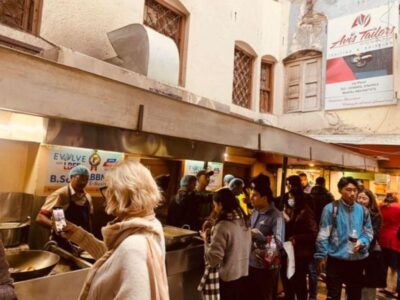
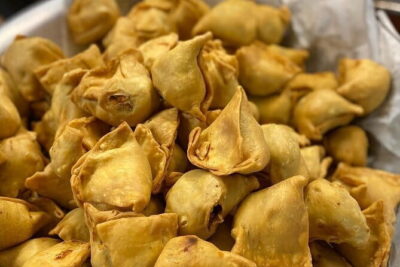
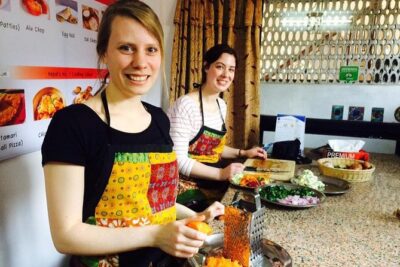
Best Nepali Cooking Class in Thamel with Local Market Trip
Read our review →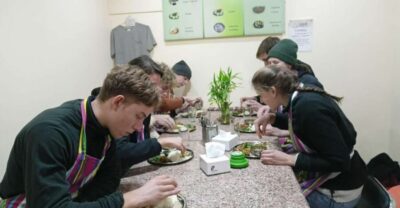
Half Day Cooking Class in Thamel with Local Market Visit
Read our review →Browse the lists this tour appears in