
Reviewed · KATHMANDU UNESCO HERITAGE TOURS
PashupatiNath and BoudhaNath – Private/Small Group
Pashupatinath and Boudhanath show two major faiths side by side, but this is not just a temple-hopping outing. At the cremation ghats, you learn how Hindu last rites fit into a person’s sixteen rites of passage. At Boudhanath, the focus shifts to Buddhist teachings, prayer flags, the five elements, and the Eightfold Path.
I like the small five-person maximum, which gives you room to ask questions. I also like the route itself: it links major religious sites with smaller stops such as Mrigasthali Deer Park, Gorakhnath Mandir, and a thangka school. The main drawback is cost clarity: the $15 tour price does not include about $13 in entrance fees, paid in cash.
Key points to know before booking
- Two faiths in one short outing: You move from Hindu customs at Pashupatinath to Vajrayana Buddhism at Boudhanath.
- A guide adds real value: Santosh is especially praised for explaining religion, culture, history, archaeology, and food in plain language.
- Small-group format: No more than five people join, making it easier to ask about ceremonies and symbols.
- Extra fees matter: Add about $9 for Pashupatinath and $4 for Boudhanath, both paid in cash at the entrance.
- The tour ends at Boudhanath: You can stay around the stupa afterward or return to your accommodation.
- Flexible timing can help: The schedule has been adjusted for special events such as the evening aarati ceremony.
Why this short Kathmandu tour works
Kathmandu can feel confusing at first. A temple may be a place of prayer, a cremation site, a school, an art studio, and a social meeting point all at once. Without context, you may see smoke, bells, painted eyes, prayer flags, and ritual objects without knowing how they fit together.
This tour gives you a clear framework. The first half centers on Hindu practice and death rituals. The second half introduces Buddhism and the religious life around Boudhanath. That contrast makes the experience easier to understand than visiting both sites separately with only a guidebook.
The group limit of five is important. Religious sites call for patience and quiet questions, not a large crowd moving from one photo stop to the next. You can ask why a rite is performed, what a symbol means, or how Hindu and Buddhist traditions coexist in Nepal.
The guide is the heart of the outing. Santosh receives repeated praise for his explanations and his willingness to answer many questions. He has been described as especially strong on culture, history, and archaeology, and he also brings in local food when it helps explain daily life. That wider view is useful because religion in Kathmandu is not separated neatly from family customs, festivals, meals, and neighborhood life.
The published rating is 4.8 out of 5 from 18 ratings, with 100 percent recommending the experience. That is a strong record, though the sample is modest. The most consistent strength is not transport or scenery. It is the guide’s ability to explain what you are seeing.
More temple and square walks around Kathmandu:
- Private Kathmandu Sightseeing Tour | UNESCO World Heritage sites
★ 5.0 · 756 reviews - Kathmandu: Full Day 7 UNESCO Tour with Lunch – Private/Group
★ 5.0 · 415 reviews - Private Bhaktapur and Nagarkot Day Tour From Kathmandu
★ 5.0 · 305 reviews
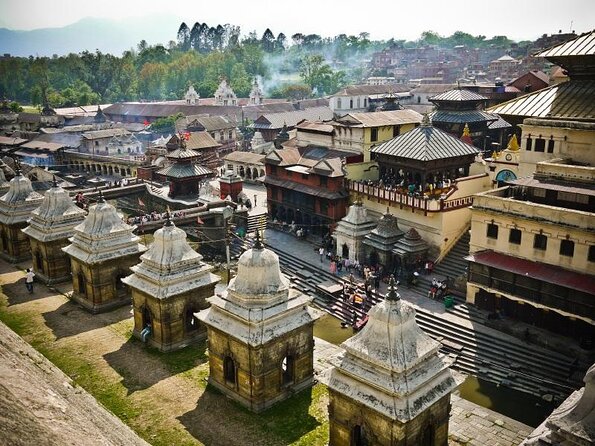
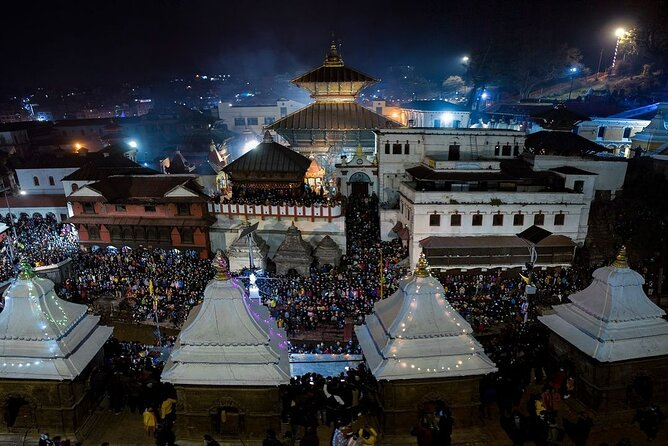
Pashupatinath: begin with Hindu worship and sacred death rites
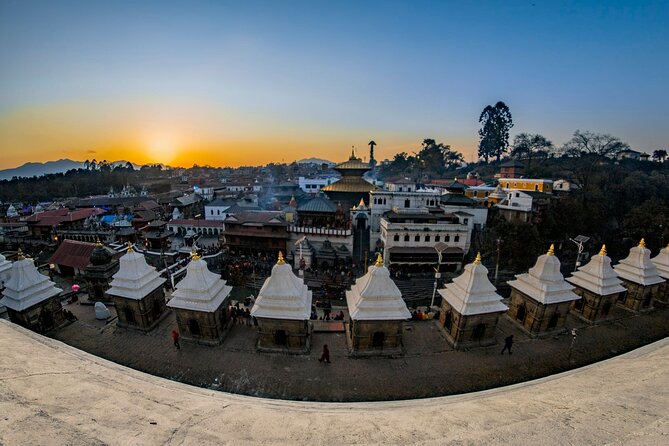
The tour starts at the Gaushala Bus Stop on Ring Road, near Pashupatinath. From there, you enter the area around one of Kathmandu Valley’s oldest and most important Hindu temples.
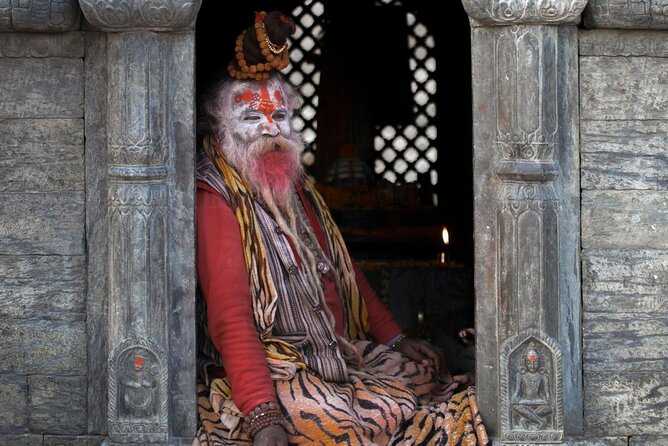
The central Pashupatinath temple is restricted to Hindus. That means you should not expect to enter the main shrine if you are not Hindu. Instead, the route leads you around the complex and toward Aryaghat, the cremation area. This is a useful distinction to understand before you arrive, since the value of the visit comes from learning about the wider sacred area, not from seeing the inner temple.
Your guide explains Hindu last rites and the sixteen Samskaras, or rites of passage. These customs mark stages in a person’s life, from birth and childhood through adulthood, marriage, and death. The discussion gives the cremation ghats a religious and social context rather than treating them as a spectacle.
Aryaghat is one of the most powerful parts of the tour, and also the part that demands the most respect. Cremations are real ceremonies involving families, grief, prayer, and tradition. You should follow the guide’s instructions about where to stand and when photography is appropriate. The purpose here is understanding, not collecting dramatic images.
You spend about 15 minutes at the temple area and about 30 minutes at the crematoria. That is enough time for a strong introduction, but not enough for a long, quiet study of every shrine and courtyard. If you prefer slow temple visits, this tour may feel brisk.
Mrigasthali and Gorakhnath: quieter stops with useful stories
After the cremation area, the route moves to Mrigasthali Deer Park. The stop lasts about 15 minutes and focuses on the story of Lord Shiva’s journey to this place and the origin of its name.
This is a welcome change of pace. After the intensity of Aryaghat, a short walk and a calmer setting give you time to absorb what you have heard. The stop is brief, so expect a focused story rather than a long nature visit.
Next comes Gorakhnath Mandir Temple, where you spend about 30 minutes. The guide explains the story of Guru Gorakhnath and uses the site as a resting point before continuing toward Boudhanath through Guhyeshwari.
These smaller temples help the route feel less mechanical. You are not simply being taken from one famous monument to another. You are hearing local stories tied to the places along the way. Still, the tour description does not promise a full visit to every interior, so your experience may focus more on explanation and walking than on extended worship inside each shrine.
Guhyeshwari: a bridge between Hindu stories and the next stop
At Guhyeshwari Shaktipeeth Temple, the guide tells the story of Satidevi and explains the idea of a Shaktipeeth. The stop is listed as about 20 minutes, followed by roughly 20 minutes to reach Boudhanath.
This is one of the more useful links in the itinerary. You are still learning about Hindu belief, but the route is now moving toward a district best known for Tibetan Buddhism. The transition shows how closely different religious traditions sit within Kathmandu’s daily life.
The temple itself may be more meaningful to you if you enjoy mythology and sacred stories. If your main interest is architecture, it may feel like a short supporting stop rather than the main event. The guide’s explanation is what gives it weight.
A few more things to do in Kathmandu worth a look
- Kathmandu: Full Day Top 4 UNESCO Tour with Lunch – Private/Group
★ 5.0 · 269 reviews - Kathmandu: Full-Day 7 UNESCO Tour with Lunch – Private/Group
★ 4.9 · 247 reviews - Kathmandu: 7 UNESCO Sites Tour in 1 Day (Private Tour)
★ 4.9 · 204 reviews - Kathmandu: Top 4 UNESCO Tour with Lunch – Private/Group
★ 4.9 · 181 reviews
Boudhanath Stupa: Buddhist ideas in a living neighborhood
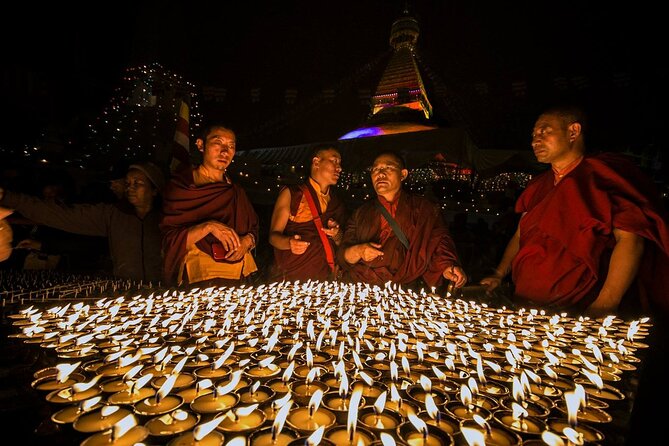
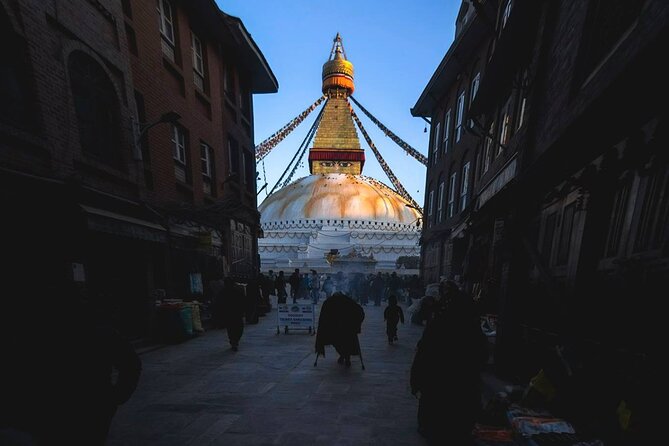
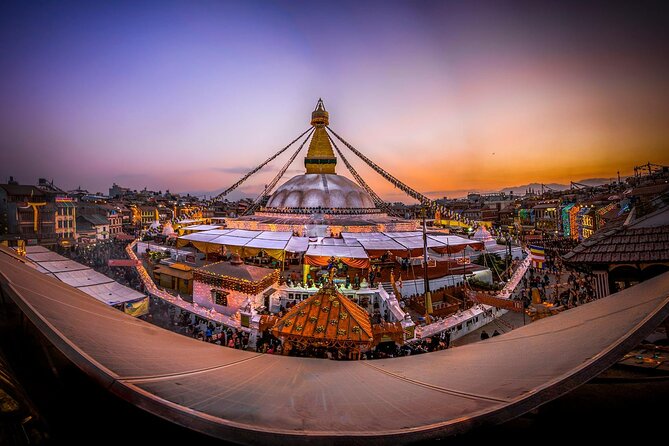
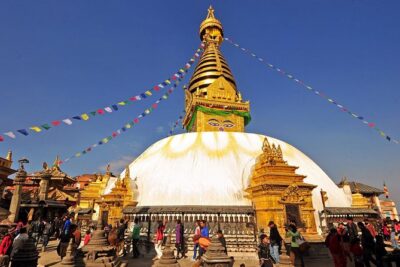
Boudhanath is the main focus of the second half. It is described as the second-largest stupa of its type in the world and is strongly associated with Tibetan, or Vajrayana, Buddhism.
The tour spends about 45 minutes here. That is the longest single stop, and it needs the time. The stupa is not just a monument to look at from one angle. It is a place where people walk, pray, turn prayer wheels, study, shop, eat, and meet.
Your guide introduces the basics of Buddhism, including the Four Noble Truths and the Eightfold Path. You also learn about prayer flags and the five elements. These subjects can seem abstract when read in a guidebook, but they become easier to follow when tied to the objects and rituals around the stupa.
This is where a guide earns the fee. You may recognize painted eyes, colored flags, spinning wheels, and monastery courtyards, but recognition is not the same as understanding. A clear explanation helps you see how these objects connect to Buddhist practice.
Boudhanath is also a good place to notice the shared religious rhythm of Kathmandu. The tour’s central theme is not that Hinduism and Buddhism are identical. It is that both are active parts of Nepali life and often exist close together. The guide also explains how food and local culture reflect this religious mix.
The drawback is that admission costs extra. The Boudhanath entrance fee is listed at about 400 Nepalese rupees, or roughly $4, and should be paid in cash. Bring small notes if possible. The exact conversion can change, but the practical point is simple: the advertised tour price is not the full outlay.
Guru Lhakhang and the thangka school
The next stop is Guru Lhakhang Monastery, where you spend about 10 minutes. Here, the guide explains what a typical Buddhist monastery looks like and discusses Guru Padmasambhava and Dharma Chakra Pariwartana.
Ten minutes is short, so this is an introductory stop. You should not expect a long meditation session or an extended monastic visit. Its purpose is to give you another look at Buddhist practice beyond the main stupa.
The final stop is the Boudha Stupa Thangka Center, listed at about 15 minutes. You learn about thangka painting, mandalas, and the basics of healing bowls.
This is a practical ending because it brings Buddhist ideas into art and craft. Mandalas are not simply decorative patterns, and thangka paintings require careful design and spiritual meaning. The center gives you a way to connect the teachings discussed at the stupa with an object made for study, practice, and devotion.
The visit ends at the Boudhanath Gate. You are free to continue exploring the area afterward or make your way back to your accommodation. That open ending is useful. You do not have to rush away just because the guided portion is over.
Timing, fees, and the real value of $15
The tour lasts about three hours and costs $15 per person. Add approximately $9 for Pashupatinath and $4 for Boudhanath, bringing the listed total to about $28 before any personal spending.
At first glance, the extra fees may make the tour look less inexpensive than the headline price suggests. Even so, the value is good if you want explanations rather than a simple route between two famous sites. A private guide can help you understand rituals that are difficult to interpret on your own, especially at Aryaghat and around the Boudhanath stupa.
The tour includes an English-speaking guide but does not list transport, meals, or hotel pickup as included. You begin at a public bus stop and finish at Boudhanath, so plan your own way to the starting point and onward from the end.
The schedule adds up to roughly three hours, but sacred sites do not always run like a clock. One particularly useful feature is the guide’s flexibility. Santosh adjusted timing for a participant who wanted to see the aarati ceremony, a Hindu evening prayer ritual. If a special ceremony matters to you, ask about timing when you book, but do not assume every event will be available on every date.
The outing is rated for most people who can participate and allows service animals. It is near public transportation. No special physical requirements are stated, so ask the provider directly if you have mobility concerns or need a slower pace.
Who will get the most from this experience
I would choose this tour if you want a first clear introduction to Hinduism and Buddhism in Nepal. It suits you especially well if you enjoy asking questions, care about cultural meaning, and prefer a small group to a large city tour.
It is also a good match for a short stay in Kathmandu. In three hours, you see two major religious centers and several smaller sites without giving up an entire day.
You may want a different plan if your priority is private access inside the main Pashupatinath temple, long photography sessions, or a relaxed schedule with no walking between stops. Non-Hindus cannot enter the main temple, and the itinerary covers many places in a limited time.
The guide makes the largest difference. Santosh is the name most closely associated with this experience and is praised for being patient, attentive, and flexible. If another guide is assigned, the quality may depend on that person’s ability to explain complex religious ideas clearly.
The experience has free cancellation up to 24 hours before the start time. Canceling or changing within 24 hours does not qualify for a refund.
Should you book Pashupatinath and Boudhanath?
Book it if you want meaning behind the monuments. The tour’s best feature is the explanation of Hindu rites, Buddhist teachings, symbols, and local customs, all delivered in a small group.
Before booking, budget for the extra entrance fees and remember that the main Pashupatinath shrine is for Hindus only. If that suits your expectations, this is a well-priced way to make sense of two of Kathmandu’s most important religious sites in one morning or afternoon.
FAQ
How long does the Pashupatinath and Boudhanath tour last?
The tour lasts approximately three hours.
What is the maximum group size?
The group is limited to a maximum of five people.
What is included in the tour price?
An English-speaking guide is included.
Are entrance fees included?
No. Pashupatinath costs about 1,000 Nepalese rupees, or approximately $9, and Boudhanath costs about 400 Nepalese rupees, or approximately $4. Both fees are paid in cash at the entrance.
Can non-Hindus enter the main Pashupatinath temple?
No. Only Hindus are allowed inside the main temple. The route instead continues toward the Aryaghat cremation area and other parts of the complex.
Where does the tour begin?
It begins at Gaushala Bus Stop, P84V+VR2, Ring Road, Kathmandu 44600, Nepal.
Where does the tour end?
The tour ends at the Boudhanath Gate. You can continue exploring around Boudhanath or return to your accommodation.
Can the schedule accommodate the aarati ceremony?
The schedule has been adjusted for an aarati ceremony before, so you can ask about timing when booking. Availability depends on the ceremony schedule and the tour timing.
What is the cancellation policy?
You can cancel for a full refund up to 24 hours before the experience begins. Cancellations or changes made within 24 hours are not refunded or accepted.
Just added in Kathmandu
- Traditional Momo Making Class★ 5.0 · 10 reviews
- Women Empowerment Project(Nepali cooking class & jewelry workshop★ 5.0 · 15 reviews
- Kathmandu 2 Nights 3 Days Chitwan Jungle Safari Tour★ 5.0 · 9 reviews
- Kathmandu to Pokhara Premium sofa bus ticket★ 4.0 · 17 reviews
- Walking tour of Kathmandu with awesome local guides★ 5.0 · 4 reviews
- Wildlife Adventure in Chitwan Nepal★ 4.0 · 4 reviews
- Regular Yoga for all levels of practitioners in Kathmandu★ 5.0 · 4 reviews
- Kathmandu Street Food Walking Tour – Eat Like a Local★ 5.0 · 3 reviews
Kathmandu UNESCO Heritage Tours, compared.
Private Kathmandu Sightseeing Tour | UNESCO World Heritage sites
Read our review →
Full Day 7 UNESCO Tour with Lunch – Private/Group
Read our review →
Private Bhaktapur and Nagarkot Day Tour From Kathmandu
Read our review →
Kathmandu Spiritual Sites: Bodhnath & Pashupatinath Tour
Read our review →
Day Trip to Bhaktapur and Panauti from Kathmandu
Read our review →
Browse the lists this tour appears in