
Reviewed · ANNAPURNA BASE CAMP TREKS
Pokhara: 7-Day Annapurna Base Camp Trek & Natural Hot Spring
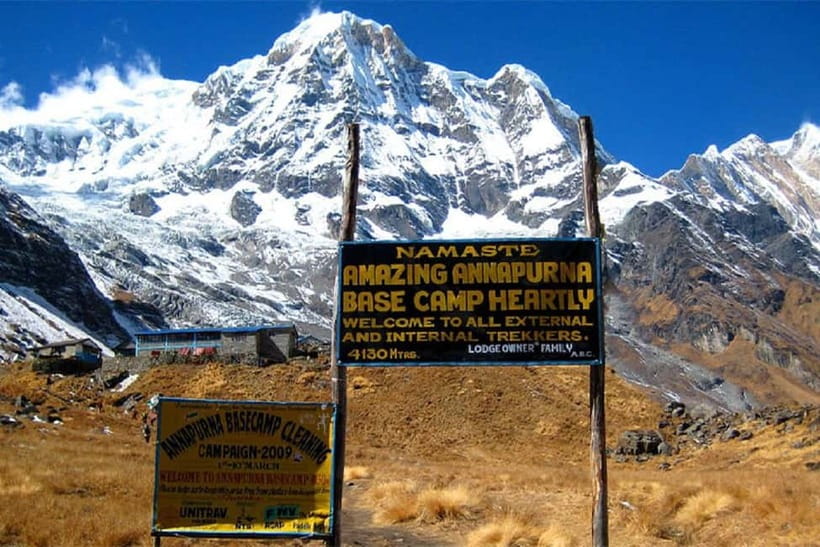
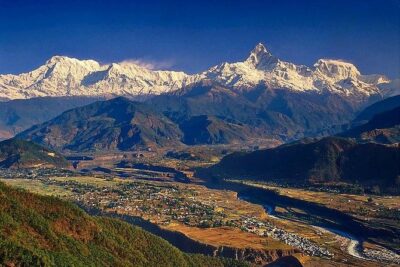
Annapurna Base Camp is the prize here, but the real pleasure is the changing route: Gurung villages, stone steps, rhododendron forests, river valleys, and finally a high mountain bowl ringed by snow peaks. You reach 4,130 meters in seven days, then descend to a hot spring at Jhinu Danda.
I like the efficient route and the personal feel of a private group. I also like that the price includes permits, a government-certified guide, tea house accommodation, guide expenses, and some trekking gear. The main caution is the pace: several days involve six or seven hours of walking, and the rapid climb to base camp demands sensible pacing and a reasonable fitness level.
Key points before you book
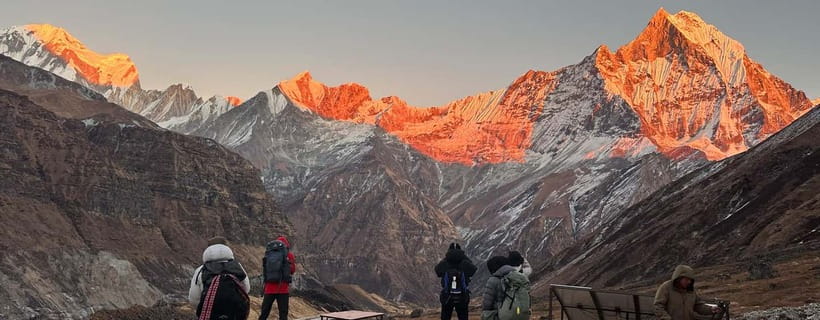
- Annapurna Base Camp at 4,130 meters: You enter the Annapurna Sanctuary and finish beneath some of the Himalayas’ most famous peaks.
- A changing trail every day: Expect villages, terraced fields, bamboo and rhododendron forests, waterfalls, river crossings, and alpine terrain.
- A private seven-day schedule: Your guide can adjust the day’s progress within the available tea house network, as long as safety and accommodation allow.
- Hot springs at Jhinu Danda: The natural soak gives your legs a welcome break after the high-altitude section.
- Strong guide support: Guides such as Chandra, Chaundra, Bishnu Giri, Anil, Jeet Bahadur, Laxman, and Sun have led this route.
- Good package value at $181: Permits, transport, guide costs, tea house lodging, and selected meals are covered, but a porter, insurance, snacks, and rescue costs are extra.
Why this seven-day route works from Pokhara
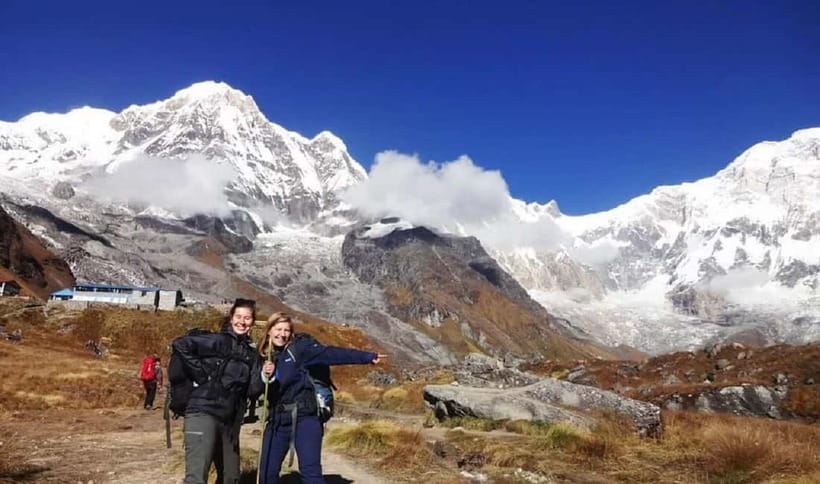
This trek gives you a direct taste of the Annapurna region without asking you to spend two or three weeks in the mountains. You leave from Pokhara, walk through villages and forests, reach the high sanctuary, and return by a different route through Jhinu Danda.
I like the balance. You get real mountain walking rather than a simple viewpoint excursion, yet the route remains short enough to fit into a wider Nepal trip. The cultural side matters too. Ghandruk and Chomrong are not just sleeping stops. They are working mountain communities, and the tea houses give you a chance to see how trekking supports local life.
The route is demanding. The walking times range from four to seven hours, and the trail includes long stone staircases. You should be comfortable walking for much of the day before booking. The altitude gain also matters. Day one sleeps at 1,940 meters, while day four ends at 4,130 meters, so you need to pay attention to your guide’s advice and report any health problems early.
The private group format is useful here. You are not tied to the pace of a large mixed party, and guides have adjusted overnight stops according to progress. That flexibility can help if a day feels harder than expected, though it does not remove the need for a steady pace.
Other Annapurna routes from Pokhara:
- Kathmandu/Pokhara: 5-Day Annapurna Base Camp (ABC) Trek
★ 4.9 · 72 reviews - Private 7 – Day Annapurna Base Camp Trekking
★ 5.0 · 50 reviews - Annapurna Base Camp Trek (8 days)
★ 5.0 · 45 reviews
Day 1: Pokhara to Ghandruk at 1,940 meters
The first day begins with a roughly one-hour drive from Pokhara toward Nayapool, followed by five to six hours of walking to Ghandruk. Pickup can be arranged from a Lakeside hotel or Pokhara International Airport, which keeps the morning simple if you have just arrived.
Ghandruk is one of the most appealing overnight stops on the route. The trail follows the Modi Khola through villages and forest before reaching this mountain settlement, where the setting opens toward the Annapurna range. The village is also a good first introduction to Gurung culture and the tea house rhythm that shapes the trek.
Do not treat this as an easy warm-up. The drive and walk together make a full day, and the trail can include uneven ground and steady climbs. If you are carrying your own pack, keep it light. A porter can be arranged for $20 per day, but that cost is separate.
Day 2: Stone steps and mountain views to Chomrong
The five to six-hour walk from Ghandruk to Chomrong reaches about 2,170 meters. This is a day of climbing and descending on stone steps, with forest sections and broad views toward Annapurna and Machhapuchhre, also called Fishtail.
Chomrong is an important point on the route because it marks the approach to the sanctuary. The village sits above the Modi Khola valley, and the views become more dramatic as the trail gains height. I would use this evening to check your clothing, water, headlamp, and sleeping bag before the route becomes more remote and colder.
The steps are the issue. They are scenic, but repetitive, and tired legs can make them feel longer than the map suggests. Trekking poles are included if needed, and they can be especially helpful on descents and on wet sections.
Day 3: Bamboo forest and the climb to Himalaya
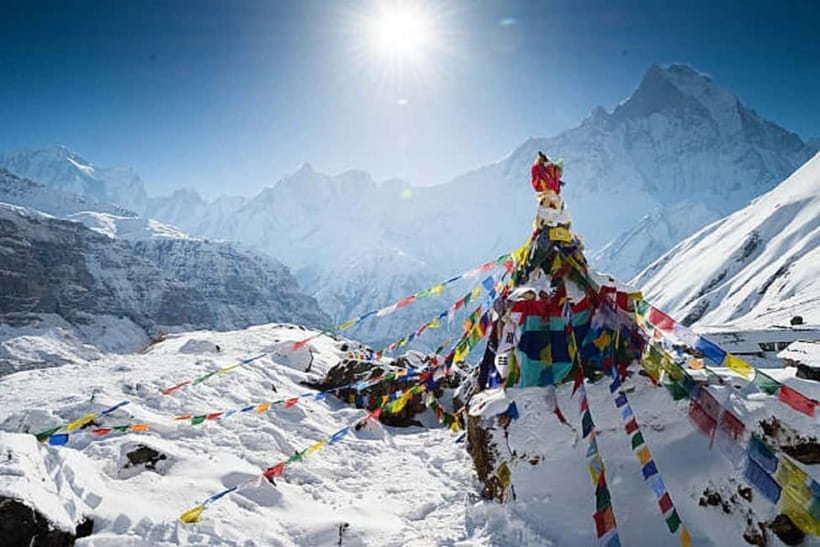
From Chomrong, you walk for six to seven hours to Himalaya at 2,920 meters. The route first drops toward the river, then climbs through bamboo and rhododendron forest.
This is one of the most varied parts of the trek. The thick forest gives shade and a close-up view of the vegetation changing with altitude. You also pass waterfalls and narrow mountain valleys, so the day feels less open than the approach from Ghandruk and Chomrong.
The name Himalaya refers to the overnight settlement, not a high summit. It is a practical stopping point before the sanctuary. By now, the altitude and long walking days may be noticeable. Eat properly, drink regularly, and tell your guide if you develop a headache, unusual fatigue, or breathing trouble. The guide is responsible for first aid and safety support, but you still need to speak up.
A few more things to do in Pokhara worth a look
- Poon hill Trek 3 days
★ 5.0 · 176 reviews - Trekking in Annapurna/Langtang/Everest/Upper Mustang regions
★ 5.0 · 161 reviews - Pokhara: 4-Day Ghorepani, Poonhill & Ghandruk Mountain Trek
★ 5.0 · 132 reviews - Ghorepani – Poon Hill Trek 3N-4D
★ 5.0 · 125 reviews
Day 4: Machhapuchhre Base Camp to Annapurna Base Camp
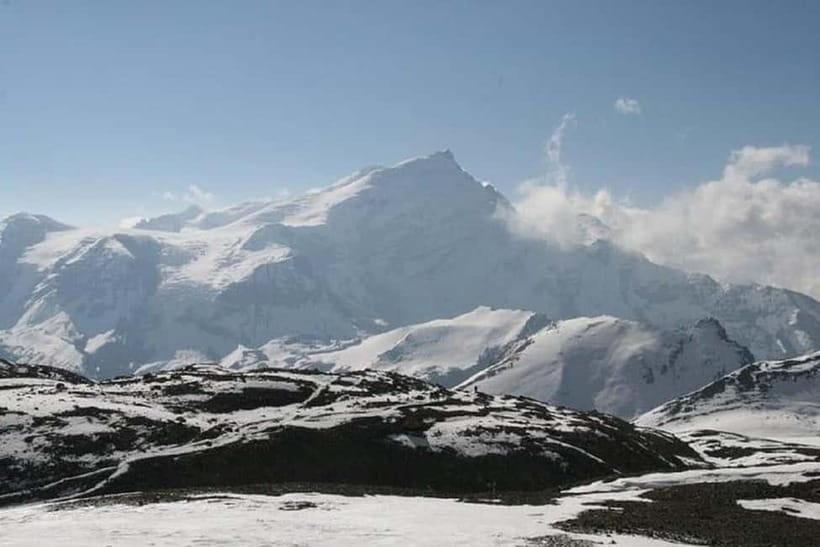
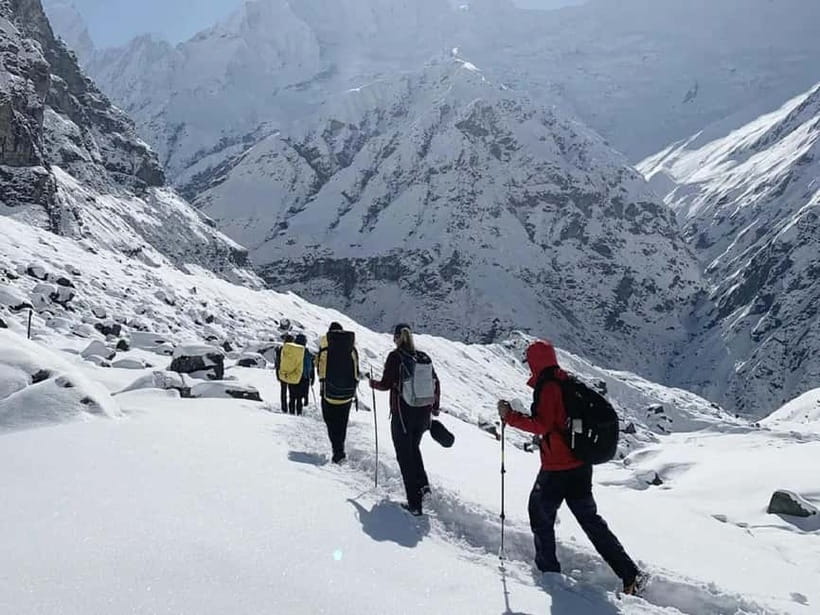
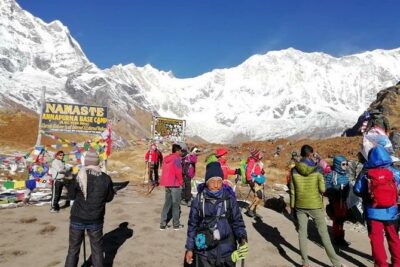
This is the biggest day and the central reason to book the trek. You walk six to seven hours from Himalaya through the alpine zone, pass Machhapuchhre Base Camp, and continue to Annapurna Base Camp at 4,130 meters.
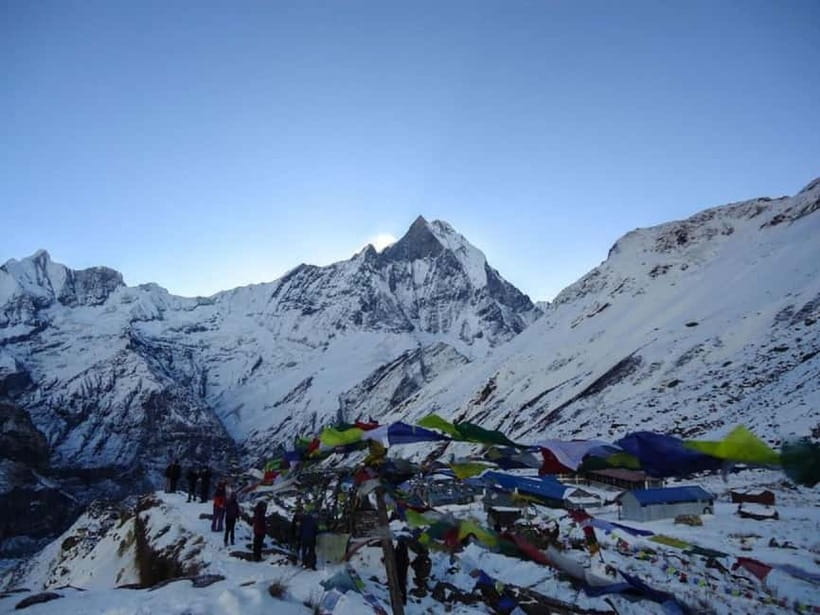
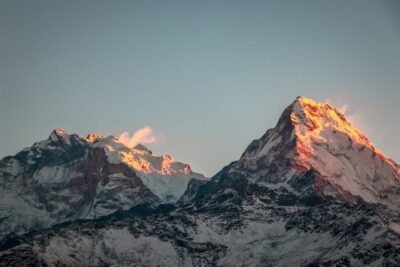
The forest thins as you enter the Annapurna Sanctuary. The trail leads into a glacier valley surrounded by enormous peaks, with the mountain walls becoming more imposing as you go. At base camp, the reward is not only the destination marker. It is the sense of being inside a natural amphitheater, with Annapurna I and Machhapuchhre among the major peaks around you.
The altitude makes this day serious. At 4,130 meters, cold weather and thin air can turn a manageable walk into a hard one. You need warm clothing, gloves, a jacket, sunglasses, sunscreen, and proper hiking shoes. A sleeping bag is available as trekking gear if needed, but confirm the arrangement when you book.
Clear conditions can produce excellent sunrise and sunset views, though mountain weather is never guaranteed. The most practical advice is to keep your expectations flexible and let your guide set the pace. Reaching base camp safely matters more than arriving early.
Day 5: A long descent to Bamboo
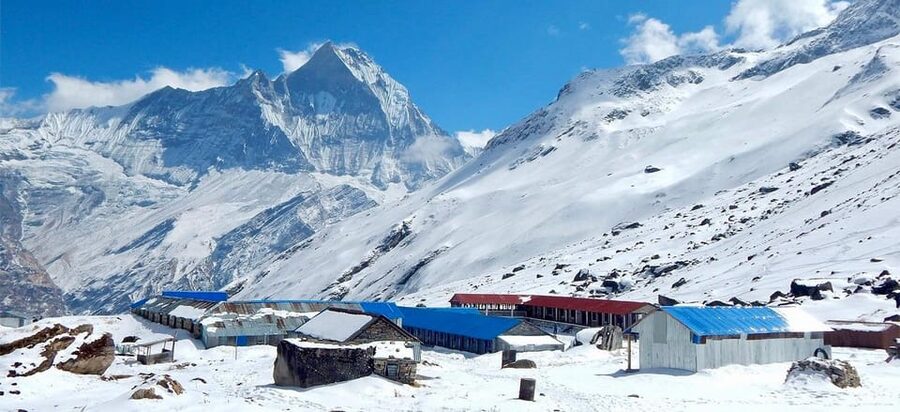
The return begins with six to seven hours of walking down to Bamboo at 2,335 meters. The route retraces part of the valley, but the experience changes when you look back toward the mountains from a lower angle.
Descending is not automatically easy. Your lungs may appreciate the lower altitude, but your knees will feel the repeated steps. Trekking poles, careful foot placement, and a controlled pace help. Waterfalls, forest, and backward views of the Annapurna range keep the day interesting.
Bamboo is a simple tea house stop rather than a grand finish. That is part of the appeal. You are back in the forest, closer to the river, and beginning the transition from high mountain walking to the warmer lower valley.
Day 6: Bamboo to Jhinu Danda and the hot spring
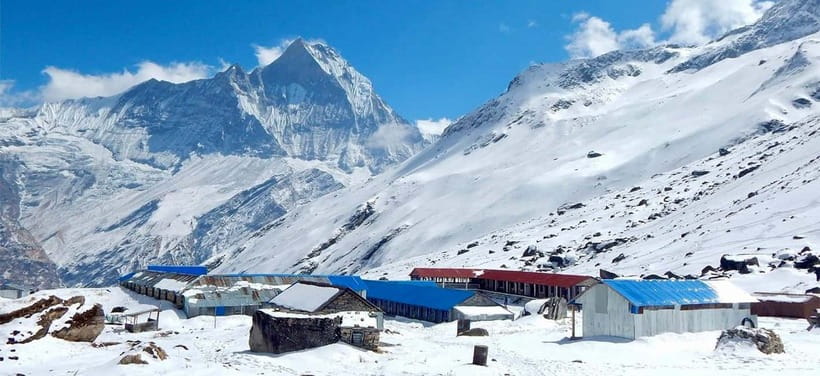
The six-hour walk from Bamboo to Jhinu Danda drops to about 1,610 meters. You continue toward the riverside, then finish the day with access to the natural hot springs.
This is a smart ending to the hard section. After the high altitude and long descent, a warm soak gives your legs a chance to relax. Bring a towel, change of clothes, and suitable footwear for the visit. The hot spring is a natural facility, not a polished spa, so keep your expectations practical.
Jhinu Danda also changes the mood of the trek. You are lower, warmer, and closer to the road network. Still, the walking is not over, and the final day remains part of the scheduled route.
Day 7: Return to Nayapool and Pokhara
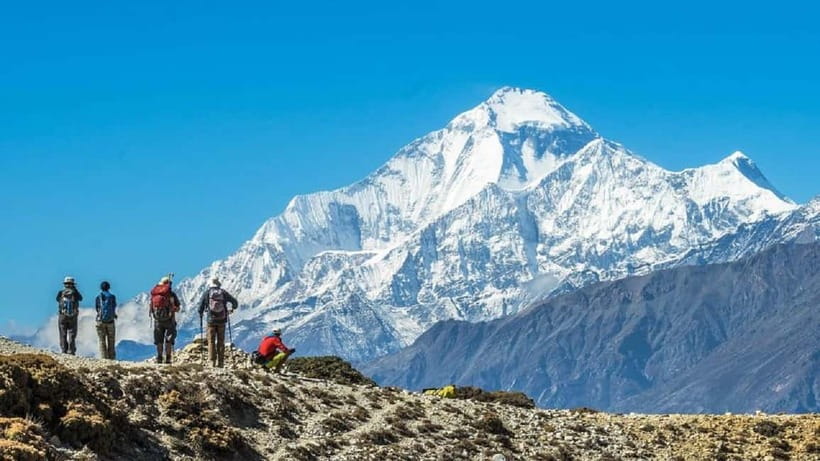
The final day includes four to five hours of walking to Nayapool and about an hour of driving back to Pokhara. Drop-off options include Lakeside hotels, Hotel Temple Tree, Hotel Barahi, Middle Path Spa and Beauty Salon, Pokhara International Airport, and Sarangkot.
One useful point is that the approach and return can include road walking. Dusty stretches may not be the most attractive part of the experience, and one person specifically suggested using a car or jeep for parts of the first and final days. Ask about current road and transport arrangements before departure if you want to limit walking beside traffic.
Even so, the return gives you a satisfying sense of distance covered. In one week, you move from Pokhara’s lower setting to a 4,130-meter sanctuary and back to the roadhead.
Guides, tea houses, and the level of comfort
The guide can make or break a trek, especially when the schedule is tight. The available guide team has included Chandra or Chaundra, Bishnu Giri, Anil, Jeet Bahadur, Laxman, and Sun. Their roles go beyond leading the path. They handle permits, help with food and accommodation, explain the mountains and local culture, and watch your pace and health.
Bishnu Giri has more than 20 years of guiding experience, while Chandra has been praised for clear English, mountain information, and flexibility around guest house stops. Anil has helped with both walking and meals, and Jeet Bahadur has been described as cheerful and good at taking photos. You cannot assume a specific guide unless the company confirms one, but you can request a preferred guide when booking.
Tea house accommodation is simple. Expect a lodge-style room and shared facilities rather than hotel comfort. Meals are included only with some booking options, so check the selected package carefully. Snacks and drinks are personal expenses, and cash is important because card payment cannot be assumed along the route.
The package includes guide insurance, salary, meals, lodging, transport, and equipment. It also includes a first aid kit and luggage storage in Pokhara, so you can leave nonessential bags behind while trekking.
What the $181 price really covers
At $181 per person, this is an attractive price for a private seven-day trek if your chosen option includes the advertised meals. The value comes from the items that can quickly add up independently: trekking permits, TIMS fees, transport between Pokhara and the trailhead, guide costs, tea house lodging, and guide equipment.
You should compare the exact meal arrangement before booking. Personal food, drinks, snacks, and a porter are not included. A porter costs $20 per day, and travel insurance is mandatory. Emergency rescue services are also separate, so insurance with trekking and high-altitude coverage is essential.
The price is strongest for someone who wants a managed trek without paying for luxury. It is not a premium lodge holiday, and the accommodation is described as simple. For a private group with a guide and paperwork handled, the cost is reasonable, provided you budget for the extras.
Best seasons, packing, and preparation
The experience has been completed in January, April, May, July, September, November, and other months, but conditions can vary sharply by season. January can mean quieter trails and tea houses, along with colder conditions at altitude. Clear winter weather may produce excellent views, but you need serious warm layers.
Pack hiking shoes, warm clothes, rain gear, gloves, a hat, sunglasses, sunscreen, hiking trousers, a towel, a change of clothes, a flashlight, a power bank, and cash. A sleeping bag and trekking poles can be provided if needed, but confirm availability. A passport copy must be submitted at least one day before the trek so permits can be obtained.
You do not need to be an elite athlete, but you should be healthy and comfortable with long uphill and downhill walks. The hardest days involve six to seven hours, and the move from 2,920 meters to base camp is fast. Build some walking into your preparation, and do not hide symptoms from your guide.
Who should book this trek
I would choose this experience if you want a short, guided Himalayan trek with a clear goal and a rewarding finish. It suits people who value mountain scenery, village contact, basic tea house life, and a private group more than hotel comfort.
It is less suitable if you dislike long walking days, stone steps, simple accommodation, cold nights, or uncertain mountain weather. It is also not the right choice if you want a leisurely schedule with several spare days for delays.
The combination of base camp and hot spring is unusually practical. You get the demanding high section, then a lower, warmer stop before the return to Pokhara. That shape makes the trip feel like a complete adventure rather than a walk to a viewpoint and back.
Should you book the Annapurna Base Camp trek?
Book it if you want to reach Annapurna Base Camp in one well-organized week and you are prepared for real exertion. The strongest reasons are the private format, the experienced guide team, the included permits and transport, and the excellent route variety.
Before paying, confirm three things: whether meals are included in your selected option, whether a particular guide can be assigned, and how much road walking or vehicle transport is planned on days one and seven. Buy proper travel insurance, budget for snacks and a porter if needed, and arrive with suitable layers.
For fit hikers who want the Himalayas without committing to a long expedition, this is a strong-value choice. The hot spring at Jhinu Danda is a fitting final reward, but Annapurna Sanctuary remains the main event.
FAQ
How long is the Annapurna Base Camp trek?
The trek lasts seven days, including transportation from Pokhara, the walk to Annapurna Base Camp, the return through Jhinu Danda, and transportation back to Pokhara.
How high is Annapurna Base Camp?
Annapurna Base Camp is at 4,130 meters, or 13,550 feet.
Is transportation from Pokhara included?
Round-trip transportation between your hotel or Pokhara International Airport and the trekking start point is included. The listed return transfer takes about one hour from Nayapool to Pokhara.
Are permits and TIMS fees included?
Yes. Required trekking permits, paperwork, and TIMS fees are included.
Is a porter included?
No. A porter can be arranged if needed for $20 per day.
What languages can the guide speak?
Guides are available in English, Hindi, and Nepali.
Is travel insurance required?
Yes. Travel insurance is mandatory. Emergency rescue services are available if needed, but rescue costs are not included.
More Spa & Hot Springs in Pokhara
- From Pokhara: 5-Day Annapurna Basecamp Trek with Hot Springs
★ 4.9 · 26 reviews - Pokhara: 7-Day Annapurna Base Camp Via PoonHill & Hot Spring
★ 5.0 · 6 reviews - Pkr/Kathmandu: 5-Day Annapurna Base Camp & Hot spring Trek
★ 5.0 · 6 reviews - Pokhara: Amazing 7-Day ABC Trek with Natural Hot Spring
★ 5.0 · 5 reviews
Just added in Pokhara
- Tandem Paragliding in Pokhara★ 4.8 · 8 reviews
- Seti George and Thrilling Suspension Bridge Tour at Pokhara★ 4.5 · 3 reviews
- Pokhara: Suspension Bridge Private Tour- 30 Min Village Walk★ 4.8 · 9 reviews
- Pokhara: Visit Best Seven Tourist Destination by Sharing Bus★ 3.4 · 10 reviews
- Pokhara: Sunrise Tour to Sarangkot★ 5.0 · 3 reviews
- Pokhara Sightseeing By Bus: Day Trip★ 4.6 · 7 reviews
- Pokhara Sightseeing By Bus – Day Trip★ 3.2 · 8 reviews
- Pokhara: Seti River Rafting Adventure with Hotel Pickup★ 5.0 · 5 reviews
Annapurna Base Camp Treks, compared.
Kathmandu to Annapurna Base Camp (ABC) 5-Day Trek
Read our review →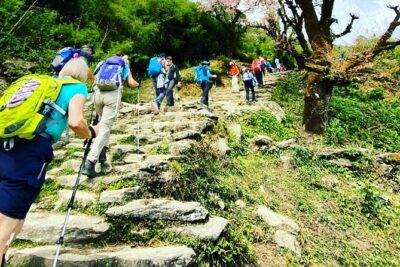
11-Day Hike Tour to Annapurna Base Camp Bliss in Kathmandu
Read our review →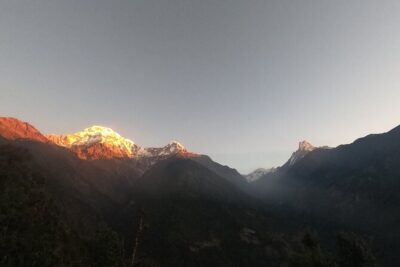
Browse the lists this tour appears in