
Reviewed · ANNAPURNA BASE CAMP TREKS
Pokhara: 7-Day Annapurna Base Camp Via PoonHill & Hot Spring
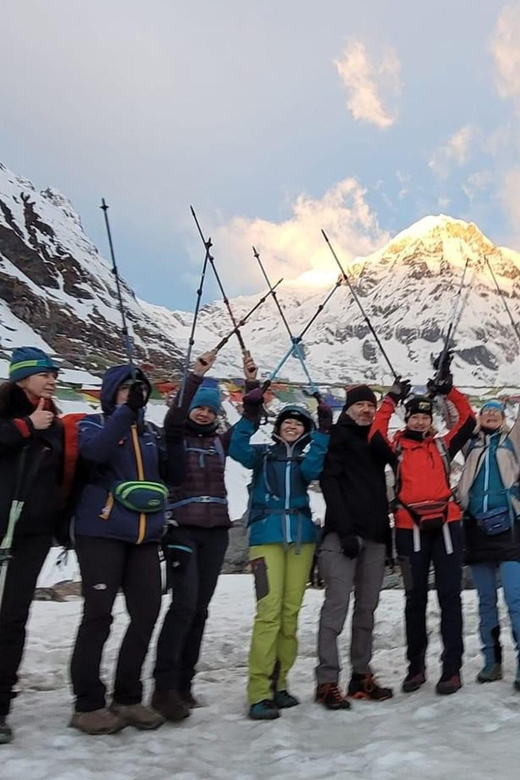
Annapurna Base Camp via Poon Hill packs two great Himalayan walks into seven days: a sunrise over the Annapurna range, then a hard climb to the mountain amphitheater at 4,130 meters. I like the route because you get both the classic Ghorepani scenery and the more serious high-altitude finish at Annapurna Base Camp.
I especially like the private-group format, which lets the guide adjust the pace, and the final soak at Jhinu Dada, a smart reward after several days on foot. The main caution is simple: this is a demanding trek, not a gentle sightseeing tour. The altitude, long walking days, steep stone paths, and limited time require decent fitness and a willingness to be uncomfortable now and then.
Key points to know before booking
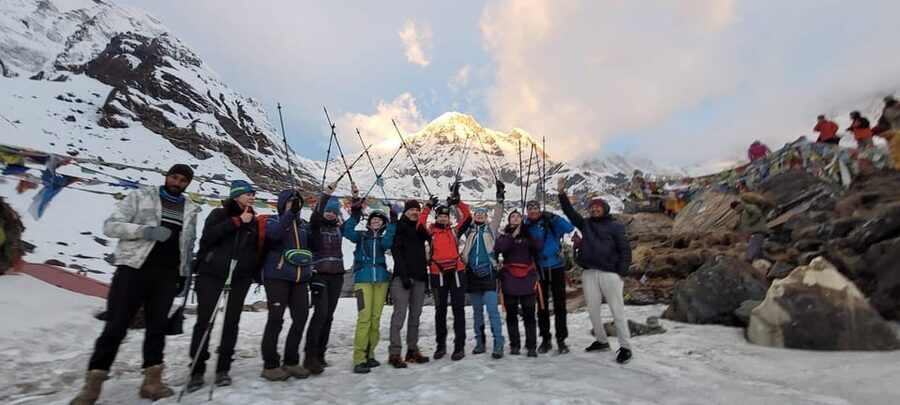
- Poon Hill sunrise at 3,210 meters: An early climb gives you a major mountain view before breakfast.
- Annapurna Base Camp at 4,130 meters: The high point is physically serious, with a long ascent from Deurali.
- Seven days from Pokhara and back: Jeep transfers reduce some road walking and keep the route compact.
- Private group with a local guide: English, Hindi, and Nepali guiding is available, with guides such as Mahesh and Prakash named in the supplied details.
- Jhinu Dada hot spring: You get about two hours to rest in the natural hot water after the descent.
- $267 per person: The price includes permits, accommodation, transport listed in the schedule, and guide costs. Meals are included for the full-package option.
Why this route works for a short Nepal visit
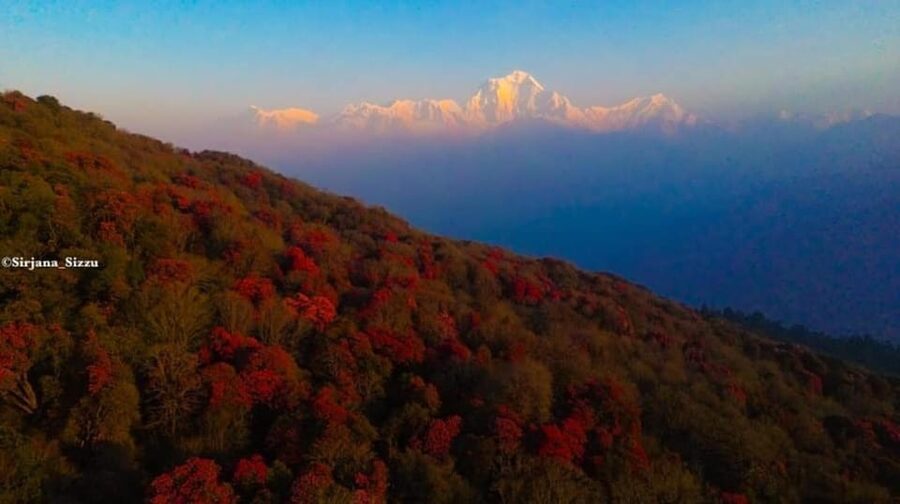
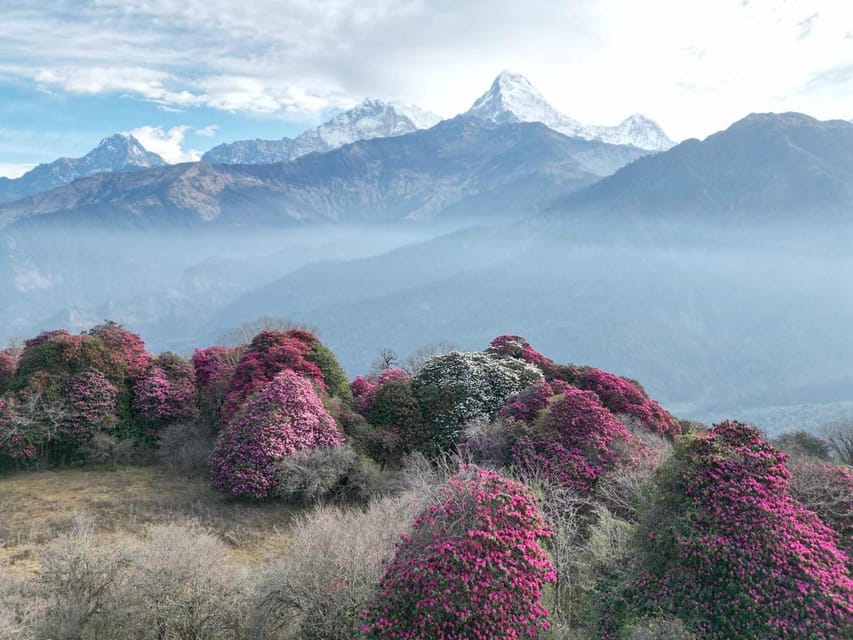
You get a lot of Annapurna in one week. The trek begins with lower mountain villages and rhododendron forest, reaches the famous Poon Hill viewpoint, then turns toward the Modi River corridor and Annapurna Base Camp. The return route finishes with a hot spring and a jeep ride back to Pokhara.
That variety is the real strength. Some shorter Himalayan trips focus on one viewpoint or one village. This one gives you sunrise, forests, river valleys, high mountain scenery, a base-camp destination, and a warm-water finish.
The tradeoff is pace. You are not lingering in each village for several nights. Several days involve five or six hours of walking, and the route gains and loses altitude quickly. The itinerary is designed for people with limited time, but it is not designed for people who want a slow, easy holiday.
The private-group setup matters here. A guide can adjust the route to your ability and expectations, as Mahesh did for one group, and can watch how you are handling the altitude. That personal attention is more useful than a large fixed group when the trail gets steep or someone needs a slower pace.
Other Annapurna routes from Pokhara:
- Kathmandu/Pokhara: 5-Day Annapurna Base Camp (ABC) Trek
★ 4.9 · 72 reviews - Private 7 – Day Annapurna Base Camp Trekking
★ 5.0 · 50 reviews - Annapurna Base Camp Trek (8 days)
★ 5.0 · 45 reviews
Day 1: Pokhara to Ulleri and Ghorepani
Your first day begins with a drive from Pokhara to Nayapul, followed by a longer jeep ride toward Ulleri. The total driving time is listed at about three hours, then you walk for roughly four hours to Ghorepani at 2,840 meters.
This opening day gives you a quick change from lakeside Pokhara to mountain villages, streams, and rhododendron forest. The jeep is a practical part of the trip. It removes some lower-route walking and helps make the seven-day schedule possible.
The walk to Ghorepani is still a proper first test. You are climbing toward nearly 2,900 meters, and the trail includes steep sections. Do not treat the vehicle transfer as a free pass. You still need comfortable shoes, water, sun protection, and a jacket that works when the air turns cool.
Ghorepani is an important overnight stop because it positions you for the early Poon Hill climb. Your accommodation is in a tea house, a basic mountain lodge where the focus is warmth, food, and sleep rather than luxury. Pack a sleeping bag, as requested for this trip, and keep your overnight essentials easy to reach.
Day 2: Poon Hill sunrise, Tadapani, and Chuile
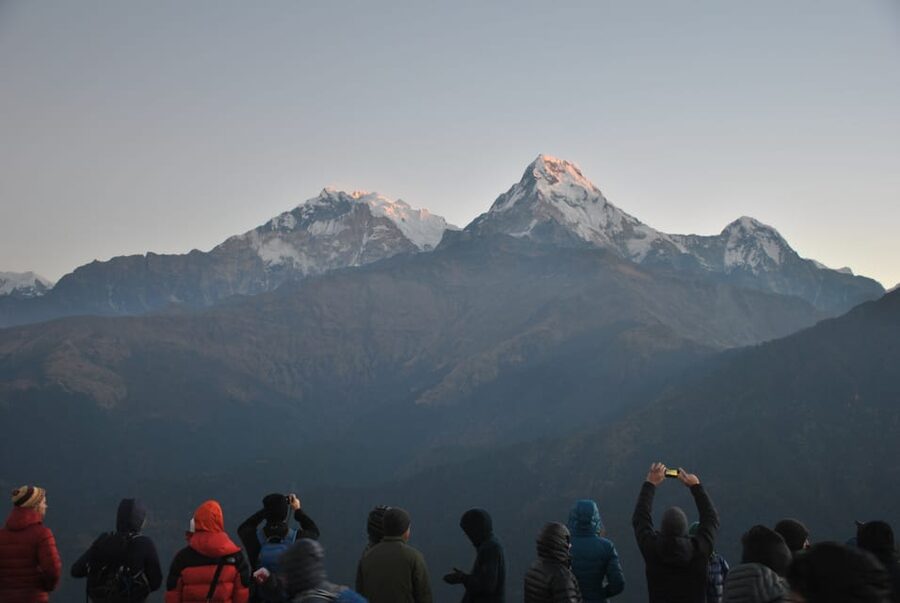
Day two starts early with the climb to Poon Hill at 3,210 meters. The reward is a sunrise view over the Annapurna range and nearby peaks. This is one of the most memorable parts of the route, but it comes with a practical cost: you will be walking uphill before breakfast.
After returning to Ghorepani for breakfast, you descend and continue toward Tadapani or Chuile. The walking time is about six hours, much of it through forest. The route changes character quickly, moving from a high viewpoint to shaded trails and village paths.
I like this day because it has a clear rhythm: a short, intense morning climb, a meal, then a longer walk through the hills. The drawback is fatigue. The Poon Hill climb is not the whole day, so you need to save energy for the trek onward.
Chuile is listed at 2,400 meters, lower than Ghorepani. That drop can feel welcome after the morning climb, although the day still involves plenty of up-and-down walking. Accommodation is in a hotel, with the exact standard depending on availability along the route.
Day 3: Chuile to Sinuwa beside the rivers
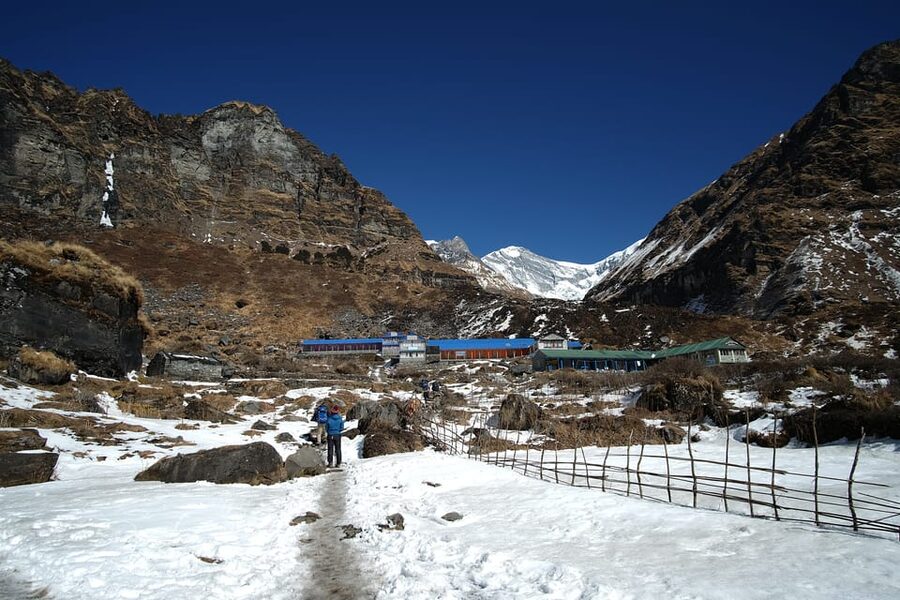
The third day takes about five hours and moves you toward the Annapurna Base Camp trail. You cross the meeting point of the Kumrung and Modi Rivers, then continue with the watercourse as a companion.
This is a quieter stage than Poon Hill, but it has its own appeal. The route connects the foothill villages with the deeper Modi River valley, and the change in scenery helps you feel that you are heading into the main Annapurna trekking corridor.
Sinuwa sits at 2,170 meters, so this is not a steady climb toward the highest point. The route rises and falls, and the descent from Chuile does not mean the next days will be easy. In fact, lower altitude can sometimes tempt you to walk too fast. Keep a steady pace and let your guide set the rhythm.
You spend the night in Sinuwa before the more sustained climb to Deurali. This is a useful break in the schedule because you are still gaining access to higher country without rushing directly from Ghorepani to base camp.
A few more things to do in Pokhara worth a look
- From Pokhara: 5-Day Annapurna Basecamp Trek with Hot Springs
★ 4.9 · 26 reviews - Pokhara: 7-Day Annapurna Base Camp Trek & Natural Hot Spring
★ 5.0 · 11 reviews - Pkr/Kathmandu: 5-Day Annapurna Base Camp & Hot spring Trek
★ 5.0 · 6 reviews - Pokhara: Amazing 7-Day ABC Trek with Natural Hot Spring
★ 5.0 · 5 reviews
Day 4: Sinuwa to Deurali through bamboo and rhododendron
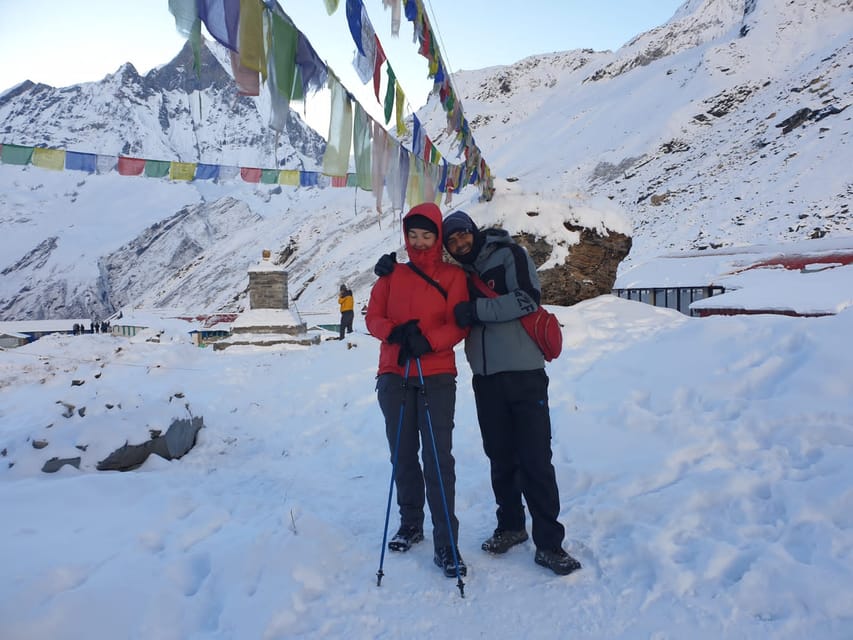
The walk from Sinuwa to Deurali takes about six hours and reaches 3,200 meters. You pass through bamboo and rhododendron forest, continuing toward Dovan before climbing onward to Deurali.
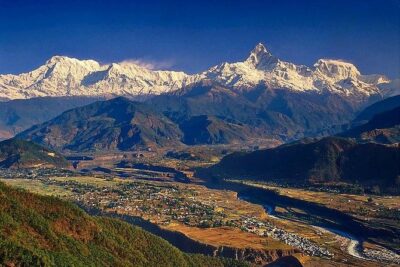
This is where the trek begins to feel more serious. The forest remains attractive, but you are now gaining altitude and moving toward more exposed mountain scenery. Views of Annapurna and Machhapuchhre are part of the day, giving you a preview of the high country ahead.
Dovan is a useful way point on this section. From there, the route continues to Deurali, where the altitude is high enough for you to notice changes in breathing and energy. Walk slowly, drink regularly, and tell your guide if you feel unwell. A private trip makes that conversation easier, but you still need to speak up.
The six-hour timing is an estimate, not a promise. Your pace, rest stops, weather, and trail conditions can change the day. I would not plan important evening commitments in Pokhara or elsewhere during the trek.
Day 5: Deurali to Annapurna Base Camp at 4,130 meters
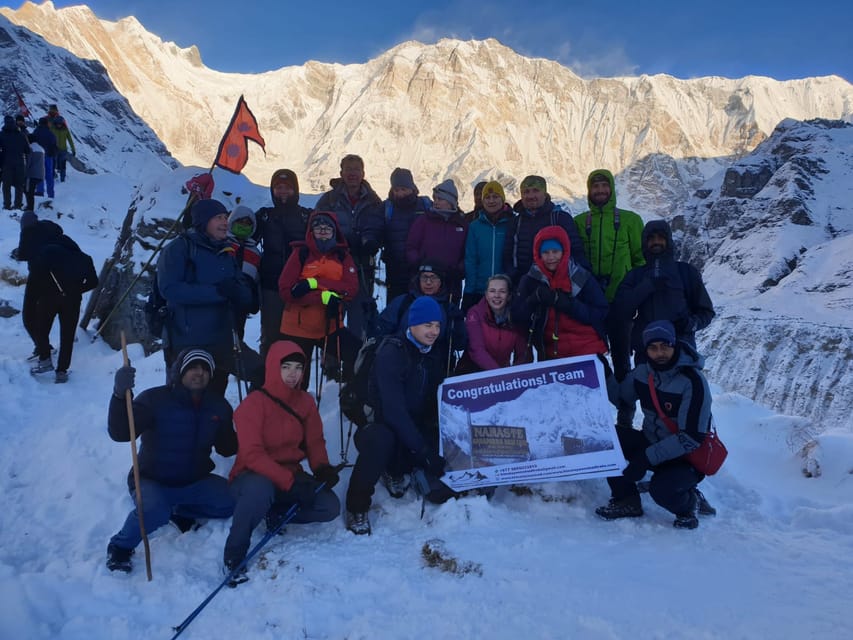
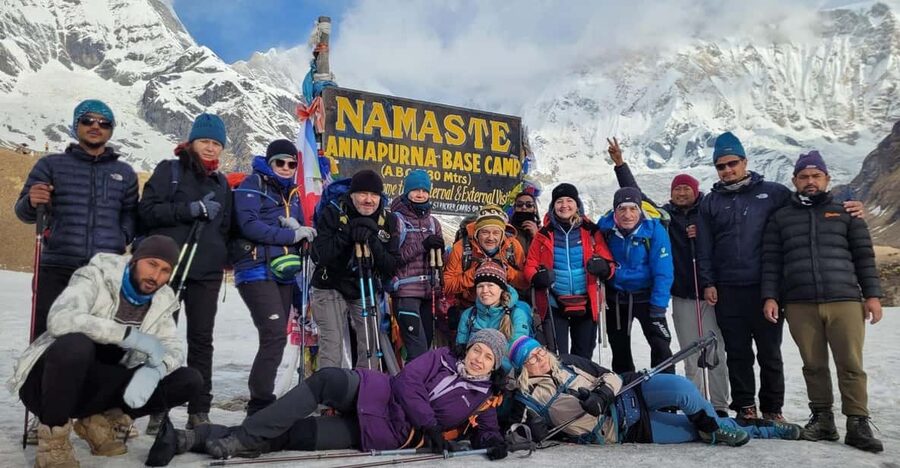
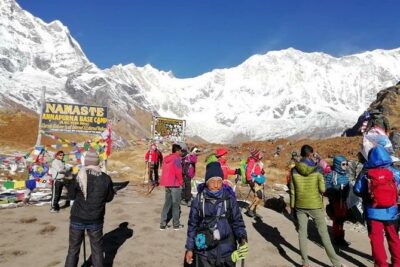
This is the main goal: about six hours from Deurali to Annapurna Base Camp. At 4,130 meters, ABC sits high enough to make the achievement feel earned.
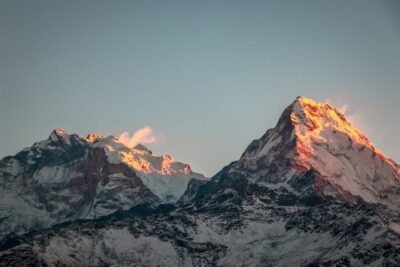
The approach leads into the dramatic mountain amphitheater, with Annapurna and Machhapuchhre among the major peaks around you. Snow-capped summits and glaciers form the scenery described for this section, and the enclosed mountain setting is very different from the forested trails below.
The route is demanding because you are walking uphill at altitude. Even a fit person may move slowly here. The guide’s role is especially valuable on this day, not to make the climb easy, but to help you keep a safe pace and manage the schedule.
Expect a basic overnight stay at the base camp. The setting is the reason to go, not hotel comfort. Bring your jacket, sleeping bag, sunglasses, and sunscreen. Bright light and cold conditions can make the high camp feel tougher than the walking distance alone suggests.
You should also keep expectations sensible. Mountain weather can affect visibility, so the best views are never guaranteed. The route still has value on a cloudy day, but clear conditions make the base-camp arrival far more rewarding.
Day 6: The long descent from ABC to Bamboo
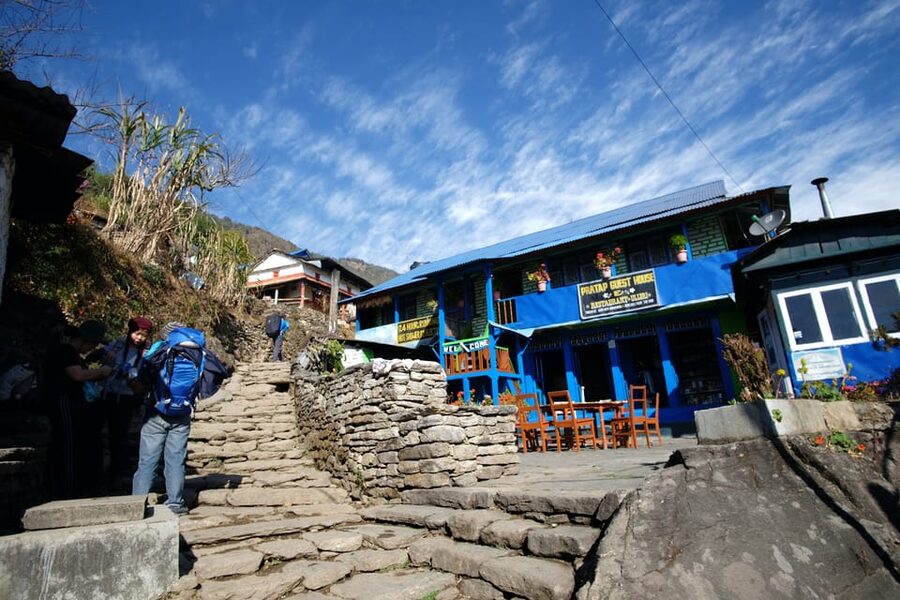
After the high point, you retrace the route from Annapurna Base Camp to Bamboo. The walk takes about six hours and drops to around 2,300 meters.
The descent may look easier on paper, but it can be hard on knees and tired legs. Stone steps and uneven paths require attention, especially after the effort of reaching ABC. Trekking poles would be useful, although the supplied equipment list simply advises bringing suitable trekking gear.
This day gives you a second look at the mountain corridor. You may notice details missed during the climb, including river sounds, forest changes, and different views along the same trail. It is also a good day to focus on recovery, eating well and keeping your pace controlled.
Bamboo is a practical overnight stop before the final descent. You are out of the highest zone, but the trek is not finished yet. Save enough energy for the walk to Jhinu Dada and the transfer back to Pokhara.
Day 7: Bamboo to Jhinu Dada and the hot spring
The final walking day takes about five hours, including the descent from Bamboo to Jhinu Dada at 1,600 meters. The hot spring is the payoff. You get about two hours to soak and rest your tired muscles in the natural hot water.
That stop adds something useful to the trip. Many mountain routes finish with a vehicle ride and a tired airport transfer. Here, you get time to sit still, warm up, and let the last week catch up with you.
After the spring, you trek for about 30 minutes to Samrung, where you board a jeep. The drive back to Lakeside Pokhara takes about two and a half hours. The transfer is included in the stated schedule, but road times in the mountains can vary, so I would avoid booking a tight onward connection that same day.
The hot spring should not be treated as a spa resort. Facilities are part of a mountain stop, and the appeal is the setting and relief after the trail. Bring modest swimwear and a small towel if those are not supplied, though personal packing details beyond the listed gear are your responsibility.
What the $267 price really covers
At $267 per person, this trek offers solid value if you use the included services. The package covers an authorized English-speaking or local guide, permits, required paperwork, the Trekkers’ Information Management System fee, accommodation during the trek, government taxes, and the scheduled four-wheel-drive jeep transport.
Guide expenses are also covered, including the guide’s meals, lodging, salary, equipment, insurance, and transportation. That matters because guide costs can otherwise add up quickly on a seven-day mountain trip.
Meals are included for the full-package option, with breakfast, lunch, and dinner during the trek. Check which package you are selecting before paying, since the information specifies meals for the Full Package only. Drinks, bottled or boiled water, showers, laundry, phone calls, bar bills, battery charging, and other personal costs are not included.
A porter is available for an additional charge. I recommend deciding early if you want one, particularly because carrying a full pack while climbing to 4,130 meters can change the difficulty of the trek. The porter cost is separate, so include it in your real budget.
The price does not cover travel insurance, rescue insurance, international flights, a Nepalese visa, sightseeing entrance fees, or extra nights in Pokhara caused by an early arrival, late departure, or an unscheduled return. Insurance is not a small detail on a high-altitude trek. Arrange suitable travel and rescue cover before leaving home.
Guides, language, and the human side of the trek
You can request guiding in English, Hindi, or Nepali, and the group is private. Specific guides praised in the supplied information include Mahesh and Prakash. Mahesh was described as adjusting the route to ability and expectations, while Prakash was praised for his care and company on the trail.
Porters Bishal, also spelled Bisal in one account, and Avinesh were named as part of one trekking team. Their work matters, particularly if you choose to carry less of your own luggage. Confirm names and porter arrangements with the company before departure, since staffing can change.
The most consistent strength is personal care. This is not just a permit-and-bed arrangement. The guide is expected to answer questions, manage the pace, and help you enjoy the route. Still, you should remain an active participant. Tell the guide about pain, exhaustion, or altitude symptoms early rather than trying to prove toughness.
Who should book this Annapurna trek?
I would choose this trip if you have limited time and want a high number of highlights in one route. It suits an active person who wants village walking, sunrise views, a base-camp goal, and a hot spring without organizing permits, transport, and mountain lodging alone.
It is also a good match for people who value a private guide. The route has fixed destinations, but a private group gives the day more flexibility than a large tour with one pace for everyone.
I would think twice if you dislike long walking days, steep stone trails, basic tea-house accommodation, or early starts. The Poon Hill sunrise requires a pre-breakfast climb, and ABC reaches 4,130 meters. Pregnant women should not book this activity, as it is specifically listed as unsuitable for them.
Bring comfortable walking shoes, trekking clothes, a jacket, sunglasses, sunscreen, and a sleeping bag. Your passport or ID card is also required. The phrase trekking gear covers a lot, so make sure you have clothing for both warm lower valleys and cold high-altitude nights.
Booking flexibility and practical details
Pickup from your hotel is optional. If you use it, wait in the hotel lobby 10 minutes before the scheduled time. The activity offers free cancellation up to 24 hours in advance for a full refund, and you can reserve now and pay later.
The seven-day duration does not mean every day has the same start time. The listing advises checking availability for starting times, and mountain conditions can affect the pace. Keep your schedule around the trek flexible, especially on the final day returning to Pokhara.
Should you book it?
Book this trek if you want the best condensed version of the Annapurna region: Poon Hill sunrise, Ghorepani, river valleys, Annapurna Base Camp, and Jhinu Dada hot springs in one seven-day plan.
The main reason to choose it is the combination of range and support. You get major scenery and a serious high point, while permits, guide expenses, accommodation, and scheduled transport are handled. The main reason to avoid it is the pace. Seven days leaves little room for an easy day or a long rest.
For a fit trekker with limited time, I think the route makes good sense. Confirm the meal package, porter cost, insurance, and exact guide arrangements before booking, then arrive ready to walk steadily rather than race. That is how you get the most from this demanding but rewarding Annapurna route.
FAQ
How long is the Annapurna Base Camp trek?
The activity lasts seven days, beginning and ending in Pokhara.
What is the highest point on the trek?
Annapurna Base Camp is the highest point at 4,130 meters. Poon Hill reaches 3,210 meters.
Is the group private?
Yes. The activity is arranged for a private group.
Which languages can the guide speak?
Guiding is available in English, Hindi, and Nepali.
Are meals included?
Breakfast, lunch, and dinner are included during the trek for the Full Package option. Drinks and bottled or boiled water are not included.
Is a porter included?
No. A porter is available for purchase as an additional service.
What is included in the price?
The price includes the guide, permits and required paperwork, the Trekkers’ Information Management System fee, government taxes, trek accommodation, listed four-wheel-drive transportation, and the guide’s related expenses.
Can I cancel the booking?
Yes. You can cancel up to 24 hours in advance for a full refund. You can also reserve now and pay later.
Just added in Pokhara
- Tandem Paragliding in Pokhara★ 4.8 · 8 reviews
- Seti George and Thrilling Suspension Bridge Tour at Pokhara★ 4.5 · 3 reviews
- Pokhara: Suspension Bridge Private Tour- 30 Min Village Walk★ 4.8 · 9 reviews
- Pokhara: Visit Best Seven Tourist Destination by Sharing Bus★ 3.4 · 10 reviews
- Pokhara: Sunrise Tour to Sarangkot★ 5.0 · 3 reviews
- Pokhara Sightseeing By Bus: Day Trip★ 4.6 · 7 reviews
- Pokhara Sightseeing By Bus – Day Trip★ 3.2 · 8 reviews
- Pokhara Sarangkot : Cable Car (Himalayas) Sunrise Tour★ 5.0 · 6 reviews
Annapurna Base Camp Treks, compared.
Kathmandu to Annapurna Base Camp (ABC) 5-Day Trek
Read our review →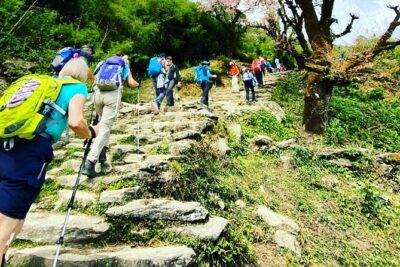
11-Day Hike Tour to Annapurna Base Camp Bliss in Kathmandu
Read our review →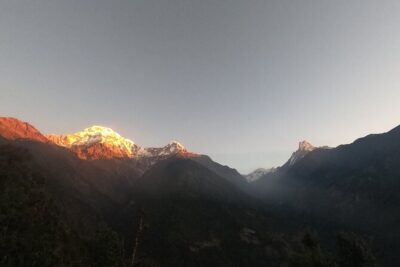
Browse the lists this tour appears in