
Reviewed · ANNAPURNA BASE CAMP TREKS
12 Days Annapurna Base Camp Trek
The best part of this trek is the changing scenery. You begin among Kathmandu’s busy streets, walk through rhododendron forests and terraced fields, then reach the stark mountain bowl at Annapurna Base Camp. Along the way, Gurung and Magar villages, friendly teahouses, and a riverside hot spring keep the route human and welcoming.
I like the Poon Hill sunrise and the fact that this is a private trip, so your group can move at its own pace. I also like the route’s variety: forest, stone steps, alpine meadows, high peaks, and hot springs all fit into one 12-day plan. The main caution is the physical demand. Three thousand stone steps to Ulleri, repeated steep climbs, and an altitude of 4,130 meters require steady fitness and patience.
Key points to know before booking
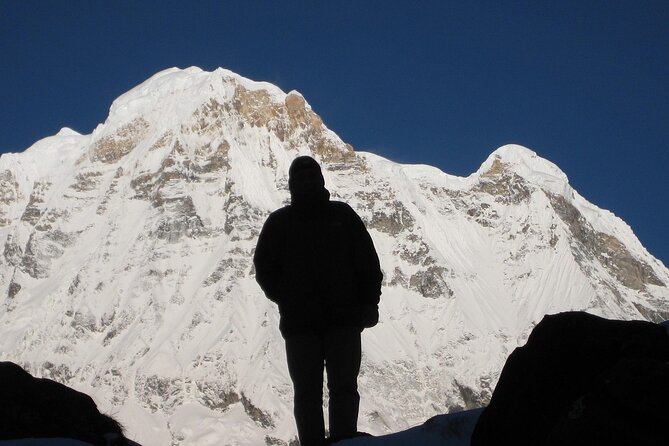
- Poon Hill adds a superb sunrise stop: Wake early in Ghorepani for views of Dhaulagiri, Annapurna, and Machapuchare.
- Annapurna Base Camp reaches 4,130 meters: The final approach leaves the forest and opens into high alpine country.
- The route includes major stair climbing: The ascent to Ulleri has more than 3,000 stone steps.
- Jhinu Danda offers a natural reward: A riverside hot spring follows the long return from base camp.
- You get a private trek: Only your own group participates, which can make daily pacing easier.
- Kathmandu to Pokhara is flexible: Choose a six to eight hour overland drive or a roughly 25-minute flight.
Why this 12-day route works so well
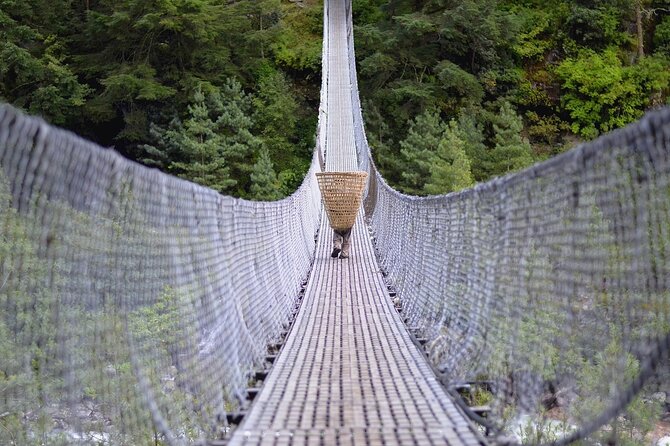
The Annapurna Base Camp Trek is a good choice if you want a serious Himalayan walk without committing to a long expedition. The route is well established and combines mountain scenery with daily village life. You sleep in local teahouses, pass through Gurung and Magar communities, and walk a trail that changes character almost every day.
The advertised price is $1,200 per person. That can represent solid value for a private 12-day trip if the quoted package covers the listed meals, permits, government charges, entrance fees, and guide service. Still, ask for a written breakdown before paying. Public transportation and airport or departure tax are not included, and the exact transport arrangements, room setup, and meal plan are not explained in the available details.
This is not a sightseeing holiday with a few easy walks. You will walk for several hours on most trekking days, climb and descend many stone steps, and spend time at altitude. The company asks for a moderate fitness level, which is a fair description. You do not need to be an expert climber, but you should be comfortable with sustained uphill walking.
Other Annapurna routes from Kathmandu:
- Annapurna base camp trek 5 Days
★ 5.0 · 252 reviews - Annapurna Base Camp Trek
★ 5.0 · 111 reviews - Kathmandu to Annapurna Base Camp (ABC) 5-Day Trek
★ 5.0 · 102 reviews
Day 1: Kathmandu arrival and trek planning
Your trip begins at Tribhuvan International Airport, followed by a transfer to a hotel in Kathmandu’s Thamel area. Thamel is a handy place to begin because it puts you close to shops, restaurants, and trekking services, though its busy streets can feel like a sharp change after a long flight.
Later, you meet your guide for a trek briefing and permit preparation. This is more important than it sounds. Use the meeting to confirm the daily plan, transport choices, meals, luggage arrangements, and what happens if weather changes the schedule.
The first day is not a mountain day. It is a setup day, and that is useful. You can recover from the journey, organize your gear, and ask direct questions before leaving the city.
Day 2: Kathmandu to Pokhara by road or air
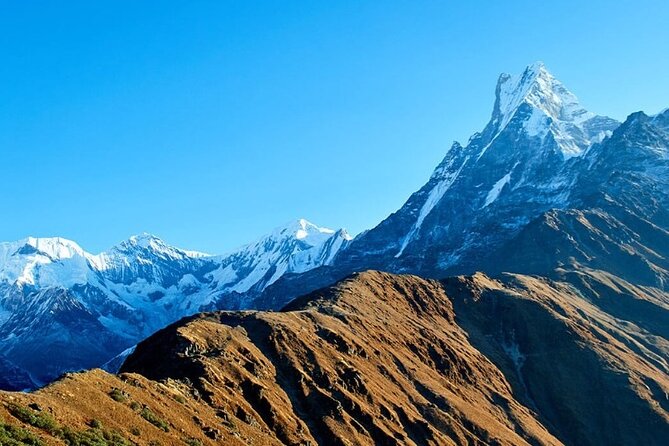
You can travel to Pokhara by a six to eight hour overland drive or take a flight of about 25 minutes. The flight saves a great deal of time, while the drive gives you a longer look at rural Nepal. Since road conditions and flight schedules can affect the day, confirm which option is included or priced separately.
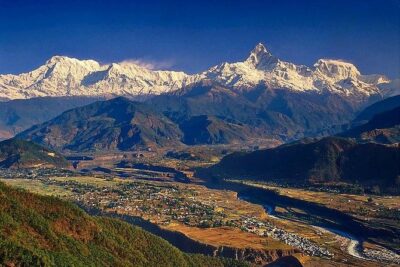
Pokhara is a calmer base beside Phewa Lake, with views toward the Annapurna range. It is also where the trek begins to feel real. You are no longer preparing in the capital. You are close to the trailhead, with the mountains forming the backdrop.
The itinerary gives you one day for Pokhara, but the trip is not built around city sightseeing. Think of this stop as a practical transition and a chance to rest before the walking begins.
Day 3: Nayapul, Birethanti, Tikhedhunga, and Ulleri
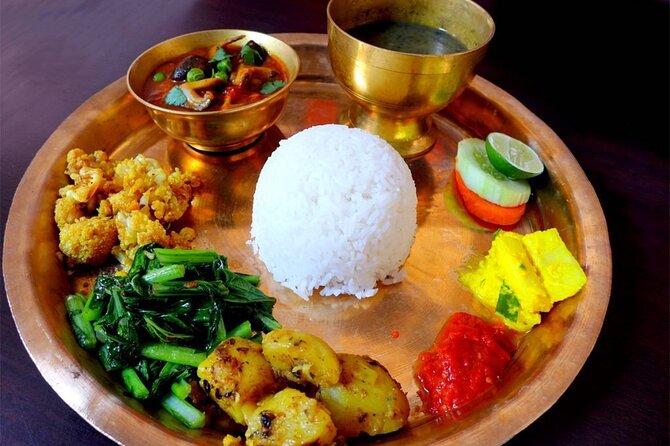
After breakfast, you drive about 1.5 hours to Nayapul. The walking route starts gently, passing through Birethanti and Tikhedhunga before the day’s main challenge begins.
The climb to Ulleri includes more than 3,000 stone steps. That number tells you exactly what kind of day this is. The distance may not sound extreme on paper, but the stairs make the effort constant. Keep your pace slow, drink regularly, and resist the temptation to race ahead early in the day.
Ulleri gives you your first strong sense of village life on the route. The setting also begins to open toward mountain views, though the real reward is the feeling that you have left ordinary roads behind.
A few more things to do in Kathmandu worth a look
- Everest Base Camp Trek – 14 Days
★ 5.0 · 1,499 reviews - Everest Base Camp Trekking
★ 5.0 · 485 reviews - Nagarkot Sunrise View and Day Hiking from Kathmandu
★ 5.0 · 471 reviews - Annapurna Circuit Trek with Tilicho Lake
★ 5.0 · 368 reviews
Day 4: Forest walking to Ghorepani
The trail continues uphill through rhododendron and oak forests. Waterfalls and Magar villages add variety, so you are not simply walking through a long green corridor.
Ghorepani is a popular stop with a cooler alpine feel and broad mountain views. It is also an important staging point for the next morning’s early walk to Poon Hill. You may be tired by the time you arrive, but the short sunrise hike is one of the most worthwhile sections of the whole journey.
This day is still uphill, so do not treat it as an easy lead-in to the high mountains. The forest offers shade, but the steady grade keeps your legs working.
Day 5: Poon Hill sunrise and the trail toward Tadapani
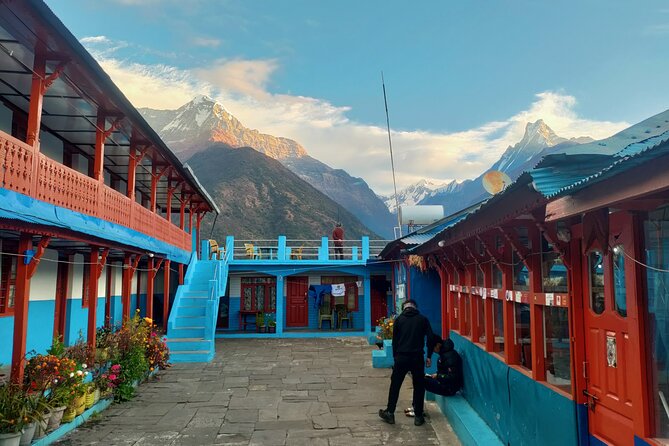
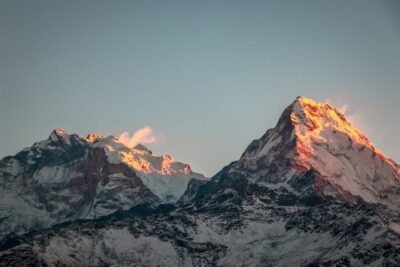
The early climb to Poon Hill is one of the signature moments of the trek. From the viewpoint, you may see sunrise over Dhaulagiri, Annapurna, and Machapuchare. The mountain views are the reason for the early alarm, and this is the one morning when getting up before breakfast clearly pays off.
You return to Ghorepani for breakfast, then continue through forests toward Tadapani. The route feels almost storybook-like in places, with wooded paths and changing views through the trees. The day combines a short, memorable viewpoint walk with a longer trek, so plan on a full day rather than a quick photo stop.
The itinerary lists an admission fee for Poon Hill. Since the exact fee structure can change, your guide should clarify what is covered.
Day 6: Chhomrong and the rhythm of ups and downs
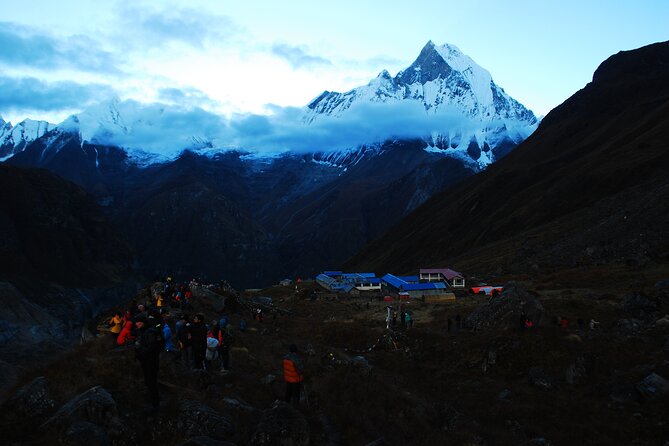
The trail descends steeply to a stream, then climbs again through terraced farmland and forest. This is a classic Himalayan walking day: downhill does not mean easy, because every descent may be followed by another climb.
Chhomrong is a large Gurung village with views toward Annapurna South and the sacred Machapuchare. It is one of the more scenic settlements on the route and a useful place to notice the contrast between mountain agriculture and trekking infrastructure.
The repeated climbing can test your legs. I would treat this as a pacing day. Walk steadily, take short breaks, and focus on arriving with enough energy for the higher route ahead.
Day 7: Sinuwa, Bamboo, Dovan, and Himalaya
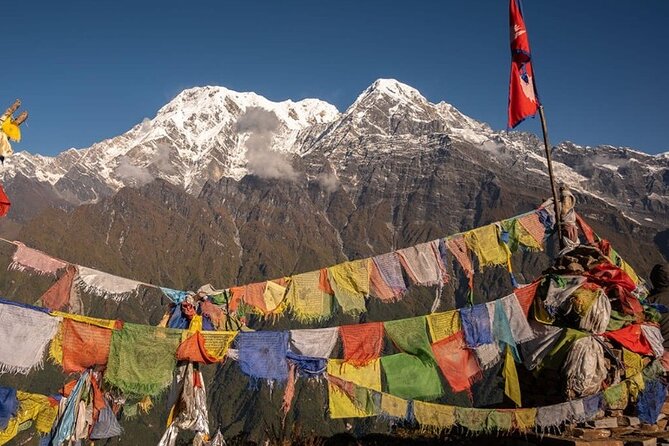
The day starts with a descent to the river, followed by a climb to Sinuwa. From there, the route passes through bamboo forest and continues toward Bamboo, Dovan, and Himalaya.
The forest becomes quieter and more enclosed here. You are moving deeper into the Annapurna Sanctuary, and the trail feels more remote than it did near the lower villages. The listed stop is simply Annapurna, but the practical sequence is clear: you pass through these small trail settlements as you gain height.
This is a long walking day with plenty of uphill work. The bamboo forest provides a change from open terraces and village views, but the shade should not fool you into thinking the route is effortless.
Day 8: Deurali, Machapuchare Base Camp, and Annapurna Base Camp
Today brings the central goal. You pass Deurali and continue toward Machapuchare Base Camp, often shortened to MBC. As the forest gives way to open alpine meadows, the views become larger and the sense of height becomes stronger.
The climb to Annapurna Base Camp is gradual rather than a single brutal wall, but altitude makes every step more noticeable. At 4,130 meters, you should pay attention to how you feel and tell your guide if you become unwell. The itinerary describes the day as a gradual ascent, but gradual does not mean easy at this elevation.
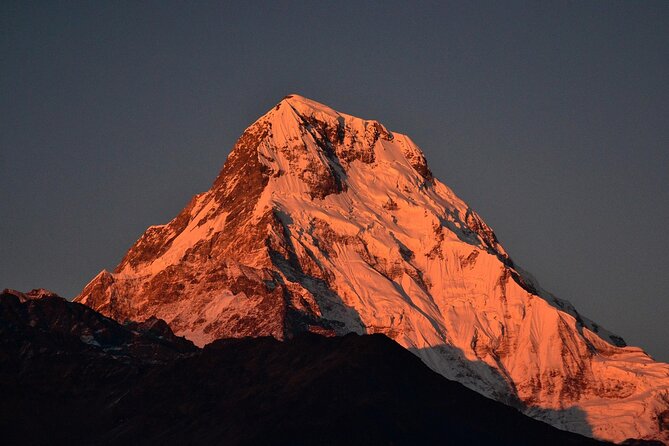
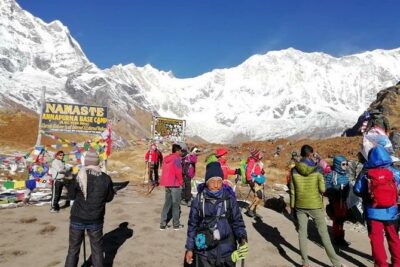
Annapurna Base Camp sits within a dramatic ring of peaks. Reaching it near sunset gives you a chance to see the mountains in changing light, though weather can control how much you actually see. This is the high point of the trek, both physically and emotionally.
Day 9: Sunrise at base camp and the long descent
An early sunrise at Annapurna Base Camp begins the return journey. You descend through MBC, Deurali, and Dovan before reaching the forest around Bamboo.
The return follows the same route, which means you already know some of the terrain. That can make navigation feel easier, but it does not remove the physical strain. Long descents can be hard on knees, especially after the exertion of the previous day.
Take your time. The itinerary correctly notes that the descent is easier in terms of effort than the climb, but it is still long. Trekking poles, if you use them, would be especially useful here, though the available information does not state whether they are supplied.
Day 10: Chhomrong to Jhinu Danda hot springs
You climb back toward Chhomrong, then descend steeply to Jhinu Danda. This is another day of sharp changes in direction, so your legs get no completely flat recovery.
The payoff is the riverside natural hot spring. After several days of walking, soaking in warm water can feel like a small luxury. It is also one of the route’s most distinctive experiences because it links the mountain trail with a simple local bathing place rather than a resort-style spa.
Do not expect the hot spring to erase every ache. It is a pleasant pause, not a substitute for rest. Still, this stop gives the return journey a clear purpose beyond simply retracing the trail.
Day 11: Return to Pokhara
You take a short final trek to Siwai or Nayapul, then drive back to Pokhara. The exact walking distance is not provided, so ask your guide how much time you will spend on foot before the vehicle pickup.
Back in Pokhara, you can have a lakeside dinner, book a massage, or simply rest. After nine days of mountain walking, this is a good time to keep your plans light. The city offers a comfortable contrast to the teahouse route and gives you space to think about what you have just completed.
Day 12: Pokhara to Kathmandu
The final day takes you back to Kathmandu by flight or road. The choice again involves time versus a longer overland journey. Depending on your international flight, you may go straight to the airport or spend another night in the city.
Build in care around this day. The package says airport pickup is offered at the start, but airport or departure tax is not included. Also confirm how the return transfer connects with your flight schedule, especially if you choose the road option.
Private guiding, support, and group size
This is a private activity, meaning only your own group participates. That arrangement can be valuable on a trek because your guide does not need to match the pace of a large mixed group. You can also ask questions more easily and discuss whether a short pause is needed.
The company has received especially strong praise for friendly, caring service. Specific feedback highlights a guide named Mandip Ji for a calm manner, mountain knowledge, and attentive support. Mandip Ji may not be assigned to every departure, so ask whether he is available if that matters to you.
The tour description says confirmation arrives at booking, service animals are allowed, and the start point is in Kathmandu at P924+79H Kathmandu. It also says the activity ends back at the meeting point. The practical details are not fully spelled out, so confirm hotel pickup, luggage handling, and the exact meeting arrangement before departure.
What the $1,200 price tells you
At $1,200 per person, the price needs to be judged against what is covered, not just the number of days. The listed inclusions are meals, government fees, entrance and admission fees, onboard WiFi, and excess baggage. Public transportation and airport or departure tax are excluded.
That creates two questions. First, which meals are included on each trekking day? Second, does the price cover the Kathmandu to Pokhara and return transport, or only the trekking arrangements? Ask these before booking, since those costs can change the real total.
The private format adds value if you care about flexibility and personal attention. The route itself also packs in several major highlights: Poon Hill, Annapurna Base Camp, local villages, teahouse stays, and Jhinu Danda. If the quoted price includes the main permits, meals, guide service, and intercity transfers, it can be a sensible package for a first Himalayan trek.
Who should book this trek
You should consider this trip if you want a moderate but serious mountain trek with a clear 12-day structure. It suits people who value scenery and village contact as much as the final base camp photograph.
It is also a good fit for first-time high-altitude trekkers who want a guided route rather than a completely independent trip. The trail is well established, and the itinerary builds toward base camp over several days instead of rushing straight upward.
You should think twice if you dislike steep stairs, long descents, basic teahouse-style travel, or changing weather. The package does not describe a luxury standard, and the physical demands are real even though the trek is rated moderate.
Should you book the Annapurna Base Camp Trek?
I would book this trip if you want a balanced introduction to the Annapurna region and are ready for the walking. Poon Hill, base camp, village trails, and hot springs give the route more variety than a simple out-and-back mountain hike.
Before paying, get written answers about transport, meals, accommodation, luggage, airport taxes, and the guide assigned to your group. If those details match your expectations, the private format and $1,200 price offer a practical way to experience one of Nepal’s best-known treks without planning every permit and transfer yourself.
FAQ
How long is the Annapurna Base Camp Trek?
The experience lasts approximately 12 days, beginning in Kathmandu and ending back in Kathmandu after the return from Pokhara.
What altitude does Annapurna Base Camp reach?
Annapurna Base Camp is at approximately 4,130 meters.
Is airport pickup offered?
Yes. Pickup is offered, and the first day includes a transfer from Tribhuvan International Airport to a hotel in Kathmandu’s Thamel area.
Is transportation from Kathmandu to Pokhara included?
The route provides a choice between a six to eight hour overland drive and a flight of about 25 minutes. The available details do not clearly state how these transport costs are handled, so confirm this before booking.
How physically difficult is the trek?
The trek requires a moderate fitness level. It includes more than 3,000 stone steps to Ulleri, repeated steep climbs and descents, and walking at high altitude.
Is this a private tour?
Yes. Only your own group participates in the activity.
Are meals included?
Meals are listed among the inclusions. The exact number and type of meals are not specified, so ask for the daily meal plan before departure.
What happens if poor weather cancels the experience?
If poor weather causes cancellation, you will be offered a different date or a full refund.
What is the cancellation policy?
You can cancel at least 24 hours before the experience starts for a full refund. Cancellations or changes made less than 24 hours before the start time are not accepted for a refund.
Just added in Kathmandu
- Kathmandu to Chitwan Tour by Tourist Bus – A Convenient and Affordable Way★ 4.0 · 4 reviews
- Changunarayan Hill to Telkot Hike Near Kathmandu Day Tour★ 5.0 · 6 reviews
- Mt Everest Base CampTrek | Budget Package★ 5.0 · 4 reviews
- Chitwan Jungle Safari 3-Day Tour★ 5.0 · 9 reviews
- Chandragiri Hill Station Tour by Cable Car★ 5.0 · 4 reviews
- Chandragiri Hills cable car day trip, private car with driver from Kathmandu★ 5.0 · 8 reviews
- Chandragiri to Taudaha Nature Day Hiking from Kathmandu★ 5.0 · 13 reviews
- Chandragiri Cable Car & Monkey Temple Private Guided Day Tour★ 5.0 · 5 reviews
Annapurna Base Camp Treks, compared.
Kathmandu to Annapurna Base Camp (ABC) 5-Day Trek
Read our review →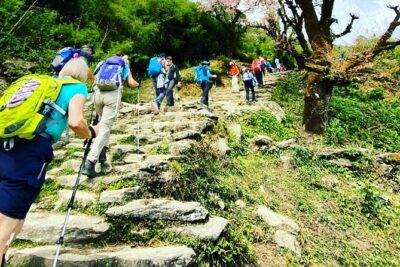
11-Day Hike Tour to Annapurna Base Camp Bliss in Kathmandu
Read our review →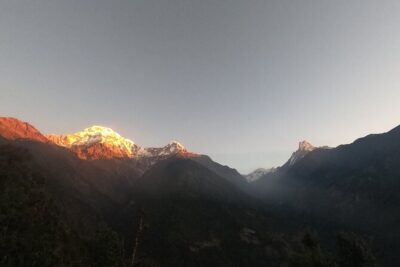
Browse the lists this tour appears in