
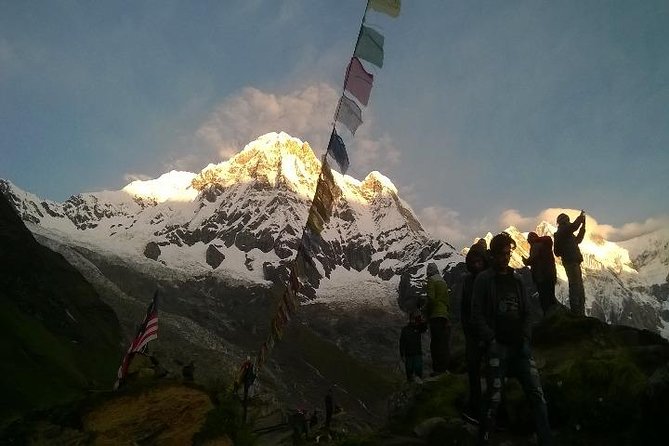
Reviewed · ANNAPURNA BASE CAMP TREKS
Annapurna Base Camp Trek – 11 Days
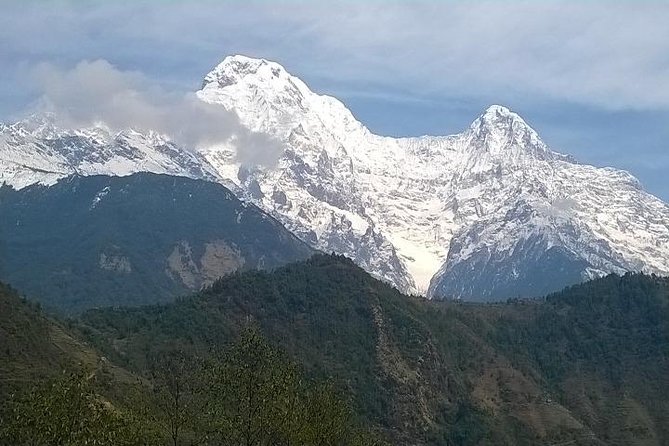
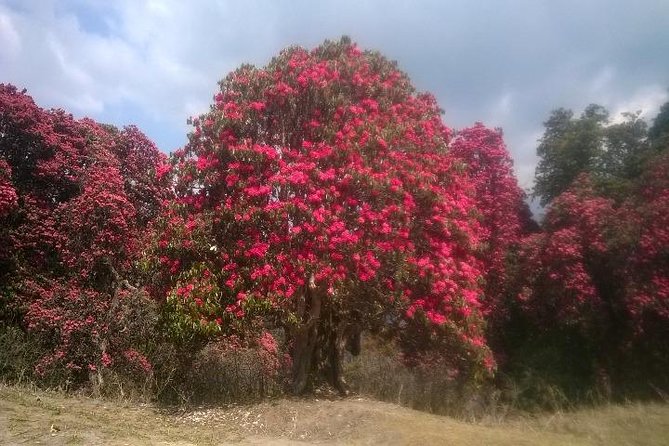
Annapurna Base Camp gives you a rare two-for-one mountain trek: Poon Hill sunrise early in the route, then the high, stark bowl of Annapurna Base Camp at 4,130 meters. Between those bookends, you walk through rhododendron forests, stone villages, suspension bridges, and the warm springs at Jhinu Danda.
I like the way the price includes the practical gear and permits, not just a guide. I also like the private format, so your group can keep its own rhythm. The catch is the pace: eleven days includes long uphill and downhill sections, early starts, and basic guest-house accommodation. You need moderate fitness and a willingness to live simply.
Key points to know
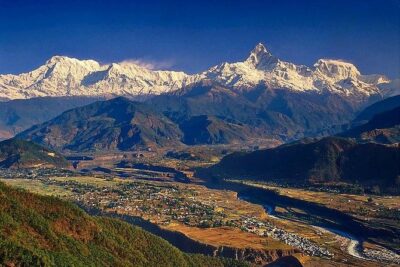
- Poon Hill at sunrise: Reach the viewpoint before breakfast for views of Annapurna, Dhaulagiri, Nilgiri, and Lamjung Himal.
- Annapurna Base Camp at 4,130 meters: The trek finishes in a high mountain amphitheater reached by a moraine trail.
- A varied route: Expect terraced farms, ethnic villages, rhododendron and fir forests, rivers, stone stairs, and snowy peaks.
- Useful inclusions: A down jacket, sleeping bag, duffel bag, permits, route map, meals, staff support, and surface transport are covered.
- A private trip: Only your group participates, with a local government-licensed English-speaking guide.
- Guides to confirm: Past departures have included Prakash, Shiva, Naba, and Saroj Dhakal, so ask who will lead your trek.
Kathmandu to Pokhara, with the Himalayas ahead
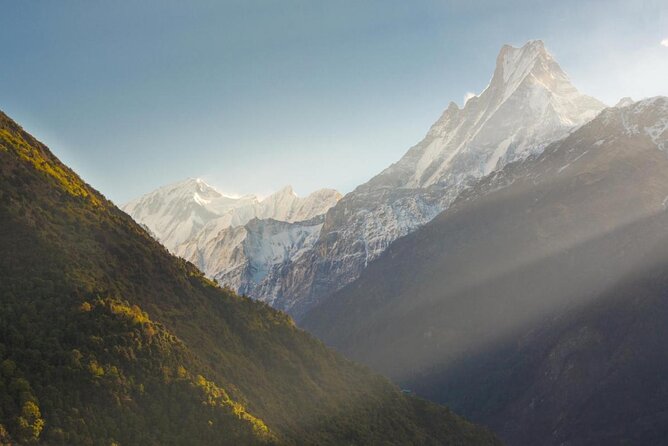
The trip begins at 6:15 a.m. in Kathmandu, where you board a tourist bus for Pokhara. The ride follows the Prithvi Highway beside rivers, terraced farms, villages, and towns. It is scenic, but it is also a full road journey, so do not think of the first day as a mountain walk.
The road transfer is included in the price, which matters in Nepal. You do not have to arrange separate transport between the capital and the trail region. Still, you should allow patience for a long day on the road and keep water and a light snack close at hand.
Pokhara is the practical gateway to the Annapurna region. The next morning, you drive roughly two hours to Nayapul, then begin walking after crossing the suspension bridge over the Modi River and passing through Birethanti. This opening section gives you a gentle introduction to village life and the river valleys before the serious climbing begins.
Other Annapurna routes from Kathmandu:
- Annapurna base camp trek 5 Days
★ 5.0 · 252 reviews - Annapurna Base Camp Trek
★ 5.0 · 111 reviews - Kathmandu to Annapurna Base Camp (ABC) 5-Day Trek
★ 5.0 · 102 reviews
Nayapul to Ghorepani, the first real test
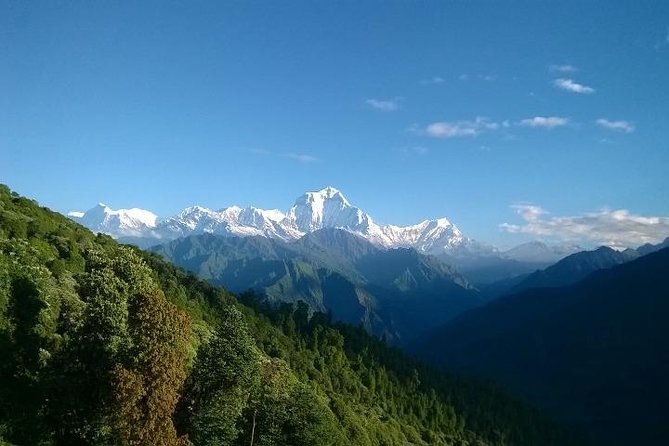
From the trail near Nayapul, the route heads toward Ghorepani. You pass through forest, villages, and the settlements of Banthanti and Nangethanti. The walk is described as easy in parts, but the climb into Ghorepani uses plenty of stone stairs.
That detail is important. The trail may not be technically difficult, yet repeated steps can tire your legs quickly. A moderate level of fitness is listed as necessary, and that is a fair expectation. You should be comfortable walking uphill and downhill for several hours, often on uneven stone.
The forests are one of the pleasures of this section. Rhododendrons, orchids, and ferns add color and texture, especially as you gain height. Ghorepani is not just a stop for the night. It positions you for the trip’s first great view, an early morning climb to Poon Hill.
Poon Hill sunrise before breakfast
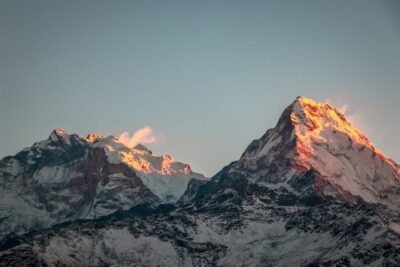
Day four begins early with an ascent to Poon Hill. The trail can be snowy, and you will want warm layers, a headlamp if you carry one, and the down jacket supplied by the company. The effort pays off with sunrise over Annapurna and Dhaulagiri, plus views toward Nilgiri at 7,061 meters and Lamjung Himal at 6,983 meters.
Poon Hill is a smart addition to this route. You get a major mountain viewpoint before reaching base camp, and it gives the trek a strong early highlight. It also makes the day demanding, since you climb for sunrise and then continue walking after returning to the lodge.
From here, the route moves through forests and mountain villages toward the Modi Khola valley. You can expect frequent changes in elevation rather than a flat march. The reward is a closer sense of how the villages, rivers, forests, and high peaks fit together.
Stone stairs, Jhinu Danda, and a welcome hot spring
The middle section includes an uphill and downhill trail, a crossing of the Kimrong Khola, and arrival at Jhinu Danda. Here you can take a short rest in the natural hot spring. After several days of stairs, the chance to soak your legs is more than a pleasant extra. It breaks up the physical strain of the route.
The following day is described as an easier walk through rhododendron forest, with orchids and ferns along the path. You descend stone stairs, cross Chhomrong Khola, and climb again to Sinuwa. Nepal trekking often means that easy and uphill appear in the same sentence, so read the itinerary with care. Even a shorter or gentler day can include a sharp descent followed by another climb.
The route then follows forest trails and continues toward the upper Modi Khola valley. The scenery changes as you approach the higher country. Forest remains part of the walk, but the mountains begin to take over the view.
A few more things to do in Kathmandu worth a look
- Everest Base Camp Trek – 14 Days
★ 5.0 · 1,499 reviews - Everest Base Camp Trekking
★ 5.0 · 485 reviews - Nagarkot Sunrise View and Day Hiking from Kathmandu
★ 5.0 · 471 reviews - Annapurna Circuit Trek with Tilicho Lake
★ 5.0 · 368 reviews
Machhapuchhre Base Camp and the climb to Annapurna Base Camp
Day seven brings the most memorable high-mountain section. You climb to Deurali, follow stone stairs, and reach Machhapuchhre Base Camp at 3,700 meters. Machhapuchhre, also called Fishtail, is one of the striking peaks in the area, and this stop gives you a dramatic setting before the final push.
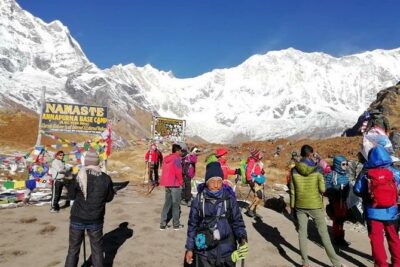
From Machhapuchhre Base Camp, the trail follows moraines toward Annapurna Base Camp. At 4,130 meters, ABC sits in a high mountain bowl surrounded by snowy peaks. The route is not presented as a technical mountaineering trip, but altitude changes the nature of the walk. You should take your guide’s advice seriously, keep a steady pace, drink regularly, and report how you feel.
The included pulse oximeter is a useful sign of organized support. It allows the staff to check your pulse, oxygen saturation, and heart rate during the trek. The company also supplies first-aid kits and covers medicine and insurance for trekking staff. That does not replace your own travel insurance, which remains your responsibility.
Reaching base camp is the central goal, but do not overlook the route itself. The moraine trail, the Modi Khola valley, the fir and rhododendron forests, and the changing texture of the mountains provide much of the trek’s character.
The return route through Modi Khola and Chhomrong
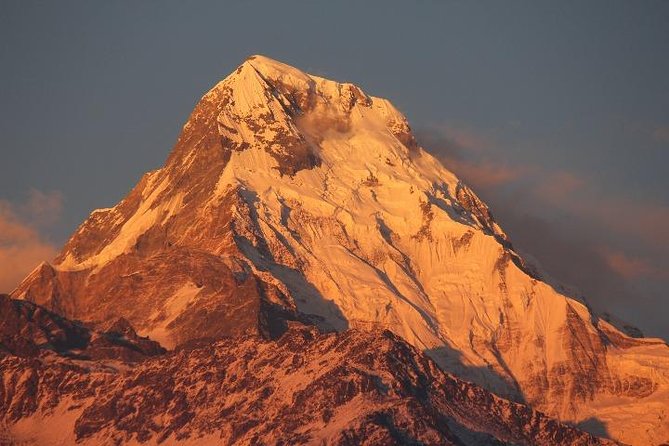
Day eight begins with a descent from Annapurna Base Camp to Machhapuchhre Base Camp through the moraine area. You then follow the Modi Khola through forests of rhododendron and fir. Descending is often easier on the lungs than climbing, but it can be hard on knees, especially after the high-altitude day.
The return continues through Sinuwa, Chhomrong Khola, and upper Chhomrong, with another series of stone stairs. This is where trekking poles can be especially helpful, though personal trekking equipment is not included. The package supplies a down jacket, sleeping bag, and duffel bag, but you must bring your own personal gear.
The route later returns to Jhinu Danda, giving you another chance to enjoy the hot spring. I like this return arrangement because the soak comes after the summit section, when tired muscles may appreciate it most. The drawback is that the route repeats some places and includes substantial ups and downs rather than a simple downhill walk.
Nayapul, Pokhara, and the road back to Kathmandu
After the final trekking stages, you descend to Nayapul along the Modi Khola route. You pass through more villages and countryside before taking transport back to Pokhara. The trip ends with another tourist bus ride to Kathmandu on day eleven, again following the highway through green hills, villages, and river country.
Surface transport to and from Kathmandu is included, which makes the overall plan easier to manage. The tradeoff is that two full road journeys take time and may feel tiring after a demanding trek. If you value a complete itinerary with transport arranged, this is convenient. If you want to spend every possible hour on foot, the bus transfers will feel less exciting.
The stated schedule includes ten breakfasts, nine lunches, and eight dinners. That covers the main trek days, but alcoholic drinks, hot and cold drinks, laundry, and other personal costs are extra. Bring funds for those purchases, plus tips for the trekking staff.
What the $986 price really covers
At $986 per person, this is not simply a guiding service. The package includes Kathmandu to Pokhara and return transport, trekking permits and entry fees, guest-house accommodation, meals, a licensed English-speaking guide, staff costs, a route map, a down jacket, sleeping bag, duffel bag, first-aid supplies, and the monitoring equipment.
That list gives the price solid value, especially if you would otherwise need to rent mountain gear, arrange permits, hire porters, and organize road transfers separately. Accommodation is in the best available guest houses, mainly in twin-sharing rooms. You should not expect hotel comfort in the high country. Basic rooms and shared facilities are part of the bargain.
The price does not include international airfare, airport departure tax, personal trekking equipment, travel insurance, drinks, laundry, or tips. Those exclusions are normal for a trek of this type, but you should budget for them before booking. The company covers insurance, medicine, equipment, and transportation for its trekking staff, not your personal travel insurance.
The guide can shape the whole trip
A local, government-licensed English-speaking guide is included, and the trip is private. That combination matters. Your guide can help with pacing, route decisions, lodge arrangements, and mountain conditions without having to manage a large mixed group.
Several guides have been associated with past departures, including Prakash, Shiva, Naba, and Saroj Dhakal. If a particular guide matters to you, confirm availability before paying. One past solo trek account specifically praised Saroj Dhakal for his work, while several other departures highlighted Prakash and teams led by Shiva and Naba. Treat names as examples of available staff, not a guarantee.
The feedback overall is very strong, with a 4.9 rating from 30 ratings and a 97 percent recommendation figure. The most consistent strengths are organization, friendly guide service, helpful porters, and smooth handling of airport and hotel arrangements. There has also been at least one complaint about an unprofessional guide on a solo trek, followed by a company response saying the booking may have been posted to the wrong company and that it had not organized such a trip in the prior four months. The sensible lesson is simple: confirm your provider, guide, itinerary, and contact details before departure.
Who should book this Annapurna trek
This trip suits you if you want a classic Nepal trek with strong scenery, cultural contact in mountain villages, and a clear base camp goal. It is particularly useful for first-time high-altitude trekkers who prefer permits, transport, equipment, meals, and staff arrangements handled in one package.
You should be ready for long walking days, stone steps, changing elevation, basic accommodation, and an early start for Poon Hill. The itinerary requires moderate physical fitness, not technical climbing ability, but that does not mean it is easy. The combination of Poon Hill and Annapurna Base Camp packs a lot into eleven days.
The private format also works well for solo visitors, couples, families with suitable fitness, and small groups that want more control over pace. You should not book it if you want luxury lodging, guaranteed private rooms, or a relaxed schedule with large rest days.
Should you book it?
I would book this trek if your priority is a well-supported route with excellent mountain variety and a price that covers the costly basics. Poon Hill, the hot springs, Machhapuchhre Base Camp, and Annapurna Base Camp give you a stronger mix than a route focused on only one viewpoint.
Before booking, confirm the exact guide, room arrangement, personal equipment list, and current transport plan. Buy your own travel insurance, budget for drinks and tips, and keep the free cancellation rule in mind: you can cancel at least 24 hours before the start for a full refund, while poor weather may lead to a new date or full refund. If you accept basic lodging and a physically active schedule, this is a sensible way to reach Annapurna Base Camp without arranging every moving part yourself.
FAQ
How long is the Annapurna Base Camp trek?
The experience lasts approximately 11 days, including road transfers between Kathmandu and Pokhara and the trekking route to Annapurna Base Camp.
Where does the trek start?
It starts in Kathmandu at the listed meeting point, with a 6:15 a.m. departure.
Is transport from Kathmandu to Pokhara included?
Yes. Surface transport from and to Kathmandu is included, using tourist bus transfers between Kathmandu and Pokhara.
What meals are included?
The package includes 10 breakfasts, 9 lunches, and 8 dinners. Alcoholic drinks and hot and cold drinks are not included.
Is trekking equipment provided?
A down jacket, sleeping bag, and duffel bag are included. Personal trekking equipment is not included.
Is this a private tour?
Yes. Only your group participates, and the trip includes a local government-licensed English-speaking trekking guide.
What is the cancellation policy?
You can cancel at least 24 hours before the experience start time for a full refund. Cancellations or changes made less than 24 hours before the start are not refunded or accepted. If poor weather causes cancellation, you will be offered another date or a full refund.
Just added in Kathmandu
- Kathmandu to Chitwan Tour by Tourist Bus – A Convenient and Affordable Way★ 4.0 · 4 reviews
- Changunarayan Hill to Telkot Hike Near Kathmandu Day Tour★ 5.0 · 6 reviews
- Mt Everest Base CampTrek | Budget Package★ 5.0 · 4 reviews
- Chitwan Jungle Safari 3-Day Tour★ 5.0 · 9 reviews
- Chandragiri Hill Station Tour by Cable Car★ 5.0 · 4 reviews
- Chandragiri Hills cable car day trip, private car with driver from Kathmandu★ 5.0 · 8 reviews
- Chandragiri to Taudaha Nature Day Hiking from Kathmandu★ 5.0 · 13 reviews
- Chandragiri Cable Car & Monkey Temple Private Guided Day Tour★ 5.0 · 5 reviews
Annapurna Base Camp Treks, compared.
Kathmandu to Annapurna Base Camp (ABC) 5-Day Trek
Read our review →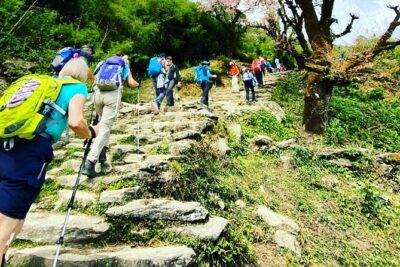
11-Day Hike Tour to Annapurna Base Camp Bliss in Kathmandu
Read our review →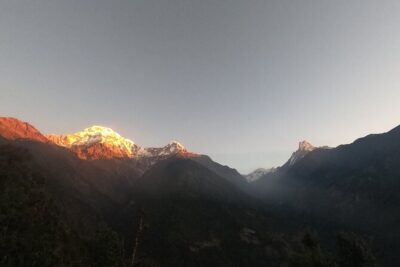
Browse the lists this tour appears in