
Reviewed · ANNAPURNA BASE CAMP TREKS
Annapurna Base Camp Trek
Annapurna Base Camp is a 14-day Himalayan trek that gives you far more than a single mountain viewpoint. You walk from Pokhara through Gurung villages, rhododendron forests, river valleys, and high mountain country, with Poon Hill and Annapurna Base Camp as the big rewards.
I like the small group limit of 10, which gives your guide room to adjust the pace and keep an eye on everyone. I also like that the trip covers teahouse lodging, meals on the trail, airport pickup, and transport, so you can focus on walking instead of arranging each night from scratch.
The main catch is the effort. This is a moderate, high-altitude trek with 4 to 7 hours of walking most days, steep stone steps, long descents, and basic teahouse accommodation. The six-hour bus ride from Kathmandu to Pokhara is another test of patience before the real walking begins.
Key points to know before booking
- Poon Hill comes before base camp: The 3,210-meter viewpoint adds an excellent sunrise stop and a second major goal to the trek.
- A maximum of 10 people: The group size is small enough for personal attention without making the trip feel private or expensive.
- Guides are a major part of the experience: Guides named Krishna, Tulsi, Suvi, Anil, and Arjun have led similar Green Valley Nepal trips.
- Meals are covered on the trail: The package includes 13 breakfasts, 10 lunches, and 10 dinners, but meals in Kathmandu and Pokhara are not included.
- Expect simple rooms: Teahouses provide practical shelter along the trail, while hotels or guesthouses are used in Kathmandu and Pokhara.
- The return includes a hot spring: Jhinu Danda gives you a chance to soak in natural ponds beside the Modi River after the hardest mountain days.
What the $925 price really covers
At $925 per person, this trek offers solid value if you want a guided route with the main logistics already handled. You are paying for 14 days of accommodation, a professional guide, shared transfers, airport pickup, most meals, taxes, and handling charges.
The value is not just in the bed and bus ticket. On a route with changing trail conditions, scattered villages, and limited lodging, a guide saves you from making daily decisions about direction, rooms, and meal stops. That matters most when you are tired, cold, or walking at altitude.
The price does not cover lunch or dinner in Kathmandu and Pokhara. Set aside extra money for those meals, along with any personal spending not listed in the package. The itinerary also includes a brief stop at Pashupatinath Temple, but its admission ticket is not included.
A small group can make this package a better buy than a large organized departure. You receive the structure of a group tour, but the maximum of 10 leaves more room for questions and changes in pace. It is not a luxury trek, though. The accommodation on the trail is in teahouses, and shared transport means you will not have every vehicle to yourself.
Other Annapurna routes from Kathmandu:
- Annapurna base camp trek 5 Days
★ 5.0 · 252 reviews - Annapurna Base Camp Trek
★ 5.0 · 111 reviews - Kathmandu to Annapurna Base Camp (ABC) 5-Day Trek
★ 5.0 · 102 reviews
Day 1: Airport pickup and a soft landing in Thamel
Your trip begins at Tribhuvan International Airport, where an airport representative meets you and takes you to your hotel by private tourist vehicle. The hotel is in Thamel, Kathmandu’s main visitor district.
The first day is deliberately light. You can rest after your flight or visit the company office for a detailed briefing. That meeting is useful because the next day brings a long road transfer, and you will want a clear idea of the route, gear, and walking schedule.
This is also a good day to avoid overplanning. The trek is demanding enough without trying to squeeze in a full city tour after landing.
Day 2: The long road to Pokhara
After breakfast, you travel about 200 kilometers from Kathmandu to Pokhara by tourist bus. The ride takes roughly six hours, with lunch along the way, and you spend the night in a Pokhara guesthouse.
This transfer is not glamorous, but it puts the trip in context. You move from the capital toward the Annapurna region without dealing with a separate transport booking. The drawback is simple: road travel in Nepal can feel slow, and a six-hour bus ride takes up much of the day.
Pokhara is an important staging point for the trek. You get a night there before the trail begins, rather than stepping straight from an international flight into a long mountain walk.
Days 3 and 4: From Nayapool to Ghorepani

The walking begins after a drive of about an hour from Pokhara to Nayapool. From there, the route follows the Modi River toward Birethani, passing small teahouses and villages.
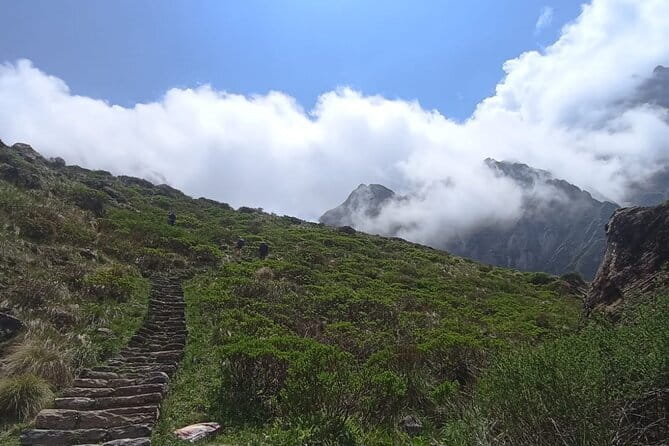
The early trail gives you a gradual introduction to trekking life. You are not yet in the high mountains, but the river, village paths, and changing forest make the route feel active from the start. The stone steps begin to show you what the word moderate means in this part of Nepal.
From Ulleri, the trail climbs more gently through rhododendron and oak forest toward Banthanti, then continues to Ghorepani. Ghorepani is a popular stop because it is the base for the Poon Hill climb.
You should expect a mix of steady walking and stair climbing rather than a smooth path. The teahouses make the route possible, but they are practical mountain accommodation, not hotel-style lodging. You will have a bed and meals as arranged, but comfort is basic.
A few more things to do in Kathmandu worth a look
- Everest Base Camp Trek – 14 Days
★ 5.0 · 1,499 reviews - Everest Base Camp Trekking
★ 5.0 · 485 reviews - Nagarkot Sunrise View and Day Hiking from Kathmandu
★ 5.0 · 471 reviews - Annapurna Circuit Trek with Tilicho Lake
★ 5.0 · 368 reviews
Day 5: Sunrise at Poon Hill
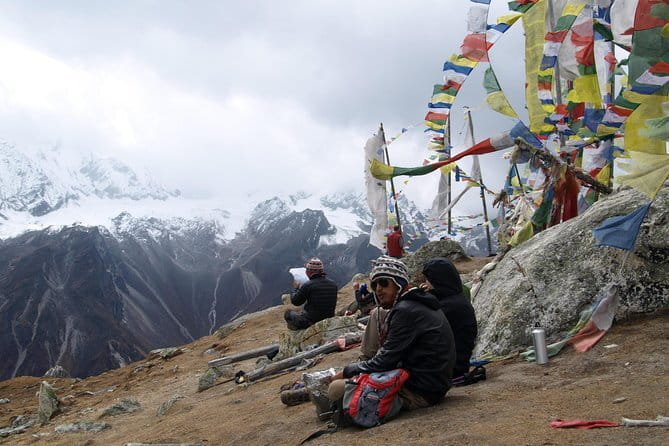
Poon Hill is one of the strongest sections of the trip. The climb takes about 45 minutes and reaches 3,210 meters, giving you a wide viewpoint over the surrounding peaks.
The timing matters. This is an early start, and the reward depends on clear conditions, but the viewpoint gives you a major mountain panorama before the trek turns toward Annapurna Base Camp. For photographers, it is one of the most useful stops because you have space to see several peaks together rather than only the valley directly in front of you.
After Poon Hill, the route continues toward Tadapani. This creates a long day when the early climb is combined with the rest of the walk, so pace yourself. The point of the morning is not to race to the top. It is to arrive with enough energy for the next stretch.
Days 6 and 7: Forest paths, Gurung villages, and Chhomrong
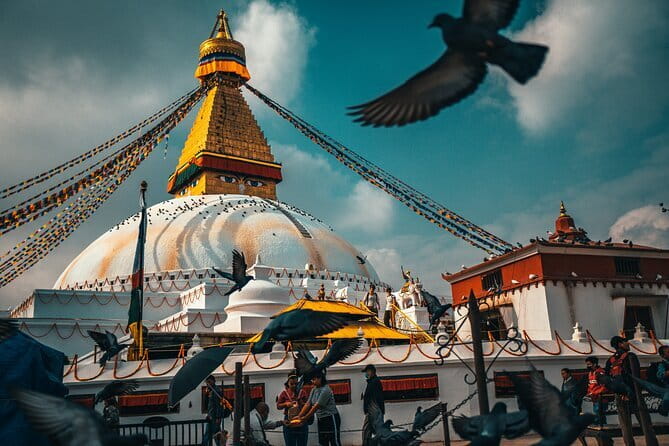
From Tadapani, you descend gradually through rhododendron forest, cross the Kimsung River, and climb toward Gurjung, a Gurung village. The route then makes a more direct climb to Chhomrong.
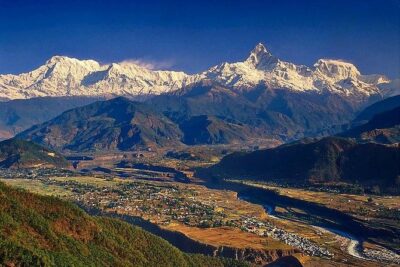
Chhomrong is one of the most memorable village stops because it spreads across a hillside with views toward the Annapurna peaks and Machhapuchhre. It is also a good place to understand the shape of the trek: you gain and lose height repeatedly, so a day that looks short on a map can still feel demanding.
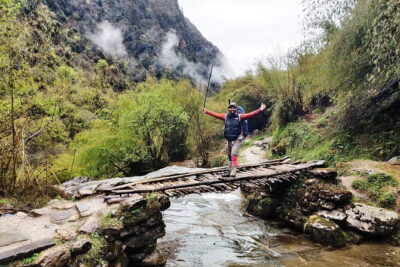
The next section begins with stone steps dropping from Chhomrong to Chhomrong Khola. After crossing a suspension bridge, you climb again to Sinuwa. The trail then moves through jungle and descends easily toward Bamboo.
This is a useful point to remember: downhill does not always mean easy. Descending hundreds of stone steps can be hard on knees, while the next climb asks for fresh effort. Trekking poles may be especially useful here, though they are not listed as part of the package.
Days 8 and 9: Bamboo, Deurali, and Machhapuchhre Base Camp
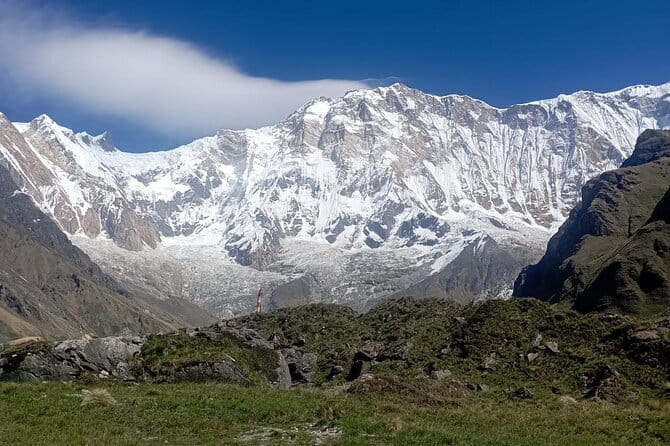
From Dovan to Himalaya, the route enters a quieter forest section. The walk passes bamboo and rhododendron forest, and the sound level is kept low near a temple. That small detail gives this part of the trek a different mood from the more active village sections.
The trail continues toward Deurali, where the setting becomes more rugged. You pass through a river bed and tackle a tiring climb to Machhapuchhre Base Camp. The mountain views open up here, with Annapurna, Machhapuchhre, Gangapurna, Himchuli, and other peaks surrounding the route.
Machhapuchhre Base Camp is not the final destination, but it is an important staging point before Annapurna Base Camp. The terrain and altitude make this one of the harder portions of the trip. Your guide’s role becomes especially valuable here, since the group must keep a sensible pace and pay attention to how everyone is feeling.
The itinerary is designed around the experience of reaching ABC rather than rushing through it. That means you should accept slower walking and regular stops as part of the plan, not as a failure to keep up.
Day 10: Sunrise at Annapurna Base Camp and the long return
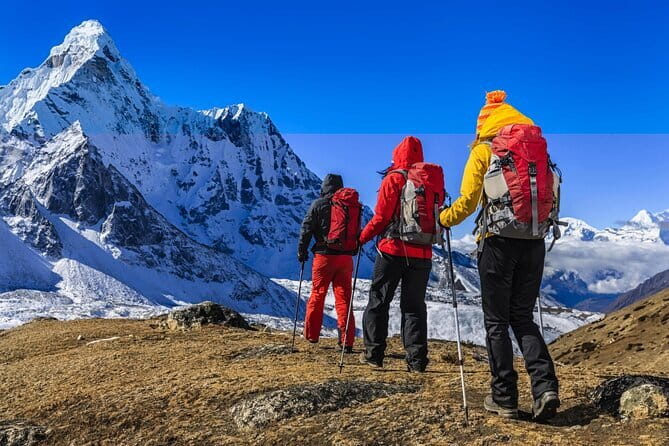
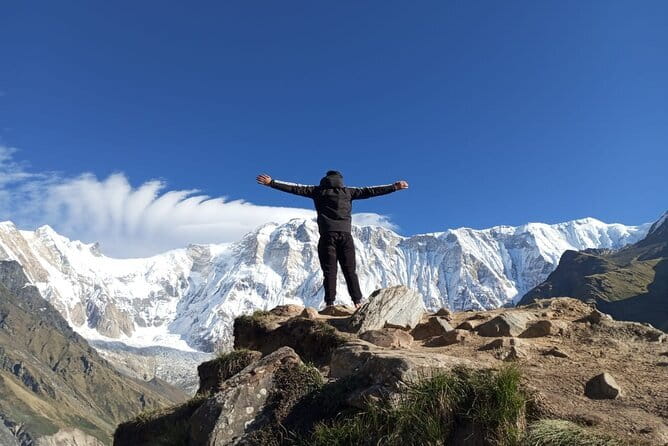
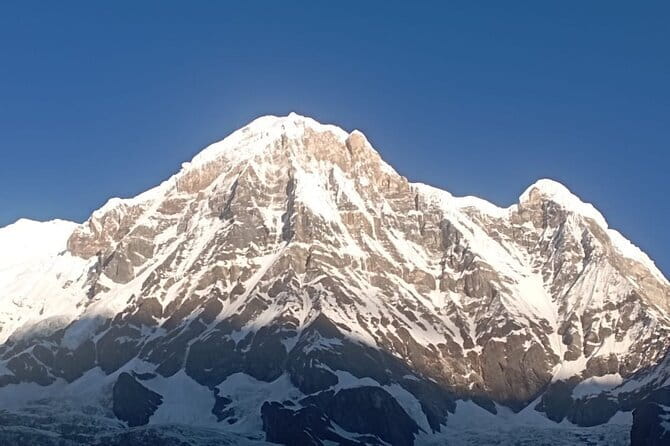
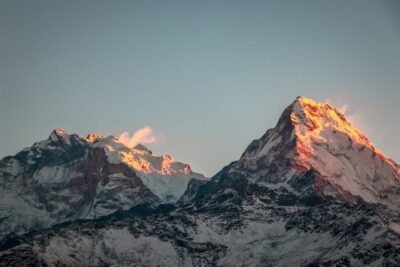
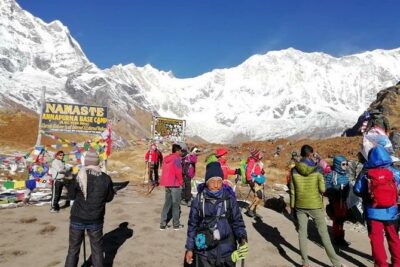
The main goal arrives with a sunrise view from Annapurna Base Camp. The camp is surrounded by mountains, and this is the moment when the previous days of steps, forest, river crossings, and uphill walking come together.
After taking in the view, you retrace the route through Machhapuchhre Base Camp, Deurali, Himalaya, Bamboo, and onward to Sinuwa. Much of the day is downhill, which may feel easier than the ascent but can still be tiring after the early start.
This is a big walking day. The itinerary gives you the reward in the morning, then asks you to cover substantial ground on the way back. If you prefer a slower return, ask about the daily pacing before you book, since the supplied schedule places a lot of distance on this day.
Days 11 and 12: Chhomrong and the Jhinu Danda hot springs
The route returns to Chhomrong, where you stop for lunch and again see the village spread across the hillside. The familiar setting can feel reassuring after the higher and quieter sections near base camp.
From there, the trip continues toward Jhinu Danda. The main attraction is a natural hot spring beside the Modi River. The ponds are about a 20-minute walk from the hotel, and you have about an hour scheduled for the stop.
This is a smart recovery point. After several long mountain days, a hot spring offers a change from boots, steps, and teahouse rooms. The stop is not a substitute for rest, but it gives the return journey a clear highlight rather than making it feel like a simple retreat down the same trail.
Days 13 and 14: Returning to Kathmandu
The return includes a stop at Malekhu for lunch, with about 30 minutes to eat. The place is known for fish and fish products, giving the road journey a local food stop rather than another anonymous roadside break.
On the final day, the vehicle takes you via Pashupatinath Temple. The scheduled stop is brief, about five minutes for photographs, and admission is not included. You should treat this as a quick roadside visit, not a full temple tour.
The trip ends with your return to Kathmandu. Since the itinerary uses shared transfers, exact road timing may feel less predictable than a private vehicle. Still, the transport is arranged, which removes one of the most annoying parts of organizing a trek independently.
Guides, group size, and the human side of the trek
A good guide can change the feel of a high-altitude trek. Green Valley Nepal’s guides associated with similar ABC trips include Krishna, Tulsi, Suvi, Anil, and Arjun. The strongest praise centers on clear communication, calm support, and attention to individual needs.
One useful detail is the flexibility shown when a participant felt unwell and decided to add a porter shortly before departure. That does not mean a porter is included here, so you should confirm porter arrangements if you want one. It does show why direct communication with the operator matters before the first walking day.
The maximum group size of 10 is a sensible middle ground. You get company on long trail days, but the group is not so large that every meal, pace change, or decision becomes slow. Children must be accompanied by an adult, and the activity requires moderate physical fitness.
Food and accommodation on the route
The package includes 13 breakfasts, 10 lunches, and 10 dinners. That covers the core trekking days, but lunch and dinner in Kathmandu and Pokhara are your responsibility.
The accommodation is a mix of hotels or guesthouses in Kathmandu and Pokhara and teahouses on the trail. Teahouses are part of the appeal because they keep you close to the villages and route, but you should not expect city-hotel comfort in the mountains.
For me, the meal coverage is one of the better features of the price. You do not need to negotiate every dinner after a tiring climb. The tradeoff is that the food and rooms are tied to the basic facilities available along the trail.
Who should book this Annapurna trek?
You should consider this trip if you want a serious mountain walk with a clear structure, but do not want to arrange every transfer, room, and meal yourself. It suits active people who can manage 4 to 7 hours of walking per day and are comfortable with steep climbs, descents, and high-altitude conditions.
It also suits first-time Himalayan trekkers who want a guide and a small group. The route gives you several distinct goals, including Poon Hill, Machhapuchhre Base Camp, Annapurna Base Camp, and the Jhinu Danda hot springs.
You should think twice if you want a relaxed holiday, private transport throughout, or hotel comfort every night. The bus ride is long, the trail is physically demanding, and the return from ABC includes a substantial downhill day.
Free cancellation is available if you cancel at least 24 hours before the start time. Changes made inside that window are not accepted, and poor weather may lead to a different date or a full refund.
Should you book it?
I would book this trek if you want the classic Annapurna route with Poon Hill added to the base camp journey, and you value having a guide manage the practical details. The $925 price is reasonable for the included accommodation, meals, airport pickup, road transfers, and professional guiding.
Before paying, confirm the exact room arrangements, daily walking times, porter options, and what happens if weather changes the plan. If you are fit enough for long days and can accept simple teahouses, this is a strong, well-structured way to reach Annapurna Base Camp without turning every day into a logistics problem.
FAQ
How long is the Annapurna Base Camp trek?
The experience lasts approximately 14 days, including airport pickup, the journey from Kathmandu to Pokhara, the trek, the return road journey, and the final stop near Pashupatinath Temple.
Where does the trek begin?
The trip begins with pickup at Tribhuvan International Airport in Kathmandu, Nepal. The walking portion begins after a drive from Pokhara to Nayapool.
How large is the group?
The group can include a maximum of 10 travelers.
Is airport pickup included?
Yes. An airport representative meets you at Tribhuvan International Airport and takes you to the hotel by private tourist vehicle.
Are meals included?
The package includes 13 breakfasts, 10 lunches, and 10 dinners. Lunch and dinner in Kathmandu and Pokhara are not included.
What kind of accommodation is provided?
Accommodation is included according to the itinerary. You stay in hotels or guesthouses in Kathmandu and Pokhara, and in teahouses during the trek.
How difficult is the trek?
The trip is described as a moderate, high-altitude trek. You should expect to walk between 4 and 7 hours on most trekking days and have a moderate level of physical fitness.
Is Poon Hill part of the itinerary?
Yes. The route includes a hike to Poon Hill, which reaches 3,210 meters and is scheduled as a sunrise viewpoint.
What happens if the weather is poor?
If poor weather causes the experience to be canceled, you will be offered a different date or a full refund. You can also cancel for a full refund if you do so at least 24 hours before the start time.
Just added in Kathmandu
- Kathmandu to Chitwan Tour by Tourist Bus – A Convenient and Affordable Way★ 4.0 · 4 reviews
- Changunarayan Hill to Telkot Hike Near Kathmandu Day Tour★ 5.0 · 6 reviews
- Mt Everest Base CampTrek | Budget Package★ 5.0 · 4 reviews
- Chitwan Jungle Safari 3-Day Tour★ 5.0 · 9 reviews
- Chandragiri Hill Station Tour by Cable Car★ 5.0 · 4 reviews
- Chandragiri Hills cable car day trip, private car with driver from Kathmandu★ 5.0 · 8 reviews
- Chandragiri to Taudaha Nature Day Hiking from Kathmandu★ 5.0 · 13 reviews
- Chandragiri Hill Day Tour★ 5.0 · 4 reviews
Annapurna Base Camp Treks, compared.
Kathmandu to Annapurna Base Camp (ABC) 5-Day Trek
Read our review →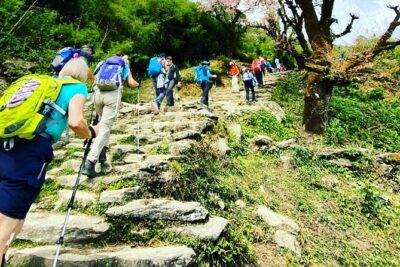
11-Day Hike Tour to Annapurna Base Camp Bliss in Kathmandu
Read our review →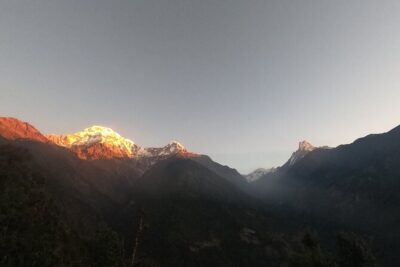
Browse the lists this tour appears in