
Reviewed · ANNAPURNA BASE CAMP TREKS
Annapurna Base Camp Trek
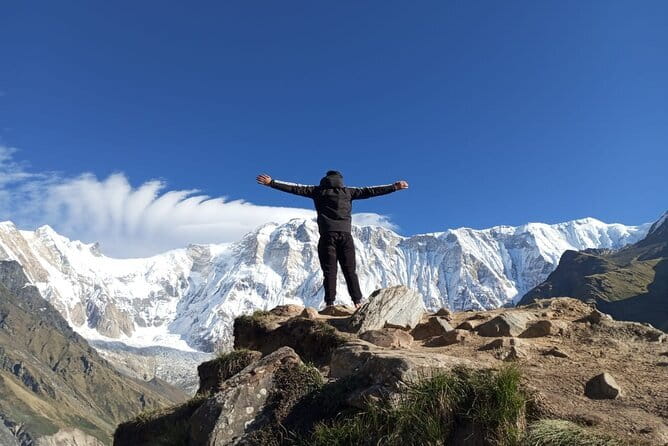
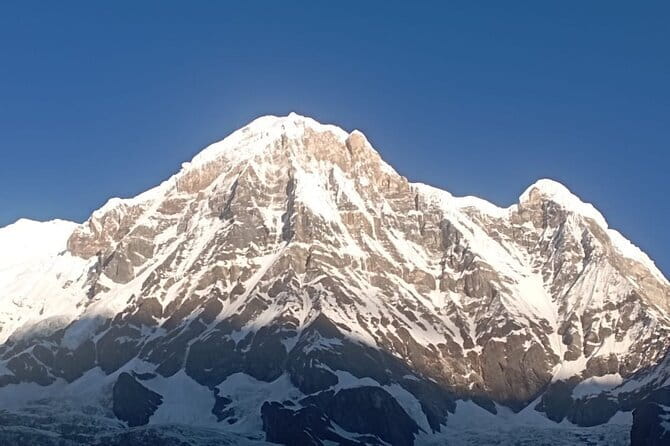
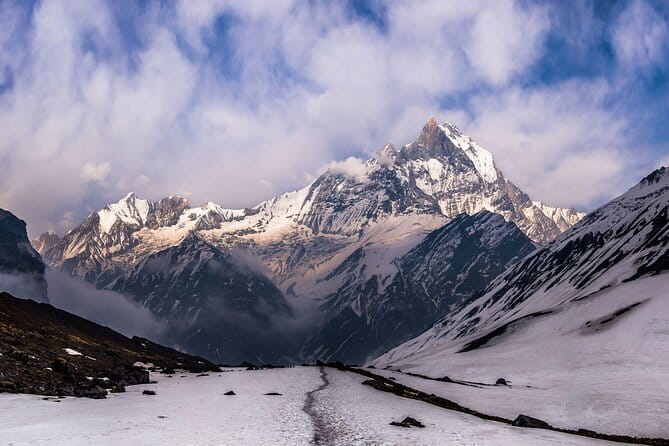
Annapurna Base Camp is the prize here: a high mountain bowl at 4,130 meters, reached by foot through rhododendron and bamboo forests, Gurung villages, and steep Himalayan valleys. The route gives you a real mountain journey without requiring technical climbing, and the payoff is the close view of Annapurna and Machhapuchhre.
I like two things in particular. The practical package covers permits, a licensed English-speaking guide, porters, meals during the trek, a duffel bag, and a sleeping bag. I also like the route’s variety: quiet Ghandruk, forest trails, high Deurali, the base camp itself, and a recovery stop at Jhinu Danda. The main caution is that the word luxury may set expectations too high. Kathmandu and Pokhara use 3-star hotels, while the trail uses the best available twin-sharing teahouses, not resort-style lodges.
Key points to know before booking
- Annapurna Base Camp reaches 4,130 meters, so a moderate fitness level is necessary.
- The route includes Ghandruk, Machhapuchhre Base Camp, and Jhinu Danda, giving you villages, forests, high mountain views, and a gentler final stretch.
- Seven active trekking days are built into the published schedule, with long walking days of up to seven hours.
- Meals, permits, guide service, porter support, a duffel bag, and a sleeping bag are included, which keeps planning simple.
- Kathmandu and Pokhara transfers take seven to eight hours by tourist bus, a practical but tiring part of the trip.
- The $240 price is unusually low for a package with this many inclusions, so confirm the exact accommodation standard and what the operator means by luxury before paying.
What the Annapurna route gives you for $240
At $240 per person, this trek is priced as a budget-friendly guided Himalayan trip, even though the description presents it as a luxury experience. The value is strongest in the services that can otherwise add up quickly: Annapurna Conservation Area Permit, TIMS card, airport transfers, Kathmandu to Pokhara transport, guide service, porter support, meals on the trail, and basic trekking equipment.
You also receive hotel accommodation in Kathmandu and Pokhara, including breakfast. On the trail, you stay in twin-sharing teahouses with breakfast, lunch, and dinner included. That arrangement is far more useful than a vague promise of comfort because it tells you what your daily routine will look like: walk, eat, sleep, and prepare for the next stage.
Still, keep the limits in mind. Lunch and dinner in Kathmandu and Pokhara are not included. Bottled water, alcoholic drinks, hot showers, laundry, phone calls, travel insurance, visa fees, and tips are also your responsibility. The $240 does not cover international airfare or rescue insurance.
The package says luxury, but the stated accommodation is a 3-star hotel in the cities and the best available teahouse on the trail. That can still be comfortable and well run, but you should not expect private luxury rooms, spa facilities, or hotel-style service at high altitude. I would treat this as a well-supported standard trek with some comfort included, not a luxury lodge holiday.
Other Annapurna routes from Kathmandu:
- Annapurna base camp trek 5 Days
★ 5.0 · 252 reviews - Annapurna Base Camp Trek
★ 5.0 · 111 reviews - Kathmandu to Annapurna Base Camp (ABC) 5-Day Trek
★ 5.0 · 102 reviews
Days 1 and 2: Kathmandu to Pokhara by road
Your trip begins at Tribhuvan International Airport, where a representative meets you and takes you to your Kathmandu hotel. The airport transfer lasts about 30 to 45 minutes, and breakfast is listed for the day.
The first full travel day takes you from Kathmandu to Pokhara by tourist bus. The distance is about 200 kilometers, but the drive takes seven to eight hours. That tells you something important about the road: this is a full travel day, not a quick transfer between two cities.
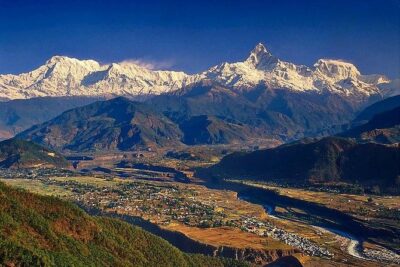
Pokhara is a useful staging point for the trek. At 822 meters, it is much lower than Kathmandu and far below the high trail, so you begin the walking portion from a gentler altitude. You have breakfast at the hotel, but lunch and dinner in Pokhara are not included in the package.
The road journey may be tiring, but it also gives you a gradual change from Nepal’s capital to a smaller lake city and then to the mountain villages ahead. If you are sensitive to long bus rides, plan your expectations carefully. This is one of the least glamorous parts of the itinerary, but it keeps the price down.
Day 3: Ghandruk brings village life into focus
From Pokhara, the drive continues toward Nayapul, about 41 kilometers away. The listed drive takes two to three hours. From Nayapul, you trek for roughly five kilometers, with three to four hours of walking, before reaching Ghandruk at 1,940 meters.
Ghandruk is one of the most appealing stops on the route because it is a traditional Gurung village rather than simply a place to sleep between trail sections. The itinerary places you here early, before the hardest altitude gains, so you can begin adjusting to mountain walking without immediately sleeping at high elevation.
This is a full-board day, with breakfast, lunch, and dinner provided. A guide and porter support are included, and one porter is assigned for every two trekkers. That ratio matters. You still need to pack sensibly, but you do not have to carry your full load all the way to base camp.
The walking distance is short compared with later days, but the combination of road travel and a first trek can make the day feel longer. Use Ghandruk as a chance to settle into the group rhythm, check your gear, and learn what your daily pace will be.
Day 4: Ghandruk to Sinuwa through forest and river valleys
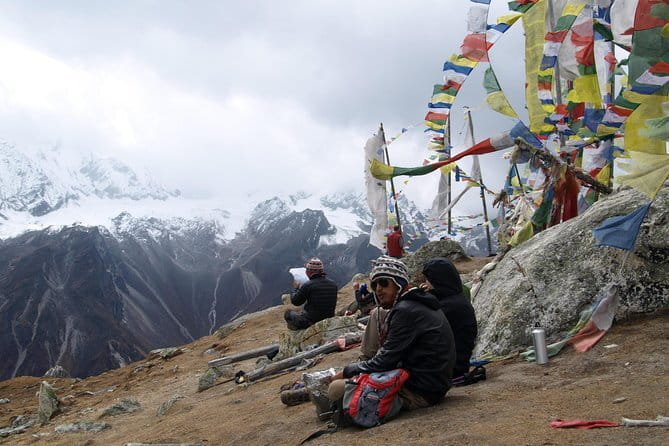
The fourth day covers about 12 kilometers and takes six to seven hours. You descend toward the Kimrong Khola before climbing again toward Sinuwa, which sits at 2,340 meters.
This is a useful introduction to the Annapurna trail’s character. The route is not a simple uphill walk. You lose elevation and then regain it, so the distance can feel harder than the altitude figures suggest. Good footwear and steady pacing matter more than rushing to stay ahead of the group.
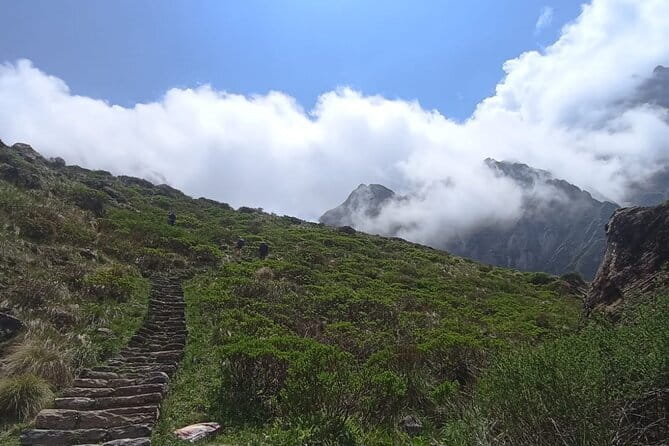
The trail passes through forested sections, and the vegetation becomes part of the experience. Rhododendron and bamboo are recurring features on this side of the route, offering shade and a strong contrast to the exposed high country later in the trek.
Sinuwa is a sensible overnight point because it moves you higher without pushing you straight into the thin air near base camp. Breakfast, lunch, and dinner are included, but hot showers are not. If washing facilities matter to you, ask the operator what is available at each teahouse and budget for any optional service.
A few more things to do in Kathmandu worth a look
- Everest Base Camp Trek – 14 Days
★ 5.0 · 1,499 reviews - Everest Base Camp Trekking
★ 5.0 · 485 reviews - Nagarkot Sunrise View and Day Hiking from Kathmandu
★ 5.0 · 471 reviews - Annapurna Circuit Trek with Tilicho Lake
★ 5.0 · 368 reviews
Day 5: Bamboo forests and the climb to Deurali
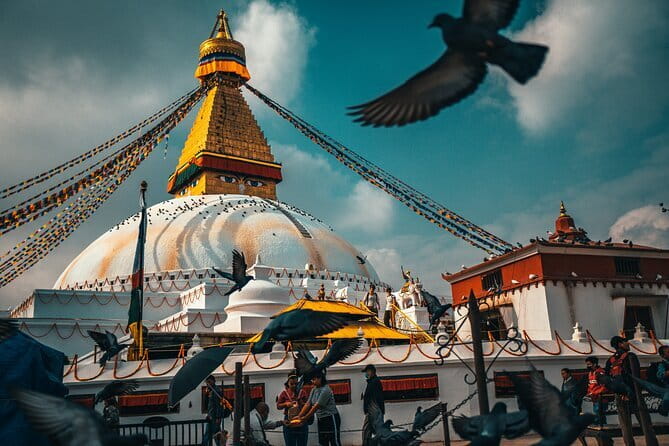
From Sinuwa, you walk about 10 kilometers in six to seven hours, reaching Deurali at 3,200 meters. The trail continues through bamboo forest and climbs steadily toward the high valley.
This is where the trek begins to feel more serious. Deurali is more than 1,000 meters higher than Ghandruk, and the day’s long ascent can expose differences in fitness within a private group. The best approach is to keep your pace controlled and tell your guide early if you feel unwell.
The inclusion of an experienced, government-licensed guide is valuable here. A guide can help manage the day’s pace, explain the route, and respond if someone needs extra attention. A first aid kit is included, but travel insurance and rescue insurance are not, so you should arrange suitable coverage before leaving home.
Meals remain full board, with tea and coffee included. That takes away one small daily chore. You still pay for bottled water and other drinks, so bring a reusable bottle and ask about the available refill arrangements before setting out.
Day 6: Annapurna Base Camp at 4,130 meters
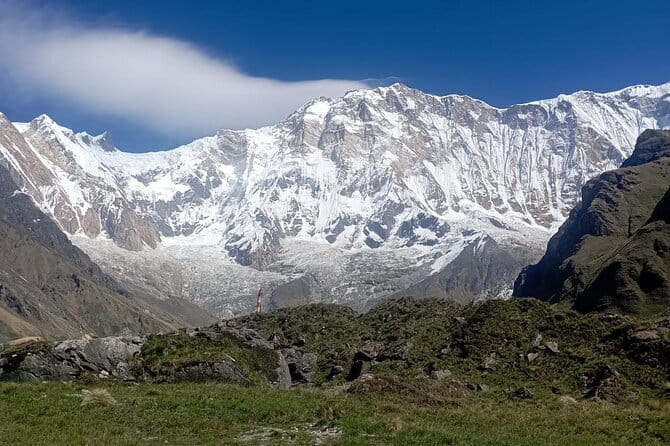
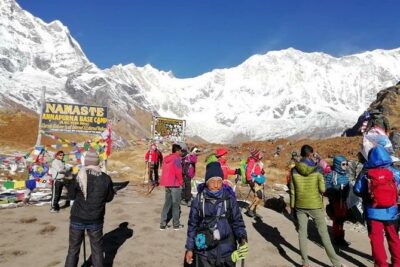
This is the main event. You walk about nine kilometers for six to seven hours and reach Annapurna Base Camp at 4,130 meters, or 13,550 feet.
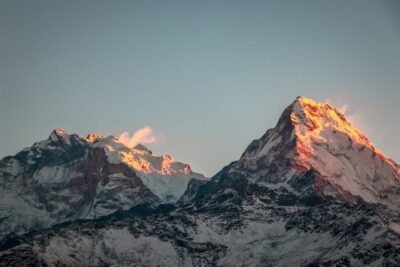
The route passes through the high mountain zone toward Machhapuchhre Base Camp before continuing to Annapurna Base Camp. The setting changes sharply from forest to open Himalayan views, with Annapurna and Machhapuchhre forming the dramatic backdrop. You are no longer walking mainly for the villages and trees. The mountains now control the day.
The distance is not extreme on paper, but altitude makes every climb harder. Take short, regular breaks and follow your guide’s advice. The itinerary describes this as one of the most exciting days, and that is fair: you reach the destination that gives the trek its name after several days of gradual approach.
The base camp overnight also means you wake high in the mountains rather than simply visiting and dropping straight back down. That adds to the sense of achievement, but it can also mean a colder, simpler night. The included sleeping bag is useful here. Do not assume that the word luxury means all high-altitude comforts are available.
Day 7: The long descent to Bamboo
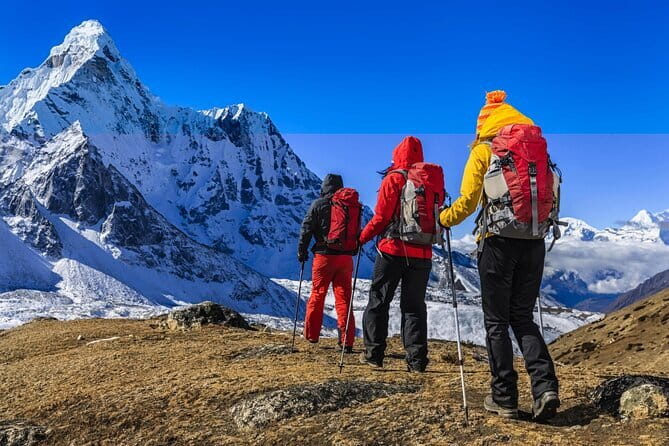
After time at Annapurna Base Camp, you retrace the route downhill for about 13 kilometers and six to seven hours, sleeping at Bamboo at 2,310 meters.
Descending is easier on your breathing, but it can be demanding on knees and ankles. Trekking poles may be useful, though they are not listed as included, so check what equipment you need to bring. The descent also gives you a second look at parts of the trail, this time with a different perspective and usually a quicker sense of progress.
Bamboo is a welcome lower stop after the base camp night. You return to full-board meals, and the porter service continues according to the one-to-two ratio. Since the trail is an out-and-back route in this section, you will recognize some terrain while noticing details you missed on the way up.
Day 8: Jhinu Danda offers a gentler finish
The walk from Bamboo to Jhinu Danda covers about 11 kilometers in five to six hours, ending at 1,780 meters. Compared with the base camp stage, this is a lower and more relaxed day, though it still includes trail climbs and descents.
Jhinu Danda is a good choice for the final mountain night because it shifts the mood from high-altitude effort toward recovery. The setting includes lush forest, and the lower elevation makes it easier to enjoy the final part of the trek without concentrating on every breath.
The package names Jhinu Danda as one of the route’s key locations, but it does not specifically promise access to hot springs or any other attraction there. Do not book this trip solely for a particular Jhinu activity unless the operator confirms it separately. The dependable feature is the village stop and the shorter walking day.
Days 9 to 11: Back to Pokhara and Kathmandu
The final trek day covers about six kilometers before a two to three-hour drive returns you to Pokhara. Breakfast and lunch are included, while dinner in Pokhara is not.
This short walking stage gives you a softer landing after the long descent. You can finish the trail without having to rush through a major distance before getting back on the road. Once in Pokhara, the trip returns to city-hotel accommodation and breakfast service.
Day 10 repeats the long road transfer to Kathmandu. The drive is again listed at seven to eight hours over roughly 200 kilometers. Dinner is included in Kathmandu on this day, which is a welcome detail after the bus ride.
On Day 11, you have time to rest before your airport transfer, which takes about 30 to 45 minutes. Breakfast is included. The schedule is described as approximately 11 days, so check your flight time carefully and confirm the exact departure arrangements with the operator.
Guides, porters, and the day-to-day setup
The trek is a private activity, meaning only your group participates. That is useful if you prefer to walk at your own pace rather than join a large mixed group, though your group still needs to cooperate on departure times and daily walking speed.
An English-speaking, government-licensed trekking guide is included. The name of the individual guide is not provided, so ask for that information before departure if personal contact matters to you. The package also includes a porter for every two trekkers. Pack with that arrangement in mind, and remember that tips for guides, porters, and drivers are not included.
The supplied duffel bag and sleeping bag must be returned after the trek. A first aid kit is included, but you should still bring personal medication and any items you rely on daily. Insurance is especially important because rescue costs are excluded.
The strongest praise connected with this experience focuses on organization, warm support, and the help provided by guides and porters. That matches the package design: transport, meals, permits, equipment, and staff are arranged in advance. The best practical move is to confirm what premium means in your exact booking, since the stated hotels and teahouses point to comfort rather than high-end luxury.
Who should book this trek?
I would recommend it to you if you want a guided first Himalayan trek with a clear route, organized support, and most trail costs bundled into one low price. It suits people with moderate fitness who can handle six to seven hours of walking on several consecutive days.
It is also a good fit if you value cultural contact and changing scenery more than polished facilities. Ghandruk’s Gurung setting, the forest trails, the high mountain bowl, and the stop at Jhinu Danda give the journey more texture than a simple march to base camp.
I would hesitate if you need private rooms, reliable hot showers, upscale food, or easy transport days. The trail accommodations are teahouses, bottled water costs extra, city meals are partly excluded, and the Kathmandu to Pokhara road journey takes most of a day each way.
The free cancellation rule gives you some booking flexibility: cancel at least 24 hours before the start time for a full refund. Poor weather or failure to meet the minimum number of participants can also lead to a new date, another experience, or a full refund. Even so, arrange travel and rescue insurance yourself.
Should you book the Annapurna Base Camp trek?
Book this trip if the $240 price is confirmed and you understand that the real product is a supported standard trek, not a five-star mountain holiday. The coverage is impressive for the cost, especially the permits, guide, porter, full-board trail meals, sleeping bag, duffel bag, and transfers.
Before paying, ask three direct questions: what hotel and teahouse standard applies to your dates, who your guide will be, and how the operator handles altitude concerns and emergency transport. If the answers are clear, this is a strong-value way to reach Annapurna Base Camp with the hard planning already done.
FAQ
How long does the Annapurna Base Camp trek take?
The scheduled experience lasts approximately 11 days, including arrival and departure transfers, the Kathmandu to Pokhara road journeys, and the trekking route.
What is the highest altitude on the trek?
The highest point listed is Annapurna Base Camp at 4,130 meters, or 13,550 feet.
Are meals included?
Breakfast is included in Kathmandu and Pokhara hotels. Breakfast, lunch, and dinner are included during the trek. Lunch and dinner in Kathmandu and Pokhara are not included.
Is transportation from Kathmandu to Pokhara included?
Yes. Tourist bus transportation from Kathmandu to Pokhara and back is included. Each drive is about 200 kilometers and takes roughly seven to eight hours.
Are a guide and porter included?
Yes. The package includes an experienced, English-speaking, government-licensed trekking guide and one porter for every two trekkers.
Is travel insurance included?
No. Travel insurance, rescue insurance, Nepal entry visa fees, personal expenses, alcoholic drinks, bottled water, hot showers, and staff tips are not included.
Just added in Kathmandu
- Kathmandu to Chitwan Tour by Tourist Bus – A Convenient and Affordable Way★ 4.0 · 4 reviews
- Changunarayan Hill to Telkot Hike Near Kathmandu Day Tour★ 5.0 · 6 reviews
- Mt Everest Base CampTrek | Budget Package★ 5.0 · 4 reviews
- Chitwan Jungle Safari 3-Day Tour★ 5.0 · 9 reviews
- Chandragiri Hill Station Tour by Cable Car★ 5.0 · 4 reviews
- Chandragiri Hills cable car day trip, private car with driver from Kathmandu★ 5.0 · 8 reviews
- Chandragiri to Taudaha Nature Day Hiking from Kathmandu★ 5.0 · 13 reviews
- Chandragiri Cable Car & Monkey Temple Private Guided Day Tour★ 5.0 · 5 reviews
Annapurna Base Camp Treks, compared.
Kathmandu to Annapurna Base Camp (ABC) 5-Day Trek
Read our review →
11-Day Hike Tour to Annapurna Base Camp Bliss in Kathmandu
Read our review →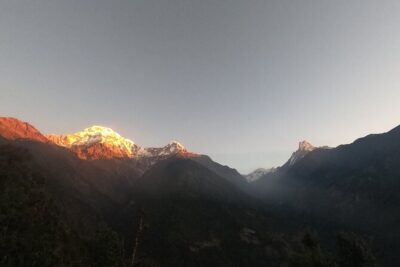
Browse the lists this tour appears in